Hi, welcome back to Line Sheet. I’m en route to Malibu for Alessandro
Sartori’s Zegna extravaganza. Wish me luck getting back to Belle and Sebastian at the Palladium on time.
It was nice to be back in Los Angeles these past few days. I had in-real-life encounters with two of my personal industry idols, Lisa Eisner and Paul Cavaco; sat down for the best talk with Gildo Zegna; took two neighborhood walks with Scott
Sternberg; ate at Sqirl three times; visited Lauren Halsey’s incredible “Sister Dreamer” sculpture park (go); stopped by LACMA; snuck into Scout; sorted my mail; and saw some great fashion. You’ll find my take on Hermès womenswear designer Nadège Vanhee’s Bel Air show below.
But enough about me: It was a big week for the industry. When isn’t it, actually? That’s why I’ve enlisted Malique
Morris to author Line Sheet’s new wrap-up, ReSee, where he distills the previous seven days in a way that’ll make you feel smarter. Most importantly, you won’t fall asleep reading it. Let us know what you think, and feel free to email Malique@puck.news directly; we take your feedback to heart!
Also mentioned in this issue: Marc Jacobs, Martin
Scorsese, Reese Witherspoon, Karen Elson, OpenAI, John Cale, Rebecca Leigh Longendyke, Aidan Zamiri, Zadie Smith, Charles Levai, Legally Blonde, Julia Lange, Kevin Tekinel, the Chelsea Hotel, Karolin Wolter, Guinevere Van Seenus,Vuori, Charles Porch, Heidi
O’Neill, Set Active, Pattie Gonia, Hillary Super, Charli XCX, and more. |
This week, I spent an inordinate amount of time discussing Nadège Vanhee, the
artistic director of Hermès’s women’s “universe,” as they’d call it, who showed her latest collection on a hilltop in Bel Air on Thursday night.
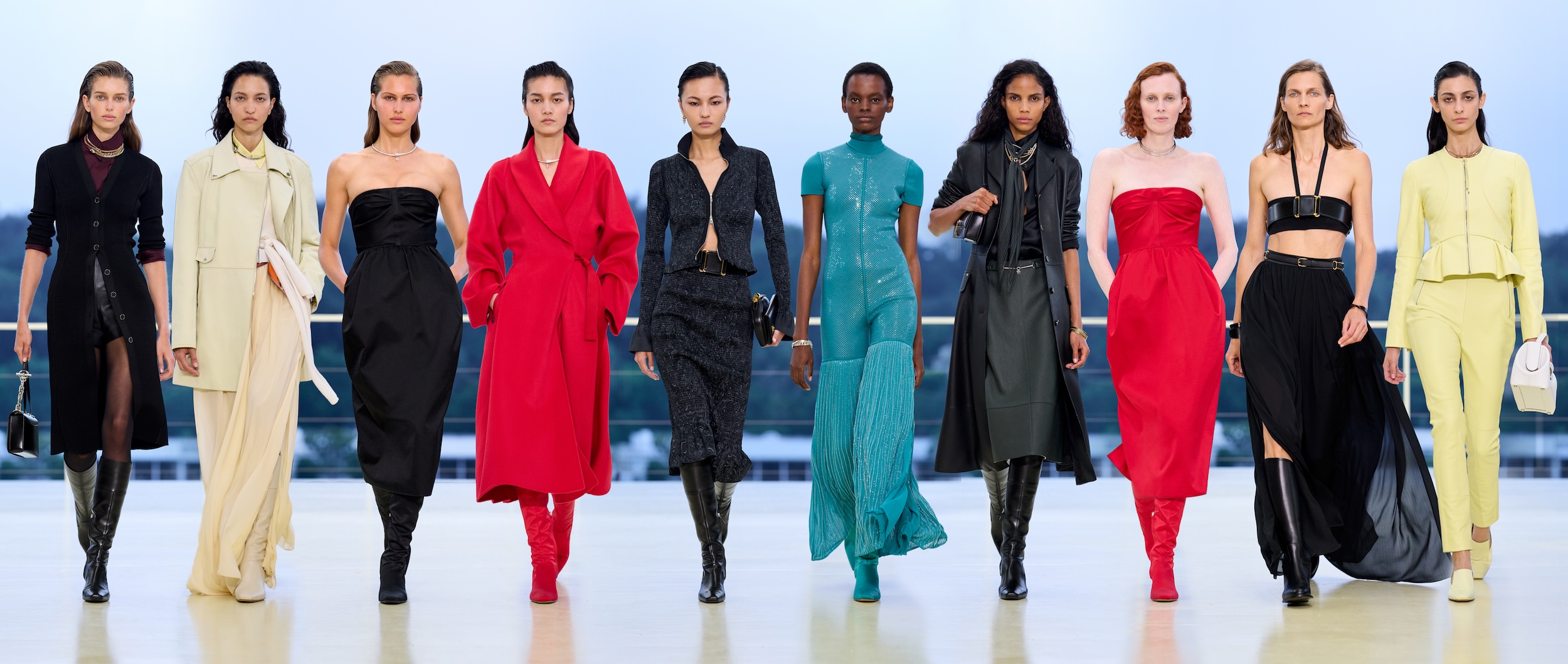
Vanhee has been at the brand for more than a decade, but the development of her work was incremental until a tiny explosion about a half decade ago, when she chopped off her hair and started showing straight-up sexy clothes. What I loved about last night’s effort—billed as a Part 2 of Fall/Winter show—was that it was just as assertive as those
recent collections, but somehow looser. Afterward, she mentioned that you have to be a “sniper” during the ready-to-wear shows: super sharp and to the point. Here, she could be freer. The story was color: the butter yellow of the invitation (the chicest I’ve ever seen, really); the pure red of the coats and matching boots—and sometimes bags, too. |
|
|
|
A MESSAGE FROM OUR SPONSOR |
Agentic commerce isn’t a future concept. It’s already reshaping how people shop. Static storefronts are giving
way to guided, conversational experiences that don’t just surface products. They drive decisions and conversion in real time. Swap’s Agentic Commerce 101 breaks down what’s real and what it means for brands right now. Inside: |
• What agentic commerce is and why most AI tools don’t qualify • Why AI discovery platforms aren’t built to convert for your brand • Why owning your AI experience and your data is becoming non-negotiable |
|
|
|
This was the most Vanhee has ever inserted herself into the broader fashion
conversation, which you don’t really have to do at Hermès. There was more non-leather texture—velvet dresses, embroidery, peplums, shimmer (!), lots of seaming. A welcome change, and honestly, a bit bizarre in a totally alluring way. She mixed the opulence of the 1980s with a girlishness that somehow didn’t deter from her typically assertive stance. I’m not a model person, but she and Julia Lange cast all my faves: Karen Elson
(wearing a true red dress fit for a Homecoming dance), as well as Rebecca Leigh Longendyke, Guinevere Van Seenus, and a bare-faced Karolin Wolter. |
Photos: Filippo Fior/Courtesy of Hermès |
They were all framed up by a truly incredible set, rendered in the same barely there yellow as the
invitation and conceived in collaboration with the prolific creative directors Kevin Tekinel and Charles Levai (who work on everything from W magazine to imagery for Chloé and Celine). It felt gift-wrapped for the hundreds of clients who were in attendance, showing off their embossed leather jackets and one-off mini Kellys.
Speaking of clients, I imagine they’re going to love the candy-box feeling of this
collection at the resees in the coming days. My only wish was that Vanhee’s “universe” was more wholly represented in the Hermès shopping experience for those who are more fashion enthusiasts than leather goods collectors. The company prides itself on its buying process in which each store director selects their own inventory. It’s empowering for the buyers, and a tremendously effective way to ensure sell-through. What’s lost, however, is the experience the people in the room had last
night.
It’s something I could see Hermès grappling with: the brand comes first, but being more in the fashion conversation has value, too. Vanhee is not a celebrity designer, but people are increasingly interested in her in the way they’re interested in glamorous intellectuals like, say, Zadie Smith, because she has good taste and a sprawling, unexpected network of friends. During her runway bow after the show, she hugged several of them, including
Charles Porch, the longtime Meta head of partnerships who just decamped to OpenAI. He’s a good one, as they say, but I would have never in a million years imagined Vanhee to be hug-level friends with the guy. Fascinating. Such interest will only accelerate as she proposes her first haute couture collection in January. She seems ready for it.
And now, here’s Malique with your new crib sheet… |
|
|
|
News and notes on an industry drowning in content, and the brands that broke
through, for better and for worse: Victoria’s Secret’s teen charm campaign, Patagonia’s drag infringement suit, Lululemon’s customer confusion, and how Prada pulled off the rarest trick in luxury. |
|
|
|
Welcome to ReSee, our new weekly column where we take a second look at what actually
mattered in fashion. The grandeur of the just-wrapped global tour of Cruise shows, and their consumer-focused nature, got me thinking about how fashion functions in an increasingly fragmented attention economy. Yes, the industry is both overexposed and no longer steering culture. But many of the events of this past week offered lessons for how designers and brands can still win—or lose!—the media game. |
|
|
|
A MESSAGE FROM OUR SPONSOR |
Agentic commerce isn’t a future concept. It’s already reshaping how people shop. Static storefronts are giving
way to guided, conversational experiences that don’t just surface products. They drive decisions and conversion in real time. Swap’s Agentic Commerce 101 breaks down what’s real and what it means for brands right now. Inside: |
• What agentic commerce is and why most AI tools don’t qualify • Why AI discovery platforms aren’t built to convert for your brand • Why owning your AI experience and your data is becoming non-negotiable |
|
|
|
To wit: Victoria’s Secret reported a gangbusters first quarter on Tuesday,
sending the stock up as much as 50 percent, thanks in part to an executive team that is rediscovering how to be relevant. C.E.O. Hillary Super and creative chief Adam Selman know how to serve two audiences at once: middle-aged Millennials looking for precise bra fits and attention-deficit teens seeking whimsy without being predictable. Meanwhile, Pink’s upcoming collaborations—a Legally Blonde prequel tie-in with Reese Witherspoon’s
Hello Sunshine and a swimwear collection with Cheetos—demonstrate that Super and Selman actually understand their customer.
Then there’s Lululemon, which reported a 4 percent decline in first-quarter U.S. sales. No great mystery there: Recent product launches, including an underwhelming yoga collection that landed with a thud, have highlighted the company’s ongoing struggle to identify today’s Lululemon customer. It’s no longer the metropolitan woman who spends her weekends in
Pilates studios blasting Beyoncé and Taylor Swift; she wears Set Active. And it’s not the tech bro looking for stretchy work pants, who now shops at Vuori. Lululemon knows it has a problem. The company plans to increase its marketing budget 15 percent this year. But without defining its buyer, the brand won’t be able to put that money to good use.
Alas, it appears that media coverage of Lululemon’s various corporate crises is hurting consumer sentiment,
too. On its earnings call yesterday, interim co-C.E.O. Meghan Frank acknowledged that Lululemon’s long-running proxy war with estranged founder Chip Wilson—the sort of story that rarely breaks out beyond the business press—has affected sales. “We experienced spikes of negative commentary in the media and on social channels
with regard to our brand, which had an impact on traffic and overall top-line performance,” she said. Recruiting incoming C.E.O. Heidi O’Neill, a 27-year Nike veteran with a mixed track record in product development, has also raised eyebrows.
Lululemon’s inability to convincingly command its customers' attention is partly what led to losing the proxy battle last week. Wilson promised to back off his caterwauling—at least publicly—in return for two seats on the board for
his hand-chosen candidates. He’s also getting access to O’Neill, giving him every opportunity to buzz in her ear behind closed doors.
Meanwhile, Victoria’s Secret seems likely to win its proxy war with Brett Blundy, the Australian billionaire who owns a 13 percent stake and wants longtime board chair Donna
James gone. After all, it’s hard to sway board members that major changes are needed when teens are staking out Pink stores at 1 a.m.—and when your valuation has doubled in the past year. |
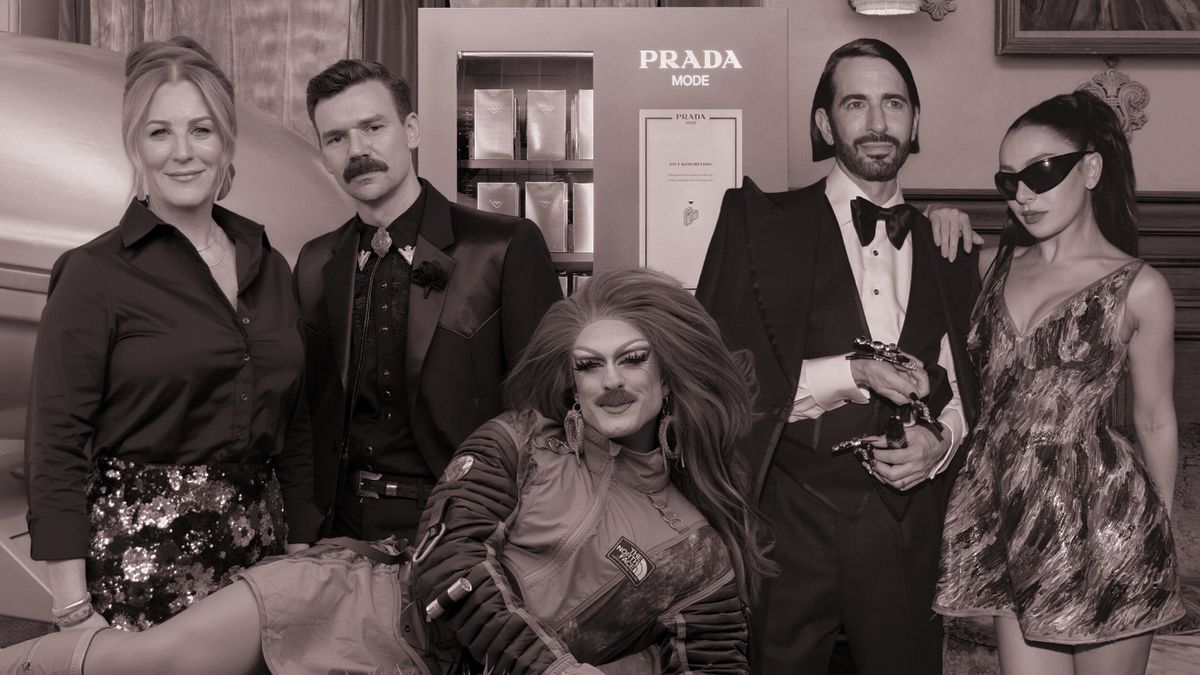
But with apologies to those teens, it was Prada that best captured the attention of the world’s
most fickle, phone-addicted, ADHD-addled audience this week: New York editors. The thinking person’s Italian luxury house hosted a five-day futurism conference of sorts at the Chelsea Hotel. The conceit struck the balance of self-seriousness and playfulness that many brands chase and few achieve. Don’t believe me? No Wave pioneer and career-long anti-consumerist Lydia Lunch even showed
up to perform. That kind of knowingness is what works these days for jaded shoppers who want to be mentally stimulated but also in on the joke. |
|
|
|
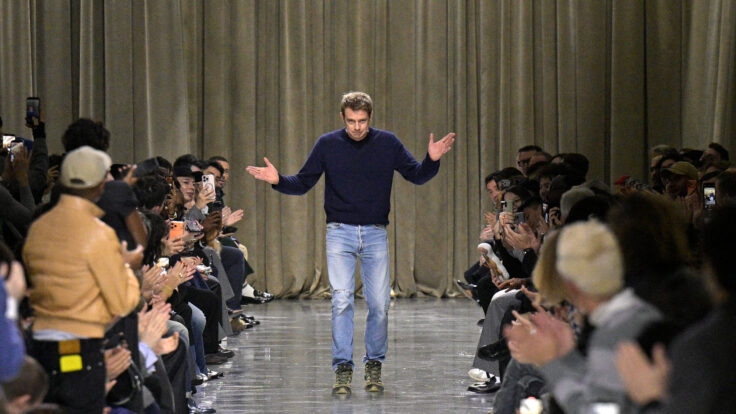
A few weeks ago, Marc Jacobs was front of mind when LVMH announced the
sale of his namesake label to licensing firm WHP Global. It was a watershed moment for fashion observers of a certain vintage. This week, Charli XCX—uncontested holder of the championship belt in attention getting during the brat summer of 2024—debuted the album art for her proper follow-up, Music, Fashion, Film. Shot by Aidan Zamiri, the cover is a group portrait of god-tier figures from each medium: John Cale, Martin
Scorsese, and Jacobs. Maybe Jacobs, one of fashion’s true kings of spectacle, will kick off this next phase of his career with some Charli merch.
As we saw with the social media backlash after Everlane sold to Shein, consumers get especially prickly when they feel a brand is playing against type. That’s what happened this week when it emerged that Patagonia, the outdoor brand known for its climate activism, had sued drag performer and climate activist
Pattie Gonia in a trademark dispute, seeking to prevent her from selling merch with her name on it. Gonia, who’s been performing under the moniker for eight years, broadcast her side of the story on Instagram last week, and Patagonia followed suit on Monday. Is anyone
actually confusing the company’s $200 lightweight jackets for Pattie Gonia’s screen-printed tees?
It’s all completely silly, of course, even as the dustup highlights the precarious power of brands—and why media sentiment is priceless. For what it’s worth, both parties are getting dragged online. |
See you in Paris next week,
Lauren
P.S.: We use affiliate links because we are a
business. We may make a couple bucks off them. |
|
|
|
Puck fashion correspondent Lauren Sherman and a rotating cast of industry insiders take you deep behind the scenes of
this multitrillion-dollar biz, from creative director switcheroos to M&A drama, D.T.C. downfalls, and magazine mishaps. Fashion People is an extension of Line Sheet, Lauren’s private email for Puck, where she tracks what’s happening beyond the press releases in fashion, beauty, and media. New episodes publish every Tuesday and Friday. |
|
|
|
An essential, insider-friendly Hollywood tip sheet from Matthew Belloni, who spent 14 years in the trenches at
The Hollywood Reporter and five before that practicing entertainment law. What I’m Hearing also features veteran Hollywood journalist Kim Masters, as well as a special companion email from Eriq Gardner, focused on entertainment law, and weekly box office analysis from Scott Mendelson. |
|
|
|
Need help? Review our FAQ page or contact us for assistance. For brand partnerships, email ads@puck.news. You received this email because you
signed up to receive emails from Puck, or as part of your Puck account associated with {{customer.email}}. To stop receiving this newsletter and/or manage all your email preferences, click here. |
Puck is published by Heat Media LLC. 107 Greenwich St., New York, NY 10006 |
|
|
|
|