|
Welcome back to Wall Power. I’m Marion Maneker.
Tonight, as we plug along during this busy season, Julie Davich is going to introduce you to a couple who’s reissuing an Antoni Gaudí chair for NYCxDesign Week, and take a tour of the galleries extending our understanding of (and perspective on) surrealism. She’ll get into that below.
But first…
|
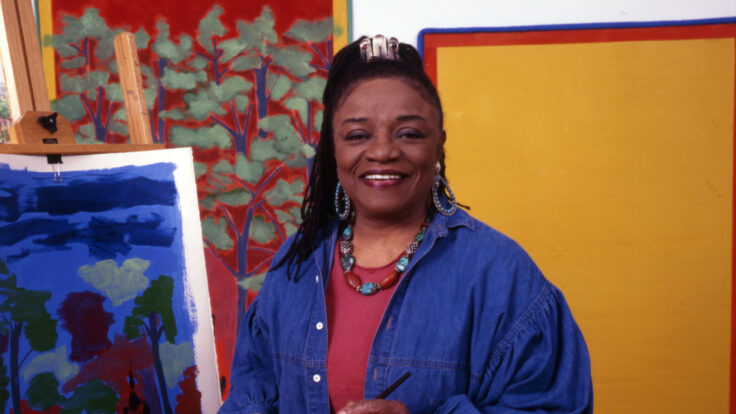
- Alison Saar wins the David C. Driskell Prize: One of the many meetings I had last week was with Randall Suffolk, the director of the High Museum in Atlanta. Suffolk is an impressive communicator and, over his 10 years at the High, has focused on building a museum that is both vibrant and reflective of the city. I hope to tell you that story in more detail this summer. In the meantime, one of the things the museum does is administer the David C. Driskell Prize for contributions to the field of African American art and art history. Driskell was a towering figure in the field of African American art history, and this will be the 20th year the prize has been awarded. Previous recipients include Mark Bradford, Rashid Johnson, Franklin Sirmans, and Amy Sherald. This year’s recipient, Alison Saar, will be honored at a gala on September 20 where John Legend will perform.
|
|
|
|
A MESSAGE FROM OUR SPONSOR
|
|
|
- More TEFAF sales: I arrived at TEFAF a little before the doors opened at 1 p.m. on Thursday, and was surprised to see long lines down both stairs leading to the entrance of the Park Avenue Armory, extending down the block and around the corner. It was the most concrete manifestation of the new ebullient-ish mood in the art market: People seem eager to browse at TEFAF, where the works are more valuable. Now, let’s see whether they buy…A lot of press and promotional material has called this Frieze Week, but it’s really been TEFAF Week, with the Armory acting as the apex of the nine fairs taking place in the city right now. I reported some sales on Friday, but the fair has gathered more since, including a $2 million Lee Bontecou sold by Marc Selwyn Fine Art/Ortuzar. The gallery said there was strong interest from institutions in another Bontecou sculpture on the stand.David Aaron sold The Hultmark Horus, bronze, for nearly $700,000. David Tunick sold a Paul Cézanne double-sided portrait. Thaddaeus Ropac had a booth of Daniel Richter’s work and sold two of the pieces for prices around or above half a million dollars. David Zwirner had a booth of Ruth Asawa sculptures and a wall of her drawings. They sold four of the sculptures and six of the works on paper.Gladstone must have been working nonstop sending out invoices, because the gallery said they sold 45 George Condo drawings. (Let’s hope some of those sales were for more than one work.) Cardi sold works by Piero Manzoni, Agostino Bonalumi, and Mimmo Rotella. Lisson sold Sean Scully, Kelly Akashi, and Olga de Amaral. White Cube sold works by Julie Mehretu, Tracey Emin, and Ed Ruscha. And Waddington Custot sold a bronze by Barry Flanagan and a watercolor by Bernard Boutet de Monvel.
- Artists unwelcome: With the qualification that this is third-hand gossip, Mrs. Wallpower and I were talking to a dealer at the Independent art fair on Friday afternoon who mentioned a group chat of colleagues filled with stories of artists being interrogated when they passed through customs and immigration to attend the fairs. One artist, according to the dealer’s description of the group chat, even went so far as to ask whether a cover story was needed to enter the United States as an artist. Make of that what you will.
|
|
|
 |
Julie Brener Davich |
|
Gallery Hopping With Julie: NYCxDesign Week Edition
|
|
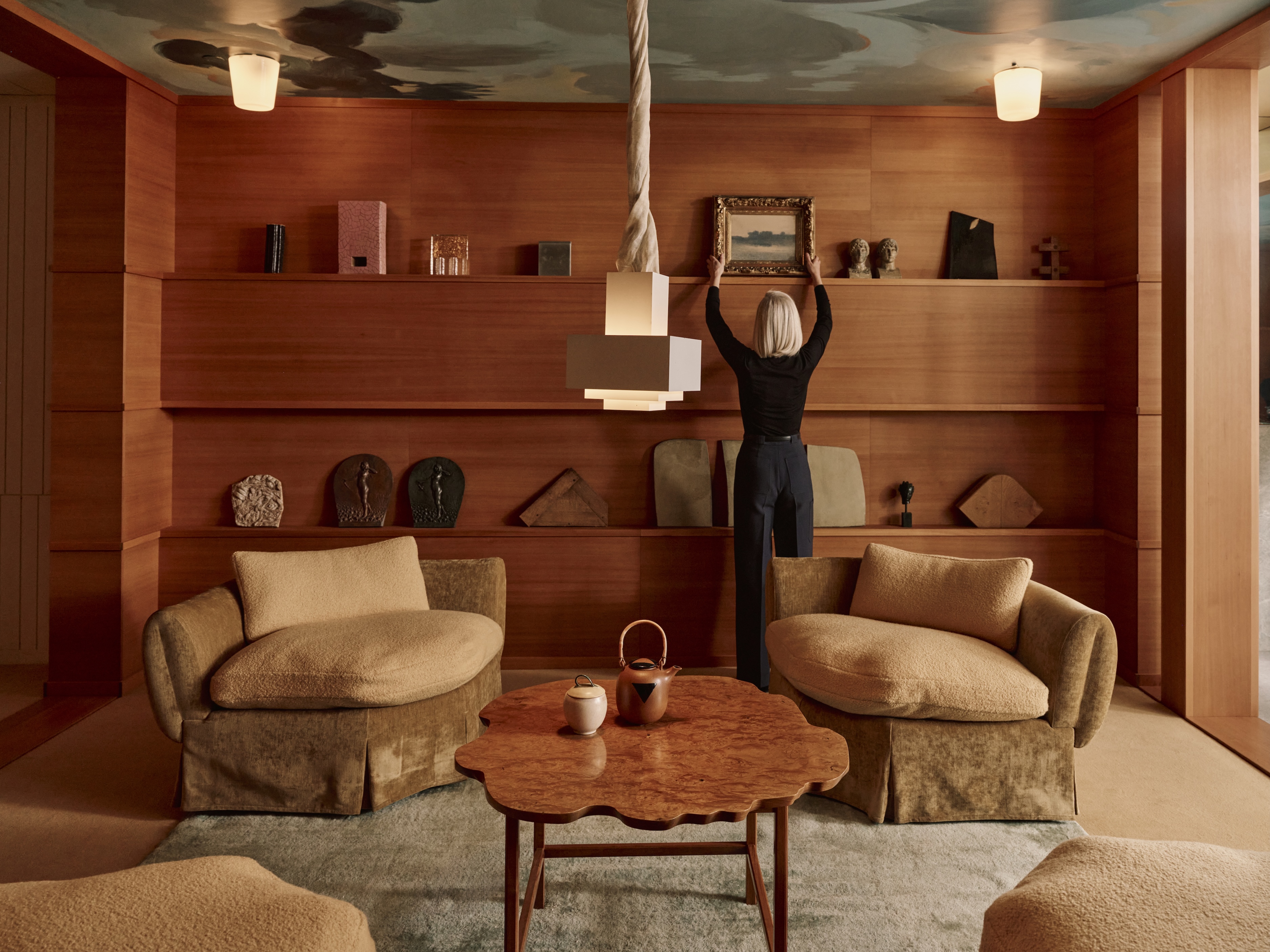
Casa Valle gallery, New York. Photo: Clement Pascal
|
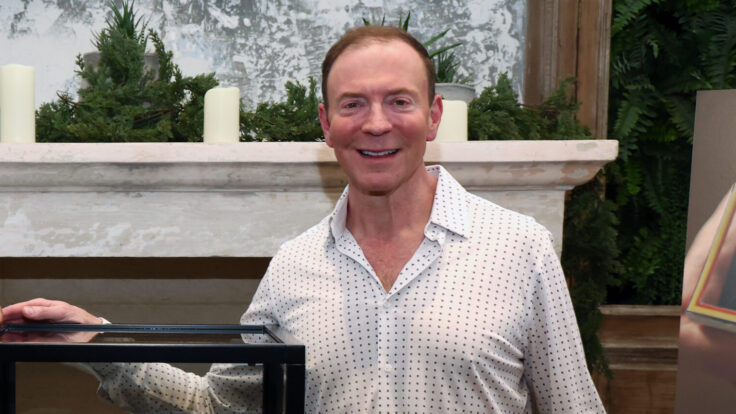
Last year, former Architectural Digest style director Jane Keltner de Valle and her husband, the architect and designer Giancarlo Valle, opened their namesake design gallery, Casa Valle, in Tribeca, where their made-to-order furniture creations intermingle with their global design finds. It’s also a showplace for their interior design practice, Studio Giancarlo Valle, founded in 2016. “We try to get out of Instagram, to stay inspired and make our own algorithm internally,” de Valle told me.
Most of the furniture, which Giancarlo described as architectural, is created for their design projects, which span Watch Hill to St. Barts. Their Smile sofa (which looks just like it sounds) is framed in maple. Their Jane table has a surface of ceramic tiles and zinc legs. There are also rugs and lighting. Almost everything is made locally in the New York area—a blessing during Covid, and probably now, with the new tariffs.
The duplex gallery itself is an “extension of our world,” said de Valle. Its warm and eclectic vibe mirrors that of the couple’s Litchfield County home, which, naturally, has been featured in AD. On the ground floor, the walls are covered in a contemporary clapboard paneling that harkens back to the neighborhood’s colonial past; downstairs feels homey, with a cedar-paneled library and a sunroom anchored by a zinc bar that comes in handy when entertaining in the gallery. The long hallway leading to the restroom (also stunning) is lined with different “chair personalities,” said de Valle.
When I asked the couple to describe their overall aesthetic, they answered, “Global.” Giancarlo’s parents were Peruvian of Italian descent, and he grew up partially in Caracas and Guatemala. The family’s travels take them around the world, most recently to Morocco. The design objects they source and resell come from all over, but predominantly from Sweden; they’re particularly attracted to the Swedish Grace movement of the 1920s—Scandinavia’s version of art deco—like a Josef Frank burl table and an Axel Einar Hjorth velvet armchair.
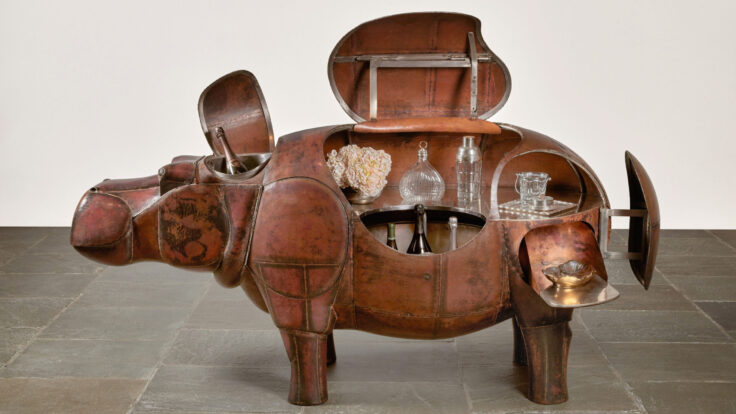
In honor of NYCxDesign Week, which starts tomorrow, the Valles are launching an exclusive limited edition of Gaudí’s 1906 Batlló chair in an ebony finish, in collaboration with BD Barcelona. For those who want to immerse themselves in the Valles’ design sense, head to Hotel Esencia on the Mayan Riviera. They’re also working on a hospitality project with restaurants and cottages on a private island in the Bahamas—adding yet another locale to their global inspiration tour.
|
|
|
|
The surrealist moment goes on, for those who are not so keen on reality these days. There are several works at the auctions, but you can also catch a variety of both famous and lesser-known artists at galleries around the city.
|
|
|
If you thought galleries had exhausted all the ways to package surrealism, you’d be mistaken—and the market isn’t done with the genre yet. As I’ve written before, there’s been a surge in demand for surrealist art in recent years, and that is partly because reality itself isn’t looking so good these days. This week, Sotheby’s and Christie’s are auctioning works by René Magritte—whose works have been leading the market—as well as Remedios Varo, Paul Delvaux, and others. Several galleries around town have also mounted shows.
At his uptown gallery on Madison Avenue, Emmanuel Di Donna has staged a retrospective of surrealist collages from 1921 through 1996 in collaboration with surrealist expert Timothy Baum. The exhibit features 74 works by 36 artists representing the global scope of the movement, from Czechoslovakia to Chile. Di Donna mounts only two shows per year—this one is up through the end of June, and is accompanied by a fully illustrated catalogue. About a third of the works are loans from both private and institutional collections, and the rest are for sale. Some of the collages incorporate hand-drawing or decalcomania, but most are pure cut-and-paste. Some of the works are funny, some are sexual, and others are disturbing; all of them require close inspection for full effect, lest you miss the cat whose whiskers turn into red wine.
|
|
|
|
A MESSAGE FROM OUR SPONSOR
|
|
|
|
Walking through the show, Di Donna reminded me that the surrealist movement was founded not by artists, but by poets, like Louis Aragon, André Breton, and Paul Éluard, who assembled pictures the same way they assembled words. “They are recomposing reality to create uncanny, strange, and marvelous juxtapositions,” said Di Donna. In Breton’s 1926 collage, Unwilling Hero, he juxtaposes a film still of Buster Keaton, primly sitting on a floral couch in a top hat and tie, with an image of a burning barn in the background. But it’s a self-portrait; Breton superimposed a photo of his own face onto Keaton’s. The surrealists’ “exquisite corpse” game also started with words—the phrase itself came from the first poem they created. Di Donna is displaying a 1938 example (also on loan) of a figure with a carrot for a neck and a teacup for an ear, by Breton, Yves Tanguy, and Jacqueline Lamba Breton, Breton’s wife at the time.
|
|
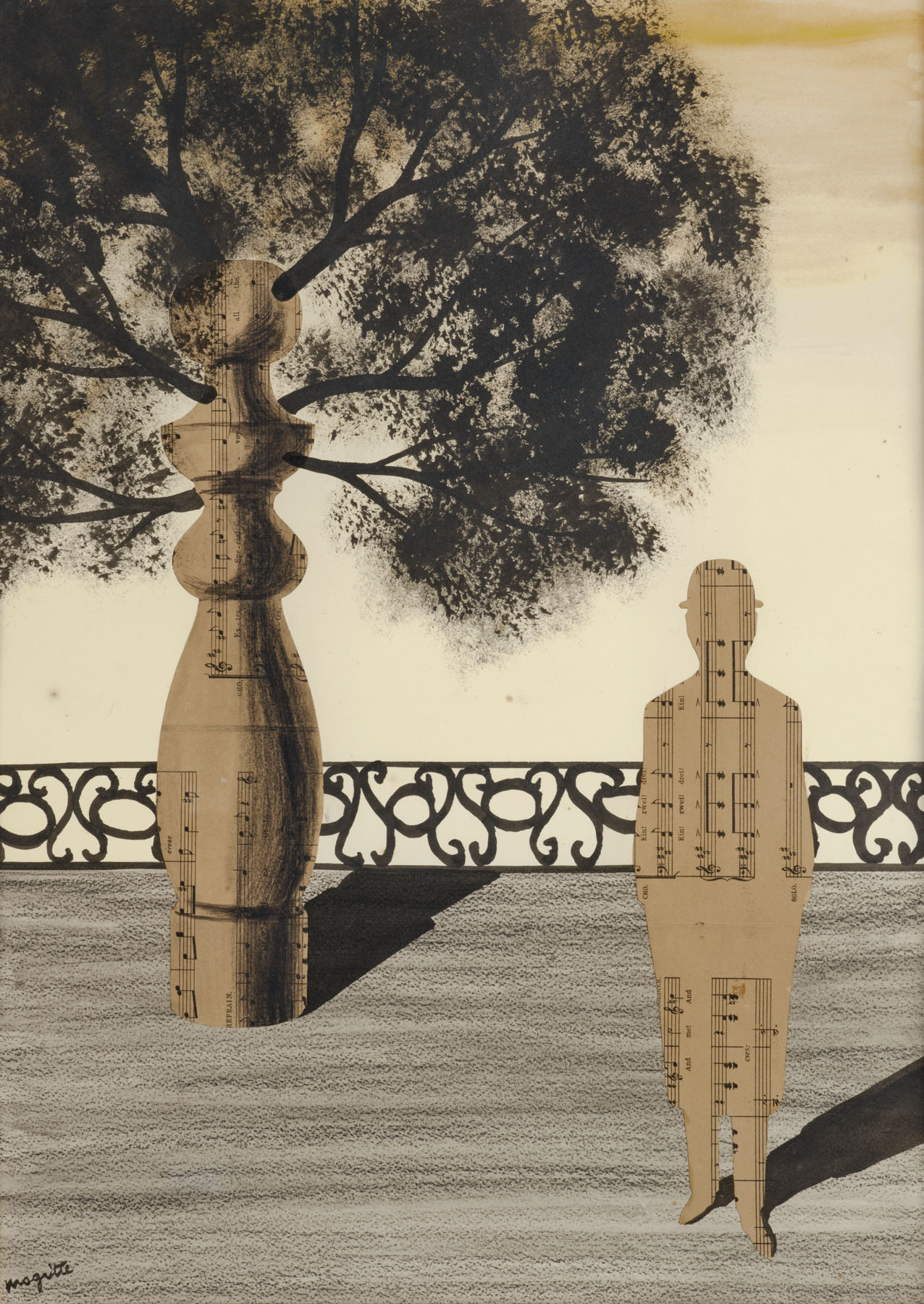
René Magritte, Untitled (1926). Photo: C. Herscovici/Artists Rights Society, New York
|
|
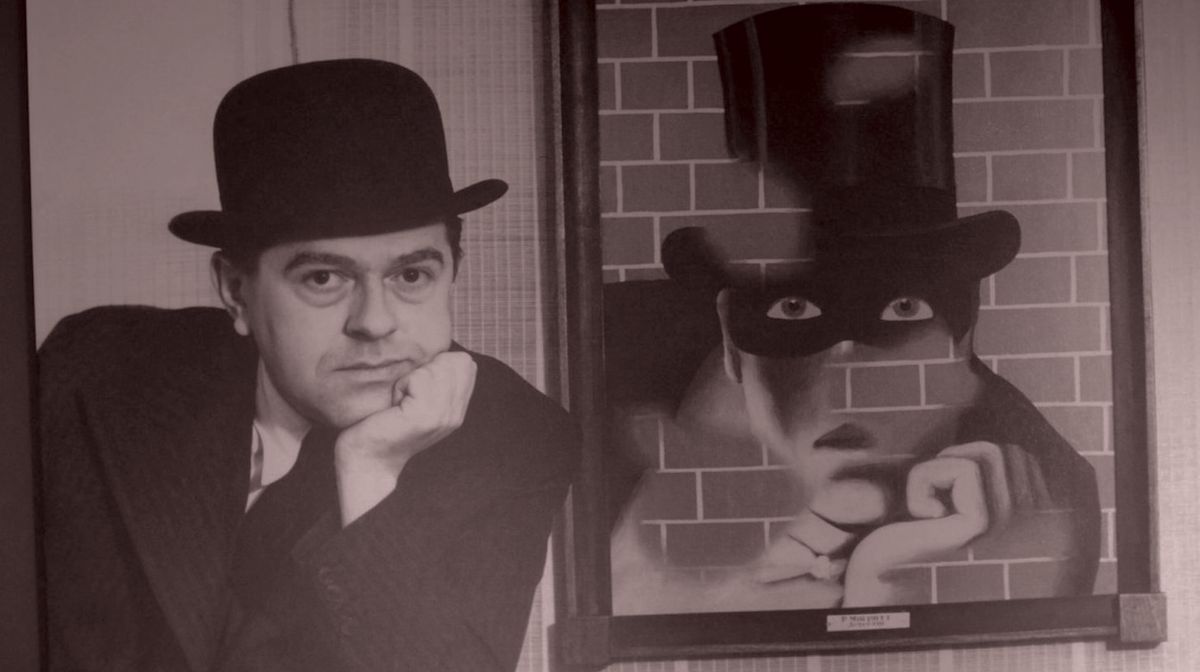
The centerpiece of the show is an untitled 1926 collage by Magritte (which you may have seen last week at Di Donna’s booth at TEFAF) that’s the first known appearance of the bowler-hatted man in his work, cut out from sheet music and pasted into the collage. The figure was outlined so meticulously in the sheet music that two rest notes are positioned perfectly to look like eyes. The work has already sold for seven figures.
|
A few blocks away at Robilant + Voena is the group show A Mysterious Vision, curated by Robert Zeller, based on his book, New Surrealism. “Surrealism is the most significant art movement of the last century,” he posits in his catalogue introduction for the show. Both his book and the exhibition delve into the influences of surrealism in contemporary art—and once you see them, you’ll never unsee them.
|
|
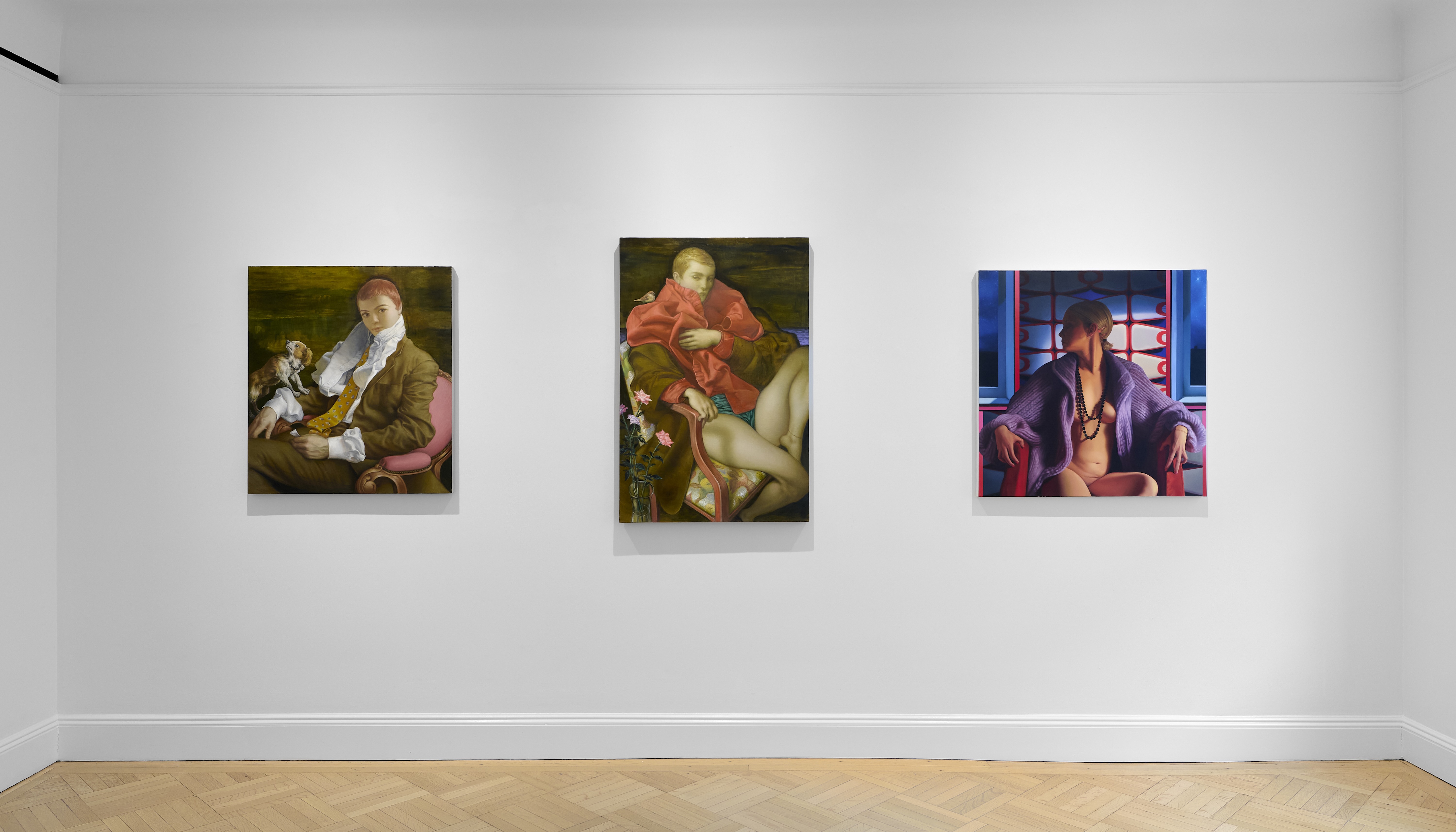
Installation view of A Mysterious Vision, Robilant + Voena, New York. Photo: Arturo Sanchez, Courtesy of Robilant + Voena
|
|
Zeller groups the paintings in four themes across the gallery’s four rooms: Uncanny Figuration, Psychic Landscape, Psychic Interior, and Non-Objective Fragments. Anchoring each room is one historical work by a titan of the genre: Leonor Fini, Leonora Carrington, Giorgio de Chirico, and Yves Tanguy. (The first two paintings are loans; the latter two are for sale.) The participating artists jumped at the chance to show their works alongside these masters.
|
|
|
The room of portraits (“Uncanny Figuration”) shows subjects rendered faithfully but in non-sequitur environments, like the 1942 Fini depiction of a nude woman amid leafy branches, loaned from the FAMM Museum in Mougins. The other works are by Jamie Adams, Arghavan Khosravi, and Nicola Verlato, plus a searing portrait by Laura Krifka of a woman turning her head to the side, as if being asked to smile and refusing to, with a teethlike wallpaper pattern in the background.
The grouping of “Psychic Landscapes”—meaning landscapes of the psyche—stars Carrington’s The Lovers, 1987, also loaned from the FAMM Museum. Last exhibited a few months ago in a show at Lévy Gorvy Dayan, the composition is based on the tarot card of the same name, with two lovers in bed in a tent in the desert. Nearby is Matt Hansel’s absurdist painting of four dancers—five if you count the graceful bird-lizard creature that one of the dancers is lifting above his head. The composition is like a game of seek-and-find with spoils that include a tiny nude man and a woman lounging in a bird’s nest, and a French horn sticking out of something that looks like—or is?—butt cheeks.
“Non-Objective Fragments” refers to abstract surrealism, which inspired the New York school and abstract expressionism. “To the degree that automatism lives on in the contemporary art world, one could argue that it does so mainly through non-objective art,” writes Zeller in the wall text. Think of Yves Tanguy. Some of his contemporary descendants represented in the show are Alessandro Keegan, Kristy Luck, Alicia Adamerovich, and Vincent Desiderio. The fourth section, “Psychic Interior,” refers to interior spaces as metaphors for the human mind, with a painting by de Chirico paired with work by Lars Elling, Ginny Casey, Lola Gil, and Tim Kent. The groupings in the show, accompanied by Zeller’s digestible explanations, really help to distill this complex and multifaceted genre.
If that’s not enough surrealism for you, Hauser & Wirth has an exhibition of 40 late works by Francis Picabia, curated in partnership with Comité Picabia. And in SoHo at Uffner & Liu, the smaller upstairs space is hosting the two-person show The Sleepwalker’s Garden, with works by Helia Chitsazan and Ho Jae Kim that present dreamlike narratives and manufactured worlds.
|
|
Thanks, Julie.
That’s all for the windup. Tomorrow the big show starts, and we’ll get some answers to the big questions many of you have been asking me in person. Feel free to text me at 917.825.1391 or just reply to this email. I really do want to hear what you’re thinking, and I’m always happy to answer questions.
Over the weekend, I heard some conflicting reports from the vibe-osphere. A few people said it felt like some of the excitement from potential buyers waned after they attended the fairs (suggesting they had found works at the fairs and might not be bidding). Others felt the strong gallery shows were attracting buyers, maybe in lieu of bidding. I’m not sure I see these as markets in opposition. The work in galleries and at the fairs is quite different from what’s available at the auction houses. And one very connected player was bullish on the works of exceptional quality that are available. Another advisor told me at TEFAF that the folks who can acquire eight-figure works are itching to buy—but only at that level of the market.
All of which is to say, there’s really no point in making predictions. The bow is drawn. Tomorrow night, the Riggio arrow will fly. I’ll be buckled into my seat to watch the spectacle. And I’ll share my thoughts with you on Tuesday.
M
|
|
|
|
The ultimate fashion industry bible, offering incisive reportage on all aspects of the business and its biggest players. Anchored by preeminent fashion journalist Lauren Sherman, Line Sheet also features veteran reporter Rachel Strugatz, who delivers unparalleled intel on what’s happening in the beauty industry, and Sarah Shapiro, a longtime retail strategist who writes about e-commerce, brick-and-mortar, D.T.C., and more.
|
|
|
|
Finally, a media podcast about what’s actually happening in the media—not the oversanitized, legal-and-standards-approved version you read online. Join Dylan Byers, Puck’s veteran media reporter, as he sits down with TV personalities, moguls, pundits, and industry executives for raw, honest, sometimes salacious conversations about the business of media and its biggest egos. New episodes publish every Tuesday and Friday.
|
|
|
Need help? Review our FAQ page or contact us for assistance. For brand partnerships, email ads@puck.news.
You received this email because you signed up to receive emails from Puck, or as part of your Puck account associated with . To stop receiving this newsletter and/or manage all your email preferences, click here.
|
|
Puck is published by Heat Media LLC. 107 Greenwich St, New York, NY
10006
|
|
|
|