 |
|
Hi, and welcome back to Line Sheet. It was a 4-inch-heel kind of weekend in Los Angeles. Several editors flew in the Saturday before the Grammys to make the High Snobiety x Maison Kitsuné dinner in the garden at the Chateau, then they bopped over to the Paramount lot for the 15 Percent Pledge Gala, and then stopped by yet another GQ party. (Geez, they are busy! Grand Marnier paid for this one.) Gucci and W mag (also busy!) hosted a Grammys afterparty at the Chateau on Sunday.
I’ll be in New York this week. Excited to see you. And if we didn’t organize a time (Libby, I’m talking to you), I’m coming back in March… plus a lot more this spring.
Finally, a reminder that we’re expanding the Line Sheet cinematic universe with the launch of a Wednesday edition, featuring contributing beauty correspondent Rachel Strugatz’s first reportage. Someone has been texting me images of Rachel toiling away at the laptop all weekend, so I can guarantee it’s gonna be good. There will also be a few fun fashion things in there to keep you grinning.
Also, if you’ve read this far and haven’t yet subscribed, let me just say: Reading Line Sheet is guaranteed to make you smarter, funnier, and (in some cases, if you take my Ozempic tips seriously) skinnier. There’s no downside.
Mentioned in this issue: Demna, Zac Posen, Martina Tiefenthaler, Richard Dickson, Phoebe Philo, Queen Latifah, Gabrielle Union, Moschino, Aurora James, Larry Gagosian, Robert Therrien, Ozempic face, Adrian Appiolaza, Alessandro Michele, Gucci, Seán McGirr, Tina Brown, and many more.
|
|
|
- On Zac Posen being named creative director of Gap Inc. and chief creative officer of Old Navy: We knew group C.E.O. Richard Dickson had ideas, but who would’ve thunk they would hire Posen, best known for his dominance of the early 2000s New York fashion scene, couture-like gowns, continual business troubles, and that six-year, inexplicable stint at Brooks Brothers. I’m confused. I’ll be back with more on Thursday. (BoF’s Cathaleen Chen had the scoop.)
- More on Adrian Appiolaza, the new Moschino designer: I gathered some additional intel on this rising star. First of all, he actually worked for Richemont-owned Chloé under Phoebe Philo, and did time at Louis Vuitton (under Marc Jacobs) and Praaaada, too. But he’s played a very important role at Loewe, where he’s been since the beginning, essentially, working under Jonathan Anderson. My sources say he was up for the Moschino job last year before the late David Renne was appointed, but was unsure about moving organizations. (LVMH pays its designers, not only the creative directors, very well.)
Appiolaza is a “masterful designer,” I’m told, who really knows how to make clothes look expensive and luxurious, which is good for Moschino. Finally, a very cool thing about him: He rents his personal clothing archive (Margiela, Comme des Garçons) for exhibitions and shoots.
- A fun LVMH-Gagosian conspiracy theory: The Marc Jacobs show happened on Friday night at the Park Avenue Armory in New York. I loved that the set piece was sculptor Robert Therrien’s giant VFW-style card table and folding chairs. (Jacobs often uses similar, human-sized chairs for his most pared-back runway presentations.) I also loved the paper-doll look of the models, with their stiff garments and supersized bouffants. So did everyone else, including Marc Jacobs, himself, and his B.F.F. (and perennial Line Sheet fascination) Sofia Coppola.
One curious, informed reader wondered if the use of the Therrien piece could validate LVMH chairman and C.E.O. Bernard Arnault’s rumored courtship of Gagosian, the gallery that represents the late artist’s estate. In November 2022, there was speculation that LVMH had offered Gagosian a bridge loan, or that they were going to invest, or buy the business. Gagosian vehemently denied the rumors at the time. That same month, favorite only daughter Delphine Arnault was appointed to the Gagosian board of directors (alongside our friend Sofia Coppola).
Not to be a bearer of boring news, but just remember that Jacobs himself is a gallery client (he was quoted in Patrick Radden Keefe’s flawless depiction of Larry Gagosian in The New Yorker), so that probably explains why he was permitted to use the work. But let’s keep looking into it! Also, in case you don’t keep up with art-world gossip, I just want you to know that Larry and the painter Anna Weyant broke up, according to this report. She’s very talented.
- An I-told-you-so about fillers replacing fat: Every time I start to believe my life would be simpler if I went on the shot, I remember how droopy my jawline would look. Indeed, Ozempic sag is real, and AbbVie, the Chicago-based pharmaceutical company that owns Botox and Juvéderm, another filler, is bullish on the idea that the rise of weight-loss drugs may boost its sales, too. “We do see it as a long-term tailwind,” executive Carrie Strom said on a call with investors last Friday.
There are two parts to this: One is that people who experience significant weight loss on these drugs may be eligible for some aftercare, including skin removal surgery, and I’m betting there are creative ways to get a filler approved by insurance. The other thing, of course, is that a lot of the people paying to take these weight-loss drugs are rich anyway, and would be inclined to use fillers regardless. Time to move that half-face-lift plan up by a half-decade…
- Pledge class: As much as I dream of attending a 1980s-style New Year’s Eve party where there’s a ballroom and dancing (invite us, we’re fun after a couple of drinks), I’m not a big fan of fundraising events. The food is bad, so is the wine, and reporting opportunities can be limited, depending on who is in the room. However, I was happy to make the rounds at the third-annual 15 Percent Pledge Gala, staged this year in Los Angeles on the Paramount lot. The goal was to raise money for Aurora James’ nonprofit, which implores retailers to commit 15 percent of their shelving space to Black-owned businesses. The gist: Black people make up 15 percent of the U.S. population, so they should have that much of a presence in stores.
It’s a very tough thing to implement, mostly because retailers—especially in beauty—buy the majority of their goods from conglomerates, which are all owned and run by white people who often appropriate ideas from Black culture rather than hire Black people. Notably, LVMH-owned Sephora was the first to sign on in 2020, with Nordstrom, Macy’s, Ulta, Moda Operandi, and others following.
First Lady Jill Biden, wearing Sergio Hudson, wanted everyone in the room (in particular, the powerful, influential Black people from Hollywood and beyond including Queen Latifah, Gabrielle Union, and Misty Copeland) to know that her husband—who is struggling with Black voters, according to certain polls—has done a lot to support Black businesses, including investing $12 billion in community lenders. (Most Black entrepreneurs have to take out loans; they are far, far less likely to receive venture capital funding, or to be able to go the “friends and family” route.) It was a good reminder, if not surprising, to hear the actress Tracee Ellis Ross explain how hard it was to get Pattern, her haircare range, off the ground. When she first pitched the idea to her agents in 2008—fresh off her hit CW show Girlfriends—they suggested she start a wig line. She didn’t launch Pattern for 10 years. Ross, who was wearing an enveloping Fear of God runway fur onstage, has privilege. Her mother is Diana Ross, her dad is white. She is beautiful, stylish, and famous. And it took 10 years, and another hit television show, to bring her idea to the masses.
As for who was wearing whom? There were lots of good looks by Ferragamo’s Maximilian Davis (on the actress Laura Harrier and Cultured editor-in-chief Sarah Harrelson), and lots of Diotima, the rising New York-based line by Rachel Scott, who sat at the Eva Chen-anchored Instagram table. (I liked Gabriella Karefa Johnson’s red Diotima knit.) Nordstrom’s Olivia Kim looked as cool as she usually does in Grace Wales Bonner. And of course, many of the guests were wearing James’ own shoe line, Brother Vellies. James and the organization’s chairwoman—entrepreneur, investor, and Line Sheet person of interest Emma Grede (Skims, Good American, Khy, the Kardashians)—were in Christopher John Rogers and Aliétte, respectively.
|
|
|
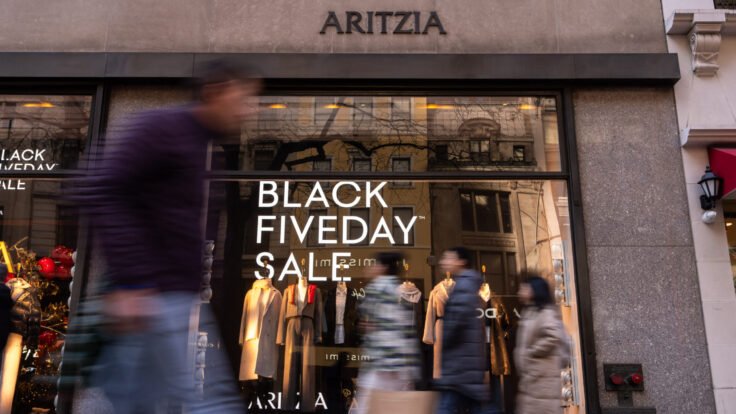
| Call me high-minded or just American, but I reckon the Tapestry-Capri marriage will be a leading topic of conversation during New York Fashion Week, which starts Friday. Late last week, the U.S.-based fashion group that owns Coach, Kate Spade New York, and Stuart Weitzman filed for a mixed-shelf offering, which allows a company to issue different types of securities—including common stock, preferred stock, and debt—so that it can access capital as needed over an extended period. The deadline for its deal with Capri isn’t until February 10, 2025, but I bet it’ll happen long before that, and that everyone will be talking about it at shows, dinners, in texts, etcetera, in anticipation.
I wouldn’t say I’m skeptical, exactly, of what this gargantuan, $8.5 billion acquisition might do to the stock in the medium term: The team at Tapestry already knows how to budget, cut costs, and make things work more efficiently. They will generate shareholder value. But ever since the deal was first announced in August, my question has been: Does brand equity matter in the grand scheme of things? Is Tapestry going to become a holding pen for also-ran labels that no longer matter to the consumer, or is it going to become a legitimate competitor to the European conglomerates?
Optimistically, there’s an opportunity to do something real here. Many of the brands in the combined portfolio—Versace, Michael Kors, Jimmy Choo, Kate Spade—have big personalities, and with the right merchandising and marketing, could entice a shopper who is bored by Big Luxury. It’s possible. Tory Burch, after all, is playing well in this space by delivering something original without alienating the more cost-conscious, less adventurous customer.
The challenge, of course, is that it’s complicated to manage creativity from a corporate altitude. It might sound absolutely crazy from a budgetary perspective, but one of the reasons LVMH has been so successful is because the businesses have largely been run independently of one another, encouraging competition. That’s not very American.
Tapestry C.E.O. Joanne Crevoiserat, a finance and operations person with zero luxury experience, could eschew this strategy and go the way of her local peers, focusing squarely on quarterly results. Or she could take a more European approach, which may be a better long-term solution. This is purely anecdotal, but I’ve lately noticed more fashion people showing an interest in Jimmy Choo and Versace—more mentions in fashion Substacks, that sort of thing. There’s a difficult-to-directly measure benefit to tastemaker adoption. Cutting costs alone and winning on price does not deliver bountiful results to shareholders. |
|
|
| The biggest news this week, however, is likely to come from Europe. But it won’t be coming from Kering-owned Balenciaga. Last week, following the early January news of the exit of chief creative officer Martina Tiefenthaler, rumors were swirling in Paris that designer Demna was leaving, too. They were false. He is not.
Kering, which announces its 2023 results on Thursday morning, remains bullish on Balenciaga. Over the past year, each stakeholder—the designer, the brand executives, the parent company—has worked tirelessly to repair the damages suffered by a late 2022 internet scandal, which happened just in time for an already expected slowdown in the U.S. In November, when he showed a collection in front of the manicured lawns of a wealthy Los Angeles neighborhood, it was obvious that Kering was as devoted to Demna as ever, and he to them and the spirit of Balenciaga. He is an admired, emotionally intelligent designer who questions commerciality while wholeheartedly embracing it. For Kering, that’s something to appreciate.
Why do the rumors persist? Well, Demna is endlessly fascinating, people (like you) are desperate for gossip, and they don’t necessarily understand the mechanics of running a fashion brand. Remember, Kering has several other home-improvement projects to complete. As I’ve noted before, most of the brands in the group’s portfolio are fashion-driven and emotional, which means they are more susceptible to the whims of the consumer. Unlike LVMH, the group also chooses to break out sales of its largest brands, so the expected, totally understandable dip last year at Saint Laurent, which ballooned during the pandemic, was scrutinized more closely than it may have been had those numbers been hidden within a larger figure. |
| Gucci (& Gucci-Adjacent) Goss |
|
| Gucci designer Sabato De Sarno’s wares are only now beginning to filter into stores, and those stores are only now beginning to be remodeled, so we won’t know for a quarter or two whether it’s all working. (During New York Fashion Week, there will be a party to celebrate the New York store’s recent lacquering.) Meanwhile, Alexander McQueen has a new designer, Seán McGirr, and there’s potential to do a lot with that brand commercially, if someone pays attention to it.
I do suspect—or hope, really—that we’ll get some clarity regarding Alessandro Michele’s whereabouts soon. What I know is that he has a job, and that he is spending a lot of time in Rome (thanks to my pap-for-a-minute friend who snapped a photo of him—Adidas, checked trousers, and all—on a recent trip). I’ve also heard that he would like to both live and work in Rome, which makes sense. These clues all point to Fendi, which would thrill the industry and would be huge for LVMH. (There is always a chance that it’s a consulting job, and that we’ll never know about it.)
Someone recently told me that they didn’t think LVMH cared as much about the smaller brands as it used to; it’s most concerned with maintaining the businesses of the largest, most profitable brands. However, that approach would go against what made LVMH successful in the first place. None of the LVMH brands were giant when Bernard Arnault acquired them; we think of Louis Vuitton and Dior as the most important luxury brands in the world, but perhaps we wouldn’t if Arnault hadn’t spent so much time and money tending to them. Fendi is already well over $1 billion in annual sales, and could easily be $5 billion. Michele may not be the right designer to take a brand from $10 billion to $15 billion in annual sales (which is why he had to leave Gucci), but he is the right designer to take one from $3 billion to $8 billion.
That brings me to Givenchy, without a designer at the moment. It may take another beat. Michael Burke was only officially appointed C.E.O. of the LVMH Fashion Group in January. When Sidney Toledano took the job in November 2017, it was more than two months before he announced his first move: Hedi Slimane’s appointment at Celine. My guess is that they do have someone ready for Givenchy. Maybe it’s Sarah Burton in the end. Here’s hoping, whoever it is, that they’re a solution, not a Band-Aid. |
| What I’m Reading… and Listening to… |
|
| Did you know that the red carpet check-in for reporters at the Grammys started at 8 a.m.? My top three looks: Dawn Richard in Khosrov, Miley Cyrus in Margiela, and Olivia Rodrigo in vintage Versace. Cool that Taylor Swift wore Schiaparelli. The watch choker is absolutely bonkers; I love it. Unfortunately, because the dress is white, she looks like an “alternative” girl attending a debutante ball. I guess if she got it totally right, though, I’d be disappointed. (She does look fine on the new album cover, wearing The Row.) [Vogue]
As my friend Claire said re: LeBron James in the now-infamous checkered knit hat: “This is so funny because it looks great on him. All the more tragic for Bradley.” [Instagram]
Lots of think piece-ing on the Ozempic beat last week. Linda Wells, one of the greats, introduces the concept of “microdosing” these weight-loss drugs. And I liked Rachael Bedard’s take that we are focusing too much on the cosmetic side effects of a drug that is going to wipe away a lot of diseases. (I do fear that when you eradicate one disease, nature makes another, far worse one. Population control!) [Air Mail and NYMag]
I didn’t realize Travis Kelce’s buzz cut was a style? It’s just a buzz cut, right? [NYT]
Speaking of T ’n T, thanks to Hunter Harris for mentioning me in her diatribe on Taylor’s goofy, sparkly, squared-off manicure. [Hung Up]
Some choice quotes from this great interview with Tina Brown: “I don’t think anybody reads print now … What is boring about reading everything online, and it is boring: it’s just an uncalibrated list of stories … But, like everybody else, I read everything on my phone.” [I Really Do Like This Podcast, But Again, They’ve Got to Change the Name]
Alexis Bittar bought back his brand in 2021. These funny little TikToks, following the travails of Upper East Sider “Margeaux” and featuring guest appearances by the likes of Kelly Cutrone (the first scary publicist to ever call me) and Mel Ottenberg (king), are very good. [TikToks]
Somehow, Gjelina in New York is reopening after last year’s devastating fire. They’re saying spring 2024, which means it’ll probably be up and running again by New York Fashion Week in September. [Eater]
Some good advice for Roger Lynch about managing a media business from someone who did a good job managing one until a Ben Smith story came along. (I don’t totally agree with Troy Young on the content-to-commerce bit—that doesn’t work at scale unless you are Martha Stewart in 1993—but everything else is worth considering.) [People vs Algorithms]
If I were a retail company, I would not go public right now. Amer Sports, which owns fashion-person-sneaker-of-choice Salomon and rich-guy outdoors line Arc’teryx, as well as tennis brand Wilson, fell short of its I.P.O. target by as much as $435 million. [Bloomberg]
And finally… I want to make fun of this hair and tell him, cut the mullet, but it looks sort of good in a 1980s-banker way. |
|
|
Until Wednesday (!!!),
Lauren |
|
|
|
| FOUR STORIES WE’RE TALKING ABOUT |
 |
| Capitalist Tools |
| Digging into Forbes’ finances as it re-enters auction mode. |
| DYLAN BYERS |
|
 |
| Nowhere to Ronna |
| A dispatch from the R.N.C.’s winter gathering in Vegas. |
| TARA PALMERI |
|
 |
|
 |
|
|
|
|
|
 |
|
|
|
Need help? Review our FAQs
page or contact
us for assistance. For brand partnerships, email ads@puck.news.
|
|
You received this email because you signed up to receive emails from Puck, or as part of your Puck account associated with . To stop receiving this newsletter and/or manage all your email preferences, click here.
|
|
Puck is published by Heat Media LLC. 227 W 17th St New York, NY 10011.
|
|
|
|