{{ 'now' | timezone: 'America/New_York' | date: '%b %d, %Y' }} |
|
|
Hi, and welcome back to Line Sheet, still in Los Angeles but getting excited to head to Paris for
a few days at the end of the week. My wallet feels attacked by this afternoon’s Auralee show.
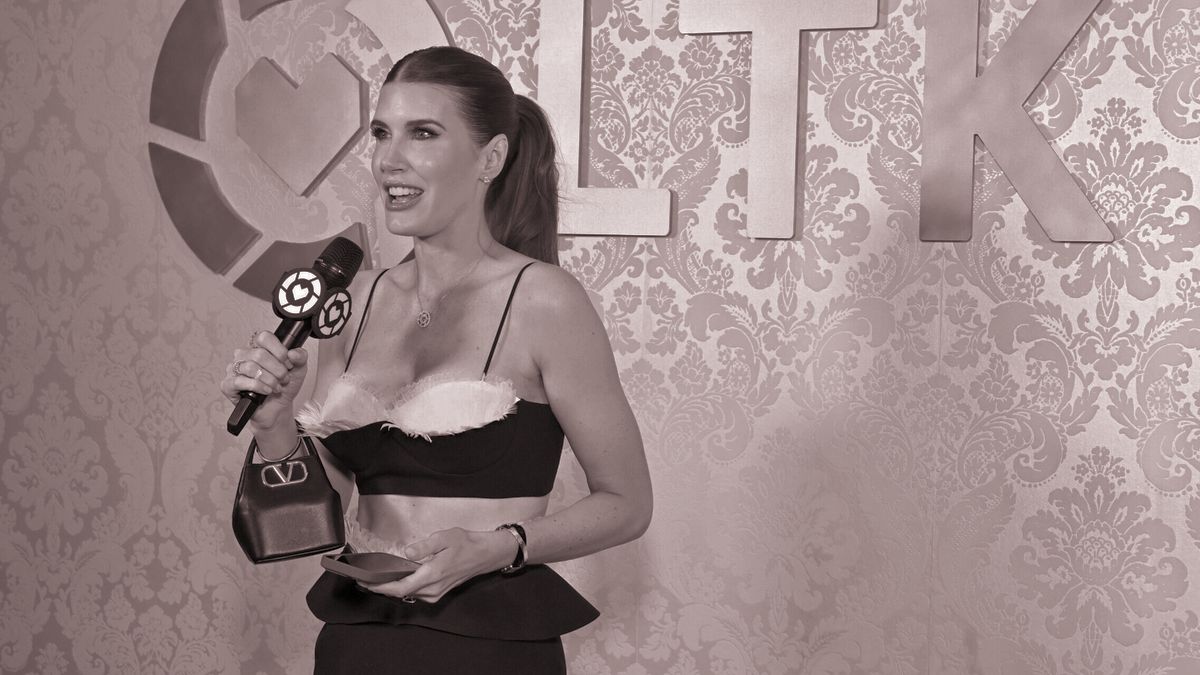
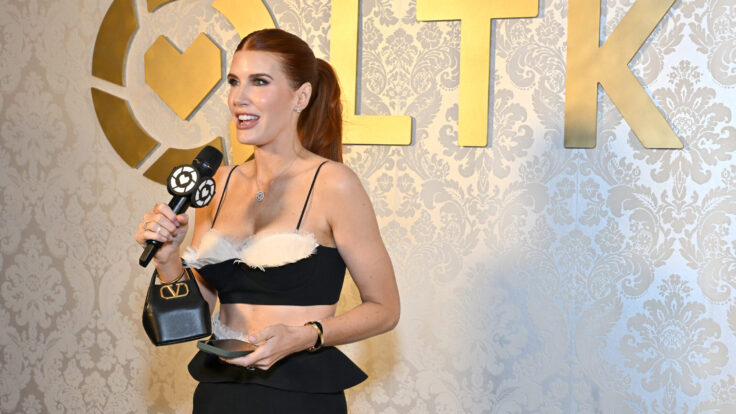
In today’s issue, you’ll find Sarah Shapiro’s latest installment on the affiliate marketing wars saga, with an update on LTK from its founder, Amber Venz Box. Up top, I share a bit of context on the exit of Bottega Veneta C.E.O. Bartolomeo Rongone, who’s off to run Moncler Group, and a plea to
Netflix from superfans of Valentino: The Last Emperor. Plus, Sarah has news on how all this red carpet strategy work is panning out for the mega-luxury brands in the run-up to the Oscars.
And if you aren’t sick of me yet, check out this episode of The Recovering Elitist, where I chat with host William Graper about the fashion industry and all its foibles. Listen
here.
Mentioned in this issue: Bottega Veneta, Bartolomeo Rongone, Kering, Moncler Group, Remo Ruffini, Gucci, Robert Triefus, Stone Island, Luca de Meo, Hermès, Louise Trotter, Netflix, Matt Tyrnauer, Loewe,
Valentino Garavani, Chanel, Selena Gomez, plimsolls, Ayo Edebiri, Aspen, Rose Byrne, Louis Vuitton, Bulgari, Timothée Chalamet, Hudson Williams, Onna House, Connor Storrie, Southampton, Amber Venz Box, LTK, Max Berlinger, Palm Beach, Lisa Perry, Anna Leigh Waters, Nike, Erin Walsh, TWP,
Anne Hathaway, and… Heated Rivalry. |
Three Things You Should Know…
|
- Leo
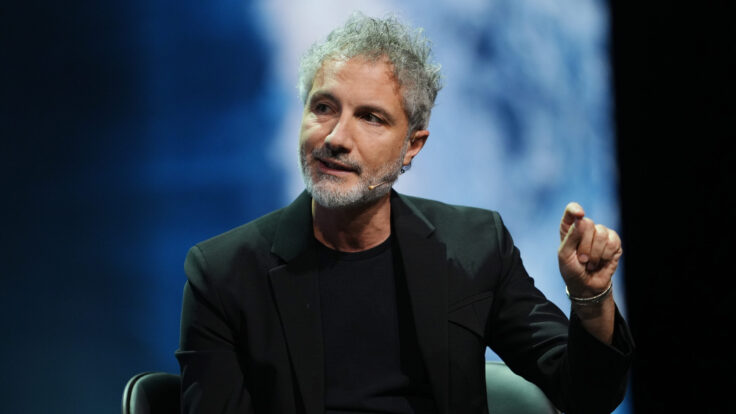
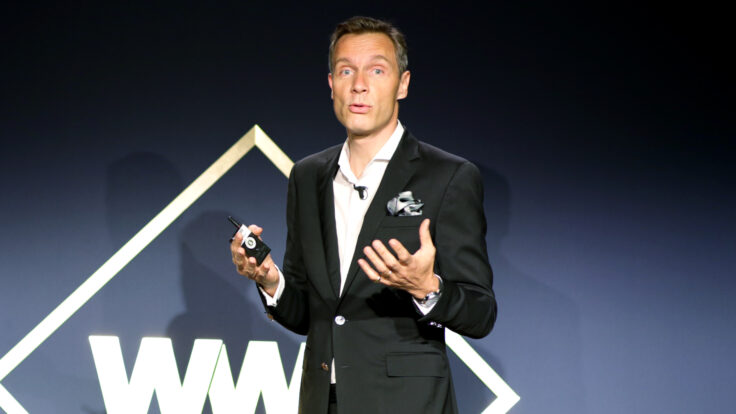
rising: The news that Bottega Veneta C.E.O. Bartolomeo “Leo” Rongone is leaving Kering to become C.E.O. of Moncler Group, replacing Remo Ruffini, came as a surprise to few. Ruffini is a savvy businessman, so of course he’d already started succession planning. And the structure—Ruffini will remain executive chairman, with a “primary role” in strategic decision-making and oversight of creative direction—allows him to remain in charge without running the day-to-day
operations.
Moncler had been considering Rongone for some years, too. The incoming executive made a name for himself while ushering Bottega through three creative director changes, a pandemic, and plenty of related behind-the-scenes turmoil. Rongone also had a run as C.O.O. of Saint Laurent, and, before that, at LVMH-owned Fendi. Moncler is a much bigger, public-facing, and better-paid role, and Rongone now has an opportunity to oversee multiple brands—with the possibility of more
acquisitions in the future. (Rongone will also be reunited with his former Kering colleague, Gucci alum Robert Triefus, who now runs Stone Island.) Plus, he gets to stay in Italy.
The manner in which the news was released—synchronized statements from Bottega and Moncler—indicates civility across the groups. Rongone will remain at Bottega Veneta until March 31, and is leaving the house in a stable position; it’s one of few luxury brands that’s still growing, although its
expansion has not been explosive. The industry will now be watching to see who Kering C.E.O. Luca de Meo selects as the business partner for still-new creative director Louise Trotter. My hunch is that, along with steadily increasing sales of handbags, there is likely a big opportunity in shoes and ready-to-wear, where leather goods houses, including Loewe and Hermès, have broadened significantly in recent years.
|
|
|
A MESSAGE FROM OUR SPONSOR |
|
|
- They’re
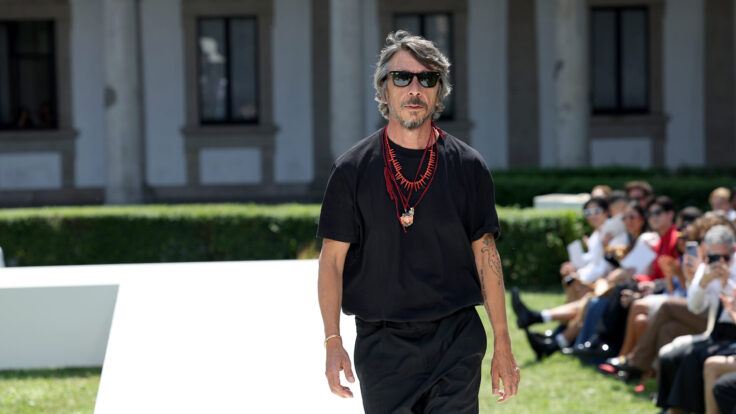
begging you, Netflix!: Is Matt Tyrnauer’s Valentino: The Last Emperor, from 2009, the greatest fashion documentary ever made? I’m sure the Unzipped heads would push back on that… and no, the answer is not The September Issue. (In the almost-sponcon genre, I prefer Dior and I above all.) Anyway, in light of the passing of Mr. Valentino Garavani in Rome yesterday, I’ve had a couple close-watchers
reach out to petition Netflix to relicense streaming of the doc, which is currently available to purchase on Amazon but not available on a streaming platform in the U.S. (Netflix is, however, streaming it in other countries.)
I reached out to Netflix to see whether this request could and would be fulfilled. (The streamer doesn’t necessarily have the rights in the U.S.) Also, if you don’t want to wait for it to start streaming somewhere, just buy it! It’s great. For
this scene alone.
|
|
|

| Sarah Shapiro
|
|
- Chanel sees golden: The
Golden Globe brand awareness rankings are in, courtesy of Launchmetrics and The Hollywood Reporter, and Chanel jumped from 10th place to first place—and from $4.5 million to $12 million—thanks to Selena Gomez, Ayo Edebiri, and Rose Byrne. (Congrats to Chanel C.E.O. Leena Nair, Line Sheet’s Fashion Hero of 2025!)
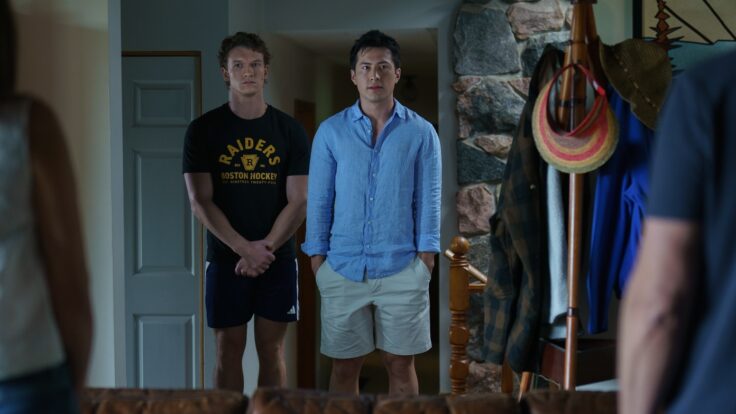
In the men’s category, Heated Rivalry co-stars Hudson Williams and
Connor Storrie (in Giorgio Armani and Bulgari, and Saint Laurent and Tiffany, respectively) captured four of the five leading slots between them. Jacob Elordi in Bottega Veneta rounded out the top of the list. Timothée Chalamet, despite his reputation as a style provocateur—the tangerine Haider Ackermann suit at the Marty Supreme premiere, the sequined Louis Vuitton harness, all those Alexander McQueen
floral prints, etcetera—didn’t crack the top five.
|
|
|
With a $2 billion valuation and first-mover advantage, LTK has long been the gold standard
in influencer affiliate marketing. But as competition from ShopMy and others heats up, the O.G. company has had to do more to attract and retain users—like sharing some of its previously well-guarded data. |
|
|
When fashion blogger Amber Venz Box founded LiketoKnow (LTK), the brand marketing platform
formerly known as RewardStyle, back in 2011, the idea of making a living from social media wasn’t even really a thing. Instagram was in its infancy; TikTok and Substack were years away from incubation. In this primordial social media stew, Venz Box’s platform offered a critical piece of infrastructure in the pursuit of getting paid to post and connecting brands with emerging influencers. Scores of bloggers like Danielle Bernstein, Arielle
Charnas, Kristal Heredia, Remi Bader, and Jen Adams have since built their businesses on LTK, which depends on a cohort of influencers who command massive, established audiences to drive traffic, resulting in a $2 billion valuation in 2021. |
|
|
A MESSAGE FROM OUR SPONSOR |
|
|
But a lot has changed in the intervening years, and the space has grown increasingly competitive, especially
with the rise of ShopMy. That newer platform, which raised $70 million last October at a $1.5 billion valuation, has continued to peel off a cohort of Substack writers and emerging creators using easy-to-access analytics, allowing influencers and brands to understand their own data.
ShopMy’s recent success has forced LTK to ask some tough questions. Chiefly, is its entrenched creator base enough to protect its first-mover advantage? Judging by recent maneuvers, the company seems to have
acknowledged that it will need to do more to stay relevant in the latest round of the affiliate wars. Last month, LTK quietly launched its LTK Brand Platform, giving partners an opportunity to use its service without committing financially upfront. The new model dispenses with fees for workflow tools such as gifting, talent acquisition, campaign management, payments, and data insights.
It was a notable shift for a company long known for its tight control over data. ShopMy made such
features available on day one, and allowed creators to run their own analytics—something that hadn’t been possible with LTK until their recent pivot. “LTK is not transparent, but they are getting there,” said one top-performing creator who uses both platforms. “Now they’re providing sales data and rankings.” This creator, who said she regularly A/B tests both platforms, found that LTK drives stronger long-term conversion for brands like Shopbop, because the app continues to convert shoppers even
after Instagram Story links expire, 24 hours after posting.
But as other contenders have dropped to the wayside—Collective Voice, formerly ShopStyle, announced that it would be shutting down this year—LTK has maintained its edge over ShopMy in distribution. To wit: LTK claims some 400,000 creators on the platform, compared to ShopMy’s 185,000. In a recent phone interview, Venz Box told me that LTK would rank among the top retailers by sales volume. Indeed, the company previously said it
drove $6 billion in sales last year, putting it in line with Victoria’s Secret and JCPenney’s annual revenue. Meanwhile, LTK’s shopping app has 44 million monthly users and drives 62 percent of creator sales, while ShopMy’s app hasn’t shared comparable figures, since they just launched their platform. (Overall, ShopMy is generating more than $1 billion in annual platform sales.)
The creators I’ve spoken to say the LTK app still performs better in practice, and many of the O.G.
lifestyle bloggers—a specific cohort who focus on fast fashion, opening price points, and mall brands—continue to use it religiously. “The LTK platform is superior,” the top-performing creator said, citing in particular the app’s search function for mid and plus sizes. She also noted the appeal of LTK’s automatic link optimization, Instagram content porting, and ability to upload video content.
LTK is clearly hoping it can shake its reputation as a flat-footed player in the game it
invented. A manager who has been organizing influencer campaigns for brands since 2018 described the company’s prior approach as “gatekeep-y.” “They wanted to keep all the relationships, and wouldn’t tell you about individuals,” she said, adding that ShopMy’s transparency “forced LTK to open the data—it likely wasn’t their choice.” One agent who works with top influencers told me he had been frustrated by LTK’s unwillingness to negotiate a top client’s contract terms. (A source with knowledge of
LTK’s operations said the company does negotiate on contracts, but couldn’t comment on the specifics of individual deals.) |
|
|
The agent found the data made available by LTK so opaque, he eventually gave up trying to understand it. For
now, though, plenty of creators are hedging and using both platforms, as well as engaging directly with retailers like Nordstrom and Sephora, which have their own affiliate programs. |
What We’re Reading…
and Looking At…
|
Teen Vogue hired a new boss.
[Delia Cai’s Twitter]
Many people have asked whether Brooklyn Beckham’s public shaming of his parents—in particular, in his mother—could affect Victoria Beckham’s sales. Doubt it. When eyeliner is good, it’s good! [BBC]
We’ve been ready for the
return of the plimsolls, a.k.a. Keds. As Max Berlinger recently wrote, “They’re preppy! They’re sporty! They’re nautical! What can’t they do?” [Add 2 Cart]
Lisa Perry’s Onna House, a gallery featuring art by underrepresented women,
is partnering with TWP stores in Southampton, Aspen, and Palm Beach. [Inbox]
Anna Leigh Waters, a pro pickleball player, signed a deal with Nike. [Instagram]
Erin Walsh, the stylist who works with Selena Gomez, Mindy Kaling, and Anne Hathaway, is
now on Quince’s payroll. [Instagram] |
Until tomorrow,
Lauren
P.S.: We use affiliate links because we are a business. We may make
a couple bucks off them. |
|
|
The industry’s go-to source for unflinching reporting on the trillion-dollar business of artificial intelligence - perhaps the
single most important technology of our time. Ian Krietzberg, the powerhouse journalist behind The Deep View, delivers twice-weekly insights into the latest dealmaking and breakthroughs in A.I., and how the intersecting worlds of finance, entertainment, media, and politics are being transformed in its wake. |
|
|
Puck founding partner Matt Belloni takes you inside the business of Hollywood, using exclusive reporting and insight to explain
the backstories on everything from Marvel movies to the streaming wars. |
|
|
Need help? Review our
FAQ page or contact us for assistance. For brand partnerships, email ads@puck.news.
You received this email because you signed up to receive emails from Puck, or as part of your Puck account associated with {{customer.email}}. To stop receiving this newsletter and/or manage all your email preferences, click here. |
Puck is published by Heat Media LLC. 107 Greenwich St., New York, NY 10006 |
|
|
|