{{ 'now' | timezone: 'America/New_York' | date: '%b %d, %Y' }} |
|
|
|
Happy Friday, and welcome back to Line Sheet. In today’s issue, Malique
Morris is looking at Target’s attempt to figure out its place in modern retail as it plots another collaboration with Isaac Mizrahi—the designer who put the big red bullseye on the map as a cheap-chic emporium. It’s a fascinating look at what happens when a disruptor’s playbook becomes too easy to replicate.
Up top, how one P.R. is getting young designers key red carpet placements, what the swell of online Dario
Vitale chatter really means, and a gleeful analysis of Michael Rider’s take on Vera Bradley for Celine.
Line Sheet in the news: I was quoted in a New York Times profile of Fashion
People guest Isabella Burley and her literary outfit, Climax Books. Sex sells, sure, but this story captures why Isabella is really succeeding.
Also mentioned in this issue: Gregory Mitola, Christine Leahy, Timothée Chalamet, The Devil Wears Prada, Kahlana
Barfield, Jamie Mizrahi, Café Carlyle, Michael Fiddelke, Dario Vitale, Vera Bradley, Danielle Goldberg, Brooke Pace, Chanel, Sergio Hudson, Crocs, Kate Spade, Marc Jacobs, Chelsea Parke Goles, Brian Cornell, Diane von Furstenberg, and more. |
Three Things You Should
Know…
|
- How
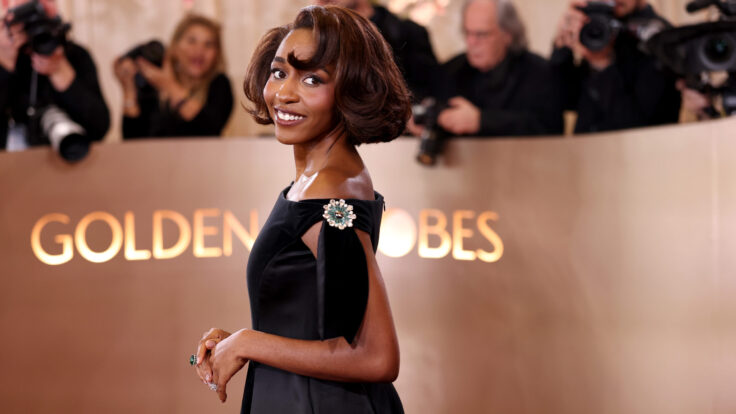
to succeed on the red carpet? Really trying…: We all know that the red carpet is predominantly pay-to-play these days in a pretty boring, disappointing way. And yet, there are ways to break through. Brooke Pace, who runs Alta Moda Communications, is the sort of gold standard in V.I.P. placements for fashion brands that are not megabrands. If you see a dress that’s not Louis Vuitton, Chanel, Armani, or Dior on an Oscar winner, there’s a significant
chance that Brooke helped organize it. But I’ve noticed another P.R. emerging as an important conduit to Hollywood for indie designers. Gregory Mitola, who dipped in at Vogue, Aesop, and Balenciaga before starting his consulting firm, Etagere, has been very successful getting his clients, including Colleen Allen and High Sport, on top stars. He clearly has a great relationship with stylists—Danielle Goldberg pulls a lot of his brands, so does
Jamie Mizrahi—but he also has superb taste. For young designers, the biggest challenge with the red carpet is fit (if you don’t have an atelier, altering is tricky), and he’s obviously working closely with the stylists to ensure this stuff fits the stars who are wearing it. Anyway, he’s just someone to watch, that’s all.
|
|
|
|
A MESSAGE FROM OUR SPONSOR |
|
|
|
- Do
you know about Dario?: Social media has been going nuts over Dario Vitale this week, speculating where he might have landed post-Versace. My answer, from what I know right now, is that he has signed somewhere—he has communicated as much to people in the industry. But where he’s going remains a question. The speculation you are reading online is false, which is why I’m not even naming brand names here. If he has signed somewhere, I’m sure we’ll find
out soon enough, and I will keep trying to figure it out.
One thing to remember is that there aren’t a lot of open jobs, which means he is likely replacing an active creative director, and that means the brand involved will attempt to give the outgoing creative director a bit of dignity. I imagine it’s not going to be easy to figure this one out if everyone does their job well. - Michael Rider does Vera Bradley: If you thought Celine’s
Repetto-esque dance shoes were cute, I have a feeling their new mixed calico print bags are going to stir up a mix of nostalgia, insane desire, and admiration. They certainly have some sort of French provenance but will remind Americans of Vera Bradley, a sorority girl staple that feels as Mid-Atlantic to me as lacrosse. (Rider, of course, is from Washington, D.C.) Yes, they
are preppy and New England and Deep South, but they are really Midwest and Mid-Atlantic first. Celine’s version, in the perfect paisley prints and stamped with a utilitarian logo tag, are going to be extremely popular—and I am sure, in the coming weeks, we will see sales of Vera Bradley bags creep up on the secondary market. Vera Bradley, which is based in Fort Wayne, Indiana, is for some
ungodly reason a public company, so we can keep an eye on their full-line results, too.
|
|
|
|
In an era when Walmart, Amazon, and Quince are competing for the same customer, Target
appears to be returning to the designer who wrote the playbook for bringing thoughtful fashion to mass retail. Could Isaac Mizrahi make Tarjay happen again? |
|
|
|
It’s easy to forget that Isaac Mizrahi was once on top of American fashion. Lately, he’s
probably recognized more for his sold-out cabaret shows at Café Carlyle or his cameo in Timothée Chalamet’s Marty Supreme than for the technicolored sportswear that made him famous. But this is a designer who came up with Marc Jacobs in the ’90s and whose namesake label was once backed by the Wertheimers. Unzipped, his 1996 doc, is probably as foundational to the hardcore Millennial fashion consciousness as The Devil Wears
Prada. When Mizrahi sold his namesake brand—by then a licensing factory owned by Xcel Brands—to WHP Global in 2022 in a deal that valued the brand at $68 million, it was reportedly generating $400 million in retail sales. |
|
|
|
A MESSAGE FROM OUR SPONSOR |
|
|
|
Last week,
reports started circulating that Mizrahi might be working with Target again. In 2003, of course, Mizrahi was one of the first fashion designers to create an affordable line for the mass retailer—a deal that lasted for five years before he left for a design job at Liz Claiborne. The partnership paved the way for Target’s subsequent collaborations with
Proenza Schouler, Rodarte, Altuzarra, Missoni, Sergio Hudson, Diane von Furstenberg, and Kate Spade—partnerships that, for a time, earned the retailer the nickname Tarjay among suburban wine moms. Mizrahi can probably take partial credit for the whole democratizing fashion shtick that’s been delighting the masses and annoying the cognoscenti for the past two decades.
Target wouldn’t confirm Mizrahi’s return, but I’m told it’s been in the works for months. (Mizrahi himself
declined to comment.) The mashup arrives at an opportune moment. In 2025, Target’s revenue fell 2 percent, to $104 billion, while apparel and accessories sales declined 5 percent, to $15.7 billion. Food and beverage remains the retailer’s largest category, but fashion is far from insignificant. Last year, apparel and accessories made up 15 percent of total merchandise sales versus beauty’s 13 percent. Several of the retailer’s in-house brands, including the activewear label All in Motion,
children's apparel line Cat & Jack, and the Gen Z–focused outfit Wild Fable, generate over $1 billion each in annual sales.
Target’s slowdown is partly due to continued fallout from its retreat on D.E.I. initiatives under pressure from the Trump administration. Who can forget its pullback on Pride campaigns a few years ago? More fundamentally, Target’s core customer—middle-class shoppers between 25 and 45—is strapped for cash and has a ton of options. Walmart and Amazon
have gained some prestige—or more accurately, shed their stigma—as plausible style destinations. Quince, now a one-stop shop like Target, is also siphoning off customers. “What Target pioneered and owned was that middle chic category,” an industry consultant told me. “They’re actually in a position right now where the middle has disappeared. You’re fighting for
something that’s much harder to attain and maintain.” |
Mizrahi could help lure those women back. He remains the flamboyantly effervescent mascot of accessible
fashion, capable of persuading a suburban 40-something woman to purchase a tastefully tacky blouse. Target, meanwhile, has been doubling down on collaborations. On an earnings call in March, newly installed C.E.O. Michael Fiddelke noted that the retailer has piloted a “style series” of “tightly curated launches designed to create urgency to shop, drive traffic, and keep Target at the center of culture.” One of the first partnerships in the series was a swimwear,
denim, and sweats line from influencer Chelsea Parke Goles’s logomaniacal brand, Parke. Target said 90 percent of the collection sold out within the first hour. It’s hard to imagine Mizrahi failing to generate similar demand.
Whatever Target can do to get away from its reliance on private labels, which make up the majority of apparel and accessories sales, the better. The company has built a reliable infrastructure around those brands—internal teams for brand management,
trends and consumer insights, and in-house design are spread throughout its four-floor headquarters in downtown Minneapolis. But it’s clear that private labels aren’t drawing people to the stores on their own. |
|
|
|
There’s also tons of white space for Target’s brand partners. I’m told that most of Target’s fashion
and accessories brands, including Crocs, Levi’s, True Classic, and Warby Parker, generate less than $100 million at the retailer. (Target disputed this figure but declined to elaborate.) Target could scale those partnerships if it wanted to. The retailer seems to recognize the opportunity. Levi’s grew its women’s offering by 20 percent this spring and will expand into 150 additional locations this year. KBB by Kahlana, a sophisticated womenswear line founded by former InStyle editor
Kahlana Barfield, launched exclusively with Target last September and doubled its store count in April.
Fiddelke’s performance will be under intense scrutiny this year. Earlier this month, activist investors, led by Trillium Asset Management, called for the removal of board chair—and Fiddelke’s predecessor as C.E.O.—Brian Cornell, as well as Christine Leahy, a lead independent director. Some insiders view Fiddelke as a Cornell acolyte,
increasing the pressure to prove he can achieve results. He’s perhaps tried to get ahead of criticism by acknowledging Target’s challenges. Apparel sales rose 4 percent in the first quarter of 2026, but Fiddelke tempered expectations on a May earnings call, noting, “Sales in home and apparel were still below 2024. This is further evidence that while we’re building momentum, we’re also not yet where we aspire to be over time.”
Target’s plans have some notable gaps. The company has moved
too slowly to replicate its SoHo concept store, with its red-coated oval entrance, featuring “drops” and celebrity-led “seasonal edits,” in other cities. If Fiddelke wants investors to see him as more than Cornell’s successor, he’ll need to make bold decisions. Bringing Mizrahi back is one of them. Remember, success at Target’s level requires giving people something to talk about. Isaac Mizrahi tends to do that. |
No feedback today. See you next week in Los Angeles.
Lauren
P.S.: We use affiliate
links because we are a business. We may make a couple bucks off them. |
|
|
|
Puck founding partner Matt Belloni takes you inside the business of Hollywood, using exclusive reporting and insight to explain
the backstories on everything from Marvel movies to the streaming wars. |
|
|
|
The industry’s go-to source for unflinching reporting on the trillion-dollar business of artificial intelligence - perhaps the
single most important technology of our time. Ian Krietzberg, the powerhouse journalist behind The Deep View, delivers twice-weekly insights into the latest dealmaking and breakthroughs in A.I., and how the intersecting worlds of finance, entertainment, media, and politics are being transformed in its wake. |
|
|
|
Need help? Review our
FAQ page or contact us for assistance. For brand partnerships, email ads@puck.news.
You received this email because you signed up to receive emails from Puck, or as part of your Puck account associated with {{customer.email}}. To stop receiving this newsletter and/or manage all your email preferences, click here. |
Puck is published by Heat Media LLC. 107 Greenwich St., New York, NY 10006 |
|
|
|
|