Hi, and welcome back to Line Sheet. The fashion industry’s cold, cold hearts have been warmed by
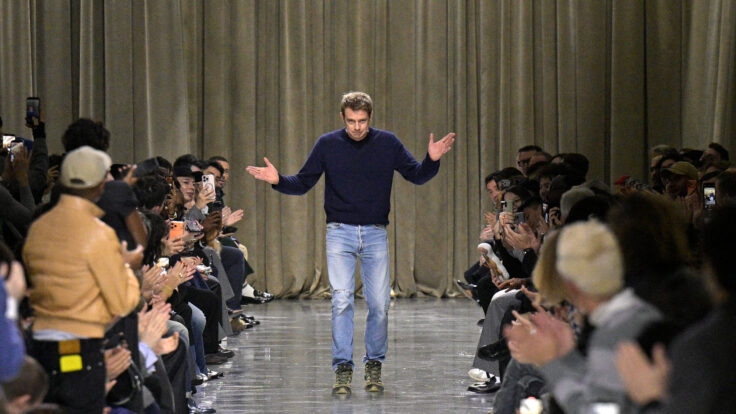
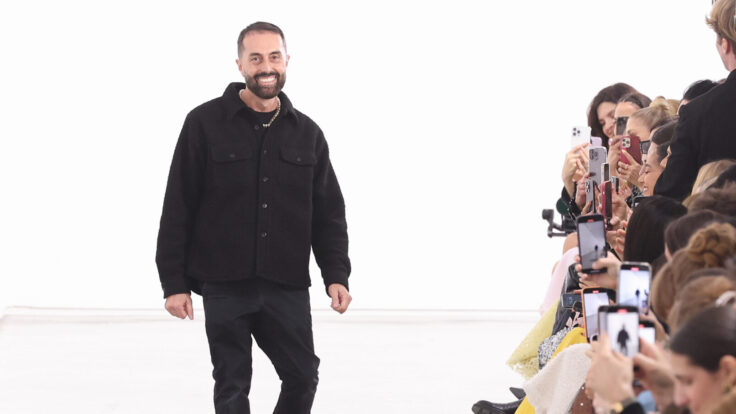
Matthieu Blazy, whose second collection for Chanel was even better than the first. Is he the savior we need? (Luckily for Blazy, Chanel itself is in no need of saving, but maybe his vision will guide some other, less stable businesses.)
I’ve got some thoughts on the show below, including instant client feedback and an explanation of why people cry when they see clothes on a runway. For the main event, Rachel
“Rachel@puck.news” Strugatz is back with the harrowing story of the rise and fall of Milk Makeup, and what it portends for all the hot beauty brands of today.
Mentioned in this issue: Chanel, Métiers d’art, Matthieu Blazy, the Wertheimer family, Ayo Edebiri, A$AP Rocky, Milk Makeup, Mazdack
Rassi, Tim Coolican, Ulta Beauty, Sephora, Amazon, Ozempic for pets, Kim Jones, Sophia Rivka Rossi, Kaitlin Phillips, and many more… |
We Need to Talk About
Chanel…
|
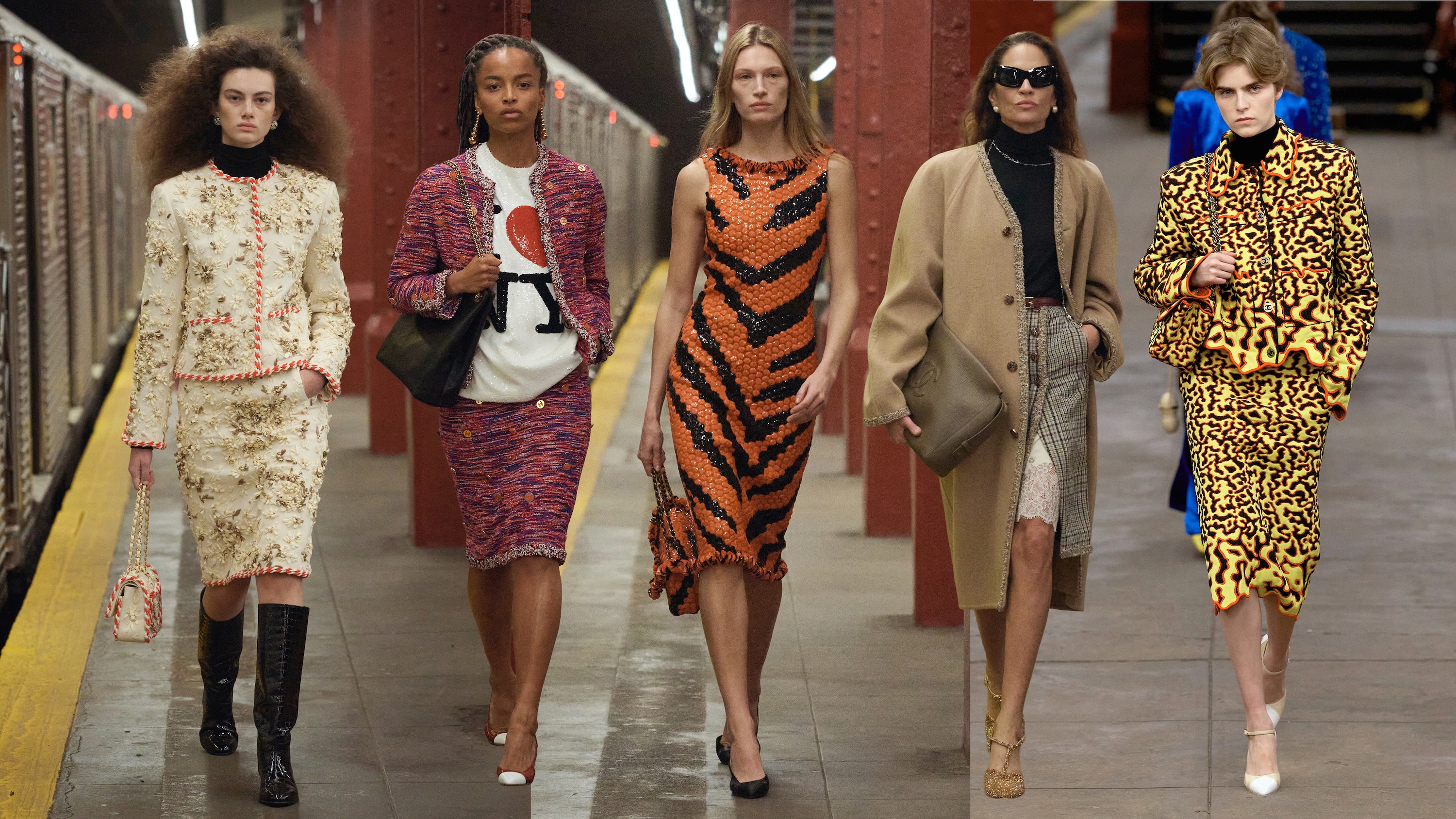
There’s nothing particularly novel about showing a runway collection on a New York City subway.
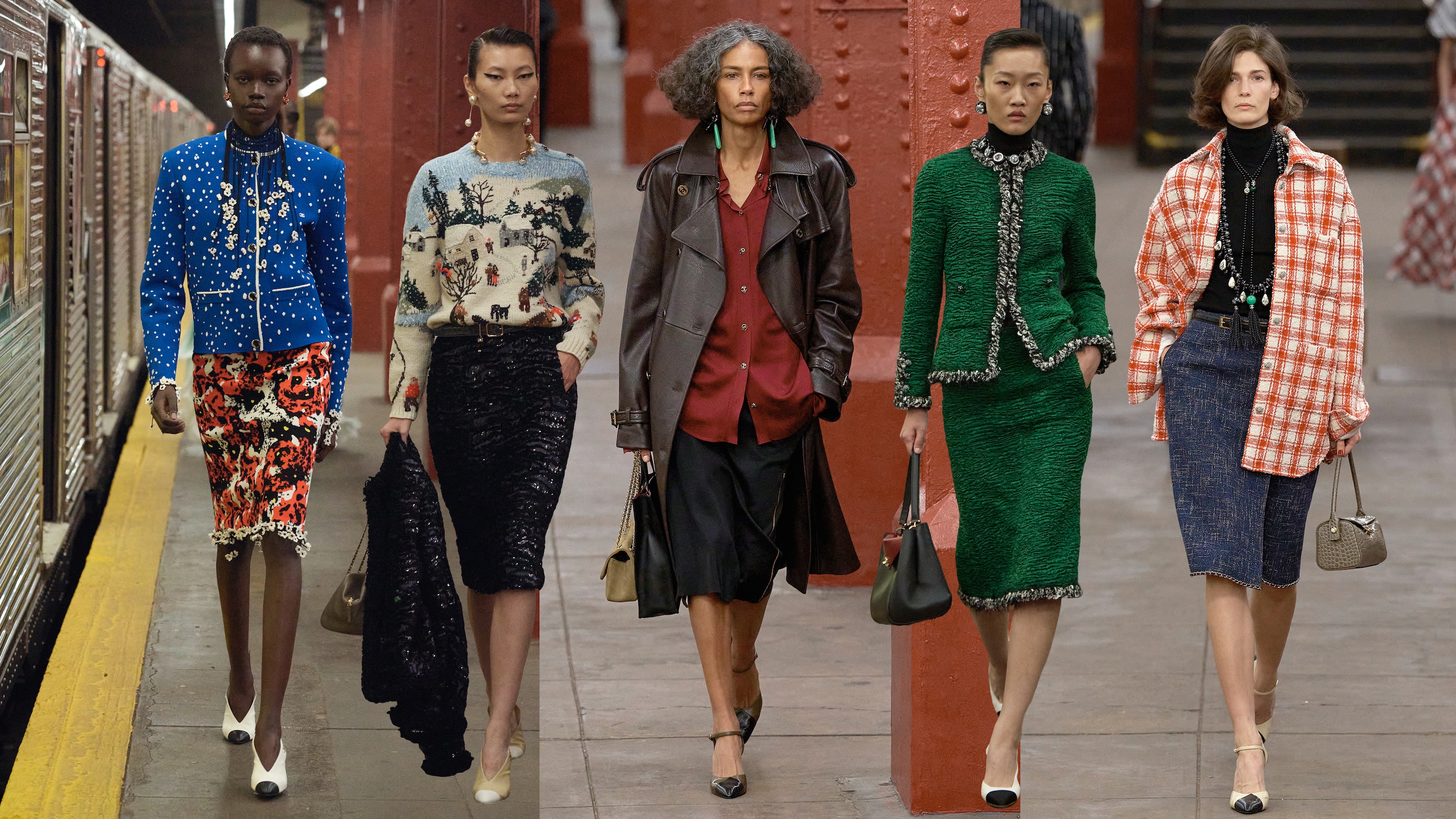
Jeremy Scott did it, Tom Ford did it, and long before that, Imitation of Christ did it… well, they did it in Los Angeles. So Matthieu Blazy wasn’t trying to be a revolutionary when he staged his first Chanel Métiers d’art collection yesterday in an out-of-use subway station on the Bowery, with the platform pillars painted that very particular Chanel shade of soft red. |
And yet, what Blazy is doing at Chanel is sort of revolutionary, if only because he is attempting to
get people to enjoy getting dressed in an era when fashion is increasingly unnecessary. We don’t leave our houses very much these days; even with the pandemic long past, we still spend so much time inside our computers. We need a top for Zoom, maybe, and a couple dresses for holiday parties. Our closets are bursting, and anything we could ever want from the last 50 years is available with just one click via the secondary market. This is the true crisis of the luxury industry, which every
designer, at every big fashion house, is trying to address in one way or another, whether they realize it or not.
Blazy, though, is coming at it from a purer place. “Sometimes the enemy of modernity is trying to be modern,” he said in the Chanel Gazette, a sponcon newspaper sent as the invite to the show and produced by the team behind Dossier. (Skye Parrott, T. Cole Rachel, Christopher Bollen, and
the like.) Instead, he just made great clothes, developing characters plucked from cinema and New York history. (One model was dressed like Diana Vreeland, with a red sash tied around her waist; another like a “journalist from the ’70s”; another like a 1980s businesswoman.) |
|
|
A MESSAGE FROM OUR SPONSOR |
The refined BMW 7 Series is all luxury. With the ability to define your design, the ultimate glamour is yet to be.
Learn more at BMWUSA.com. |
|
|
The first note I typed into my phone as the models started hopping off a working train, right after the doors
slid open, was, “How women want to dress!” One of the best things about this collection was seeing the looks my friends and acquaintances posted on Instagram, including Colby Mugrabi, Gabriella Karefa-Johnson,
Jen Brill, and Leandra Medine Cohen. It was different every time. Some people liked the royal blue velvet gown. Others liked the intarsia-ed Superman sweater, or the I <3 New York sequined knit, or the traditional, velvety bouclé green skirt suit
tipped in black-and-white fringe. Or the bouclé plaid shirt worn over a black turtleneck and a slub-tweed wrap skirt, or the tiger-knit dress with a matching bag.
Traditionally, Chanel’s goal with Métiers d’art is to show the technique of the maisons the brand owns and operates: Lesage’s embroidery, Lemarié’s feathers (and flowers), Desrues’ buttons. But it was never the most memorable of collections. And yet, while I loved Blazy’s debut for Chanel back in October, this second
go-around was better by leaps and bounds, both editorially and commercially. As one insider put it, the wild mix was a “smash and grab on quiet luxury’s dollars.” Blazy, a master of texture, rendered the overused word “craft” exciting again.
The big question of the night, however, was whether the devoted Chanel client will follow Blazy’s direction. For a long time, the only mega luxury brand doing true fashion was Prada. Now Chanel is in the conversation. At the afterparty, I chatted up
several clients, getting their reactions. The fashion obsessives were on board from day one. Those that buy Chanel because it’s pretty are going to require more convincing, but in this collection, they saw more of themselves. It may take a minute with the legacy clients, but Blazy has also already opened Chanel up to so many more people. |
In the traditional luxury pyramid—which the Wertheimer family created when they hired
Karl Lagerfeld in the 1980s—couture is at the tippy top, followed by ready-to-wear, accessories, and beauty and fragrance. Today, the foundation is actually social media messaging, which is free to the consumer, but allows them to own a piece of the brand in their brains. If you look at this collection, Blazy addressed every slice: He offered the ultra-rare for top Chanel clients, and great new bags and shoes for those who want in but can’t afford a five-figure
jacket. Inevitably, there will be a spike in sales of red lipstick after he so deftly used that iconic shade—not only to paint the set, but in some pieces, too.
As for the free part: Blazy has been very smart about the staging—once again, he used a nostalgic pop song from his youth, this time Natalie Imbruglia’s “Torn”—and the theme song to Happy Days to close out the show. (If you want to know why people cry at fashion shows, as they did at this one, it often
has to do with the music.) And the celebrity mix was right: Kristen Stewart, a longtime Chanel ambassador, was there, as were Margaret Qualley and Sofia Coppola, along with newcomers Ayo Edebiri, A$AP Rocky, and (Sofia’s daughter) Romy Mars. Elsewhere, there was Jenny Slate, Bowen Yang, Riley Keough, and Bernie Wagenblast, the
subway announcer.
In short, Blazy is making Chanel, inarguably the biggest fashion brand in the world, feel very real. When I left the afterparty at Webster Hall last night, around 9:30 p.m., I saw him walk up with a friend, appearing totally anonymous, and work his way through the barriers to get in. No entourage, no pomp, just a guy moving through the world like all the women he wants to dress.
And now, here’s Rachel… |
|
|
Milk Makeup, the once very cool and extremely fashion-adjacent beauty line, has suffered the
slings and arrows of the post-wunderkind blues at Sephora and the Ulta rebound that wasn’t. Now, one of the cool-guy founders is back involved, but is it already too late? |
|
|
I’ve been hearing rumblings about the recent misfortune of Milk Makeup, the once extremely cool brand that
has suddenly felt less cool as young shoppers turned to Summer Fridays, Rhode, Rare, and even E.l.f. Cosmetics. Then, last week, Waldencast—the special purpose acquisition company formed by two former L’Oréal execs at the height of SPAC-mania, which acquired Milk in 2022—confirmed as much when it released its second- and third-quarter earnings. Milk, despite launching at Ulta Beauty in March and on Amazon in June, saw its Q3 revenues decline by 20 percent year over year. Yes, Milk had a
big third quarter in 2024, which makes for an unflattering comparison. But Milk’s revenues were also down for the first half of 2025. (“Our business in the U.S. is growing double digits,” a Milk spokesperson said, pointing to the brand’s positive performance in Q2.) |
|
|
A MESSAGE FROM OUR SPONSOR |
The refined BMW 7 Series is all luxury. With the ability to define your design, the ultimate glamour is yet to be.
Learn more at BMWUSA.com. |
|
|
And yet, perhaps the downturn wasn’t all that surprising. After postponing its Q2 earnings release, cutting
its forecast, and announcing a strategic review back in August, I’ve been hearing that Milk’s business at Sephora, where the brand was sold exclusively in the U.S. for nine years, has been struggling for some time. According to a person with knowledge of Milk’s business, the brand has seen a “drastic” decline in its Sephora makeup ranking in the second half of the year, even though “they were still in the top 25 in the first half of the year.” Meanwhile, a few months ago, I spoke with a
high-level beauty insider who had just spent a day at Sephora’s San Francisco HQ—and their takeaway was how poorly Milk was performing. (“Tanking” was the word they used.)
More than anything, this insider was shocked by Milk’s startling decline in relevancy. When the brand launched nearly a decade ago, it stood out because it put “real people” with interesting facial features in its campaigns; it felt “edgy,” and not intended for well-behaved makeup customers following YouTube
tutorials or doing Kardashian-style contouring. (The Kush Mascara was extremely popular.) Ironically, the insider attributed Milk’s current spiral at Sephora to the absence of a celebrity or influencer at the center of the brand—which, admittedly, seems to be Sephora’s winning strategy these days.
It’s likely, however, that Milk’s problems are much greater than that. After all, since coming to market, the brand has largely failed to evolve. The introduction of a Cooling
Water Jelly Tint Blush about two years ago brought Milk back into the beauty zeitgeist once more, but the line has yet to replicate the runaway success of its Hydro Grip Primer that came out in 2019 (which was then successfully duped by E.l.f. Cosmetics’ own $11 Power Grip Primer). But perhaps the thing that hurt Milk the most was its launch into Ulta. |
Of course, after selling exclusively at Sephora in the U.S. for so long, it might have seemed rational to
expand to a second U.S. retailer. It’s also impossible to truly scale with only one retail partner. Many beauty lines wind up at Ulta out of desperation—a last-ditch effort to drum up business following a lag in Sephora sales. But when it comes to prestige beauty in the U.S., brands seem to keep forgetting that Sephora has outsize power in this segment of the market. Even the likes of Charlotte Tilbury and Sol de Janeiro—brands that launched at Ulta while they were still on top at
Sephora—experienced the post-Ulta sales dip.
An industry veteran once told me that a brand should never make the leap to Ulta because breaking the exclusivity with Sephora isn’t worth the sales you’ll potentially gain. Once brands enter Ulta, this person said, Sephora will go into vengeance mode and stop supporting your brand, no matter how successful it’s been. Indeed, I’ve reported
that it’s normal for a brand’s Sephora business to drop 20 to 40 percent once it decides to expand its distribution. Another insider broke it down this way: Within six months of adding Ulta to your distribution, your sales at Sephora will be down, and after a year, your total U.S. sales will be down. “You’re on your own to generate sales,” this insider said. (Both Ulta and Sephora declined to comment for this story.)
According to YipitData, a third-party research firm,
Milk’s Sephora sales have dropped about 40 percent year to date. (A Milk spokesperson said that number is “very inaccurate.”) |
For a while, it seemed like Milk benefitted from the Waldencast acquisition. A person close to the business
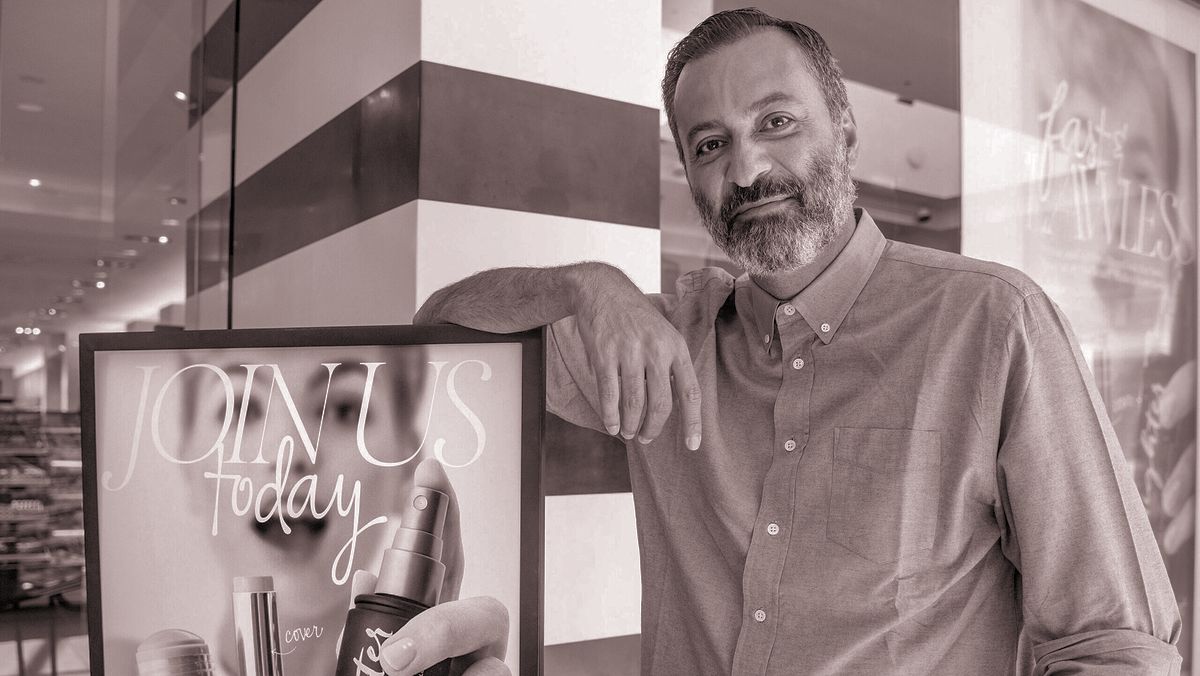
told me it’d been losing tens of millions of dollars before the deal closed, and that Tim Coolican, who was named C.E.O. in 2020, helped stabilize the company through 2024. Under his purview, annual revenue shot from $47 million in 2021 to $100 million in 2023. Last week, though, Waldencast announced that it was bringing back co-founder Mazdack Rassi as president to “lead the brand’s business transformation.” Coolican will remain as C.E.O.
|
|
|
Perhaps Rassi might be able to recapture some of what made Milk so special when it launched—namely, its
proximity to fashion. After all, he’s the co-founder and co-C.E.O. of Milk Studios, the New York City–based creative agency, studio, and former fashion week venue that became the brand’s namesake. (His wife, Zanna Roberts Rassi, another Milk co-founder, is a former fashion editor and fashion expert.) “The makeup was instantly fashion-coded because it came out of Milk Studios,” a beauty executive told me, a point that several others echoed in the last week as well.
But
attempting to capture the same lightning in the same bottle ignores the fact that the beauty business has changed dramatically over the past decade. At this point, Milk looks and feels stuck in time. The notion of being a “forever brand”—one that spans multiple generations—increasingly looks like an outdated aspiration, espoused by founders in a pre-TikTok era. I hope Rassi can figure out how to turn this thing around, but all available evidence suggests that the culture has moved on. |
Kyle Chayka helps explain why the liberals love Landman.
[The New Yorker]
Ozempic for pets! [NY Times]
On that subject, Sophia Rivka Rossi, co-founder of HelloGiggles, started a newsletter. Her latest email features an honest (dramatic, but
hardly hyperbolic) account of GLP-1 usage. [Between Friends]
Kim Jones on Pam Hogg, who died late last month. [BoF]
There’s been more restructuring at Nike. It always gets
worse before it gets better! [WSJ]
More gift guides for your pleasure: Kaitlin Phillips’s Part 2 is here, as is Jam Session’s annual
recommendation session, and Helen Rosner’s always perfect food-person suggestions.
The Council of Fashion Designers of America says no more fur at New York Fashion Week unless it’s “animal fur obtained
by Indigenous communities through traditional subsistence hunting practices.” [Inbox]
7 For All Mankind hired a real designer (Nicola Brognano, formerly of Blumarine) and is gonna show at New York Fashion Week. [Inbox] |
And finally… For some reason, I feel it’s important for people to know that
this song is… good?
Until tomorrow,
Lauren
P.S.: We use affiliate links because we are a business. We may make a couple bucks off them. |
|
|
Puck fashion correspondent Lauren Sherman and a rotating cast of industry insiders take you deep behind the scenes of this
multitrillion-dollar biz, from creative director switcheroos to M&A drama, D.T.C. downfalls, and magazine mishaps. Fashion People is an extension of Line Sheet, Lauren’s private email for Puck, where she tracks what’s happening beyond the press releases in fashion, beauty, and media. New episodes publish every Tuesday and Friday. |
|
|
An essential, insider-friendly Hollywood tip sheet from Matthew Belloni, who spent 14 years in the trenches at The
Hollywood Reporter and five before that practicing entertainment law. What I’m Hearing also features veteran Hollywood journalist Kim Masters, as well as a special companion email from Eriq Gardner, focused on entertainment law, and weekly box office analysis from Scott Mendelson. |
|
|
Need help? Review our
FAQ page or contact us for assistance. For brand partnerships, email ads@puck.news.
You received this email because you signed up to receive emails from Puck, or as part of your Puck account associated with {{customer.email}}. To stop receiving this newsletter and/or manage all your email preferences, click here. |
Puck is published by Heat Media LLC. 107 Greenwich St., New York, NY 10006 |
|
|
|