Welcome back to Wall Power. I’m Marion Maneker—sojourning in
Minneapolis for the weekend. (I know you’re jealous.)
There’s a fair bit of news today. Christie’s won the Marian Goodman estate. The Guggenheim hired Melissa Chiu, the former director of Washington’s Hirshhorn Museum (part of the troubled Smithsonian complex of institutions that continues to be the focus of the Mad King’s retribution campaign). And Lalanne’s YSL mirrors just went on view. For the main piece, I go deep on what’s likely to
be the big event of the spring season—the big Henri Matisse show the Acquavellas opened this week.
By the way, if you’re reading this because someone forwarded you a copy, take a moment to sign up for your own damned subscription. (Said with love!) Better yet, join the Inner Circle here
to feel like a real art pro.
Also mentioned in this issue: Mariët Westermann, Agnes Gund, Si Newhouse, Richter, de Kooning, Jasper Johns, Hank Willis Thomas, Rashid Johnson, Jean and Terry de Gunzburg, Pierre Bergé, Jodi Pollack, Robert Weis, Patricia
Weis, and… Leon Black.
Let’s start with some news… |
-
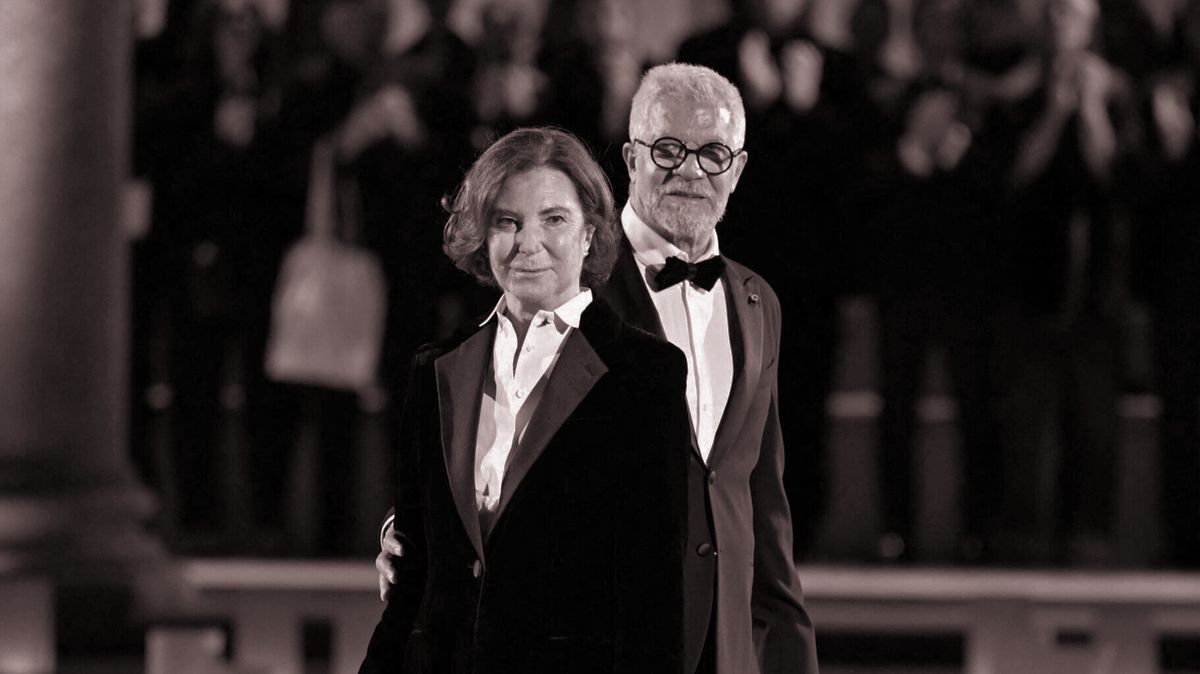
The Guggenheim gets a fundraiser: In a surprise announcement yesterday, the Guggenheim Museum revealed that Melissa Chiu will become its director in September, leaving her role as head of the Hirshhorn in Washington, D.C., after a decade in charge. The appointment is anything but controversial, considering Chiu’s success expanding the board, raising $250 million, and mounting a number of strong shows at the Hirshhorn. And it’s no secret that the Guggenheim needs
to raise more money. With Chiu’s arrival, the museum’s current director and C.E.O., Mariët Westermann, will become the director and C.E.O. of the Guggenheim Foundation, which oversees museums in New York, Venice, Bilbao, and Spain. (There’s also one close to completion in Abu Dhabi that may not open for a while, considering the current state of the Gulf.)
- Christie’s gets Goodman: Competition between the auction
houses is always ferocious, but the dealmaking gets truly cutthroat after one of the houses has an unexpected success. Last November, Sotheby’s overperformed with the Lauder collection, which made $525 million. This season, Christie’s has decided to leave nothing to chance: They won the $100 million Agnes Gund collection as well as the still-not-formally-announced Si Newhouse collection, said to be worth $450 million. Just recently, they also
snagged dealer Marian Goodman’s personal collection, which includes a handful of Gerhard Richter works. (Goodman was Richter’s dealer for 37 years.)
Seven of those works will be offered in the “Marian’s Richters” sale that opens the 21st century evening sale. The top lot is a Richter painting of a single candle estimated at $35 million. (A similar work sold for $16.5 million in 2011.) Then there’s the 2-meter-tall abstract painting Mohn, from
1995, that has no public estimate yet, though the highest auction price for a work of that size and vintage was more than $23 million, paid in 2021 for a painting with a lot of red in it. Mohn will most likely be estimated well below that level. The sale also includes three other domestically sized Richter abstracts. More works from Goodman’s collection will be sold during a dedicated single-owner sequence opening the post-war and contemporary art day sale, as well as a single-owner
online sale. - Print the legend: The IFPDA Print Fair runs all weekend at the Park Avenue Armory. You should go. There’s an immense variety of prints and drawings on offer, from obscure artists whose practices focused on editions and multiples, all the way up to the biggest names who worked in the medium, like Willem de Kooning and Jasper Johns, among others. When I walked into the fair on Thursday’s opening
night, Hank Willis Thomas and Rashid Johnson were holding court in the front entryway.
- The YSL mirrors: On my way to the Armory, I stopped into the Breuer Building, where the Jean and Terry de Gunzburg sale opens today. Among the many great works on view is the
set of 15 mirrors that Claude Lalanne made for Yves Saint Laurent and Pierre Bergé, which the de Gunzburgs bought from the famous YSL-Bergé sale during the global financial crisis. But the couple seems never to have found a place to hang
them, and they are indeed difficult to hang.
Lalanne used a plating method that took actual vines and leaves and turned them into metal. YSL commissioned the first from Claude in 1974, and the remaining 14 took another decade to produce. The whole set hung close together in the music room at YSL and Bergé’s famous 55 Rue de Babylone duplex. Thanks to Sotheby’s Jodi Pollack, who showed me the chamber where the auction house has hung 14 of the 15 mirrors on chocolate-brown
walls in a loose re-creation of the original setting.
All 15 mirrors are being sold as a single lot with a $10 million estimate. But the way prices have been going for Lalanne works in general, and Claude’s mirrors in particular, that seems unrealistically low for a final price. The highest price paid at auction for a mirror is nearly $5 million, which you obviously don’t have to multiply by 15 to get well above $10 million. At prices higher than it would cost to build a very large home,
let’s hope the buyer goes the extra mile and builds her own hall of mirrors.
|
Now, let’s head over to 79th Street… |
|
|
|
The fabulous new Matisse exhibition at the Acquavella Galleries is a testament to
the surging interest in a sometimes overlooked artist—as well as to the masterful stewardship of the Acquavella family, which created and still controls the modern Matisse market. |
|
|
|
Henri Matisse seems inescapable this year, with museum shows at the
Grand Palais in Paris, the Art Institute of Chicago, SFMoMA, the Philadelphia Museum of Art, the Baltimore Museum of Art, and the Musée d’Art Moderne de Paris. There’s even one at the Morris Museum, in Morristown, New Jersey, with 71 Matisse drawings from the Mourlot family archive on display. The Mourlots were master lithographers, and the show documents the production of the artist’s books, which preoccupied him during his last 15 years.
And yet, there’s still something
about Matisse that feels overlooked and underappreciated. That may be because there’s not much Matisse appearing on the auction market—and the artist’s top prices seem to lag far behind those of his peers. Nine-figure Picassos don’t sell at auction every day, but there have been five of them in the past 16 years. Contrast that with David Rockefeller’s Odalisque couchée aux magnolias, from 1923, which attracted only $80 million in 2018—still the highest price
paid for a Matisse painting at auction.
Not that there hasn’t been some stirring in the auction market. Last season, surprise bidding wars broke out for Robert and Patricia Weis’s Figure et bouquet (Tête ocre), from 1937, which was estimated at $15 million but ended up selling for $32 million. The 1920 work
Nu au Fauteuil, main gauche sous la tête, from Japan’s Kawamura Museum, was priced at $2.5 million but sold for nearly $6.8 million. Those results also point to something peculiar to the Matisse market: Auctions are not where the action is. Whether that’s because the best Matisse works are already in museums or the kinds of collections that just never sell, I don’t know.
What I do know is that the Acquavella family very deliberately chose this moment to mount a
valedictory show of 50 Matisse works. These are mostly paintings and sculptures plus a few drawings, the bulk of which 88-year-old paterfamilias William Acquavella has owned, sold, or brokered during his long and almost accidental career as an art dealer. |
“High
Concentration of Risk”
|
Nicholas Acquavella, who works at the gallery along with both of Bill’s other
children, gave me a tour of the show on Wednesday. The sheer number of high-quality works was overwhelming. At one point during our conversation, I remarked on the show’s relatively short running time—it closes on May 22. The younger Acquavella explained that it’s a big ask to get clients to lend even for a few months. Then he stopped and pulled himself upright. “The insurance costs alone,” he added, his eyes widening in astonishment.
Indeed, at this moment, the gallery is what the
insurance people call a “high concentration of risk.” Between the loans from MoMA, the Met, the Philadelphia and Cleveland museums of art, the Phillips Collection, Glenstone, and many private collections, the amount of high-value art in this one place should make anyone nervous. I was a little jittery, myself.
That said, if the Acquavellas are willing to shoulder the cost and put in what must have been a lot of time calling in favors, the rest of us should take advantage. I had
to stop by again on Thursday, and I’m sure I will try to come back a few more times, depending on the crowds.
The show is divided into four rooms. To the right, just as you enter the grand, high-ceilinged former townhouse on 79th Street, there’s an intimate gallery of six works: Madeleine I, a bronze cast in 1901, along with a drawing, “Study for Madeline,” from the same year; a painting of a male nude from 1900 paired with another bronze of the same model from 1900-04;
and two fauvist portraits of women from 1905 and 1906. The earlier one, still luminous in orange tones, was sold to its present owner in the early 1960s—a testament both to the strength of the Acquavellas’ relationships and to how much collectors cherish these works.
On the same floor, there’s a gallery with a number of female nudes. In addition to the Rockefeller odalisque, there are two remarkable reclining nudes—one a small painting with an orange background, the other a detailed
drawing. The show also has several other elaborately finished drawings, the kind you rarely see at auction. Nick pointed that out to draw attention to the gap between the private market, where many of these trophies trade, and the auction market, where one often sees lesser-quality Matisses.
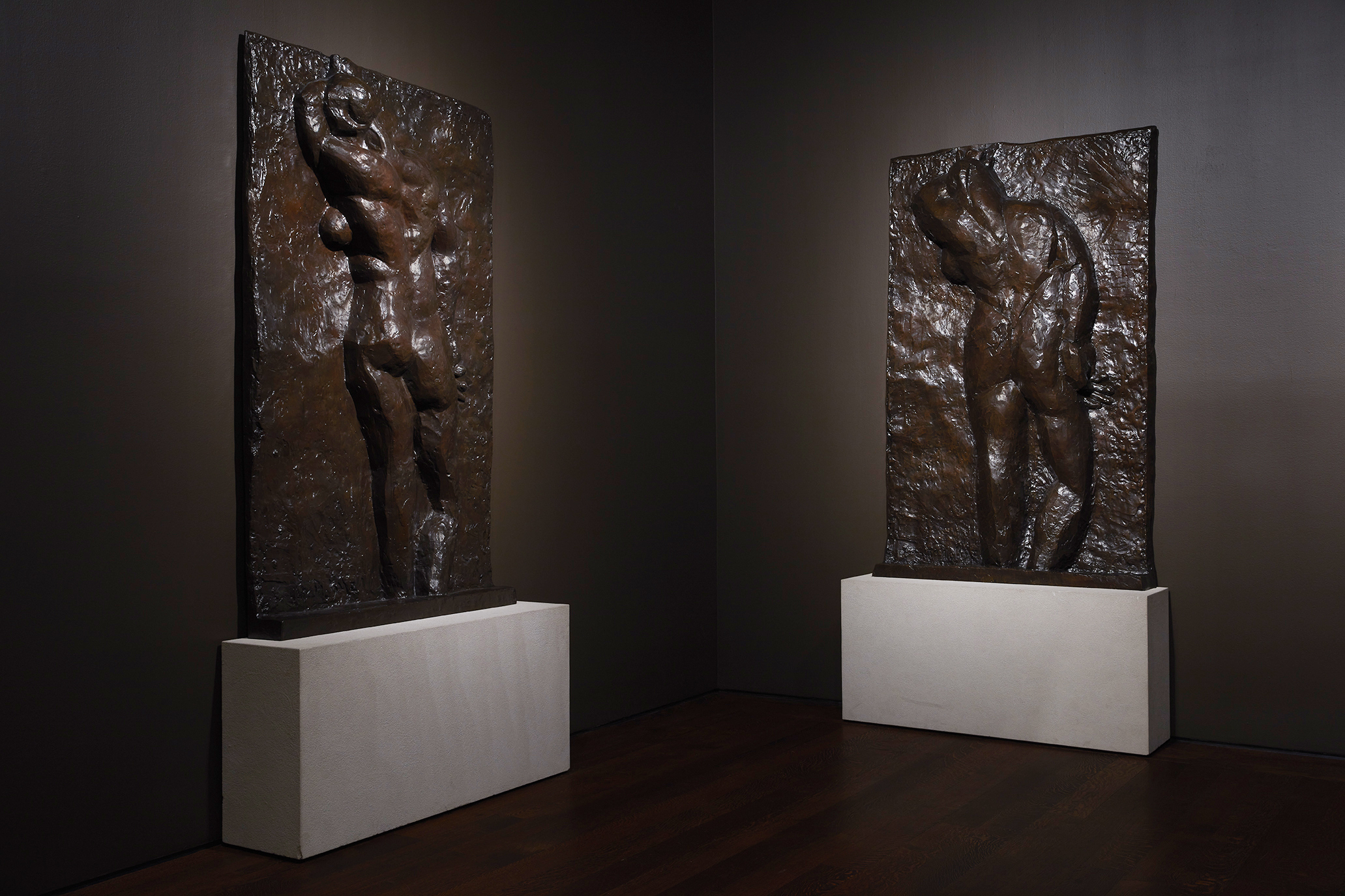
A case in point: At the back of the gallery, the Acquavellas have created a chapel-like space for a complete set of the artist’s famous bronze backs, bas-relief sculptures of a woman’s back in four
states. You can see another set in MoMA’s garden or at the Hirshhorn when its sculpture garden reopens soon. The set on display here, mounted in front of rich brown walls that bring out the brown in the bronze, was on loan to a museum in Texas for many years. It was only when Leon Black paid nearly $50 million for a single back that these four unexpectedly came to market. The sellers first tried to auction them for an astonishingly high number, but it took Bill Acquavella’s man
management skills to get the deal done privately at a nine-figure price that satisfied everyone. |
Photo: Kent Pell/Courtesy of Acquavella Galleries |
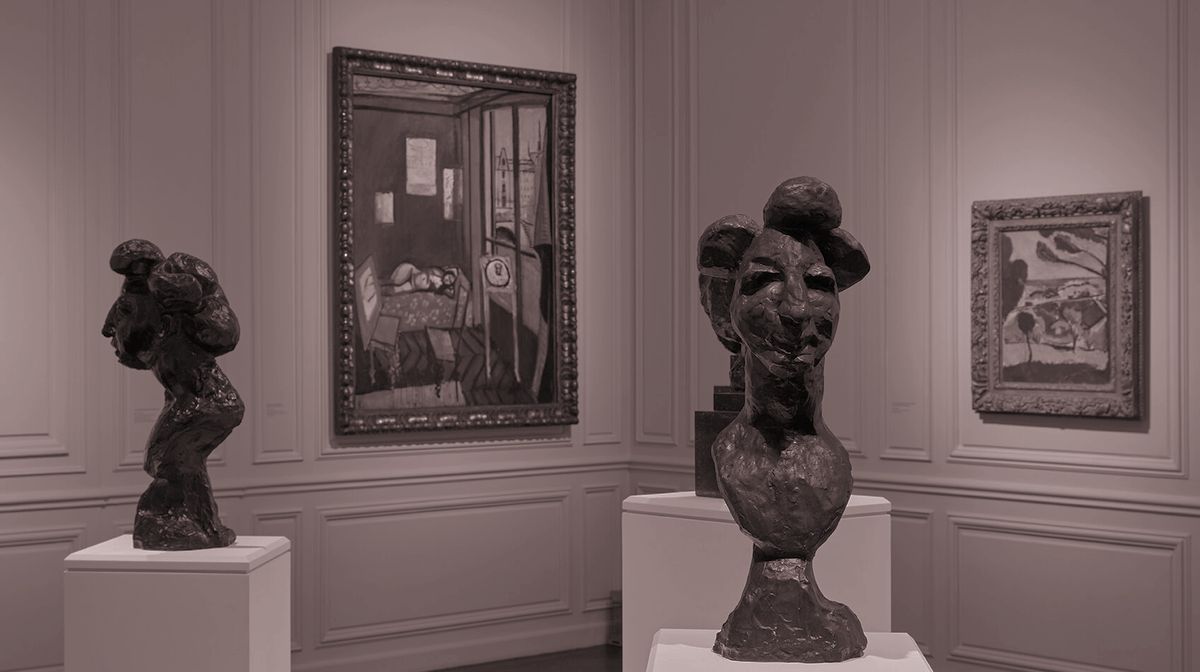
Upstairs, there’s a room dominated by a set of bronze heads that Acquavella sold to Glenstone. The
room is also lined with works of exceptional provenance, including a strong painting of a seated female nude viewed from behind. (Nick told me they were keen to hang this with the bronze backs but couldn’t make it work.) The final room of the show is the jackpot, featuring the works that immediately spring to mind when you think of Matisse—interiors dense with decorative patterns centered on female figures. The draftsmanship is loose but the fidelity is true to life.
After seeing the
show, I couldn’t help looking up Matisse’s auction history. There I found records for a number of the works on display that were auctioned, often at surprisingly low prices, as early as 1985 and as late as 2019. It reminded me that there is a subtext to all of this. The Acquavellas are patient art dealers, who make their money by buying and then selling works over time, often with a significant gap in between.
This is the old style of art dealing, which befits a firm now deep into its
third generation. You buy works when they come up—with luck, at a time when no one is excited about Matisse. Then you sell them to the right person who is excited to get one, especially from the firm with a reputation for brokering the best works. That’s the message of the show: If you’re patient—and have a good eye—you can get in on the good stuff. |
I’ll leave it there. While I’m away on Sunday, I’ll leave you in the good hands of our partners at
Air Mail, plus I’ll have some more lot announcements. The historical turn continues…
’Til soon,
M |
|
|
|
Puck founding partner Matt Belloni takes you inside the business of Hollywood, using exclusive reporting and insight
to explain the backstories on everything from Marvel movies to the streaming wars. |
|
|
|
Ace media reporter Dylan Byers brings readers into the C-suite as he chronicles the biggest stories in the industry:
the future of cable news in the streaming era, the transformation of legacy publishers, the tech giants remaking the market, and all the egos involved. |
|
|
|
Need help? Review our FAQ page or contact us for assistance. For brand partnerships, email ads@puck.news. You received this email because you
signed up to receive emails from Puck, or as part of your Puck account associated with {{customer.email}}. To stop receiving this newsletter and/or manage all your email preferences, click here. |
Puck is published by Heat Media LLC. 107 Greenwich St., New York, NY 10006 |
|
|
|
|