Hi, and welcome back to Line Sheet. If you’re in the U.S., I hope you were able to take time off yesterday. If you’re heading to Milan for what’s left of Men’s Fashion Week there, let me know how it’s going!
In today’s issue, you’ll find an outtake from my Fashion People interview with Jonathan Schley, vice chairman of Newmark’s Global Retail Advisory, who understands what’s happening in luxury retail better than anyone I know. (He’s also obsessed with cars and I’m sure has a hot take on Luca de Meo at Kering, but alas, we conducted this interview a few weeks ago.)
In other news, Sarah Shapiro explains how jeweler Brent Neale, beloved by many a Line Sheet reader, is shaking off knockoffs. Elsewhere, I’ve got the latest on Victoria’s Secret’s turnaround struggle (we’re heading toward ABG territory!), and we have a special guest appearance from our Puck partner Dylan Byers, who has some salty words for Loewe’s polarizing Grateful Dead collaboration.
Programming note: Thanks for all the feedback on yesterday’s interview with Ryan Murphy, where he addressed the vitriol being spewed at him and the rest of the American Love Story production regarding the costuming of Sarah Pidgeon, who is portraying Carolyn Bessette-Kennedy. We’ve opened that interview up for all Puck subscribers. (Sorry, but the Kering reporting is only for Inner Circle members. Kering is for the real heads!)
Mentioned in this issue: Jonathan Schley, LVMH, Kering, Brent Neale, Victoria’s Secret, Hillary Super, Jonathan Anderson, Loewe, Josef and Anni Albers, the Grateful Dead, Jack McCollough, Lazaro Hernandez, Charlie Smith, and many, many more…
|
|
|
|
A MESSAGE FROM OUR SPONSOR
|
|
|
Three Things You Should Know…
|
|
|
 |
Sarah Shapiro |
|
- Brent Neale’s forced pivot: Instead of sending lawyers to go after knockoffs, or forcing shoppers to play “spot the original,” jewelry designer Brent Neale will archive (a.k.a. stop producing) her popular mushroom pendant, which quickly became her signature piece after its 2017 launch and was carried by Bergdorf Goodman and Net-a-Porter. As exact copies in precious metals flooded trade shows, she realized the fight against fakes wasn’t worth it. “It was an emotional decision rather than a financial one,” she told me. (The pendant accounted for a not-insignificant 15 percent of her sales.) “But one piece never defines a brand, or a designer.”We’ve seen this play before from larger brands, such as Loro Piana (which strategically discontinued its Open Walk and Summer Walk shoes), when a single style risks becoming ubiquitous. As the sole owner of her brand, with 60 percent of the business coming from private clients and 40 percent from wholesale, Neale can pivot quickly. She’s betting on rings next, with color-heavy designs that have become a signature for her.
|
|
|
- Barington Capital strikes back: The same activist firm that forced Victoria’s Secret owner L Brands to spin off Bath & Body Works, in 2021, is back at it, pressuring Victoria’s Secret to “refocus on core strengths”—bras and undies—while ramping up online sales and streamlining dumb operating procedures. “Since the 2021 spinoff, the board has presided over the destruction of $2.4 billion in shareholder value, and has approved approximately $1.8 billion in capital expenditures and acquisitions with little demonstrable return,” Barington chief James Mitarotonda wrote in a letter earlier this week.He also noted that still-new Victoria’s Secret C.E.O. Hillary Super doesn’t have a ton of experience running underwear brands, and even less experience running a public company. I would love for everyone to give Hillary a chance, but this is not a privately held firm, and Mitarotonda makes some good points. (You can read the full letter here.)
The rise of activist investors is notable—especially in the U.S.—but there are pros and cons. Investors can force necessary changes to unlock shareholder value (the Bath & Body Works spinoff, Marco Bizzarri being let go from Gucci, etcetera), but they tend to be single-minded—and once they make their money, they scram. Barington, notably, came back for more, seemingly concerned about the actual future of Victoria’s Secret. The best-case scenario here is probably that someone takes it private. At this point, I see Authentic Brands Group in Victoria’s Secret’s future.
- Turn on your Loewe light: Under Jonathan Anderson, its previous creative director, Loewe launched a number of novel, out-of-the box collaborations: the ongoing dialogue with Studio Ghibli, the Paula’s Ibiza capsule (which became a sub-brand), Josef and Anni Albers, Ken Price, etcetera. So I wasn’t exactly surprised when Puck’s very own Dylan Byers sent me a Slack inquiring about the LVMH-owned brand’s new capsule with the Grateful Dead.As a person whose interest in the Grateful Dead borders on the certifiable (is it still P.C. to say “Deadhead”?), Dylan was disappointed in the offering, which includes a $950 cropped t-shirt trimmed with embroidered dancing bears and an $1,800 crystal-embellished t-shirt featuring one blown-up dancing bear.
“I’m open-minded to merch, from $890 for a handkerchief, all the way down to, ‘I’ll trade you two joints and a crystal for it.’ It just has to be good,” said Dylan. “And there’s so much great stuff out there for fans, by real fans. I just have no idea what they were thinking.” (Dylan’s go-to for Dead merch is “vintage from way back when. After that I like Online Ceramics, Camp High, Mike Gracie, Brolome, Dude Inn…”)
Dylan, I should report, isn’t the only one flummoxed. Some choice Instagram comments include: “$1,300 for a Dead shirt as the world burns around us. Gotta love capitalism!” … “Anyone who buys this is def not a dead fan lol, ridiculous” … and, “Does this make anyone else feel like they’re losing their mind?”
As someone who was once, as an early teen, charmed by the aesthetics of the Grateful Dead (but bowed out quickly because, uh, jam bands), I
have to say that… it’s fun? Dead fans come from all walks of life, including walks where it is perfectly acceptable to spend $1,000 on a t-shirt. (The collab is also very Jack McCollough and Lazaro Hernandez–coded, although I’m not sure whether the new creative directors, who started just a few months ago, had anything to do with it.) The best news in all of this: Dylan now knows how to pronounce Loewe. And maybe that’s the point? Charlie Smith, the brand’s head of comms and marketing, was just named the 17th most-influential C.M.O. in the world by Forbes.
|
|
|
|
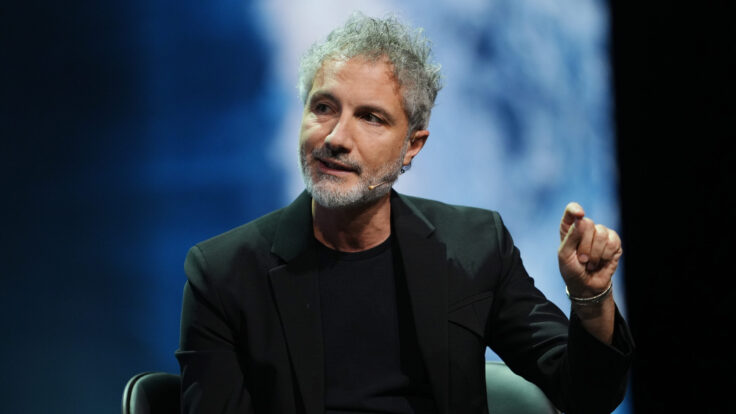
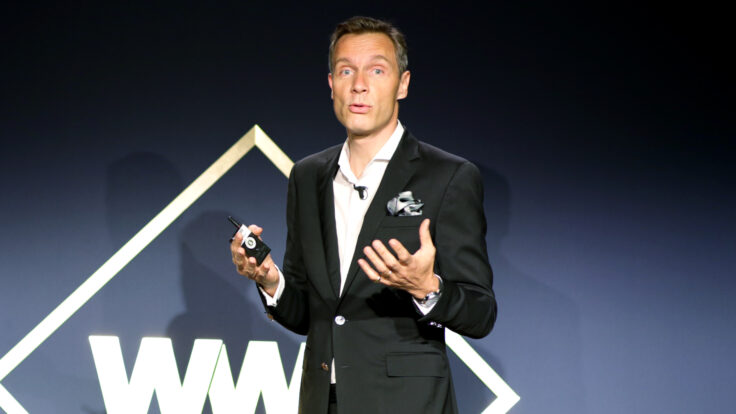
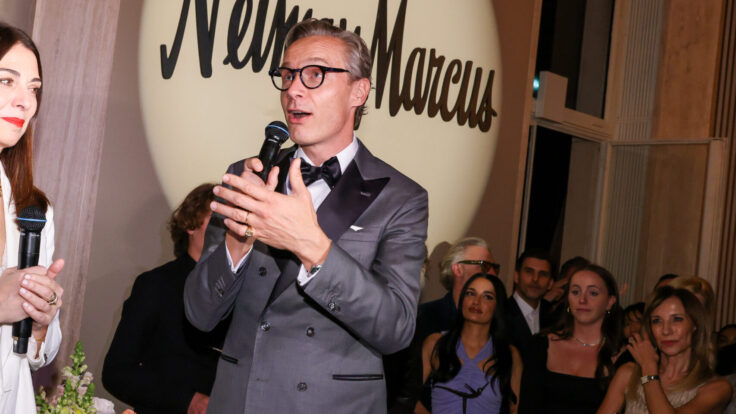
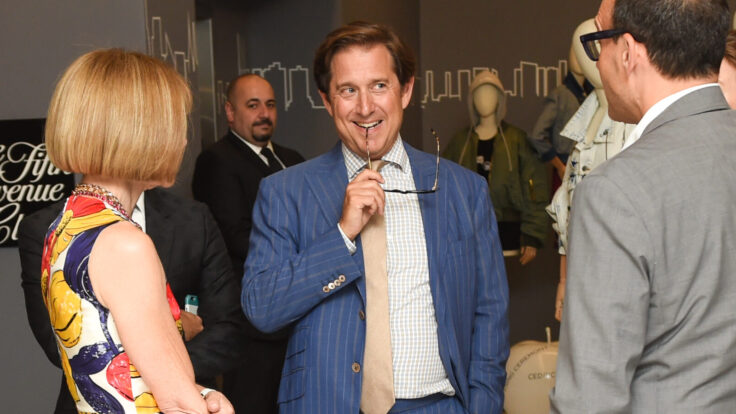
Luxury conglomerates like Kering and LVMH snapped up real estate and opened locations in the era of cheap capital, but they can no longer afford the barely-breaking-even, store-as-billboard model. Newmark global retail advisor Jonathan Schley explains it all for you.
|
|
|
Everything in life revolves around real estate, but especially in the fashion world, where retail is still very much at the center of the experience. But what’s a store for, these days? As more shoppers use retail for browsing, mostly, and their trips to the store decrease, brands have had to establish a new set of performance metrics. Sales-per-square-foot still matters, obviously, but can’t be measured the same way when so many customers are buying online. (It’s also easier to bump up that number when you’re operating out of a shoebox.)
Anyway, earlier this month I decided to dial up Jonathan Schley, vice chairman of Newmark’s global retail advisory, to discuss how the retail real estate landscape is changing city by city, and how these market changes reflect the experience of the consumer—who, if you haven’t noticed, is having an existential crisis. (A longer, unedited, probably more annoying version of this conversation originally ran on Fashion People, my podcast.)
|
|
Lauren Sherman: To start, can you explain what you do?
Jonathan Schley: I effectively act as the real estate partner for various fashion, consumer product, and design brands in North America and globally. We tend to be significantly involved at the strategy stage of defining a first-to-market plan and a local market strategy. We predominantly represent tenants (brands). We also do similar activities on the landlord and investor side. It’s not often, but we represent and work with a few of the more premier, exclusive shopping-center owners in the country.
|
|
|
|
A MESSAGE FROM OUR SPONSOR
|
|
|
|
LVMH was a real estate firm that became something bigger. How has the development of the conglomerates changed the dynamic for luxury real estate over the past 20 years?
My perception is that real estate has always been a very locally focused effort. L.A. sat as an island from New York, which sat as an island from Paris, which sat as an island from London, because people simply weren’t as mobile. The biggest difference would be that decisions were made more in isolation back then. In terms of consumer-facing visibility, those strategies now need to be more uniform and cohesive. The biggest factor at play is media, and more specifically, social media. As consumers, we have significantly more visibility into the goings-on day to day. That’s why our business has never focused on a singular geography. My attitude was always, If we’re going to help you in L.A. or New York, we need to be involved in the broader strategy.
The aha moment for me was when we did Acne Studios; it was the biggest store they’d ever done. It was declared the most Instagrammed store in the world in 2013, and that was the first time I heard that metric being used. Not that I would say we’re social-media-driven—and frankly, I don’t like using it as an information source—but at that point, it became very clear how it impacted all of these strategies.
How have the luxury brands changed the way they approach real estate in the past 15 years or so? Stores proliferated.
I don’t know if the growth was necessarily intentional. I don’t think someone at LVMH sat down and said, I want this many more Louis Vuitton stores by a particular date. It was more a function of that period of time having incredibly cheap capital. One major shift you saw was the big groups buying a lot more real estate—if you’re a group like LVMH or Kering, you can create a singular density that, in theory, should create enough critical mass to be self-sustaining. In the past 10 years, you’ve seen a lot more purchasing, which allows them to control the environment. Even if it’s a space they don’t intend to occupy, they’re leasing it to a competitor, and they control the terms.
|
Living in a Multi-Channel World
|
|
When did the mentality of We need to be hip to what’s happening in the culture start to permeate real estate?
Mixed-use development is nothing new. Typically, when you see it in the commercial sense, it’s a horrible 400-unit apartment building with a Subway and Baskin-Robbins at the bottom, or something like that. But there were developers with the foresight to make something with that same concept, but in a much more interesting way. One way to increase dwell time is to get people there to do more things for a longer period of time.
If you’re a developer with a multi-hundred-thousand-square-foot office lease for a tenant where everyone’s relatively high-earning, it’s pretty easy to amenitize that property and give them something that suits their interests—whether it’s entertainment, food and beverage, or retail shopping.
|
|
|
|
How long does it take for stuff to stick? I’m thinking of developer Craig Robins and the Miami Design District, which I really never thought was going to happen-happen, and then it did.
It’s a tough question. I’m really sensitive to scale—whether it’s store size, neighborhood, etcetera. The hardest thing to do is change consumer behavior. I don’t know exactly how long it takes. It’s property-specific, city-specific, consumer-specific. What someone in Miami buys from Dior is different from what someone in New York buys from Dior.
We recently did a commercial project with Tishman Speyer and Rockefeller Center, and I’m obsessed with what they’ve done there. Why do you think that’s worked? How do you revive a neighborhood that people didn’t want to spend time in previously?
I did the McNally Jackson and the Rough Trade there. When you have a project like that, where you’re talking many millions of square feet, you have to take into account that a couple hundred thousand square feet is
not going to make or break the project from the owner’s financial perspective. So a project of that scale, they’re able to focus significantly more on making sure the retail is an amenity that people actually want to engage with, as opposed to simply [chasing] the best economic deal. Because of that, they’re able to offer attractive deals to tenants. That’s not to say they bought all the tenants, or anything like that. They’ve done a great job, and I agree with you. But they’re also in a fortunate position, due to the nature of the project.
What are brands looking to get out of a store now?
We went through a period, about 10 or 15 years ago, where it was very much, I’m gonna get a store in Times Square, or on Madison or Fifth Avenue, that’s never gonna be profitable, and it’s a billboard. Those days are long gone. At the end of the day, a store is the best venue in which to control your customer journey—from a staffing perspective, a design perspective, a storytelling perspective, etcetera. In the multi-channel world we live in, each brand is going to have a different equilibrium of what’s going to work best for them. But as it’s always been, and will continue to be, retail is the best place to own your customer journey. I don’t think anyone could make an argument against that.
|
|
On Ryan Murphy’s C.B.K. muck-up: “He needs to hire Lauren Santo Domingo as a creative consultant. She has really studied Carolyn Bessette-Kennedy’s style and gets all the nuances.” —A famous supermodel
More on American Love Story: “I’m still nervous.” —A P.R.
More on C.B.K.: “Good on you for getting the interview, and speaking for all of us. I don’t see how this could get better. This isn’t something that original clothes can fix, it’s much bigger than that. And the biggest issue to me is that Ryan clearly doesn’t see that.” —A stylist
|
|
Have a great weekend,
Lauren
P.S.: We are using affiliate links because we are a business. We may make a couple bucks off them.
|
|
|
|
Puck founding partner Matt Belloni takes you inside the business of Hollywood, using exclusive reporting and insight to explain the backstories on everything from Marvel movies to the streaming wars.
|
|
|
|
Puck’s daily art market email, anchored by industry expert Marion Maneker, offers unparalleled access to the mega-auctions and galleries, elite buyers and sellers, and the power players who run this opaque world. Wall Power also features Julie Brener Davich, a veteran of Christie’s and Sotheby’s, who provides unique insights into how the business really works.
|
|
|
Need help? Review our FAQ page or contact us for assistance. For brand partnerships, email ads@puck.news.
You received this email because you signed up to receive emails from Puck, or as part of your Puck account associated with . To stop receiving this newsletter and/or manage all your email preferences, click here.
|
|
Puck is published by Heat Media LLC. 107 Greenwich St, New York, NY 10006
|
|
|
|