{{ 'now' | timezone: 'America/New_York' | date: '%b %d, %Y' }} |
|
|
Hi, and welcome back to Line Sheet.
There’s something happening in fashion—retail, more
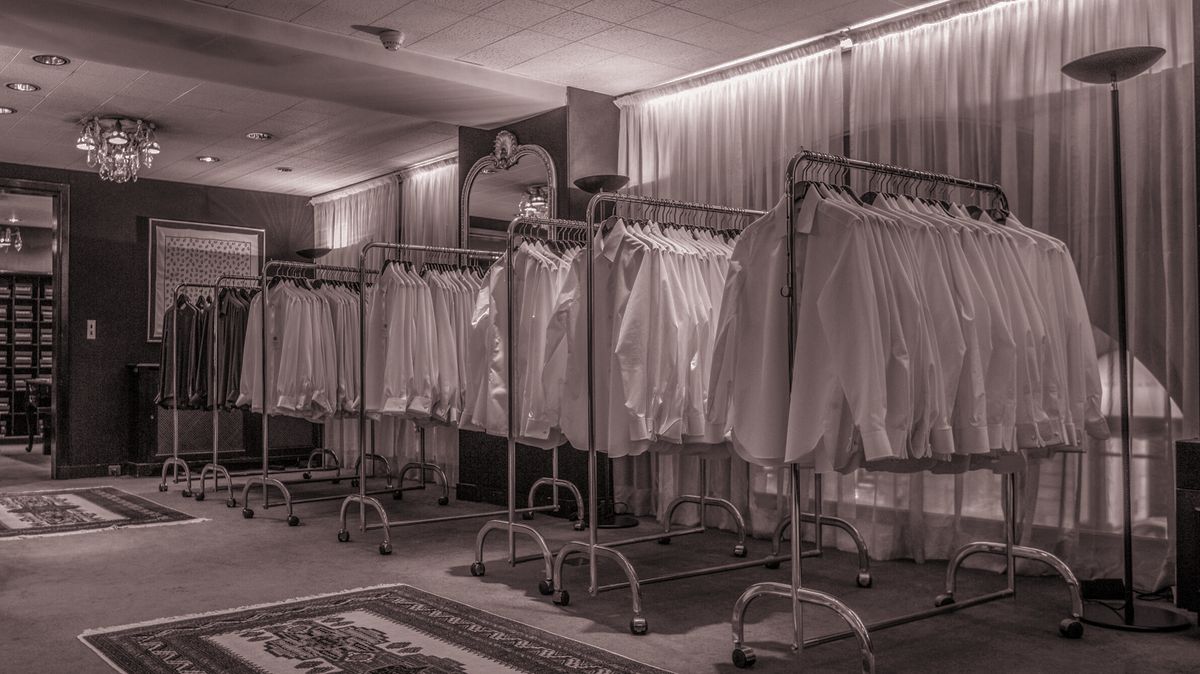
so—where people who think they have taste are obsessed with pure plays. Stores with history, unburdened by the pressures of the public markets or private equity investors. I’m thinking of Murray’s Toggery Shop on Nantucket, where you buy trademarked Reds, or Schostal pajamas, or Gammarelli, where the pope buys his socks. The ultimate example of this is Charvet, the 186-year-old shirtmaker off the Place Vendôme, where fashion people have been going for years to get custom shirts and
various accoutrements like ties, slippers, and scarves that you truly cannot get anywhere else—and for a reasonable price, to boot.
In recent seasons, the Charvet store has become a mecca—and honestly, a little stressful to shop during the shows. Now, after last week’s partnership with Chanel (they’re calling it a “conversation,” not a collaboration), more people than ever are talking, and thinking, about Charvet. Is that a good thing? Will our precious Charvet be ruined? And are we
responsible for its destruction?
I wouldn’t worry about that, but Sarah Shapiro is here today to explain why this is happening now, what it all means, and why real ones will shop Charvet in good times and bad. (Every time I leave, I whisper to one of the nice salespeople, “Don’t sell…”)
In other news, Sarah offers her thoughts on the Alex Eagle x J.Crew collaboration, and gives us an update on the crazy tariff situation. (I’m shopping exclusively in Europe from now
on.) I’ve also got a quick take on the much-anticipated LVMH earnings.
P.S.: Our brilliant colleague Julia Ioffe’s incredible book, Motherland: A Feminist History of Modern Russia, from Revolution to Autocracy, is out next week. Please buy it, and subscribe to Puck’s daily dispatch from Washington,
The Best & The Brightest, where Julia is on the foreign policy beat.
Mentioned in this issue: Charvet, Matthieu Blazy, LVMH, Cécile Cabanis, Maria Grazia Chiuri, Sephora, Alex Eagle, J. Crew, J.F.K., Winston Churchill, Kate Young, Amanda
Mull, Hedi Slimane, Jenna Lyons, Rob Zangardi, Skims, and many more… |
Three Things You
Should Know…
|
- Is
LVMH playing offense or defense?: The group’s Q3 sales were better than expected in the Fashion & Leather Goods division—its profit center—causing the luxury industry and investors to breathe a huge sigh of relief. (Someone you know actually said to me, “Thank God.”) That news, combined with an uptick in China and the announcement that Maria Grazia Chiuri is joining Fendi as its chief creative officer—what a baller title, for LVMH especially!—caused shares to lift 8
percent in after-hours trading. I listened to most of the call, and here are the key points you should know:
- They chose look No. 57 from the Dior show to highlight in the earnings.
- There is a lot of talk about what creative directors can do for the brands, but C.F.O. Cécile Cabanis noted that, while good design is important, they’re seeing a lot of traction when the company improves the retail experience: The wild Louis Vuitton ship in China is killing it, and Tiffany’s refurbished stores are performing better than those yet to be redone. (Of course, new/better stores are a big capital expenditure, and if you screw up, amortization will
crush the business.)
- As for the new designers: New Celine bags are already in stores, and the first apparel drops in November. At Fendi, it’s going to take a while—Maria Grazia’s first show isn’t until February—but I suspect they’re hoping many of her V.I.C.s move with her over there, and they will. It’ll take a few quarters to see the results of Jonathan Anderson’s efforts at Dior—Cabanis said look for the real bump in Q2 2026. (That said,
Dior, which continues to perform below average, is already doing better with local Chinese consumers.) It’s also important to note that LVMH called out Jack McCollough and Lazaro Hernandez’s debut at Loewe and Sarah Burton’s well-received collections at Givenchy as high points, along with Victoire de Castellane’s jewelry designs at Dior. (Fine jewelry is a big growth opportunity for Dior, as I’ve noted previously.)
- On the rising cost of goods, Cabanis said that the average order size has not changed; what they’re working on is the volume of customers coming in and foot-traffic. (This speaks to the idea that rich people continue to shop at the same pace; it’s everyone else who has stopped. Stuff is expensive.)
- Rhode was a record launch for Sephora. (But you already
knew that, thanks to Rachel Strugatz).
- On investments and divestments, Cabanis once again said the company was honored to be mentioned by Armani, but wouldn’t comment further. She said nothing about Marc Jacobs and the potential offloading of the business. “There is no dogma on the portfolio,” she said. “If there is a brand
for the group to have, we will look at it. If on the other hand there is a brand or asset we believe would be better off elsewhere, we will look at it.”
- In Q4, the comps are going to be tougher.
- In the end, Cabanis made a very good point that speaks, once again, to where the market is moving. LVMH is known for starving brands when times get tough, and obviously that doesn’t work. “Often in downward cycles some people cut
investment to protect margin, but that only works in the short term,” she noted, adding that the company must “continue to make sure that we invest the right amount.”
|
|
|
A MESSAGE FROM OUR SPONSOR |
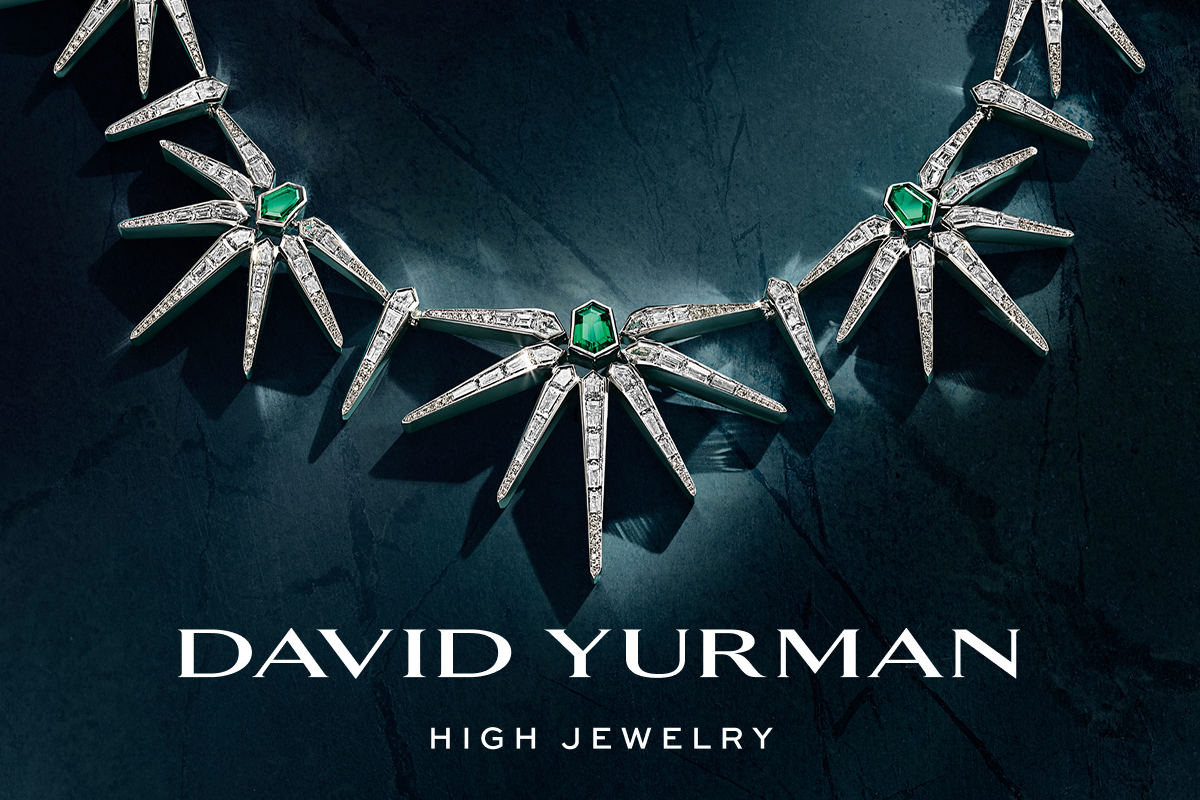
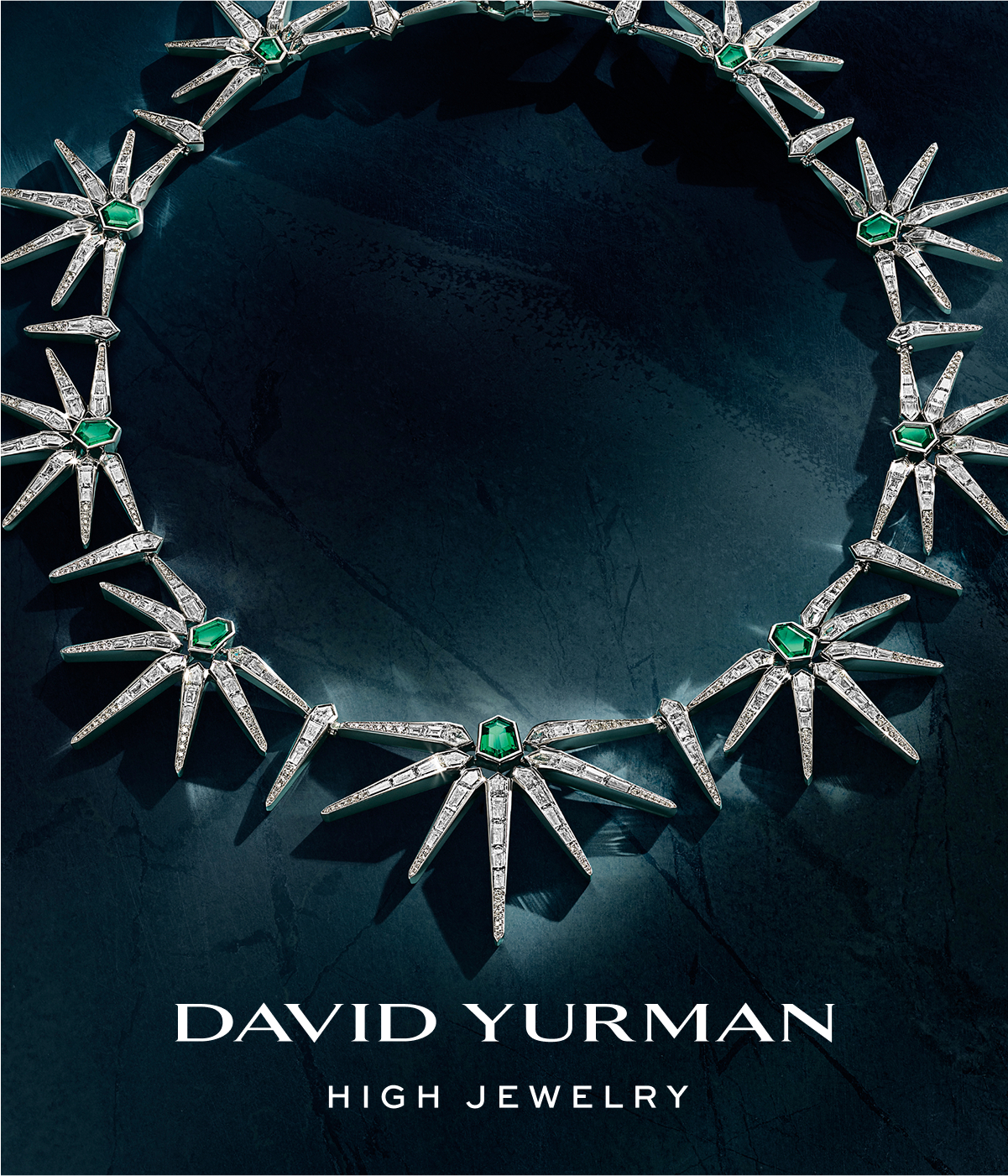
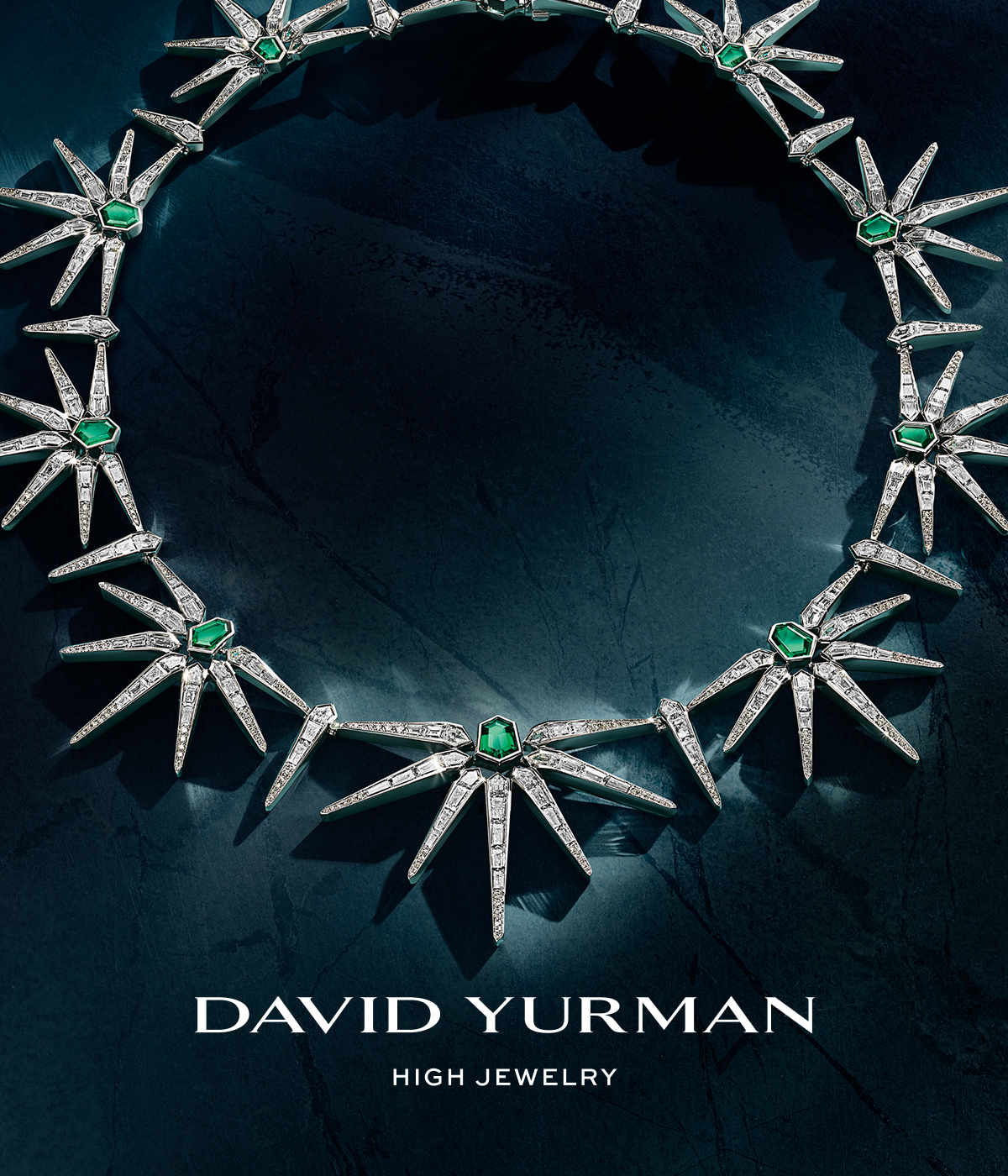
THE ART OF EXCEPTIONAL DESIGN The Liberty High Jewelry collection necklace evokes the spirit of New York City’s iconic skyline. Bespoke-cut diamonds and luminous emeralds are hand-set in white gold, radiating icy perfection like the Statue of Liberty’s crown.
Book a private appointment: concierge@davidyurman.com
EXPLORE DAVID YURMAN |
|
|

| Sarah Shapiro
|
|
- Alex Eagle x J.Crew collab
notes: British designer Alex Eagle has built a business around her taste: There’s her studio, of course, plus her Soho House store concepts, her collaborations with Away and Superga, etcetera. Her aesthetic seems well-suited to J.Crew, whose customers are partial to anything reminiscent of Ralph Lauren or England. For their new collaboration, J.Crew will borrow her editorial eye to produce a reversible trench coat, varsity jacket, and smart tailored slacks—all without having to pay the U.K. tariff, given that everything ships from the U.S.
The collab is also a savvy
move for J.Crew, not least because, given the cadence of their drops—the company launches a new delivery every month, along with smaller mid-month items—it can be hard for certain pieces to stand out. This will give customers a reason to pay attention—and to buy. Moreover, partnering with a Brit, after J.Crew closed all six of its U.K. locations during Covid in 2020 and didn’t reopen any of them, feels like a minor reclamation of lost ground. - Tariff
traffic report: As you know, last week, Trump threatened an additional 100 percent tariff on China on top of the 30 to 40 percent, depending on the category, already looming. For vendors, retailers, and shoppers, it was another day of chaos and unforeseeable downstream consequences. The president’s post on Sunday, saying “Don’t worry about China, it will all be fine!” did little to placate this anxious crowd.
Right now, retailers and
brands are reporting that their shipments are stuck in customs, and they don’t know when they’ll clear, or even what duties will be slapped on. On October 2, UPS suspended its own money-back guarantee for international shipments, only to reinstate it on October 10. Import forecasts are also all over the place. Forecasts for October are down over 12 percent, and November and December are both down almost 20 percent. Because retailers smartly frontloaded inventory earlier this year, it’s difficult
to draw any firm conclusions. In short, there is no baseline that feels normal.
|
|
|
In an era of endless expansion, private equity fervor, and imitation luxury, sometimes the
most radical business strategy is simply refusing to grow. |
|
|
Investors looking to make big money in retail typically employ a familiar set of tactics: acquire, expand,
scale, and exit. But some notable fashion success stories have been resistant to the private equity playbook. During fashion week, Charvet, the 187-year-old French shirtmaker with a single location on the Place Vendôme, was the talk of Paris—particularly after Matthieu Blazy sent Charvet-stitched dress shirts down the runway for Chanel, with a retail price of $4,350. After the show, internet search interest for Charvet went through the roof. And yet, the brand continues
to sell its own custom shirts starting around just $600.
Yes, Charvet could probably charge a lot more for its clothes, which have long been a favorite of fashion insiders like Hedi Slimane and Jenna Lyons, and, back in the day, political royalty like John F. Kennedy and Winston Churchill. Instead, dress shirts run $495 to $695 off the rack; slippers cost $585; socks $70, and silk ties $385. While The Row and Brioni are
charging more than $1,000 for dress shirts, Charvet is arguably pricing well below the pain threshold for many of its customers. |
|
|
A MESSAGE FROM OUR SPONSOR |
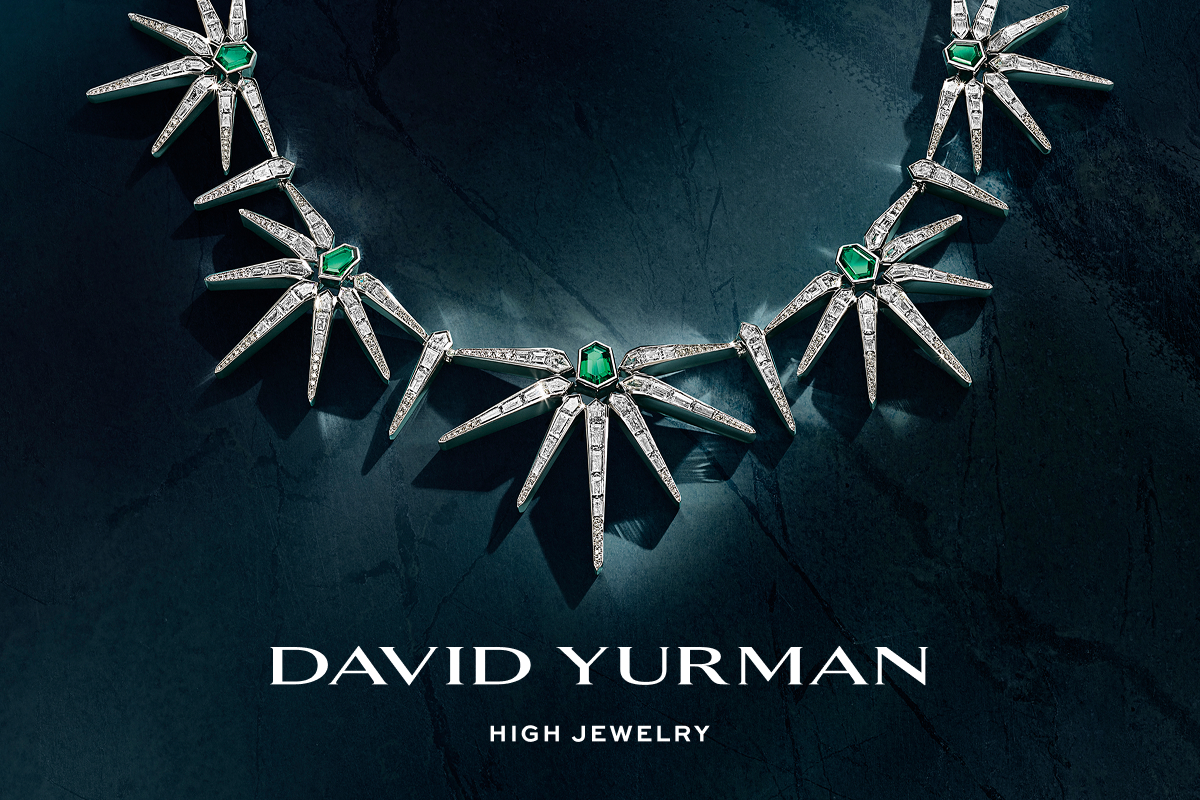
THE ART OF EXCEPTIONAL DESIGN The Liberty High Jewelry collection necklace evokes the spirit of New York City’s iconic skyline. Bespoke-cut diamonds and luminous emeralds are hand-set in white gold, radiating icy perfection like the Statue of Liberty’s crown.
Book a private appointment: concierge@davidyurman.com
EXPLORE DAVID YURMAN |
|
|
That strategy stems in part from the company’s ownership structure. Siblings Anne-Marie and
Jean-Claude Colban still run the company their father, Denis, bought in 1964 from the Charvet family, and they’ve kept it a family business. No venture capital, no direct-to-consumer website. Most of Charvet, you can’t buy online. Yes, there’s some wholesale at Mr. Porter, Bergdorf Goodman, Mytheresa, and, coming soon, Net-a-Porter, but the assortment is limited. If you want Charvet, you go to the Place Vendôme.
Visiting the store in Paris delivers an experience that expansion would likely destroy. The logistics of visiting a single location create a
natural friction that maintains a special aura around it without artificial scarcity. A few other brands have a similar footprint, such as Schostal, Husbands, and Rubirosas—Lauren Rubinski's new Paris store—selling well-made classics at premium prices. These businesses understand that exclusivity creates value in ways flooding the market never can. |
Is Charvet leaving a not-insignificant amount of money on the table by not doing the obvious and scaling the
model with, say, Charvet boutiques in New York, London, and Tokyo? Would expansion kill what makes it special? Maybe. While outside investment could supercharge sales, you can’t scale credibility. And you certainly can’t bottle the magic of a Place Vendôme location, where, for a certain customer, going to Paris will always mean going to Charvet. The model only works at this size, with this scarcity, in this exact setup.
The retail industry’s obsession with growth has conditioned investors
to see success as a blueprint for replication. But some businesses succeed precisely because they resist replication. Charvet’s refusal to expand isn’t a missed opportunity—it’s the entire point. In a market drowning in sameness, where every brand sells everywhere through every channel and has 10 collections a year, the stubborn single store with a limited assortment becomes radical. |
|
|
Charvet will outlast this moment of heightened interest because it never has chased trends. The brand just
exists, making the same shirts, silks, and socks it’s made for nearly two centuries. That consistency, that refusal to change with the market, makes it matter now. Private equity can study the model all it wants, but it’s not easily reproduced. |
What Sarah’s Reading…
and Looking At
|
The stylist Kate Young has been on a collaboration tear. Her latest is with
Alexandra Golovanoff, a gorgeous French journalist and influencer who happens to have a well-loved knitwear line, too. They did sweaters and jeans, and it launches October 22. [Inbox]
If you’re wondering why Chase hired Hailey Bieber and Claudia Schiffer to star in credit card campaigns, Amanda Mull has the answer. [Bloomberg Businessweek]
Celebrity stylist Rob Zangardi launched an outerwear line. The name is really tough, but let’s give him some grace and hope it does well. [Auterwear]
With a tween in my house,
very little in the Piper Sandler Teen Survey surprised me. Nike, Hollister, and Brandy Melville are still top of the charts. Worth noting that 62 percent of teens surveyed see the economic outlook as “worse.” [Piper Sandler]
Skims has launched…. merkins? With the tag line, “Your carpet can be whatever color you want it to be.” They have
basically sold out. [Skims] |
Until tomorrow,
Lauren
P.S.: We use affiliate links because we are a business. We may make
a couple bucks off them. |
|
|
Puck fashion correspondent Lauren Sherman and a rotating cast of industry insiders take you deep behind the scenes of this
multitrillion-dollar biz, from creative director switcheroos to M&A drama, D.T.C. downfalls, and magazine mishaps. Fashion People is an extension of Line Sheet, Lauren’s private email for Puck, where she tracks what’s happening beyond the press releases in fashion, beauty, and media. New episodes publish every Tuesday and Friday. |
|
|
Puck’s daily art market email, anchored by industry expert Marion Maneker, offers unparalleled access to the mega-auctions and
galleries, elite buyers and sellers, and the power players who run this opaque world. Wall Power also features Julie Brener Davich, a veteran of Christie’s and Sotheby’s, who provides unique insights into how the business really works. |
|
|
Need help? Review our FAQ page or contact us for assistance. For brand partnerships, email ads@puck.news. You received this email because you signed up to receive emails from Puck, or as part of your Puck account associated with {{customer.email}}. To stop receiving this newsletter and/or manage all your email preferences, click here. |
Puck is published by Heat Media LLC. 107 Greenwich St, New York, NY 10006 |
|
|
|