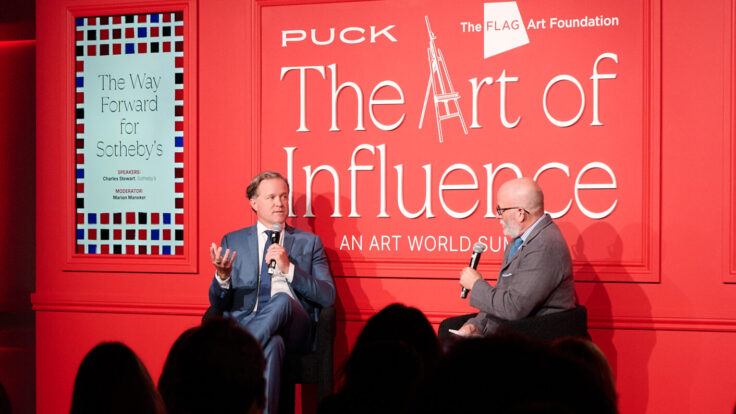
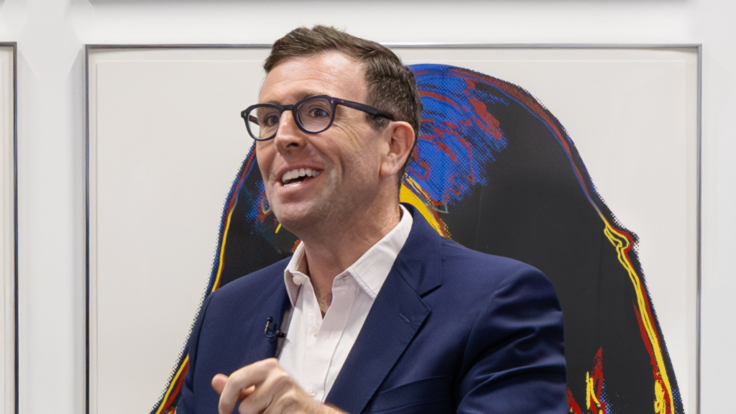
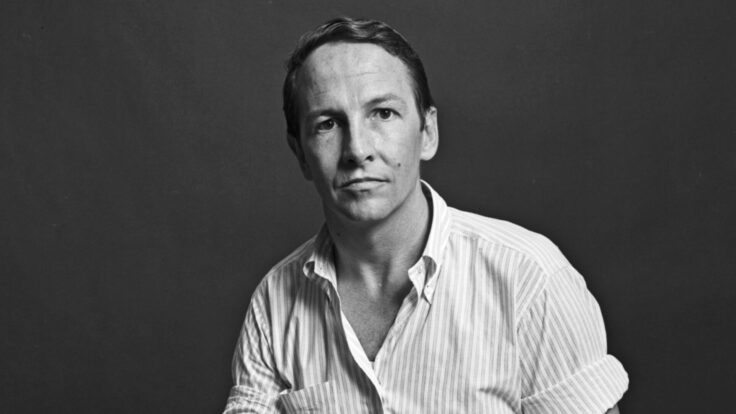
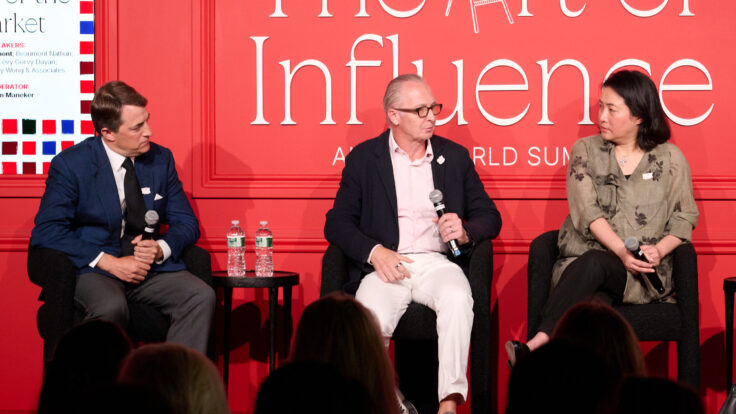
Welcome back to Wall Power. I’m Marion Maneker.
I’ve got a treat
for you tonight. Ingrid Abramovitch is just back from Salone del Mobile in Milan, which she says has “peaked” due to a fashion world incursion, with luxury brands chasing moneyed clients happy to spend $150,000 on a sofa. A design veteran like Ingrid still knows where the action is at Salone—and she takes us with her. Up top, major lots are still being announced for the May sales, which begin in just two weeks. Today we look at a $40 million Roy Lichtenstein at
Christie’s. Plus, South African gallery Southern Guild opened last Friday with a bang, and the dramatic results of Sotheby’s watches sale in Hong Kong.
Also mentioned in this issue: Margot Robbie, Zoe Saldaña, Snoop Dogg, HUGEL, Trevyn and Julian McGowan, Zanele Muholi, Anne Schlumberger, Ken Griffin,
Holly Solomon, Giuseppe Albanese, Maria Porro, Gio Ponti, Ai Weiwei, Giorgio Armani, Demna, Daytona Williams, Francis Bacon, and more…
A few quick things before we go to Milan… |
-
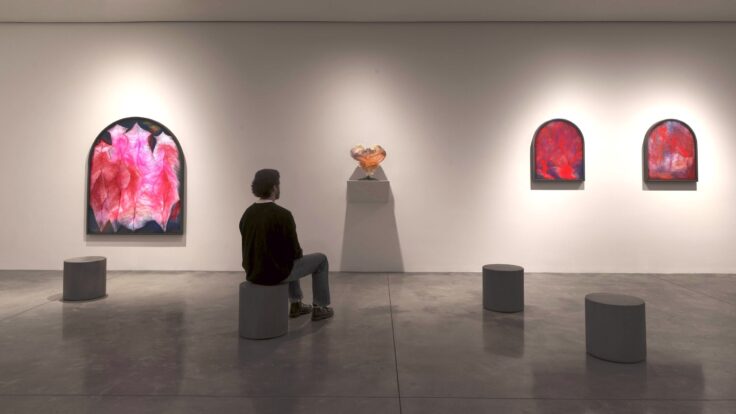
The Global South comes to Tribeca: After a two-year sojourn in Los Angeles, the South Africa–based Southern Guild has moved their U.S. outpost to New York. I stopped by their gallery, on Leonard Street, last Friday night for the opening of a dual show of two very different South African artists, Mmangaliso Nzuza and Usha Seejarim. Nzuza makes big figurative
portraits with simplified features, while Seejarim assembles sculptural installations from steam irons and clothespins and other objects of domestic production. The space was teeming with a wide range of visitors, many dressed elegantly and some extravagantly. It was the best example of an art opening as a stage spilling out onto the street, which is fitting because the gallery’s owners, Trevyn and Julian McGowan, both have theater backgrounds. When I caught up
with Trevyn to say hello, she told me that the attendees were all drawn from their extended list of contacts built through art fairs and their time in Los Angeles.
Trevyn and Julian met in London when they were both married to other people. She had been an actress who fell into interior design; he was a set and costume designer working between New York and London. Twenty years ago, they decided to move to a remote part of South Africa’s Western Cape, where they built a company, Design
Network Africa, exporting handcrafted objects and housewares to contacts from her design business. In South Africa, relationships with artisans turned into relationships with artists. But selling art is different from selling housewares, so Southern Guild emerged as a way to sell collectible designs made by South Africans. And because their artisans had artistic ambitions, the gallery began to travel the global fair circuit and build a broader base of buyers for artists, like Zanele
Muholi, who have international appeal.
Two years ago, they took the leap to setting up a base in the United States, the world’s biggest market for art. They opened in Los Angeles, but discovered that it takes quite some time to crack that market, as local gallerists often explain to me. New York, it turns out, was already a transshipment point for artworks going to L.A., and the couple had plenty of experience in the city from their theater and design days. Plus,
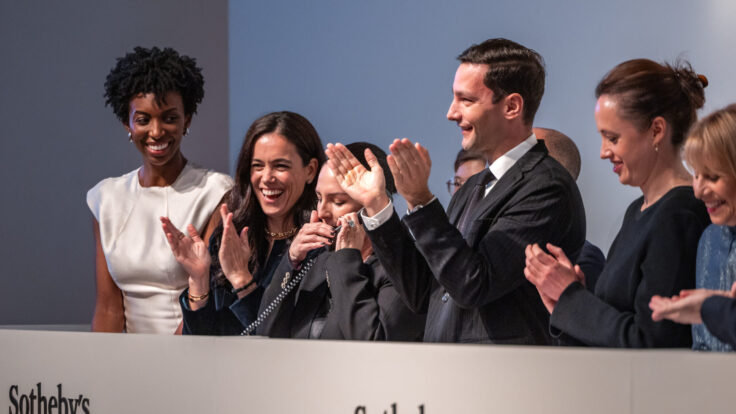
the McGowans discovered that their better collectors, even the ones who lived in Los Angeles, told them they “only buy art in New York.” So here they are. - Sotheby’s $53 million watch bonanza: Sotheby’s set a house record for a watch auction last Friday in Hong Kong, netting almost $53 million total. A collection of 82 Cartier watches sold for nearly $14 million, with a 1987 “Crash”
watch selling for almost $2 million. (Cartier has been developing a strong secondary market for their vintage watches by backstopping the auction market in recent years.) A Patek Philippe made for Tiffany sold for more than twice the
estimate to make nearly $2 million, too. Several F.P. Journe watches sold well, including this Tourbillon Souverain “Ruthenium,”
which made more than $1.1 million.
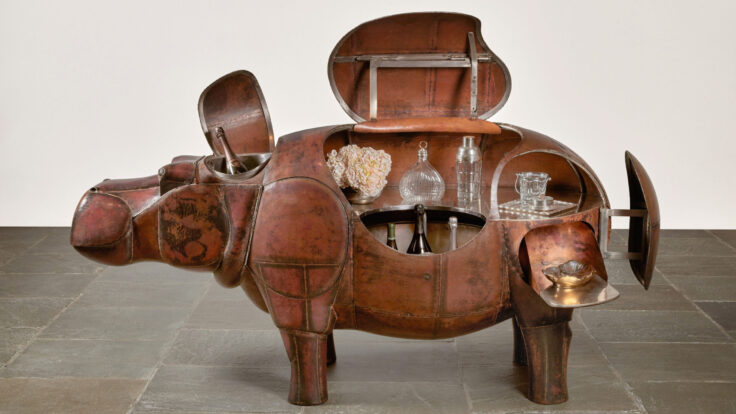
- A hippo by any other name…: As several of you were quick to point out—and I’m sincere when I say that I do appreciate the corrections—I was having an “episode” last week when writing about the previous Lalanne record set in December. That work was a unique hippopotamus bar sold by Anne Schlumberger—and not purchased by Ken Griffin, despite persistent
rumors—and not a rhinoceros bar, as I dubbed it in multiple references. Obviously, I need to go to a zoo and take a refresher course in large African mammals.
|
A $40M Anxious Girl at Christie’s
|
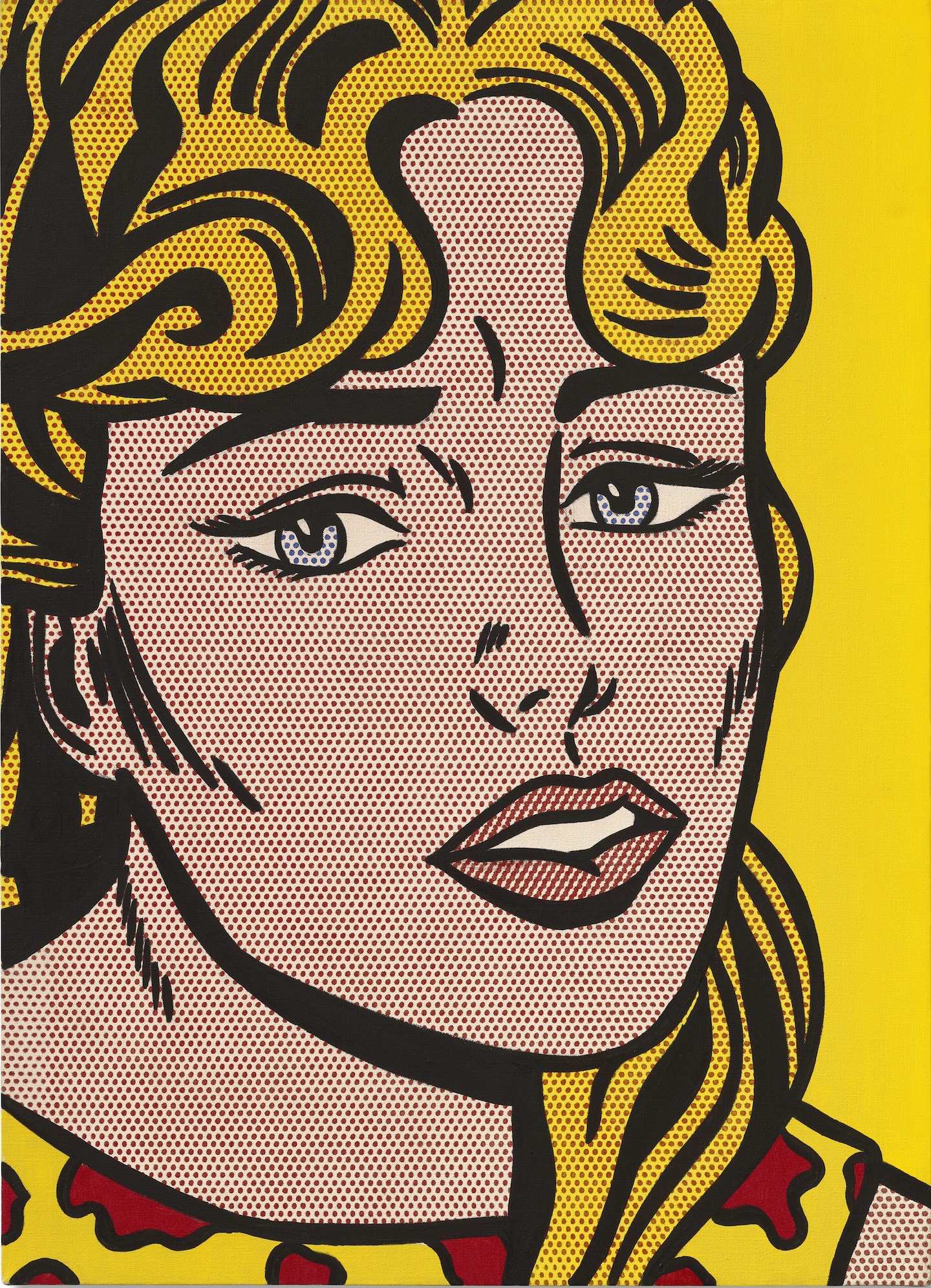
Roy Lichtenstein, Anxious Girl (1964). Photo: Courtesy of Christie’s |
The slow-build pop art revival seems to be reaching its peak, with an important show coming to the
Guggenheim in June and a major retrospective of Roy Lichtenstein’s work at the Whitney this fall. We’ve already seen a flood of work from the artist’s estate snapped up by collectors over the past two years. But there have been few major works on offer from his breakout moment in the early 1960s. Today, Christie’s
announced it will be selling a prime example, Anxious Girl, from 1964, with an estimate of $40 million. Once owned by Holly Solomon, an early pop art collector, the painting is the first early ’60s work inspired by comics to come to market
since 2019, when Kiss III, from 1962, sold for $31 million.
Over at Sotheby’s, an enamel painting of Girl in Mirror, made in an edition of eight in 1964, is being offered with a $5 million estimate. That work was previously bought in 2012 for $3.7 million. Since then, other versions have sold for prices as high as $6.8
million. And one work in the edition was the subject of a famous “cruel and offensive offer” during the height of the global financial crisis in 2009, when a collector managed to buy it privately for only $2 million, a great deal facilitated by a director at Gagosian.
Now, let’s go to Milan with Ingrid…
|
|
|
|
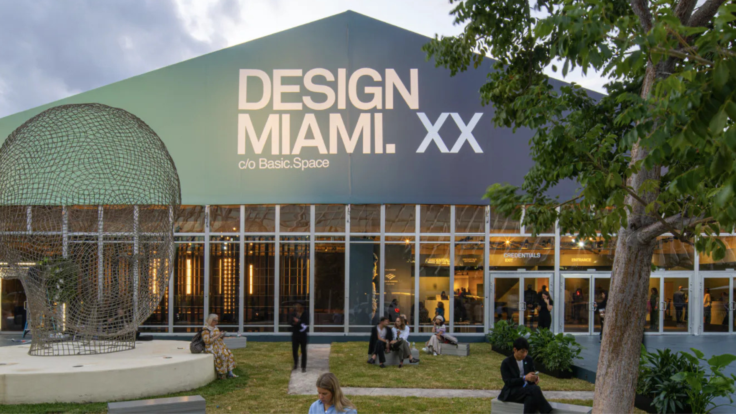
This year, the unparalleled design fair Salone del Mobile was nearly
overtaken by luxury brands, Martha Stewart, and anyone hoping to capitalize on its moneyed clientele. After all, if you’re willing to plunk down six figures for a sofa, what’s a handbag or two? |
|
|
|
Last Monday evening—on the brink of the 64th edition of Salone del Mobile, and two days into my
seventh pilgrimage to the Milanese furniture fair that has metastasized from trade show to design spectacle—I took my seat in a red silk-and-gilt box on the fourth tier at Teatro alla Scala. Even from that vertiginous perch, the excitement was palpable as the eminences of the global furniture industry filed in for the gala that kick-starts a week critical to this city’s economy.
Backed by the house philharmonic, Italian pianist Giuseppe Albanese tore through Symphony No.
40 in G minor, K. 550—a programmatic choice, according to Salone president Maria Porro, for its “lucid, almost architectural composition, capable of shaping unrest into form.” It wasn’t just the Mozart. Unrest was the subtext of this year’s Salone, with luxury brands lurking, Salieri-like, behind every velvet curtain, scheming to capitalize on the event’s arty, intellectual, and irresistibly Italian appeal.
After pouring money
into designs, production, and booths that routinely run into five and six figures, the design industry—still recalibrating from the loss of Russian clientele in 2022—was bracing for fresh geopolitical headwinds. Would Middle Eastern buyers show? Would Italy recover its recently reported 13.1 percent drop in furniture exports, driven by declining demand from China and the U.S.? Would Milanese taxi drivers stop asking me about Trump? Magari.
Meanwhile, a more
existential struggle was playing out as the Fuorisalone—a sprawling constellation of off-site exhibitions—continued its march across Milan, threatening to swallow the city whole. While Salone officials might have hoped design could impose order on chaos, in reality the fair is just one slice of an ever-expanding pie that now includes splashy activations by fashion houses like Louis Vuitton, Hermès, Prada, and Gucci. The result is a FOMO industrial complex flooding feeds with decadent parties,
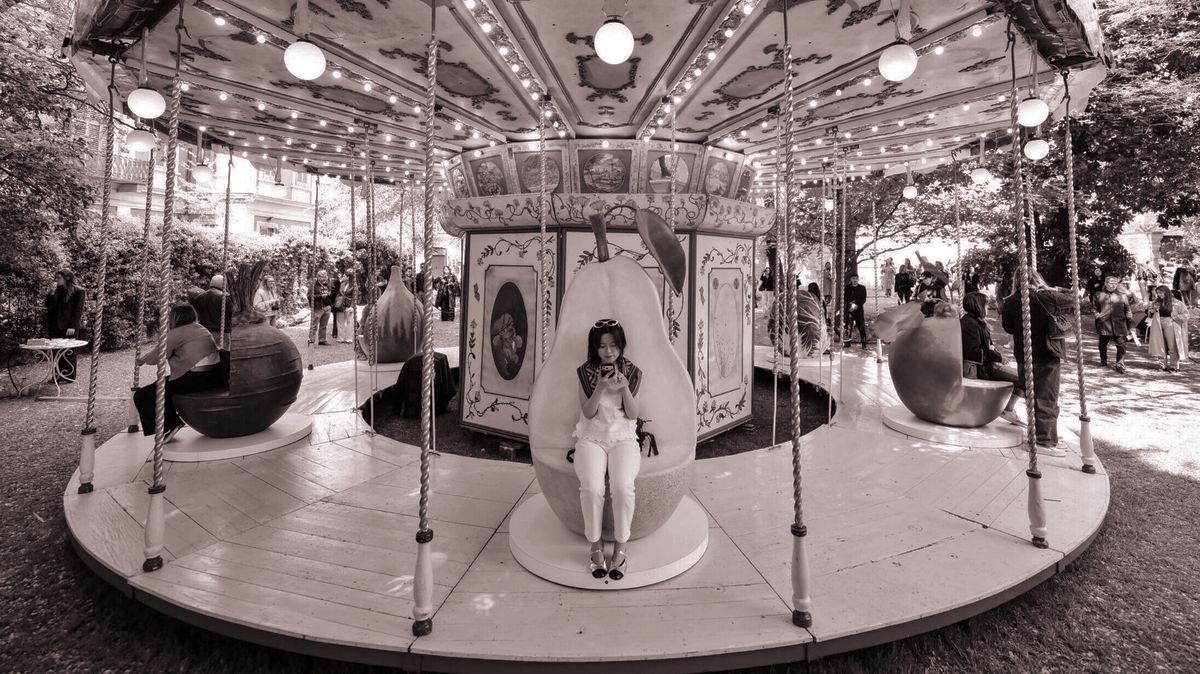
celebrity sightings (Martha Stewart! Dua Lipa!), and Gio Ponti treasures staged in improbable settings—like the bank vault at Dimorestudio’s new gallery across from the stock exchange. If you didn’t post food artist Laila Gohar’s carousel for Arket, with larger-than-life vegetables standing in for horses, did it really happen? |
Seven editions in, I’ve learned one rule about Salone: The fair may open Tuesday, but the real
action starts days earlier. I arrived Saturday afternoon from Carrara, where I’d been touring quarries and sculpture studios with designers like Luis Fernandez and Lillian Wu, on a trip organized by ABC Stone. My first stop in Milan was the Rubelli showroom, whose windows were veiled with white curtains patterned like delicate pinwheels—until they snapped into focus as rings of raised middle fingers. The textiles marked Chinese artist Ai
Weiwei’s debut in décor. Inside, fifth-generation co-C.E.O. Nicolò Rubelli walked me through the technical feat behind the artist’s subversive silk lampas—a red-and-gold weave featuring surveillance cameras, handcuffs and chains, and Twitter birds. But don’t call your decorator, he cautioned: This is an artwork, not a product. It’s not for sale. (Or not yet, anyway.)
That evening, I went to the Triennale di Milano for a cocktail party
hosted by interior designer Julie Hillman, honoring an exhibition of 1950s and 1960s photos of Chicago jazz musicians by her father, Don Bronstein. I also caught shows on British design duo Barber Osgerby and the late architect Andrea Branzi, including artifacts from his sci-fi utopia, No-Stop City.
On Sunday morning I headed to a design takeover by Uzbekistan, a country better known for repression than expression. At Palazzo Citterio,
the 18th century façade was draped in giant ribbons and tassels, the handiwork of British designer Bethan Laura Wood. Inside, displays featured Uzbek bread trays reimagined by Marcin Rusak and Nifemi Marcus-Bello. A translucent courtyard yurt designed by architect Kulapat Yantrasast, of the Los Angeles firm WHY, was an impressive setting for panels and tassel-making workshops held later that week.
From there, I continued
on to Alcova, the roving experimental fair that has become a must-stop on the Fuorisalone circuit. This year, curators Valentina Ciuffi and Joseph Grima returned to the decaying Baggio Military Hospital, an overgrown 1931 art deco complex, where installations unfolded across abandoned wards and tree-lined avenues. Here, Mexico City’s Sten Studio staged a “wedding” of stone totems in a former chapel, complete with live harpist. A van ferried guests to Villa
Pestarini, a 1939 home by Italian rationalist architect Franco Albini, newly opened to the public.
By then, the week had dissolved into 20,000-step days and spritz-fueled nights. I paid respects to the late Giorgio Armani at Armani Casa, where greatest hits sat alongside updated designs. In the cloister of San Simpliciano, Gucci’s designer Demna planted a wildflower field and hung tapestries charting the house’s history—complete with a
Tom Ford moment and a cameo by Demna himself.
As Daytona Williams, publisher of Paris-based Neptune Papers, explained while holding court at his lively aperitivo party at Tabaccheria Giacomo, the lure of Milan Design Week for fashion brands is that “if a person can spend $12 million on a Francis Bacon painting, or $150,000 on a couch, then a $4,000 handbag is just a drop in the ocean.” At Casa Milana, inside the Brera apartment
of Gabriella Campagna and Mario Milana, the couple—she is an American actress turned somatic therapist, he is an Italian designer of furniture, lighting, and objects—described a design philosophy rooted in “presence.” A rotating lava-stone dining table embodied the idea. “If an object is static, it becomes dead,” Milana told me. How quintessentially Milanese. |
That
Inimitable Design Week Allure
|
Across town, Palazzo Donizetti became a fantasia for the brand Artemest, with spaces riffing on the
Italian grand tour—from a Neapolitan dining room by Rockwell Group to leopard-carpeted salons by Charlap Hyman & Herrero. Upstairs, Artemest’s first furniture collection was displayed in a re-creation of the New York studio of its designers, Christine and John Gachot.
On Tuesday afternoon, I made the 45-minute trek to Fiera Milano Rho, the futuristic complex where Salone’s 1,900 exhibitors had opened for business. At Salone Raritas, a new collectible
design section curated by Annalisa Rosso with scenography by FormaFantasma, I spotted Lalanne works at the Mitterrand booth and new designs by Job Smeets for a Dubai startup. “You never would have seen Lalannes at a fair like this before,” said R & Company’s Evan Snyderman, who seemed impressed as he wandered through the crowded booths. “It shows how many facets the design market has now. I like it.” Nearby, architect
Lee F. Mindel was quietly snapping up a pair of vintage Sergio Rodrigues mirrors.
That night, I swapped sneakers for heels and headed to the unveiling of RH Milan, The Gallery on Corso Venezia, in a 75,000-square-foot former palazzo. A line snaked around the block as guests—including Margot Robbie and Zoe Saldaña—entered a full-blown bacchanal. Dinner was served beneath a glass roof in a subterranean restaurant; the
French DJ HUGEL, fresh off his Coachella set with Snoop Dogg, performed Latin house music in the courtyard; and late-night negroni sbagliatos appeared on the top floor courtesy of Bar Basso.
Whether RH’s all-American formula will land in Milan remains to be seen. That evening, no one was asking. What did seem clear is that 2026 was the year we may have reached peak Salone—a perfect storm of fashion and Hollywood sidling up to an industry once better known
for its Franco Albini and Vico Magistretti introductions than for Prada “symposiums” and influencer dinners. In the city where Ico Parisi and Gae Aulenti once walked, there may be no turning back. |
Thank you so much, Ingrid. I really enjoyed this. I hope everyone else did, too. And if you have
any burning questions about the world of design that you want answered, please reply to this email or text me at +1.917.825.1391. We’re looking forward to having Ingrid back soon.
Tomorrow, in the Inner Circle, I’ve got an interview with tech-forward landscape painter Emma Webster ahead of her New York solo show debut at Petzel. Upgrade here to read it.
Ciao,
M
|
|
|
|
Puck founding partner Matt Belloni takes you inside the business of Hollywood, using exclusive reporting and insight
to explain the backstories on everything from Marvel movies to the streaming wars. |
|
|
|
Unique and privileged insight into the private conversations taking place inside boardrooms and corner offices up and
down Wall Street, relayed by best-selling author, journalist, and former M&A senior banker William D. Cohan. |
|
|
|
Need help? Review our FAQ page or contact us for assistance. For brand partnerships, email ads@puck.news. You received this email because you
signed up to receive emails from Puck, or as part of your Puck account associated with {{customer.email}}. To stop receiving this newsletter and/or manage all your email preferences, click here. |
Puck is published by Heat Media LLC. 107 Greenwich St., New York, NY 10006 |
|
|
|
|