Hi, and welcome back to Line Sheet. Today, Sarah “ SShapiro@puck.news” Shapiro examines LoveShackFancy, former fashion editor Rebecca Hessel Cohen’s pink tulle explosion of a brand, beloved by tweens and repressed adult women alike. There have been plenty of profiles written about Hessel Cohen over the past few years, all documenting the potency of her aesthetic, which I’d describe as “Shabby Chic meets Betsey Johnson meets Toddlers & Tiaras.” Here, Sarah analyzes LoveShackFancy’s real business potential, from licensing opportunities to physical retail, as its audience trades up to brands like Isabel Marant.
Mentioned in this issue: LoveShackFancy, Rebecca Hessel Cohen, Marie Antoinette, Sephora, Target, Pottery Barn, ruffles, Shiseido, Ron Gee, Kentaro Fujiwara, Duran Lantink, Jean Paul Gaultier, LVMH, and many more…
|
|
|
|
A MESSAGE FROM OUR SPONSOR
|
GET NOTICED
Every detail of this iconic performance SUV has been labored over to communicate poise and presence.
EXPLORE
|
|
|
Three Things You Should Know...
|
- Rachel on the executive shake-up at Shiseido: After a tumultuous few years, Ron Gee, the C.E.O. and global M&A lead of Shiseido Americas, abruptly left the beauty giant this week. I heard employees were invited to an informational meeting held via Microsoft Teams on Tuesday morning during which Shiseido C.E.O. Kentaro Fujiwara informed the company of Gee’s departure.Of course, the Japanese company’s overreliance on China, its largest market, continues to present challenges. But things in North America haven’t been going well for some time. In addition to a deal to buy Osea that almost closed last year (“It was basically fully done, and fell apart after the summer,” a person familiar told me), there are ongoing issues with Nars and Drunk Elephant, two of Shiseido’s most important U.S.-based brands. (The company acquired the latter in 2019 for $845 million.) A high-level source said the situation in North America had gotten so bad that Shiseido “might ‘regroup’ in Asia and relaunch in the American market in a couple of years.”There’s been speculation that Gee’s finance background didn’t lend itself to brand building, while others have made allusions to something more abrupt. As one Shiseido executive pointed out: “He’s not staying to transition. Who leaves the company the same day they resign?” This person added that they talked to Gee as recently as late last week. By contrast, the company had a succession plan in place five years before Fujiwara’s predecessor, Masahiko Uotani, retired last year. (A representative for the company declined to comment.) ––Rachel Strugatz
- Gaultier’s new creative lead: Duran Lantink, the recent winner of the Woolmark Prize, has been named creative director of Jean Paul Gaultier. This news, of course, has been circulating for a bit, in Line Sheet and elsewhere. But now it’s official.
- Arnault’s rough quarter: LVMH missed analyst expectations and revenue declined by 3 percent in Q1, sending the stock tumbling and allowing Hermès to take its place as the world’s most valuable luxury company. U.S. and Chinese markets were particularly weak, and all of that was before the tariffs really started to hit. Among the three worst-performing categories: fashion and leather goods (down 5 percent), the alcohol business (down 9 percent), and Sephora’s retail operations.
|
|
And now for the main event…
|
|
|
|
Rebecca Hessel Cohen’s ultra-pink, Versailles-chic sorority brand is expanding its business through traditional retail, wholesale, and a growing variety of licensing plays—everything from Pottery Barn rugs to press-on nails. How far can LSF reach before it overextends?
|
|
|
|
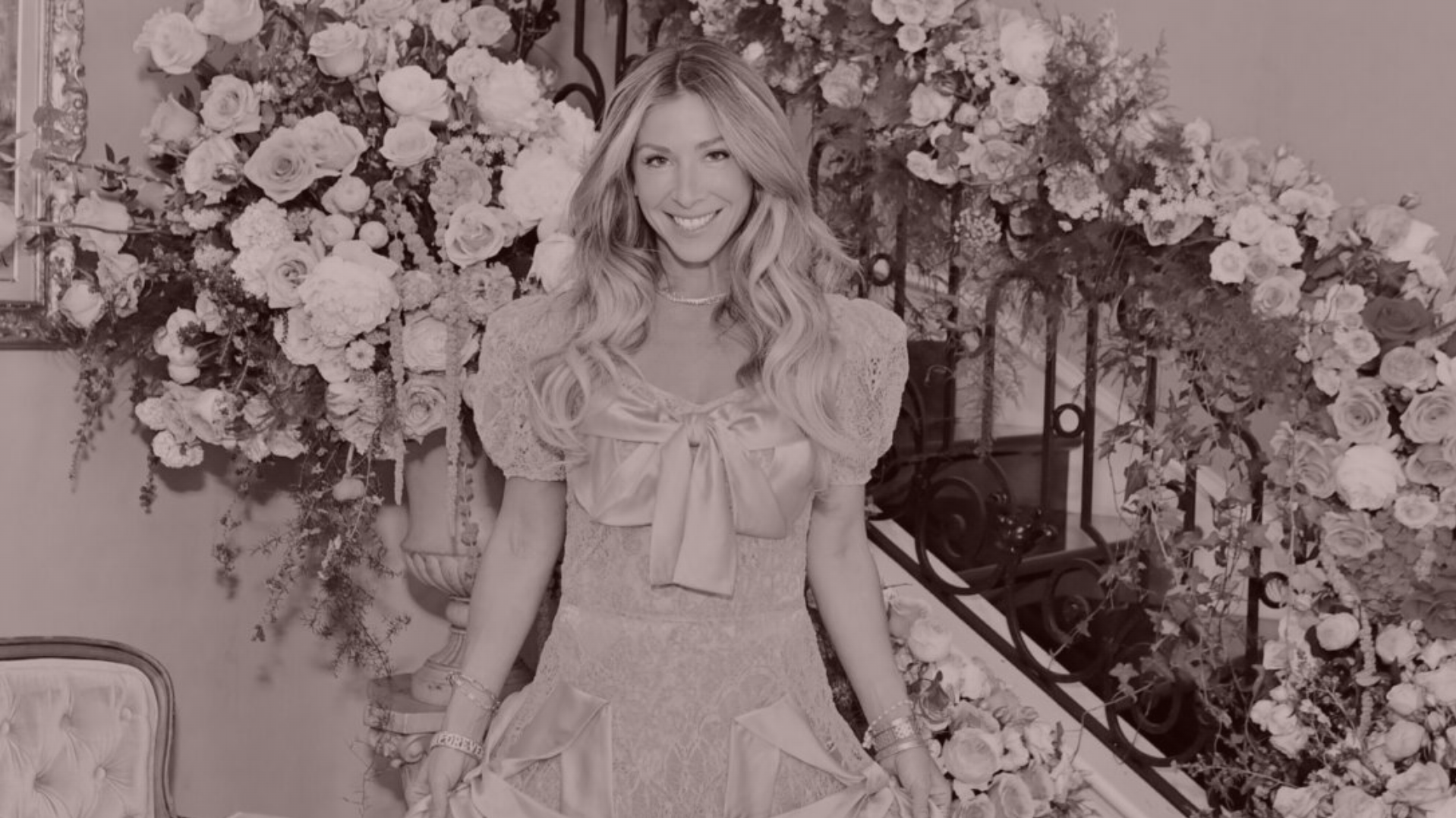
To venture into a LoveShackFancy boutique is to risk a sensory overload of pink: floral arches framing doorways, ruffled dresses displayed like confections, and an atmosphere that evokes Marie Antoinette’s boudoir, but reimagined for Gen Z. At the brand’s recent New York Fashion Week presentation, held in the Louis XV–style Duke mansion on Fifth Avenue, the LSF aesthetic was at its peak: Champagne flowed while acrobats hung from the ceiling, and pearls dripped from chandeliers, bustier crop tops, and models’ necks. The scene made Millennial pink seem positively austere.
LoveShackFancy is the decadent, aspirational vision of Rebecca Hessel Cohen, who launched the brand in 2013 after failing to find sufficiently girlie bridesmaid dresses for her wedding. And while LSF is intentionally not for everyone, it’s been remarkably successful, generating an estimated $100 million in annual revenue across 20 storefronts and spawning a seemingly endless series of collabs. (A representative declined to comment on the company’s financials.)
|
|
|
|
A MESSAGE FROM OUR SPONSOR
|
GET NOTICED
Every detail of this iconic performance SUV has been labored over to communicate poise and presence.
EXPLORE
|
|
|
The distinctiveness of the brand has also lent itself to an unusually aggressive partnership and licensing strategy. Indeed, LoveShackFancy seems to announce a new partnership every week (the latest is with the bag brand State), even as their own product line continues to expand. In the U.S., the LSF trademark adorns a range of apparel items, including dresses, footwear, hats, and underwear, as well as the newish fragrances that are also available in Sephora. Over the last few years, LSF has partnered with everyone from Hunter boots and 1-800-Flowers to Pottery Barn Teen, Stanley (water bottles), Gap, Kendra Scott, imPress press-on nails, Hedley & Bennett ( aprons), Beach Riot (swimwear), and Bandier (the defunct fitness brand), among many others.
A spokesperson for LoveShackFancy told me they view these arrangements as collabs rather than licensing deals, although royalties and design fees are often part of the structure. Another way to describe Hessel Cohen’s vision is that she is world building. (She has cited Ralph Lauren, who built Polo into an all-encompassing lifestyle empire, as an inspiration.) For the youngest adherents, for instance, there is the Goody hairbrush at Target and ribbons galore in stores. For older teens, LSF has become the unofficial uniform of #RushTok, wherein sorority hopefuls document their recruitment journeys in LoveShackFancy’s signature ruffled skirts and sundresses. The Pottery Barn Teen collaboration, meanwhile, extends the relationship with those same customers into their homes and dorm rooms.
It’s a lucrative model. According to an insider who worked on one of the deals, LoveShackFancy typically receives 5-10 percent of net revenue from collabs, while partners get to experiment with feminine designs they couldn’t credibly create on their own without feeling off-brand. These arrangements, I’m told, typically provide LoveShackFancy a rev share with a guaranteed floor—say, 7 percent of $4 million in the first year of a deal, even if the partnership doesn’t generate that many sales, and an even higher guarantee for multiyear deals. The partner takes on the greater share of risk, financing the development, sampling, and tooling, etcetera, while LSF provides the design and cooperates on the marketing.
|
|
Proceeds from these sorts of deals likely comprise only a small portion of the brand’s estimated total revenue, which mostly comes from D.T.C. and their wholesale clothing line, plus a small but growing fragrance business. But the collabs also provide something invaluable: stability in an unstable market, and the ability to grow revenue without adding head count. When I asked industry sources why LSF wouldn’t just create their own home line, for example, they pointed to the extra overhead and CapEx required. Collaborations offer comparative simplicity and little risk, while giving devoted followers—from teenage girls to their mothers—new channels to engage with the brand’s aesthetic.
|
|
|
|
Of course, as Hessel Cohen’s empire of pink expands into seemingly every product category, the risk of brand dilution grows. At times, LoveShackFancy feels stretched thin, perhaps too ubiquitous for a brand built on exclusivity. Standing in the Duke mansion during Fashion Week, watching the brand’s V.I.C.s, store buyers, and executives move through swarms of influencers so thick you could barely breathe, I wondered: Can a brand that caters to the upper crust maintain its aspirational quality when its prints appear on everything from rain boots to nail stickers?
The most successful licensing strategies identify partners whose customer base is either overlapping or adjacent. Another cardinal rule is to avoid offering standard products at a lower price point, which risks diluting the brand with minimal strategic upside beyond quick cash. I don’t see that happening… yet. The lower-budget partnerships, such as the Stanley water bottle or press-on nails, are still more high end than what those categories typically offer.
Nevertheless, for retail executives watching this space, LoveShackFancy offers a lesson in selective brand extension—and a warning about overextension. As market uncertainties persist, those partnership royalties might just be the most stylish buffer against volatility that a brand could ask for.
|
|
Until tomorrow,
Lauren
P.S.: We are using affiliate links because we are a business. We may make a couple bucks off them.
|
|
|
|
Puck fashion correspondent Lauren Sherman and a rotating cast of industry insiders take you deep behind the scenes of this multitrillion-dollar biz, from creative director switcheroos to M&A drama, D.T.C. downfalls, and magazine mishaps. Fashion People is an extension of Line Sheet, Lauren’s private email for Puck, where she tracks what’s happening beyond the press releases in fashion, beauty, and media. New episodes publish every Tuesday and Friday.
|
|
|
|
An essential, insider-friendly Hollywood tip sheet from Matthew Belloni, who spent 14 years in the trenches at The Hollywood Reporter and five before that practicing entertainment law. What I’m Hearing also features veteran Hollywood journalist Kim Masters, as well as a special companion email from Eriq Gardner, focused on entertainment law, and weekly box office analysis from Scott Mendelson.
|
|
|
Need help? Review our FAQ page or contact us for assistance. For brand partnerships, email ads@puck.news.
You received this email because you signed up to receive emails from Puck, or as part of your Puck account associated with . To stop receiving this newsletter and/or manage all your email preferences, click here.
|
|
Puck is published by Heat Media LLC. 107 Greenwich St, New York, NY 10006
|
|
|
|