Welcome back to Wall Power. I’m Marion Maneker.
After my
brief vacation in the Scottish Highlands and Edinburgh, I’ve been “in country”—meaning London—for two days. Tonight, I’ll clue you into what’s been happening here with the auction houses and museums. I hadn’t intended to start my Frieze week reporting until I got here, but I saw a great Andy Goldsworthy retrospective while in Edinburgh, where I also stopped by the Ingleby gallery. So we’ve been back in art mode since Saturday. More on all that below the fold. |
|
|
A MESSAGE FROM OUR SPONSOR |
Bold, sculptural, and fluid.
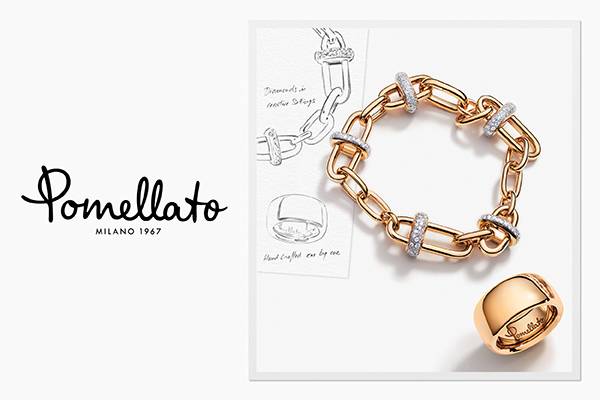
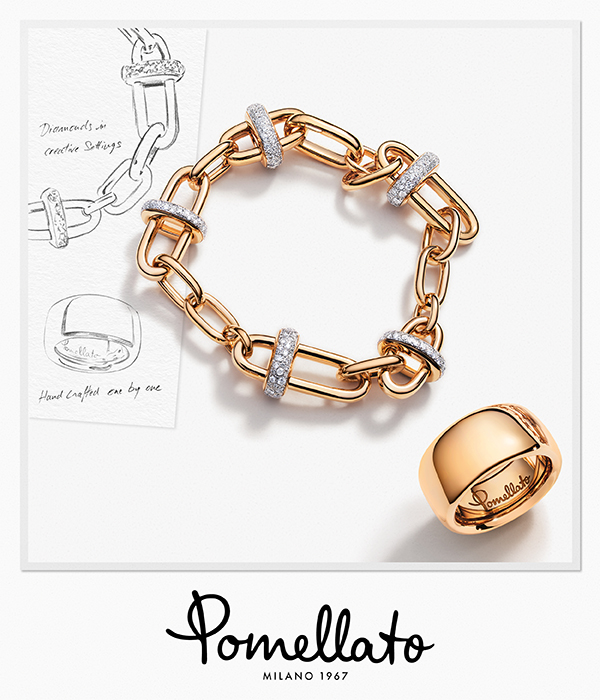
Pomellato’s Iconica collection honors Milanese goldsmithing with handcrafted pieces that are more than just jewelry; they are a symbol of empowerment, authenticity, and timeless beauty. From statement necklaces to stackable rings, each piece reflects expert craftsmanship and modern expression. |
|
|

| Julie Brener Davich
|
|
- Jewelry musical
chairs: Now that Christie’s jewelry chief Rahul Kadakia has assumed responsibilities as head of Asia and luxury for the auction house, he’s promoted Max Fawcett to be the new global head of jewelry based in Geneva, while Claibourne Poindexter will head up jewelry in the Americas. They all assume their new positions in January. Over at Phillips, Dianne Batista is the new head of jewelry in the Americas, after stints at
Freeman’s Hindman and Rago/Wright, while Leslie Roskind, formerly of Bonhams and Christie’s, is taking on Batista’s previous role at Rago/Wright.
- New records at Bonhams: Bonhams’ Blazing a Trail: Modern British Women auction last week had some standout results. A new
record was achieved for Newlyn School painter Dod Procter when Girl in her Petticoat, from 1928, made £406,800 against an estimate of £15,000. (Her previous record was £140,500, set in 2015.) Another
record was set for Vorticist artist Jessica Dismorr’s Self Portrait, circa 1928, which made 10 times its estimate of £15,000, beating the record of £61,360 she set last year.
|
|
|
Now let’s get to the main event… |
|
|
Now in its third decade, London’s Frieze art fair occupies a different
world than it once did, as New York and Paris have taken on greater importance for auctions. Now the major houses are rethinking what London is for. |
|
|
The Frieze art fair in London began two decades ago as a way to capitalize on the
wave of interest in contemporary art generated by the Young British Artists movement and the growth of galleries in London. Since then, the fair, with its attendant auction exhibitions and museum and gallery shows, has evolved into something different—especially now, with the economic and geopolitical shifts in Britain and the United States. In short, the goals have changed.
For one thing, the retrenchment of the art world over the last three years has magnified New York’s role and
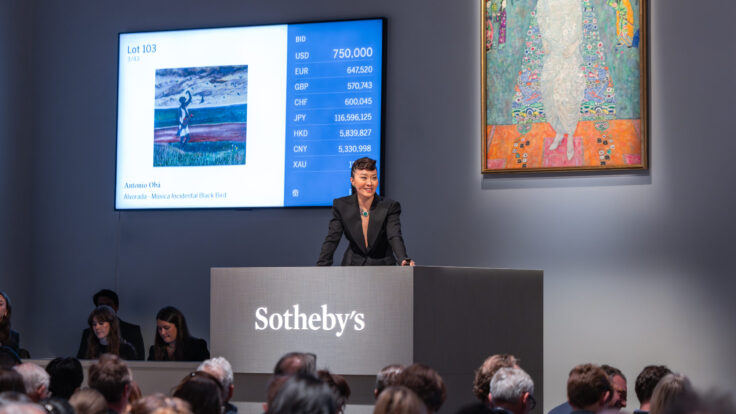
importance, since so much art buying is concentrated in America. Meanwhile, with European auctions now split between London and the Paris sales to take place next week, the houses are rethinking what London, and Frieze specifically, is for. Sotheby’s, still riding the high of their massively successful sale of Pauline Karpidas’s collection of Lalanne and surrealist works, is focused on generating momentum through select lots. Christie’s, which no longer even
holds its June London sales, is concentrating on a number of art collections, hoping buyers will want works with the halo of a name collector. And Phillips, retooled under a new C.E.O., is trying to continue to build their credibility as a third alternative and cement their position with younger buyers. |
Before I even got to London, I had been corresponding with Richard
Ingleby, who for 28 years has run a gallery in Edinburgh, a city that otherwise doesn’t have much in the way of gallery infrastructure. After its origins as an operation he ran with his wife on the ground floor of their Georgian row house, Ingleby expanded the gallery to a dramatic new location eight years ago in a former house of worship for a Protestant sect called the Glasites. The contemplative space is almost ideal for showing art, and even though Edinburgh isn’t a regular stop on
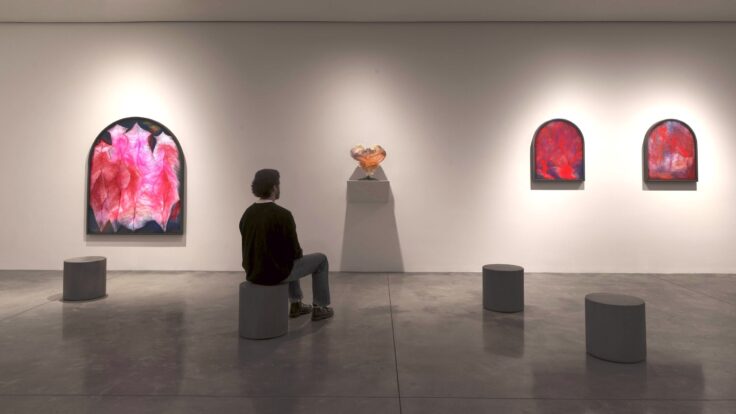
the international gallery circuit, Ingleby has been able to build a roster of international artists like Caroline Walker, Callum Innes, Hayley Barker, and Andrew Cranston, among others. Mrs. Wallpower and I visited the current show of Charles Avery works, with its strong echoes of Hilma af Klint’s organic abstraction. |
|
|
A MESSAGE FROM OUR SPONSOR |
Handcrafted in Milan. Inspired by Pomellato's rich heritage, the Iconica Collection is a masterclass in quiet precision. The Iconica Bracelet features alternating gold and diamond links sculpted to a seamless silhouette. The matching ring shares the same commitment to fluidity and comfort. The result is timeless Milanese elegance with a contemporary edge. |
|
|
It so happened that the National Galleries of Scotland was nearing the end of an
Andy Goldsworthy retrospective that summarized 50 years of the artist’s career, starting from his emergence in the 1970s as a star of the land art movement. I knew and liked Goldsworthy’s work, mostly from his satisfying and surprisingly emotional installation at the Storm King sculpture park. Storm King Wall, from 1997, is a traditional unmortared fence that meanders in broad loops down a hill, through a stand of trees, and into a small lake. The Scotland retrospective
contains some showstopping installations like Oak Passage, a collection of branches piled into two rows that create a solemn processional down the center of the main gallery; Red Wall, an expanse of terra-cotta-colored clay on the gallery wall that had dried and cracked into a complex pattern; and Fence, a scrim of barbed wire strung across two pillars that frame the entrance to the neoclassical building.
Catching the Goldsworthy show, a bit like stumbling
across his art outdoors, was a happy accident. Our farewell dinner in Edinburgh at Timberyard, a restaurant as focused on its natural surroundings (and foraged ingredients) as Goldsworthy’s art, was not. We had Ingleby’s recommendation to thank for that. And we boarded our overnight train to London deeply satisfied with our trip to Scotland. |
Rested and ready for Frieze week, we plunged in first thing Monday morning, hitting all
three auction houses and Gagosian gallery. At Sotheby’s, we arrived before the crowds to see the two Francis Bacon paintings that have spent most of the last dozen years or so on exhibit at the Art Gallery of New South Wales. The small Study for Self-Portrait, from 1980, is estimated at £5 million and covered
by an irrevocable bid. Its companion, Portrait of a Dwarf, from 1975, is estimated at £6 million.
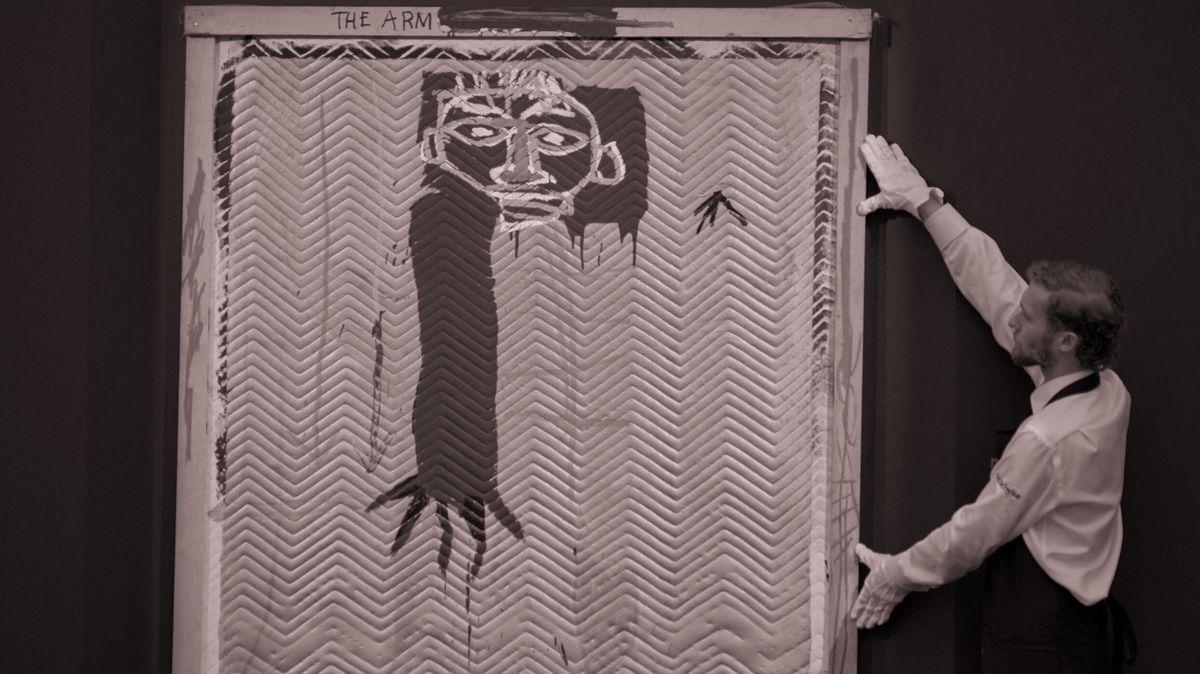
The house’s dealmakers have been hard at work, too. Jean-Michel Basquiat’s Untitled (The Arm), from 1982, is
estimated at £4.5 million and also covered by an irrevocable bid. The painting is one of the works Basquiat made with found objects using a wooden armature; it features a herringbone quilted fabric, painted gold, and a dark, outstretched arm extending from the top of the canvas, where the artist also painted a face. Given that new collectors
seem to be coming into the market via Basquiat, it maybe shouldn’t be a surprise that Sotheby’s secured a backer. But their auction peers were impressed.
With the current sales sandwiched between Karpidas, the Hong Kong sales, and the upcoming opening of the Breuer Building in New York, Sotheby’s has focused on offering some interesting potential sleepers. Among them is Andy Warhol’s Four Pink Marilyns (Reversal Series), from 1986,
estimated at £3 million. The consignor bought the work for $4.5 million a decade ago in New York, which means they will be made whole (minus inflation) if it sells at the low estimate. But the piece looks surprisingly good, with its pink undertones positively radiating beneath the black. Along similar lines, Yves
Klein’s Untitled Fire Colour Painting (FC 28), from 1962, is being offered with what should be an attractive £1.8 million estimate, having last sold in 2014 for nearly $5.5 million. Since Sotheby’s guaranteed the work, it should see some bidding and sell. That will give us a chance to gauge the
market.
Some other works that looked strong in the cold light of a London morning were Georg Baselitz’s Kullervos Füsse, from 1966-69, which has an £800,000 estimate and is already backed by a third party. Following her recent museum show in London, Jenny Saville has a charcoal nude on paper
estimated at £350,000. And, along with all the other houses this week, Sotheby’s features works by Emma McIntyre, Hernan Bas, Derek Fordjour, and Yu Nishimura—which tells you just which names are currently on top of collectors’ wish lists.
Just a block away at
Phillips, the top lot is a Basquiat work on paper, Untitled (Pestus), from 1982, which carries a £2 million estimate and is backed by a third party. Flora Yukhnovich works are rare on the auction market these days, so it isn’t surprising that her My Body knows Un-Heard of Songs, from 2017, is backed by a guarantor and carries a £900,000 estimate. With the death of Giorgio Armani last month, someone has decided to consign a Warhol diamond dust portrait of the designer made in 1981. It has a £600,000 estimate. Steven Shearer’s Synthist, from 2018, made a splash
when Loic Gouzer’s Fair Warning sold the painting for $437,000 as its first-ever lot in 2020, and now the painting is back at Phillips with an estimate of £150,000. There are also works by Noah Davis, Sasha Gordon, and two classic Damien Hirst artworks.
Before heading over to Christie’s, we stopped by
Gagosian’s Grosvenor Hill gallery to see the new Christopher Wool show, which comprises a selection of work similar to what visitors saw at the guerrilla gallery Wool created for himself in New York’s Financial District last year. Except here, Gagosian has space for some truly monumental works—and they are for sale. |
|
|
Over at Christie’s, the emphasis was on collections. The folks at Christie’s are well
aware that many current artists’ works have been selling for a fraction of the prices they achieved five to seven years ago. But specialist Keith Gill explained that the house is hoping strong provenance from collectors like Ole Faarup, whose spectacular Peter Doig paintings are the rightful stars of Christie’s sale, or Klaus Hegewisch, whose collection of works on paper is the other main attraction, will give buyers confidence
that the works won’t see their monetary value evaporate.
Speaking of those Doigs, the £6 million Ski Jacket, from 1994, is backed already, while the £7 million Country Rock, from 1998-99, is not. Only Lucian Freud’s
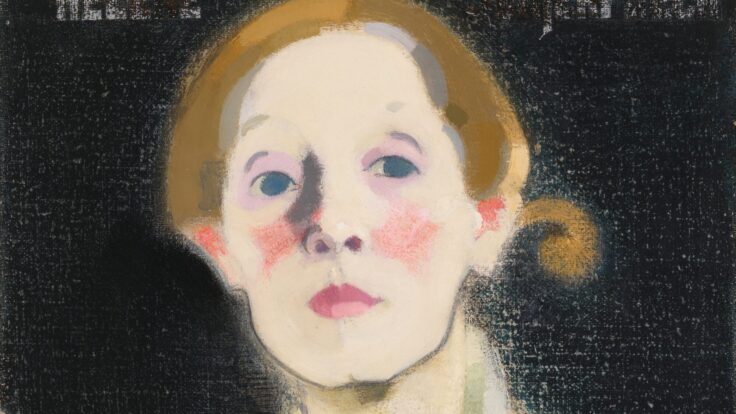
unfinished self-portrait carries a higher estimate, at £8 million. Christie’s has two other interesting early Freud works in these sales, too. |
The auction house tour took up the morning, after which we headed to the Wigmore, where
Mrs. Wallpower had booked lunch. From there it was off to the National Gallery to catch the show of neo-impressionist works mostly gathered by Helene Kröller-Müller, whose collection now fills a Dutch museum. The
show, which is supported by Ken Griffin’s Griffin Catalyst philanthropy, features artists
known to most of us, including Paul Signac, Théo van Rysselberghe, and Georges Seurat, whose Les Poseuses, Ensemble (Petite version), which sold for $150 million in the Paul Allen sale, is on display here. But the value of the show is largely in the other interesting painters from that movement whom most of us never really see, like Jan Toorop, Anna Boch, and Maximilien
Luce.
Griffin Catalyst also helped the Courtauld Institute mount its small but effective show of Wayne Thiebaud’s work, which was our next stop. Wayne Thiebaud: American Still Life makes the argument that the artist’s pop subject matter masks the classical intent of his work. The show opens with two paintings from
Thiebaud’s earlier, darker style, which radically changed into the mature, sunny, and impastoed work we all know by sight. Thiebaud is a master of color. Look at the shadows and outlines in his paintings to see what I mean.
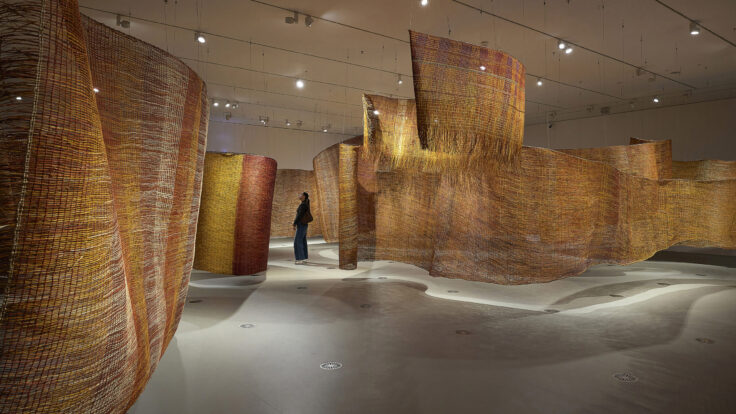
We could have spent hours in the two rooms devoted to Thiebaud paintings, but we had one more stop to make at the Tate Modern, where I wanted to see the Emily Kam Kngwarray show I wrote about this summer. It did not disappoint. The museum did an
excellent job of illuminating the deep connection between Kngwarray’s art and the actual experience of the landscape in Australia’s outback. The Tate Modern also has the important Nigerian Modernism show, which I walked through and learned from. But that one presents too big a subject—Nigeria’s decolonization and nation-building of the 1950s and early 1960s—to
tackle here.
This morning I went to the Kerry James Marshall show at the Royal Academy, where I ran into one dealer who called it the best show he had seen in months. It is the show that everyone is talking about. Later in the week, I hope to get to the Serpentine for Peter Doig’s show. More on that soon. |
Let me leave it there. I’ll have more details on Frieze and the auctions on Friday.
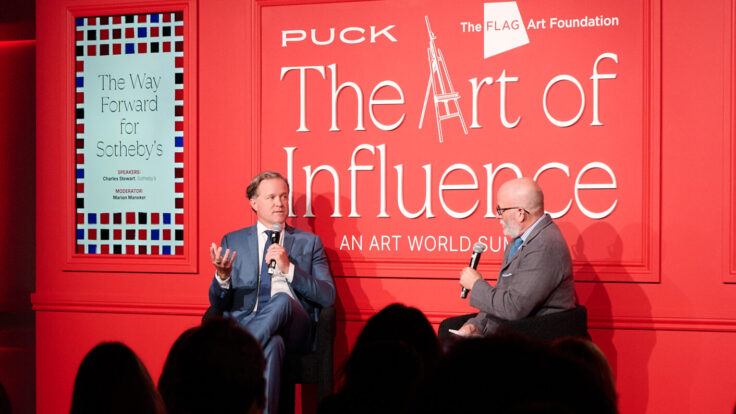
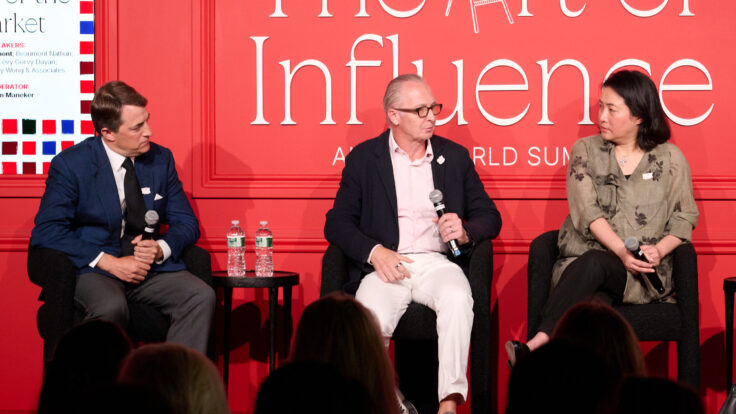
Tomorrow in the Inner Circle, we’re going to have the director’s cut of the Art of Influence collectors’ panel with Dasha Zhukova, Michael Ovitz, Tom Hill, and Glenn Fuhrman. If you’re a member, you can also watch the unedited video of the panel—but if that’s not the case, what are you waiting for? Upgrade here.
Speak
soon,
M |
|
|
The ultimate fashion industry bible, offering incisive reportage on all aspects of the business and its biggest
players. Anchored by preeminent fashion journalist Lauren Sherman, Line Sheet also features veteran reporter Rachel Strugatz, who delivers unparalleled intel on what’s happening in the beauty industry, and Sarah Shapiro, a longtime retail strategist who writes about e-commerce, brick-and-mortar, D.T.C., and more. |
|
|
Finally, a media podcast about what’s actually happening in the media—not the oversanitized,
legal-and-standards-approved version you read online. Join Dylan Byers, Puck’s veteran media reporter, as he sits down with TV personalities, moguls, pundits, and industry executives for raw, honest, sometimes salacious conversations about the business of media and its biggest egos. New episodes publish every Tuesday and Friday. |
|
|
Need help? Review our FAQ page or contact us for assistance. For brand partnerships, email ads@puck.news. You received this email because you signed up to receive emails from Puck, or as part of your Puck account associated with {{customer.email}}. To stop receiving this newsletter and/or manage all your email preferences, click here. |
Puck is published by Heat Media LLC. 107 Greenwich St, New York, NY 10006
|
|
|
|