Welcome back to Wall Power. I’m Marion Maneker.
I couldn’t make it to Nyack for the opening of Tomokazu Matsuyama’s exhibition at the Edward Hopper House on Friday night, but I did get to meet the artist in his impressive Greenpoint studio a couple of weeks ago. Tonight, I want to tell you more about him and what appears to be the culmination of 25 years of hard work. Julie Davich also has the results of William Koch’s wine auction at Christie’s and some details on a great collection of ceramics at Sotheby’s in London this week.
Before we move on, I need to correct a mistake I made on Friday. Laurent Asscher sent me a note this morning to clarify that he was not the consignor of the Jenny Saville sold today at Sotheby’s for £5.4 million ($7.4 million). I had written that the owner of a private museum in Venice was selling the work, and Asscher is categorical that he has no connection to this “fantastic” painting. The error was mine alone.
Since I’m atoning for my own failures, let me offer some amnesty and grace to any of you who are getting forwarded this email. You can still become a Puck subscriber by clicking here. Eternal happiness, and market advantage, awaits you…
Just a reminder, I really do want to hear your questions. We’re getting into the summer months when I have more time to get into answering them. And I promise to do my best. Just respond to this email or contact me at +1 917.825.1391 on SMS, Signal, or WhatsApp.
Meanwhile, a quickie reminder…
|
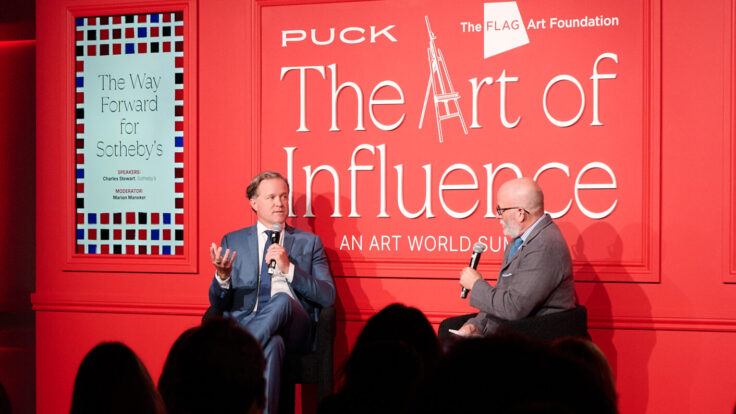
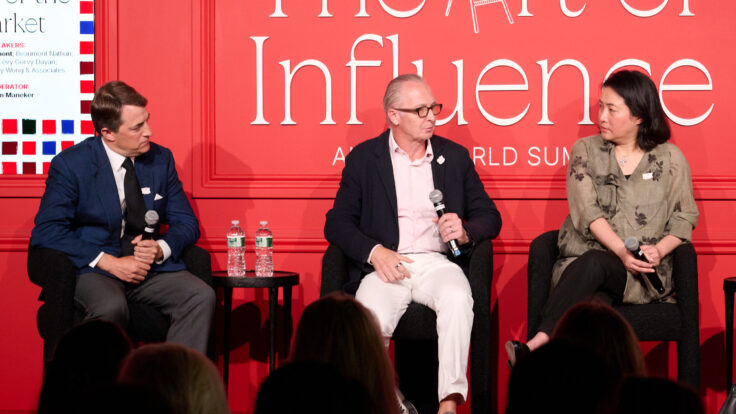
Puck and the FLAG Art Foundation have announced our first summit, The Art of Influence, which will take place on September 15 in New York at SECOND, a Midtown event space.
Join us for a day of frank conversation and unparalleled access in an intimate setting. This one-day event will take place from 10 a.m. to 4 p.m., leaving you plenty of time to get work done. Our goal is to focus on the most pressing issues and opportunities in the global art world—for museums, auction houses, galleries, advisors, and more.
Our first featured guest is Larry Gagosian, who needs no introduction. Prominent collector Glenn Fuhrman will have a conversation with artist Nicolas Party. Dasha Zhukova, the founder of Ray, will be there, too. More guests and programming will be announced in a few weeks. But don’t wait for that to buy a ticket. We’re keeping this event small and exclusive—spots won’t last, and you won’t want to miss it.
|
|
|
|
A MESSAGE FROM OUR SPONSOR
|
|
|
 |
Julie Brener Davich |
|
- Red wine and Koch: Last week, Christie’s set the record for the most expensive single-owner wine sale ever in the United States, when the collection of William Koch sold for $28.8 million—almost double its estimate of $15.5 million. Remarkably, the three-day sale of 1,469 lots (about 8,000 bottles) was 100 percent sold. This was the house’s first wine sale in the U.S. since November 2020, and Christie’s reported that 42 percent of registrants were new to the house.The bulk of the offering was burgundy and bordeaux, led by a methuselah (equivalent to eight bottles) of 1999 Domaine de la Romanée-Conti, Romanée-Conti, which made $275,000, almost three times its $100,000 estimate. Koch is not a wine auction novice. In 2016 he auctioned 1,783 lots (about 20,000 bottles) at Sotheby’s for $21.9 million. The Palm Beach-based octogenarian seems to be in a downsizing phase—this past January he listed his Aspen compound again for $125 million, and just last week he listed his Cape Cod estate, acquired a decade ago from Bunny Mellon, for $24 million.
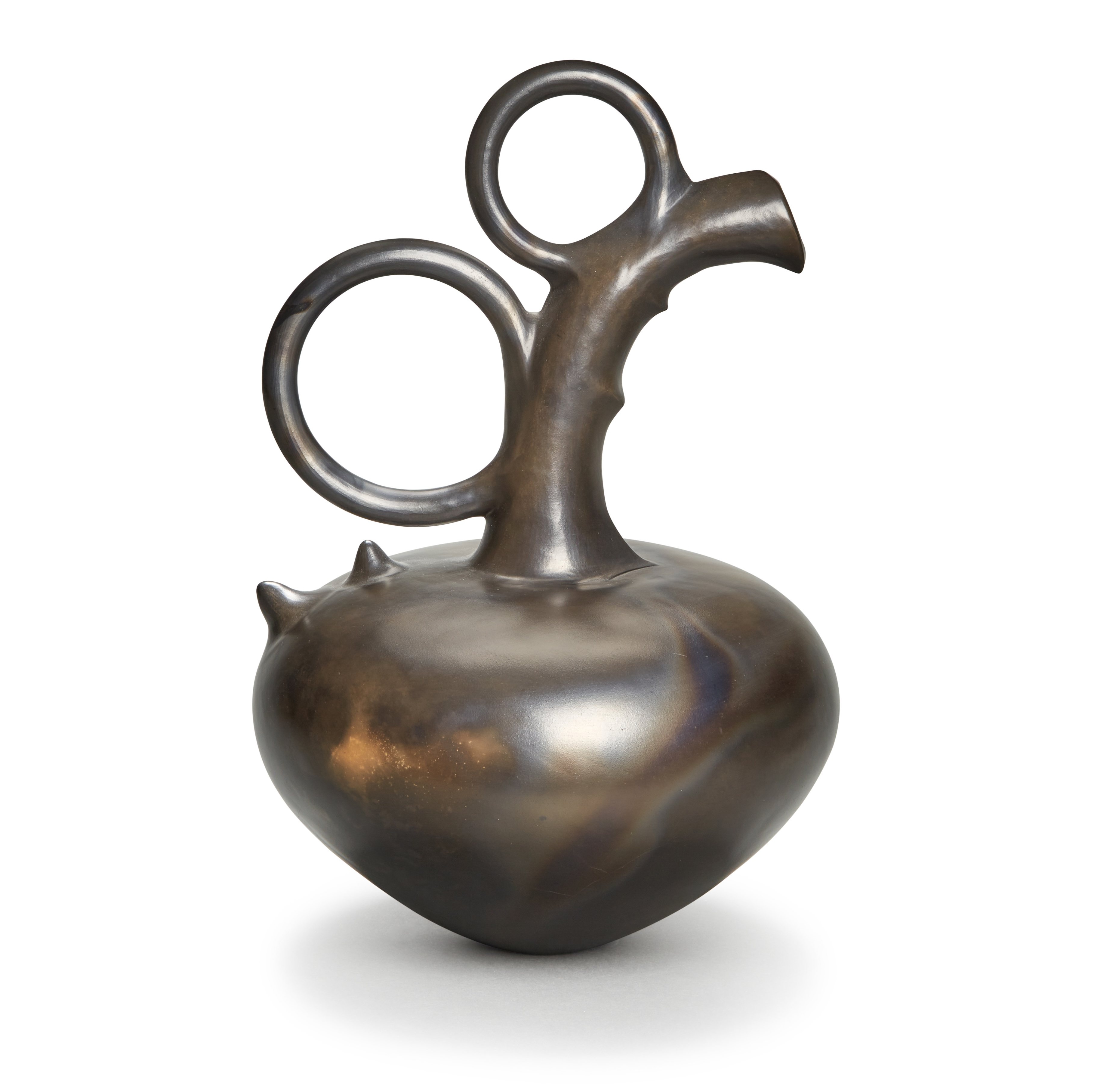
- A Denton the pottery market: The late Sydney Denton loved bicycles and ceramics—not necessarily in that order. His thriving business selling bicycles to Oxford students allowed him to indulge his passion for pottery over nearly four decades. In the 1980s, he started collecting works by Britain-based ceramicists like Hans Coper, Jennifer Lee, Lucie Rie, and John Ward, who died in 2023. Denton liked to support living artists and was especially close to Magdalene Odundo, who attended his memorial service.Denton died last year at the age of 90. Now, his descendants are selling his collection at Sotheby’s, with a live single-owner session featuring 22 lots on Thursday, concurrent with an online sale of 186 lots that closes Friday. The collection is estimated to bring £750,000. Sotheby’s is hailing the grouping as one of the finest of its kind in private hands.
|
|
Magdalene Odundo, Untitled (1991). Photo: Courtesy of Sotheby’s
|
- It’s no small thing that Sotheby’s is holding a live sale for such a low-value consignment during a marquee week. The auction house must really believe in the ceramics market. Though the lots in the live sale range in price from only £1,700 to £150,000, there is huge potential upside. The two top lots are figurative vessels made from burnished and carbonized terracotta by Odundo. The last time Sotheby’s offered a piece by the artist, for £100,000 in its June 2023 modern evening sale, it made £533,400. Similar estimate-busting results have been achieved for works by Coper, Rie, and Lee. Highlights in the sale include one of Coper’s Arrow works, estimated at £80,000, and one of Ward’s large disc pots in green and white, estimated at £8,000.
|
|
|
|
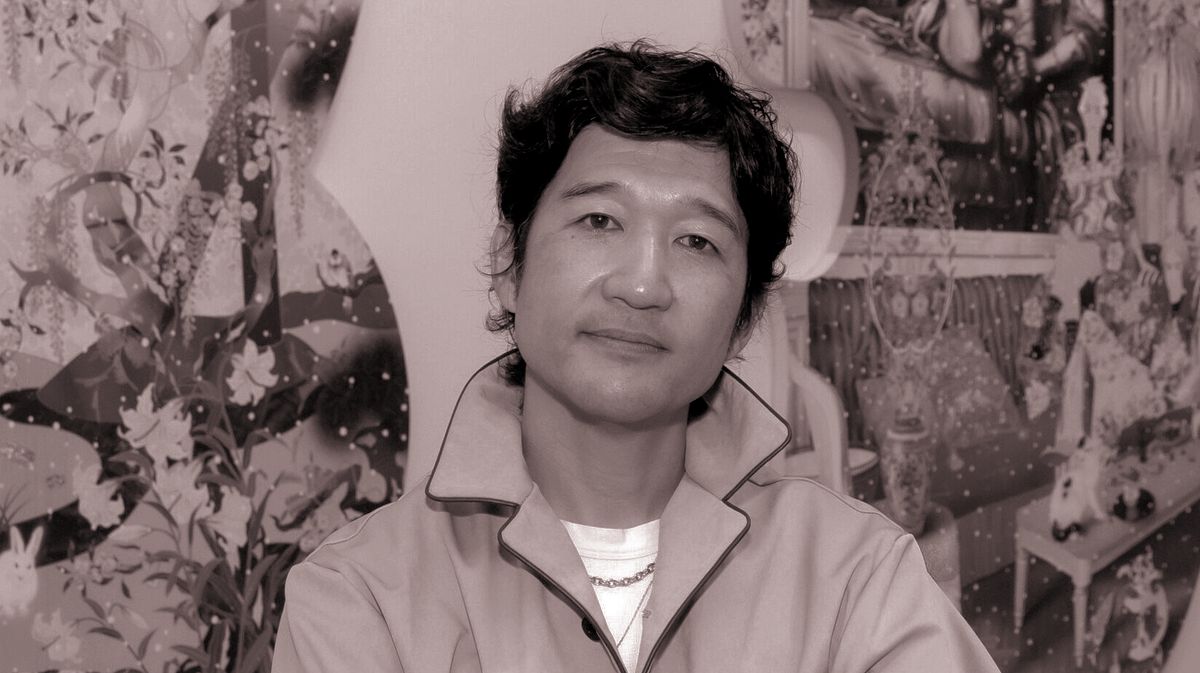
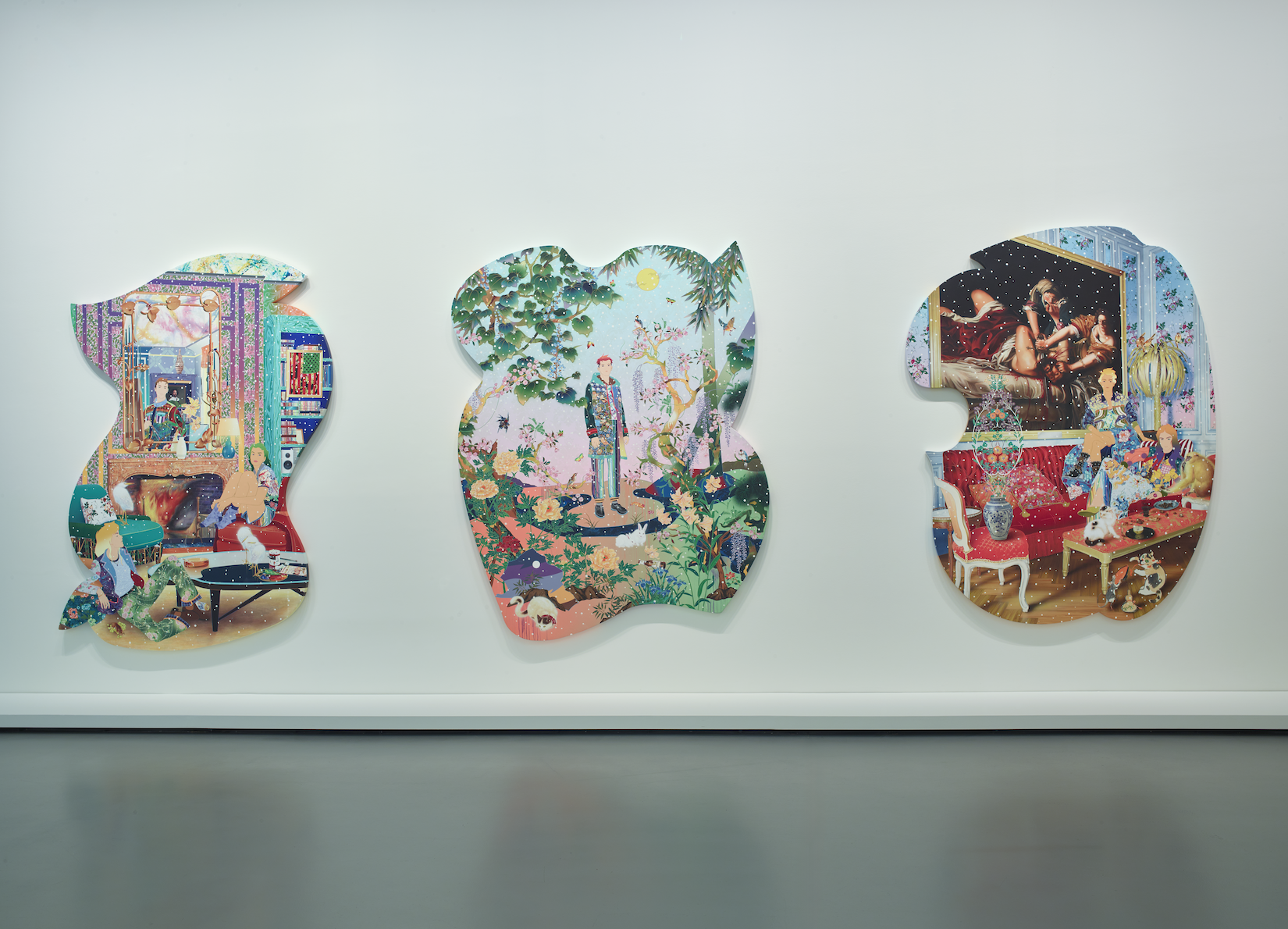
Tomokazu Matsuyama, the Japanese transplant who is running a small cultural enterprise out of Greenpoint, Brooklyn, is enjoying an ascendant market for his wry, textured, and homage-filled interpretation of the modern American experience.
|
|
|
|
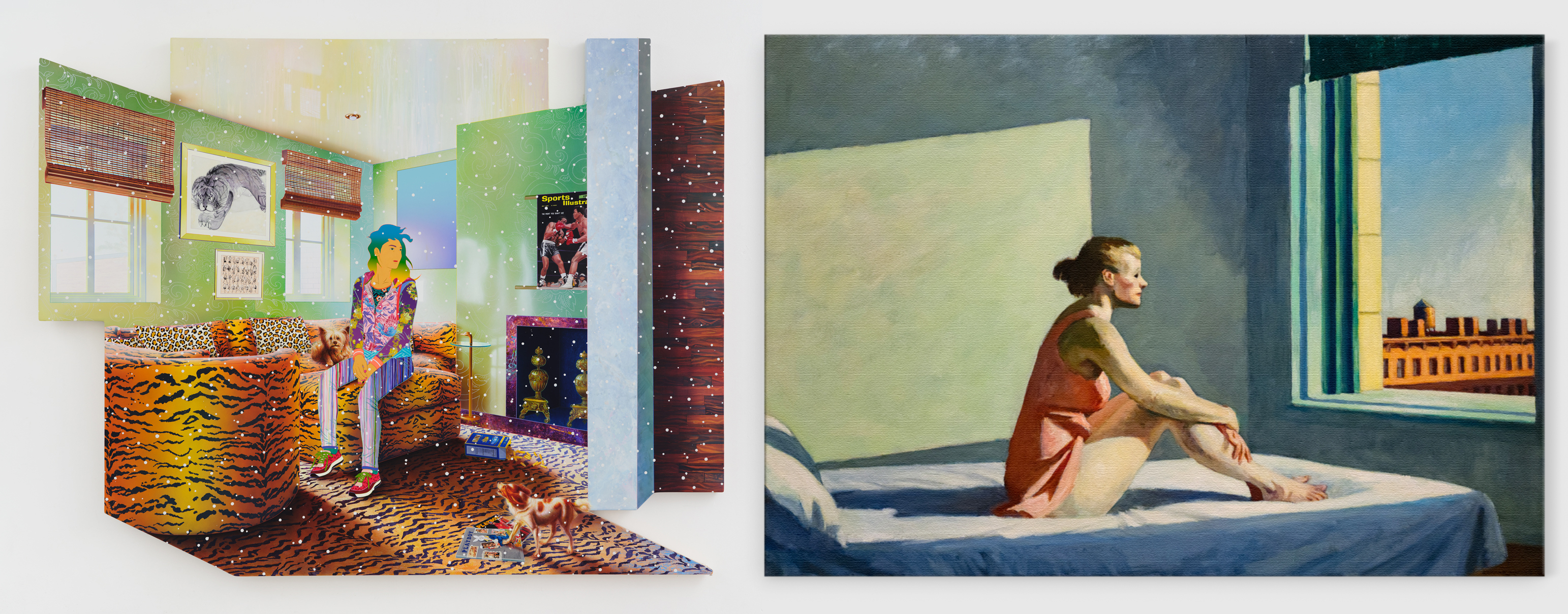
Edward Hopper’s Morning Sun—the one in which a woman sits upright in her bed, her arms crossed over her shins, facing the open window with the sun streaming in—has often been read as a commentary on the isolation and loneliness of modern urban life. Whatever sense of dislocation Hopper was trying to convey in 1952, though, is nothing compared to the atomization and anomie so many feel in today’s smartphone-fueled culture of FOMO and consumption. That’s the vibe that Tomokazu Matsuyama is getting at in a new painting, Morning Sun Dance, which was inspired by the Hopper work and debuted Friday at the Edward Hopper House in Nyack, about 45 minutes up the Hudson from Manhattan.
Hopper’s hard-boiled film noir take on American culture probably reads as outdated to most viewers. But to a transplanted Japanese kid, who arrived in New York to study design at Pratt, 25 years ago, before teaching himself to paint and launching his own career via street art and mural projects, updating Hopper’s cosmopolitanism fits almost too easily into his broader multicultural appropriation project. Matsuyama’s version of Hopper’s haunting image echoes the “solitude, light, and constructed space” the artist sees in Hopper’s work, but with a postmodern recontextualization of images drawn from a wide range of sources.
|
|
|
|
A MESSAGE FROM OUR SPONSOR
|
|
|
|
In Morning Sun Dance, a fully dressed young woman sits at the center of a shaped canvas, not on a bed but in a tiger-and-leopard-print conversation pit whose image is lifted from a shelter magazine. Instead of facing the window, this woman is looking away from it into the room, which contains two dogs—their own images are drawn from a 19th century Rosa Bonheur painting and a 17th century Dutch interior—and, on the walls, Chinese ink paintings as well as the 1965 Sports Illustrated cover depicting Muhammad Ali’s second fight against Sonny Liston. All of this is covered with white droplets, simulating a softly falling Japanese snow that gives the whole scene an otherworldly sheen.
|
|
Tomokazu Matsuyama, Morning Sun Dance (2025) and Edward Hopper, Morning Sun (1952). Photos: Courtesy of Tomokazu Matsuyama Studio and Wikimedia Commons
|
|
I went to visit Matsu, as everyone calls him, in his Greenpoint studio a couple of weeks ago, and discovered that the artist I had thought was just beginning his career was actually a 47-year-old art entrepreneur who employs some 30 people. The team helps him do everything from executing his meticulously plotted-out paintings, to scouring obscure art reference books for the images he uses in his mashups, to applying for and executing public art projects or placing his work in museum collections. The whole operation is backed up by Max Teicher’s 291 Agency, which supports visual artists who want to retain control over their own destinies.
While I marveled at all this, Matsu leaned in conspiratorially. “When we want to intimidate the galleries we work with,” he said with mock discretion, “we bring them here for a visit.”
|
|
Before I ever saw one of Tomokazu Matsuyama’s works of art in person, I had seen his auction results. In late May of 2021, a huge triptych of his from 2011, titled Happy Zodiac, sold in Hong Kong for HK$3.25 million or just over $400,000—some 10 times its estimate. That fall, two more of his paintings, one from 2018 and another from 2013, sold in Hong Kong and New York for $260,000 and $175,000, respectively. His highest auction prices so far were achieved in April 2022, and again in April 2023, when buyers paid almost $650,000 each time.
I only first encountered his work in person last October, in Paris, when I was walking through the Tom Wesselmann show at the Fondation Louis Vuitton. The curators had included three 9-foot-tall shaped canvases by Matsuyama to illustrate Wesselmann’s influence on contemporary painters—the two artists shared both a penchant for painting on shaped canvases and a knack for integrating images from other artworks, placing cultural references in constant tension with one another. I saw Matsuyama’s work in person again earlier this year at Frieze Los Angeles, where Almine Rech had a large booth painted in jewel tones to make the paintings appear to pop off the walls.
|
|
Tomokazu Matsuyama, installation view of Pop Forever, Tom Wesselmann &…, Fondation Louis Vuitton, Paris. Photo: Courtesy of Louis Vuitton Foundation
|
Tomokazu has also used institutional and public art projects to build his audience and visibility outside of the gallery system. There have been murals, including a prominent one on Bowery and Houston in New York; paintings commissioned by museums, like this one at Crystal Bridges in Bentonville, Arkansas; and public art projects in Hong Kong, Istanbul, Tokyo, and Culver City. He’s even experimented with creating balloons that can fill public spaces or be easily transported as part of a concert stage set to project his aesthetic.
|
|
|
|
At his studio, I was reacquainted with two of the works I had first seen in Paris. But this time, Matsu walked me through how he constructs an image. On the floor of his studio, he laid out the actual reference materials, which included shelter magazine spreads for the interior settings, fashion shoots for the poses, and patterns from traditional Japanese textiles or Chinese decorative motifs to fill in and enhance the visual interest.
He also borrows an Old Master device of signalling emotions by using pictures within his pictures, littering his work with art-historical quotes. For instance, there’s Diego Velázquez’s portrait of Juan de Pareja, the painter’s former slave emancipated to be an artist in his own right, paired with David Hammons’s African American flag hanging not far away. Matsu’s landscapes owe a debt to the self-taught painter Henri Rousseau. At the studio, I saw a large painting that uses Rousseau’s famous image of footballers as background.
Matsu presented me with an articulate rationale for his syncretic work: Japanese anime-inspired figures inhabiting a world of riotous patterned wallpaper and clothing was an expression of his own sense of being a minority within a very different majority culture. His work is about representation, but within it, he imagines a sophisticated multicultural world where there are no set hierarchies.
There’s another way to read his art, however: It’s less multicultural than it is cosmopolitan. To my born-and-raised-in-New York eyes, the Japanese transplant’s work spoke to the best of the city’s tendency to place all the cultures that contribute to its polyglot cacophony on a relatively equal footing. That’s become increasingly true over the past 40 years, as the WASP establishment has gone the way of the Knickerbocker aristocracy. Manhattan is no longer a citadel of high culture—the boroughs that Tom Wolfe memorably described as the “Third World out there” are now as vibrant and enriching (and, in some cases, as expensive) as any place in the city.
Greenpoint isn’t the SoHo of the ’70s, with artists living in cold-water lofts. It’s filled with teeming glass towers, and people who retired in their 30s and were looking for an apartment convenient to the BQE so they can escape to Montauk on the weekends. More than one black Range Rover drove by as I stood on the loading dock in front of Matsuyama’s building. Rather than expressing the hopes of an alternate narrative, it seemed to me that Tomokazu had found himself in the middle of the main storyline.
|
This is a little off-topic for a newsletter about art (though I’m constantly annoyed by the way too many people misapply machine learning to art), but I thoroughly enjoyed last week’s Lunch with the FT column featuring Emily Bender, a linguistics professor who is an expert on how computers model human language. Bender’s perspective is refreshing if you, like me, wonder how we’ve kept getting the prospects for A.I. so wrong. The point is not to ignore A.I. as a potentially powerful tool, but rather to steer clear of the fantasy that what computers do approximates intelligence.
Of course, I’m also mentioning all of this to introduce you to Ian Krietzberg and Puck’s newest private email, The Hidden Layer ( sign up here), which begins publishing in a few weeks. Ian will write about the enormous, burgeoning A.I. industry with the same level of intimate knowledge and useful skepticism that animates all of Puck’s coverage. I am excited to start reading his work. I hope you are, too.
That’s enough for today. See you in the Inner Circle tomorrow.
M
|
|
|
|
The ultimate fashion industry bible, offering incisive reportage on all aspects of the business and its biggest players. Anchored by preeminent fashion journalist Lauren Sherman, Line Sheet also features veteran reporter Rachel Strugatz, who delivers unparalleled intel on what’s happening in the beauty industry, and Sarah Shapiro, a longtime retail strategist who writes about e-commerce, brick-and-mortar, D.T.C., and more.
|
|
|
|
Finally, a media podcast about what’s actually happening in the media—not the oversanitized, legal-and-standards-approved version you read online. Join Dylan Byers, Puck’s veteran media reporter, as he sits down with TV personalities, moguls, pundits, and industry executives for raw, honest, sometimes salacious conversations about the business of media and its biggest egos. New episodes publish every Tuesday and Friday.
|
|
|
Need help? Review our FAQ page or contact us for assistance. For brand partnerships, email ads@puck.news.
You received this email because you signed up to receive emails from Puck, or as part of your Puck account associated with . To stop receiving this newsletter and/or manage all your email preferences, click here.
|
|
Puck is published by Heat Media LLC. 107 Greenwich St, New York, NY 10006
|
|
|
|