{{ 'now' | timezone: 'America/New_York' | date: '%b %d, %Y' }} |
|
|
|
Hi, and welcome to Line Sheet. How were your in-store sales last week?
I ask because I’m
hearing mixed things. Some say business is great, some say it’s not easy. We’re all hoping that Chanel’s rising tide lifts other brand boats, but that may not be the case. In this issue, we are exploring all sorts of post-luxury bubble realities: the fate of T’s editorship; the new edition of System, which is essentially just a pitch for Jonathan Anderson’s Dior; and the latest fronts in the affiliate marketing wars. For the main event, I check
in on Kim Jones, who’s navigating a post-LVMH life after 15 years as the golden boy at Fendi and Dior. The good news for Jones, as I reveal below, is that the guy knows how to make money. By the way, Rachel Strugatz will be back later this week to give her two cents on this potential Estée Lauder–Puig
merger.
Meanwhile, stylist and beautiful person Karolyn Pho is my guest on tomorrow’s episode of Fashion People. We discuss whether Chanel should launch menswear, how designers should act after they leave big jobs, whether John Galliano should be designing for Zara, and who should be the next editor of
T. Listen here and here.
Also mentioned in this issue: Hanya Yanagihara, Sabato De Sarno, Magdalene Odundo, the Kulm Hotel in St. Moritz,
Hedi Slimane, David Sims, System magazine, Jonathan Wingfield, Rolf Sachs, Sara Moonves, Jennifer Lawrence, John Galliano, Tim Blanks, Thomas Lenthal, Melissa Ventosa Martin, Chinese outerwear giant Bosideng, Matthias Vriens, Benjamin Bruno, Yorn
Michaelsen, Victor Luis, Justin Moran, Raf Simons, and many more… |
Three Things You Should Know…
|
-
Taking T magazine names: Everyone in my world wants to talk about Hanya Yanagihara leaving T, but nobody is suggesting who should take it over. There was a concern among some uninformed troublemakers that the Times may just close the thing, which is ridiculous given the recurring luxury
advertising client base. But there’s certainly a question of who would be interested in this gig other than the obvious internal candidates and the usual external suspects.
Generally speaking, the indie magazine editors have too much freedom (and a dearth of management experience) to tackle the realities of the Times borg. The same goes for many of the former star editors who could be in the mix… until they get ahold of the salary and the Times’s internal policy
regarding business-class travel. Perhaps a dark horse from Stellene Volandes’s mini-fiefdom at Hearst? Send suggestions, intel, and strongly worded diatribes to Lauren@puck.news. It’s okay to D.M. me about this on Instagram, too. - Image intelligence!: I love inside-baseball journalism, but sometimes the Systemification of indie
mags—you know, interviews with industry insiders, talking about industry issues—can feel a little exhausting. I thought the latest issue of System, which is mostly a deep dive on Jonathan Anderson’s first year at Dior, went so deep it made all those other attempts feel flimsy. There’s an interview with Tim Blanks, every designer’s
favorite journalist (except for Hedi Slimane); one with Anderson and Dior spokesperson Jennifer Lawrence, moderated by Sara Moonves; a conversation between Anderson and former Christian Dior assistant Yorn Michaelsen; and one between Anderson and ceramicist Magdalene Odundo. Plus, a couture editorial by stylist
Benjamin Bruno and photographer David Sims (both Anderson collaborators), and a conversation between them and Anderson, moderated by System editor Jonathan Wingfield.
I will likely never read every inch of this issue, but I went straight for the Anderson-Sims-Bruno interview, since I am obsessed with process and imagemaking. I thought it was an honest and clear
conversation, and I loved the idea they brought forth about “image intelligence.” It’s also worth buying this issue if only for the interview with Thomas Lenthal, the magazine’s creative director, and Matthias Vriens, the former editor of Dutch—which, in the late 1990s, published an 80-page editorial featuring no clothes. Several of those images are included in the issue, but the interview with Vriens really stuck with
me because in the retelling of what happened to Dutch, you can see the early signs of the dissolution of print media. Anyway, if you buy just one of these extremely heavy magazines this season, maybe it should be System.
|
|
|
|
A MESSAGE FROM OUR SPONSOR |
|
|
|

| Sarah Shapiro
|
|
- The affiliate
marketing wars rage on: Last Thursday, the affiliate marketing platform LTK sent an email to its creators informing them about updates to its terms of service. Creators, already on high alert after Meta launched its own affiliate test program last month, were greeted with a message requiring them to accept the new terms or lose access to their account. While this kind
of forced acceptance is pretty standard, the platform’s users were incensed by a non-disparagement provision—even though it existed in the prior terms, too, but for whatever reason hadn’t been a focal point. Creators spent the weekend blasting the provision online, saying that the non-disparagement clause made them feel like they could be fined if they gave a product a negative review or spoke ill about LTK. The reactions from creators ranged from unease to complete abandonment of the
platform for fear of legal exposure. (When I asked LTK about what happened, they told me, “We should have done a better job summarizing these updates for creators upfront. That’s on us, and we’re sorry for the confusion it caused.”)
By Sunday, LTK had replaced the clause with a watered-down “non-interference” provision, along with a mea culpa email that laid out what changed, what didn’t, and what they were willing to adjust. The new terms also included details around how LTK
will handle A.I. rights (they might use the technology for formatting images) and link optimization for when items are sold out (they’ll send viewers to similar, in-stock items at other retailers instead of dead-linking). More than anything, the adjustment is yet another reminder that the affiliate marketing wars are as alive as ever.
|
|
|
|
And now, on to the main event... |
|
|
|
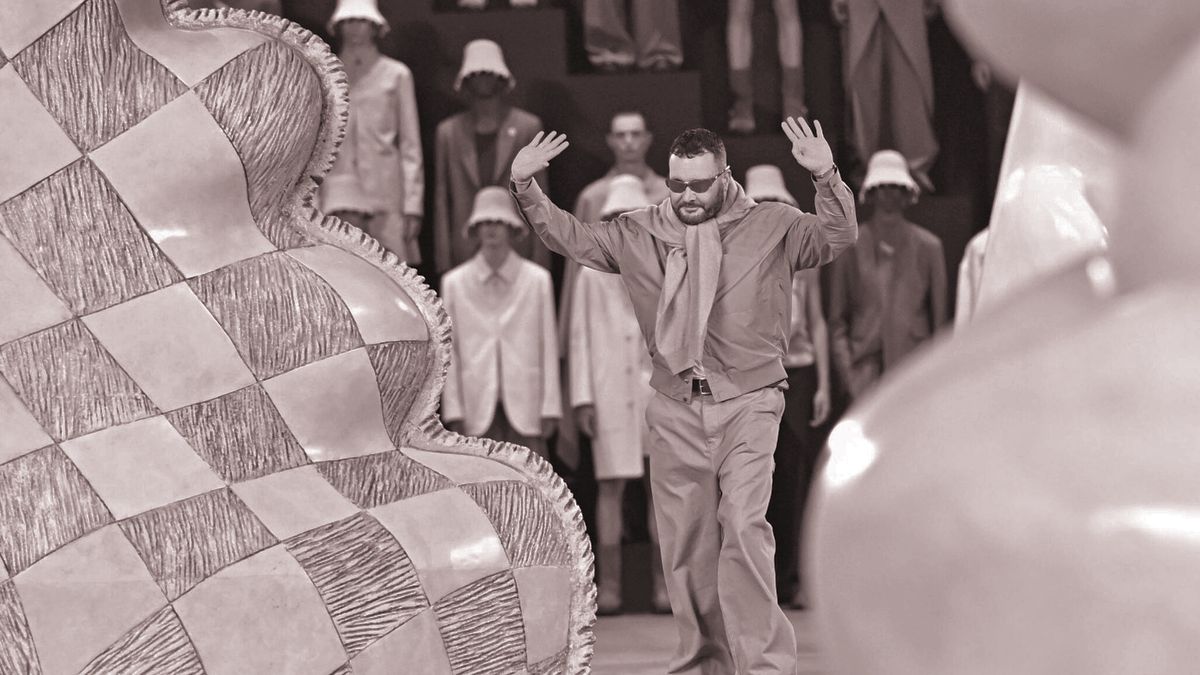
After 15 years inside the LVMH machine, Kim Jones exited his fat-check corporate job in time
to have a second or even third act—a new trend among a certain class of designers. |
|
|
|
Last fall, at the Financial Times’s luxury summit in Hong Kong, the British designer
Kim Jones leveraged both the platform and locale to recast his career. After 15 years inside the LVMH machine, at Dior and Fendi, Jones was embarking on a new journey as a philosopher-king of the Asian luxury market—a vision befitting his still-new post as creative director of Areal, the premium line of Bosideng, the Chinese outerwear giant that specializes in down jackets. “Whenever I’m designing, Asia is always one of my main priorities,” Jones said in a
social media video promoting the event. “I think about their craft, their history, and the talent of local craftsmen and how we can entwine them with what we do. I’m loving working with Asia at the moment because the factories are so new and they have so much new technology. … For me, it’s like looking at the future.”
Jones may have been unfurling a rehearsed and choreographed talking point, but it also happened to be true: During his LVMH era, he understood the Asia opportunity earlier,
and better, than many of his peers. In his post-Arnault life, however, Jones has contemplated several scenarios: designing for another house, establishing a branded studio that could spit out collaborations at high velocity, or working on a series of consulting projects to meet an income threshold established at the peak of the luxury fashion bubble—a.k.a. money jobs. For now, he seems to have chosen the latter, betting on his immense talent to persuade men in Asia to
buy stuff. In addition to his gig with Bosideng, Jones partnered last year with Aman Essentials, the product line offshoot of the wildly upscale resort chain. Jones is an Aman obsessive, and said in October that he had visited more than 30 of its 33 locations. |
|
|
|
A MESSAGE FROM OUR SPONSOR |
|
|
|
Of course, these types of consulting gigs may also be his only option for now. Jones never cracked womenswear
like Jonathan Anderson or Raf Simons, who both also started in menswear, which somewhat limits his opportunities. At LVMH, where he was revered by Bernard Arnault, his vision for Fendi womenswear never quite materialized. Perhaps he didn’t understand what women wanted, or maybe he was enmeshed in a tricky situation with heir and menswear designer Silvia
Venturini Fendi. (It also simply could have been the wrong fit.) Regardless, it’s unlikely Jones will get another big position in womenswear again. |
At only 52, Jones is at a fascinating career inflection point: He exited his fat-check corporate job in time
to have a second or even third act—a new trend among a certain generation of designers. Just this past week, the aesthetically disgraced former Gucci creative director Sabato De Sarno relaunched his career with a design project in Italy. John Galliano, the former Dior and Maison Margiela enfant terrible, signed a two-year deal with Zara.
Yes, these vanity endeavors are partially about restoring
relevance—an ego-stoking antidote to the post-wunderkind blues that befall creative directors after they leave their multibillion-dollar projects. But more often, they’re about piecing together the $2 million to $3 million-a-year, all-expenses-paid lifestyles that they grew accustomed to during their heyday. A handful of designers are still being compensated like that, or even more generously—but generally, I’m told, rates have declined as the market for soft luxury goods has… softened. It’s not
entirely unlike what’s happening with Hollywood talent as the film industry shrinks.
Of course, once you are making a certain income, expenses often increase, and in order to maintain that lifestyle, you’ve got to diversify. That’s why Jones’s Bosideng gig might be the most consequential deal of his post-LVMH era. I’m told by multiple sources that the designer negotiated a fee of €2 million per look for his first collection with the company, which launched at Galeries
Lafayette this past February. (I reached out to both Bosideng and Jones to ask about this and did not receive a response.)
That number might sound nuts, but I understand the logic. Bosideng, which is valued at about $6 billion on the Hong Kong Stock Exchange, has been trying to move upmarket and abroad for about a decade. The company has shown collections at various fashion weeks across the world—not that anyone noticed. In 2024, Bosideng took a 30 percent stake in Moose Knuckles, the
Canadian outerwear brand led by former Coach C.E.O. Victor Luis, in an effort to further embed itself abroad. And yet, the partnership with Jones—and especially seeing it on display in the windows of Galeries Lafayette a few weeks ago—was the first time that Bosideng had registered with me.
To be honest, I’m not sure there’s a better post-conglomerate option for Jones. He may fancy himself an expert on the Asian markets, but the once symbiotic
relationship between China and Big Luxury has decoupled. Similar to Hollywood, the Chinese market is now increasingly supplying its own cultural products—aided, in part, by the long-term interests of the C.C.P. I’m not sure if Jones will legitimize Bosideng for Western consumers, but that may no longer be the point. All that really matters is whether he can understand the modern Chinese market, where consumers aren’t going to overpay for Fendi and Dior logo slaps. |
|
|
|
For Jones, the gig offers him more direct access to the customer who made him rich in the first place, and
proximity to an evolving market that few brands can crack. Sure, it may not offer the same prestige with the insular European fashion community, but that’s what the money is for. Jones isn’t wrong when he says that working with Asia is like “looking at the future.” |
I found this mostly one-sided explanation of what happened (with killing cats and other weird stuff) at
shuttered Los Angeles restaurant Horses deeply satisfying; there was a ton of detail and what felt like a lot of honesty. I’m not sure why this story is such a fashion industry fixation other than the fact that there were a lot of fashion parties at Horses, and that the restaurant was nice and looked more like a New York restaurant. People keep asking me if the food was any good. The cocktails were great, and yes, the Caesar salad, the bread, and the tiramisu were very delicious. The off-menu
pasta was fine. The people who worked front-of-house were also really nice. Life is weird. [Air Mail]
Everyone in Paris is talking about the sudden, unexpected death of aesthetic doctor Antoni Calmon, who was based here. Be good to one another! [Instagram]
A Prada shoe factory in Venice was robbed on Thursday. According to reports in the Italian press, 600 pairs were stolen. That’s hundreds of thousands of dollars. Of course they stole the shoes! [La
Milano]
Vanessa Friedman, Nicole Phelps, Rachel Tashjian, and Rian Phin on the state of fashion criticism. [10 Magazine]
If you want to see the future of press
trips, consider what Highsnobiety and editor-in-chief Noah Johnson just pulled off. They hosted a group of pseudo-influencers (Chris Black, the chef Frederik Bille Brahe, Laura Reilly) at the Kulm Hotel in St. Moritz and got the tourism board, Audemars Piguet, and Maserati to chip in. They skied. They went to Rolf
Sachs’s Olympiahaus! (Apparently, Sachs was wearing an Extreme Cashmere sweater over an Oxford shirt for the visit.) Chris did interviews to run across social media, Maddy Rotman shot for Instagram, Louise Chen D.J.’d one night at the Kulm Country Club. Designer Nicholas Daley and his girlfriend D.J.’d the final night at the hotel. My feeling is… the new GQ is gonna have to
work hard not to feel boring. [Highsnobiety]
I love skirt suits. If you are still looking for your skirt suit, and also feeling the new Chanel, you may want to consider Melissa Ventosa Martin’s pick, handloomed by textile artist Julie Rose Clapton.
[Old Stone Trade]
I’m not sure there are going to be any more fashion stories to be told about The Devil Wears Prada 2 by the time the film is actually released later this spring, but I liked reading about the rise of Sasuphi, a 5-year-old Italian label, anyway.
[N.Y. Times]
Loewe hosted a fun dinner with Bergdorf Goodman at the Odeon. Everyone looked well-rested, rich, and fully paid up. Be jealous you weren’t there! [Vogue]
Run-A-Muck, Pam Drucker Mann’s new
media platform, edited by Justin Moran, is getting good advertisers. Hermès—more experimental than you’d expect when it comes to new media—framed itself around this feature starring chef-restauranteurs Rita Sodi and Jody Williams. [The Draft]
Zegna released its full-year
financial report late last week. Revenues were down a bit overall, while profit margin widened. Brand by brand, Thom Browne was down a lot, Tom Ford was up a little, and Zegna was up a little more. [Inbox] |
Until tomorrow,
Lauren
P.S.: We use affiliate links because we are a business. We may make
a couple bucks off them. |
|
|
|
Puck’s daily art market email, anchored by industry expert Marion Maneker, offers unparalleled access to the mega-auctions and
galleries, elite buyers and sellers, and the power players who run this opaque world. |
|
|
|
Puck founding partner Matt Belloni takes you inside the business of Hollywood, using exclusive reporting and insight to explain
the backstories on everything from Marvel movies to the streaming wars. |
|
|
|
Need help? Review our
FAQ page or contact us for assistance. For brand partnerships, email ads@puck.news.
You received this email because you signed up to receive emails from Puck, or as part of your Puck account associated with {{customer.email}}. To stop receiving this newsletter and/or manage all your email preferences, click here. |
Puck is published by Heat Media LLC. 107 Greenwich St., New York, NY 10006 |
|
|
|
|