{{ 'now' | timezone: 'America/New_York' | date: '%b %d, %Y' }} |
|
|
Hi, and welcome back to Line Sheet. Visit any billionaire zip code this summer, from Water Mill to
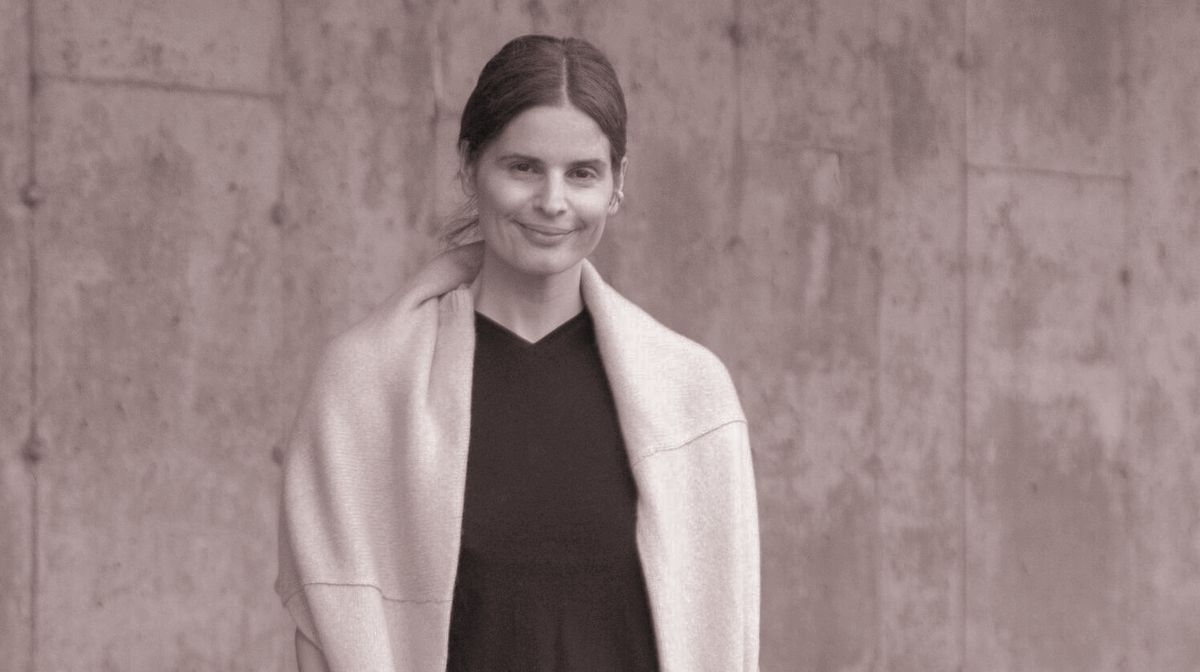
Montecito, and you’ll find a gaggle wearing Khaite shoes, dresses, and, of course, jeans. Many of founder Catherine Holstein’s most popular designs quickly turn ubiquitous, like this season’s studded Boden and beaded Loop sandals. I’ve had a blast covering the rise of Holstein and
her brand, which she co-founded nearly 10 years ago with backing from Adam Pritzker and her longtime collaborator, the stylist Vanessa Traina.
When they sold a majority stake to Ken Fox’s Stripes group more than two years ago, I was skeptical about whether the investment firm would be the right partner for a proper fashion house. Stripes has interests in premium consumer outfits like Levain, Erewhon, and Vuori—estimable businesses, all of
them, but ones that require less patience than a true luxury play. (Although maybe we sold them short. The other day, my husband counted 23 employees working the Erewhon smoothie bar.)
I’m sure it hasn’t been easy for Holstein, or C.E.O. Brigitte Kleine, a former Tory Burch exec turned investor whom Stripes installed to lead operations. And there were moments over the past two years when I feared they were pushing too hard, too fast, and risked losing sight of
why they were so successful in the first place: Holstein’s aptitude as a product designer. And yet, as Sarah Shapiro shares in today’s issue, it seems that Holstein has managed to shoo away distractions. Khaite is more popular than ever, despite the tremendous pressures, and Sarah is here to explain why.
Up top, Sarah also explains why bringing back designer collabs won’t help Target. I also have one addendum to yesterday’s item about the Vogue U.S. head
of editorial content gig, and a bit of Vanity Fair restructuring news.
Mentioned in this issue: Catherine Holstein, Khaite, Brigitte Kleine, Vanity Fair, Mark Guiducci, Rachel Tashjian, Vogue, Anna Wintour, Sara Moonves, Benjamin Talley Smith, the “basic rich woman” aesthetic, Beth Buccini, Oliver Peoples, Brian
Cornell, Target, Pamela Anderson, and many, many more… |
|
|
A MESSAGE FROM OUR SPONSOR |
There’s a reason the industry doesn’t publish wholesale reports often: it’s nuanced, behind the scenes, and
not particularly sexy. But we do it anyway because we care about how brands actually thrive. Our latest B2B report contains data we gathered from 100+ real brands. From choosing retail partners to ditching digital tools they barely use, brands are being ruthless about wholesale efficiency and control. Get your free copy. |
|
|
Two Things You Should Know…
|
- Don’t
forget about Sara: After I published yesterday’s non-update update on the search for the first-ever American Vogue head of editorial content, I got a concerned note from a close observer regarding the absence of Sara Moonves’s name from the current list. “I wouldn’t give up on Sara just yet,” this person noted.
As I mentioned
very early on in this process, I’d recommend Moonves as a true successor to Anna Wintour—to the extent anyone can fill that role. Since she owns a piece of W magazine, which she bought with a group of investors from Condé Nast, her availability would require some clever dealmaking. It’s not impossible, but it would take more time and effort on both sides, and months to work out. Anyway, everyone is either on Long Island, Nantucket, or a Greek island right now, so
perhaps we really will have to wait until September for more developments. (Famous last words.)
In related news, new Vanity Fair king Mark Guiducci sent out a memo today detailing his first stab at restructuring the magazine for a post-S.E.O. world. First off, he’s killing the brand’s digital-only verticals—including The Hive—and hiring three new correspondents for the Style, Hollywood, and Washington sections. In the process of attempting to make the Hollywood
content less “tradesy,” three entertainment writers—film critic Richard Lawson and two Hollywood reporters—were laid off. He also announced that he was hiring a new creative director in advance of a redesign, timed to the Hollywood issue at the end of the year.
Perhaps most notably, though, he announced that Radhika Jones buddies Claire Howorth and Daniel Kile were sticking around. Howorth’s new title is
deputy editor, overseeing actual content; Kile—who was up for Guiducci’s gig, by the way—is now the V.P. of global content strategy, not editing anything (obviously) but serving as a go-between for all the different departments and the business side, too. (As Selina Meyer would say on Veep: continuity with change.)
Regarding this Style correspondent job, the obvious candidate is Rachel Tashjian, the current fashion critic at the beleaguered
Washington Post. Tashjian and Guiducci worked together at Garage magazine; she used to work at Vanity Fair in the comms department; and I personally would be thrilled to see her vamp a little in a position like that.
|
|
|

| Sarah Shapiro
|
|
- Tar-jay, you say?:
As Target struggles to find a way forward in the face of a falling stock price—down 24 percent, year to date, and more than 20 percent in the last five years—I started thinking about the retailer’s pioneering role in affordable cool collabs, back when it first became the low in the high-low shopping conversation: the Tar-jay era. Alas, what began as groundbreaking partnerships with high-end designers devolved into a predictable parade of deals that barely moved
the needle in an oversaturated market, as we saw with their Kate Spade collab in April.
During the pandemic, Target’s business hit an all-time high, partly thanks to their BOPIS (buy online, pick up in store) program, which remains a plus. As a busy parent, having someone bring your stuff to the car, along with your Starbucks order, is a dream. But that hasn’t been enough to counterbalance the paused Ulta partnership, the shareholder lawsuits after the stock reacted negatively to the
store’s retreat on D.E.I., inventory challenges, and, most recently, tariff concerns.
In contrast, Walmart’s stock is up 15 percent year to date, and more than 130 percent over the past five years. (It helps that 90 percent of Americans live within 10 miles of a Walmart, which has moved upstream and into new revenue lines while Whole Foods–Amazon migrated downward, pinching Target in the middle.) Costco is also up 8 percent year to date. Instead of hunting for the right collab,
Target needs to figure out how to reengage customers, and address the operational and positioning challenges that determine whether the collabs are relevant in the first place. The current search to replace retiring C.E.O. Brian Cornell—who deserves a lot of credit for reinventing the brand and piloting the company through the pandemic—is the obvious place to start.
|
|
|
Two and a half years after getting a $150 million check from Stripes, Catherine Holstein’s
fashion label is performing across categories. Can the Khaite mystique survive aggressive P.E.-driven expansion? |
|
|
It’s been almost two and a half years since Khaite, the New York–based fashion label
designed by Catherine Holstein, received a $150 million check from Stripes for an 80 percent majority stake. At the time, Lauren noted that Khaite was an unusual fit for a firm like Stripes, which had amassed a portfolio of progressive-but-unapologetically-consumerist companies like Erewhon and Vuori. These were very different bets than
a high-end U.S. fashion company, which European conglomerates have traditionally—and often successfully—tried to squelch.
But Stripes seems to have applied the right touch with Khaite. Its offerings have been spotted on worthies from Marin County to Martha’s Vineyard this summer, and the testimony of retailers and data suggest a positive outcome. One person close to the brand told me that the business saw double-digit growth this year as they’ve focused on expanding
their accessories, footwear, and handbag categories. Searches for the Loop sandal—you know, the summer-camp-y beaded one—saw a 233 percent spike during the last three months on Lyst. I also keep hearing about Khaite’s dresses, denim, knits, leathers, belts, handbags, and shoes all performing simultaneously. Sellouts across all categories on Khaite’s website jumped 106 percent year over year in June,
and 298 percent in July, according to Edited data. (Khaite declined to comment on their finances.)
|
|
|
A MESSAGE FROM OUR SPONSOR |
There’s a reason the industry doesn’t publish wholesale reports often: it’s nuanced, behind the scenes, and
not particularly sexy. But we do it anyway because we care about how brands actually thrive. Our latest B2B report contains data we gathered from 100+ real brands. From choosing retail partners to ditching digital tools they barely use, brands are being ruthless about wholesale efficiency and control. Get your free copy. |
|
|
Retailers who wholesale the brand have told me that Holstein has managed to capture the “basic rich woman”
aesthetic, and specifically dresses the 40-to-50-something female consumer who doesn’t like logos but does want to feel fashion-relevant. Khaite consistently ranks in multiple boutiques’ top five, alongside brands like The Row, Toteme, and Loewe. Beth Buccini from Kirna Zabête told me they already have a 37 percent sell-through on pre-fall styles, with strong performance across ready-to-wear, handbags, belts, and shoes. The accessories can serve as an entry point, and the belts
have the right amount of detail to make them worth spending on; Khaite has also partnered with Oliver Peoples for eyewear. |
A Little
More on Those Basic Rich Women…
|
Of course, it’s not really about the accessories. Last week, Pamela
Anderson was the perfect advertisement when she wore the brand’s Malik dress—with its sheer bottom, high neck, and revealing low back—in Copenhagen. Her look was sultry without being vulgar. Khaite’s dresses
use loose, forgiving fabrics in sophisticated colors. Current in-demand styles include the Sicily dress—with its bare spaghetti straps, rose-print-on-navy, and double side slits in a midi length—and the thick-knit Dixi.
Meanwhile, Khaite has also managed to make both denim and knitwear work, which is no small feat considering that many brands end up on one side or the other. This is partly due to Holstein’s smart decision, early on, to hire Benjamin Talley Smith, one of the most in-demand denim fit specialists. They also offer head-to-toe dressing options, so customers know they can find something workable to wear, even at the last minute: The Toto
bodysuit, for instance, works with skirts or denim. Plus, leather pieces like the $4,500 Jackson jacket have become customer magnets. Buccini told me that besides Miu Miu, Khaite is the one brand she can easily transfer between her seven store locations, because each store is begging for more inventory.
In short, the core clientele seems to be treating the brand like a one-stop wardrobe solution, and whatever New York essence Holstein is bringing to the table seems to fly just under the radar. “A lot of pieces don’t automatically read ‘cool downtown New York chick,’” said Emily Holt of Hero Shop at Marin County Mart. “Their last resort lookbook was incredibly effective. All of us here at the store were loving it—it
was like, I want to look like that, I want to dress like that.” Even though average prices are up by as much as 13 percent through July compared to last year, according to Edited, customers are still buying, which suggests the pricing strategy is working.
|
|
|
Yes, so much of this owes to Holstein’s vision. But it’s also about business models. Two years ago,
Stripes installed Brigitte Kleine, a veteran operator from inside their organization, as C.E.O., replacing Holstein in the top role. This allowed Holstein to focus on merchandising, which she does really well. The real test, however, will come when Stripes pushes for the kind of scale that justifies their investment. The plan, according to an inside source, is for Khaite to open a new store every year; the one planned for Melrose this year would bring the total to five in the
U.S. and one in Korea. Private equity firms expect aggressive expansion, but there’s risk in opening too many stores too quickly, or diluting what makes a brand special in the pursuit of bigger numbers. And yet, these investors will remind you, there is no greater risk than moving too slow. For now, Holstein is threading the needle. Stay tuned… |
What We’re Reading…
and Looking At…
|
Halie LeSavage is the reporter to follow for Copenhagen Fashion Week news and
notes. [Marie Claire]
Taylor Swift announced her new album, The Life of a Showgirl, on boyfriend Travis Kelce’s New Heights podcast. Get a load of that Cartier necklace and watch. [Instagram]
Kelce’s
GQ cover, styled by hopeful Ungaro buyer Law Roach and photographed by Ryan McGinley, is wild and truly ridiculous in the best possible way. As Sarah noted, the cover is giving QAnon Shaman. [GQ]
Roach’s main client, Zendaya, is broadening her contract with On to include an
apparel capsule. [WWD]
Amanda Mull broke down why there are so many trends right now—like Dubai chocolate—and how technology plays into it. [Bloomberg] |
Until tomorrow,
Lauren
P.S.: We use affiliate links because we are a business. We may make
a couple bucks off them. |
|
|
Puck fashion correspondent Lauren Sherman and a rotating cast of industry insiders take you deep behind the scenes of this
multitrillion-dollar biz, from creative director switcheroos to M&A drama, D.T.C. downfalls, and magazine mishaps. Fashion People is an extension of Line Sheet, Lauren’s private email for Puck, where she tracks what’s happening beyond the press releases in fashion, beauty, and media. New episodes publish every Tuesday and Friday. |
|
|
Puck’s daily art market email, anchored by industry expert Marion Maneker, offers unparalleled access to the mega-auctions and
galleries, elite buyers and sellers, and the power players who run this opaque world. Wall Power also features Julie Brener Davich, a veteran of Christie’s and Sotheby’s, who provides unique insights into how the business really works. |
|
|
Need help? Review our FAQ page or contact us for assistance. For brand partnerships, email ads@puck.news. You received this email because you signed up to receive emails from Puck, or as part of your Puck account associated with {{customer.email}}. To stop receiving this newsletter and/or manage all your email preferences, click here. |
Puck is published by Heat Media LLC. 107 Greenwich St, New York, NY 10006 |
|
|
|