Hi, and welcome back to Line Sheet. What’s a
clean girl who can’t afford a designer bag to do? In today’s issue, Sarah Shapiro shares the story of Polène and how the L Catterton-backed brand’s Spanish-produced leather handbags and accessories, rendered in familiar-but-not-too-familiar silhouettes, have become a bobo go-to in less than a decade. (Polène’s sibling founders are the
grandchildren of the founders of Saint James, the famous Breton shirt brand.) Sarah reveals why it’s working and the size of its opportunity.
In other news, I’m making sense of these Kering numbers and have an update on Document Journal—where, as many of you know, there is a new drama. Plus, Sarah considers American Eagle’s Substack misfire.
Mentioned in this issue: Polène, the Mothay siblings, Kering, big ass bags, Luca
Solca, Luca de Meo, Gucci, Demna, Document, Nick Vogelson, American Eagle, Sydney Sweeney, Casey Lewis, Hillary Kerr, Jane Herman, and many, many more… |
|
|
A MESSAGE FROM OUR SPONSOR |
Very few companies share what’s happening behind the scenes in wholesale. We do — because we’re curious, and
we know the industry is too. Over 100 real brands recently shared with us what’s working (and not working) right now in wholesale. Spoiler alert: it’s not more DTC or marketplace whiplash. It’s ruthless efficiency, low-risk wholesale, and smarter supply chains. Download the 2025 State of B2B report. |
|
|
Three Things You Should Know…
|
- The
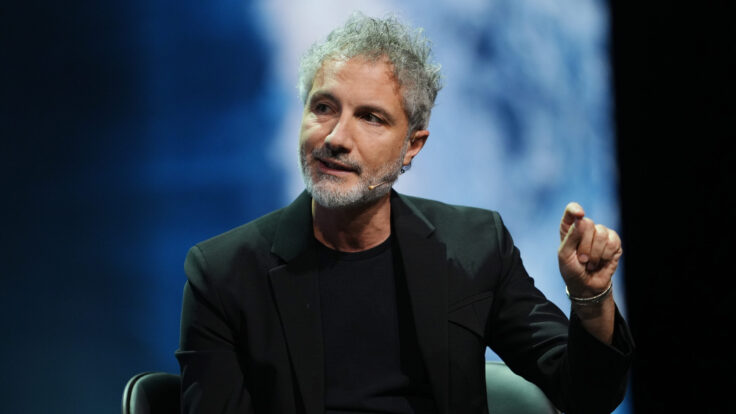
Kering waiting game: On an earnings call this afternoon, Bernstein analyst Luca Solca called Kering’s first-half earnings “marginally worse” than expected. The good news: Kering is almost done rationalizing its retail portfolio (they plan to close about 80 stores by the end of the year, and will close more in ’26 and ’27); Boucheron, the jeweler, is performing exceptionally well; Brioni is back thanks to men’s casualwear; and Bottega Veneta is going strong. Sales at
B.V. were up 18 percent in North America, and the brand fared better in Japan than most others because of the local business. EBITDA was up 12 percent, although B.V. will experience a slower Q3 as the transition from Matthieu Blazy to Louise Trotter materializes.
Now, the okay news: At Saint Laurent, which grew so fast and so big, margins were wider than expected. Meanwhile, operating income at Gucci, despite some positive signs with new
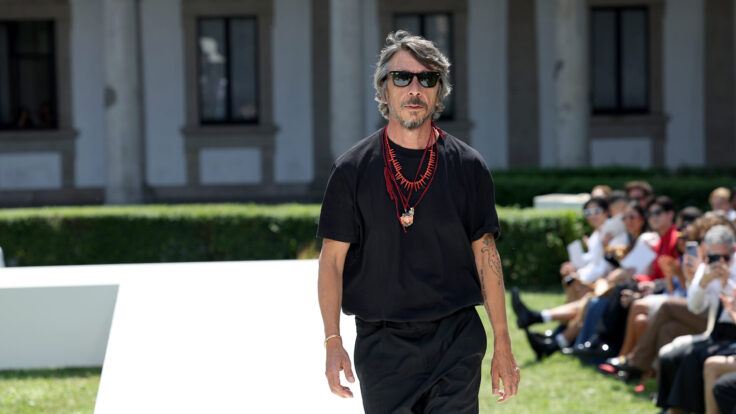
bags, was down 52 percent. (Obviously, everyone—employees, investors, etcetera—is waiting for incoming C.E.O. Luca de Meo to start on September 15 and reorganize the business.) Finally, Kering deputy C.E.O. Jean-Marc Duplaix essentially said that Valentino’s current performance is related to macro headwinds, and the aesthetic changeover, and that the parentco can’t judge the business until the end of 2028—when the option to buy it in full prepares to
expire.
Kering deputy C.E.O.s Francesca Bellettini and Duplaix made some interesting comments during the Q&A portion of the call. In terms of rationalization, they noted that there are no current plans to offload any brands. Duplaix called Alexander McQueen “challenged,” but underscored that there aren’t plans to sell anything.
Understandably, investors are obsessed with Gucci and want a better understanding of what will be new in stores this
year, given that Demna’s full-on vision will not be realized until March 2026. (Please note that there will be a new, full collection presented in September.) Bellettini asked everyone to remember that Gucci is not only about its designer. “There is a company, there is a brand, and there is constant work from the team in presenting a new collection, a new product,” she said. Who knows how things will change once de Meo arrives, but according to Duplaix, “He has already met with
several key stakeholders and is preparing for his formal arrival. … It will be up to him to define his roadmap,” which we should expect in 2026.
However, both the Kering call and LVMH’s earnings last week indicate that the portfolios of these groups are not fixed, never have been, and I wouldn’t be surprised if there were under-the-radar layoffs at several of these brands across Europe over the next six months. On this matter, Duplaix said that a general hiring freeze at the
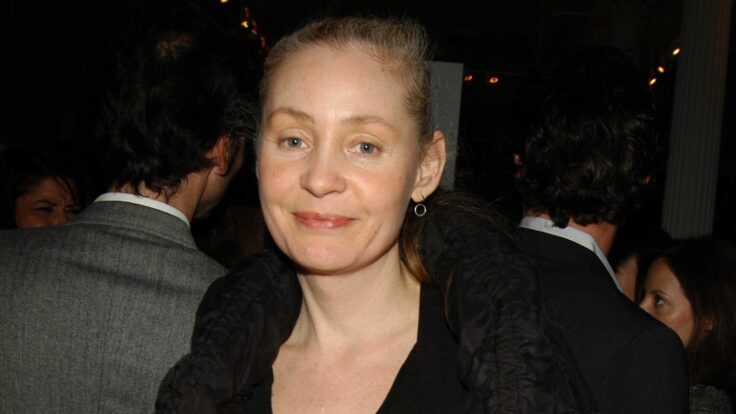
underperforming brands, along with store closures, has resulted in natural attrition. - More Document drama: Over the past few weeks, I’ve heard murmurs that something was afoot at Document Journal, Nick Vogelson’s New York–headquartered indie magazine. You may remember that the publication was embroiled in a lawsuit almost two years ago involving Sarah Richardson, its former fashion director, who claimed that
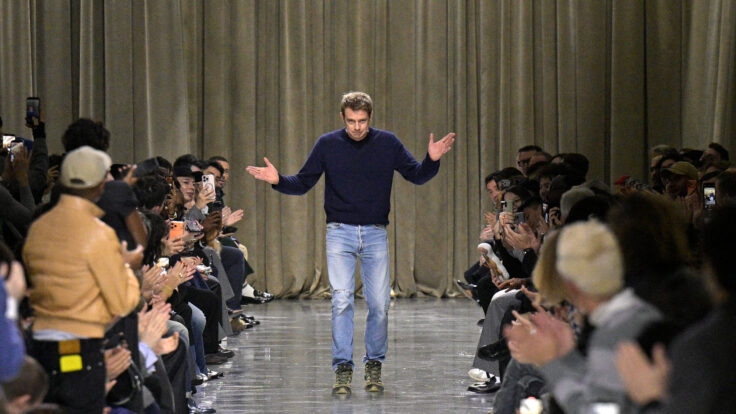
Vogelson owed her “no less than $1.2 million” in back pay and equity. (Read all about it here.) Vogelson seemed to have moved on from the incident: Soon after Richardson’s lawsuit was made public, he hired a new team, including style director Ronald Burton III. In February 2025, Vogelson announced the launch of a spinoff
magazine, Notes on Beauty, in hopes of courting a new suite of advertisers. Since then, things have gotten a little weird.
Multiple brands that paid for story placements months ago have yet to see results, or receive any information regarding when the magazine might be published next. Yes, I am talking about pay for play. Some—not all—indie magazines will take cash from brands in exchange for placements, either in fashion spreads or for a cover. This doesn’t include
advertising. The more traditional way of operating, at least here in the States, is that a brand will buy advertising, and the magazine will feature the brand in its editorial shoots. It’s not written into the contract, or even directly spoken about—it’s more of an understanding. (If the magazine doesn’t provide enough placements, a marketing person or publicist usually hashes it out with the commercial side.)
None of this has been helped by the fact that Vogelson chose to sit out the
men’s shows and Couture—fashion weeks he always attends. And yet, Vogelson and his remaining team seem to still be working on stories, so perhaps there is an explanation for his radio silence. I reached out to him about what I’ve been hearing. Here’s what I can tell you: the summer edition of Document is going to print now. On September 6, the magazine will host an event at New York Fashion Week, and another edition of Document will be released on November 1. Next February,
Notes on Beauty will debut.
As for the delay, it seems this might be a matter of indie magazines being difficult to operate, and Vogelson not having the proper resources. (The Richardson lawsuit, no matter the outcome, must have taken a toll.) I did hear, elsewhere, that Vogelson is in the midst of raising new money—he declined to comment on that, but said that Document’s ad sales revenue is up in 2026.
|
|
|

| Sarah Shapiro
|
|
- American Eagle’s ghost
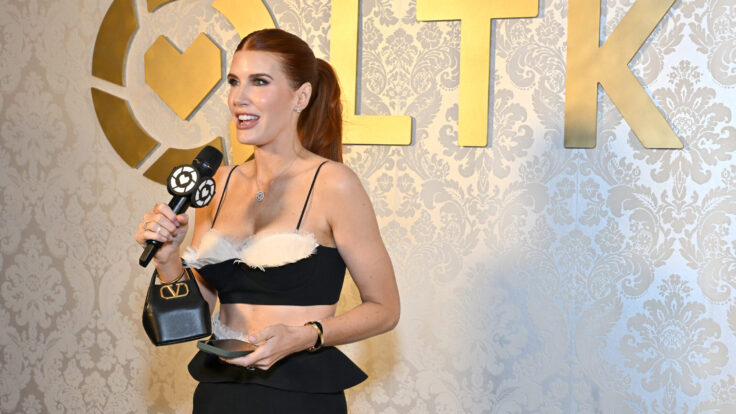
launch: There’s been a recent trend of brands making big announcements about joining Substack, only to quietly discontinue those efforts weeks later. American Eagle was one of those brands, making the very smart decision to hire Casey Lewis to edit their first three Substack posts. Nobody covers the teen market better than Casey, and she even shared
her content strategy on TikTok. But when I checked the brand’s Substack in the aftermath of the social media flare-up surrounding the Sydney Sweeney “Good Jeans/Genes” ad campaign, expecting to see denim content or maybe behind-the-scenes outtakes from the shoots, I found… nothing. Their Off the Cuff newsletter, which has 2,600 subscribers, hasn’t published anything since June 4.
Perhaps American Eagle was merely testing marketing strategies, and Substack isn’t where they
decided to put their money or time. But it raises the question about the lift required for brands to actually maintain a Substack, and whether it’s smarter to simply partner with creators who are already performing on the platform. (Check out Jane Herman and Hillary Kerr’s recent Old Navy–sponsored Substack posts for examples.)
|
|
|
Now, a look at the bag you’re about to see everywhere… |
|
|
For a luxury industry struggling with oversaturation and tight margins, the success of
Polène—and their Cyme tote, in particular—seems to prove that accessible luxury can generate a decently sized business with just a few stores and limited awareness. At least for the time being. |
|
|
It’s high summer in the United States, but fall fashion is already starting to hit stores. And this season,
you can expect to see more of the Polène Cyme tote. The certified B.A.B.—or big ass bag, the term du jour—encapsulates the French-coded “clean girl” look, a not-so-subtle rejection of American consumers’ taste for luxury brands and designer labels. The
brand was founded in 2016 by three siblings—Elsa, Mathieu, and Antoine Mothay—and while they have no explicit background in the fashion industry, their great-grandfather Léon Legallais did found the heritage Breton stripe brand Saint James. |
|
|
A MESSAGE FROM OUR SPONSOR |
There’s a reason the industry doesn’t publish wholesale reports often: it’s nuanced, behind the scenes, and
not particularly sexy. But we do it anyway because we care about how brands actually thrive. Our latest B2B report contains data we gathered from 100+ real brands. From choosing retail partners to ditching digital tools they barely use, brands are being ruthless about wholesale efficiency and control. Get your free copy. |
|
|
Last year, a minority-stake investment from L Catterton, the private equity firm linked to LVMH, validated
the notion that an accessibly priced French brand could hold sway in the world of handbags and fashion. Impressively, the brand reported a healthy 20 percent EBITDA margin on $250 million in annual sales revenue. And they appear to be growing strategically. So far, they’ve turned down U.S. multibrand retailers and department stores, who are always looking for ways to distinguish their racks, especially at price points that won’t alarm the U.S. consumer. (The Cyme tote retails for
$560.) Meanwhile, Polène is expanding its own U.S. retail footprint beyond SoHo with a second U.S. shop opening on Oak Street in Chicago in 2026. The brand also has stores in six other cities, including prime locations in Paris, London, Tokyo, and Seoul.
A few years ago, the bags got a social media boost when Volkan Yilmez, a.k.a. “Tanner Leatherstein,” took apart a Polène handbag in a viral TikTok that showcased the leather, craftsmanship, and hardware. The bags are mostly made in Ubrique, a region of Spain known for artisanal leather craftsmanship and manufacturing. Beyond the Cyme, other popular styles include the Cyme mini, the Osmo (a ’90s-style leather baguette), and the Mokki and Numero Neuf origami-style dumpling bags. They all exemplify the clean, architectural aesthetic that has become synonymous with modern French design. |
A certain quiet cost-consciousness pervades the brand’s strategy as well. For example, manufacturing the bags
in Ubrique allows Polène to set contemporary rather than luxury price points but still maintain the quality of the handbags. Meanwhile, in January, Polène alerted customers that their prices would be ticking upward so that they could make purchases beforehand—a customer-service and brand-awareness win when competitors were ducking and weaving ahead of Trump’s threatened tariffs.
This spring, I stopped by the SoHo location, which offered a good case study
in how Polène is positioning itself in the market. The store draws steady foot traffic, and is close enough to various luxury shopping boutiques to attract serious handbag consumers but far from the tween chaos a few blocks north (and the fake bag hustlers a few blocks south). I observed enough purchases to conclude that customers were not just browsing but buying—fueled, in part, by the option to have bags monogram stamped in-store. The SoHo shop also displayed the brand’s costume
jewelry, fashioned into organic shapes that are plated in 24k gold. After all, a pair of $200 earrings is a nice basket builder with a $600 handbag. |
|
|
Anyway, L Catterton seems to believe that Polène has cracked the code for profitable luxury without logo
dependence or hype—but really, the core appeal is that it’s a European brand, produced in Europe, with a lot of opportunity to scale at retail. The solid financials are a positive sign, obviously, and they’re likely envisioning either a profitable sale or I.P.O. in the future. We’ll see where the business is in a year or two. But for an industry struggling with oversaturation and tight margins, Polène seems to prove that accessible luxury can generate a decently sized business with just a few
stores and limited awareness… for the time being. |
What We’re Reading…
and Looking At…
|
It’s interesting that Quince’s new funding comes from the firm that manages the family offices of
Mark Zuckerberg, Jack Dorsey, and other billionaire founders. [Bloomberg]
Perhaps the box office comeback of superheroes bodes well for mega-luxury brands.
[Vulture]
EssilorLuxottica, Ray-Ban’s parentco, shared in their Q2 earnings that sales of the Ray-Ban Meta glasses were up 200 percent in H1, with revenue more than tripling year-over-year. (Presumably the total business is still small, and they
did not share actual figures.) Earlier this summer, Meta took a 3 percent stake in the EssilorLuxottica business as they continue to invest in their A.I. eyewear (Oakley has also developed A.I. glasses from EssilorLuxottica). If you’re reading
this with a pair, message me. [EssilorLuxottica]
This summer’s big Birkin-inspired handbag has vanished. The $1,600 “Boatkin” bag, which combined Hermès’s Birkin silhouette with L.L.Bean’s classic Boat & Tote, is no longer on creator Hathaway Hutton’s website. The SKU
has possibly had a makeover as the “Birdie Fair Tote.” [The Fashion Law]
A fun profile of the real Mr. Big, Ron Galotti, who was fired from Condé Nast in 2003, right before it went to the dogs. He moved to Vermont, bought a tractor, never looked back, and seems really happy.
[NYT] |
Until tomorrow,
Lauren
P.S.: We are using affiliate links because we are a business. We
may make a couple bucks off them. |
|
|
Puck fashion correspondent Lauren Sherman and a rotating cast of industry insiders take you deep behind the scenes of this
multitrillion-dollar biz, from creative director switcheroos to M&A drama, D.T.C. downfalls, and magazine mishaps. Fashion People is an extension of Line Sheet, Lauren’s private email for Puck, where she tracks what’s happening beyond the press releases in fashion, beauty, and media. New episodes publish every Tuesday and Friday. |
|
|
The industry’s go-to source for unflinching reporting on the trillion-dollar business of artificial intelligence - perhaps the
single most important technology of our time. Ian Krietzberg, the powerhouse journalist behind The Deep View, delivers twice-weekly insights into the latest dealmaking and breakthroughs in A.I., and how the intersecting worlds of finance, entertainment, media, and politics are being transformed in its wake. |
|
|
Need help? Review our FAQ page or contact us for assistance. For brand partnerships, email ads@puck.news. You received this email because you signed up to receive emails from Puck, or as part of your Puck account associated with {{customer.email}}. To stop receiving this newsletter and/or manage all your email preferences, click here. |
Puck is published by Heat Media LLC. 107 Greenwich St, New York, NY 10006 |
|
|
|