Hi, and welcome back to Line Sheet. It’s Juneteenth, a federal holiday here in America. Puck’s offices are closed. I hope everyone is able to take some time. (Meanwhile, why are you all sending me cryptic messages about Saks Global?)
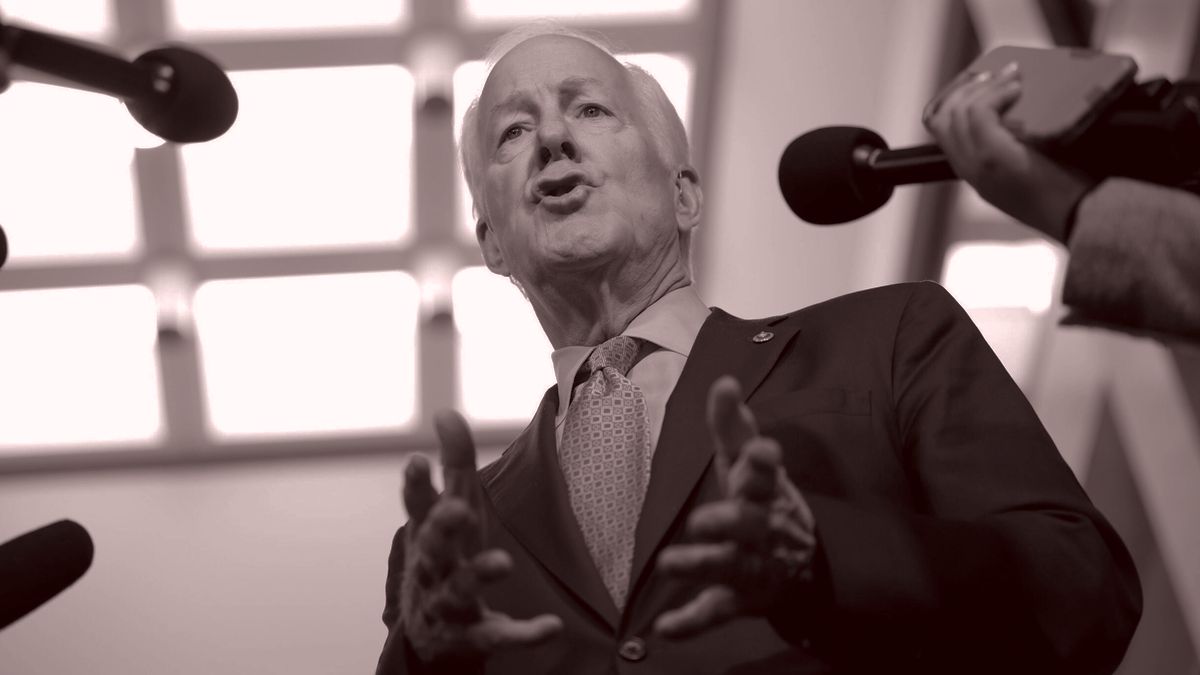
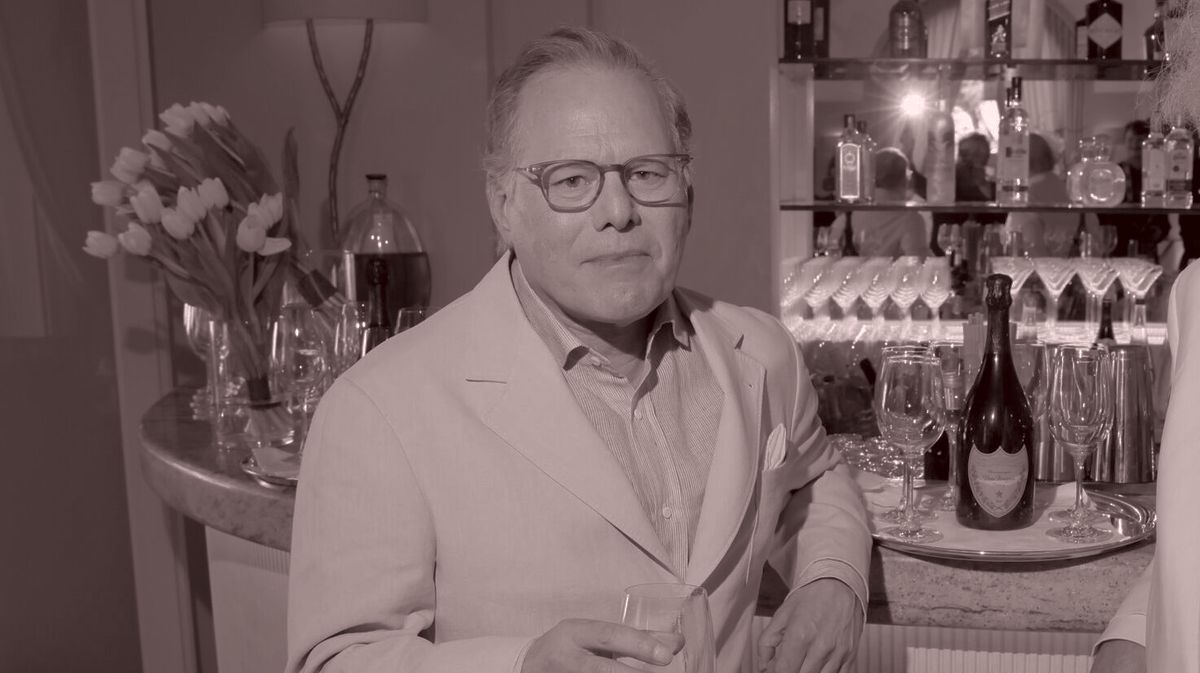
In this special send for Inner Circle members (trade up here), I share what I know about the situation at Kering: how folks are reacting to the appointment of Luca de Meo as C.E.O., what kind of reputation he has among former employees and C-suite executives, and what difficult steps he may have to take to get the conglomerate back to growth.
In honor of the holiday, we’re going to shake up today’s format. Rather than offering you news and notes from across the industry, I’ve got a timely interview with the one and only Ryan Murphy, who shares his reaction to the reaction over the images of actress Sarah Pidgeon dressed as Carolyn Bessette- Kennedy for his new FX show, American Love Story. (You may have noticed that people are not pleased.) In our conversation, Murphy sets out to prove that he knows what he’s doing, and also confesses that all his considerable effort to honor his subject—a committee of fashion insiders, the sourcing of the precise garments—may not be enough to satisfy the late Bessette-Kennedy’s obsessive fans. But he acknowledges that the fervor over these clothes reflects the very reason he wanted to take on the project in the first place.
Mentioned in this issue: François-Henri Pinault, Luca de Meo, Francesca Bellettini, Jean-Marc Duplaix, Michael Burke, Kering, Renault, American Love Story, Ryan Murphy, Carolyn Bessette- Kennedy, Sarah Pidgeon, Birkin 40s, G.F.C.s, Leena Nair, and many, many more…
|
Ryan Murphy Addresses the C.B.K. Discourse
|
Ryan Murphy, who built his television empire by depicting various forms of depravity—both imagined and ripped from the headlines—has endured plenty of controversies. But there is something downright chilling about the way the public has reacted to the early images of actress Sarah Pidgeon in character as Carolyn Bessette- Kennedy, whose life and relationship with John F. Kennedy Jr.—and ultimately, their deaths—are the subject of the first season of Murphy’s new series, American Love Story, which has begun shooting in New York and is set to debut in 2026.
The pushback on Pidgeon dressed as C.B.K.— first during lighting tests, then in paparazzi shots captured on set—from both anonymous online commenters and personal friends of the Kennedys, alike, has been eerily similar in intensity to the way the public engaged with the couple when they were alive, a microscope that Murphy says “ultimately killed her.” The obsession with C.B.K.’s looks and style has only escalated in recent years, as the limited number of her public images continue to circulate on Instagram.
|
|
|
|
A MESSAGE FROM OUR SPONSOR
|
|
|
|
Murphy is following the online discourse closely, and called me up yesterday to discuss his team’s plan for the American Love Story costumes, which he says will not only do right by Bessette-Kennedy, but also include the original items, or at least exact replicas of items, that she wore. Here’s a condensed and edited version of that conversation.
Lauren Sherman: What was it about the response to these images that made you feel it was important to speak out?
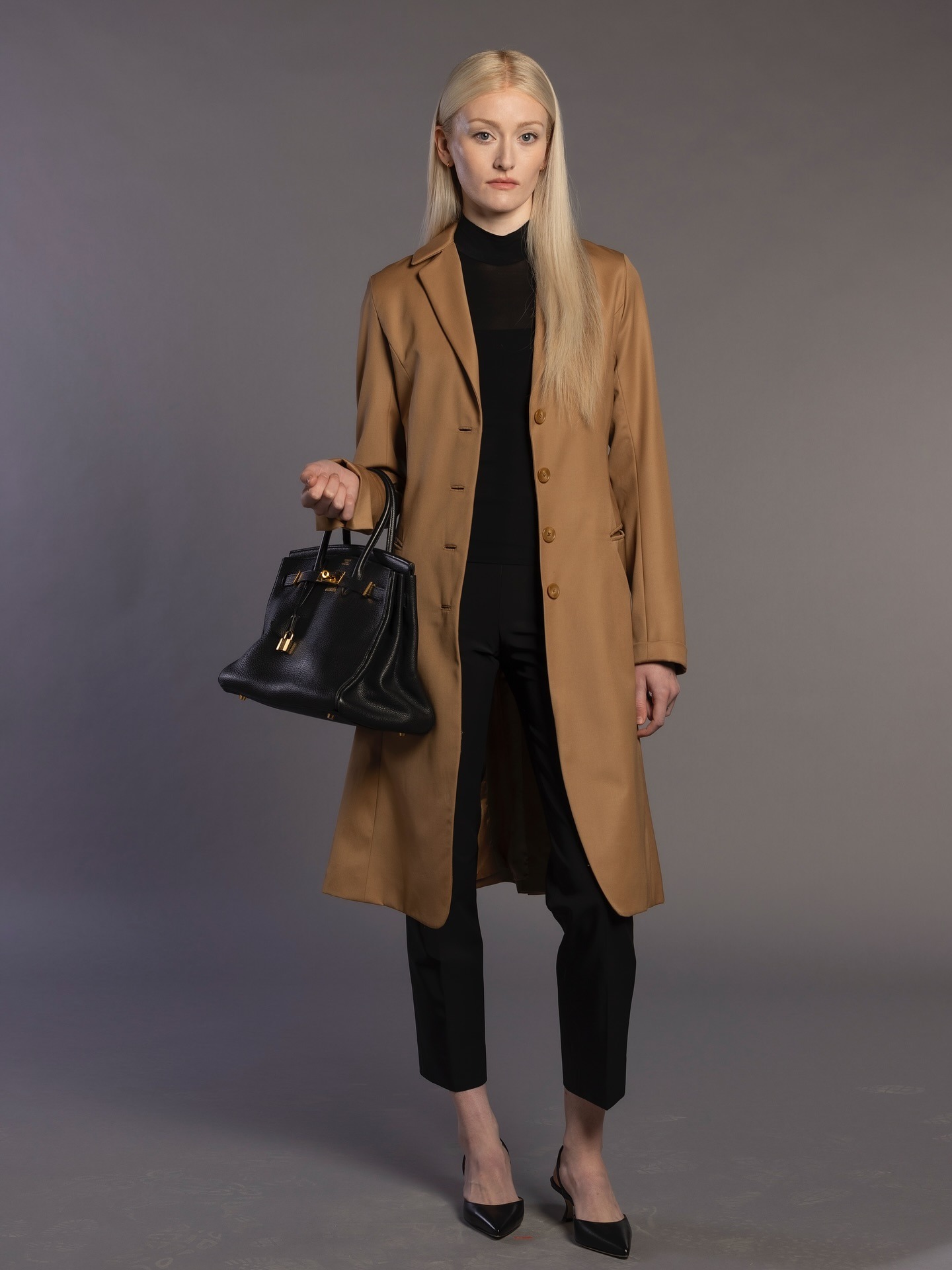
Ryan Murphy: Carolyn Bessette-Kennedy is sort of a religious figure in style circles, which is interesting. I wanted to give people some context, whether you love it or hate it. The screen test, for instance: That is not the wig we’re using, that is not the purse we’re using. Those are just things we had to show the studio. It was a work in progress, but I released it, because sometimes you put things out and the paparazzi backs off, so your actors don’t feel attacked.
Can you give some context around those paparazzi shots in front of the Calvin Klein offices? It looks like high street clothes from 2023.
There were many photographs of her wearing those shoes, but they were private photographs. They weren’t paparazzi photographs. That scene was 1993/1994, before she was famous. (We’re shooting in chronological order.) She arrives at Calvin Klein, takes off those shoes, and puts on Manolos as she heads into the showroom.
And we have references for those clothes. We have pictures of those clothes. They were not from 2023. So I look at that picture, and think, Well, people are criticizing it, and they’re wrong, to be quite blunt.
We’re going to release a series of short films in the fall, which will show the actual look, and our version of it. It’ll be the exact same thing, and in some cases, if we can’t find it, we’ll have something made. There are also so many Carolyn Bessette-Kennedy fashion blogs and Instagram accounts devoted to her. We’re inviting a group of 20 of them to come see us, probably in September, to look at all of our stuff, and talk about how we did the research.
We have an advisory committee of up to 10 people now, who are pulling all of the real stuff. We are either using the actual pieces, or we are getting as close as we possibly can. Today, we found two holy grail pieces. I can read you a list of the clothes, and what we’re actually pulling, if you’re interested in that?
|
|
Photo: Courtesy of Ryan Murphy Productions
|
|
Yes, you don’t have to name them all, but this is what my readers will be interested in.
The Birkin we photographed in the screen test was just one from a wardrobe that wasn’t even hers. We are very aware that her Birkin bag was number 40, not 35. We have the 40. We have multiple pairs of Manolo Blahnik heels and sandals from 1992 to ’99. We have the black and brown Manolo boots. We have the Prada tall boots.
We have the early Prada bag that she wore, and she wore this all in a very specific way. They were very lived in. We have multiple pairs of Prada loafers. We have the Prada tank dresses. We have the Yohji ruffled skirt from ’98. The Miu Miu turtleneck, the Narciso sleeveless tanks. The Calvin Klein collection ’97 leather blazer; another leather blazer from that collection. The Calvin Klein collection ’95 satin gown that she wore with the cream scarf, the Calvin Klein ’92 slip dress, the Yohji ’99 black coat, the L.L.Bean vintage tote. The Calvin Klein collection ’94 velvet coat dress, the Calvin Klein collection ’94 silk sweater, the Yohji ’97 long coat, the Chanel resort ’96 floral dress, the Prada vintage fall ’96 camel tan blazer, the Prada ’97 black military coat, the Levi 717 jeans.
We have the original Charles Wahba headbands, the sunglasses from Selima Optique.
Hollywood often gets the fashion industry very wrong. What are you doing to make sure you get it right?
First of all, we cast the right actors who can play the part right. You can try and copy people’s look to a tee. Sometimes that works, sometimes it doesn’t. It’s also about money. It’s about how much you’re spending, and we’re spending a tremendous amount of time and money and effort to get her closet correct.
I was astonished that someone like Kelly Klein, who knew her and must have some inkling that there’s a real-life person playing the role of Carolyn, and who has a great, vulnerable, beating heart, would look at a picture, and immediately go on several websites and criticize it, and say cruel things about it, and the actor, and the clothes and the shoes. I had this when I did Versace, right? I had Donatella Versace speak out against that show. I had her say that it was all wrong. The casting was wrong. She didn’t like the clothes. She was, very early on, calling up many actresses who I was friends with, who she heard might be playing the part, and telling them not to play it. [Note: A personal rep for Versace could not be reached for comment.]
You said that you felt troubled by the photograph. Why would you feel so bothered by that?
The first image did stress me out.
Why did it stress you out?
The clothes looked very contemporary.
What I would say is the coat she was wearing—that was obviously just a stand-in for the build of the famous camel coat that wasn’t ready yet on that day. So we threw something on.
|
|
|
|
A MESSAGE FROM OUR SPONSOR
|
Scalable creator programs powered by data.
LEARN MORE
|
|
|
|
I was naive about the screen test. We just grabbed something and put it on her arm, and it was a Birkin that was in our costume department for another show, just to sort of try—and then to have, literally, bibles be written about how, That’s not the right purse. She wouldn’t hold it that way. She always had it open. The bottom was scuffed. She would open it up on the subway. Why didn’t you… I had no idea that people cared as much as they do, but I guess that’s a good thing.
We’re doing our absolute best. I can’t announce who’s on the advisory board yet, because many of them have contracts that have not been signed, and I don’t want to offend them by using their names before everything is done. But, what I also love is a lot of people have been kind and come forward and said, Hey, I have this piece. Are you interested in using it? I did not expect that either.
But the look with the sneakers, too. It did not look lived-in to me. And to be honest, the other thing that bothered me was the water cup, because I feel like in 1993, no one was using those kinds of cups.
She’s not going to have a water cup on the show. That was a paparazzi picture of a rehearsal that was to get a camera move correct. This is the thing that’s absolutely ludicrous about trying to appease all these people.
I’m lucky that I can speak to you about it, but the internet is not so lucky. What’s tricky about this versus, say, The Assassination of Gianni Versace, is that the way C.B.K. imagery is disseminated on Instagram, and the internet generally, it’s like she is a living person. That’s why people are having an extreme reaction. Nobody who’s 19 right now is poring over images of Roy Halston on a daily basis.
That’s the world we live in, right? The internet is a very nosy, loud vessel. It’s the very story that we’re making. That’s my headline. We’re making a story about a woman who fell in love with a very famous, most eligible bachelor of his time, who was called America’s Prince. And she was constantly waking up to a deluge of articles about her, and how she wasn’t pretty enough, how she wasn’t good enough for him. That she didn’t have any style. She was regularly called ugly. Paparazzi who would follow her, would viciously call her a “cunt” to get a reaction. That was her life, and our story is about Carolyn Bessette-Kennedy falling in love with somebody, and being sucked into this maelstrom that made her absolutely miserable.
And in her lifetime, she was routinely attacked, routinely hunted, routinely told that she was not good enough, and it was only upon her death, and a decade later, that this sort of canonization began. That’s kind of what we’re writing about, and that’s what’s happening with the press right now. I find that absolutely fascinating. It’s something we talked to the actors about.
It’s a tragic fairy tale that I’ve never done before. I’ve never seen this level of press before. It’s very interesting that the story we’re telling, it’s like we’re now living it, day to day, while making this production. It’s kind of eerie, kind of sad, and kind of moving. History repeats itself.
And I agree with your sentiment. People seem so invested in every single thing about this person, and I was not prepared for that. I don’t think any of us were, but I guess that’s a good thing, don’t you think?
|
|
And now, on to the main event…
|
|
|
|
For decades, François-Henri Pinault executed a playbook that transformed his father’s retail business into a modern luxury superconglomerate. But macroeconomic headwinds and internal havoc call for a new playbook. Does Luca de Meo, who turned around Renault, have the magic touch?
|
|
|
|
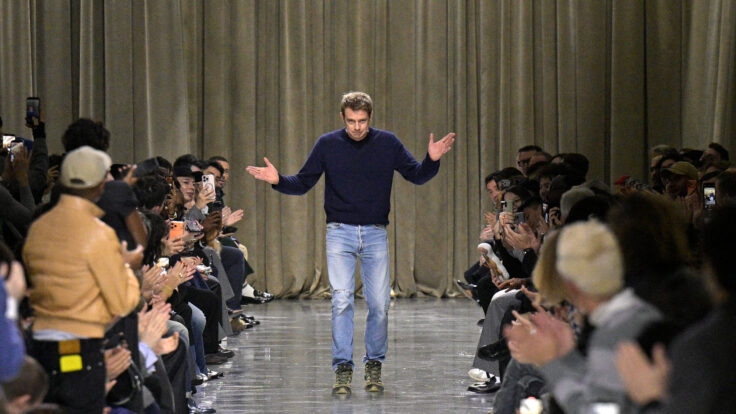
There were many people inside Kering, including at the highest levels, who didn’t know that Renault C.E.O. Luca de Meo was about to become their new boss. It was only on Friday night that Kering C.E.O. and controlling shareholder François-Henri Pinault shared the news. Even internal candidates for the job were in the dark until the very last moment. Sure enough, the news leaked by Sunday.
Some may be disappointed, but they couldn’t have been so surprised. In retrospect, it was naive to imagine that the company’s deputy C.E.O.s, Francesca Bellettini (brand development) and Jean-Marc Duplaix (operations and finance), were ever really in the running, despite their individual bona fides. After all, both Bellettini and Duplaix have spent decades building Kering, executing F.H.P.’s playbook. After taking over from his father, two decades ago, Pinault embarked on a famous restructuring of the company—buying brands, shedding others, merging with the Gucci group of assets, upscaling what was then PPP into a modern luxury conglomerate—that created tremendous value for shareholders, none more so than the Pinault family itself. In 2003, patriarch François Pinault was not on Forbes’ list of the world’s richest people. Now he’s the 111th wealthiest person in the world, according to Bloomberg, with a net worth of around $20 billion.
But that value has diminished significantly over the past two years, as shares of Kering—of which the Pinault family office owns a controlling stake—have diminished by as much as two-thirds. Pinault’s personal fortune has dropped about $10 billion during this brief period. And Pinault fils’ playbook has become outdated amid the cooling of the Chinese economy, changing tastes, price sensitivities, and a natural response to the luxury industry’s years of aggressive investment. The modern luxury industry, fashioned in this century by Pinault and Bernard Arnault, has never endured a real downturn. Even the 2008 recession was mitigated by emerging wealth in the Middle East and Asia. This current disruption is particularly fraught for Kering’s trend-sensitive, emotional brands.
And that’s just the macro. There’s obviously been internal havoc—starting with the exit of Alessandro Michele and the Demna scandal in 2022, followed by the activist-investor-driven firing of Marco Bizzarri in 2023, and, financially, the succession of Gucci misfires—that made a true turnaround plan necessary, one that would require a leader with that sort of experience. Amid all this, Pinault acquired a controlling stake in CAA, which was either a distraction, or at least very much looked like one.
|
|
|
|
There are virtually zero luxury industry executives who have implemented a real turnaround. Perhaps Michael Burke’s work at Fendi qualifies, but with all the heritage labels, it was more about reviving and reconstituting, rather than righting, an already very large ship. Either way, that was orders of magnitude smaller in scale. Enter de Meo, who transformed Renault from a €7.3 billion loss in the trough of the Carlos Ghosn era to a €4.26 billion operating profit.
|
At Renault, de Meo was known for being decisive. He fast-tracked an electric car project that had previously been canceled, and boosted the group’s sub-brand, Alpine, through Renault’s F1 partnership. He was an operator, obviously, but also a creative and determined decision-maker, who grasped the softer, occasionally ineffable elements of brand architecture. “What set de Meo apart … was his ability to blend passion for great product with financial savvy,” Stuart Codling wrote this week in the racing trade Motorsport. “He could wrangle the contents of a spreadsheet like any other bean counter, but also made it clear to all below him that their mission was to create ‘G.F.C.’ (in private, ‘great fucking cars’).”
From the accounts I've heard, de Meo is also an incredibly charismatic leader: tough, but inspiring. People love him. And if he can make a plan to create a G.F.B. (the last letter, in this case, being “bag”) he may very well succeed at Kering. On top of the near-guaranteed wordplay—he called his Renault turnaround “Renaulution”—he strives for actual results.
De Meo doesn’t know bags like he knows cars, and he’s never worked in a traditional direct-to-consumer business. (Other than Tesla, cars are mostly sold via third parties.) He has also spent most of his career at resolutely European companies—he cut his teeth at Fiat and Volkswagen. I imagine de Meo will take the Leena Nair approach to learning the fashion industry: go on a listening tour, and meet with executives in every department, in every country. Over four years, the Chanel C.E.O. has made difficult, sweeping changes to the operations without letting (most of) the current executives feel left behind.
But de Meo doesn’t have the luxury of leading a private company and operating on his own clock. Kering’s numbers must start improving, fast. As he meets leaders, de Meo will also be doing extreme due diligence on the business and his leadership team. It’s going to hurt. While so much of the organization is relieved by François-Henri’s choice, some are concerned about where they may fit in this brave new world.
After all, F.H.P. is the opposite of a micromanager. Kering was so successful during the past 20 years partly because Pinault let his executives run free. Now de Meo will be reining in many of them, and cutting loose others, while presumably bringing in leadership from other industries with fresh eyes and corporate backgrounds. This personnel shuffle, alone, is going to transform the culture. F.H.P., who will remain Kering’s chairman, and its largest shareholder, has clearly divined this transformation. After all, he was an exceptional second-generation steward—he knew what he didn’t know, and left that work to others. Now he’s handing it over to a car guy for a reason.
|
|
|
|
Puck fashion correspondent Lauren Sherman and a rotating cast of industry insiders take you deep behind the scenes of this multitrillion-dollar biz, from creative director switcheroos to M&A drama, D.T.C. downfalls, and magazine mishaps. Fashion People is an extension of Line Sheet, Lauren’s private email for Puck, where she tracks what’s happening beyond the press releases in fashion, beauty, and media. New episodes publish every Tuesday and Friday.
|
|
|
|
Puck’s daily art market email, anchored by industry expert Marion Maneker, offers unparalleled access to the mega-auctions and galleries, elite buyers and sellers, and the power players who run this opaque world. Wall Power also features Julie Brener Davich, a veteran of Christie’s and Sotheby’s, who provides unique insights into how the business really works.
|
|
|
Need help? Review our FAQ page or contact us for assistance. For brand partnerships, email ads@puck.news.
You received this email because you signed up to receive emails from Puck, or as part of your Puck account associated with . To stop receiving this newsletter and/or manage all your email preferences, click here.
|
|
Puck is published by Heat Media LLC. 107 Greenwich St, New York, NY 10006
|
|
|
|