{{ 'now' | timezone: 'America/New_York' | date: '%b %d, %Y' }} |
|
|
Hi, and welcome to Line Sheet. This has become the busiest time of the year in Los Angeles for
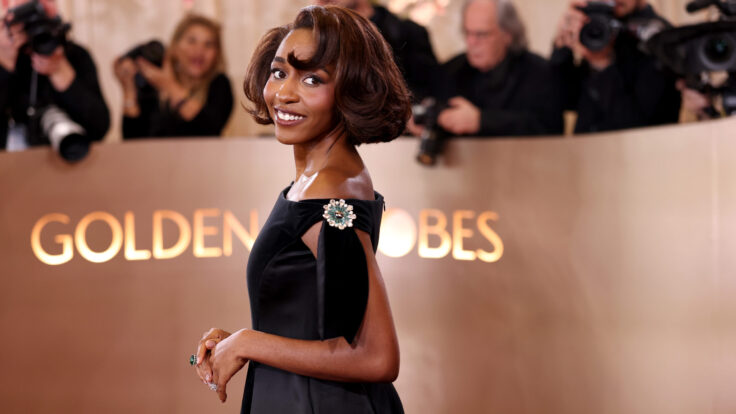
fashion industry–adjacent people: There was the Academy Museum Gala last week, then Vogue World last night, and now the LACMA Art+Film Gala, sponsored as usual by Gucci, this Saturday. Stylist Erica Cloud’s birthday party is always wedged somewhere in between. (Did you go?)
To kick off our week, I’ve gathered some news and observations about how the developments in Los Angeles reflect the industry at large. Also: some philosophizing about the future of McQueen, a
chic influencer’s battle with The Row, and more.
Programming note: Tomorrow on Fashion People, king of the luxury analysts, Bernstein’s Luca Solca, is back for our quarterly earnings season wrap-up. He also reviews the Dior and Chanel shows. And we discuss the future of Armani. Listen here and
here.
Mentioned in this issue: Vogue World, Anna Wintour, Mark Guiducci, Arianne Phillips, Colleen Atwood, Dior, Greta Lee, Lisa Love, Chloe Malle, Melanie Ward, McQueen, Luca de Meo, Kering, Marc Jacobs,
ABG, Paola Russo, Dario Vitale, Donna Langley, Sue Kroll, and many more… |
|
|
A MESSAGE FROM OUR SPONSOR |
Lyst is re-imagining the multi-brand fashion store online, partnering with the world's best brands to help you reach
the customers who matter. With the stakes higher than ever this holiday season, Lyst insights reveal new search trends and behavioural data from fashion’s most strategic shoppers, and how your brand can cut through the noise online.
Download the Lyst Peak Season Playbook now. |
|
|
Three Things You Should Know…
|
- Could
this be the end of McQueen’s reign at Kering?: Last week’s news that Kering-owned McQueen was undergoing a strategic business review, likely resulting in a 20 percent staff reduction at its London headquarters, got a lot of people talking. Is Kering C.E.O. Luca de Meo preparing the brand for a sale? After all, the guy has barely been in charge for a month and he’s already effectively sold off the beauty business to
L’Oréal in a $4.7 billion deal. Meanwhile, during a recent earnings call, then-deputy C.E.O. Jean-Marc Duplaix acknowledged McQueen’s challenges. (Duplaix also noted that there were no plans to sell, but that was before de Meo took charge.)
Kering has owned a majority stake in the business since 2001 but has yet to scale it meaningfully. Over the years, McQueen
has had real commercial hits—including that famous sneaker—but has never managed to maintain the momentum. For what it’s worth, I liked Seán McGirr’s latest collection, and can imagine the customer base with the right merchandising strategy. Alexander McQueen, the house’s late namesake, also remains a public fascination—he’s one of the few designers normal people care about. But de Meo may have his hands full reorganizing Gucci, Saint Laurent,
and Bottega Veneta, and perhaps there is a better owner out there.
If they sell McQueen, I don’t see Kering offloading it to a licensing company—the playbook deployed by LVMH in its sale of Marc Jacobs to ABG, which I reported last week. McQueen can sell designer clothes, and the best owner would be a company in that space, like OTB or Richemont. Or maybe private equity. Or
maybe they’ll keep it. This is what strategic reviews are for! - Speaking of Marc…: A person with firsthand knowledge of the ABG–Marc Jacobs deal had some useful feedback following my story. This person argued that Marc Jacobs made sense as ABG’s first foray into luxury on account of the playfulness of the brand—i.e., its semi-kooky personality, as evidenced in its ubiquitous and self-aware tote bag, which could allow for a lot of easy
branding and licensing opportunities. (“Think of the sock license!” this person said.)
But there will likely be plenty of challenges, too. ABG is currently searching for a brand president whose job will, in the simplest of terms, involve a balancing act between managing the namesake designer and running the financially rapacious ABG playbook—overseeing various channels, manufacturing partners, and teams across the globe, all while managing up to Jamie Salter. More to come
on this soon, I’m sure. - Welcome to Hollywood: Conversations about the relationship between fashion and entertainment often focus on how the two industries are increasingly dependent on each other, for better or worse. But there are also a lot of very important clients in this town beyond NBCU chair Donna Langley and Amazon film marketing head Sue Kroll, and perhaps it’s no surprise that many of the big brands—Saint
Laurent, Bottega Veneta, Boucheron, Bulgari, etcetera—hosted V.I.C.-centric events around Los Angeles during the past couple of weeks. There’s even more on the calendar in the coming days. Remember, the U.S. is still a key growth region for nearly every top brand.
These in-person experiences remain a potent sales driver. On Saturday, I stopped by Paola Russo’s great store, Just One Eye, on Sycamore: Dario Vitale’s Versace collection was on display and
available for preorder, and clients perused a depth of offerings. Under Capri, Versace forfeited the middle market between very high-end eveningwear and cheap entry-price pieces. Now there are leather jackets, shirting, etcetera in between quality pieces under $1,000 (belts, shoes, denim, jewelry) and pricey atelier dresses. Anyway, you’d only be able to see that if you had stopped by to look.
|
|
|
Even after the fourth (mostly) well-received iteration of Vogue World, this time set on the
Paramount lot in Los Angeles, many industry observers remain uncertain about the actual purpose of the traveling pop-up magazine. Naturally, much of the head-scratching ties back to the fact that Condé Nast is in cost-cutting mode. |
|
|
Over the past week in Los Angeles, across all the lunches and dinners and cocktail parties that I attended
(plus the ones I didn’t), one question bubbled up over and over above all else: Has fashion become over-reliant on celebrity? Some people believe we have reached peak saturation, with the effectiveness of partnerships waning as B- and C-listers increasingly front campaigns. Are these $15 million deals really worth it anymore? Meanwhile, others argued that fashion and Hollywood are only just starting to understand each other—that this bubble was nowhere near popping.
Was
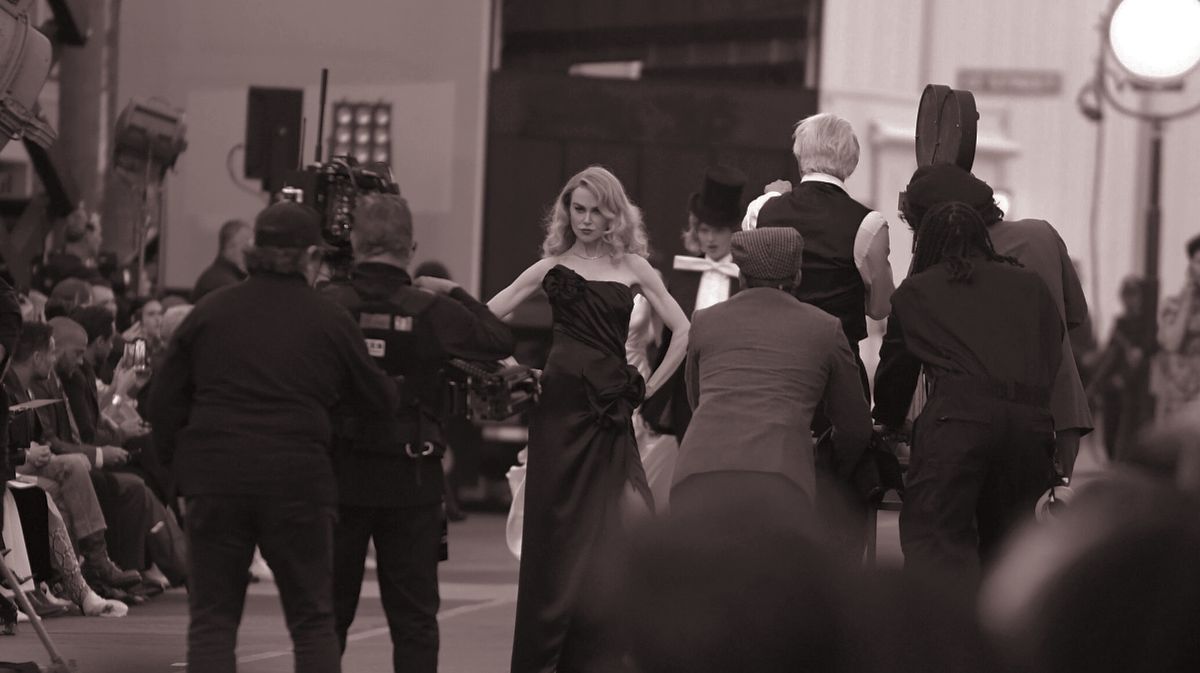
this conclusion optimistic, delusional, or somewhere in between? Vogue World, the traveling pop-up magazine that staged its latest iteration at the Paramount lot on Sunday night, actually may have gestured at something of an answer. The organizers—Anna Wintour and her former deputy (and current Vanity Fair content head) Mark Guiducci—chose to center the performance around costumes from Hollywood history, and the work of great costume designers
like Arianne Phillips and Colleen Atwood, the latter of whom, in her black Chanel suit, absolutely destroyed any other person’s chances of earning the title of the evening’s best dressed. (Ayo Edebiri in Chanel wasn’t bad, either.) |
|
|
A MESSAGE FROM OUR SPONSOR |
Lyst is re-imagining the multi-brand fashion store online, partnering with the world's best brands to help you reach
the customers who matter. With the stakes higher than ever this holiday season, Lyst insights reveal new search trends and behavioural data from fashion’s most strategic shoppers, and how your brand can cut through the noise online.
Download the Lyst Peak Season Playbook now. |
|
|
Vogue World, which had previously been staged in New York, London, and Paris, is the type of event that
could, in theory, make the Vogue brand feel relevant to a generation of consumers who simply don’t see a reason to care. On Saturday, a college friend who works as a computer engineer, of all fields, texted me that he noticed V, the K-pop singer and BTS star, was flying in for it. (What is Vogue World, he texted…) Wintour and her team also make a point to showcase the uniqueness of their host city. Hollywood types were almost surely charmed by the overture of setting
this year’s event on the historic lot.
The 30-minute performance opened with Baz Luhrmann meta-directing Nicole Kidman; featured around 150 models and several big stars, like Greta Lee in Dior; and ended with a swell of models walking out to “Good Vibrations.” On-the-ground reports suggested it was a little hokey, but also a romp. “It was kinda great,” one curmudgeonly viewer said. “Lots of energy. Really fun. Crowd was into it.” Another
noted that people were dancing in their seats, and that Gwyneth Paltrow looked perfect.
As always, Lisa Love, the former West Coast editor of Vogue, who still does stuff like this for Condé Nast—and whose great talent is putting on a fabulous show—ensured that attendees, especially the paying ones, had a good time. (You can always tell when Love is involved with the staging of an event; they’re lighter, more fun.) A lot of credit also goes to the
entertainment department for getting all those celebrities to show up.
Some observers, however, were less kind. “It looks silly and dated and like a waste of money,” one executive said. “And all the favors they must have had to call in? Aren’t designers tired of being asked to make things for free for their dumb projects?” |
Even after four iterations of Vogue World, many remain unclear about its purpose. And on some level,
they have a point: Events like this can cost eight figures to produce, are rarely profitable in early years, and often serve as a distraction from the core business. Vogue World exists, in part, to generate top-line revenue, which was close to $30 million this year, according to Condé’s self-administered leak in the Journal. It’s also to show advertisers and marketers that Vogue still matters in the fragmented media environment. This season’s sponsors included
Starbucks, eBay, and Eli Lilly, the manufacturer of Mounjaro, the preferred skinny fuel for this crowd. There was a Quince scarf on every seat. (Vogue also donates part of the ticket proceeds to a local charity in each city.)
But part of the lingering confusion regarding this traveling carnival ties back to the fact that Vogue—as well as parentco Condé Nast—is still very much in cost-cutting mode. I’ve been told that Chloe Malle, American
Vogue’s new head of editorial content, has been asked to shave $1 million off her annual budget for 2026. (A rep for Condé Nast did not respond to a request for comment.) Other people I talked to said that number isn’t exactly right, but whatever it is, it’s likely easier than it sounds to achieve; there are plenty of legacy policies (and probably people) that can be managed out. The company is always reviewing how to best allocate resources, as a person with access to the
budgets told me—which, in this case, means spending less money on traditional content and more on Vogue World.
Indeed, Vogue World’s actual purpose is to pronounce the brand’s enduring position in the industry while the core business continues to erode. Absent innovations to its model or product, Vogue may never escape a state of managed decline in a market where its main way of making money is by serving advertisers that increasingly hope to dictate the
contents of the magazine. |
|
|
Vogue should be so much bigger than that, and perhaps one day it will be. But the challenge comes
down to the question about the interplay between fashion and Hollywood. One of the great promises of the Condé Nast titles, at least back in their heyday, was that they effectively managed the tollbooth between entertainment and luxury fashion. Brands were willing to pay tens of millions in advertising to see big stars in their credits in the glossy pages of Vogue, Vanity Fair, GQ, Glamour, etcetera. Yes, the celebrity endorsement spigot existed, but it was in
its comparative infancy. Now, as everyone knows, that micro-industry has shifted into overdrive. After all, fashion brands pay Hollywood millions and millions more each year to market their goods. If anything, the codependency between the industries is growing.
And among the various economic challenges facing magazine brands—new platforms, behavioral changes, the challenging economics of print—the most underappreciated, perhaps, is the manner in which they lost their role as gatekeepers.
The truth is that Hollywood and fashion need each other too much these days to bother with a middleman.
Wintour, of course, is the exception to this rule. She is the last of her kind—a true power convener who can make a K-pop star board a plane from Korea and have a normie engineer take notice. But can Vogue World grow faster than Vogue declines? In this final stage of her career, can Wintour find a way to make a real business out of that power and influence? The lingering
question in the industry has always been whether Vogue can exist without her, but perhaps the better riddle is whether Vogue World can, too. |
What I’m Reading… and
Looking At…
|
Bernard Arnault holding a Labubu—doesn’t get better or more real! I’ve never touched a
Labubu. [Instagram]
Speaking of, Arnault and his family have bought a bunch of LVMH stock over the past few months, gaining even more control over the business. [Bloomberg]
I told you
last week that this was going to happen, but just an additional F.Y.I.: Parade announced over the weekend that it is shuttering. Its last day of operations will be October 28. [Instagram]
When famous people die, the social media response
usually rings super false and weird to me, and I disengage. The death of the stylist Melanie Ward, however, affected me. I didn’t know her at all, but her work was just so influential and special-seeming. Katie Grand’s tribute to her helps to explain why she was so important to so many people. You should read it. [BoF]
It feels like listicles are really staging a comeback. (Why? Well, they are fun and numbing.) I happen to think this list of the 50 most stylish people alive is pretty great. [GQ]
And finally…
The influencer Neelam Ahooja, best known for her love of The Row, wrote an open letter to the brand
airing some grievances—namely, that the brand tried to “control” her work and image while she wore their product to drive sales via her poses. The gripe, real or imagined, is fascinating to contemplate as the label begins to seriously engage in advertising, influencer partnerships, and red carpet appearances. (Just a week ago, Kendall Jenner wore a custom dress by The Row to the Academy Museum Gala.)
As someone who loves The Row as a consumer, and who has covered the
brand critically as a reporter, I don’t think they owe Ahooja anything, and have no obligation to give her special access or discounts. That said, I don’t doubt Ahooja has driven millions of dollars’ worth of sales over the past couple of years, and that’s valuable. The lesson here is that once you put something out into the world, it’s no longer yours. The Row should just invite this lady to their show, or offer her early access to the sample sale, which feels more appropriate in this
case.
If I were Ahooja, I’m not sure I would have bothered writing an open letter. And yes, it’s just clothes; who cares? But maybe it’s time, as one of my group chats suggested, for obsessives like Ahooja to realize that there is a world beyond The Row. (Phoebe Philo, of course, but also Versace, Celine, Loewe, Chanel, etcetera, etcetera.)
[Substack] |
Until tomorrow,
Lauren
P.S.: We use affiliate links because we are a business. We may make
a couple bucks off them. |
|
|
Need help? Review our FAQ page or contact us for assistance. For brand partnerships, email ads@puck.news. You received this email because you signed up to receive emails from Puck, or as part of your Puck account associated with {{customer.email}}. To stop receiving this newsletter and/or manage all your email preferences, click here. |
Puck is published by Heat Media LLC. 107 Greenwich St, New York, NY 10006 |
|
|
|