Hi, and welcome back to Line Sheet. It’s all happening! Right now, Sarah Shapiro
and I are at the WSA Building for a live taping of Fashion People. If you’re not with us, you may be at Library 180, celebrating Bruce Weber’s incredible and robust new retrospective, My Education, published by Taschen. Or perhaps you’re at the cocktail party celebrating Sander Lak’s first namesake collection, or the J.Crew dinner on the Bowery (they’re
taking over a house for the week), or the Jacquemus x Veuve Clicquot event at the Central Park Boathouse. Anyway, I hope you have a great week, and I hope to see you around so you can tell me I was too easy on Edward Enninful regarding 72. (There is still time.)
Today, Sarah is in the driver’s seat with two fabulous proposals: First, she has some intel on what went down behind the scenes at Madewell before last week’s exit of president Adrienne
Lazarus. She also has an interview with Buck Mason founders Erik Ford and Sasha Koehn, plus womenswear designer Rachel Wilder and her new collaborator, Erin Wasson, about the company’s big push into womenswear following a decade of steady growth.
Plus, I got up extra early to see what happened at Kering’s general meeting amid the news that the French government has collapsed once again. Yesterday, Prime
Minister François Bayrou was ousted just nine months after predecessor Michel Barnier lost his own confidence vote. Moments before he was voted out, Bayrou referred to Bernard Arnault, who has threatened to leave the country over its taxation system, and other French billionaires as “emblematic targets of magical thinking; they’re like voodoo dolls with needles stuck in them to hurt them and, I imagine, hit them in the wallet.” He noted that
taxing the rich too heavily forces them to repatriate elsewhere. “Those who are targeted have a very simple and immediate response. They move.”
Mentioned in this issue: Buck Mason, Erik Ford, Sasha Koehn, Erin Wasson, Rachel Wilder, Bloomingdale’s, Madewell, Dakota Fanning, Adrienne Lazarus, Alexa Chung, Luca de Meo, Kering,
François-Henri Pinault, Gucci, and many, many more… |
|
|
A MESSAGE FROM OUR SPONSOR |
The end of De Minimis has already redefined global commerce - and most businesses aren’t navigating it alone. A recent Swap study found
88% of companies are already seeking partners to adapt cross-border strategy, mitigate tariff exposure, and protect profitability.
Swap’s latest tariff turmoil report gives leaders the playbook to stay compliant, defend margins, and unlock global growth in the new trade era.
👉
Download the full report |
|
|
Two Things You Should Know…
|
- It’s Luca time: Today in Paris, Kering held its annual general meeting, where shareholders voted overwhelmingly to approve Luca de Meo as its new C.E.O. effective Monday, September 15. Current C.E.O. François-Henri Pinault, whose family office controls the business with 59 percent of the voting rights, had a nice, albeit unrevealing, sendoff in
WWD today. He spoke briefly but eloquently in the meeting about his 20-year run leading the business through its many iterations.
Pinault, of course, will remain chairman of the board and serve as de Meo’s thought partner—especially in the early days. He also made clear that he had been thinking about
succession since before the pandemic, and started the transition in earnest back in 2023. I believe him—his exit was certainly a personal decision, although there were multiple wrenches thrown into the plan (the unexpected exit of Marco Bizzarri, the Sabato De Sarno failure, the global luxury retrenchment, etcetera).
A few interesting notes from the meeting: As I reported previously, the board confirmed that they employed two head-hunting
firms when they started searching for a new C.E.O.—one with in-depth knowledge of the business, the other with a more “global approach”—and cross-referenced the two methodologies. They whittled the pool down to five candidates (we know of three; I wonder who the other two were?) before deciding on de Meo, who spoke in front of shareholders after a message from Pinault and independent members of the board. Wearing a double-breasted navy jacket and a four-point pocket square, de Meo said
that while his comprehensive plan will not be announced until 2026, “We shall not wait for the finalization of the strategic plan to act,” adding that some changes will be made by the end of the year.
Astrid Wendlandt, the independent journalist who is also a shareholder in Kering, asked if deputy C.E.O. Francesca Bellettini was going to be reassigned as the C.E.O. of Gucci. Kering responded indirectly, via a written statement, by saying
that de Meo will “be responsible for defining, if he deems it necessary, a new management structure and making any corresponding appointments.” In other words, de Meo is playing this close to the vest, if he has even made a decision. I thought de Meo’s comment about needing to “consolidate the foundations of our houses and build a luxury group that is more integrated, more agile” revealed more about his approach and, coincidentally, pooh-poohed the traditional old-school executive shuffling that
has defined both the company and the industry.
There is tremendous goodwill toward de Meo, but there’s no denying that he is entering the business at an unprecedented moment, not only for Kering and the luxury market, but in France, too, as the country prepares for nationwide protests amid the government shutdown. It’s all connected—France’s calling card is Veblen goods, from wine to handbags. Their livelihood is under threat. That’s a lot for one Italian to take on, but at least he has
an established relationship with Emmanuel Macron from his Renault years.
|
|
|

| Sarah Shapiro
|
|
- Unwell at
Madewell: Madewell president Adrienne Lazarus’s departure from the J.Crew Group–owned business after barely two years revealed what everyone already knew privately: She wasn’t the right fit for the business. Multiple sources inside the company told me that her leadership felt stagnant—“Ann Taylor 2.0,” was how one employee put it, referring to Lazarus’s mid-aughts gig at the endlessly dowdy retailer—with an outdated aesthetic that failed to connect with the Millennial
customer base Madewell should have been courting. There was even drama around Alexa Chung’s sequel collaboration with the brand. The first go-round, which launched more than a decade ago, was a huge commercial hit—and awareness play—for Madewell. This was supposed to be something of a return to form, to give both Madewell and Chung a boost. Alas, it didn’t work out that way.
Meanwhile, the brand’s Dakota Fanning collaboration launched this week. It’s an
odd pairing, if only because Fanning isn’t known for having any particular interest or affinity for fashion. Despite a marketing push that included a Times Square billboard and a kickoff timed to coincide with NYFW and the Emmys, the product offering is bare bones. It’s one pair of jeans, which I’m told is good thanks to Benjamin Talley Smith’s work, and a single t-shirt in three colors. At one time, Madewell was so strong that the group considered spinning it off publicly. Now,
it’s up to J.Crew Group C.E.O. Libby Wadle, who ran Madewell during the boom times, to figure out how to get it back on track.
|
|
|
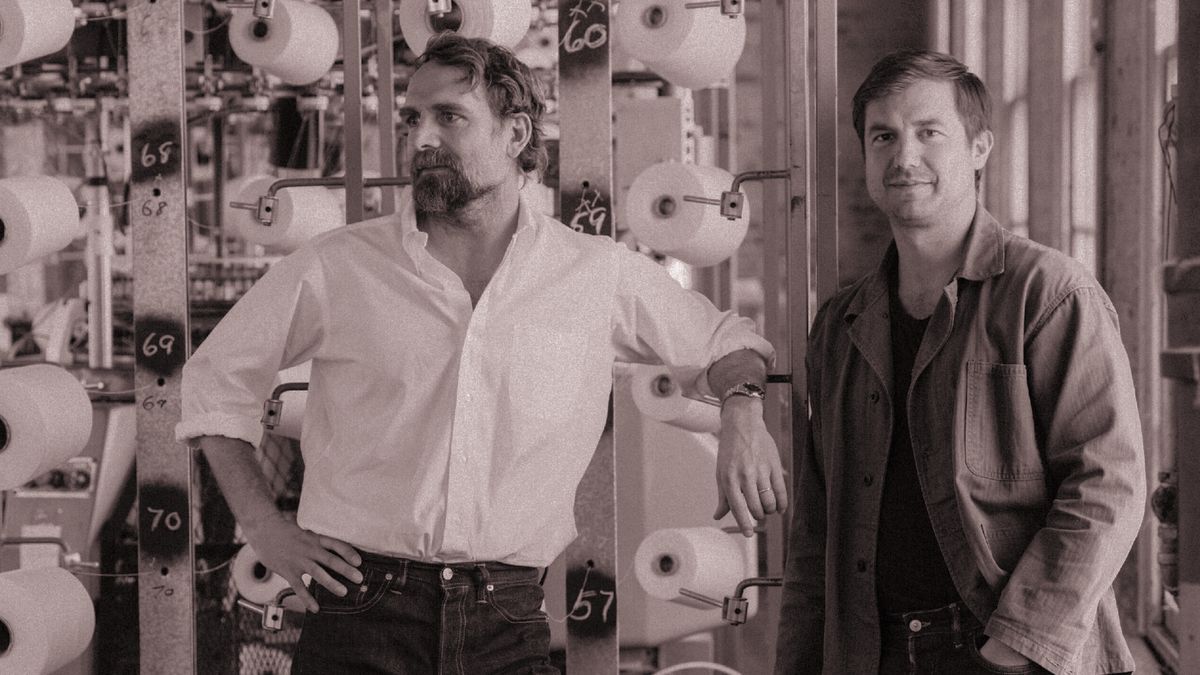
A conversation with the founders and new women’s design team at Buck Mason, the $100
million-a-year menswear heritage brand that largely bypassed venture capital on its way up. |
|
|
Founded in 2013, Buck Mason has often been unfairly clumped into a peer group with other D.T.C. brands from
the early 2010s, like Everlane and Outdoor Voices, that have either struggled, gone bust, or thrown out their original plan. But founders Erik Ford and Sasha Koehn decided not to raise venture capital. Instead, they launched Buck Mason with a relatively small pool of money from friends and family and angel investors, and subsequently made intelligent choices regarding manufacturing and distribution partners. In 2024, the company
surpassed $100 million in net revenue, and it has become an attractive target for private equity investors and strategic groups alike. |
|
|
A MESSAGE FROM OUR SPONSOR |
The end of De Minimis has reset the rules of global trade. Every U.S.-bound shipment now faces tariffs, higher costs, and compliance
pressure—making margin protection more critical than ever.
Swap’s latest tariff turmoil report gives businesses the blueprint to adapt quickly, reduce risk, and turn disruption into growth.
Inside, you’ll learn:
🌍 Impact of the De Minimis suspension on global commerce
💸 How businesses and customers are adapting to rising costs
⚠️ Risks of inaction for margins and loyalty
🚀 Five strategies to protect profits and fuel growth
👉
Download the full report |
|
|
Buck Mason’s next chapter centers on a push into womenswear—something they’ve deliberately slow-rolled,
despite customer demand. I recently spoke with Erik and Sasha, along with their creative collaborator, Erin Wasson, and their new head of women’s design, Rachel Wilder, formerly of A.L.C., Frame, Joie, and Haute Hippie. We discussed the epiphany that helped bring about the push into womenswear, the importance of “anti-fashion” to brand identity, the ideal number of centimeters for a lapel, and why you shouldn’t spend $3 million to open a store.
As usual, our conversation has been lightly edited and condensed. |
Sarah Shapiro: You’ve been making women’s clothing for
five years, but this is a bigger push. What changed?
Erik Ford: It started with women just begging for the product, and they kind of wanted the same thing that we were doing on the men’s side, rooted in these timeless classics. To be honest, the business had more momentum than we had design capability. And Sasha and I were intentionally slowing it down until we found the right team.
Through a friend of a friend, we met Rachel, and what
was really interesting was that she was sort of like, Fuck the fashion business. Even though she had all this amazing fashion experience and was such an accomplished womenswear designer for wonderful brands, she was like, I don’t want to do this anymore. We were looking for perennial classics, products that would stand the test of time, so once we met Rachel and joined up, that was really when we started thinking, Okay, we should open some stores and we should grow.
That’s been the impetus for having the right team to think bigger.
Rachel Wilder: I’d always been a huge fan of the brand—for my husband, for myself. I used to buy stuff all the time and say, This is such an amazing brand, why don’t they do women’s? The thought and detail and consideration comes through in every single piece. In this market, that’s really hard to find. I call it clothing with a soul, clothing that tells a story without screaming—these timeless
classics where you’re inspired by the absolute best vintage that you can possibly find, and re-creating them, and elevating them through fabric and fit for women.
Rachel, with your background at other brands, what white space did you see that Buck Mason could fill in women’s?
Rachel: In terms of the umbrella of the brand, the story, the experience that you have when you go into a Buck Mason store, it’s something that’s missing in the women’s market. More
importantly, it’s taking these principles of quality, integrity—I’m measuring stitches per inch—and [offering] timeless classics that are very hard to find at this price. We want our customers to trust that there’s always an almost anti-fashion posture, where we’re not going to lead them down a path that’s not going to hold up.
|
Erin, what drew you to work with Buck Mason?
Erin Wasson: [It’s amazing] to
have language in and around things like a differentiation of a lapel being a certain number of centimeters. That falls flat with certain brands, where they’re like, Well, we’re going to emulate the idea of something, but not do the level of research to give the customer that kind of product. Even if it’s as basic as a t-shirt or cable-knit sweater, I’m really drawn to heritage brands—there’s so much depth and romance.
What Buck Mason has done beautifully well is give everybody
an experience, as if they’re walking into a world that seemingly has existed for far longer than it has. I hope I can be a conduit and create deeper levels of narrative through things that I research and things that I’m drawn to—bringing in the art world, bringing in ideas of the past, present, and future, and a little bit of my experience of having done curation and design in the past. Being able to collaborate with people who are so deeply aware of their capabilities is nothing but a win for
everyone. |
|
|
Sasha and Erik, how have you funded Buck Mason’s growth without major outside investment? You’ve
opened 41 stores, plus nine shop-in-shops that you operate at Bloomingdale’s.
Sasha Koehn: We decided we were a retail brand and not a tech company, and we never tried to act like a tech company. That allowed Buck Mason to be on our own timeline. We don’t have an investment horizon, we don’t have a three to five year cycle that this business has to operate on. We joke all the time about how we’re basically a family business with two families, and luckily our
families get along really well.
Erik: We’ve been focused on cashflow from the beginning, and there are limits to what we can do, because we’re reinvesting everything into growing women’s. We are scaling at a rate that we can handle. Thirty to 50 percent annual growth feels good. This year has actually been a lot higher than that, but that was unexpected. We’ve had a couple of months where we’re up triple digits, and that wasn’t really the goal. We bought inventory
thinking, Oh, maybe we’ll have a 90 percent sell-through. That would be crazy, and that happens sometimes, but we’re pretty capital efficient on the buildouts. We’re not spending $3 million to open a store. The stores are very profitable from the jump usually, so that’s helpful. You can pay back a store pretty quickly. |
Exit Lane, a romance novella written by Erika Veurink—a journalist, brand
consultant, and popular TikToker—is out September 16. It’s billed as a modern retelling of When Harry Met Sally. And despite its compact size, it doesn’t skimp on world-building across Iowa, NYC, and Copenhagen. [831 Stories]
In an incredibly odd turn of events, Jack Carlson, founder of psycho-preppy label Rowing Blazers—which
sold a majority stake to Burch Creative Capital last February—has joined preppy New Haven stalwart J. Press as C.E.O. and creative director. His first collection for the 123-year-old brand, which is owned by Japanese apparel manufacturer Onward Kashiyama, will be shown Thursday.
[Inbox]
Lauren spoke about her career journey, covering Condé Nast, and the highs and lows of fashion media these days, with Sali Christeson, the founder and C.E.O. of Argent, on the brand’s podcast. [Work Friends]
Marc and Sofia’s 30-year friendship, via Marisa
Meltzer. [NY Times] |
Until tomorrow,
Lauren
P.S.: We use affiliate links because we are a business. We may make
a couple bucks off them. |
|
|
Puck’s daily art market email, anchored by industry expert Marion Maneker, offers unparalleled access to the mega-auctions and
galleries, elite buyers and sellers, and the power players who run this opaque world. Wall Power also features Julie Brener Davich, a veteran of Christie’s and Sotheby’s, who provides unique insights into how the business really works. |
|
|
Puck sports correspondent John Ourand and a rotating cast of industry insiders take you inside the executive suites and owners
boxes where the decisions that shape the entire sports business are made. You’ll hear interviews with players, network execs, and everyone in between. The Varsity is an extension of John’s private email for Puck by the same name. New episodes publish every Wednesday and Sunday. |
|
|
Need help? Review our FAQ page or contact us for assistance. For brand partnerships, email ads@puck.news. You received this email because you signed up to receive emails from Puck, or as part of your Puck account associated with {{customer.email}}. To stop receiving this newsletter and/or manage all your email preferences, click here. |
Puck is published by Heat Media LLC. 107 Greenwich St, New York, NY 10006 |
|
|
|