{{ 'now' | timezone: 'America/New_York' | date: '%b %d, %Y' }} |
|
|
|
Hi, and welcome to Line Sheet, and happy 4/20 to all who celebrate. Cannabis, which is legal in
the state of California, is not for me.
I am in glorious Milan for Salone del Mobile, the design fair, where Fashion has ingratiated itself, for better or worse. In tomorrow’s issue, you’ll find my report on what’s happening, including the E.I.C. speculation from tonight’s T magazine party at Villa Necchi Campiglio. Also, be sure to check out my conversation with veteran design writer Kelsey Keith, currently MillerKnoll’s global creative
director, on tomorrow’s episode of Fashion People. Listen here and here.
Today, we’ve got news of layoffs at Glamour and Saks Global, plus a close reading of the three-part Arnault succession report in French news
magazine Le Nouvel Obs. For the main event, a postmortem on Kering Capital Markets Day, which is all everyone was talking about until the Arnault story came out.
Mentioned in this issue: Frédéric Arnault, Luca de Meo, Delphine Arnault, Ron Johnson, Toyota’s Just-in-Time manufacturing model, Amal Clooney, Demna, Stephane Bianchi, Xavier
Niel, Cindi Leive, Antoine Arnault, Zac Posen, Armelle Poulou, Francesca Bellettini, Michael Burke, Alexandre Arnault, Hélène Mercier-Arnault, Roger Lynch, Sam Barry, the “ReconKering” turnaround strategy, Geoffroy van Raemdonck, Le Parisien, George Clooney, Cécile
Cabanis, Andrea Guerra, Vincent Bolloré, and more… |
Three Things You Should Know…
|
- What’s left of
Glamour: The once-voluptuous magazine’s U.S. editorial team was significantly reduced after the closure of Self and exit of global head of content Sam Barry. There are two editors left on what was already a slim staff; everyone else does social media or commerce. An inside source at Condé Nast said that the teams in countries where Glamour will cease publishing—Germany, Spain, and Mexico—found out about their redundancies only when C.E.O.
Roger Lynch issued a company-wide note about the changes.
Anyway, this is sad for everyone but entirely unsurprising. During the heyday of Cindi Leive’s reign as editor and Bill Wackermann’s tenure as publisher, Glamour’s brand elasticity made it the dominant title in Si Newhouse’s portfolio. It wasn’t as chic as Vogue or Vanity Fair, but it preyed on the marketing budgets of an incredibly wide
variety of categories—from high fashion to lowbrow brands, entertainment to teen cosmetics, etcetera. All this evaporated after the financial crisis, of course, and Leive eventually left. Instead of running a national search, Anna went with her gut and selected a digital video producer whom she met at George and Amal Clooney’s wedding. So here we are. A rep for Condé Nast did not respond to a request for comment. - Too much Saks: Employees at Saks Global—which has been in a relatively chill period since Geoffroy van Raemdonck took over as C.E.O. in January to manage the debt restructuring—are bracing for a reduction in staff in the coming weeks, either late April or early May. The layoffs come as the company closed its Brookfield Place office. (Neiman Marcus offices in New York and Dallas were already closed.) At the moment, everyone is
fully remote. During the pandemic, when he was C.E.O. of Neiman Marcus, van Raemdonck prioritized remote work, but this feels like a different thing. I asked a rep why van Raemdonk thought this was a good idea, other than cost-cutting. She explained that the office is only temporarily closed, and will reopen in some capacity soon. “Colleagues are working remotely on a temporary basis while we complete this project. We continue to believe in the benefits of a hybrid work environment that includes
in-person connection and collaboration. We look forward to welcoming colleagues back to the office in the coming weeks.” (Usual disclosure: Saks is suing Puck over our coverage of its debt management.)
|
|
|
|
A MESSAGE FROM OUR SPONSOR |
Agentic commerce isn’t a future concept. It’s already reshaping how people shop. Static storefronts are giving way to
guided, conversational experiences that don’t just surface products. They drive decisions and conversion in real time. Swap’s Agentic Commerce 101 breaks down what’s real and what it means for brands right now. Inside: |
• What agentic commerce is and why most AI tools don’t qualify • Why AI discovery platforms aren’t built to convert for your brand • Why owning your AI experience and your data is becoming non-negotiable |
|
|
|
- Airing out the
Arnaults’ clean laundry: There was a sprawling, three-part piece on the Arnault family in the French news magazine Le Nouvel Obs this past week that ran with the headline “The Succession War,” shaped by more than 30 hours of interviews. I was told that none of the Arnault children, nor their dad, agreed to be interviewed for the piece. I can’t confirm whether that’s actually the case, but it’s fair to say that the story mostly leaned on people
around them.
My big takeaway is that the Arnaults are a pretty normal family, and it’s unfortunate that their interpersonal issues have become public fodder. But that’s what happens when you decide to work at your dad’s company and he is one of the richest and most powerful men in the world. Honestly, the whole thing made me a little sad. But here is what’s worth knowing from the report, and what I subsequently found out:
|
- In December 2025, deputy C.E.O. Stephane Bianchi brought together Antoine (first family) and Alexandre and Frédéric Arnault (second family) in what Le Nouvel Obs describes as a “group therapy session” to discuss, in part, tension over the potential sale of Le Parisien to far-right billionaire
Vincent Bolloré. Here’s my fact-checking: According to people familiar with the situation, the nature of the conversation was misinterpreted, and it was way less intense than family therapy.
According to Le Nouvel Obs, the Gen X first family wants to stay out of business with Bolloré, and the Millennial second family doesn’t care about who owns Le Parisien as long as it’s not them. (I’m told the conversations with Bolloré have never
gotten far enough for this to be an actual issue, and the French press has just glommed on to it.) The paper is unprofitable, and there is a feeling among certain executives and family members that they shouldn’t keep sinking money into an operation that is losing money when the big luxury profit centers are being asked to cut costs. The issue here isn’t so much between the two families, but between the kids and the dad, who still reads print media and sees Le Parisien as a publication
that wields a lot of influence when it actually doesn’t. - The report posits Bianchi is close to the younger kids and C.F.O. Cécile Cabanis is closer to the older kids. This isn’t really true. Cabanis hasn’t been around for long enough to be close with anyone, and since Bianchi has been promoted to the deputy C.E.O. role, he spends more and more time with Delphine and Antoine, the older children, who are also on
the executive committee. He is as neutral a party as it gets at the moment.
- The piece attempts to position family matriarch Hélène Mercier-Arnault as “uncontrollable,” especially given her recent string of press appearances to promote her new album. (She’s a concert pianist.) “Unofficially, it’s to silence rumors of a power struggle between her husband’s five children and to say to millions of viewers what
she’s been saying privately for months,” the Le Nouvel Obs reporters posit. She tried, at least.
They also write of severe tension between Mercier-Arnault and Xavier Niel, Delphine’s husband. The piece states that Niel, who owns a majority stake in Le Nouvel Obs with an investor group, was not welcome at the family’s house for Christmas dinner. I’m told that he was invited, but didn’t attend. Antoine also blocked Hélène’s number
from his phone, according to the report, and I was able to confirm that this is true. Anyway, sounds like a pretty typical family drama. - Most importantly, there is a growing sentiment among executives and investors alike that Arnault, at 77, needs to come up with a succession plan that does not involve his children. The younger kids, who really want to run the whole thing, need another five or 10 years of training, which might work if Arnault retires
at 85, as he plans. But if it’s earlier than that, they’ll likely need to bring in an outsider. There are no Andrea Guerra types at LVMH; Michael Burke is probably the closest thing, and he’s inching toward retirement while getting the U.S. operations in shape. The company, which loves to promote from within, would have to conduct a serious search, given that the only person who could do it is Bianchi. The task feels
insurmountable to me. I reached out to LVMH’s comms team for comment. They did not respond.
|
|
|
|
There’s some natural skepticism around Luca de Meo’s recently unveiled turnaround strategy
at Kering—and while not everyone is sure that his plan to double operating margins can work anytime soon, everyone in the industry wants to believe it will. |
|
|
|
There’s been a story going around the luxury circuit that newish Kering C.E.O. Luca
de Meo took a group of executives on a sightseeing expedition to Zara. During one poignant stop on the tour, he supposedly held up a t-shirt made by the Spanish fashion conglomerate—which was famously inspired by Toyota’s Just-in-Time manufacturing model when creating its vertically integrated supply chain. Was the quality of this t-shirt really any different than the version that Kering sells at Balenciaga for many multiples of the price? |
|
|
|
A MESSAGE FROM OUR SPONSOR |
Agentic commerce isn’t a future concept. It’s already reshaping how people shop. Static storefronts are giving way to
guided, conversational experiences that don’t just surface products. They drive decisions and conversion in real time. Swap’s Agentic Commerce 101 breaks down what’s real and what it means for brands right now. Inside: |
• What agentic commerce is and why most AI tools don’t qualify • Why AI discovery platforms aren’t built to convert for your brand • Why owning your AI experience and your data is becoming non-negotiable |
|
|
|
I asked a rep for Kering about this; they declined to comment. A person close to de Meo said it sounded
far-fetched. But no matter what went down, de Meo, who came to his current position after successful stints running both Fiat and Renault, is certainly thinking about what luxury really means. Why not charge a bit less for the Balenciaga t-shirt and sell more of them? Sure, the margins would shrink, but a lower price point could increase sales volume and grow profit.
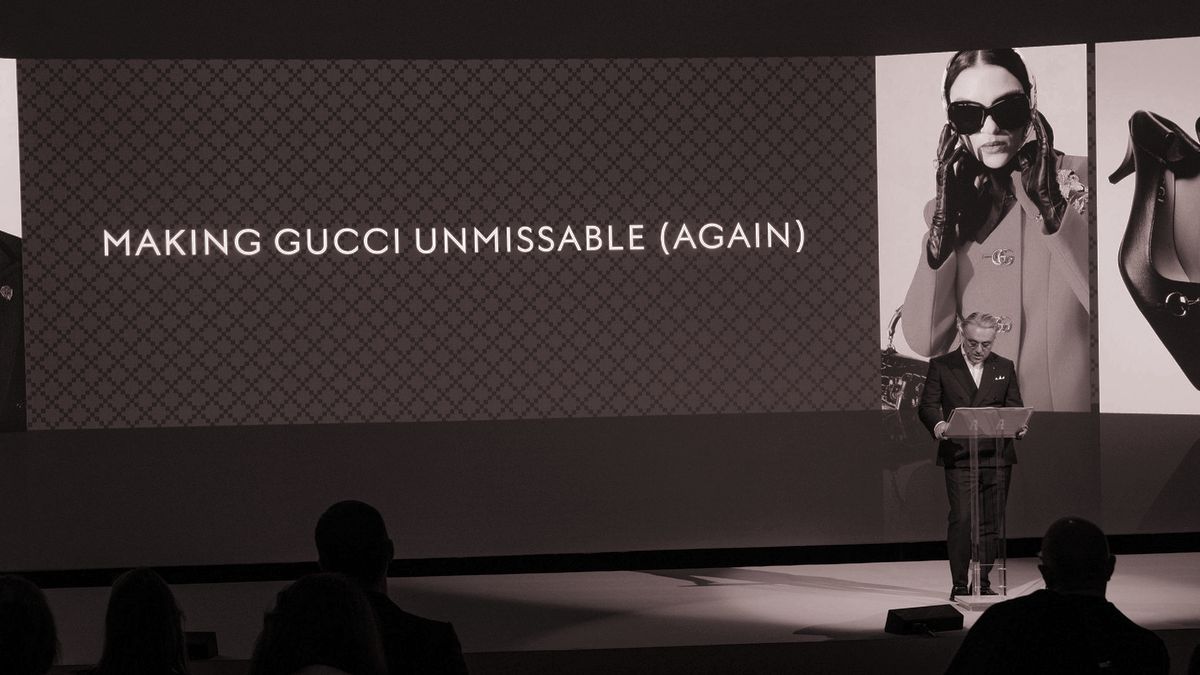
Last Thursday, de Meo’s obsession with profits was a prevailing theme at Kering’s Capital Markets Day: He spent about three
hours addressing more than 200 investors, analysts, and journalists while unveiling his “ReconKering” (pronounced reconquering) turnaround strategy, which involves doubling operating margins in the midterm. The plan is reflective of his career in the auto industry, which may not grow considerably year over year, but throws off sufficient cash as consumers replace older models with new ones. Fast fashion works not dissimilarly; cheap clothes are disposable, only worn for a limited time.
Given the rise of resale, combined with the overaccumulation of goods, de Meo sees luxury moving in a similar direction, and he appeared hell-bent on trying to convince Kering investors to care less about top-line growth and more about free cashflow. “This is a business where you need to make three products to sell one,” he noted, with a touch of annoyance, in one of his Q&A sessions.
That evening, at a stand-up dinner at the Gucci archives, he and his C-suite executives, including Gucci
C.E.O. Francesca Bellettini, Saint Laurent C.E.O. Cédric Charbit, and Kering C.F.O. Armelle Poulou and chief strategy and development officer Joël Hazan, spent hours answering questions from attendees. It looked exhausting, but de Meo appears to thrive on these kinds of interactions. Notably confident, and charmingly frank in an old-fashioned way, he’s convinced
that his strategy to improve Kering’s operational efficiency will create a more fertile environment for creativity. (Going forward, executive bonuses will be partially based on the somewhat nebulous, hard-to-measure concept of “brand desirability.”)
As I noted last week, however, de Meo is also ruthless. He promised to “eject” any brands from the portfolio that did not perform, and I’m told that he asked executives across the company to reduce budgets across the board by 20 percent for
the next two years. (A rep had no comment.) There’s so much talk in Italy about the labor issues in factories, and it seems de Meo wants to take that on by further industrializing Kering’s processes. Most attendees seemed to agree with most of his plan, and the market felt the same: Kering shares fell 5 percent on Thursday, but mostly recovered by the day’s end. |
Beyond petty complaints about the amount of time he was onstage, most skepticism was directed toward the
art part of his strategy—and whether the pursuit of efficiency will actually lead to creativity. Kering needs to generate more hit products, and its creative directors need the time and resources to feel empowered. Product-first creative directors like Gucci’s Demna, whose initial efforts are working well at retail (especially in the U.S.), have a better chance of succeeding.
But not everyone is going to make it, and some probably should not have been hired in
the first place. Demna has a strong partner in Bellettini, one of the best C.E.O.s in the industry. There is also tremendous opportunity for Saint Laurent in China, shoes, and ready-to-wear. Not every brand is so lucky: Bottega Veneta, which de Meo posited should be far more profitable, does not currently have a C.E.O. De Meo said he’s not in a rush to appoint someone. I’m told rumors that he is installing an old colleague from Renault are completely unfounded, and that internal candidates are
being considered. |
|
|
|
So far, de Meo has installed very few of his people at the brand level, acknowledging there needs to be some
amount of creative know-how to nail the art part of the equation. I asked him how he thinks about the fact that a lot of the upside in fashion actually comes from happy accidents and mistakes and overdevelopment. (After all, it’s not efficient to make a Bottega Veneta bag.) “I agree, but it’s also a form of defense of the luxury industry people—they want to defend that kind of culture, right?” he said. “You are underestimating the level of intellectual sophistication that I have when I analyze
the situation. I know that this is a creative industry—[it] is creative, [but] also an industry. And you have to combine the business and art, which is the priority.” He also mentioned some of the creative things he did in autos, like making “supercars that never made money.” He added, “I’m a brand guy. But because of my experience, I can see that there is a way to make the system more effective, not only more efficient.”
Most people want de Meo’s plan to work. The luxury industry needs
to operate differently, and everyone is searching for solutions. That said, it’s going to take another year to see whether his approach is actually effective. Last week, I couldn’t help but think of Ron Johnson, the Apple retail executive who tried, desperately, to save JCPenney by getting rid of discounting in an effort to make it chic. Johnson’s failure was almost immediately clear, even though people wanted him to succeed. But de Meo, unlike Johnson, is
actually a turnaround guy. Maybe he knows what’s good for Kering better than a traditional luxury executive. If not, we’re going to have a very different conversation about Kering’s future soon enough. |
The Vampire’s Wife founder Susie Cave is back at it with a demi-couture
shop called Weddings and Funerals. Brilliant name. [British Vogue]
R.I.P. Joan Burstein of Browns. She was 100. [Vogue Business’s Instagram]
R.I.P. to Zac Posen’s mom, Susan, too.
[WWD]
The new LACMA will be transformative for Los Angeles, and not only because there is an Erewhon inside. [The Hollywood Reporter]
One thing I’ve
learned this week: Design people really believe that T magazine is theirs, and feel a lot of ownership over the editor. Speaking of T, I enjoyed this roundup of the must-see buildings in Milan. [T]
There was a chic Pucci show in Sicily. I would love to hear an LVMH executive discuss the value of managing this brand the way
they do; feels like they could really scale it, and yet there doesn’t seem to be a desire to put the acceleration on. [Instagram] |
Until tomorrow,
Lauren
P.S.: We use affiliate links because we are a business. We may make
a couple bucks off them. |
|
|
|
Puck founding partner Matt Belloni takes you inside the business of Hollywood, using exclusive reporting and insight to explain
the backstories on everything from Marvel movies to the streaming wars. |
|
|
|
The industry’s go-to source for unflinching reporting on the trillion-dollar business of artificial intelligence - perhaps the
single most important technology of our time. Ian Krietzberg, the powerhouse journalist behind The Deep View, delivers twice-weekly insights into the latest dealmaking and breakthroughs in A.I., and how the intersecting worlds of finance, entertainment, media, and politics are being transformed in its wake. |
|
|
|
Need help? Review our
FAQ page or contact us for assistance. For brand partnerships, email ads@puck.news.
You received this email because you signed up to receive emails from Puck, or as part of your Puck account associated with {{customer.email}}. To stop receiving this newsletter and/or manage all your email preferences, click here. |
Puck is published by Heat Media LLC. 107 Greenwich St., New York, NY 10006 |
|
|
|
|