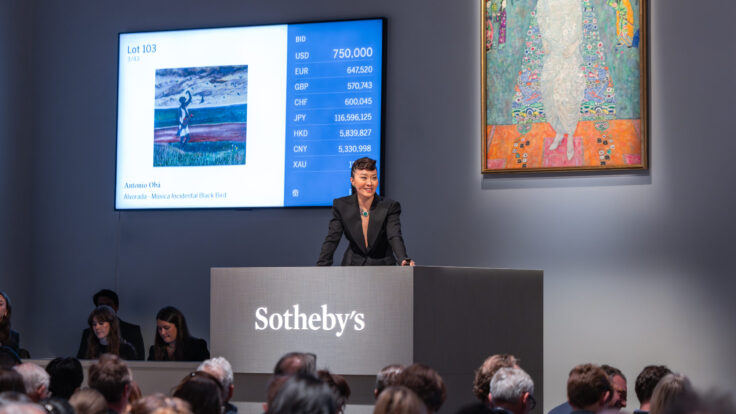
Welcome back to Wall Power. I’m Marion Maneker, wishing a happy
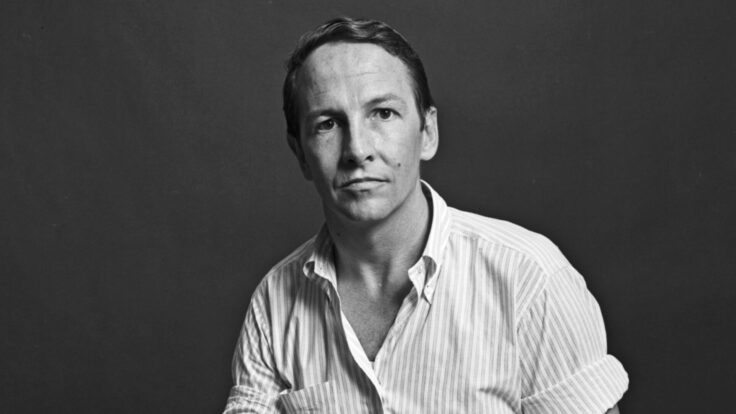
Clare McAndrew art market report weekend to all who celebrate.
I’m actually not joking about that. Thursday’s release of the Art Basel & UBS Art Market Report for 2026 (covering private and public sales in 2025) sets the benchmark for the art market’s annual self-reckoning as it prepares for its most important season: spring.
Everyone—collectors, dealers, and auctioneers—needs to know where the market stands, and McAndrew’s report is central to how the market sets prices and gauges the overall mood of buyers. Tonight, I’ll roll up my sleeves and tell you what it all means.
On our way there, we’ll stop by last night’s wild sale of the Jim Irsay collection at Christie’s, where the house answered the question: Did Irsay pay too much for his passion for popular culture? Also, Phillips’s Bacs &
Russo watch division is on a roll with Patek Philippe—they’re bringing a gold watch to market in Geneva this May with its highest-ever estimate.
Mentioned in this issue: Clare McAndrew, Jim Irsay, David Gilmour, Jack Kerouac, Jerry Garcia, Doug Irwin, Tash Perrin, Aurel Bacs, and more…
Don’t forget: If you’re not yet a subscriber,
become one here. (Aren’t you embarrassed to read a forwarded copy?) Or upgrade to Inner Circle status here. And send tips or start arguments by replying to this email or texting +1.917.1391 via SMS or WhatsApp. (Don’t worry. I like all feedback, especially being told what I got wrong.)
Enough, let’s bust a
move… |
Months after Indiana Colts owner Jim Irsay died last May at the Beverly Hills
Hotel, news broke that the F.B.I. was investigating a possible connection to painkillers and ketamine. (Irsay had been public about his struggles with addiction.) In addition to his NFL fame, Irsay was also well-known for collecting pop culture items before such property was recognized as a field. Many, in fact, were skeptical that Irsay’s purchases would hold or gain value. Last night, Christie’s proved that assumption very wrong with the $84 million first installment of the Jim Irsay
Collection. (There’s more today, tomorrow, and online.) Here are a few of the highlights. |
- Another brick in the wall: Irsay bought David Gilmour’s 1969 black Fender Stratocaster in the 2019 sale of the Pink Floyd star’s guitar collection for slightly less than $4 million—then a record price for any guitar. One of those rare instruments that’s deeply associated with the musician who played it, the Stratocaster returned to its position as the most valuable guitar ever auctioned, making $14.5 million last night.
- The Beat goes on: Guitars weren’t the only pop culture artifacts burning up the Christie’s sale room last night. In 2001, Irsay paid slightly more than $2.4 million for the typescript of Jack Kerouac’s On the Road, a scroll of paper that the Beat author rolled into a typewriter in early April 1951. After three weeks of continual typing, without paragraph or chapter breaks, Kerouac had the novel that would redefine literature in midcentury America.
Last night, bidders drove the scroll to more than $12.1 million.
- Tiger, tiger, burning bright: Elsewhere in iconic guitars in the Irsay collection was one of two built for the Grateful Dead’s Jerry Garcia by the luthier Doug Irwin. After playing Irwin’s “Wolf” guitar primarily in the 1970s (and again in the early 1990s), Garcia commissioned the “Tiger” guitar, telling Irwin, “Don’t hold back.” That one, which Irwin
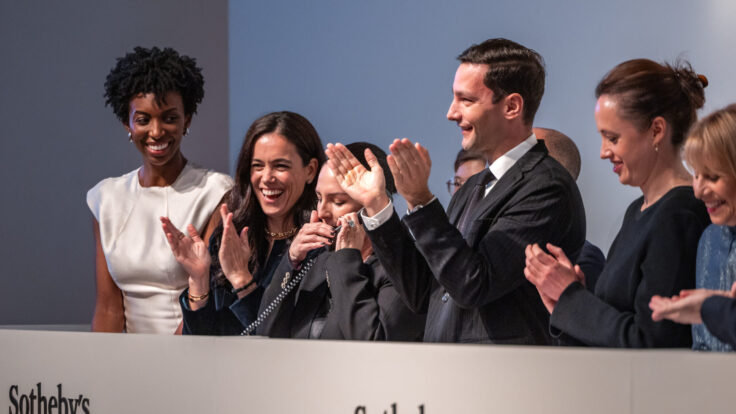
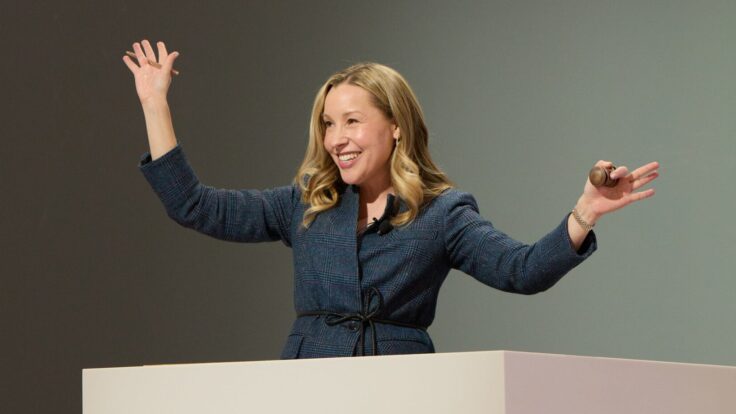
called his “best effort,” was Garcia’s primary instrument in the ’80s, and it made $11.5 million at Christie’s last night. After the hammer went down, the winning bidder stood up to embrace and high-five half a dozen people surrounding him in Christie’s saleroom. The scene went on long enough to provoke auctioneer Tash Perrin into a fit of laughter at the rostrum. When she regained her composure she said, “I’ve never seen that before in a sale.”
-
Smells like Kurt Cobain: Before last night’s sale, Irsay had owned three of the 10 most valuable guitars ever auctioned. The sale made those instruments the top three most valuable guitars ever auctioned. Rounding out third place behind Gilmour’s and Garcia’s was Kurt Cobain’s 1969 Fender Mustang, which Irsay purchased only four years ago for $4.55 million—and which made just over $6.9 million last night.
The return on Cobain’s guitar, which is
valuable for its appearance in Nirvana’s “Smells Like Teen Spirit” music video, hints at the trajectory of the pop culture and guitar markets since Gilmour’s 2019 sale. As Irsay bought and bought and bought, he clearly gave other collectors confidence to buy, themselves. The result is that while Gilmour’s Black Strat quadrupled in value, Cobain’s Mustang only appreciated by 50 percent. It’s another reminder that record-setting, market-astonishing prices often end up becoming “cheap” when
a broader market develops around the confidence generated by the original sale.
|
Phillips’s
$6.4 Million Patek Philippe
|
Patek Philippe World Time Ref. 2523 (Circa 1953). Photo: Courtesy of Phillips |
Aurel Bacs, who heads Phillips’s watch division, Bacs & Russo, says that this
Patek Philippe cloisonné enamel world-time Ref. 2523 is “one of the great treasures of vintage watchmaking.” The piece, noted for the quality of its cloisonné craftsmanship, is one of only two or three dozen believed to have been made in all dial variations and metals. But this one, produced in 18-karat gold and decorated with a map of South America in 1953, is considered exceptionally rare, because it’s one of only two known gold watches to feature the map. (Patek Philippe also made
versions with Eurasia and North America depicted on the dial.) The watch last came to auction in 1988. Because of all of these attributes, Phillips will sell it in Geneva with an estimate of CHF5 million ($6.37 million), a record for any watch.
Now, let’s get to Clare’s data… |
|
|
|
Clare McAndrew, the prophetic art market economist, is out with the latest edition
of the annual report that has become required reading for the industry. The big takeaway is that markets are recovering—but the wealth isn’t being spread evenly, and costs are rising too. |
|
|
|
Last year, as I’ve been reporting, the art market appeared to largely heal itself. Now, we have
confirmation in the form of Clare McAndrew’s highly anticipated annual report on the state of the art market, which gives new depth to our existing portrait of the dramatic turnaround, especially in the auction world, after the middle of last year. It all added up to an estimated $59.6 billion in total sales in 2025—an increase of 4 percent from the year before.
Of course, 4 percent growth, especially from a low base, isn’t going to solve all the problems. But it does
belie a continuing process of renewal. One surprise, for instance, is that more new galleries opened than closed, though there was perhaps too much attention on the latter category.
As always, McAndrew’s report provides a nuanced portrayal of the lives and challenges of art dealers, if you’re willing to read deeply enough. For now, let’s just say that it’s hard out there for an art dealer. Costs are going up, and although sales are also beginning to rise, they're not rising evenly for everyone.
Some top galleries that bring in more than $10 million a year are seeing a recovery, but it’s happening at fewer than half of them. Plenty of small galleries with sales below $500,000 are opening, but those guys are going to take some time to turn into bigger enterprises, if they ever do. And they still have to navigate a thicket of challenging issues—including rising operating costs and a narrowing client base—to start making money.
The healing also extended to the public auction market.
There, too, McAndrew has plenty of interesting numbers that show the top end of the market leading us into renewed interest and potential growth. The report is divided into three main categories of research and observation: macro trends, dealers, and auction houses. For tonight’s first pass at Clare’s data, I’m going to recap what she’s found in each. |
On the whole, McAndrew finds that the number of art transactions increased to 41.5 million last
year—up 2 percent from 2024. More transactions are a good thing. But the bulk of the overall rise in the market is coming from the resurgence of higher-value transactions, especially above $10 million, in both public and private sales.
The United States continues to carry the art market on its back, accounting for 44 percent of the overall market sales, or $26 billion. That’s up 5 percent year over year in sales, and 1 percent in market share. The United Kingdom was the second-largest art
market, with sales of $10.5 billion—a 2 percent rise in spending to maintain 18 percent market share. China remains the third-place market at $8.5 billion, or 14 percent of the total.
There have been times in the past when the market share was more balanced. The diminution of London and Hong Kong as sales centers is probably the largest unexplained factor in the art market’s decline since 2022, and the solution to its remaining woes could lie in solving this riddle. Putting that to one
side, the surprise in McAndrew’s numbers comes in the next tier. The Japanese market, which showed a lot of promise in 2024, pulled back last year. But France, Korea, Switzerland, Austria, and Spain all logged strong gains in sales, ranging between 6 and 13 percent. Meanwhile, Germany and Italy, which both have governmental measures that hamper the art market, fell off—in Germany’s case, by a tough 10 percent. |
Nothing makes the point that art dealing is a hard business better than McAndrew’s latest data.
According to her report, the dealer sector was up 2 percent over 2024, to $34.8 billion. But the good results were not shared across the board, and costs outpaced sales gains. No wonder that 39 percent of the galleries McAndrew surveyed reported lower profitability in 2025. Another 29 percent said their profit picture remained unchanged, but a robust 33 percent of galleries moved the ball forward on profits.
When McAndrew grouped the galleries by the size of their turnover, she saw
something similar but different. The galleries with annual sales below $500,000 were growing—and by double digits. Dealers in the middle, with sales of $1 million to $10 million, were stagnant. The gallery with over $10 million in turnover grew revenue slightly, by 3 percent. But only 43 percent of the galleries within that last group posted gains. So even at that altitude, a majority of dealers are still waiting for the market to turn their way.
One interesting nugget in McAndrew’s
research is the revelation that small galleries have an average of 29 clients, and large galleries average 125. These numbers remind us how small the art-buying world really is, and it isn’t growing—yet. According to McAndrew, the average number of clients per dealer for all dealers is 57, the lowest since 2021.
Buyers might be leaving due to the rise in ancillary costs. Dealers’ biggest expenses are staff and real estate. But travel expenses rose 6 percent, the cost of art fairs went up
9 percent, and shipping and logistics were up 10 percent. Art dealers are having trouble staying ahead of this grinding cycle. And before you suggest they give up on travel and sell more online, you need to know that art fairs accounted for 35 percent of sales last year. The proportion of sales taking place online dropped 6 percent, to 16 percent. We’re clearly back to I.R.L. |
Old
Masters’ Billion-Dollar Year
|
Finally, overall public auction sales were up 9 percent, to $20.7 billion, boosted by the
late-season flurry of high-value sales. The U.S. plays an outsize role here: 61 percent of the lots above $1 million were sold here last year, along with 78 percent of lots above $10 million. Meanwhile, the value of works above $1 million rose by 21 percent last year, and the value of works above $10 million rose by 30 percent, despite only 9 percent more lots in that band.
Broken down by category, postwar and contemporary art accounted for 45 percent of the fine art auction market,
totaling $4.5 billion. Modern art represented 24 percent, or $2.4 billion, up 9 percent year over year. Impressionism and its ilk made up 19 percent of the market, at $1.8 billion, up 5 percent. And Old Masters leapt a huge 30 percent, to $1.2 billion. That’s because twice as many lots in the category sold for more than $1 million compared to the previous year.
These numbers are promising. Of course, what they mean in the face of a war in Iran and the closure of the Strait of Hormuz is
anybody’s guess. Having finally vanquished uncertainty last year, we now look to see if the world’s wealthiest are in the mood to ramp up their buying. Or will they retreat again to wait and see? |
That’s all we have room for today. I’m hoping to go into more granular detail with Clare McAndrew
and her charts in future installments of the Inner Circle. Look for those soon. In the meantime, enjoy your weekend.
M |
|
|
|
Finally, a media podcast about what’s actually happening in the media—not the oversanitized,
legal-and-standards-approved version you read online. Join Dylan Byers, Puck’s veteran media reporter, and Julia Alexander, a longtime media analyst, as they sit down with TV personalities, moguls, pundits, and industry executives for raw, honest, sometimes salacious conversations about the business of media and its biggest egos. New episodes publish every Tuesday and Friday. |
|
|
|
A professional-grade rundown on the business of sports from John Ourand, the industry’s preeminent journalist,
covering the leagues, players, agencies, media deals, and the egos fueling it all. |
|
|
|
Need help? Review our FAQ page or contact us for assistance. For brand partnerships, email ads@puck.news. You received this email because you
signed up to receive emails from Puck, or as part of your Puck account associated with {{customer.email}}. To stop receiving this newsletter and/or manage all your email preferences, click here. |
Puck is published by Heat Media LLC. 107 Greenwich St., New York, NY 10006 |
|
|
|
|