 |
|
Hello, folks—welcome back to Wall Power. I’m Marion Maneker.
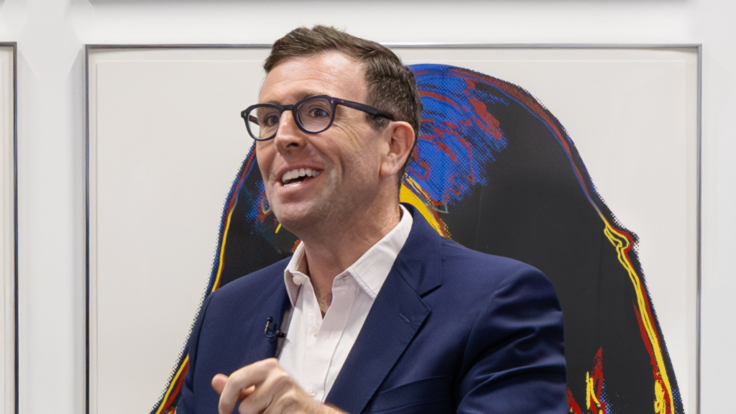
This evening, I want to go through some of the results from London’s sales last week and preview the London Old Masters sales with the help of Robert Simon, a leading dealer and the guy who rediscovered Leonardo’s Salvator Mundi.
|
|
A MESSAGE FROM OUR SPONSOR
|
 |
|
|
|
But first…
- Jho Low settles: After chasing international fugitive Jho Low for nine years over his alleged $4.5 billion embezzlement scheme, the Department of Justice announced last week that Low, members of his family, and trust entities have resolved two civil forfeiture cases. As part of the agreement, Low forfeits an apartment in Paris and two paintings that he bought for $35 million—Warhol’s Colored Campbell’s Soup Can (Emerald Green) and Monet’s Vétheuil au Soleil. In addition, Low will give up $67 million in property and cash located in Malaysia, Switzerland, and Singapore. In exchange, the Low family will get access to $3.5 million to pay for costs associated with the properties and to pay their lawyers.
For those who have not been following the saga, Low appeared as an ostentatious buyer of art at auction more than a decade ago, often in the company of Leonardo DiCaprio. Of course, as prosecutors allege, nearly all of Low's money was actually siphoned from Malaysia’s 1MDB economic development fund. He set the record price for a Basquiat when he bought Dustheads in 2013 for $48.8 million. Low subsequently pledged much of his art to Sotheby’s as collateral for a loan he used to build a $250 million yacht, Equanimity. When the scheme collapsed, Sotheby’s and Christie’s both cooperated with the D.O.J. Sotheby’s, in particular, provided evidence that helped the authorities make their case against Low’s enablers at Goldman Sachs.
- The rest of Sotheby’s new personnel announcements: In addition to the reshuffling of Sotheby’s Hong Kong team—brought about by the return of Max Moore to New York and Alex Branczik to London—there were several new titles announced for the team in London. Helena Newman will become chairman of Impressionist and Modern art worldwide. James Sevier will move from a specialist role to become deputy chairman, Contemporary art, Europe which will be more of a business-getting role. According to Sotheby’s announcement, Sevier’s new role will “provide him space to work more closely with his portfolio of major clients.” Michael Macaulay becomes deputy chairman, head of Contemporary art, Europe. He will continue to be an auctioneer. André Zlattinger becomes deputy chairman, head of Modern art, Europe.
- Joan Kee moves up: New York University has named its replacement for director of the Institute for Fine Arts: Joan Kee, a professor of art history at the University of Michigan, where she was known for her fairly unique background as an art historian with a law degree. Kee’s scholarly work focuses on the intersection of art and law, comparative diaspora studies, and the convergence of art and digital communications. Now, she’ll lead NYU’s graduate program in art history, housed just down the street from the Metropolitan Museum of Art in the former Benjamin Duke mansion.
What makes Kee’s appointment more interesting is that she has distinguished herself outside the academic world—and not as a lawyer. She is a key figure in the increasingly global view of the art market because of her role, a decade ago, in popularizing the Tansaekhwa movement of Korean abstract artists. She wrote the first book in English on the movement, in 2013, and curated a show at Blum & Poe in Los Angeles the following year that helped bring interest from international museums and prominent collectors.
- Don’t panic about the London sales: The overall numbers for London are quite low, but when you look at a chart of the sales over the last 18 years, they begin to make much more sense. Sotheby’s results were on par with their London June sales in 2022, a strong year for the market. (The big blip last year came mostly from a single, very valuable lot.) Christie’s June sales in London have been more variable than Sotheby’s, especially since 2014. Just looking at Sotheby’s performance, the peak year was 2015. Since then, there’s been a steady decline in the volume at Sotheby’s June sales (with the exception of last year). So this year shouldn’t be seen as such a disappointment.
|
| A little more on this… |
 |
| A Picasso Surprise & The Basquiat Boom |
| The June sales in London are in the midst of being downgraded. But that doesn’t mean we can’t learn a thing or two from the tepid results, which show the market is still bottoming. Plus, a preview of the Old Master sales. |
|
|
|
| First, the numbers: The London sales saw £128,174,025, or nearly $163 million, change hands for 436 lots. Originally, 557 lots were offered, but consignors lost their nerve on 16 lots with a combined presale value of £8.4 million ($10.68 million), or about 7 percent of the presale total. The sell-through rate without the withdrawn lots was 81 percent. If we add the withdrawn lots back in, it falls to 78 percent—not a huge difference but slightly below the industry average.
A better indication of market health is the hammer ratio, which measures the aggregate presale estimate of all lots against the total hammer price of those lots. Without the withdrawn lots, the hammer ratio was a neutral 1.0, meaning the overall hammer total was equal to the presale estimate. And with 19-22 percent of the lots unsold, that 1.0 hammer ratio isn’t bad at all. Once we add the withdrawn lots back in, the hammer ratio falls to .92, which is pretty weak indeed. (But still consistent with much of what we’ve seen this year.)
Another key indicator for understanding the health of these sales is the breakdown of the performance of the sold lots. Some 45 percent of the lots sold within the estimate range; another 27 percent of the lots saw aggressive bidding over the high estimate; and a worrying-but-not-horrifying 29 percent of the lots had to be sold at prices below the estimate level or risk not selling at all.
The top 10 lots by price were mostly familiar names like Basquiat, Picasso, Renoir, Fontana, Manzoni, August Strindberg (yes, the playwright), Cy Twombly, and Paula Rego. Taken together, the top 10 totaled £71.4 million, or 56 percent of the total. That proportion is not unheard of, but mostly reflects the fact that Phillips and Christie’s presented smaller sales with lower-value work. On the positive side, six of the top 15 works were sold for prices above the estimate level, including two Giacometti sculptures, two works by Twombly, and a painting by Renoir. I won’t keep repeating my expectation that the market will revive on a turn toward historical works by well-established artists, but these results don’t contradict that prediction in any way.
Meanwhile, the top lots by hammer ratio (or the lots that were bid the most above their estimates) were a grab bag of emerging talent and historical artists. Brazilian Sophia Loeb, a recent Goldsmiths graduate represented by Pippy Houldsworth, saw a painting with a £4,000 estimate sell for £48,000 hammer. Half of the top 10 works by hammer ratio had estimates of £10,000 or below. Artists in that group include Daisy Parris, Alfie Caine, Alia Ahmad, and Daniel Crews-Chubb—all of whom also graduated within the last decade.
The other five artists on that list are a fascinating mix of Renoir and Brice Marden, on the blue-chip side of the ledger, and Michael Goldberg and Françoise Gilot on the historical rediscovery side. Other historical names among the top 50 works by hammer ratio are Alexander Calder, Lucian Freud, Irma Stern, Etel Adnan, Robert Indiana, David Burliuk, and Tracey Emin. |
|
A MESSAGE FROM OUR SPONSOR
|
|
|
|
|
|
|
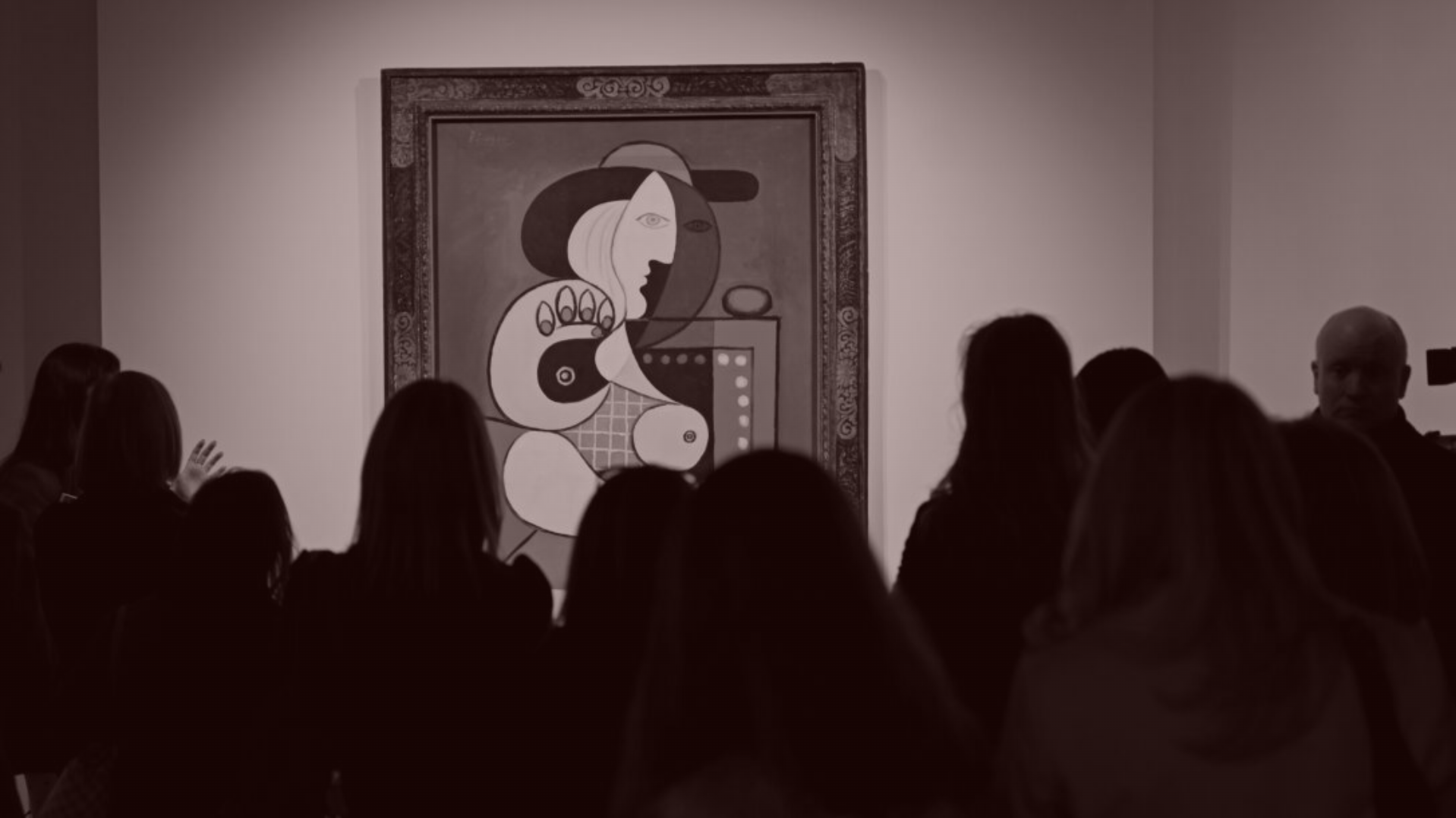
| Notably, Picasso didn’t have a great performance in these sales. Five of the 12 lots offered failed to find buyers, including a 1953 Portrait de Femme estimated at £2.8 million. The only works that saw positive bidding were two pieces on paper priced at £30,000. A £10 million still life was sacrificed for a £9.3 million hammer price. Nevertheless, Picasso held top spot for market share with $21 million in sales and 13 percent of the sales total. Basquiat was second with £20 million in sales (12 percent.) Renoir was the surprise third-position holder at $13.5 million (8.34 percent.) Twombly, Giacometti, Strindberg, Fontana, Manzoni, Andy Warhol, and Rego rounded out the top 10.
The $13.5 million paid for works by Renoir was a surprise, but perhaps it should not have been. Although a fine small portrait of Edmond Maître only saw a few bids above the $2 million estimate the month before in New York, appealing works by Renoir have performed well on the market in recent years. Last May, Square de la Trinité, from 1878, which had been in the same family for a century, sold for $11.9 million—well beyond the $4 million estimate. Last week, nine Renoirs were offered in London: one was withdrawn, and one did not find a buyer, but the £5.39 million in presale value was bid up to £8.9 million in hammer value primarily due to the success of two lots. A small fragment of a 1913 landscape less than 10 inches square was estimated at £45,000 but sold for £336,000 with fees. More impactful was the bouquet of lilacs that was estimated at £2 million but went through 10 minutes of bidding to get to a £6.8 million selling price, or $8.7 million. Don’t get too excited about the Renoir market: Bidding is highly dependent upon the image and other factors that may not be easily discernible to many bystanders. Nevertheless, these punctuated Renoir successes suggest we’ll see more works dot the market.
No one would describe Alberto Giacometti as undervalued or overlooked as an artist. Nevertheless, three works were offered in London at estimates ranging from £500,000 to £1.2 million. Yet when they were all done selling, the three works landed within a few hundred thousand dollars of each other, reaching prices from $1.95 million to $2.28 million with the middle lot, estimated at £700,000, making the highest price. An early work made in 1926, Figure, dite cubiste I, turned out to have powerful historical appeal since the object was not obviously in Giacometti’s mature style.
Gilot, Picasso’s former lover and mother of Paloma and Claude, has become a genuine source of collector interest, especially since her death last year at 102. Four of her works were offered in these sales. Three sold for their identical £50,000 estimates, but a self-portrait from 1944 tripled the estimate to make nearly half a million dollars.
Meanwhile, there’s still life in the market for abstract art by women painters. Some nondescript works by Jadé Fadojutimi underperformed in these sales, while a painting by Marina Perez Simao beat expectations. Michaela Yearwood-Dan and Yayoi Kusama also saw good results. But Lucy Bull seems to be in another category at the moment, achieving her sixth-highest price in these sales when 10:00, from 2021, hammered at £750,000 over a £350,000 estimate. This $1.14 million market performance echoed her record price set in May during an otherwise lackluster season. |
|
|
| And Now, a Word on the Old Masters Sale |
|
| The July Old Master sales in London mark the end of the city’s auction season, with much of the trade having already headed off to early holidays. This season, the auctions have more exciting works than usual, but taste and demand in this market is more volatile than in the broader art market.
Robert Simon was kind enough to call me after seeing the previews this weekend. When he last made the trip to London for the Old Master sales in December, the effects of Brexit were too hard to ignore. The sales were “fewer by number and quality” with much of the impact of the previews going to works that would be sold a month later in New York. This season, the quality is much better and there are works to be excited about.
Christie’s has Titian’s painting Rest on the Flight into Egypt, which is believed to be from the first decade or so of the 16th century. The small painting passed through several illustrious collections throughout Europe and was eventually last seen at auction 146 years ago, when it was bought by Colnaghi, the world’s oldest commercial gallery, which sold the painting to the Marquess of Bath. Since then, the painting has been at Longleat House, which is now selling the work. Christie’s estimates the painting at £15 million, but the final sale price is difficult to predict. The quality of the work and its documented provenance will surely attract buyers thrilled to be included among illustrious peers. Though upon inspection, the condition might limit interest.
Christie’s also has a rediscovered Quentin Matsys’s painting The Madonna of the Cherries, from the 1520s. London’s National Gallery devoted an exhibition to Matsys last year, which might have helped generate interest in the Flemish painter, considered the father of the Antwerp school. The composition is considered widely influential but had disappeared from the historical record when it was sold in the late 17th century. It reappeared in Paris in the 1920s, altered and obscured by its aging varnish. As late as 2015, it was sold as a studio copy. Only the removal of an overpainted curtain and cleaning of the varnish revealed the work to be Matsys’s original. Now it comes to market with an £8 million estimate. Simon believes this work is an important art historical moment, and he would not be surprised to see an institution of the Getty’s quality or a supercollector jump in.
George Stubbs’ Mares and Foals in an extensive landscape dates from 1769 and is estimated at £7 million. A remarkable example of his prized works featuring horses, the painting is one of the largest Stubbs ever made and the last of this size in private hands. Simon was impressed by the impact of the work and the quality of the landscape. A similar but smaller painting from the same mares and foals series sold 14 years ago for nearly $16 million.
For the last hundred years, Frans Hals’s Portrait of a gentleman of the de Wolff family, possibly Joost de Wolff has been in the possession of Michael Pearson, the 4th Viscount Cowdray, and his family. Last year, the National Gallery also held a major Frans Hals exhibition, which may help explain the timing of the sale. The portrait is estimated at £4 million.
Over at Sotheby’s, there’s a Botticelli Virgin and Child, with a landscape beyond, estimated at £3 million, that was once owned by the Rothschilds. It’s cheap for a Botticelli, because his late works were made with much support from his studio, but Sotheby’s makes a case for more input from the master than previously assumed. And there’s solid research to back that assertion up. A pair of Venice views sold as a single £2.5 million lot by Canaletto and a set of six paintings by Tiepolo are estimated at £1.5 million. (Just the sort of thing one might want to buy to furnish the dining room in your villa, Simon quips.) But the most intriguing lot is hardly the most expensive. It’s a painting by Herri met de Bles, a pioneer of landscape painting in the Netherlands, called The Holy Family with the Infant Saint John the Baptist in an extensive landscape with travellers, estimated at £600,000. What makes the painting interesting is the fact that it was owned by Peter Paul Rubens and reworked by him. Rubens had a habit of tinkering with works by other artists. In this case, Rubens couldn’t help himself from fixing the figures in the painting while leaving de Bles’s “extravagant landscape, rich in fine and meticulous underdrawing,” as Sotheby’s describes it, untouched. |
|
|
|
| FOUR STORIES WE’RE TALKING ABOUT |
 |
|
 |
| ‘Titanic Level Disaster’ |
| An emergency analysis of Biden’s grim debate performance. |
| JOHN HEILEMANN, PETER HAMBY & DYLAN BYERS |
|
 |
|
 |
| Big East of Eden |
| The inside story on TV negotiations for Big East basketball. |
| JOHN OURAND |
|
|
|
|
|
 |
|
|
|
Need help? Review our FAQs
page or contact
us for assistance. For brand partnerships, email ads@puck.news.
|
|
You received this email because you signed up to receive emails from Puck, or as part of your Puck account associated with . To stop receiving this newsletter and/or manage all your email preferences, click here.
|
|
Puck is published by Heat Media LLC. 227 W 17th St New York, NY 10011.
|
|
|
|