Hi, and welcome back to Line Sheet. Want to know what it’s like to shop in the so-called best mall
in America? Sarah “SShapiro@puck.news” Shapiro visited Aventura Mall in Miami to understand what makes it the platonic ideal. Sarah also breaks down why, exactly, the Ralph Lauren flag motif is so big this summer, spawning a thousand knockoffs. She also endeavors to find
meaning in the 25 bestselling fashion items of the past 25 years, and answers a question we’ve been asking since the 1980s: Do American consumers really prefer “Made in the U.S.A.” clothing, or do they just claim to? For the finale, I’ve dropped in some of the week’s most compelling reader feedback.
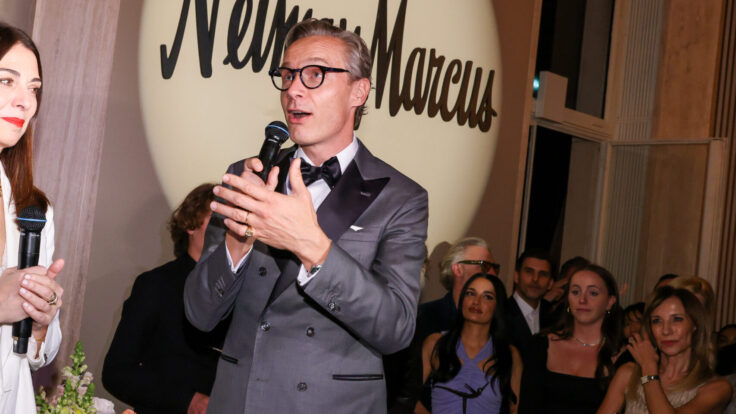
By the way, thanks for all the reports from the Michael Grynbaum book parties. Some takeaways: Not many Condé people, past or present, showed up on Wednesday night, save for a
fairly robust Vanity Fair contingent, including new boss Mark Guiducci and ex-boss Graydon Carter. (It surely helps that Grynbaum’s wife, Juli Weiner, was a writer there, but also: journalism!)
Another former Vanity Fair editor-in-chief, Tina Brown, came to the second party, held Thursday night at Chez Nous and hosted by (another Vanity Fair alum) David Kuhn and Simon &
Schuster’s Sean Manning—Grynbaum’s agent and publisher, respectively. Anyway, I guess you can’t go home again, but it’s another example of why Grynbaum barely mentioned the publisher’s last decade in his book. Pretty much every important editor who represents the future of so-called magazines was there on Wednesday—New York magazine’s David Haskell, The New York Times’s Stella Bugbee, Cosmopolitan’s Willa
Bennett—and yet Guiducci was the only one from Condé who had the savvy (and, I guess, guts) to show up to fete what is ultimately an incredibly flattering book. Anyway, hope you all had fun!
Mentioned in this issue: Aventura, Ana Andjelic, Bloomingdale’s, Nordstrom, Skims, Ralph Lauren, Net-a-Porter, Massimo Dutti, Laura Reilly, Aritzia, LVMH, Chanel, Jonathan Schley, Proenza Schouler, Loewe, and many, many more…
|
|
|
A MESSAGE FROM OUR SPONSOR |
The Cost-Cutting Playbook for Modern Brands Global commerce is only getting more complex—and inefficiency is getting more expensive. Swap’s Unified Commerce Report breaks down how forward-thinking brands are cutting costs and reclaiming margin by streamlining their operations from the inside out. Inside, you’ll find the 5 C’s of
Connected Commerce, plus real examples from brands like Zara, Nike, and Glossier. From fulfillment to compliance to inventory accuracy—it’s the growth-minded playbook your tech stack needs in 2025. 👉Get the full report and start scaling smarter:
Download Now |
|
|

| Sarah Shapiro
|
|
Three Things You Should Know...
|
- Wet hot American summer:
Whether because of MAGA, boom boom, the Ralph Lauren resurgence, or some combination, we are living through a real flag-sweater summer. The Polo Ralph Lauren pieces and various spinoffs are popping up all over the cobblestone streets of Nantucket and beyond, displacing the Jackie O. twinset in favor of semi-patriotic prep, sans the overt political valence of recent years (the left is increasingly in on the trend too). These days, the sweater is less a partisan signal than a nostalgic
throwback.
The Polo Ralph Lauren label first introduced this sweater in 1989; 36 years later, it’s not only still relevant, but also being replicated by many other brands. Tuckernuck has a few dozen iterations, including their own private-label puff-sleeved version and one for the kids. The flag sweater has also been spotted on the racks of
Old Navy (a major supplier of July Fourth merch), Brandy Melville, Hollister, Quince (for men), and Kohl’s private label—all of
which point toward a young generation embracing the look. - Twenty-five years of spending: Net-a-Porter’s recap of its bestselling items from each of its 25 years in business offers a snapshot of 21st century retail history. While Net-a-Porter launched as an online retailer for luxury and designer goods, its trajectory captures shifting tastes and spending
habits among its designer-minded class of clientele. (Hat tip to Laura Reilly’s brilliant, shopping-obsessive Substack, Magasin, for alerting me.)
A couple poignant trends are apparent. In the early 2000s, everyone wanted the same things at accessible price points. This started to shift at the turn of the decade, when J Brand’s
Houlihan—a low-rise, skinny-leg cargo pant at $230 a pair—became the thing, with Barneys, Bloomingdale’s, Intermix, and NAP also moving units as fast as they could come in. Meanwhile, the hot handbags were leaping up into ever-higher price brackets; in 2009, the bestseller was
the PS1 handbag from Proenza Schouler for a little under $2,000; 2024 was the year of The Row
Margaux, for about $3,490 depending on size; this year’s hot item is the Loewe Puzzle
Bag for $3,750, also depending on size.
That’s an almost 88 percent jump in prices for the top handbags in roughly a decade and a half—well outpacing inflation. Many items have also come back around to a second life already (the Chloé Paddington had a nice boost with Chemena Kamali’s
debut runway show; here’s the newest version), and there have been whispers about the return of the Isabel Marant wedge sneaker. - Tariffs shmariffs: Speaking of patriotism, a new survey shows that less than half of respondents think it’s very or extremely important to buy
clothing that is made domestically. That’s according to the latest Consumer Trends report with Coefficient Capital from Dan Frommer (a.k.a. Lauren’s husband). The survey included 3,200 consumers aged 15 and older, 45 percent of whom attested to the importance of clothes made stateside—a lower proportion than for products like supplements and pet food, but higher than for furniture and wine.
Interestingly, only 12 percent of respondents would pay up to 50
percent more as a premium for clothing made domestically—58 percent, meanwhile, would pay only up to 10 percent more. So, perhaps, Americans love America, and there is nothing more American than capitalism itself.
|
|
|
And now, let’s go shopping… |
|
|
The South Florida shopping scene contains multitudes—and Miami’s various shopping districts
somehow manage to coexist without cannibalization. |
|
|
One mystery of the Miami retail scene is that, with so many shopping neighborhoods wedged into about a
20-mile radius (Coconut Grove, Aventura, Bal Harbour, the Design District…), they somehow manage to keep from cannibalizing one another. This isn’t unique to the 305—the same puzzle is laid out in Dallas, Boston, Chicago, and beyond. But Miami is a land of extremes, and thus an especially informative place to study operations, tenant strategies, and where brands actually want to plant their flags. |
|
|
A MESSAGE FROM OUR SPONSOR |
5 Steps to Winning in Q4 The
holiday rush is coming—but the smartest commerce brands are already preparing. Swap’s new guide lays out five essential strategies to get ahead of peak season chaos. From cross-border fulfillment to tax compliance and returns, it’s your blueprint for a smoother Q4—and stronger margins. Inside, you’ll find: 🎯 The key ops moves to make in July—not October 🌍 How to go global with zero surprises at checkout 📦 How leading brands are turning returns into retention This is the growth-minded playbook your ops team needs to win Q4. Download the full guide |
|
|
Aventura
has been named the number one mall in America, and it tells you everything you need to know about what a Class A shopping experience looks like in 2025, from the location to the tenant mix. After five years’ worth of significant upgrades, including an extended wing, it’s basically the platonic ideal of
mixed use: It blends restaurants like STK, bowling at Pinstripes, Lego for the kids, fitness studios like Pure Barre, and even coworking at Industrious and healthcare at One Medical. Accordingly, it’s crawling with families. I chatted with one mother-daughter duo who rushed to the Patrick Ta meet-and-greet at Sephora straight from high-school senior portraits.
That’s before you even get to the actual stores—which, in addition to anchor department stores Bloomingdale’s,
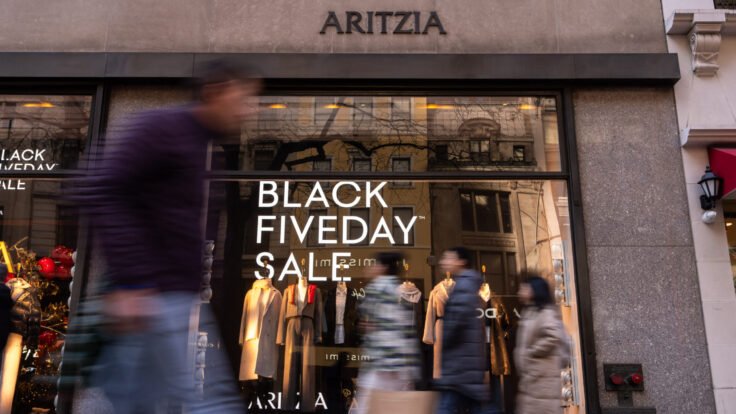
Nordstrom, and JCPenney, include a Skims, the only U.S. location of Massimo Dutti (which is owned by Zara parentco Inditex), Aritzia, and swimwear brand Agua Bendita. The Banana Republic is well-merchandised with neutrals and some summer
spice hues mixed in, plus Spanish sandals from the heritage brand Castañer, whose merchandise can’t be found everywhere. But the sprawling space felt like a ghost town, unlike the rest of the mall; they have the goods but not the shoppers.
What you will not find at Aventura is Saks or Neiman
Marcus; those anchor the Shops at Bal Harbour, a smaller outdoor center just 6 miles away. The Shops’ heavy designer focus gives it a more refined vibe than its nearby cousin, with a selective smattering of contemporary brands mixed in. The James Perse store is the clean, warm flagship, with wooden fixtures and strategically placed plants, a vision of “what Banana Republic could have been,” in the words of marketing strategy executive Ana Andjelic.
Then there’s the Miami
Design District, which looks like what happens when LVMH buys a neighborhood, per Andjelic—luxury retail urban planning on steroids. At The Webster, which merchandises by lifestyle versus brand, I was told that Chanel and Christopher Esber were the hottest sellers at the moment (see: Esber’s jelly flip-flops—the shoe of the summer).
The parking lots were packed in all of these shopping areas,
though the underlying competitive dynamics are a little more subtle than this observation might suggest. Air conditioning is a competitive advantage in Miami’s brutal summer heat, which gives a leg up to Aventura, where the mix means you can spend all day there without having to venture outside. But even the Miami Design District puts competitive pressure on Bal Harbour, according to Newmark vice chairman of retail Jonathan Schley, who has done cannibalization
studies of the 305. |
|
|
According to Schley, Aventura and the District can coexist by virtue of pulling from different demographics,
customers, and experiences. Whether it’s Aventura’s family-friendly Class A mall experience, the Design District’s gallery-visit-style adventure, or Bal Harbour’s white-glove service that makes every purchase feel special, the point is to create compelling reasons to shop. This isn’t just a Miami-specific pattern. Retail winners understand their specific customer bases and create experiences that go beyond transactional shopping. Even when the humidity is miserable. |
On the Condé book: “The biggest story in Grynbaum’s Empire of the Elite is not
Vogue/Wintour and that ‘stuff.’ It’s the connection between Si Newhouse and Roy Cohn (‘Uncle Roy???’), and Graydon Carter setting the stage—and actually, in a way, launching the career—that ended up putting Trump in the White House. For me, it puts the entire family, not to mention
the editors-in-chief’s relationships, in a completely different light. Mind-blowing.” —A retail consultant
On the ‘Devil Wears Prada’ sequel plot reveal: “Honestly, most reboots have much worse storylines. I’m interested to see if they’ll pull it off. But as you always say, Hollywood sucks at getting the industry
right.” —An editor
On Byredo and the future of niche fragrances: “That market is morphing into something similar to wine. As in, a hyper-fragmented market where clients and retailers like to experiment, to move from one ‘label’ to another. Hard to build a classic ‘brand’ in that context. You could be loyal to a retailer or to
something like Frederic Malle’s Editions de Parfums (the brand acting as a curator of noses), but… Byredo? I don’t see that happening again in the future.” —A marketer
On Hermès vs. LVMH: “I get your point from Monday’s issue that Hermès is currently valued more than all of LVMH combined, with its 75-some maisons—it’s wild!—but, technically, Hermès is
four brands: Hermès, John Lobb men’s shoes, Puiforcat silverware, and Saint-Louis glass. Obviously those brands contribute very little to the pie, but still.” —An industry scholar
On Ssense not being the only hip retailer facing an existential crisis: “You’ll see similar problems at GOAT and StockX as both last raised at a $3 billion-plus valuation
during the peak ZIRP era of 2021.” —A founder |
Have a great weekend,
Lauren
P.S.: We are using affiliate links because we are a business.
We may make a couple bucks off them. |
|
|
Puck fashion correspondent Lauren Sherman and a rotating cast of industry insiders take you deep behind the scenes of this
multitrillion-dollar biz, from creative director switcheroos to M&A drama, D.T.C. downfalls, and magazine mishaps. Fashion People is an extension of Line Sheet, Lauren’s private email for Puck, where she tracks what’s happening beyond the press releases in fashion, beauty, and media. New episodes publish every Tuesday and Friday. |
|
|
The industry's go-to source for unflinching reporting on the trillion-dollar business of artificial intelligence - perhaps the
single most important technology of our time. Ian Krietzberg, the powerhouse journalist behind The Deep View, delivers twice-weekly insights into the latest dealmaking and breakthroughs in A.I., and how the intersecting worlds of finance, entertainment, media, and politics are being transformed in its wake. |
|
|
Need help? Review our FAQ page or contact us for assistance. For brand partnerships, email ads@puck.news. You received this email because you signed up to receive emails from Puck, or as part of your Puck account associated with {{customer.email}}. To stop receiving this newsletter and/or manage all your email preferences, click here. |
Puck is published by Heat Media LLC. 107 Greenwich St, New York, NY 10006 |
|
|
|