 |
|
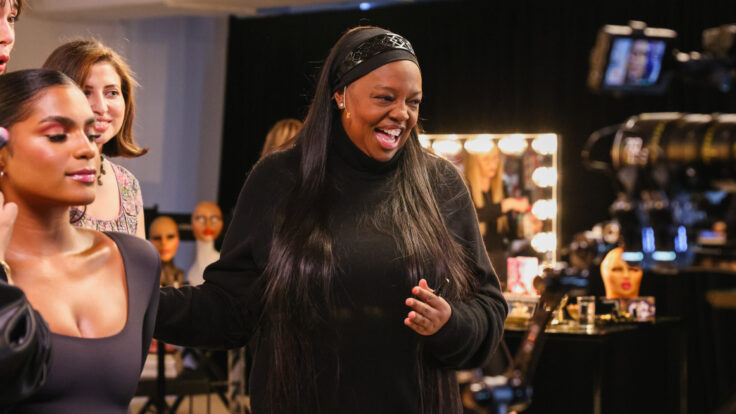
Hi, and welcome back to Line Sheet. I’m going to try to take it easy for the next few issues in anticipation of the forthcoming Fashion Month marathon… psych! Starting next week, Line Sheet is coming to you three days a week, with a Wednesday edition anchored by our new contributing beauty correspondent, Queen Rachel Strugatz. As we expand our scope, I’d love to hear from you: What do you want more of, and what do you want less of? Just hit reply to this email and give it to me.
Also… if you still haven’t subscribed to Puck, you can do so here. Don’t you dare talk to me until that’s sorted. And don’t lie….
Mentioned in this issue: Hermès, José Neves, Luca Solca, Schiaparelli, Bernard Arnault, Prada, Gus Van Sant, Diego Della Valle, Bradley Cooper maximalism, John Galliano, Daniel Roseberry, copycat merkins, and more Farfetch mysteries…
|
|
|
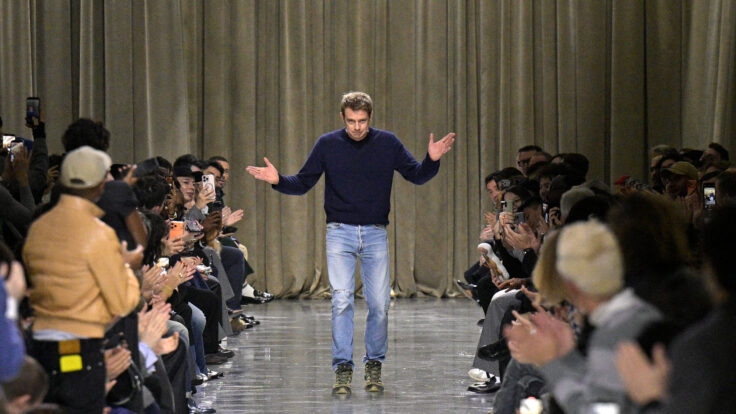
- What Margiela means: A number of you have messaged me about John Galliano’s latest Maison Margiela show, asking for my take. If you are one of my readers who isn’t embedded in fashion, I encourage you to look at it. Staged last Thursday night on the Seine, in a cellar underneath the Pont Alexandre III, it was as much about the surroundings—which were contrived to resemble a filthy 1930s bar—as the clothes, which the designer (in mesmerizing, painstaking detail) contorted into an exaggerated hourglass silhouette using corsetry and other construction. The proportion, a sort of twisted, vulgar take on Dior’s New Look, was like nothing else we’ve seen, and neither was the way it was presented, with models (including Game of Thrones’ Gwendoline Christie) lurching down the runway in a tortured, theatrical, meticulously orchestrated fashion.
I can’t fully evaluate a collection of substance unless I see it in person, but it’s obvious that the Margiela show was affecting: People cried, people laughed. Will it “go down in history,” as Cathy Horyn declared? (Her review, of course, is worth reading. As is the perspective of Tim Blanks.) History is an artificial construct that matters less and less to people because of how we now receive and process information. But I keep thinking about the fact that this collection was beloved across generations: Even those who picked at it respect it. The internet is a place where going against the grain is encouraged, but here, you can’t cross-cut without it feeling forced. When Tim asked Galliano for details regarding a particular design technique, Galliano told him, “You don’t have to know. Just enjoy.” When something is so good that you can “just enjoy,” it’s called transcendence.
It’s notable that Galliano, who staged his most important shows in the ’90s and aughts, has been able to reach new creative heights at the age of 63. Indeed, he is having a bit of a moment. In March, a documentary about his life, High & Low, will be released. Galliano participated in the film, but I’ve heard it’s unsettling—and guaranteed to conjure new feelings about his exile from Dior, in 2011, after his awful antisemitic remarks in a Paris bar.
Galliano was resuscitated by the ever-loyal Anna Wintour and especially Renzo Rosso, the Diesel entrepreneur and owner of the Italian fashion group OTB, who installed him at the company’s Maison Margiela brand. (Its eponymous founder escaped fashion just a few years before the Galliano scandal.) Perhaps the anticipation of the film, and the increased exposure that will come with it, thrust Galliano into another stratosphere.
As for Margiela itself, what I liked most about this collection was that there was no obvious commercial plan, and that’s why it’ll be good for business. Brands like Margiela cannot compete against the luxury goods purveyors that generate more than $10 billion annually. They’re selling different things: One is selling fashion, the other is selling products. This collection, and what Margiela sells best at retail, don’t have to connect. The only trend Galliano should be setting is to encourage designers to speak from the heart. Unfortunately, most don’t have it in them, and will deliver pale imitations. I dread the merkin copycats that are on their way.
- Schiaparelli shills: A Hollywood friend asks, Why are all these celebrities paying to attend Schiaparelli? As in, why are all the celebrities sitting front row at Schiaparelli couture paying for their own flights and accommodations? Well, I don’t know the details of every single agreement here, but if you look at the front row, you’ll see that many of these stars were also at other shows staged by bigger brands that probably footed the bill. (If you’re curious: a one-off personal appearance—sitting at the show and a few social media posts—can cost $250,000, plus travel and accommodation. Some of these appearances are baked into larger contracts.)
I do know that Schiaparelli, owned by Tod’s C.E.O. Diego Della Valle, whose ascots have grown more dramatic with age, has allocated a disproportionate amount of its marketing budget to the red carpet. That’s why you see Schiaparelli at pretty much every big awards show, and often on A-list celebrities. So maybe they did cover costs for some. Regardless, focusing on celebrity is a smart strategy for this brand. Schiaparelli can’t convincingly compete against the big houses in every category, so homing in on the red carpet makes sense—that’s where the eccentric, surrealist look of Schiaparelli works, after all. Also, designer Daniel Roseberry is very charming, and I’m sure they like being around him—even if the paycheck isn’t as big—or in some cases, nonexistent.
- Is Coupang coming for it all… or none?: There were some weird new developments in the online luxury wars last week. On Friday morning, I received word that a group of Farfetch investors were challenging Coupang’s deal with the company, architected in desperation by founder and C.E.O. José Neves, the only remaining board member. (Everyone else left when the company delisted in December.) The investors hold more than 50 percent of Farfetch’s convertible notes, which were due in 2027. Because of the delisting, the investor group declared a default on those loans, and are demanding they be repaid immediately.
Why are they doing this? Well, money, obviously. The investors think the deal with Coupang—a $500 million predatory bridge loan for a company once valued at more than $20 billion— undervalued the current business. It should have been valued at something like $3 billion, they say. Plus, a poison pill in the Coupang agreement requires any competing bidder to pay a $1 billion fee if they end up taking over the company instead. Pretty genius work by the Coupang lawyers, who are effectively daring the previous investors to risk getting wiped out or pay a fee that would offer a 2x premium on the rescue cash for a few weeks of work. Once again, usury proves to be the greatest business model!
The investors, for their part, have a right to be pissed. As of August, Farfetch executives were acting like everything was fine. They said they expected to be cash-flow positive in 2023. So why, they want to know, did a suddenly jittery Neves go through with the Coupang deal and devalue their equity? Was he fudging the truth back in August, or did something else happen behind the scenes to make him take such a terrible deal in December?
The creditors want to underscore that this is not simply a distressed-asset play. Some of them have been putting money into Farfetch for years. Noted. A rep for Farfetch declined to comment. I’m wondering if whoever ends up owning Farfetch will make a play for Richemont orphan Yoox Net-a-Porter Group, too. A friend connected to many parts of the puzzle suggested last week that Coupang might also be eying YNAP. Who knows how it will all shake out, but if the consolidation of YNAP and Farfetch happens, it’s safe to bet that it’s not going to be Neves in charge.
|
 |
| Leather Heads |
| Recent earnings and a particularly insightful analyst report underscore why Hermès stands apart from its peers in luxury. |
|
|
|
| A few weeks ago, I had lunch at the Polo Lounge with an industry executive who also happens to be an industry client. He spends a lot of money on small luxury goods like handbags and clothing—a guaranteed six figures a year, maybe some years seven. He’s a cheerleader for the business because he is also in the business. He did, however, express some disillusionment. He doesn’t like a lot of what’s being produced by the big, conglomerate-backed brands. It all looks the same, etcetera, why should he bother?
Why indeed. The ubiquity of Big Luxury is deeply suspect amid a moment when cool-hunters are searching for something not only less accessible, but less known. The market for personal luxury goods expanded by just 4 percent in 2023, with performance softening each quarter, according to Bain’s annual report, probably the most comprehensive examination of the industry out there. And much of that growth can be attributed to price increases, not volume increases. Of course, some companies still did all right in the end. Just last week, LVMH—which owns 75 different businesses—announced a decent ending to its fiscal year, restoring confidence in the market and allowing its stock to soar, making chairman and C.E.O. Bernard Arnault the richest man in the world, according to Forbes, surpassing his lunch buddy Elon Musk. China is finally bouncing back, spending-wise. At the same time, something is going on with American customers—especially those on the younger side, who are growing tired of fashion’s hype machine. The U.S. represented 17 percent of LVMH’s overall revenue in 2023, down from 21 percent in 2022 and 2021.
Hermès, though… Hermès is still working for Americans, including my friend. He doesn’t need anything, but he keeps buying. That single sentiment is reflected in the company’s most recent financial results. During one of the toughest periods for luxury in decades, sales were up 20 percent in the Americas. In early February, the company, still family-run and controlled, will post its full-year outcome. Everything will be fine. Hermès is unassailable.
Is it because of the family’s constitution? (Probably a little, but they are only human.) Is it because they approach design with passion and integrity? (Sure, but that doesn’t guarantee success.) Is it because everything is made with precision and care by workers who spend a year and a half training? (Yes, but that’s hard for most people to discern.) Is it because Hermès continues to feel elite and inaccessible in an era when everything prestige is going masstige? Definitely. The proof is in the numbers. Hermès’ return on invested capital is heads and shoulders above its competitors’, and its sales growth is the steadiest, and most controlled. |
|
|
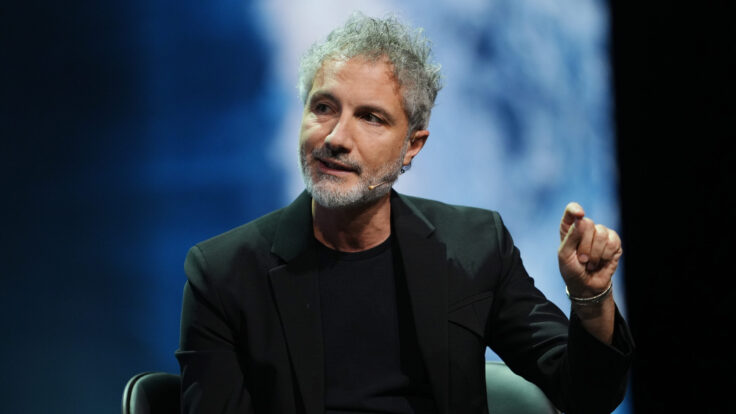
| Last week, Bernstein luxury analyst Luca Solca put out a detailed note attempting to break down the “Hermès magic formula” once again. A few things stood out in his analysis. First, while its most expensive bags—the Birkin and the Kelly—remain desirable, Hermès has also introduced (or reintroduced) an array of lower-priced bags that feel less obvious than those of their competitors, who have all increased prices to keep pace. (Chanel, another independent, family-run business, now charges as much as Hermès for its bags, shoes, and clothing, sometimes more. Many other luxury brands have increased their prices in recent years as well.)
Hermès’ easier-to-access bags communicate a sort of knowing, appealing to a consumer set that is self-conscious of looking too turned out. The Picotin, a top-handle feeder bag, starts at €2,320. The Bollide, a curved carryall, is €5,250. Why buy a trendier bag from another maker for the same price—often with a copycat design—when you can get an Hermès? According to Bernstein, Hermès is also the best at resale, with some bags selling for double their original cost.
Talk to any Hermès executive, and they’ll tell you that their prices are not a marketing tool but rather a reflection of the cost of goods. Whether or not that’s true, they make it feel like it’s true. The strategy most germane to Hermés, however, is the manner in which it controls its demand chain. While the company’s leather goods production capabilities have increased by 6-8 percent in recent years, Solca and his team found that their output is still far short of what the market can bear. (In 2022, the company employed 9,469 people on the production line, up from 8,846 a year earlier.)
Hermès makes up for this, according to Bernstein and its mystery shoppers, by “encouraging” clients to buy other items in order to gain access to the Birkins and Kellys. It’s sort of like a carrot-and-stick managed shopping journey built around intent. Loyal consumers who buy a stool during one appointment, and a leather coat during another, might subsequently be offered a chance to buy a rare bag at their next. That is, if you can get an appointment, which is not easy. But that’s part of the fun. One of the problems with luxury today is its perceived availability, and building the right amount of friction—playing hard to get—can create more desire.
If you asked my friend from the Polo Lounge, he might also say that, despite its resilience, Hermès has modernized in recent years. Instead of being a collection of perennials only, there are seasonal It-items, like clogs and Apple Watch bands. There is even deodorant. There are more celebrities and influencers at the shows, and there are red-carpet appearances. The introduction of lipstick in 2020—just in time for the Zoom era—opened Hermès up to a whole new type of person. (The type that might not even know Hermès sells $220 silk scarves, but is absolutely fine with spending $75 on lipstick.)
How does Hermès maintain its unassailability when there are so many more people engaging with it? Lord knows. If the past is any indication, it will come down to steadfast integrity and control. (There’s certainly more to say about the sprawling family—including the current C.E.O., 53-year-old Axel Dumas, a sixth-generation heir—and how they’ve properly managed their shared controlling stake in the business.) It’s a good guiding principle for the rest of the luxury industry, even if they’ll never be Hermès… no matter how hard they try. |
|
|
| Not sure if you saw, but last week, second-hand retailer Vestiaire launched a crowdfunding campaign under the pretext that it’s prepping for an I.P.O. within the next year. Okay… I believe you. Well, on Sunday, the company sent an email to U.S. customers inviting them to invest… and had to quickly rescind the offer, noting in a follow-up email that the “investment isn’t open for our U.S. members this time, due to financial regulations.” Oops. [Inbox]
Just in time for the Forbes union walkout—including an afternoon rally today, Monday, at 24 Fifth Avenue—Bernard Arnault is now the world’s richest person. (He has LVMH’s stock bump to thank.) [Forbes]
Hmm LVMH is in talks to buy the building that houses the Bergdorf Goodman men’s store. (The Goodman family no longer owns this building, but still owns the one across the street.) [Bloomberg]
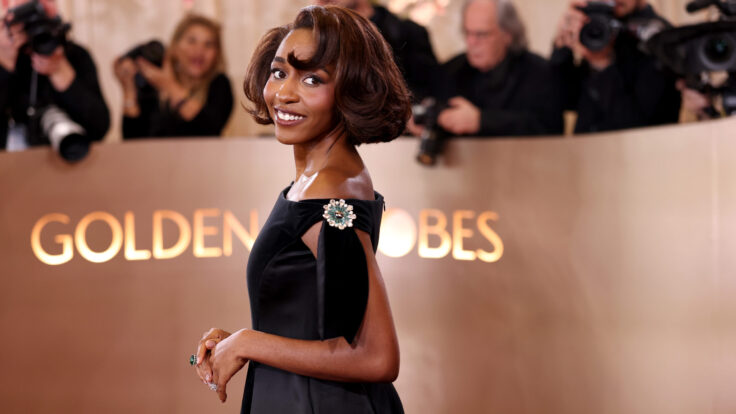
In the same vein of what I was talking about up top with Schiaparelli, Oscar de la Renta has focused more on red carpet, less on runway, in recent years. And it has paid off. [The Hollywood Reporter]
Props to anyone who attempts curly bangs. [InStyle]
I hope none of you well-meaning marketing goofballs are brainstorming ways to fashionize the Apple Vision Pro. [NYM]
I didn’t realize that Gus Van Sant directed Feud: Capote vs. The Swans. I will watch. Also, the MoMA premiere carpet was a triumph. Demi in Balmain. Calista in Zuhair Murad. Chloë in Christopher John Rogers. Diane Lane in Cristina Ottaviano. Their faces all looked good, too. [People]
I don’t even want to address this Bradley Cooper outfit, it’s very upsetting. One Line Sheet reader said he is “dressed like a character an 11-year-old built in the Sims in 1999.” Another sent me a picture of the Mini Mushroom from Super Mario. (Gigi Hadid’s look isn’t great, either. They need to break up.) [Vogue]
And finally… Is the &Daughter cardigan the sweater of the season? |
|
|
Until Thursday,
Lauren |
|
|
|
| FOUR STORIES WE’RE TALKING ABOUT |
 |
| The Jamie Switcheroo |
| JPMC’s executive shuffle, Paramount tea leaves, Elon’s stock rant. |
| WILLIAM D. COHAN |
|
 |
| Hit and Ronna |
| A close look at Trump’s R.N.C. arm twist. |
| TARA PALMERI |
|
 |
| Jon Stewart 2.0 |
| Observations on Stewart’s return to The Daily Show. |
| BARATUNDE THURSTON |
|
 |
|
|
|
|
|
 |
|
|
|
Need help? Review our FAQs
page or contact
us for assistance. For brand partnerships, email ads@puck.news.
|
|
You received this email because you signed up to receive emails from Puck, or as part of your Puck account associated with . To stop receiving this newsletter and/or manage all your email preferences, click here.
|
|
Puck is published by Heat Media LLC. 227 W 17th St New York, NY 10011.
|
|
|
|