{{ 'now' | timezone: 'America/New_York' | date: '%b %d, %Y' }} |
|
|
Hi, and welcome back to Line Sheet. I broke down and watched a few episodes of Heated
Rivalry this week. (If you’d rather not partake, just read Naomi Fry.) In today’s issue, Sarah “SShapiro@puck.news” Shapiro looks at whether all that Adidas gear
could help pull the struggling sports brand back into the zeitgeist.
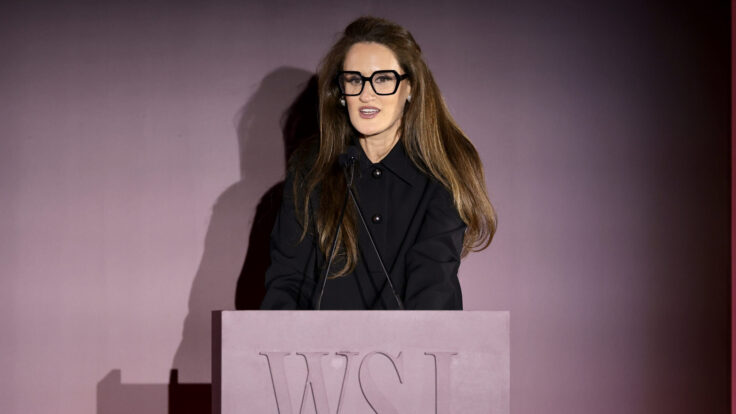
Sarah was in New York this week, where she co-hosted a cocktail party with Tishman Speyer, Genesys, and ServiceNow to celebrate the close of the National Retail Federation’s Big Show. Of course, everyone was talking about Saks Global, and Sarah did some on-the-ground reporting, too, checking in on Saks Fifth Avenue and Bergdorf Goodman to see what the sales floor looked like post-Chapter 11 filing. She also has a
post-investment Dôen update. For the main event, you’ll find an original, never-before-published conversation between Dry Powder’s Bill Cohan and me, all about Saks Global: what happened, what happens now, and what happens next. It’s been great to collaborate with Bill on this coverage over the past year, and I hope you all feel like he’s made you smarter. (I certainly do.)
Mentioned in this issue: Saks Global, Geoffroy van
Raemdonck, Gary Wassner, Neiman Marcus, Bernard Arnault, LVMH, the Pinaults, Brunello Cucinelli, Richard Baker, Adidas, Heated Rivalry, Connor Storrie, Louis Vuitton, Hanna Puley, Dôen, Oasis, Simeon Siegel, Bloomingdale’s, Olivier Bron, Bergdorf Goodman, Alexander McQueen, Valentino, Bernard
Dubois, Chanel, Peter Marino, Warby Parker, Lord & Taylor, and many more… |
|
|
A MESSAGE FROM OUR SPONSOR |
Inspired by the relaxed elegance and spirit of Portofino, MALO has quietly perfected the art of Italian knitwear since
1972—elevating cashmere with design and soul. Our independent Tuscan house reemerges with renewed purpose: refined, enduring, and crafted with intention. Made in Italy, offering luxury without noise, only softness, simplicity, and beauty. Feeling over trend, MALO is sublime comfort for modern lives. MALO. Worn by the wind. Kissed by the sun. |
|
|

| Sarah Shapiro
|
|
Three Things You Should Know…
|
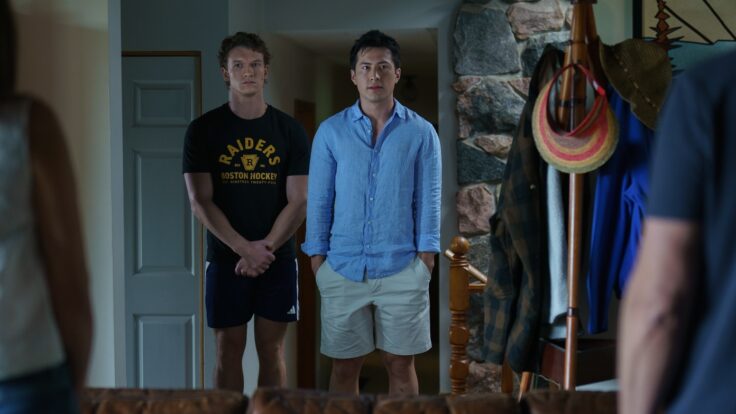
- ‘Heated Rivalry’ to the
rescue?!: Bank of America downgraded Adidas from “buy” to “underperform” this week, despite the fact that the company raised its full year outlook in October. But there’s some good news for the brand, as anyone watching HBO Max’s just-renewed Heated Rivalry knows. Connor Storrie’s Russian hockey player, Ilya, lopes around in Adidas tracksuits and shoes, a nod by costume designer Hanna Puley to the brand’s role as a status symbol in Russia
after the collapse of the Soviet Union. Adidas’s lifestyle line, Originals, is already a top performer at the brand in terms of profit, revenue, and SKU assortment, a recent alum told me.
Can an erotic hockey drama help Adidas stay relevant in its post-Samba era? Cultural moments can drive interest in a brand—the Adidas x Oasis collab resulted in a noticeable increase in searches, according to Brendan Dunne, a senior director at StockX. But Adidas is
facing what many expect to be a downshift in the casual shoe trend, according to Simeon Siegel, Guggenheim Partners’s senior managing director of retail and ecommerce. Instead of buying multiple pairs a year, a shopper may buy only one. Siegel also pointed out that Adidas relies too much on a single shoe style, the Samba, rather than having their next “it” shoe lined up. - A tale of two department stores: After Saks declared bankruptcy
earlier this week, I decided to swing by the flagship Fifth Avenue store. It was business as usual in the beauty department, where employees were placing new signage for fragrances. But when I tried to shop for lipstick—the sort of item that is typically set for automatic replenishment and always available—the first four shades I asked for were out of stock, highlighting Saks’ shipping woes. The contemporary floor was a sea of markdowns, with racks in the aisles, jean shorts next to
slacks next to cocktail dresses, and discounts on designer items as deep as 70 percent. New inventory was difficult to find—one customer told me it felt like shopping at TJ Maxx.
Things were less chaotic over at Bloomingdale’s flagship, which is in glow-up mode thanks to C.E.O. Olivier Bron’s directive to make customers feel like they’re walking into a home. The shoe floor was almost finished and should be ready in the spring. The ready-to-wear designer floor, which is
making room for brands like Alexander McQueen, Valentino, Zimmerman, Toteme, and Acne Studio, was designed by Bernard Dubois, who also worked with Galeries Lafayette when Bron was C.O.O. Chanel’s two-story boutique, designed by Peter Marino, connects the R.T.W. floor to the shoe floor. A smattering of Bloomingdale’s V.I.C.s—very important customers—attended a private preview of Chanel’s new Spring collection on Wednesday. - Dôen
and dusted: During channel checks, I noticed that Dôen is getting ready to open their newest store, on Madison Avenue between 78th and 79th streets, alongside Staud and ALC, and with Kallmeyer across the street. The location will open in March 2026. Dôen secured about $25 million in funding last year and will be opening another two to three
locations in 2026, which would bring their store count up to 11. Lori Krauss quietly came on board in December as chief brand officer. Krauss spent almost 12 years at Warby Parker, rising to chief marketing officer. During her tenure, she was tasked with scaling Warby Parker across its growing fleet of retail locations.
|
|
|
And now, on to the main event… |
|
|
Frank discussions with a former M&A banker about the Saks Global mess, whether Arnault
should buy Bergdorf, the future of department stores, and if Geoffroy van Raemdonck will spin off Neiman Marcus. |
|
|
The saga of Saks Global, which filed for Chapter 11 bankruptcy protection late Tuesday, is really just
beginning. On Thursday, Gary Wassner, the C.E.O. of factoring firm Hilldun, sent partner brands a message advising them not to ship product yet, despite the fact that a Texas judge had approved the $1.75 billion in DIP (“debtor-in-possession”) financing amid pushback from Amazon, which poured nearly $500 million into Saks Global at the beginning of 2025. “I realize that it is difficult to not be anxious, but for your own protection, we all must wait until the situation is
stabilized and on the right path, and until your future payments for new merchandise are secured,” Wassner wrote. “This is a large bankruptcy with many creditors, both secured and unsecured, who are all equally entitled to have a voice in the process.”
Of course, it’s unclear whether new C.E.O. Geoffroy van Raemdonck can make Saks Fifth Avenue, Neiman Marcus, and Bergdorf Goodman into viable businesses. I’ll be documenting his efforts to do just that in the coming months.
Today, I wanted to share a conversation with Puck’s Bill Cohan, author of the indispensable Dry Powder newsletter, who was the first to observe that Saks’s debt had begun trading unfavorably on the bond market. (Disclosure: Last year, Saks sued Puck over our coverage of its financial condition.) Since early last year, Bill and I have exchanged observations about the state of
the company, its potential financing options, and what might come next now that a restructuring is in process. Today, we’re going to dig into the mechanics of the filing and the next steps for the company as it enters restructuring. As usual, the following has been edited for length and clarity. |
Lauren: Bill, did any of this shake out differently than you thought it
would?
Bill: As a former banker, there are certain signs that indicate a company is in potential distress. You alerted the world to the Valentine’s Day Massacre, a.k.a. the decision to stretch payables from 30 days to 90 days, and to tell vendors who were already owed money that they would not get paid until the summer; I saw those as
huge red flags. As a retailer, you don’t stretch payables unless you’re having financial difficulties. And the fact that they did that, literally two months after the Saks Global deal closed, signaled to me that there was trouble ahead. Then it was just a matter of watching how this junk bond traded in the market: The secondary market price traded down and the yield traded up—all signs of financial difficulty. |
|
|
A MESSAGE FROM OUR SPONSOR |
Inspired by the relaxed elegance and spirit of Portofino, MALO has quietly perfected the art of Italian knitwear since
1972—elevating cashmere with design and soul. Our independent Tuscan house reemerges with renewed purpose: refined, enduring, and crafted with intention. Made in Italy, offering luxury without noise, only softness, simplicity, and beauty. Feeling over trend, MALO is sublime comfort for modern lives. MALO. Worn by the wind. Kissed by the sun. |
|
|
Lauren: The department store model has been in decline since the 1970s, essentially, when
specialty retail and catalogues started to take market share. As a consumer, and as a person who covers the fashion industry, I understand the value of these things from a discovery perspective and marketing and surprise and delight and all that. But on a mass consumer level, they don’t really work anymore. Why do these mergers keep getting financed?
Bill: Most investors have very short memories, and they’re basically optimists. Hope springs eternal. When you make an
investment, you buy it because you think the stock is going to go up. And there’s a whole apparatus on Wall Street designed to hype stocks and bonds.
And what is Saks Global? It’s Saks Fifth Avenue and Neiman Marcus and Bergdorf Goodman. These are luxury brand leaders, household names that have been around forever. So of course there’s risk, but you’re in the business of taking calculated risks, and you’re in the business of putting money to work. So it’s a combination of all those
things, which is the only explanation for why you would ever have been part of putting new money into Saks in August of last year.
Lauren: Every time this happens, I assume that there’s going to be a real wake-up call for the fashion industry, because it can’t operate the way it used to operate, which is on a wholesale model. If you look at the top 10 brands that are owed money by Saks Global, Chanel doesn’t need to be in Saks stores, Kering doesn’t need to be in Saks
stores, LVMH doesn’t need to be in Saks stores. Richemont, maybe a little bit, Brunello Cucinelli, maybe a little.
Bill: Then why do they do it?
Lauren: Because of tradition, and because that’s the way things are done. Department stores are still distribution and awareness channels. LVMH and Chanel have had shop-in-shops there for years. Having so many stand-alone luxury stores is a pretty new phenomenon. It used to be that they were run by
franchises in different countries, and they’ve only globalized since the early 2000s, with Bernard Arnault and the Pinaults. You saw Chanel close some Neiman Marcus stores before this—that was a signal to Saks Global that “If you don’t pay us back, we’re going to leave.”
And if this is going to work, you need LVMH and Chanel and Kering to be in the stores. A lot of them think they’re getting 100 percent on the dollar.
Bill: I think
the chances of that are very, very low. There are creditors competing over this carcass, and it’s going to be a battle royale in bankruptcy. They filed without a prepackaged plan, so this is a so-called freefall bankruptcy—there’s basically a dead body on the floor, and they’re going to fight over this thing.
Part of what happened in August was creditor-on-creditor violence. A group of creditors who provided the additional financing, as crazy as that was, put themselves in a position
senior to other creditors in this capital structure. And they are going to perfect on that seniority and that security that they bargained for in August to the detriment of other creditors—including these vendors, who are now general unsecured creditors. There’s going to be a fight, and it could go on for a long time.
Lauren: This filing, you said it’s a freefall bankruptcy. Is that unusual?
Bill: Normally, they would have already met with
their creditors and tried to resolve this before filing Chapter 11, so that it would be a prepackaged bankruptcy. It would basically be a matter of ratification by the court.
Obviously, they got their act together to get the DIP financing, which is essential. And they got their act together to hire bankers and lawyers and a new management team. But they were not able to resolve how this carcass is going to be cut up among the various creditor groups. |
|
|
Lauren: I’m talking to brands who don’t know if they should
ship.
Bill: Definitely ship going forward, because with this DIP financing, they’re going to get paid to ship goods. That’s why the DIP financing is the size that it is. In the second half of last year, you frankly needed your head examined if you were a vendor shipping to Saks. |
Should
Bernard Buy Bergdorf?
|
Lauren: How do you make Saks Global healthy? To me, you close the majority of the stores.
You find the productive stores, focus on those, and you make this a much, much smaller business that is not going to I.P.O. Do you see a world where, three years from now, this is a success story?
Bill: Can this emerge as a smaller, more focused specialty retailer? You would know better than I. Neiman filed for bankruptcy. Now Saks has filed for bankruptcy. So this is the second bankruptcy of these entities. Hudson’s Bay, which was also owned by Richard
Baker, liquidated.
So many are gone. Lord & Taylor is gone. Could there be a third bankruptcy? Of course there could be, unfortunately. What happens is that there’s a tension, as you get further along in the bankruptcy, where creditors don’t want to convert as much of their debt to equity as they probably should. They want to try to salvage some of that debt and put debt on the entity going forward so they can claim that they have debt, as opposed to equity, because the latter
requires writedowns and all sorts of things that they probably don’t want to deal with.
But if they were smart, this new management team would close stores that are underperforming and make this fun again. If they don’t, it’s probably doomed to liquidation.
Lauren: Okay. Final question: Do you think that there’s a world in which Saks and Neiman split up again?
Bill: In bankruptcy, everything is for sale. And now, the creditors are
effectively in charge of the equity of this company. If I were Bernard Arnault and I wanted Bergdorf Goodman, now is the perfect time to make that known. You know who the creditors are here. You know how to express your interest. If they’re really smart, they would buy up the Saks debt for a fraction of its original cost and get enough of it so that they controlled the so-called “pivotal security” here that’s going to get converted into equity ownership. And then they could buy the whole thing
for pennies on the dollar.
Lauren: I think he’s too smart to do that. It’s not smart to buy Saks. It’s smart to buy Bergdorf Goodman.
Bill: This is the time to pounce. |
On Macy’s opportunity: “I’m not sure this is a ‘make-or-break’ moment for them, but I’m pretty
certain they stand to benefit quite a bit from the Saks Global bankruptcy if they play their cards right. Everyone is going to be looking to fill the inevitable gaps in 2026 P&Ls from whatever is going to happen to Saks, and I’m guessing a lot of the brands that snubbed Blooms and Nords are now revisiting those decisions, whether they like it or not.” —A brilliant executive
Another on the Macy’s op: “To your point on Macy’s benefiting: I am in S.F. for work and had to
visit the flagship Macy’s on Union Square for lunch…I was very impressed! I think it’s a luxury retail–specific building across the street from the regular Macy’s, but it was nicely merchandised and almost beautiful in there! Hadn’t previously been in a Macy’s in 10-plus years, so my expectations were low and they were exceeded.” —A business development person
On stores that are ships: “LVMH is about to join the Marvel Universe in terms of over-the-top Disney-fication.
We have giant ships landing in Shanghai, founders becoming Immortals (while donning Frank Gehry–designed swords)… I don’t know how Pharrell manages to keep a $traight face.” —A marketer |
Until Monday,
Lauren
P.S.: We use affiliate links because we are a business. We may make
a couple bucks off them. |
|
|
Puck fashion correspondent Lauren Sherman and a rotating cast of industry insiders take you deep behind the scenes of this
multitrillion-dollar biz, from creative director switcheroos to M&A drama, D.T.C. downfalls, and magazine mishaps. Fashion People is an extension of Line Sheet, Lauren’s private email for Puck, where she tracks what’s happening beyond the press releases in fashion, beauty, and media. New episodes publish every Tuesday and Friday. |
|
|
Puck’s daily art market email, anchored by industry expert Marion Maneker, offers unparalleled access to the mega-auctions and
galleries, elite buyers and sellers, and the power players who run this opaque world. |
|
|
Need help? Review our
FAQ page or contact us for assistance. For brand partnerships, email ads@puck.news.
You received this email because you signed up to receive emails from Puck, or as part of your Puck account associated with {{customer.email}}. To stop receiving this newsletter and/or manage all your email preferences, click here. |
Puck is published by Heat Media LLC. 107 Greenwich St., New York, NY 10006 |
|
|
|