Happy New Year, sports fans. (Are we still saying that?) Anyway,
welcome back to Wall Power, your newly expanded-to-four-days-a-week private email about the art world and the deals and people who make it so fascinating and (sometimes) so very valuable.
From here on, you’ll be getting three emails a week from me—often featuring my brand-new colleague Julie Brener Davich—on Sunday, Tuesday, and Friday. Plus, Inner Circle members will get an exclusive Wednesday email. This upper tier of subscription also includes bimonthly calls with Puck authors, access to Puck merch, and even more detailed-to-wonky art data and analysis. Upgrade here.
We’re working out the editorial rhythm in the next few weeks, so please don’t hesitate to let us know what you like and want to read more of. You can reach me on Signal, WhatsApp, and text at 917.825.1391. (Try it out, I’ll text you back.)
Now, let’s get started…
|
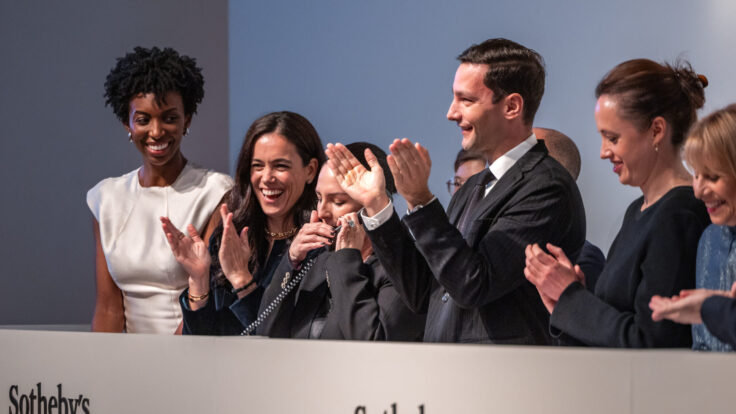
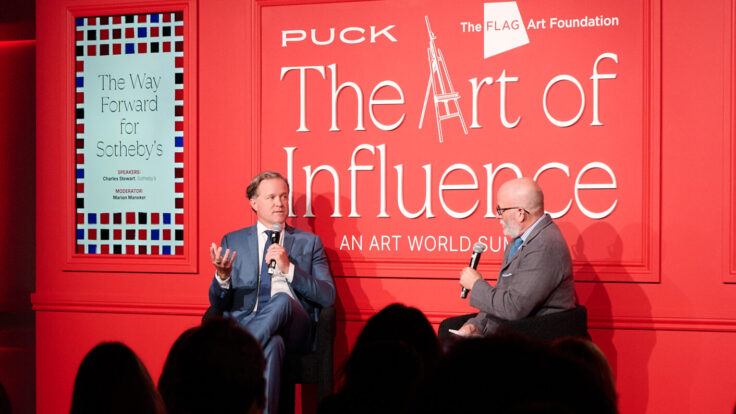
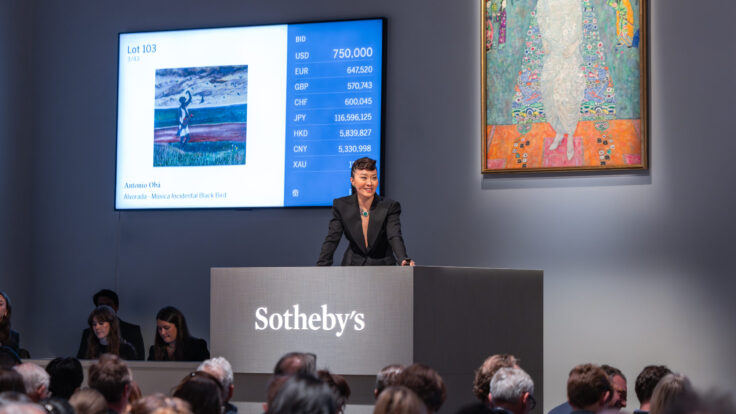
- Sotheby’s Madison blues: December was a rough month capping a rough year for Sotheby’s. The company announced last autumn that it had closed on the former site of the Whitney Museum—the Breuer building on Madison Avenue—whose brutalist exterior falls under landmarking laws that aim to preserve historic buildings. Now, it appears that NYC’s Landmarks Preservation Commission has taken an interest in the interior as well. Last month, the commission announced it would schedule public hearings in the new year, which, according to The Patch, are a step toward granting landmark status to the inside of the building. If that’s granted, Sotheby’s would have to get its interior redesign approved by the commission.
- St. Barts’ billionaire boat show: The holiday break always sends denizens of the art world scattering to a variety of destinations, whether humble or remote and exotic. On Instagram, I spotted some British art dealers and their families in France. Another American dealer, whose wife has her own gallery with partners, started in Paris before decamping to Morocco. Meanwhile, half the world seemed to be in Japan this year, due to the cheap yen against the dollar, including some collectors I know.
But the New Year’s place to be for the absurdly rich was, as is often the case, St. Barts. Looking at the AIS data—yachting’s version of tracking the tail numbers on private jets—I could see a number of boat owners there who range from dabbling buyers to serious art collectors. There were nearly 200 yachts anchored off the 8-square mile island on December 31 to see the famous fireworks display. The usual suspects dropped anchor, including David Geffen, who may be one of the most successful collectors of the last 50 years. (If Geffen himself wasn’t there, his boat Rising Sun certainly was.) Bernard Arnault’s Symphony was anchored off Gustavia, too, not far from Koru, owned by Jeff Bezos, one of the few billionaires in Arnault’s wealth class, whose name everyone mentions after Ken Griffin’s when there’s a really big-ticket artwork on offer.
Other collecting yachties worth noting: Eyal Ofer, of the Ofer family of major collectors—whose patriarch, Sammy Ofer, briefly partnered with the Mugrabi family 30 years ago—had his blunt-bowed Olivia O there. David Reuben, one of the British brothers, whose niece Lisa Reuben is an active collector, was there on his boat, Siren, as was Michael Platt, the founder of BlueCrest Capital, who used to have a unique way of collecting art by only commissioning work directly, on Arrow. A whole Las Vegas contingent including Steve Wynn’s Andrea was there, too, along with Viva, which belongs to Frank Fertitta, another casino owner with a deep interest in art, and Lonian, which belongs to his brother, Lorenzo. Cowboys owner Jerry Jones, who has a lot of contemporary art in his Dallas stadium, had his yacht, Bravo Eugenia there. Steven Spielberg's Seven Seas was also there.
Of course, we shouldn’t ignore all of the Waltons—cousins Nancy and Ann—on their respective yachts, nor Lachlan Murdoch, Jan Koum, Barry Sternlicht, Michael Jordan, Eddie Lampert, Arthur Blank, James Dyson, or Yuri Milner, who also had boats in St. Barts.
|
|
Speaking of where in the world is the art world…
|
|
|
|
The folks at Hauser & Wirth want you to experience the art collecting lifestyle in a down-to-earth, casual setting, complete with a very mindful seasonal locavore menu. Can a simple concept of art gallery-as-restaurant bring new collectors into the fold?
|
|
|
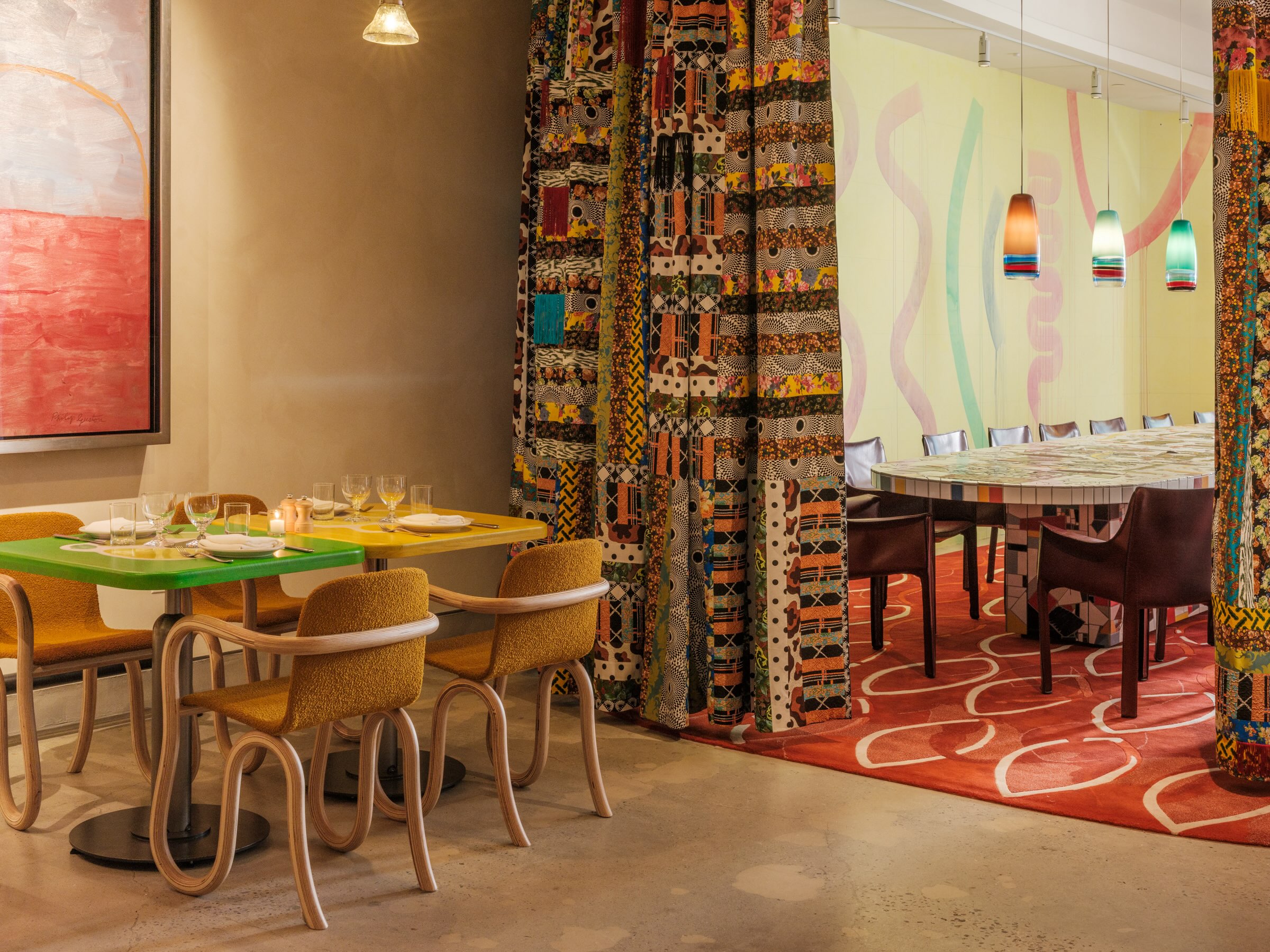
After a day spent trudging from gallery to gallery, and with a couple of hours to kill before dinner, Mrs. Wallpower and I stopped in SoHo a couple weeks ago for a holiday drink at Manuela, the Hauser & Wirth restaurant that opened at Prince and Wooster in late October. Our companion, a glamorous young art advisor, had spent the day packing for a multi-leg holiday jaunt to Paris and England to meet her vaguely aristocratic (and newish) boyfriend and his family. Together, the three of us were the exact target clientele for Manuela, where the vibe is meant to be “art-world hangout,” and where industry players (the glamorous art advisor) rub shoulders with the curious (me and my wife) and the aspirational (most of the folks at the bar).
Manuela is designed to serve as “a democratic space that doesn’t feel like it has the pomp and ceremony that some places have,” Bee Emmott, the C.E.O. of Artfarm, Hauser’s sister hospitality company, told Vogue. Presumably she was talking about other restaurants, but you could apply the same sentiment to the entire gallery world, where self-serious is the default mode, and where everyone claims to want new clients, but remains wary of investing time and manners into anyone who hasn’t already demonstrated commitment to the game. Here, though, all it takes is a reservation to grant you proximity to the world of serious art collecting.
A similar idea drives Artfarm, Hauser’s extensive program to make art less remote and foreboding by pairing it with hospitality. Strategically, combining art and hospitality—from the gallery side—has been one of the few new business innovations in art dealing since the emergence of the global gallery decades ago. Hauser’s own expansion into food and lodging began with a Somerset, U.K., farm and gallery. Artfarm also now runs the Groucho Club, in London, as well as restaurants and hotels in multiple locations, combining the experience of food, art, and travel. These include the original Manuela, which opened in the Hauser & Wirth complex in Los Angeles in 2016; restaurants and pubs in London and Somerset; plus destinations in Scotland and Minorca. There are also plans for a Groucho Club near the Yorkshire sculpture park, where there’s already a branch of Soho House. (The Wirths—husband and wife partners Iwan and Manuela—aren’t the only ones hip to the appeal of art as a travel beacon.)
|
|
|
By making art more of an everyday experience, Artfarm is essentially doing the reverse of what Peter Marino did with a slew of fashion boutiques and the flagship Tiffany store. There, the architect used art to make clothes and handbags seem loftier and more refined— i.e., not just very expensive consumer goods: They were now art-adjacent, artlike, or just plain art. Artfarm, by contrast, is making art less intimidating and inscrutable, safer for consumption.
The commercial logic here is straightforward, even if it’s not the only reasoning: There’s a new generation of potential art buyers who have to get used to these objects, and who, while they can afford the luxury travel and hospitality, find the idea of ownership too remote in a social sense, or too aspirational in a financial sense. And, maybe more importantly and less obviously, Hauser & Wirth is building a potentially valuable business off the untapped resource of the gallery’s stable of artists, estates, and their inventory.
At Manuela, as at other Artfarm restaurants, museum/gallery quality art is hanging on the walls, up close and personal. At, say, the Met, you might stroll by Both, a Philip Guston donated by the artist’s daughter, glance at the wall tag and, if you’re lucky and diligent, linger a few minutes. At Manuela, though, you might be seated right under Crescent, a work by the same artist, of similar size and composition, completed just before Both in 1976—or maybe under the Cindy Sherman centerfold Untitled #92 (two examples have sold for more than $2 million at auction); or a Nicolas Party landscape (a similar work made $3.2 million at auction three years ago). You can spend an hour or more looking at that Louise Bourgeois spider, the Mika Rottenberg vine-and-recycled-plastic chandelier and candelabra at the bar, or the Pat Steir painting in the private dining room, where you’ll eat off a Rashid Johnson mosaic piece.
In short, the place lets the art creep up on you and hit you when you least expect it, which is the kind of experience that you can’t get anywhere else—not at a gallery or a museum—unless you happen to own art yourself. And that’s the point. At Manuela, the art is the experience.
|
I was reminded of all of this as I read New York’s review of the restaurant, which dwells more on the decor than the food. “Oh, right—the food,” wrote the magazine’s critic, Matthew Schneier, who found many of the dishes to be “less creative than their surroundings,” but declared it “perfectly good” even if it’s largely “exactly what you would expect… a mid-career survey of localish seasonal eateries.”
The New York Manuela serves a different function than its Los Angeles cousin, which acts more like a museum concession—think Café Sabarsky at Neue Galerie, or Frenchette at the Whitney—an amenity that eases the trip to an unfamiliar neighborhood or an intimidating institution. That open-air restaurant provides a palate cleanser for the senses and facilitates spending a few hours in Hauser’s art complex.
But here in New York, where Hauser’s gallery spaces are distributed throughout the city—Chelsea, the Upper East Side, and a few steps north of Manuela on Wooster—the restaurant would ideally become a clubhouse: a place where artists, collectors, advisors, and maybe even a few rival dealers will congregate and table hop. That would give the art experience authenticity and appeal.
In the meantime, Mrs. Wallpower, the art advisor, and I spent several hours entertained by a charming bartender and taking side-eye notes on the handsy couple seated next to us. If I’m being honest, the bar seemed more lively than the restaurant. And the overall effect of so much art, and so many art-based design objects, crammed into one experience could come across as contrived. That said, when I messaged the art advisor to find out what she thought, she told me she was going back again this week to try the food.
|
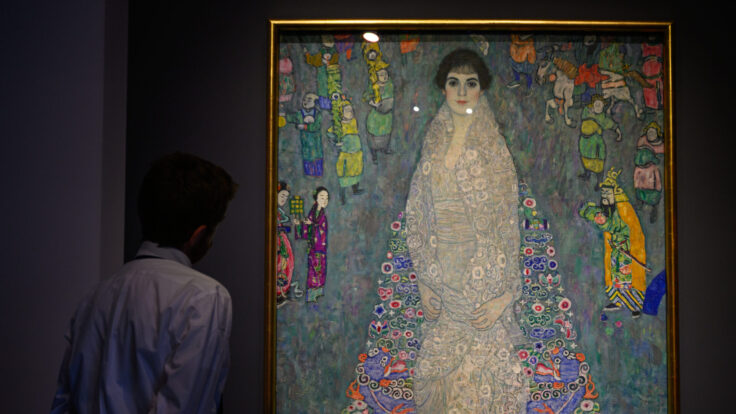
In the pre-holiday frenzy with the added drama at Sotheby's, I’d only glanced at this odd New York Times story identifying—sort of—the family that now owns the storied 1890 van Gogh painting, Portrait of Dr. Gachet. This was one of the last works made by the artist, and its purchase marked the peak of the Japanese art-buying frenzy of the late 1980s and into early 1990, when it was auctioned at Christie’s for $82.5 million ($204.3 million in today’s dollars).
I’m not sure the Times understands that outing the very discreet Italian-Swiss family that probably owns the painting—they didn’t deny it through their lawyers—isn’t really news. If the family decides to sell, that’s a story. But owning a major van Gogh for nearly 30 years, and never letting anyone see it, creates the sort of mystique that makes some works of art so valuable.
The far more interesting part of the painting’s provenance concerns the man who owned the work briefly in the late 1990s—but never saw it. Wolfgang Flöttl, the now-disgraced Austrian hedge fund manager, lived a dangerous financial life built upon secretly borrowed money and social climbing. ( The Wall Street Journal published a good overview in 2007, when Flöttl’s scheme unraveled.) Before then, in 1997, Flöttl had been acquiring art partially funded by credit from Sotheby’s. When he bought the van Gogh, his debt to Sotheby’s ballooned to $240 million. He couldn’t make payments in the wake of the Long-Term Capital collapse, however, and Sotheby’s started selling his paintings. That’s how Portrait of Dr. Gachet wound up in Switzerland… or wherever it is.
Okay, that’s enough fast and loose international finance for one day. I’m glad to be back in the harness and eager to have Julie come help pull the sled. As always, you can just hit reply to this email if you have questions you want answered or have something you want us to look into. Your tips and curiosity are central to what we do.
Let’s check back in on Tuesday.
M
|
|
|
|
Puck founding partner Matt Belloni takes you inside the business of Hollywood, using exclusive reporting and insight to explain the backstories on everything from Marvel movies to the streaming wars.
|
|
|
|
Lauren Sherman, a former top executive at Business of Fashion, is the preeminent fashion journalist of her generation. Line Sheet offers incisive reportage on all aspects of the industry and its biggest players. Every Wednesday, Lauren is joined by the beauty industry’s leading reporter, Rachel Strugatz, who writes the definitive guide to what’s happening across the category, from M&A to executive shuffles.
|
|
|
Need help? Review our FAQ page or contact us for assistance. For brand partnerships, email ads@puck.news.
You received this email because you signed up to receive emails from Puck, or as part of your Puck account associated with . To stop receiving this newsletter and/or manage all your email preferences, click here.
|
|
Puck is published by Heat Media LLC. 107 Greenwich St, New York, NY 10006
|
|
|
|