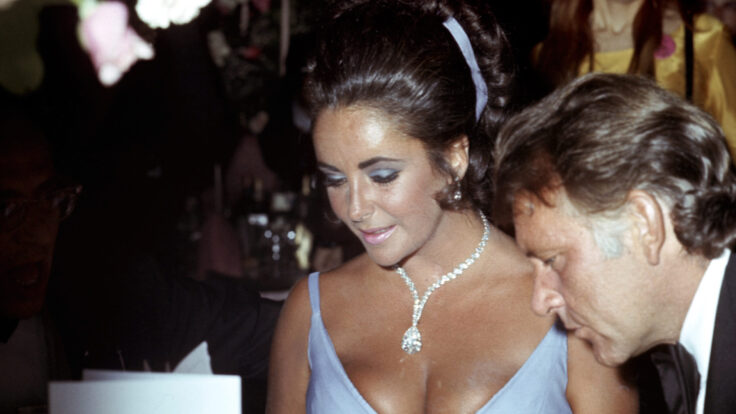
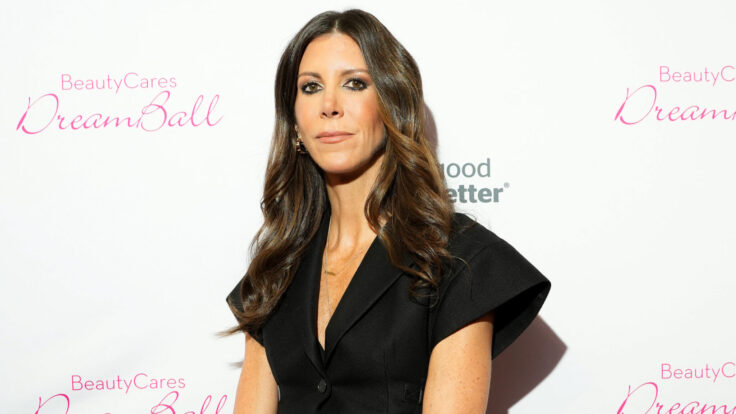
Hi, and welcome back to Line Sheet. Have you read Amy Odell’s Gwyneth
Paltrow book? A friend vacationing in the South of France wanted me to know that it’s really good when paired with an edible.
I read it straight. Since I already know too much about the subject, I enjoyed the depiction of Paltrow’s early days more than the Goop anecdotes because, you know, I’ve practically lived them. But no matter what you think of the book, or Paltrow, it’s clear
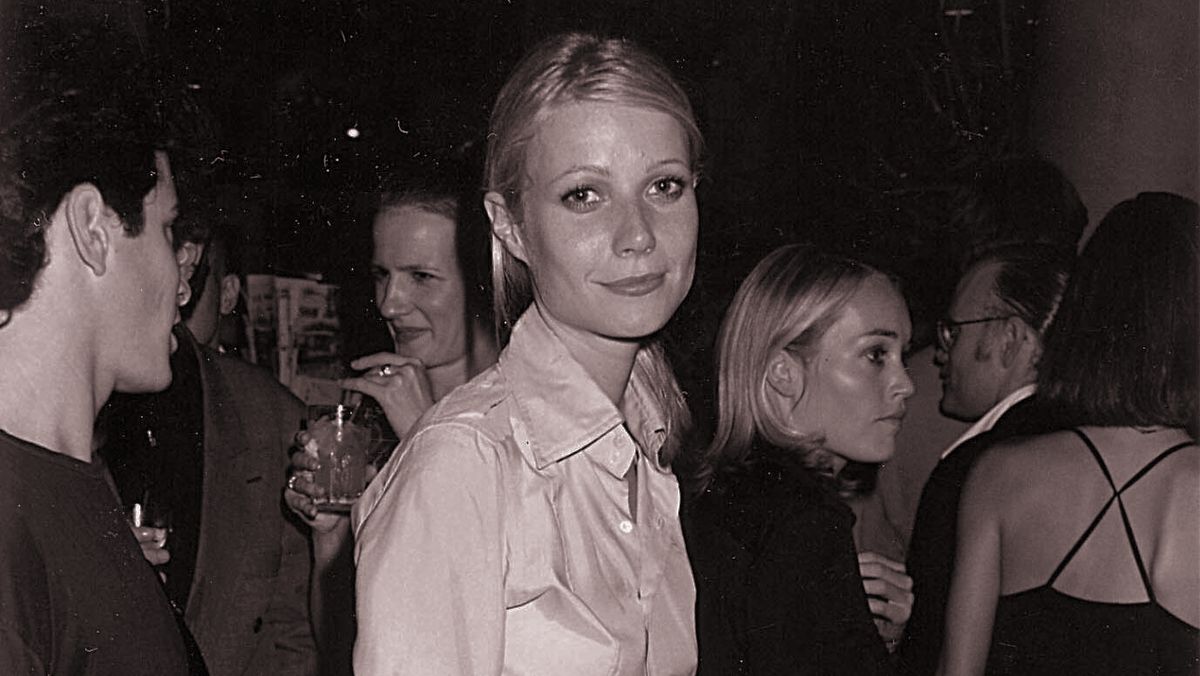
that Gwyneth lives rent free in the minds of many, from her high school rivals to Line Sheet readers. Over the past two years, our very own Rachel Strugatz has made Goop an integral part of her cinematic universe, so I very much enjoyed reading her conversation with Odell about Paltrow’s influence on consumer culture, particularly during the past decade. (I no longer want to dress like G.P., as I did when I was in my teens, but I certainly want to know where she gets her lasers
done.)
Up top, you’ll find my first impression of the Outdoor Voices relaunch (by reader request).
Mentioned in this issue: Gwyneth Paltrow, Goop, Anna Wintour, Amy Odell, Glossier, Outdoor Voices, Tyler Haney, Miu Miu, Miuccia Prada, Lotta Volkova, Spence, Amanda Greeley, Lauren Powell, and many others… |
|
|
A MESSAGE FROM OUR SPONSOR |
The Lyst Index is essential intelligence for fashion people. Powered by fashion search, sales and social media data from 160 million shoppers across 27,000 brands, this isn't trend forecasting - it's trend confirmation. Discover which brands are hot, the products that broke the internet, and the categories that are primed for growth.
Discover the new report now.
|
|
|
- Doing
things… with a tramp stamp: We already knew that the relaunch of Outdoor Voices, engineered by founder Tyler Haney and backed by licensing firm Consortium Brands, was not necessarily geared toward its original consumers—thirtysomething, mostly childless Millennials with a little bit of disposable income—who reveled in the then-revelatory color-blocked leggings circa 2013 (or ’14?). More than a decade later, the company still sells color-blocked styles—in
two- and three-color patterns—and plenty of the original materials championed by Haney the first time around, including TechSweat (a dry, dense material with decent compression) and
CloudKnit (a precursor to the material used on Vuori’s creepy-feeling joggers). In multiple interviews conducted last week, Haney, now 37, reiterated that the new O.V. was designed to reflect modern tastes with the spirit of O.G. O.V.
I see where her mind is headed. When Haney launched the Exercise Dress in 2018, it seemed a little goofy, but it became a bestseller and foreshadowed the growing obsession with tennis and other racket sports. Now, every brand sells an exercise dress. This time around, Haney is acknowledging that we are in a post-leggings era—as
Sarah Shapiro noted so eloquently in Line Sheet last week—by layering her activewear with Gen Z staples, including striped banker shirts and teeny cardigans. I’ve
heard mixed things from the Line Sheet community thus far about the first Tyler-approved drop: Some complained that the bras were too small for anyone who wears anything bigger than a C cup; others were appalled by the tramp stamp on the 3-inch Gemini short.
I, too, refrained from buying the Gemini short because of the tramp stamp. (“Outdoor Voices” is embroidered, in cursive, on the top of the
short where it hits your lower back.) But I liked the colors—various saturated and powdery shades of blue, pink, green, yellow, and black—and the silhouettes. I will try the Solar bra. And while I don’t play enough tennis to buy an exercise dress of any kind, I could see myself justifying the pleated Stardust skirt after another month grounded in Los Angeles.
More than anything, this collection reflects the pervasive influence of Miu Miu’s dynamic duo, Miuccia Prada and stylist Lotta Volkova, but it also demonstrates the risk in chasing youth. Haney has great merchant instincts, but I’m not sure whether she’s ahead of the trend or behind. Let’s see how it sells, how much more product they roll out—right now, the inventory is relatively
sparse—and how long it takes me to succumb to the Gemini.
P.S.: If you are hankering for some new workout clothes that directly scratch the O.G. O.V. itch, I suggest peeking at Spence, the racket-sports-focused brand that
launched about a year ago. Founder Amanda Greeley, who grew up in a retail family and has years of experience under her belt, contracted Lauren Powell—Haney’s designer from 2015-2017, who then went on to launch activewear at Everlane and worked for a good while at Tracksmith—as her design director. These things always reflect the vision of the founder—if the leader doesn’t know what they want, the product won’t be good—but Powell plays well with others, and I
like her sensibility.
|
Now here’s Rachel and Amy on Gwyneth… |
|
|
A talmudic discussion of Goop’s fortunes, Paltrow’s strengths and weaknesses, and various
exit outcomes with Amy Odell, the author of Gwyneth. |
|
|
Since I joined Puck, I’ve reported pretty relentlessly on Goop, Gwyneth Paltrow’s ubiquitous
but underperforming lifestyle brand. For all of its challenges––lack of focus, inept executive team, and an infatuation with scale and gimmicks over profitability and sustainable business practices, etcetera––Goop has still managed to become one of the most important brands of the last 20 years. Paltrow herself has had an outsize influence on wellness culture, and whether you love or hate her, she’s one of the greatest marketers of our time.
Late last year, I was introduced to
Amy Odell while she was working on Gwyneth, her Paltrow biography that was published last week. In the time since, we’ve become friendly and enjoyed trading notes about some of our shared interests, especially Goop (but also Blake Lively’s Blake Brown, and celebrity beauty brands in general). Recently, Odell and I connected to chat about her new book, Goop’s
future, and Paltrow’s still-forming legacy in the business. As usual, this conversation has been lightly edited for clarity. |
Rachel Strugatz: What was the
most surprising thing you discovered about Goop and Paltrow’s entrepreneurial ventures as you reported out the book?
Amy Odell: I was surprised, in general, that the person whom a lot of people think they know, because we’ve seen her so much on talk shows, in interviews, and in magazines, is not the person many of my sources saw. She can be cold, aloof, and icy––people compared her to Anna Wintour. If you walk into her office and she’s doing something,
she might not look at you––I was surprised by that. I was also surprised to hear about how her acting experience helped her as a businessperson. |
|
|
A MESSAGE FROM OUR SPONSOR |
The Lyst Index is essential intelligence for fashion people. Powered by fashion search, sales and social media data from 160 million shoppers across 27,000 brands, this isn't trend forecasting - it's trend confirmation. Discover which brands are hot, the products that broke the internet, and the categories that are primed for growth.
Discover the new report now.
|
|
|
How so?
A businessperson is all about meetings and relationships, and she can really
turn on the charm and charisma when she needs to––to great effect.
That makes sense, given how much money Goop has raised to date––and from some high-profile funds and investors, too: Lightspeed Venture Partners, Greycroft, Fidelity Investments, G9 Ventures, etcetera.
Basically, she can remember what to say in a meeting—she has amazing recall from being an actress. She can read a script once and basically have it memorized, so when she’s doing a presentation, that
must be a piece of cake for her. She can remember what to say and execute it flawlessly, like she’s performing a script—which is not to say she doesn’t know her stuff, but that’s a really important skill. I believe Goop’s raised just over $140 million. How many other celebrity brands or beauty brands raise that much?
It’s ironic to me that Gwyneth is one of the pioneers, if not the pioneer, of the wellness movement, and has built such an
influential lifestyle brand out of it—but the company still isn’t profitable after 17 years. Where did she go wrong?
I completely agree. It’s kind of wild that she architected this industry with Goop by giving wellness a rhetoric, a language, talking about “toxins” and getting toxins out of our bodies and our lives with so-called clean living, clean eating, clean beauty, and then also giving it this gorgeous aspirational aesthetic that people wanted to buy into. We see this
mirrored in so many different companies, even though Goop’s kind of moved away from wellness.
An outside investor told me they don’t think Goop will ever be successful, and that the company doesn’t really even need to exist anymore. They didn’t believe the company should have ever raised more than $20 million––because when you raise that much money, it basically allows you to spend in pursuit of growth at any costs.
Yes, correct. That also makes me think of Glossier, which
has raised about $265 million, and it’s barely profitable. Part of the problem is that Goop, and obviously Glossier, are products of another time. Had they been launched today, they never would have raised this much money––and they definitely would have prioritized profitability from the beginning.
I think that’s what happened. They had all this money, and they spent it on a lot of different things: beauty, as you’ve covered, fashion, the wellness business. There were
supplements… the Jade Egg.
Oh my gosh, the Jade Egg! But it’s still not profitable.
Well, Gwyneth said in Fortune, as you saw, that they’ve had profitable months, but a business isn’t considered “profitable” until it’s been a full year. Someone did tell me that the Goop clothing line could do $20 million this year. |
What would you say is the turning point when Goop went from its heyday to being sort of
irrelevant?
The pandemic. But also, the problems with the company are, in some ways, classic founder stuff, and, in other ways, classic celebrity stuff. Gwyneth had some experienced executives in there who were not empowered to do their job, at least not really, and who were really afraid to tell her no. I also think—and a number of people who worked there brought this up to me—that even though the content was problematic, because it had a lot of not fact-checked, health
misinformation, it was the heart and soul of the business, and Goop cut back on that. It became like any e-commerce website, and it lost a little bit of the connection to Gwyneth’s world. Because that’s what Goop really is. |
|
|
She also likes a viral moment: When she turned 50, she painted her whole naked body gold, splashed it across
the internet, and went on CBS Mornings to talk about it. There was the “This Smells Like My Vagina” candle, the Astronomer video last week, etcetera. So to your point about why it didn’t work––well, I don’t know, is that a good use of your attention? Another thing is that Goop has real estate, commercial real estate, in the most expensive places in the world, so that’s a big expense for the company. I don’t really know why they have all those stores, do you?
I
understand having one or two flagships, but doing your own retail at that scale is so astronomically expensive that, for this type of brand, it doesn’t feel like the best use of capital.
And Goop has a huge office in Santa Monica that’s as big as a city block, which is another expensive piece of real estate, but Gwyneth wanted it. She felt like Goop should have a campus like Google… but that’s not to say that she doesn’t have strengths. She had good instincts about the wellness
business, which is now a $6.3 trillion industry. I’ve been calling it Big Wellness because it’s absolutely enormous––even the global pharmaceutical industry is at $1.6 or $1.7 trillion.
I think that’s important to understand, but I also think Gwyneth and Goop contributed meaningfully to that, and provided a template for others to execute even better than Goop. Her strengths are that she has an instinct for what’s going to interest people about her, or for creating a viral moment. She has
really good taste, and a really good aesthetic, and she’s translated that to Goop and the Goop stores. And she knows that she has, in some sense, an instinct for the products that people will buy from the Goop store—people who work there said that repeatedly. Publishing industry veterans who have been in the business for 20 years said she was a good editor and was doing the most detailed edits. She was good at that, and that surprised them.
Yes, that’s all valid. And lastly, what
do you think is next there?
They could keep going as they are for a while. They could get acquired, although that would seem to me the less likely scenario, because the products really only sell when she’s personally promoting them. But is she now more interested in spending more time doing movies, or whatever it may be? She has lots of options. If she pulls back, are the products going to sell as well? Is it going to be as strong of a
business? Is Gwyneth going to change her mind and move on to something else? She said she would never go back to acting, and now she’s going back to acting. That, to me, would make it a risky acquisition target. |
Everyone likes comms-marketing guy Chris Bugg, and he got a big, new job at the Prada Group.
[WWD]
No. 5 men’s tennis player Jack Draper, who recently broke up with Nike, is expected to announce a partnership with our guys at Vuori before the U.S. Open. (He was seen on the court wearing Asics, also.) [X]
A primer for those of us attending an Oasis concert later this summer.
[Fast and Loose]
Millennials are apparently richer than they had planned to be, but still can’t afford to buy a house. Too many avocado toast orders?
[Wall Street Journal]
Former Barneys co-C.E.O. Bob Pressman, whose grandfather founded the store, filed a lawsuit in New York alleging that his siblings—soon-to-be-published-author Gene, plus Elizabeth and Nancy—evaded taxes by claiming that their mother lived in Florida. I can’t
tell whether the Pressman siblings are actually denying this, because the article wasn’t edited, and is confusing. [WWD] |
Until tomorrow,
Lauren
P.S.: We use affiliate links because we are a business. We may make
a couple bucks off them. |
|
|
Puck fashion correspondent Lauren Sherman and a rotating cast of industry insiders take you deep behind the scenes of this
multitrillion-dollar biz, from creative director switcheroos to M&A drama, D.T.C. downfalls, and magazine mishaps. Fashion People is an extension of Line Sheet, Lauren’s private email for Puck, where she tracks what’s happening beyond the press releases in fashion, beauty, and media. New episodes publish every Tuesday and Friday. |
|
|
Puck’s daily art market email, anchored by industry expert Marion Maneker, offers unparalleled access to the mega-auctions and
galleries, elite buyers and sellers, and the power players who run this opaque world. Wall Power also features Julie Brener Davich, a veteran of Christie’s and Sotheby’s, who provides unique insights into how the business really works. |
|
|
Need help? Review our FAQ page or contact us for assistance. For brand partnerships, email ads@puck.news. You received this email because you signed up to receive emails from Puck, or as part of your Puck account associated with {{customer.email}}. To stop receiving this newsletter and/or manage all your email preferences, click here. |
Puck is published by Heat Media LLC. 107 Greenwich St, New York, NY 10006 |
|
|
|




_01K1GXEHHWTM4V2QTJMMAQY37T.jpg "LYST")