 |
|
Hi, and welcome back to Line Sheet, where I’m sparing you my musings on the existential threats of climate change and A.I… at least for this week. Seriously, though, stay hydrated, and buy whatever you want! Stopping yourself from purchasing a pair of mesh ballet flats is not going to save the planet. Real change comes through public policy. Instead, let’s just follow the money.
Mentioned in this issue: Maureen Chiquet, Kim Kardashian, Nick Brown, Marcus Wainwright, John Howard, Andrew Rosen, the Gredes, Marco Bizzarri and Francesca Bellettini, Jean-Marc Duplaix, and many more.
But first…
- Hearst Layoffs, Round Gazillion Billion: A quick word on that other legacy publishing house, Hearst. The owners of Harper’s Bazaar, Elle, and Esquire laid off more than 40 people across titles today, I’m told. A Hearst spokesperson responded to my query with the following statement: “As we continue to produce the highest-quality content across all platforms, we’re also making strategic decisions that position the business for long-term growth.” Not fun!
|
| OK, let’s get started… |
| On that $4 Billion Skims Valuation… |
|
| Just four years after its founding, Skims announced their Series C this week: $270 million in new cash at a $4 billion valuation, with backing from Boston-based Wellington Management alongside Green Oaks Capital Partners, as well as D1 and Imaginary Ventures, the boutique fashion-and-beauty V.C. firm led by Natalie Massenet and Nick Brown. Skims has raised a total $670 million in all, and it seems like its planning on an I.P.O. exit, which will test whether this private valuation is valid or not.
I’ll spare you any canned quotes, only to say: Skims is on track to generate $750 million this year in net sales. That’s great, but it’s a fraction of the $6.3 billion generated by Victoria’s Secret, which happens to have a market capitalization of just $1.5 billion. Obviously Skims’ Series C investors knew this and had all kinds of justifications for their valuation based on lower capital expenditures (stores, materials, etcetera etcetera) and digital penetration. But the juxtaposition is a useful reminder that private markets operate based on future projections while the public markets rely on inscrutable Wall Street analysts. Anyway, it is what it is.
What Skims has done is taken mindshare from Victoria’s Secret—a far bigger threat in a market that keeps growing. I’m of the belief (along with some of my analyst buddies) that these types of brands don’t need to generate more than $3 billion a year in sales: A company that size can be profitable, with productive stores. Skims will likely use this new cash not only to diversify its range of product categories, but also to expand its retail footprint (including a big new store in L.A. in 2024), which is still important in the bra biz, where consumers like to try things on. However, the brand still relies heavily on wholesale—Skims dominates the intimates section at Nordstrom—which is often a lower-margin business in the long run. Stores cost more up front, but the results at the ones that work are often better. Victoria’s Secret still runs more than 800 stores.
I’m sure the headlines on this thing will mostly concern co-founder Kim Kardashian—I wonder if Kanye is mad that he sold his stake back to her?—but just remember that the unsung architects here are Jens (star operator) and Emma Grede (star merchant), the power couple quietly influencing so much of what you buy. Jens is a founder of Frame denim, Emma also runs denim line Good American (a Khloe Kardashian joint), and they are investors in a ton of different brands, sometimes partnering with early Skims investors Andrew Rosen and John Howard, who will pop up again elsewhere in this issue. You can see the Gredes’ influence everywhere—their parent company is boldly called Popular Culture—from the way they work with celebrities to the categories to which they’ve hitched their wagon (i.e., no real fashion).
And now for a quick word on what’s been going on at Kering… |
 |
| Succession Season at Gucci |
| A C.E.O. switcheroo at Gucci, coupled with Maureen Chiquet’s new Kering board seat, has everyone in Paris reading the succession tea leaves. |
|
|
|
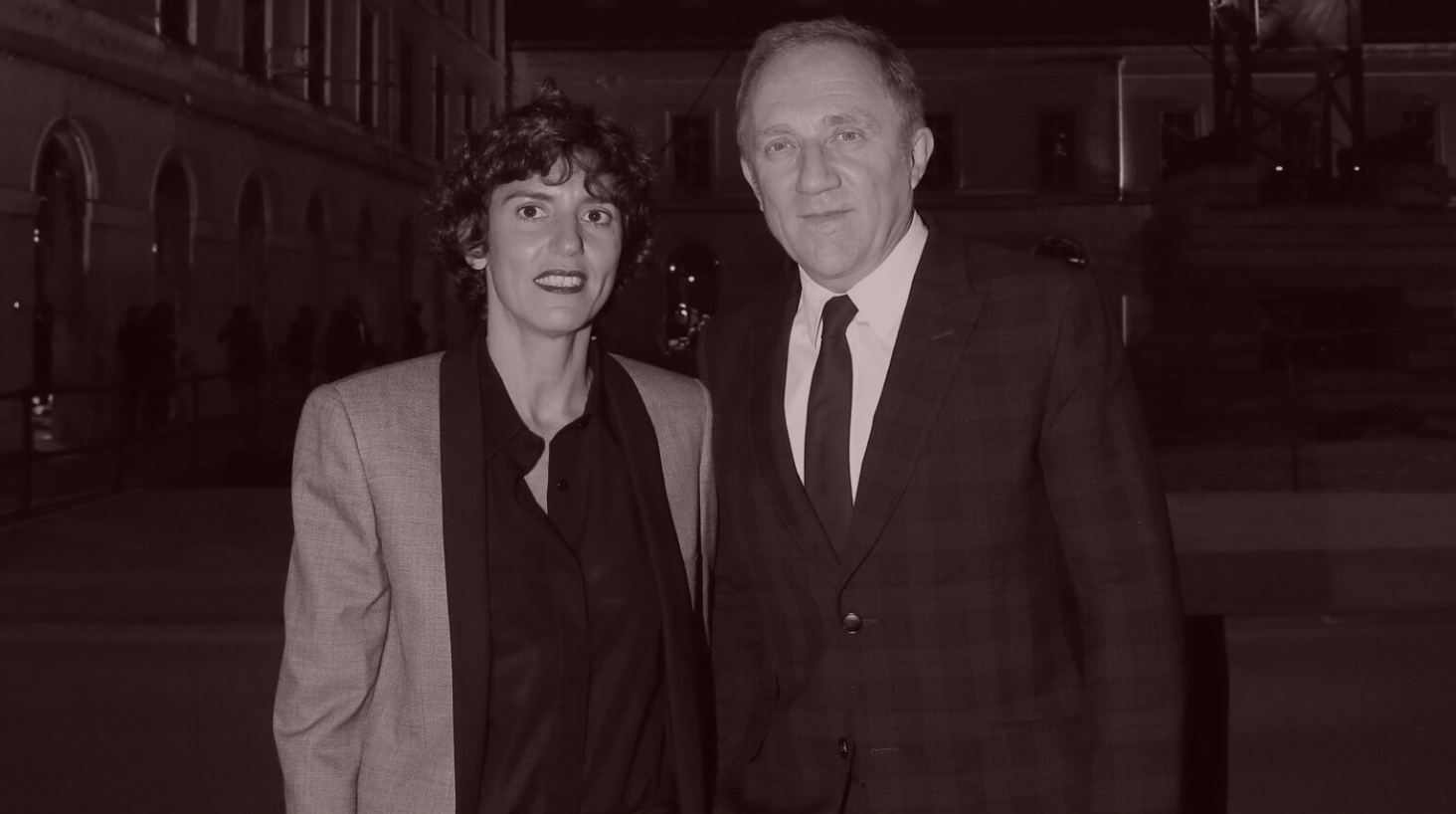
| So, what’s up with the Kering management switcharoo, including the exit of longtime Gucci C.E.O. and company man Marco Bizzarri; the elevation of Saint Laurent C.E.O. Francesca Bellettini to deputy C.E.O., with all the brand C.E.O.s—including for Alexander McQueen, Balenciaga, Bottega Veneta, and yes, Gucci—reporting to her; and Jean-François Palus acting as interim C.E.O. of Gucci? After talking to some people on the inside and out, the clearest answer is that this probably isn’t exactly how Kering C.E.O. (and CAA’s number-one fan) François-Henri Pinault envisioned the next phase of his growing luxury empire. The much-discussed trouble at Balenciaga last year, combined with the challenges at Gucci resulting in the departure of Alessandro Michele, will be further elucidated in the company’s first-half results, released next Thursday, and it’s likely that Pinault and his team thought it wise to make this announcement beforehand. (Indeed, shares were up after the release went out.)
Here’s what else I’ve learned… First, people inside Kering tell me the Gucci C.E.O.’s exit was a long time coming: Bizzarri has been with the group for 18 years, and helped catapult Gucci into another competitive stratosphere over the past decade. The less understandable part: Why did they not name a permanent replacement? There’s a chance that someone is waiting in the wings but has an air-tight non-compete, yadda yadda. However, it was suggested to me that solving the Gucci C.E.O problem had to be put on the backburner while the Balenciaga situation was managed. (Note that there were no changes announced at Balenciaga.)
The other problem, of course, is that there just aren’t that many qualified candidates. Landing that job would be a major coup, but LVMH’s top executive talent (Louis Vuitton’s Pietro Beccari, Dior’s Delphine Arnault) are not going anywhere, and there isn’t an obvious break-out star among the lower-level LVMH brands. (That could be because their boss, Sidney Toledano, the current C.E.O. of the LVMH fashion group, dominates.) Gucci could attempt to woo back Valentino C.E.O. Jacopo Venturini, the star merchandiser who was an almost silent partner in the early days of Michele and Beccarri’s success. Another ex-Kering exec, Burberry C.E.O. Jonathan Akeroyd, is well-liked, but the other sticking point is that they’re likely trying everything they can to hire an Italian. (I know that they wanted an Italian designer to replace Michele; the lucky guy, former Valentino number-2 Sabato De Sarno, will show his first collection in September.) |
|
|
| The bigger question, to my mind, is why didn’t Bellettini get it? Sure, the promotion to deputy C.E.O. of the group, with all brand C.E.O.s reporting up to her, gives her serious authority. But, traditionally, running the largest brand has been a more important job. Bellettini has been incredibly effective at Saint Laurent: Many people were skeptical that she’d be able to keep up the momentum after Hedi Slimane quit, especially with a then-unknown quantity like Anthony Vaccarello. But she got the merchandising and pricing exactly right (with a focus on not too cheap, not too expensive essentials) as Vaccarello and his team started to make runway magic.
From what I know, it sounds like she may still be directly managing the Saint Laurent brand for some time. (By the way, there are a lot of people in Hollywood—like, people at the top of studios—eager to get in touch with Bellettini about Saint Laurent Films, but have had trouble connecting with her. Maybe this is why?)
As for Jean-François Palus’ temporary appointment as Gucci C.E.O.: Palus is in F.H.P.’s inner circle—a trusted right hand who started out as C.F.O. of the group’s timber division in 1991!—but he has never worked with a designer. They need a product person, not a numbers person, to run Gucci, so this was clearly a greater-good type situation. (Palus is, however, stepping down from the Kering board and relocating from Paris to Milan… for now.)
What I wouldn’t do is assume that this is all some sort of pre-succession planning. (Pinault is only 61.) Like Bellettini, Jean-Marc Duplaix’s elevation from C.F.O. to Deputy C.E.O. of Operations and Finance sounds like more of a pat on a back—combined with a nod to the market that the company is committed to efficiency and results—rather than a major shift. |
|
|
| As for that Maureen Chiquet board seat… Exactly six minutes before the press release dropping the big news landed, I received a glossy memo announcing the appointment of the former Chanel Global C.E.O. to Kering’s board of directors. The board is a mixed bag in terms of industry authority (Emma Watson is a director), but Chiquet is most certainly a strategic hire. She famously left Chanel after several disagreements with the Wertheimer family, including about the creative direction; she wanted Karl Lagerfeld to retire, they had no interest in shaking things up.
It’s probably her extensive experience both at L’Oreal and Chanel Beauty that drove Kering to recruit her as they further their ambitions in that category. The group recently bought niche fragrance brand Creed, but also see a good deal of opportunity in developing Gucci beauty, which barely exists. (The Saint Laurent deal with L’Oreal is too complex and fruitful to bring in-house at the moment.) Anyway, I doubt Chiquet is in the running for the Gucci job, nor would she want it—she has a nice life.
One final note: It’s interesting to compare Kering’s shakeup to how LVMH announces big executive changes. The reports that Toledano’s retirement is set and that former Louis Vuitton C.E.O. Michael Burke will replace him are solid, people in Paris say. (I reached out to LVMH for comment, haven’t heard back.) Toldedano’s original contract to run the LVMH fashion group was three years, but there was Covid and other outside forces at play that meant it all took a little longer—it’s now been six years. And yet, we haven’t heard a peep from the rival group on what are clearly set-in-stone plans. LVMH is just more buttoned up. That being said, it’s a much bigger company with a better stock position than Kering’s at present. They’re in no rush.
And now onto the main event, another executive shakeup, albeit on American shores… |
 |
| From Riches to Rag & Bone |
| Marcus Wainwright’s departure from day-to-day activities at Rag & Bone is the end of an era—and it’s an era that ended a long time ago. |
|
|
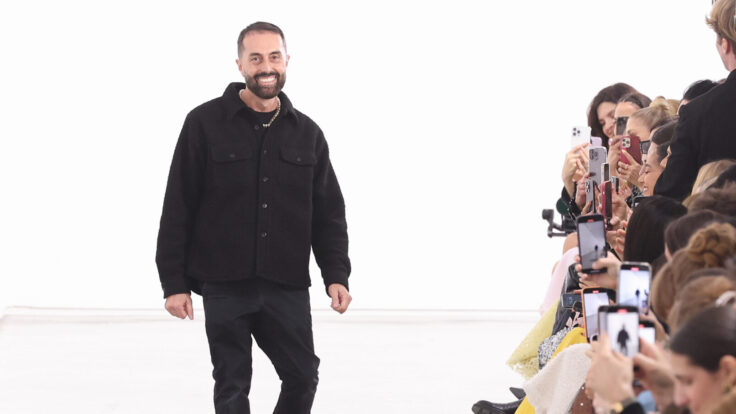
| I can’t say I was surprised to hear earlier this week that Rag & Bone co-founder Marcus Wainwright was stepping down from his operational role at the business, where he was most recently chief brand officer. After a significant push in the mid-2010s to become the next billion-dollar fashion brand, progress had been a struggle, with a revolving door of executives recruited to help take the label to the next, difficult-to-achieve level.
Wainwright, by all accounts (including my own), is well-meaning. He loves clothes. But he probably shouldn’t have been playing a significant day-to-day role in running a company with hundreds of millions of dollars a year in sales, and that disconnect was bound to catch up with him. (His co-founder, David Neville, left the daily operations several years ago to help manage his wife Gucci Westman’s wildly successful beauty line.)
Sometimes, in fashion, it’s easy to forget how important a brand was to a certain subset of people, especially after the sentiment cools. That’s why I didn’t think the news was worth more than a link out at the bottom of Monday’s email. To satisfy my own thirst for gossip, however, I texted a Rag & Bone-adjacent friend:
“Interesting about Marcus (not fishing, just have no one else with whom to discuss),” I said.
“I’ve been waiting for this message,” this person responded.
“Lmaoooo. Truly not fishing. I don’t think anyone cares but us!”
“I felt the same. I wanted to text you but was asked not to.”
Turns out, the story of Wainwright’s ouster is one worth telling: So worth it, in fact, that the person who originally asked that I not be made aware of the backstory hopped on the phone with me just a few hours later. Not because there was anything particularly salacious about what went down, but more because the story of Rag & Bone is the classic tale of what happens when a private equity deal goes wrong in fashion. |
|
|
| Let’s backtrack to pre-2012, when Rag & Bone was considered a premium brand, known for its “heritage” aesthetic: adjacent to the Barbour-style field jackets, rigid denim, and not-too-rugged boots that were so popular at the end the 2000s, especially in menswear. Founded by two well-bred British guys in 2002 (one of them, Nathan Bogle, buggered off sooner than later, replaced by another, Neville), Rag & Bone was an American Vogue brand from the start. In those days, it felt like Anna Wintour valued classic looks and pedigree more than design sense and originality.
So it was no surprise when Irving Place Capital (IPC), the private equity firm backed by investor John Howard, swooped in, acquiring a quarter of the business. Howard, who personally invested in Proenza Schouler around the same time, wasn’t afraid of fashion: Over the course of its run, ICP had taken stakes in designer-denim label 7 For All Mankind, Aeropostale, and Stuart Weitzman, among others. With Rag & Bone and Proenza, however, Howard was entering the designer apparel space, a different proposition.
Howard often invests alongside Theory founder Andrew Rosen, as was the case with Proenza and Rag & Bone. But the particulars of IPC’s deal with Rag & Bone are what’s important here. According to what I’ve been told, it was a seven-year agreement, with an option to opt out at the end of the seven years (end of 2019), or put more money into the business.
Here’s what happened over the next seven years: Howard backed away from pure fashion plays, focusing on celebrity-backed brands instead. (Alongside Rosen, he’s an investor in Skims, Good American, Brady, and more.) During that time, Rag & Bone also lost its way. Positioned on the higher-end of mid-priced fashion, it had success in the early 2010s, and at the beginning of the IPC deal, in expanding its denim range and accessories. Every upper middle-class white guy listening to Kings of Leon wore the jeans, every up-and-coming female marketing exec had a pair of the Newbury ankle boots. They were cute.
But the brand got too big too fast, and some executives argued that its reliance on the off-price market (which happens, even to the best) diluted its standing among consumers. Others said that Rag & Bone simply lost its spark and consumer relevance, despite being profitable. There were layoffs, there were restructurings. Through it all, Wainwright remained dedicated to making it work, even if it wasn’t.
So, you may not be surprised to hear that at the end of the seven years, ICP and Howard were like, bye. (At this point, the company’s valuation was about 75 percent of what it had been at the time of their initial investment.) Then the pandemic hit, and Rosen, who retired a few years earlier from his full-time C.E.O. job at Theory (owned by Uniqlo-parent company Fast Retailing), set out to find new capital. Not only did Rag & Bone have to pay back ICP, but they needed cash to fuel the business.
Rosen implemented a plan to drive top-line growth in hopes of finding a buyer, along the lines of what Vince did when it was acquired by Authentic Brands Group (ABG), the licensor-turned-brand vacuum that owns everything from Barneys New York to Reebok to Forever 21, and recently raised another $500 million at a $20 billion valuation. ABG looked at Rag & Bone, but a deal didn’t materialize. Enter Wainwright’s exit. |
|
|
| What happens next is yet to be determined. Given Howard and Rosen’s alliance, and just the general way they work, ICP is not rushing to exit. Wainwright and Neville are still on the board of directors of Rag & Bone, and still each own a piece of the business. So it will depend on whether the board makes the right choices for the business—who they hire to give it back that “spark”—but also whether they luck out. (Fashion is all about timing.)
At the moment, a lot of American companies are in major debt after that post-Covid boom, desperate to sell, and there aren’t a lot of buyers. Rag & Bone certainly has more brand recognition, and distribution, than most, which gives it a leg up. It’s hard to find an unobvious lesson here: The fashion business is hard, execution matters, investors are looking for a return and even when you do most things right, it typically does not end well. |
|
|
| Emily Oberg and Sporty & Rich land on the cover of Thursday Styles, written by the excellent Jessica Testa: This is really the whole story, as far as I know it. [NYT]
If you’re as unnaturally obsessed with Sporty & Rich as I know a lot of you are (I’ve had too many conversations with you about it to count!), this piece is also worth a read, too. And I happen to be quoted in it. [GQ]
Someday, I hope someone tells the unique story of Outlier, which started out as a “commuting” fashion brand—super high-tech fabrics for biking to work but looking polished—but transformed into something more. That’s in no small part thanks to its singular creative director, Willie Norris. Now, Outlier has added Norris’s name to a capsule collection with a focus on “androgynous tailoring.” [Hypebeast]
Lucien Pages talks key performance indicators! [032C via Public Announcement]
Balenciaga announced a return to its original Paris headquarters, including an expansion of its couture salons, which are doubling in size. [WWD]
If you like charts and want to know more about how consumers feel about Ozempic, check this report out, published by my significant other. (Note: Unfortunately, there are no celebrities outed for Ozempic use in the findings.) [The New Consumer]
I’m not a stylist, but I’d be happy to make some introductions once the strike is over. [Picketfits on Instagram, shoutout to Booth Moore who reported on this account first]
“First off, neither Erin nor I (Jonah) had ever heard of Houston’s until very recently.” Ummmmmm. What? If you, too, have never heard of Houstons, as the Blackbird Spyplane folks are claiming, enjoy this great Bon Appetit article from 2016 explaining the appeal of this restaurant group, which includes Manhattan’s Hillstone. To all my fashion publicist friends who live off Hillstone spinach-artichoke dip between intermittent fasts, only read this if you enjoy feeling enraged! (I know you do.) [BBSP]
Mattel has partnered with over 100 brands and retailers on Barbie collaborations. Make it stop! [BoF]
Burberry is making progress in its trade up to pure luxury. [The Fashion Law] |
|
|
Until Monday,
Lauren |
|
|
|
| FOUR STORIES WE’RE TALKING ABOUT |
|
|
|
|
|
 |
|
|
|
Need help? Review our FAQs
page or contact
us for assistance. For brand partnerships, email ads@puck.news.
|
|
You received this email because you signed up to receive emails from Puck, or as part of your Puck account associated with . To stop receiving this newsletter and/or manage all your email preferences, click here.
|
|
Puck is published by Heat Media LLC. 227 W 17th St New York, NY 10011.
|
|
|
|
|