Welcome back to Wall Power at the end of an unexpectedly ebullient gigaweek in New
York. I’m Marion Maneker.
The mood going into this week’s sales was cautiously optimistic. Since Monday night, though, we’ve seen that caution mostly thrown to the wind. When I last wrote to you, on Wednesday evening, the running total for the week had already passed $1.5 billion. After the six auctions on Wednesday, and the four that I sat through on Thursday, that number is up to $2.18 billion. That’s close to the previous art market high, from November 2022,
and there are still a few day sales left to be counted.
Let’s pause right there and admit that no one—and I mean no one—expected the market to suddenly shoot from the bottom to the top. On Thursday, I spoke to a number of advisors and auction house people who were already relaying tales of consignors drawing unrealistic conclusions from this week’s market performance.
It’s still too early to tell what this all means for the broader appetite for art. But tonight, I’m going
to recap my last two days making the rounds in New York and try to offer some anecdotal evidence for where we are in the current moment.
But first… |
-
Puck’s Guide to Mirth & Merriment: I’m not much of a gift giver. I just seem to lack the imagination to come up with something truly different or special. That’s why I’m excited to be able to share with you
Puck’s 2025 Guide to Mirth & Merriment, which includes great gift ideas inspired by Larry Gagosian and offered by David Zwirner Gallery’s David Leiber and Lily Mortimer. There are also a ton of great gift ideas from all of your favorite Puck writers, and the stellar staff here that we all rely upon. Take a look. It’s my gift to you.
|
|
|
A MESSAGE FROM OUR SPONSOR |
The first steps towards a masterpiece starts with a dream. The all-electric BMW i7 – the
evolution of brilliance. Learn more at BMWUSA.com |
|
|
- Brant Foundation’s Keith Haring show: The Brant Foundation announced that it will open a show of Keith Haring’s art on March 11. Curated by Dieter Buchhart and Anna Karina Hofbauer, the show will focus on 1980-83, Haring’s breakout period, and feature works from the exhibitions at Tony Shafrazi Gallery in 1982 and the FUN Gallery in ’83.
- It’s a bird! It’s a
plane! It’s $9.1m!: Yesterday, Heritage Auctions hammered down the most expensive comic book ever sold: a 9.0-graded Superman No. 1, from 1939, for $7.6 million, or $9.1 million with fees. It’s a life-changing amount of money for the three brothers who discovered the book hidden away in their late mother’s Northern California attic, where the climate aided its preservation. Five early issues of Action Comics from the same trove brought a combined $583,200, led by a
9.4-graded copy of issue No. 15 from August 1939, also featuring Superman on the cover, that sold for $264,000. —Julie Brener Davich
|
Now, let’s get to the main event… |
|
|
Fresh reporting on an ebullient gigaweek in New York, where more than
$2 billion worth of art was sold, approaching the market high in 2022, even as bidders sought out art as more than just an asset. |
|
|
After two successive nights of $700 million art auctions—both strong, but hardly
indications of an art market where buyers were bidding with abandon—I thought the remainder of New York’s so-called gigaweek would be relatively quiet. I envisioned a series of modest day sales and cleanup evening sales where business got done with little excitement. Was I ever wrong.
On Wednesday evening, as my last newsletter went out, the $126 million Christie’s evening sale of 21st century art—with works from the collection of Chicago couple Stefan Edlis and
Gael Neeson—was just getting started. Edlis and Neeson were tastemakers in their day. A huge trove of their art—including major works by Jasper Johns, Cy Twombly, Andy Warhol, Gerhard Richter, and Cindy Sherman—now forms the backbone of the Art Institute of Chicago’s collection of postwar and contemporary holdings. Had those
works been included in the sale, it would have been a tentpole event in the art market. That said, the works on offer were nothing to sneeze at.
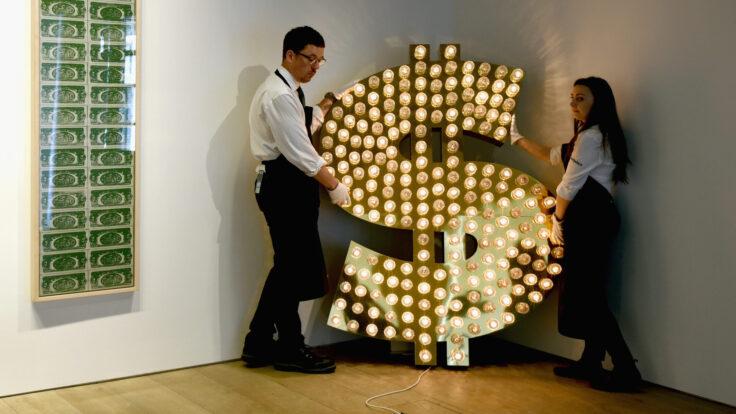
One of Sherman’s more recognizable Film Still works—No. 13, from 1978—in an unusually large format sold for a banner price of nearly $2.2 million. A smaller version of the work sold in 2008 for $900,000. A bronze statue of a toy cowboy by Richard Prince sold for $3.3 million, and a rare Double Nurse painting
made a conservative $3.5 million. Warhol’s bright yellow double image of Leonardo’s Last Supper sold for a little more than $8.1 million, nearly the same price as a different version in the same color that was sold in 2018. And a Warhol oxidation diptych that once sold for $775,000 in 2011 made $1.7 million this week. |
|
|
A MESSAGE FROM OUR SPONSOR |
The first steps towards a masterpiece starts with a dream. The all-electric BMW i7 – the
evolution of brilliance. Learn more at BMWUSA.com |
|
|
In many ways, the Edlis-Neeson collection had a time warp feel to it, due to not only the couple’s tastes, but also its redolence of an earlier era in the art market. Nowhere was this more evident than in the sale of John Currin’s Lake Place, from 2012, which was estimated at $2.5 million. The estimate was no doubt keyed to Christie’s sale in May of an earlier Currin painting for $3 million, a sign of the stirring of interest around an artist whose work had gone out of favor. But this painting didn’t summon that enthusiasm. It was sold for a hammer price
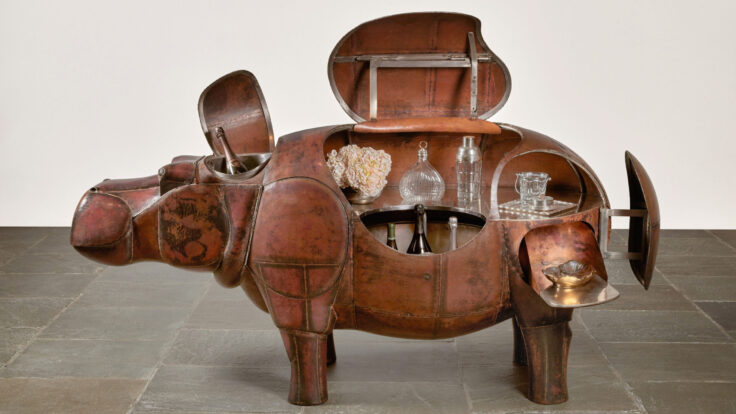
of $1 million, or $1.27 million with fees. In another measure of changing tastes, the Edlis-Neesons’ four pieces of Diego Giacometti furniture brought in a total of $12 million, well above the combined estimate of less than $6 million.
In the various-owners portion of Christie’s sale, there were some other lots that charted the changing taste in contemporary art. Takashi Murakami’s Miss Ko2,
from 1997, sold for $2.75 million with fees. It’s the third time one of these editioned works has sold in the last eight years for approximately the same price—although it’s a far cry from 2010, when one of the edition sold for $6.8 million. It’s another reminder that art market prices are not so much a measure of quality as they are a reflection of demand. Low prices,
as with the Currin sale, often draw our scorn, but they regenerate interest in an artist’s work and allow art to be redistributed more efficiently.
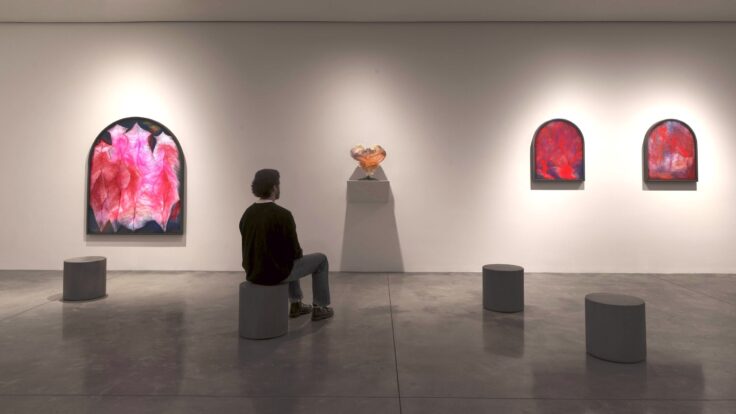
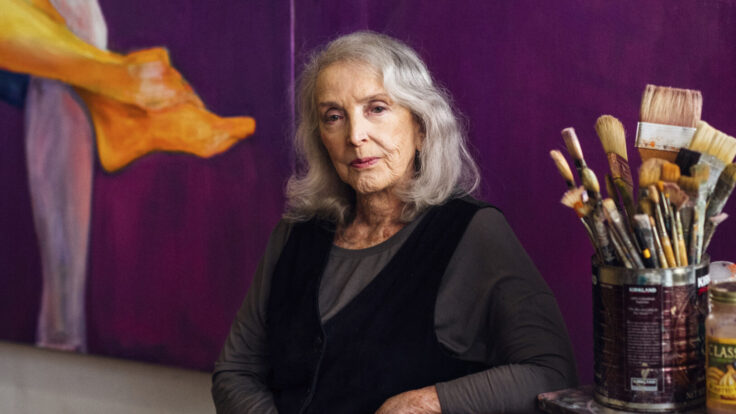
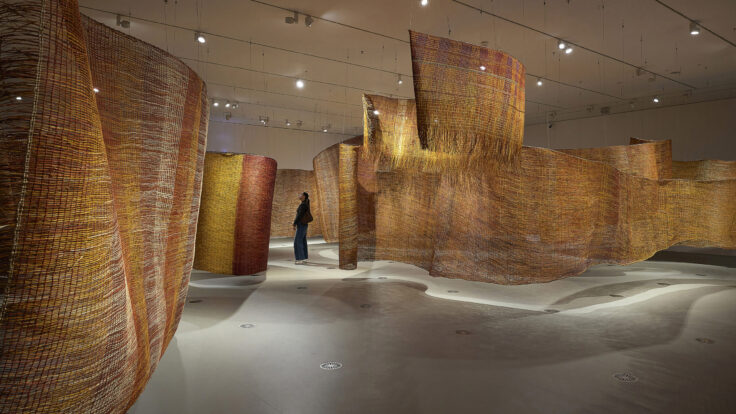
On the opposite end of the distribution spectrum, Olga de Amaral’s Pueblo H, from 2011, sold from Elaine Wynn’s collection for $3.1 million—more than twice de Amaral’s previous auction record. All of her sales above $1 million have come since the Fondation Cartier exhibition in Paris in late 2024, and
de Amaral’s gallery, Lisson, has played an important role in building on this interest. There’s a show of the artist’s work up right now in Los Angeles.
Of course, we cannot leave Christie’s without mentioning the sale of Christopher Wool’s RIOT, from 1990, which made nearly $20 million. Bought by a West Coast art advisor, the painting actually achieved the artist’s fourth-highest auction price ever. A decade ago, hard on the heels of a major museum retrospective
of his work, a similar version of this painting sold for nearly $30 million. But as a testament to how long Wool’s word paintings have had an enduring presence in the culture, recall Morley Safer’s infamous 60 Minutes report from 1993, lampooning the auction market for contemporary art and complaining that another Wool word painting had sold for… $30,000.
How far we’ve come. |
Bonhamsmentum & Phillips’ New
System
|
I started my Thursday morning with a “hard hat” tour of Bonhams’ new space at 111 West
57th Street, a skinny luxury building that went up over the old Steinway Hall and will open on February 9. Bonhams’ global head of postwar and contemporary art, Ralph Taylor, and managing director of the U.S., Lilly Chan, led me through the soaring atrium of the lobby and up the elegant but imposing stairs, under star-shaped chandeliers, to the new triple-height auction room and exhibition space.
Despite the recent shift in ownership from a private equity
to a private credit firm, Bonhams seems to be building momentum. I stopped by their sale earlier on Wednesday, where I saw part of the Beaumont Nathan advisory crew and David Nahmad sitting in the small sale room, presumably to bid on the rediscovered Yves Tanguy painting that Bonhams
sold for nearly $1.8 million, and an early Henri Matisse that made nearly $690,000. Bonhams was able to sell $28 million worth of art this week, led by a Wayne Thiebaud landscape, River Sides, from 1997-98, that made close to $2.4 million, among other works by
David Hockney ($1.39 million),
Jeff Koons ($1.35 million), Richard Prince ($534,000), and Andy Warhol ($699,000).
I could not stay to watch the Bonhams sale because I had to jump on Puck’s Inner Circle phone call, but I was able to get
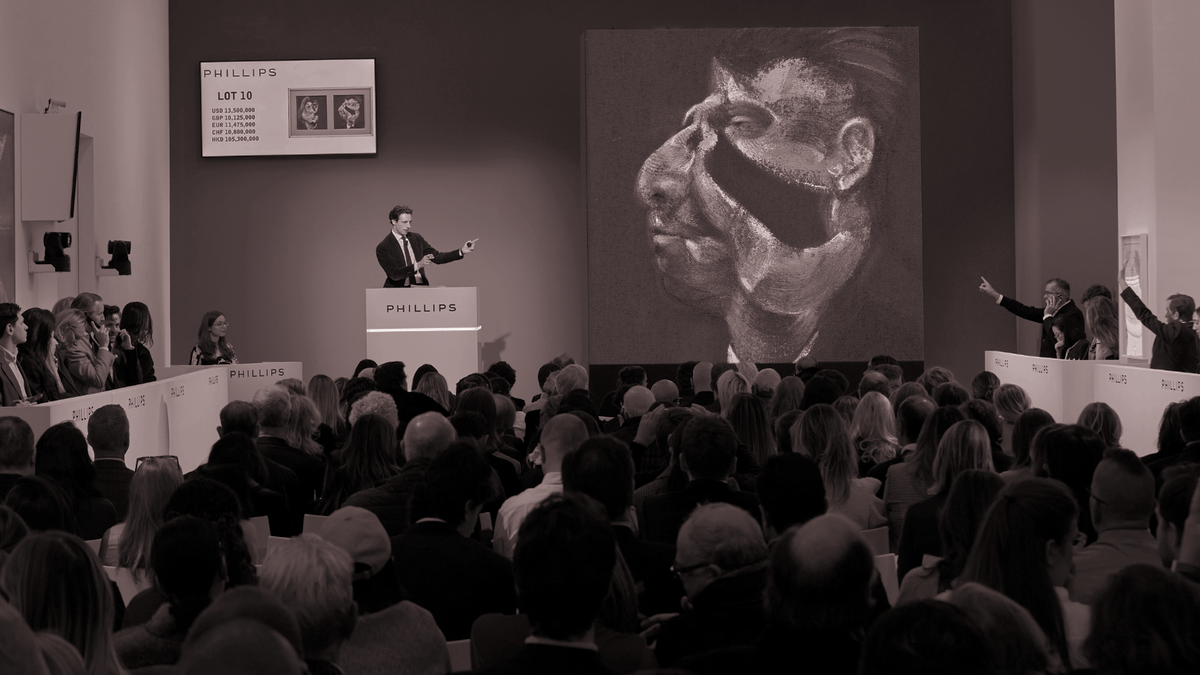
over to Phillips in time to see their sale. I found C.E.O. Martin Wilson standing in the back of the room, where he told me that 70 percent of the lots had already been sold before the auctioneer even mounted the rostrum due to the firm’s Priority Bidding program. The new system effectively replaces third-party guarantees with
a one-size-fits-all formula more accessible to all potential buyers. Phillips seems quite happy with it, and the sale results—whether a product of the priority bidding system or other factors—backed up the positive mood.
Estimates can sometimes seem aspirational at Phillips. But on Wednesday, most of the top lots sold at or above the estimate level. A 1967 Francis Bacon study of two portraits made $16 million; Joan Mitchell’s untitled 1957-58 work was
sold to advisor Ralph DeLuca, splashing out once again, for nearly $14.3 million; Jackson Pollock’s untitled 1947 work on paper sold for nearly $3.5 million; Mark Tansey’s Revelever, from 2012, sold for $4.6 million; and two Ruth Asawa works sold for prices close to $1 million.
I ended Wednesday night at Clemente Bar, where Loïc Gouzer was holding a gathering of the art tribes and a brief live
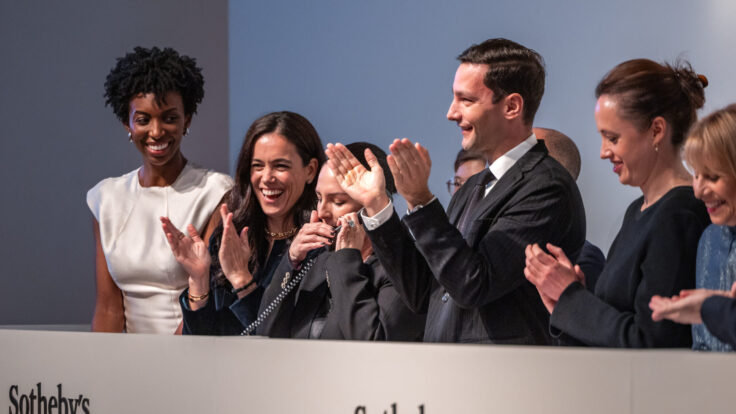
auction of Warhol’s Brigitte Bardot, from 1974, which was commissioned by Gunter Sachs in a rare case where Warhol used a Richard Avedon photograph. Other examples from the series have previously sold for prices at the $10 million and nearly $12 million marks, but this red-and-yellow version—done in an oversize format of 48 inches square—last traded in 2012 for $4.7 million. Thirteen years later, it was a different story. The single-lot sale, conducted
by former Christie’s auctioneer Jussi Pylkkänen, had at least four bidders, and ended with the painting making nearly $16.7 million with fees. |
The Last of a Dying Breed
|
Pylkkänen clearly relished conducting an auction again. But a stray comment touched off
a two-day, three-auctioneer masterclass in the art of crying lots. Auctioneers, whose job is to maximize the bidding for the seller, work in set increments that change as numbers get larger; bidding in between those increments is called a split or chopped bid, and it’s dependent on the auctioneer’s experience and feel to decide when to accept a smaller increment and when to refuse. Accept a chopped bid too soon, and the auction can bog down in small increments, exhausting everyone participating.
Refuse a chopped bid, and the auctioneer risks denying the consignor incremental value. It’s a subtle art, and a rarefied number of auctioneers—surely fewer than the number of people who have climbed Mount Everest—are qualified to comment on one another’s style. |
|
|
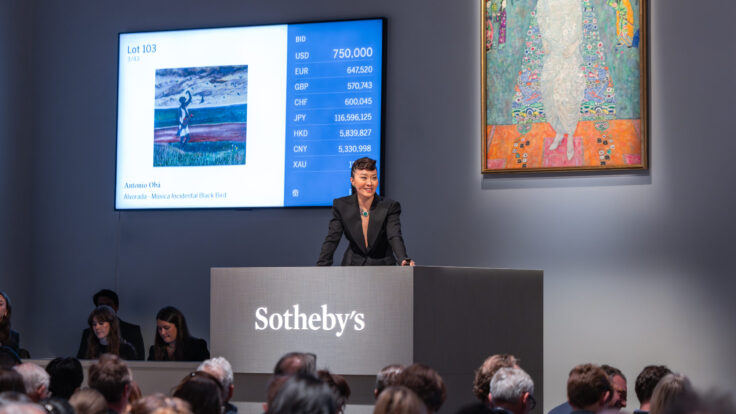
At one point on Wednesday evening, Pylkkänen turned down a chopped bid. In announcing
that he would not accept bids in $100,000 increments, he slyly noted that he wasn’t Oliver Barker, Sotheby’s star auctioneer. The next night, during Sotheby’s sale of the Pritzker Collection, when Barker turned down a bid, he told the bidder with a smile, “I’m advised I take too many split bids.” Barker then turned his gaze to the first few rows, where Pylkkänen, now a top art advisor (he bought a $12.3 million Magritte, the most expensive lot in the modern evening sale), was
seated. “I’ve been waiting to say that all day,” he addressed his former rival directly.
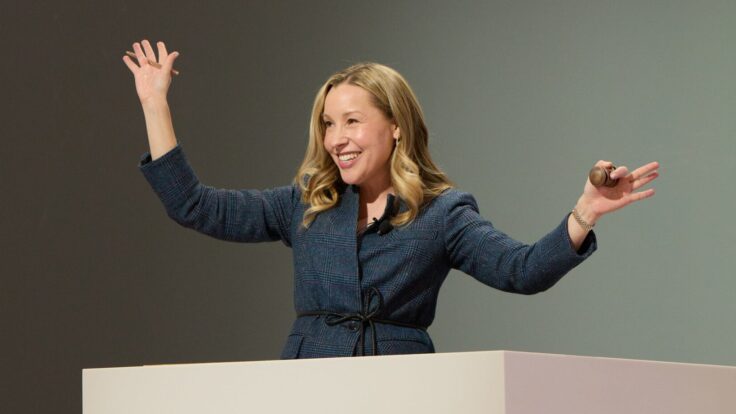
The good-natured ribbing drew laughter from the crowd, but Barker did seem to hold the line a bit more than usual. Then, when Helena Newman replaced Barker for the modern evening auction, the iron fist came out of the velvet glove. Twice Newman was forced to lay down the law to maintain the bidding increments, and both times her long experience paid off. Her bidders accepted the
conditions and finally bid the next increment.
It’s rare to see variations on this delicate art form so starkly displayed. And, with fewer and fewer live auctions being conducted, there’s a sense that the next generation of auctioneers will not be able to accumulate the necessary experience—it takes a long time to get that comfortable in high-stress situations—to rise to the level of these last-of-a-dying-breed masters.
I don’t know if it was the auctioneering that provided the
secret sauce at Sotheby’s on Thursday night, but something clicked in the room, and all three of the auctions Sotheby’s held were conducted without a lot passing (although two lots were withdrawn). Global guarantees may have played a role; the excitement and novelty of the new Breuer Building might have contributed, as well. But the result was another $305 million in auction sales, with the Pritzker Collection accounting for $109.5 million of that total.
The top lot was a Vincent
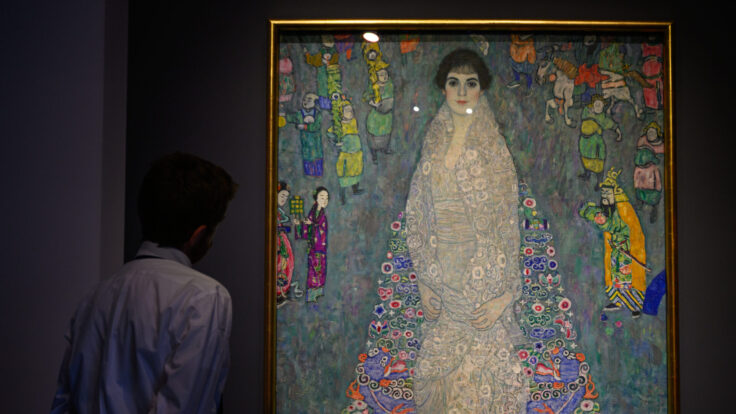
van Gogh still life, which advisor Patti Wong bought for $62.7 million. Max Beckmann’s Der Wels, from 1947, sold for $9.2 million with fees, well above the $5 million estimate without fees. In the Exquisite Corpus sale of art collected by Nesuhi Ertegun, co-founder of Atlantic Records, Frida Kahlo’s El Sueño sold for more than $54 million, a record price for a work by a female painter.
A few
works struggled against their estimates, but on the whole, the three sales were conducted with enthusiastic, sometimes aggressive bidding. There even seemed to be a collector or two in the room bidding on surrealist works for themselves. Indeed, that was the theme of the week: art being bought for the love of art, not in pursuit of returns. |
One last thing to keep an eye on. Last season, I pointed out that Sotheby’s had a very
strong contemporary art day sale totaling $97 million. Even though the top of the art market was in the doldrums, the day sales in May did quite well. This season, that number rose to $108 million for Sotheby’s contemporary day sale, a record for the auction house. The day sales, of course, are where the real work of the art market takes place—consisting of lots that mostly sell in the high five and low six figures. That price band has remained strong throughout this recent slump. Now it seems
to be rising along with the top end. That’s good news, indeed.
That’s it for today and this surprising week. Let’s meet back here on Sunday.
M |
|
|
The ultimate fashion industry bible, offering incisive reportage on all aspects of the business and its biggest
players. Anchored by preeminent fashion journalist Lauren Sherman, Line Sheet also features veteran reporter Rachel Strugatz, who delivers unparalleled intel on what’s happening in the beauty industry, and Sarah Shapiro, a longtime retail strategist who writes about e-commerce, brick-and-mortar, D.T.C., and more. |
|
|
Finally, a media podcast about what’s actually happening in the media—not the oversanitized,
legal-and-standards-approved version you read online. Join Dylan Byers, Puck’s veteran media reporter, and Julia Alexander, a longtime media analyst, as they sit down with TV personalities, moguls, pundits, and industry executives for raw, honest, sometimes salacious conversations about the business of media and its biggest egos. New episodes publish every Tuesday and Friday. |
|
|
Need help? Review our FAQ page or contact us for assistance. For brand partnerships, email ads@puck.news. You received this email
because you signed up to receive emails from Puck, or as part of your Puck account associated with {{customer.email}}. To stop receiving this newsletter and/or manage all your email preferences, click here. |
Puck is published by Heat Media LLC. 107 Greenwich St., New York, NY 10006 |
|
|
|