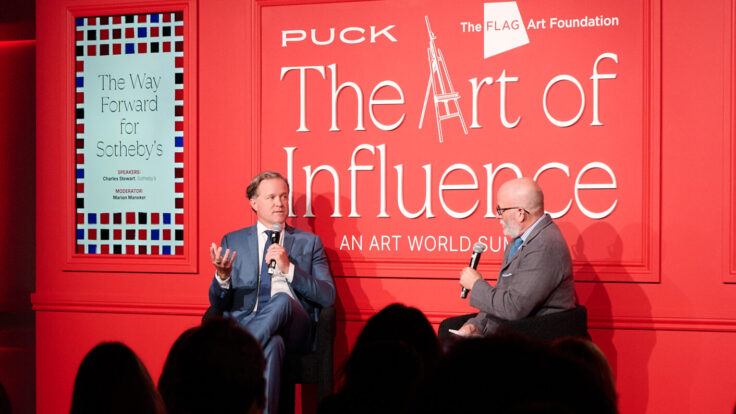
Welcome back to Wall Power. I’m Marion Maneker.
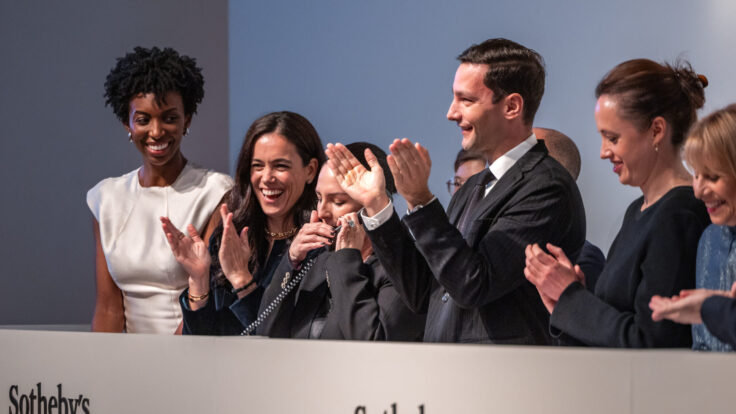
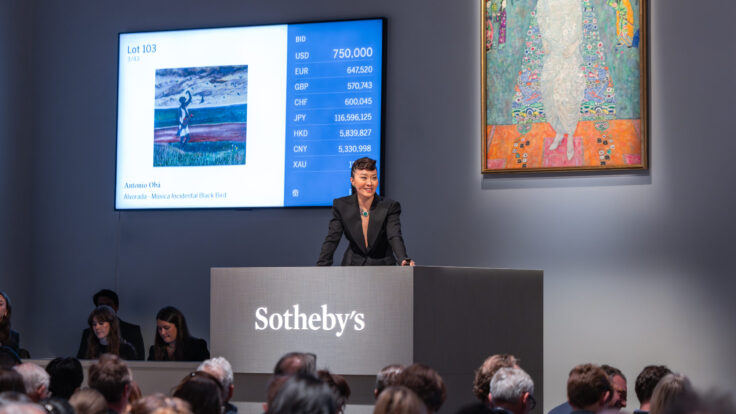
It has begun. The May art fair and auction season has officially commenced in New York City, and there’s a pervading sense of optimism as financial markets quiet down and a lot of good art is on offer. The previews look good, especially Sotheby’s. It all feels a bit like the first episode of a great serialized drama that everyone will be talking about by episode three. With that in mind, and recognizing that, yes, today is May the Fourth (sorry), I thought I would catch us all up on George Lucas’s long-standing dream of building a museum of narrative art in Los Angeles.
Also, a reminder: I’ll be moderating a panel at the Independent art fair on May 9, in conversation with Lucy Mitchell-Innes, Charles Moffett, Kendra Jayne Patrick, and Chris Sharp about what it’s like to be a downtown dealer these days. Use the code PUCK for a 20 percent discount on tickets.
|
|
|
|
A MESSAGE FROM OUR SPONSOR
|
A new campaign starring Julia Garner celebrates the House’s storied silk scarves and their enduring legacy within the House’s design codes.
DISCOVER MORE
|
|
|
 |
Julie Brener Davich |
|
|
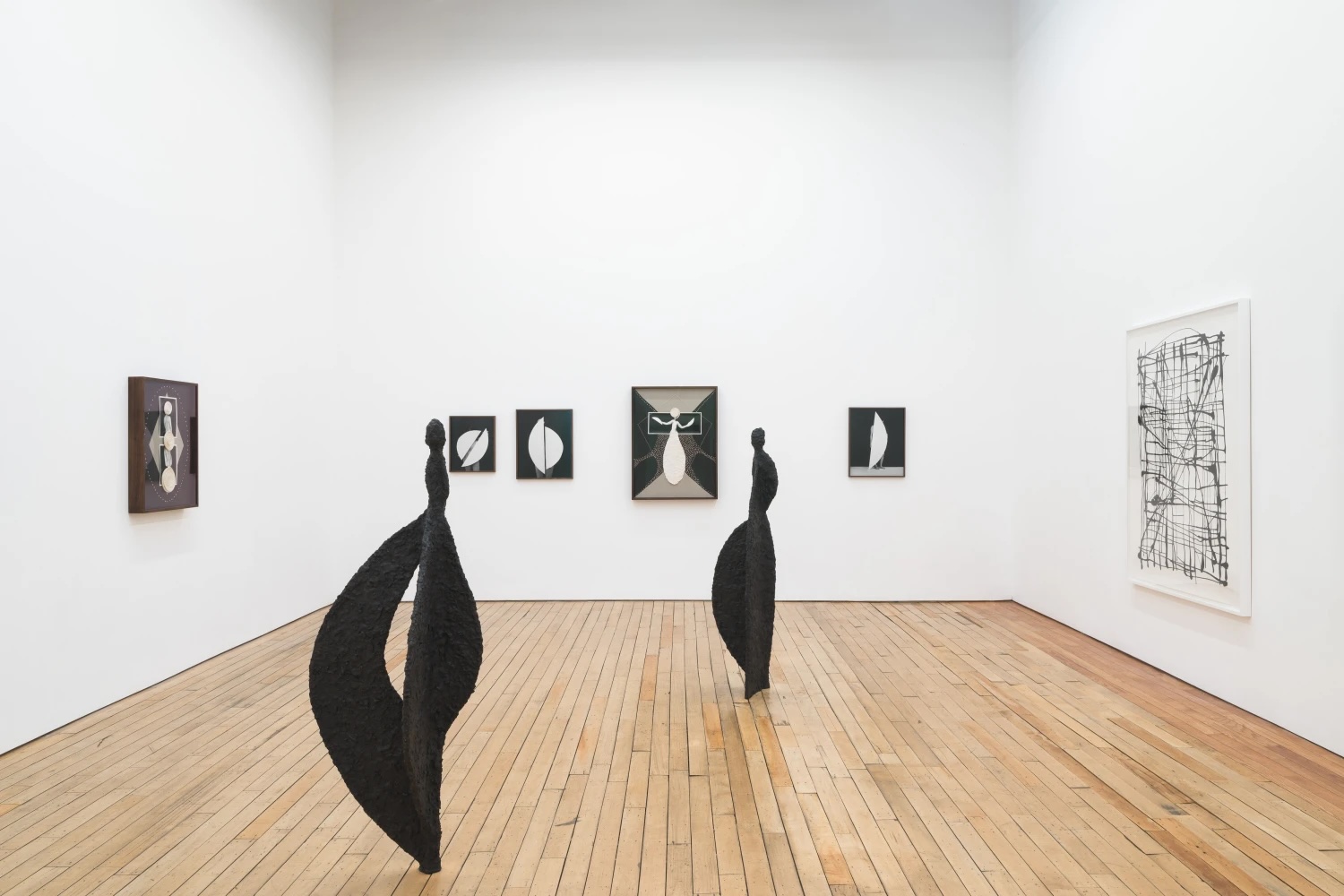
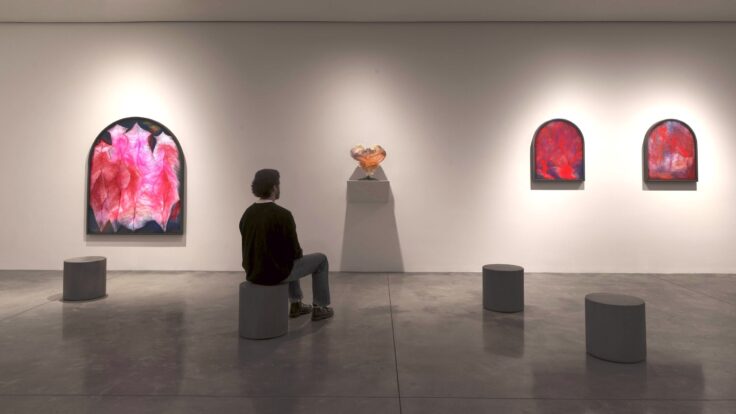
Sheree Hovsepian, installation view of Figure Ground, Uffner & Liu gallery, New York. Photo: Courtesy of Uffner & Liu
|
Over the past couple weeks, Sheree Hovsepian has covered a lot of ground in New York. There she was at the opening celebrations for her husband Rashid Johnson’s retrospective at the Guggenheim. Then, she was back at the museum on Thursday for a party honoring Cultured magazine’s Cult100 list, which included Johnson. And all the while she’s been finalizing arrangements in her Gramercy studio for her second solo exhibition at Uffner & Liu gallery in SoHo, which opened last night.
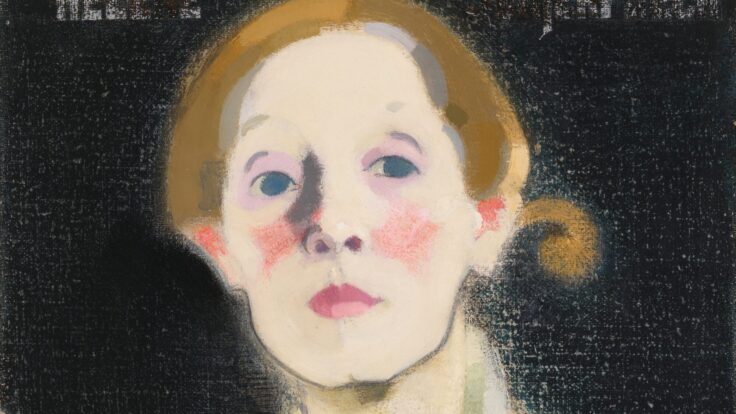
Hovsepian broke onto the international art stage with her figural mixed media collages at the 2022 Venice Biennale, which focused on female surrealists. The works combine photographs, crescent-shaped ceramic tiles, and string set against a black velvet background in walnut wood box frames. Though not strictly a surrealist, Hovsepian counts Man Ray and Hans Bellmer as influences. Under her direction, a photograph of a lily becomes an arm, and a crescent-shaped tile becomes a torso. “Once you know my work, you see the body parts,” she told me when I visited her studio last week.
Hovsepian’s collages speak a new formal language that is at once timely and prescient. She tackles issues of identity and representation with a freshness that is hard to pull off. Her new exhibition, on view through June 21, continues that conversation—spanning from drawings to photographs to mixed-media collages to bronzes. The Iran-born Hovsepian was raised in Ohio, where she did not feel like she fit in. She went on to receive her MFA in photography at the School of the Art Institute of Chicago. Her art, she says, is about “archiving my presence.” The model in all her photographs is her sister, who serves as a stand-in for the artist. The subtly figural bronzes stand level with her petite height, and bring her crescent motif into three dimensions, as if they are dancers twirling through space. (Hovsepian herself was in a West African dance troupe in college.) Being anchored into the floor gives them a lightness.
Hovsepian’s new mixed-media collages have evolved from the ones she showed at the Biennale: They are still figural, and still made from the same components of ceramic, string, and photographs, but they are more organic. The backgrounds are now black paint on linen, instead of black velvet—commonly used by photographers to achieve the blackest black—and the ceramic crescents have morphed into irregular forms she calls “skirts” and “swirls.” She’s also painted in dots, reminiscent of aboriginal artworks, in a fleshy pink “almost color,” as she described it. It’s the same color she painted the walls of her womb-like exhibition space at the Venice Giardini. Some of the pieces, priced from $6,000 to $85,000, have already sold.
Hovsepian’s works are in the collections of the Art Institute of Chicago, the Studio Museum, and the Guggenheim. She has previously shown with dealers in Chicago, Brooklyn, and East Hampton, among other cities. Rachel Uffner, who helped launch the careers of Shara Hughes, Hilary Pecis, and Sam Moyer, is her first gallerist in Manhattan. The 17-year-old gallery is entering a new era, adding 25-year-old Lucy Liu as a partner to expand their reach into Asia. Next up on Hovsepian’s busy agenda is the release of her jewelry collaboration with Sidney Garber inspired by her ink drawings.
|
The Buddha’s Righteous Gemstones
|
|
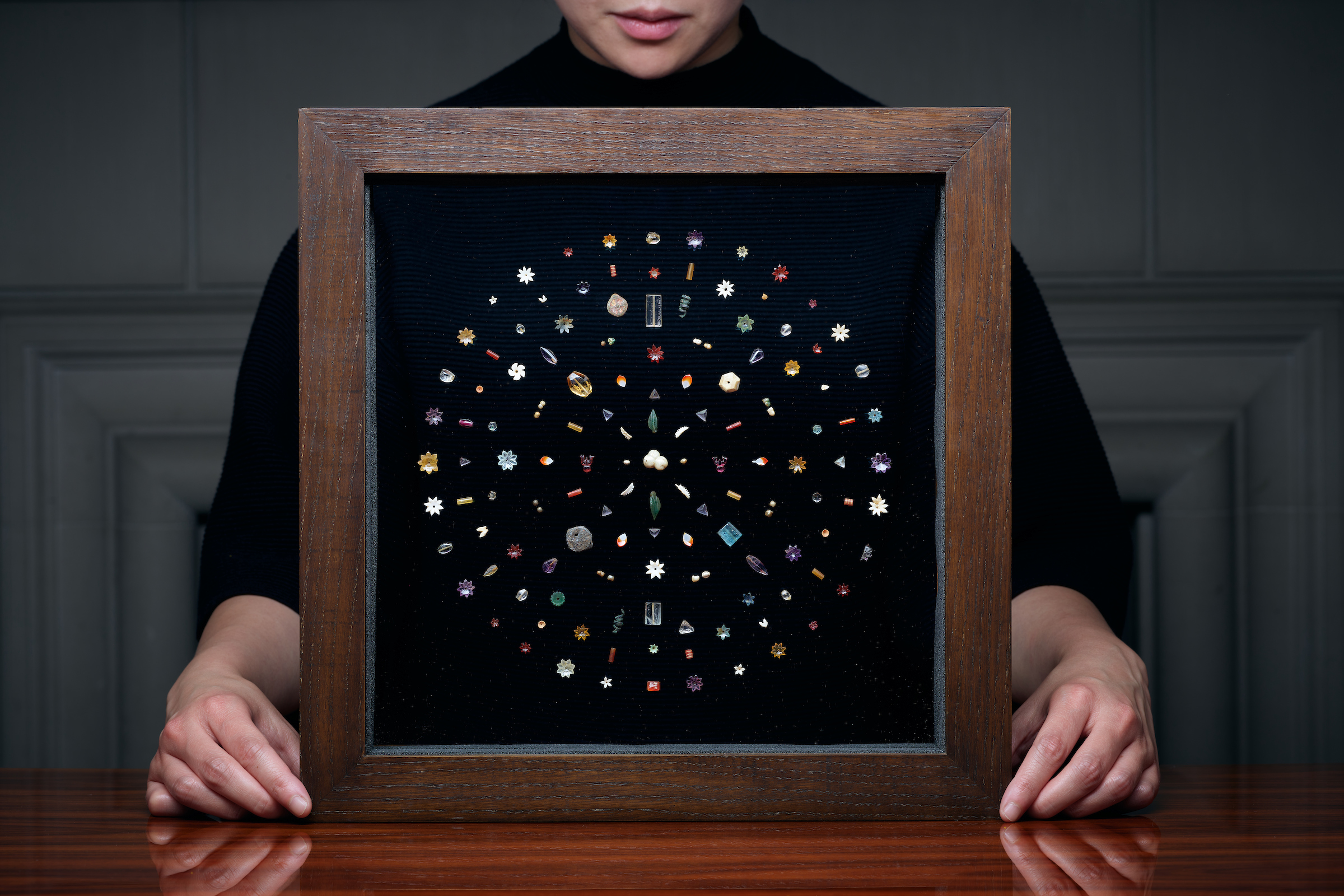
The Piprahwa Gems of the Historical Buddha, Mauryan Empire, Ashokan era, circa 240-200 B.C.E. Photo: Courtesy of Sotheby’s
|
“These are very powerful objects,” said John Guy, a curator of Southeast Asian art at the Met, referring to the gem relics of the historical Buddha, “and for those deeply engaged with Buddhism, extremely holy objects.” The collection of small gemstones, pearls, rock crystals, shells, silver, gold, and the like was buried more than 2,000 years ago with the ashes of Siddhartha Gautama, the founder of Buddhism. They were offerings from his devotees, whom he’d instructed before he died to collect and enshrine his remains in a stupa, or burial mound. Because the gems came into contact with the Buddha’s ashes, they are now considered sacred. Those up for sale in a single-lot auction at Sotheby’s Hong Kong this Wednesday are expected to set a world record for Buddhist art.
The relics were consigned to Sotheby’s by the descendants of Englishman William Caxton Peppé, who excavated the stupa in northern India in 1898. Peppé and his team unearthed about 1,800 relics—called “contact relics” because they were in reliquary urns along with cremated ashes and bones—in Piprahwa, which is believed to be the historical Buddha’s homeland. Peppé was permitted to keep 331 gem relics that were considered duplicates, or about one-fifth of the total discovered. The rest were given to the Indian Museum in Kolkata.
Peppé’s descendants were committed to sharing the relics with the public. For the past six years, the gems have toured museums in Zurich, Singapore, Seoul, and New York. In summer 2023, the Metropolitan Museum of Art opened an exhibition, Tree & Serpent, of early Buddhist art in India. The heart of the exhibition was the Piprahwa gem relics.
“Nothing of this caliber has ever been offered,” said a Sotheby’s spokesperson. In 2013, the auction house sold a Yongle-period gilt-bronze figure of a seated Buddha for $30.5 million. And in 2018, Sotheby’s set a world auction record for a Buddhist manuscript, at $30.4 million.
|
|
|
|
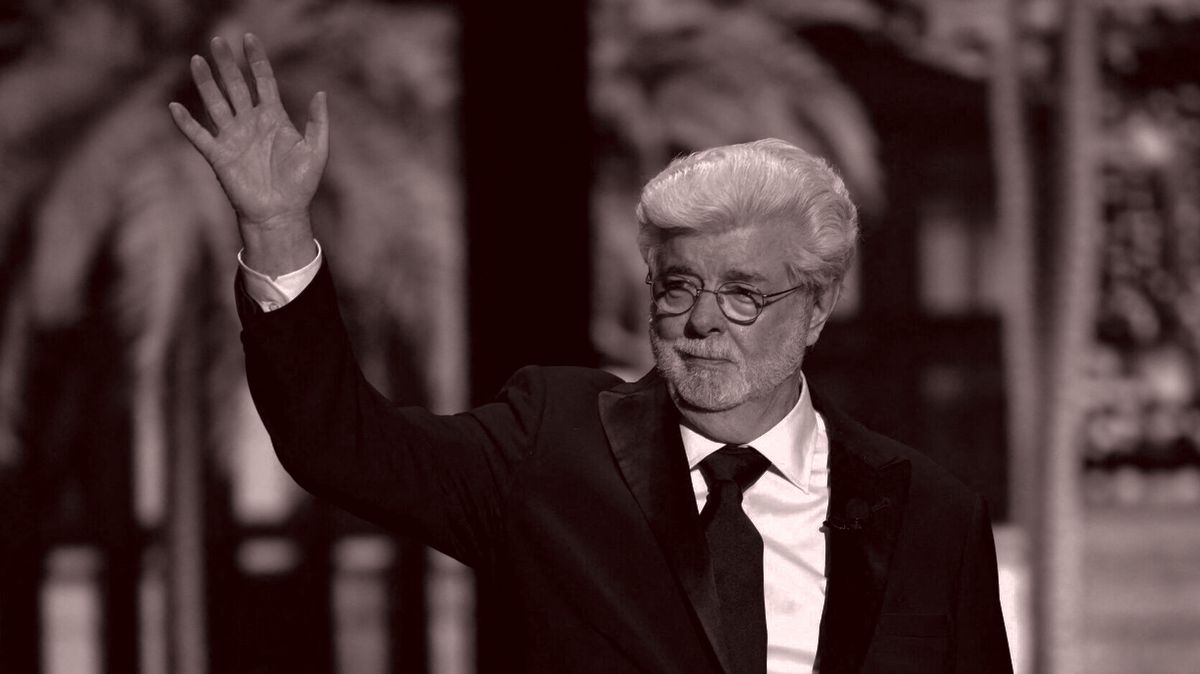
For more than 15 years, George Lucas has been quietly building a museum of narrative art, whatever that is. What the museum seems to lack in cohesion and transparency, it makes up for in ego, with its founder’s ultimate mission being to put his movies on par with other art-historical masterpieces.
|
|
|
|
You could call it a bit of a Jedi mind trick: Earlier this year, George Lucas was able to fire the director and C.E.O. of his long-delayed and ill-defined Los Angeles museum project without causing much of a ripple. Although, on some level, this latest setback was hardly a surprise development for the legendary filmmaker’s decade-plus, $1.5 billion, self-funded boondoggle. After more than five years and three delayed openings, Sandra Jackson-Dumont was quietly thanked for her service and replaced by an interim C.E.O.—former Paramount Pictures and 20th Century Fox C.E.O. Jim Gianopulos, of all people—to oversee the completion of the building. But establishing the curatorial vision for the Lucas Museum of Narrative Art will fall to Lucas himself.
|
|
|
|
A MESSAGE FROM OUR SPONSOR
|
A new campaign starring Julia Garner celebrates the House’s storied silk scarves and their enduring legacy within the House’s design codes.
DISCOVER MORE
|
|
|
|
The circle of trust regarding the museum, its curatorial vision, and the ultimate goal of this gargantuan project is small. The board of trustees is led by Lucas and his wife, Mellody Hobson, the investor and president of Lucas’s Skywalker Holdings. Trustees include a few worthies, like Michael Govan, who runs LACMA; Cesar Conde, chairman of NBCUniversal News Group; and the former heads of Northwestern University, Chicago’s Field Museum, and the U.S. Department of Education. Filmmakers Guillermo del Toro and Steven Spielberg round out the team, along with public relations honcho Matthew Yale.
Creating a museum is always a massive undertaking, of course, but here the enigmas abound—particularly around the definition of “narrative art.” According to early articles on the museum, Lucas has half a million images and objects from the making of the Star Wars prequels alone. (Imagine his collection from the original trilogy…) And per the museum’s P.R. team, his and Hobson’s prolific art holdings also span from “Egypt in 2200 BCE” to “Northern European painting, contemporary African sculpture, Japanese ukiyo-e prints, street murals, photography, comic art, book and magazine illustrations, and the arts of filmmaking.” That’s a lot of art—a lot of very different art—for a museum that doesn’t claim to be encyclopedic, or have a scholarly mission.
It’s hard not to have sympathy for Lucas. He seems to have gotten himself in over his head with this project. Before a recent trip to Los Angeles, I got in touch with the Lucas Museum’s communications team hoping I could speak to the collector about why his vision of a museum has been so much harder to execute than any of his phenomenally successful film projects. Not surprisingly, I was told that Lucas wasn’t available.
|
|
Finding a home for the museum, for starters, was a picaresque worthy of one of Lucas’s own scripts. In 2010, the filmmaker approached San Francisco’s Presidio about building a museum on what had been Crissy Field. Two years later, the trust that operates the park set guidelines for proposals to develop the site. Lucas’s proposal was one of the finalists, but it didn’t fit within the guidelines. Instead of modifying his proposal, he launched a campaign that the San Francisco Chronicle’s urban design critic John King summarized as, “You should bend the rules and let me build it, because I’m going to pay for it, and I’m George Lucas.”
Lucas and his wife then looked to Chicago—Hobson, who was born and raised there, was close to then-mayor Rahm Emanuel—but a local preservationist group mounted a legal challenge, partly due to the size of the proposed structure. Fittingly, or at least cinematically, Los Angeles came to the rescue when former Mayor Eric Garcetti offered a site in Exposition Park: an 11-acre parking lot that used to be the prime tailgating location for USC football games.
|
|
|
The Lucas Museum broke ground in 2018 on a building designed by Ma Yansong, who’s known for the striking Harbin Opera House in China and the curved “ Marilyn Monroe” residential towers in Ontario. The pandemic caused delays, of course, but so did Ma’s extensive use of an extremely lightweight construction material called Geofoam. When pressed on why the museum was falling behind schedule, Jackson-Dumont was forward-looking, emphasizing that the museum is a “200-year proposition.”
Just what that proposition is remains the museum’s biggest question mark. Lucas’s definition of narrative art has seemed to shift over the years. At first, after the director had begun collecting works by Norman Rockwell and Maxfield Parrish, it appeared that his idea of narrative art was centered on illustration. But then Lucas and Hobson started buying a lot more art. The collection includes works by Jessie Willcox Smith and N. C. Wyeth; comic artists like Winsor McCay, Frank Frazetta, George Herriman, Jack Kirby, and Robert Crumb; muralists such as Judith F. Baca and Diego Rivera; as well as other artists like Frida Kahlo, Jacob Lawrence, Charles White, Utagawa Kuniyoshi, and Robert Colescott.
Lucas isn’t the first incredibly rich guy to build a museum dedicated to his own idiosyncratic ideas about art. Think of Albert Barnes, Norton Simon, and even Henry Clay Frick. There may come a time, generations from now, when Lucas is thought of in those terms. But until we see the finished project, it is hard to understand how he hopes to bring all of this together into something more than an attempt to elevate his filmmaking to the same level as the artists in his collection.
Additional research and reporting by Maya Tribbitt.
|
|
|
|
The ultimate fashion industry bible, offering incisive reportage on all aspects of the business and its biggest players. Anchored by preeminent fashion journalist Lauren Sherman, Line Sheet also features veteran reporter Rachel Strugatz, who delivers unparalleled intel on what’s happening in the beauty industry, and Sarah Shapiro, a longtime retail strategist who writes about e-commerce, brick-and-mortar, D.T.C., and more.
|
|
|
|
Puck founding partner Matt Belloni takes you inside the business of Hollywood, using exclusive reporting and insight to explain the backstories on everything from Marvel movies to the streaming wars.
|
|
|
Need help? Review our FAQ page or contact us for assistance. For brand partnerships, email ads@puck.news.
You received this email because you signed up to receive emails from Puck, or as part of your Puck account associated with . To stop receiving this newsletter and/or manage all your email preferences, click here.
|
|
Puck is published by Heat Media LLC. 107 Greenwich St, New York, NY 10006
|
|
|
|