Welcome back to Wall Power. I’m Marion Maneker.
London Gallery
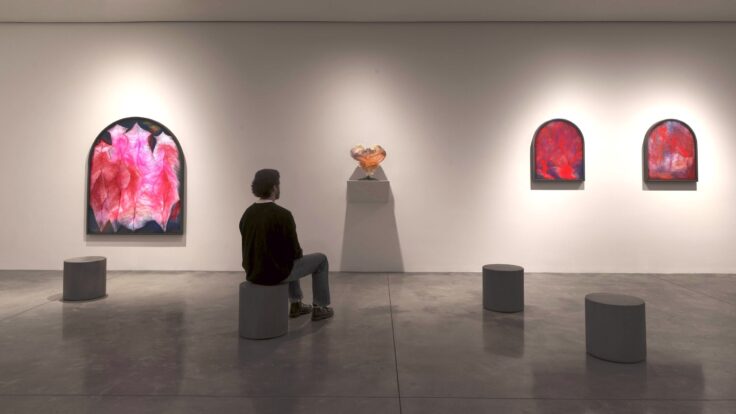
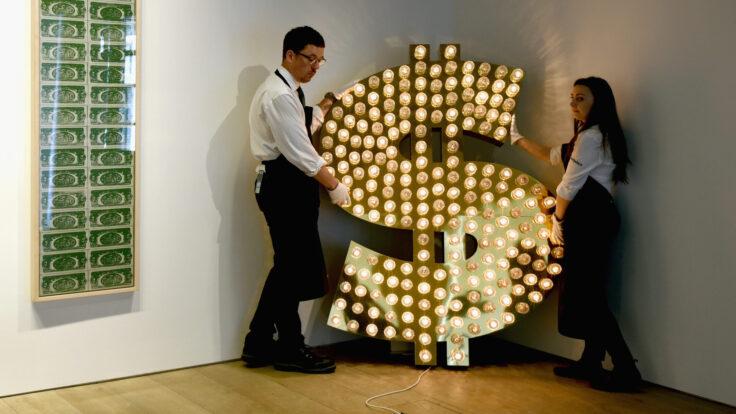
Weekend is coming up this Friday. With 122 participating galleries all over the city, the event is like an art fair—but you can also get into the actual galleries and see the neighborhoods that surround them. For tonight, I spoke to the organizers, Sarah Rustin and Jeremy Epstein, and I’ll share their thoughts with you below.
Up top, sad news about Jerry Gogosian, and notes on the uprising on Grub Street’s Instagram page over the mean
Marcel review. To wrap up, I read the Vogue walk-through of the Lucas Museum of Narrative Art so you don’t have to.
Also mentioned in this issue: Matthew Schneier, Marina Rust, Shoshanna Gruss, Rodman Primack, Adam Sheffer, Joan Mitchell, David Geffen, Sally Tallant, Missy
Flynn, Giles Deacon, George Lucas, Mellody Hobson, Nathan Heller, and more. |
|
|
|
A MESSAGE FROM OUR SPONSOR |
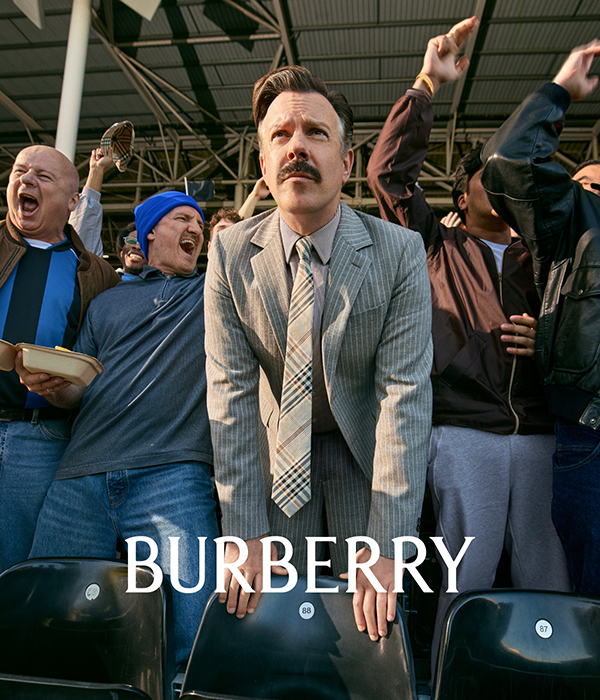
Inspired by football fandom and Britain’s love of the beautiful game, the campaign captures the anticipation and camaraderie
of match day – come rain or shine – with an all-star cast of familiar faces.
Learn More |
|
|
|
-
Hilde Lynn Helphenstein dies at 40: If you have not already heard—and how could you not?—Hilde Lynn Helphenstein was found dead in her hotel room on Sunday. Helphenstein was best known as an influencer, @JerryGogosian, who created memes that punctured the pretensions of the art world, its sense of
entitlement, and the behavior of its wealthy denizens. There has been an outpouring of tributes to her on Instagram, including from Simon de Pury, Jeremy
Larner, and, of course, Jerry Saltz.
According to Globo, which first reported the news,
Helphenstein had been in São Paulo for three weeks, staying at the Rosewood. On Saturday, some patrons of the hotel’s restaurant made a complaint that Helphenstein and her companions were “visibly intoxicated and behaving boisterously”—including, per Globo’s quotes from the police report, engaging in “public displays of intimacy” that “escalated into a situation involving partial nudity.” On Sunday, a man who was identified as Helphenstein’s plastic surgeon was unable to reach her by cellphone.
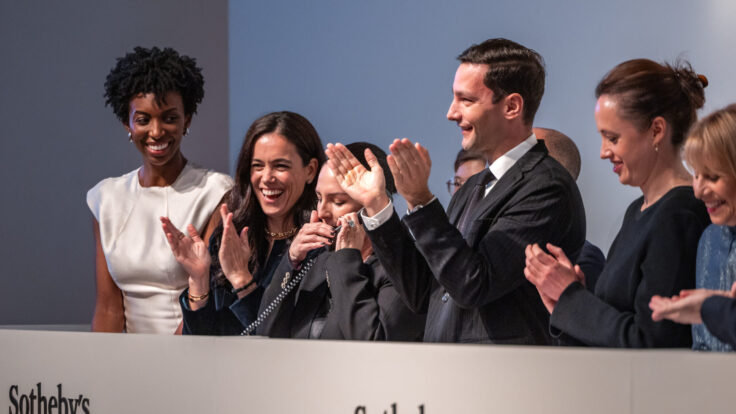
Hotel staff entered Helphenstein’s room and discovered her body. - The mean Marcel review revolt: Matthew Schneier’s review of Marcel, the new restaurant at Sotheby’s, has caused an unexpected backlash on Instagram as art-world and society people take to the comments to express
their delight at having eaten there. In response to Schneier’s verdict that the food is “dressy but unexciting, meekly seasoned and reticent except when it is passionately oversalted,” Marina Rust wrote, “Strongly disagree.” Shoshanna Gruss retorted, “Anyone say Jalouse?!” Decorator and design dealer Rodman Primack, who is based in Mexico City, couldn’t “imagine a place I would rather be in the
city.” Adam Sheffer, the former head of the private museum Magazzino and a dealer, said, “I must voice my dissent here. … Among the best escargot I’ve ever had.”
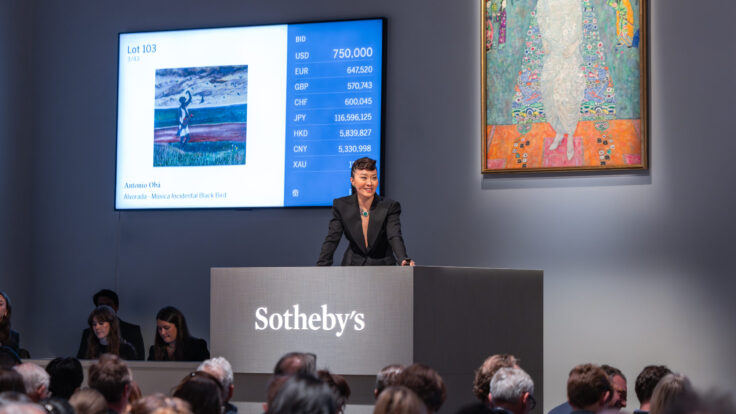
The whole contretemps is funny to anyone who has witnessed the periodic spleen-venting of art critics who attend auctions and then write about them in the huffiest way possible. Add the fact that the building once housed three different museums’ collections and it isn’t a surprise to read the self-righteousness
of Schneier’s dining companions. (He quotes one painter he brought as hissing that they hoped the built-ins were removable, speaking “for the contingent that throws its lot in with the museums over the auction houses and the essential over the redecorated.”) The art-as-religion thing makes eating at Marcel like having dinner in a deconsecrated church for them.
But Schneier is actually quite complimentary about every other aspect of the restaurant that proprietors Robyn
and Stephen Alesch care about: He was impressed by the art, like the great Joan Mitchell on loan, and by the famous guests like David Geffen. He positively quoted a dinner companion, who happened to be an interior designer, about the tableware, glassware, and lighting. He didn’t even take a real swipe at the merchandising, which is a centerpiece of the Alesches’ approach and Sotheby’s ambitions.
I haven’t eaten at Marcel, so I cannot
speak to the food. Schneier points to the que voulez-vous section of the menu as a “list of proteins that can be cooked in whichever manner customers request,” which he says effectively negates the expertise of the chef. It does. But, of course, that’s not what rich people want from a restaurant—or the clubhouse Sotheby’s wants to create. They want a place that will cater to their quirky dietary requirements, fads, or fixations. So it seems churlish (at worst) and clueless (at best) to
make the food the focus of a restaurant that’s as much about setting, scene, and socializing as it is about food—which may better explain why the natives rose up on Instagram.
|
|
|
|
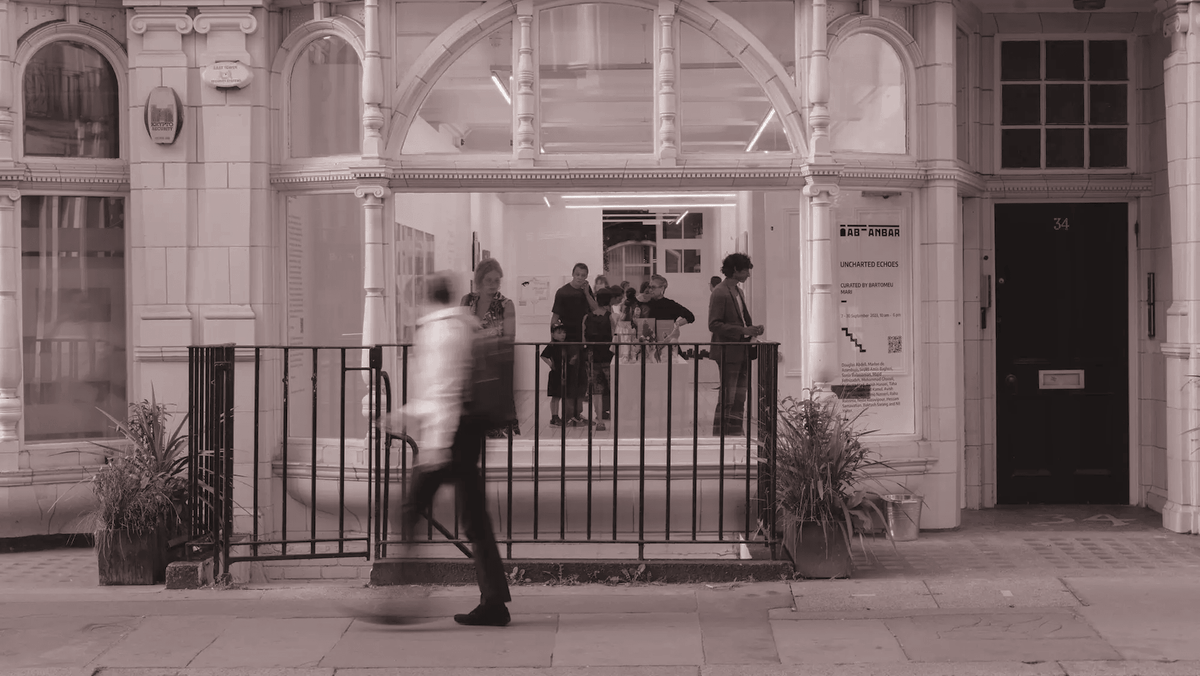
In its sixth year, London Gallery Weekend isn’t just supporting nascent
galleries and luring 50,000 art enthusiasts to town. It’s fortifying London’s place as a major art city. |
|
|
|
Walking around Frieze this year, I got a note from art-world publicist Sarah
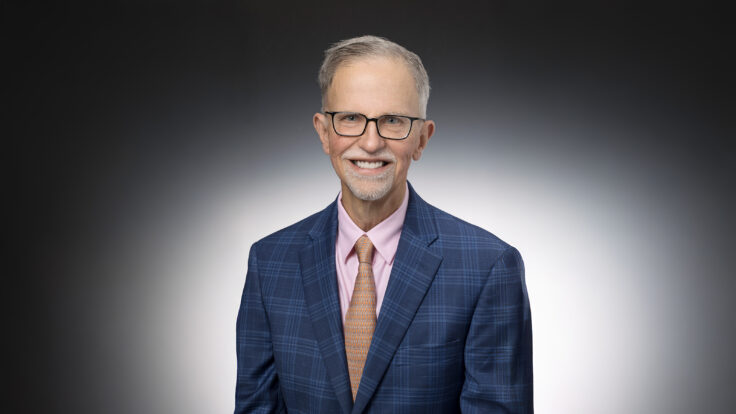
Rustin asking to meet. So we stole half an hour in the Shed’s top-floor lounge, where she pitched me on London Gallery Weekend, which runs from Friday, June 5, to Sunday, June 7, and incorporates 122 galleries across a range of neighborhoods that dot the city. Rustin founded this event along with Jeremy Epstein, one of the two principals at the London gallery Edel Assanti, and one advantage of having a seasoned publicist at the top of an organization is that the
P.R. pitch is laser-focused, fully formed, and heartfelt. |
|
|
|
A MESSAGE FROM OUR SPONSOR |
Inspired by football fandom and Britain’s love of the beautiful game, the campaign captures the anticipation and camaraderie
of match day – come rain or shine – with an all-star cast of familiar faces.
Learn More |
|
|
|
To help break the sheer number and breadth of galleries into more-manageable chunks for the 50,000
art-curious folks who attend each year, LGW tries to focus attention on different parts of the city each day while also asking that all galleries remain open during the set times on all three days. “We are proactively creating the means of engagement,” Epstein told me on a recent call with Rustin, in an effort to subtly steer the many who “come to London who think they know the geography of the London art infrastructure.” Epstein and Rustin want them to also discover the smaller communities of
galleries, artists, and collectors. “It’s a decentralized geography,” Epstein said. “That’s what we’re trying to tackle by finding ways to push people into places that they’re not used to going.”
As such, visitors can either choose their own adventure or follow any of nine preplanned gallery routes presented by a range of notable individuals—an author, a fashion house founder, a songwriter, an architect—depending on their affinities or interests. Curator Sally Tallant,
who will become the director of the Hayward Gallery in July, sends you from Herald St and The Approach in Bethnal Green to Emalin and Hollybush Gardens in Clerkenwell, then to Massimo de Carlo, Sprüth Magers, and Grimm in Mayfair. Entrepreneur Missy Flynn does a near
full loop of London from The Sunday Painter, Cecilia Brunson’s Projects, and Kristin Hjellegjerde Gallery in the south to Public Gallery and Nicoletti in the east, then back to Larkin Durey in central London. And creative director Giles Deacon keeps it tight in Mayfair,
tracing a route from David Zwirner to Waddington Custot, Alison Jacques, Hauser + Wirth, and General Assembly; over to Sadie Coles HQ and Pilar Corrias on Saville Row; then finishing at White Cube’s Mason’s Yard location. |
When we met, Rustin told me that LGW grew out of pandemic-era closures and a spirit of
cooperation among London’s galleries. During that challenging time, small galleries discovered they could help one another, share knowledge, and grow together. This same spirit has been quite useful during the past three years, as the narrative of the art market has moved away from primary dealers, and even London, as the main characters of the art market.
Rustin is particularly concerned with the broader story being told about London’s gallery ecosystem and wants to call attention to
“how much the landscape in London has changed over the last few years.” She sees a “richness and variety” in the gallery community “that is flourishing despite challenging circumstances.” And she points out that more gallery spaces are opening than closing in London these days, despite the high-profile failures of Simon Lee in 2024 and Stephen Friedman this year.
Now in its sixth year, LGW has begun to act more like an art fair than a gallery weekend. The organization sponsors an “under
40” acquisitions fund for the Arts Council Collection, and has supporting funds to bring curators from around the U.K. and the world to the weekend. It is also helping smaller, more inexperienced galleries stride up the learning curve by tapping into shared knowledge and experience of museums and curators. |
|
|
|
But LGW’s real goal is to reestablish London’s place in the art world. The city has some
competitive advantages, Epstein told me: a combination of cheap real estate, especially outside of Mayfair; low wage demands from staff (I’m sure they love to hear that); and the presence of six top art schools in the city that feed an ever-renewing supply of talent.
That’s not just talent at making art. Many recent graduates will discover that even though they might not have something original to say as artists, they still want to make a career in the art world. Some of them will think
about opening galleries. And that is precisely what Rustin wants LGW’s visitors to discover. “The narrative they’ve been reading,” she told me on our call, “isn’t conveying what’s going on here.” |
George Lucas and Mellody Hobson’s Lucas Museum of Narrative Art
won’t open until September, but the publicity onslaught commenced on Friday, with a Vogue.com feature by Nathan Heller. The museum’s path to realization has been
convoluted, spanning several cities and multiple staff changes. No one would expect a heavily P.R.-managed story, no matter how well written, to be particularly revelatory, but somehow this one seems to speak volumes just by paying attention.
First and foremost, Heller locates the heart of Lucas’s career and aesthetic approach in his discovery of the universal narratives that underlie all human communities and buttress the sci-fi/Western opera Star Wars franchise. Ostensibly, the
museum is built around these narratives, and one of Lucas’s goals appears to be equalizing the perception of film, illustration, and so-called fine art as mediums for art making. From his quotes and Heller’s descriptions, Lucas seems to be motivated by some level of frustration or resentment at art historians. Or, as Heller puts it, “It can be surprising to find the founder of one of the nation’s largest, most prosperous popular-creative empires engaged in what he perceives to be an underdog
battle against a subset of humanities academics.”
It’s hard to know whether his animosity was forged in battles with academics on the long trek toward building and programming the museum, or simply a resentment that his favored form of art is not sufficiently esteemed. Heller does quote Lucas saying this: “I’ve worked with hundreds of illustrators and they never get credit for anything. They’re not going to end up in museums, because the art world is elitist and illustrators are seen as
lowly.” More breadcrumbs of Lucas’s frustration come by way of Hobson’s observation that “George wanted the artists and the art to be in an important building.” Also: “If the building looks important, people will understand that art must be important too.”
Meanwhile, the rest of us are having trouble wrapping our heads around whether the Lucas Museum is an actual institution with a definable and recognizable mission that will resonate with visitors and justify the
time, expense, and space devoted to it. The other options, of course, are that it is a Star Wars museum, as much of the public probably wants; an ego project for Lucas himself; or simply a pumped-up version of a retired couple throwing themselves into building their dream house—only to sell it at a loss a few years later. |
That’s more than enough for today. I’m already sorting data from the May sales for tomorrow’s Inner
Circle issue. By the way, if you’re not a member of the Inner Circle, you should upgrade here. The content’s great, and you now also get access to Air Mail as a bonus. Give it a try.
’Til tomorrow,
M |
|
|
|
Puck founding partner Matt Belloni takes you inside the business of Hollywood, using exclusive reporting and insight
to explain the backstories on everything from Marvel movies to the streaming wars. |
|
|
|
Unique and privileged insight into the private conversations taking place inside boardrooms and corner offices up and
down Wall Street, relayed by best-selling author, journalist, and former M&A senior banker William D. Cohan. |
|
|
|
Need help? Review our FAQ page or contact us for assistance. For brand partnerships, email ads@puck.news. You received this email
because you signed up to receive emails from Puck, or as part of your Puck account associated with {{customer.email}}. To stop receiving this newsletter and/or manage all your email preferences, click here. |
Puck is published by Heat Media LLC. 107 Greenwich St., New York, NY 10006 |
|
|
|
|