{{ 'now' | timezone: 'America/New_York' | date: '%b %d, %Y' }}
|
|
|
Hi, and welcome back to Line Sheet. We’re in the home stretch, which obviously means someone
is going to die or something is going to get sold—or go bankrupt—before 2026.
Today, though, I’m focused on the present. Up top, lots of “What’s going on with…” notes: some Vogue exits, the latest on Saks Global, and a look at last week’s Oscar de la Renta show in the Dominican Republic. And sorry, I still don’t know why Louis Vuitton U.S. comms head Kristine Westerby left the company. I heard months ago that she was moving to another gig within the
group, but now I’m not sure. Some of you love her, some of you don’t, but all of you want her to have a job. Keep me updated!
Anyway, I know you came here for the big Villain of the Year reveal. As you’ll see, there were easier, more obvious options. But everything kept leading me back to this one.
Also, we’ve got a lot of great episodes of Fashion People coming up. Tomorrow stars “Sweet Baby”
Jamie Mizrahi, who styles everyone from Adele and Mia Goth to Pedro Pascal and Jeremy Allen White. We discuss her recent string of gigs, the sartorial allure of Zoë Kravitz and Harry Styles’s coupledom, the art of wearing your mom’s vintage dress ( à la
Apple Martin, Kaia Gerber, and Lily-Rose Depp), and the fashion in everyone’s favorite Christmas movie, Eyes Wide Shut. Listen here and here.
Finally, a festive Shoppies
suggestion: These ruby satin, high-throat pumps from Emme Parsons resemble what I dreamed of wearing as a grown up when I was in grade school. It took 35 years, but I seem to have manifested them.
Mentioned in this issue: Bryan Yambao, Delphine Arnault, Marc Metrick, Saks Global, Richard Baker, Gary
Wassner, the Kardashians, Marc Jacobs, Vogue, Mark Holgate, Dior, Jonathan Anderson, Celine, Michael Rider, Alessandro Michele, Gucci, Oscar de la Renta, Louis Vuitton, and many more…
|
Three Things You
Should Know…
|
-
Some end-of-year Vogue exits: Even though no one is talking about it, everyone seems to know that Mark Holgate, American Vogue’s much-loved, longtime fashion features director, is leaving the brand and moving back to the U.K. Who will write about Erdem now? Anyway, Mark will still contribute in some capacity. The bigger news, though, is that Alastair McKimm seems to be totally done after a year and change as French Vogue’s “fashion and
image director at large”—yes, that was a real title.It’s too bad: McKimm’s covers and editorials have been great, and I thought that Condé Nast was aiming to replicate his successful partnership with local content head Claire Thomson-Jonville across titles—similar to how Carlos Nazario has been paired with Chloe Malle at American Vogue. But I’ve also heard there’s now so much cross-region syndication that much of what lands on
the covers of international Vogues may end up being leftovers from the mothership. Not fun for a “fashion and image director at large.” Reps for Vogue had no comment.
|
|
|
A MESSAGE FROM OUR SPONSOR
|
Fashion's full-funnel future is here 🚀
Amazon Ads is revolutionizing fashion advertising with AI-powered full-funnel campaigns that launch themselves. Our AI-powered tools help you:
• Understand your brand and craft your story automatically
• Optimize across awareness, consideration, and
conversion in real-time
• Reach over 300M U.S. ad-supported audiences where they shop and stream
With 90% of fashion audiences already engaging with Amazon Ads, you're not just reaching customers. You're reaching customers ready to discover and buy.
LEARN MORE
|
|
|
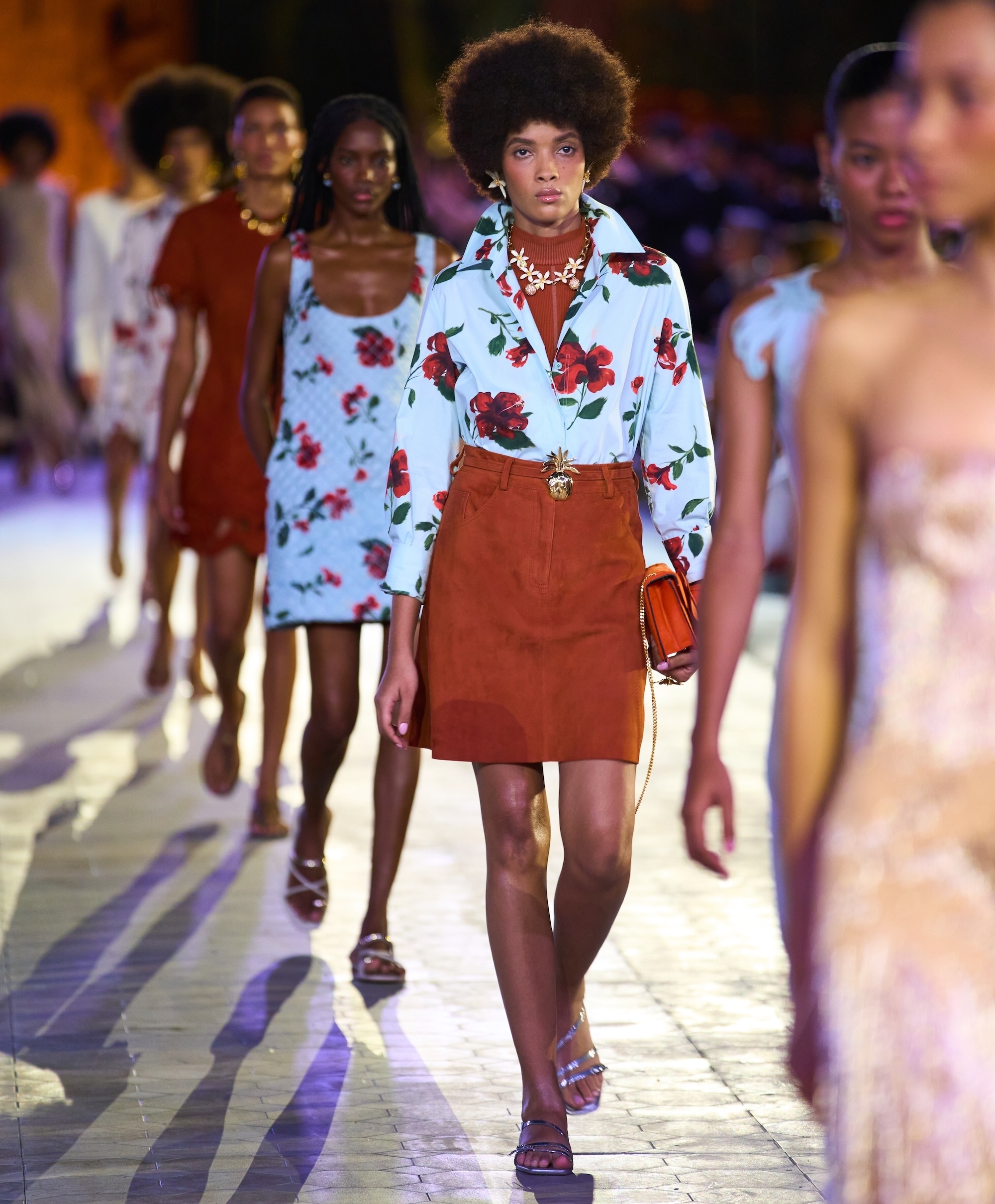
- The last dress brand standing: Last week, Vanessa Friedman had a nice write-up of the Oscar de la Renta show in the Dominican Republic, which marked the fashion house’s 60th year in business and also the final show for outgoing co-creative directors Laura Kim and Fernando Garcia. The pair were de la Renta’s true successors after his 2014 death, following a very brief, strange run by Peter Copping, and remained faithful to his vision for the brand, and therefore faithful to its longtime customers. (For the newbies, Kim designed dresses and sets she might wear without deviating from his color palette, silhouettes, or materials library. Perhaps there were more crop tops and quirky illustrations during her tenure, though.) The show was staged at the Fortaleza Ozama in Colonial City (the late designer’s birthplace), and featured an all-Dominican cast of 50 models, along with a performance by the Dominican National Symphony under the baton of José Antonio Molina. They played “A Mi Manera,” a song de la Renta loved to sing at dinner parties.
|
Photo: Courtesy of Oscar de la Renta
|
- In many ways, it was the ultimate expression of C.E.O. Alex Bolen’s anti-fashion-show fashion show strategy. The company invited 500 people—mostly clients, but also some retailers, along with friends of the house who happen to be influencers—and zero magazine editors. Rather than rely on an information filtration system that no longer works, Bolen would rather spend money by making money—wooing clients and dressing celebrities whom young people rely on for style and shopping
cues.Now that Kim and Garcia are leaving to focus on Monse, the brand they founded just before they got the Oscar gig a decade ago, succession remains an open question. Oscar, of course, is one of the last brands standing that makes the majority of its money selling clothes, not fragrance or accessories (although I do love the Oscar costume jewelry). Whoever is appointed will have to be comfortable executing Bolen’s ideas, while sprinkling in some of their own.
|
- What you need to know today about Saks Global: I’m hearing that Hilldun C.E.O. Gary Wassner is still advising clients to hold off on shipping to Saks Global, given that the group’s accounting department is on break this week. Saks also hired the turnaround and restructuring specialists at Berkeley Research Group “to address its inventory and cash-flow pressures,” according to Bloomberg. (I was able to independently confirm this.) Another Bloomberg report straight-up says that Saks Global is flat-out considering a Chapter 11 bankruptcy restructuring.For what it’s worth, Saks’ bonds are currently trading “flat,” as if they will not make the $120 million interest payment at the end of the month. I’m also told that Bergdorf Goodman president Tracy Margolies and fashion director Linda Fargo were in Los Angeles a few weeks back with their boss, Marc Metrick, who has stopped engaging with some vendors and employees that he normally talks to at least once a week, sometimes every day. Is there a world in which Bergdorf, the single-door jewel in the Saks Global crown, must expand its capacity as a part of some Hail Mary deal that group chairman Richard Baker may need to cook up to placate vendors? Who knows? But if you’re still shipping to Saks Global, call me! A rep for Saks Global had no comment.
|
And now, the grand reveal…
|
|
|
The demanding, annoying, and increasingly necessary “client”—from the desperate poseur
buying the Louis Vuitton money clip to the oil heiress dropping $500,000 on a custom couture look. Like entertainment, politics, and media, the fashion industry has been laid low by the depths of post-monoculture influencer economics.
|
|
|
Late last week, the influencer-editor Bryan Yambao, better known to his ~900,000 followers
as Bryanboy, sent me a playful D.M. on Instagram: “Am I fashion’s villain of the year?”
“You wish!” I joked. But then I started thinking about it…
Yambao, who got his start writing a travel diary on LiveJournal in the early 2000s, is a sycophant-critic hybrid. He has one of the most influential and ubiquitous social media presences in the industry, plus direct relationships with designers and industry executives who care about his perspective. But most importantly, he is a
client: Yambao regularly spends a fortune on head-to-toe looks from Hermès, Saint Laurent, etcetera. (Yes, there’s a Swedish software developer husband, but I’m sure Yambao does fine on his own, too.) And the industry increasingly relies on people like Yambao to buy things, lots of things, and then tell followers what they are buying, in order to perpetuate the spending cycle.
The Bryanboys of the world have followed a fairly simple trajectory. Beginning in the
late aughts, the industry started passing over traditional authorities for more pliant voices and hangers-on who could allow them to communicate more directly with their customer, sans a journalistic filter. You know what happened next, of course: The rise of influencer culture, which has upended media and politics, would eventually come for fashion. Provo housewives became powersellers; the Kardashians arrived; and people like Bryanboy, who once upon a time would have never
been permitted into a runway show, had platforms brimming with impactful, often facile opinions about the industry. Worse, after the post-Covid correction, the business needed them more than ever.
|
|
|
A MESSAGE FROM OUR SPONSOR
|
Fashion's full-funnel future is here 🚀
Amazon Ads is revolutionizing fashion advertising with AI-powered full-funnel campaigns that launch themselves. Our AI-powered tools help you:
• Understand your brand and craft your story automatically
• Optimize across awareness, consideration, and
conversion in real-time
• Reach over 300M U.S. ad-supported audiences where they shop and stream
With 90% of fashion audiences already engaging with Amazon Ads, you're not just reaching customers. You're reaching customers ready to discover and buy.
LEARN MORE
|
|
|
This was all well and good, or at least manageable, until Yambao and his peers started growing disillusioned
with various failings of the industry, and became increasingly vocal about it this year. There are plenty of factors at play here: a handful of less-than-stellar collections, sure, and an industry in a generally defensive crouch. At Dior, for instance, Delphine Arnault and Anderson have waxed on about “quality,” even though that should be a given in a $4,000 cotton dress. Luca de Meo is openly endeavoring a turnaround effort at Kering. Marc Jacobs
nearly sacrificed his brand to ABG. Meanwhile, fair or not, the Yambaos of the world helped elevate a collective client-side disenchantment that the industry couldn’t ignore.
For the past few months, I simply couldn’t escape a litany of client complaints of various levels of validity. I’ve received notes from Dior diehards who aver that they hated Jonathan Anderson’s Pre-Fall womenswear more than the debut. (Really? Okay.) There are the rage-filled
Chanel collectors who missed the whimsy of the previous regime. (My eyes are bulging.) This morning, a major client messaged me that Michael Rider’s fabulous first collection at Celine—probably the most universally well-received debut this fall—somehow didn’t look great in person. “The scarves are cute, the small leather goods are cute, but the key items are not as compelling,” this person said. And so, yes, Bryanboy, you and your ilk of engaged and enraged ornery clients are
the industry’s villains of the year.
|
The final quarter of 2025 should offer some clues about what’s to come in the new year, but the high-spending
customer revolt will affect more than the performance of a single quarter. Social media has made it much harder for designers and brands to generate bona fide, across-the-board hits, especially at multibrand retail—a challenge that has been exacerbated by the rise of the secondhand market, especially in the U.S., and the fact that Chinese customers became more sophisticated and less reflexively brand-conscious and spend-happy. Indeed, in the wake of the pandemic fluke, it’s clear that
the industry has changed for good: Sales at some of the biggest brands in the world plummeted as much as 40 percent from record highs; customers stopped going to Saks Fifth Avenue.
Perhaps the most instructive example of “what happened to fashion” is the career of Alessandro Michele, whose early designs as creative director of Gucci, in 2015, were a commercial phenomenon. Even those uninterested in Michele’s fancy dress-trunk wares probably still had a pair of
fur-lined loafers in their closet. Michele’s first few seasons at Valentino, however, have been a case study in the fraying brand-client dynamic. True, he’s had to navigate some well-documented personnel issues, but the ultimate challenge facing the brand is that so much has changed in the decade since he began his run at Gucci. His Spring/Summer 2026 collection, shown in October during Paris Fashion Week, was pretty phenomenal, reflecting the way real women are dressing—or want to dress. But
these days, prospective clients buy vintage Valentino online—and maybe Gucci from his era, too. With seemingly endless options, they also don’t want to be told what to do.
So, in retrospect, 2025 was the year that the client truly became a nightmare. But this dynamic also reflects a larger, often unspoken reality: Despite their desire to be ahead of the trends, fashion people are lemmings who will typically buy whatever bill of goods they are sold. Over the past few years, though,
customers have made it clear that they don’t want to be treated that way anymore, and the era of groupthink is ending. The industry is praying the clients will relent. But, of course, they won’t.
|
Retail royalty Nancy Pearlstein, best known for Relish, her shop in Georgetown, is retiring.
(Relish will remain open.) I love talking to Nancy, and occasionally arguing with her about the state of the industry. If you want to know more about her and Relish, her good friend Robin Givhan wrote an op-ed about the sad state of shopping and wove Nancy into the narrative. [NY Times]
Kering announced a “staged” acquisition of
Raselli Franco Group, a jewelry manufacturer. They’re buying 20 percent now, 100 percent by 2032. Makes sense. Boucheron and Pomellato are doing really well, and these companies are better off when they control the supply chain. [Inbox]
Etro has been on the market for a while, and has a new minority investor. The founding family is going to exit with this recent transaction. To be honest, I don’t really understand what this article says other than that. But as we all know, there is an
editing crisis in the media and this is but one example.
[ WWD]
Speaking of media crises, it’s worth reading my fantasy football teammate Dylan Byers’s Media State of the Union. [ Puck]
Gwyneth Paltrow has looked particularly great on the Marty Supreme press tour . My faves have been the black Valentino dress she wore for
the New York premiere and the Valentino suit she wore on Good Morning America.
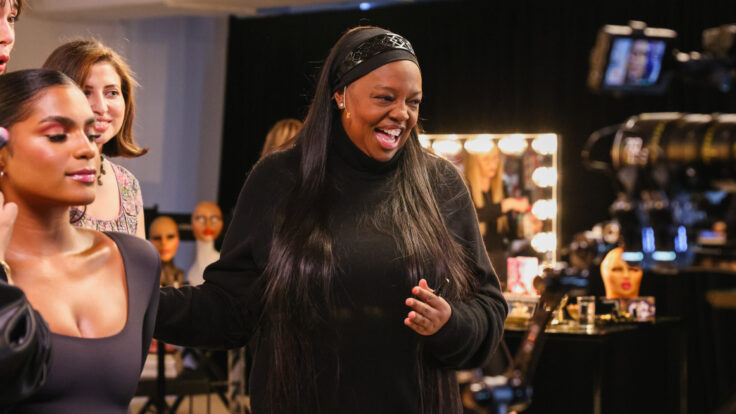
Pat McGrath Labs is apparently for sale. Rachel Strugatz will
have more soon, I’m sure. [ WWD]
|
Until tomorrow,
Lauren
P.S.: We use affiliate links because we are a business. We may make
a couple bucks off them.
|
|
|
Puck’s daily art market email, anchored by industry expert Marion Maneker, offers unparalleled access to the mega-auctions and
galleries, elite buyers and sellers, and the power players who run this opaque world.
|
|
|
Finally, a media podcast about what’s actually happening in the media—not the oversanitized, legal-and-standards-approved
version you read online. Join Dylan Byers, Puck’s veteran media reporter, and Julia Alexander, a longtime media analyst, as they sit down with TV personalities, moguls, pundits, and industry executives for raw, honest, sometimes salacious conversations about the business of media and its biggest egos. New episodes publish every Tuesday and Friday.
|
|
|
Need help? Review our
FAQ page or contact us for assistance. For brand partnerships, email ads@puck.news.
You received this email because you signed up to receive emails from Puck, or as part of your Puck account associated with {{customer.email}}. To stop receiving this newsletter and/or manage all your email preferences, click here.
|
Puck is published by Heat Media LLC. 107 Greenwich St., New York, NY 10006
|
|
|
|