{{ 'now' | timezone: 'America/New_York' | date: '%b %d, %Y' }} |
|
|
|
Hi, and welcome back to Line Sheet. It’s officially skirt season.
In today’s issue, you’ll
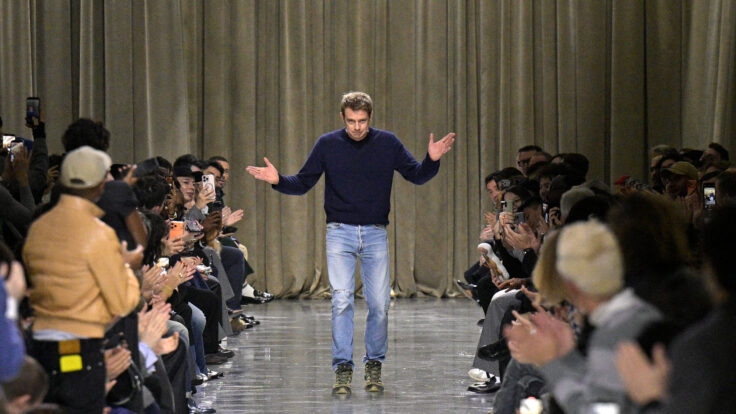
find my conversation with Michael Preysman, the founder and former C.E.O. of Everlane, who was as surprised as anyone by the Shein acquisition. (He found out 20 minutes before the news broke right here.) Turns out, the deal has inspired Preysman to do something he thought he’d never do again. More below.
Up top, Mel Ottenberg shares what’s
really going on at Interview amid talk of a staff exodus, and I’ve got an update on the fate of The Face. Malique Morris also has news of a giant, scientific report on the “cultural evolution of beauty standards” that sheds some light on body diversity in fashion. (Some of the findings are surprising.)
Line Sheet in the press: Plum Sykes called me the modern-day Isabel Archer (I hope I make better choices!), Alice Cavanagh interviewed Jo Ellison and me for System, I was on CBS
Mornings and Bloomberg’s Everybody’s Business talking Everlane. I also chatted with my favorite spa newsletter. (The only spa newsletter?)
Also mentioned in this issue:
Meng Ru Kuok, Charlie Porter, Taylore Scarabelli, Ozempic, Rory Satran, Ian Flooks, Chanel, Craig McDean, L Catterton, Alissa Bennett, Laura Reilly, and more. |
Three Things You Should Know…
|
-
The Face saves a little face: It seems that the recently shuttered magazine has been sold to C86, a Singapore-based holding company run by billionaire palm oil heir Meng Ru Kuok, who owns Caldecott Music Group and NME, the famous British music publication. Former staffers are naturally miffed, given that they all just lost their jobs. My assumption is that some will be invited back—if I hear more, I’ll let you know.
However, this is obviously not the way
that fashion media insiders would have liked this saga to play out—many wanted to buy The Face themselves. Unfortunately, Kuok has said some controversial things about A.I. that I.P. creators might find off-putting, like suggesting that A.I.-generated music will aid in “empowering and democratizing” the music industry. Why did Wasted Talent owner Ian Flooks decide to sell to C86? Follow the money. - Interview intrigue: What’s
actually happening at Interview? Over the weekend, Instagram started feeding me posts about alleged issues at the magazine. I knew that Taylore Scarabelli had left, but I also knew why: She wanted to try new things and make more money, etcetera. Turns out, a few other staffers have recently left, at least one of whom decided to turn on the drama. So I texted Mel Ottenberg to make sure everything was okay. It sounds like this
was just some normal, moderate turnover.
According to Mel, Interview is “good”: They are moving into a bigger, better office this week; there are two new people joining the team; and, most importantly, most of the staff did not quit in one fell swoop. “A few people have left recently and that’s notable mostly because no one has left in so long,” he said, noting that he’s had luminaries including Charlie Porter and Alissa
Bennett editing interviews while he rearranged the staff. Anyway, sometimes there is natural attrition, Interview remains one of the best magazines in the world, I don’t see why Peter Brant would ever shutter it in any scenario (especially one where it remains culturally relevant), and if there is real drama you should come to me first. The next issue lands in three weeks.
|
|
|
|
A MESSAGE FROM OUR SPONSOR |
|
|
|

| Malique Morris
|
|
- The beauty myth of
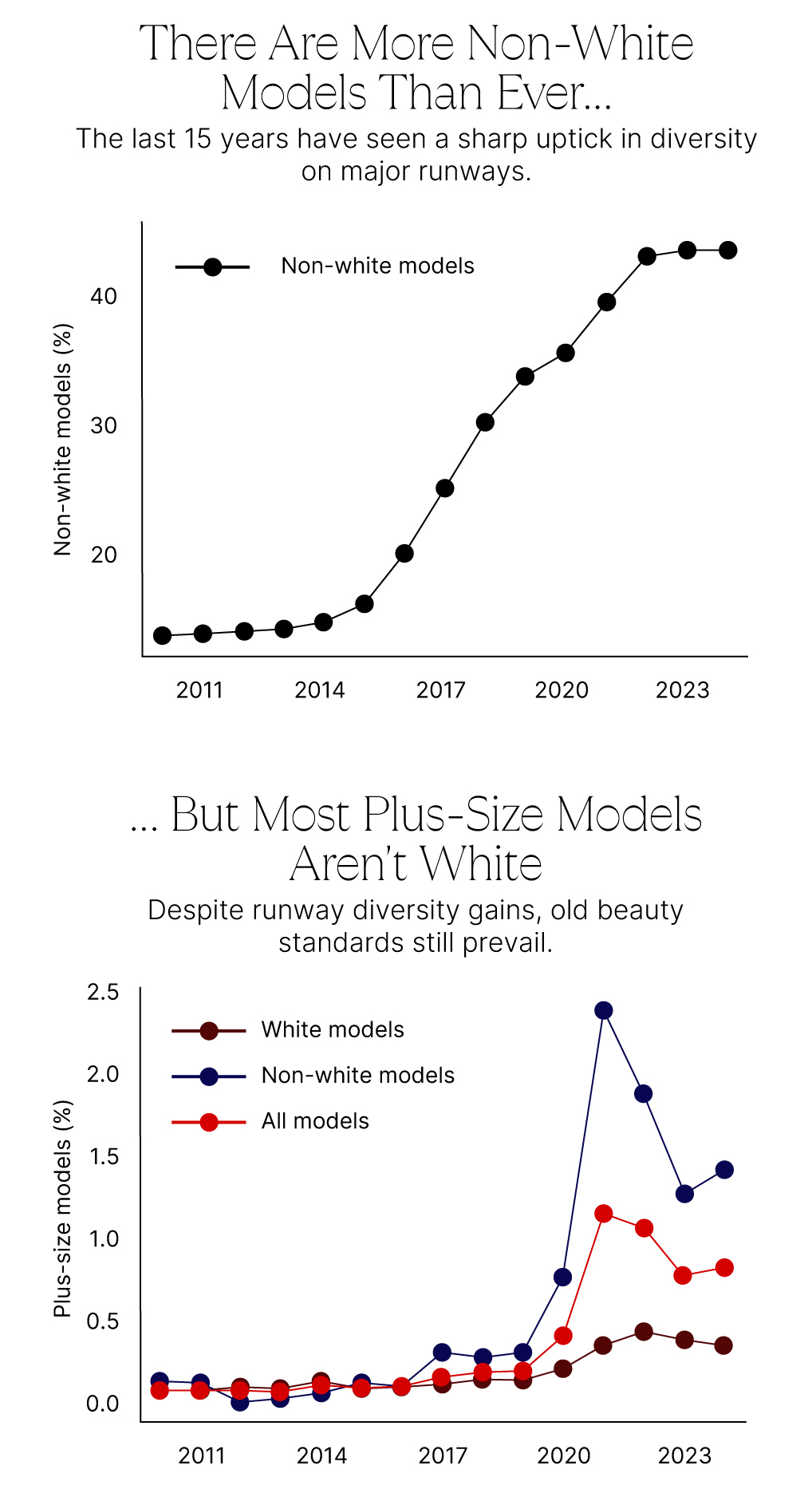
runway diversity: The Proceedings of the National Academy of Sciences has published a fascinating report on the “cultural evolution of beauty standards.” The data confirms what armchair runway critics have been banging on about: While racial diversity in fashion is way up, skinny is still the norm. Over the past 25 years, there’s been a broader range of national origins, skin tones, and phenotypes represented on runways and in editorials and campaigns. The number of non-white models in
fashion rose dramatically from 13 percent in 2011 to 44 percent in 2024. Yet not only is there still a scarce number of “plus-size” models—a nominal 1 percent in 2024—but the ones who make it into Vogue or walk the Armani runway are still smaller than the average woman in the U.S., and they tend to also be non-white. So, it all looks more inclusive, but the Eurocentric beauty ideal remains unchanged.
|
- Fashion has always taken a
piecemeal, begrudged approach to diversity. So it comes as no surprise that when representing larger body types, casting agents are checking off multiple boxes at once. Meanwhile, the body positivity movement of the 2010s has been flattened by the post-pandemic Ozempic craze and Trump’s anti-woke crusade. The report doesn’t name either of those as factors, but one can safely assume both have disincentivized brands from giving a damn.
|
|
|
|
Now on to the main event… |
|
|
|
One week after the Shein shocker, Everlane co-founder Michael Preysman opens up about what
the brand got right, what went wrong, and his radical plan to create an Everlane 2.0 without V.C. or private equity. |
|
|
|
I remain awestruck by the response to Shein’s acquisition of Everlane. Nearly a week after I broke the news
that the distressed, virtue-signaling fashion brand was selling to the climate-agnostic, ultra-mass Chinese conglomerate, the deal had become such a massive conversation topic online that The New York Times sent a breaking email alert. Naturally, I texted Everlane co-founder Michael Preysman, who sold the company to private equity firm L Catterton in 2020. Preysman had stepped away from daily operations years ago, and fully cut ties with Everlane within
the last year. I wasn’t sure if he’d be upset, embarrassed, or indifferent about what had transpired. But I asked him if he wanted to talk.
Preysman was never a dyed-in-the-wool garmento type; instead, he was a private-equity-trained, Northern California–bred startup guy who saw Everlane as a problem-solving vehicle. He once told me that he wouldn’t be in the fashion business forever. But unlike many of his Bay Area peers, Preysman actually has taste. The difference between Everlane and
many of its contemporary peer companies was that Michael actually believed in what he was selling, even if Everlane wasn’t ever quite as progressive as its media portrayal.
Yesterday, Michael responded to me. He did want to talk—about the sale, about what he would have done differently, and what the online response has compelled him to do next. I’m not big on Q&As, but in this case, it felt worth it to let Michael speak for himself. You’ll find our conversation here, with some news of a
venture born out of Everlane’s demise. The following has been lightly edited for length and clarity. |
Lauren Sherman: What was last week like for
you?
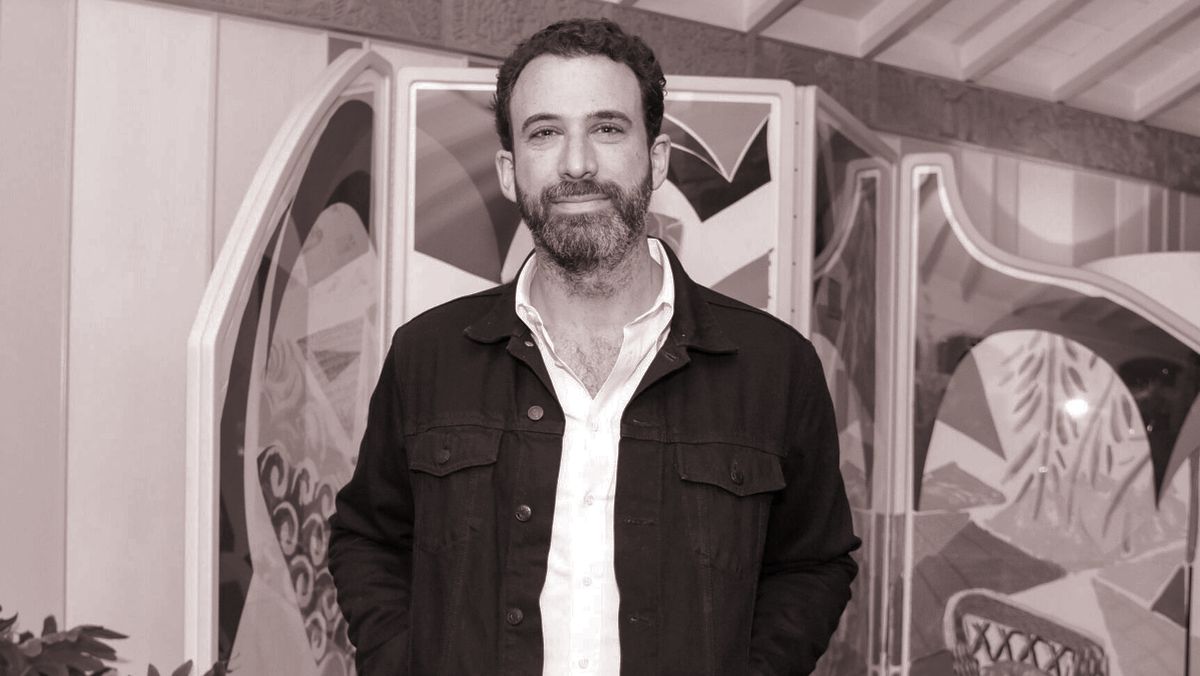
Michael Preysman: For the record, I was not involved in any shape or form. I left the board a bit ago because I didn’t really see eye to eye, didn’t see where things were going, and also frankly didn’t feel like I had much input or could help in any way. So I was completely unaware of this. I found out probably 20 minutes before the news broke from Puck. In some ways, it was not a surprise, because I knew Everlane needed to find a home. But where it ended
up was pretty shocking. Not anything I’d ever considered, to be honest. It’s the antithesis of what we stood for in many ways.
I did not expect the news to go that viral. But I get it. People are looking for trust, and Everlane stood for that. And then to have it end up in a place that feels like the antithesis of transparency—it’s just completely ironic, but also it’s out of a Black Mirror episode. It’s hard to write the script. |
|
|
|
A MESSAGE FROM OUR SPONSOR |
|
|
|
Your original focus at Everlane was on pricing transparency; the environmental angle came later. What
was happening in the culture then that led you to that messaging?
Everlane is easy to critique, but we did a lot of hard work and everything we said was true. When we started the company, it felt like a moment of hope. We were looking at brands that felt like they were entirely built on image. Everlane was born out of the idea that there was more than just image, there was a soul, and there was a way of doing business, and that consumers deserved more. They wanted to be treated
like they were smart… because they are smart.
What changed over the first 10 years of the business?
The first 10 years were pretty strong. As you build a business, you learn more and more, and you sort of peel the onion back. When we brought in our director of sustainability, we reduced our per-unit environmental impact by, like, 50 percent, which was incredible. Imagine if everybody did that.
When the pandemic hit, Everlane was caught in a sea of
challenges: inventory, design—we had originally been built for the Millennial workforce—and then, ultimately, just managing during a time when everything was fraught. I left in 2021. By then, we had lost our design direction. People have this idea that we failed because of sustainability [backlash], and it has nothing to do with that. You just have to offer great design. This is the cycle of fashion companies. It’s the only industry where you have to find product-market fit every year. The
collection has to be relevant.
When you started, you weren’t even marketing collections—you were releasing items SKU by SKU. And the products were good to start, but the whole point was to keep making them better, keep iterating. Then they fell off. If you could go back, would there have been something you would have done differently, or a moment when you should have corrected course?
In 2017, the company doubled to north of $100 million in sales and was
profitable. At that point, we should have focused on driving the bottom line and delivering great products to the consumer, instead of optimizing for the top line. We had product-market fit. It’s not a thing that people talk about in fashion, but Chanel has product-market fit right now. Gucci doesn’t. We were basics, but basics have to be on trend, too. We started to lose it in 2019 because we got so focused on trying to expand.
When you started, Gap was deeply uncool, Uniqlo
barely existed in the U.S., Amazon Basics weren’t really a thing. But it’s nearly impossible to scale a basics business if you don’t have the infrastructure, because it’s a commodity. Did you plan for that?
Candidly, no. The [big brands] were sort of struggling at that time and I didn’t spend a lot of time thinking about it because they hadn’t figured out digital, so it’s not something that we talked about much. We were just sort of in our own world doing our thing. |
You once told me that you weren’t really a retail guy—that
you weren’t always going to be in the fashion business. Now, after what happened last week, you’re starting something new?
I was really done with fashion. And then the outpouring of love from people who loved Everlane, and then the sort of outcry at the same time from people who felt betrayed, sparked a nerve in the same way that I felt in 2010 and 2011 before we launched. And it felt appropriate to see what’s possible again. |
|
|
|
What is that going to be to start?
We’re launching just a landing page, and it is the
very simple premise: same principles, but this time no venture capital, no private equity.
And the name?
We don’t have a name. The website is StillRadical.com.
Oh.
Classic.
And do you have a team assembled yet? Did you bring anybody back or…?
Conversations are starting. There are a lot of people who have a lot of love.
And I did text or talk to a few people and the reaction is, Oh, thank god I can now have my favorite X again, or, How can I help? What can I do? We have to make this happen.
I knew you would be back, Michael.
Thanks, we’ll see what it becomes. I have an idea. What people are craving today—and I see it everywhere—is quality. Transparency is now a requirement, but what is sorely missing in today’s world is craft and quality. And that’s only
becoming more prevalent with the explosion of A.I. We’ve crossed the barrier where 50 percent of people are spending 50 percent of their time online. It’s tipped this desire for a bit of a countermovement grounded in quality and craft, but doing it in a way that’s accessible.
Do you think the current owners of Everlane made a bad decision selling to Shein? In some ways, they had no choice: Creditors didn’t care about brand perception, and they were not going to back down. But do
you think this will kill the brand?
I can’t speak on behalf of, you know, anyone. For me, it was a bit of a shock and I feel like we let people down. Listen, I’m going to just be blunt: I’m not the most altruistic person. But I try to do good and do more good than others and try to do right. And try to be honest. I’m always honest, for better or for worse. The only comment I made all last week was the post on LinkedIn, which was for the team—because a lot of people put their
blood, sweat, and tears into that company, and we all believed in building something better. And I actually, fundamentally, do believe we did. Transparency is now the norm. So that part is fantastic. More power to them if they’re able to maintain it. I just don’t know how. It’ll have to become something different. |
Rory Satran has launched a newsletter filled with Hamptons intel, info, and
gossip. Long live local news! [The Hamptons Chronicle]
Laura Reilly has a new “aesthetics and longevity” newsletter called High Touch. [Magasin]
Chanel’s Métiers d’Art campaign, shot by
Craig McDean, is out. It’s fab. [Instagram]
The Jacquemus creative team is more prolific than me! [Instagram] |
Until tomorrow,
Lauren
P.S.: We use affiliate links because we are a business. We may make
a couple bucks off them. |
|
|
|
Need help? Review our
FAQ page or contact us for assistance. For brand partnerships, email ads@puck.news.
You received this email because you signed up to receive emails from Puck, or as part of your Puck account associated with {{customer.email}}. To stop receiving this newsletter and/or manage all your email preferences, click here. |
Puck is published by Heat Media LLC. 107 Greenwich St., New York, NY 10006 |
|
|
|
|