Hi, and welcome back to Line Sheet. I’ve arrived in Copenhagen, the land of Mfpen trousers and Pico scrunchies. I might share a few shopping and food recommendations and observations later in the week. Today, though, I’m handing the mic over to Sarah Shapiro, who put together a “Where Are They Now?” for the D.T.C. 1.0 crowd, inspired by Everlane’s not-so-quiet repositioning as “clean luxury.” The recent refresh took me back to Everlane’s “100% Human” campaign from 2017, which wasn’t without its detractors, but was definitely clearer.
Sarah also has an explanation for why there are already back-to-school promos, despite the fact that school is not even out yet in many areas of the country. And Rachel has a note on vlogger Huda Kattan buying back her brand, Huda Beauty, from TSG Consumer—and what the transaction, coupled with Gregg Refrew’s attempted resuscitation of Beautycounter and Cassandra Grey’s recapturing of Violet Grey, says about the state of M&A in that market.
Also: Next Friday is the inaugural Sarah Shapiro Mailbag Issue. Send her your burning shopping and retail questions by replying to this email or hitting her up at SShapiro@puck.news.
Mentioned in this issue: Warby Parker, Neil Blumenthal, Dave Gilboa, Everlane, Reformation, Glossier, Outdoor Voices, Allbirds, Quince, Dôen, Jens and Emma Grede, Khloé Kardashian, Kendall Jenner, Sam Bankman-Fried, and many, many more…
|
|
|
|
A MESSAGE FROM OUR SPONSOR
|
|
“One of the best series on TV right now.”
|
|
|
Three Things You Should Know…
|
- Rachel on private equity’s beauty switcheroo: Yesterday, Huda Kattan, the founder and co-C.E.O. of Huda Beauty, announced that she had bought back the minority stake in her brand held by TSG Consumer Partners, giving her full ownership of the makeup line eight years after TSG invested at a $1.2 billion valuation. This didn’t surprise anyone, but it fits a pattern worth highlighting.
For years, we’ve seen P.E. firms buy into “special” beauty brands—Huda Beauty, Supergoop, Beautycounter, Anastasia Beverly Hills, Morphe, etcetera—at high valuations, but struggle to support them operationally. Eventually, they end up neutered, no longer “special,” and get sold back to their owners or other investors at a loss. Some of these challenges can be chalked up to mismanagement and overly rich valuations, but also beauty trend cycles that are evolving faster than ever. When TSG acquired its stake in Huda Beauty in 2017, “Instagram makeup,” full beat YouTube tutorials, and dramatic transformations were still dominant on social media. Now they’re like distress signals from another century.
How did we get here? For starters, most P.E. firms that got into beauty were so eager to play in the space that they were willing to pay a premium for their position. But in the years since, the industry has only gotten more confusing, crowded, and harder for brands to differentiate. For companies like Huda, Supergoop, and Beautycounter, which were already vulnerable to changing trends and increased competition, an M&A dry spell may have changed the equation for their P.E. partners. The likes of TSG, Blackstone, or Carlyle, who enjoy a privileged position astride the cap table, typically have the luxury of exiting these deals with their money intact if their investment thesis doesn’t pan out… leaving it to enterprising founders to decide if they want to take another shot. —Rachel Strugatz
- Sarah on back-to-school promo discountmania: While your kid might still be counting down the minutes until the school year ends, retailers are already rolling out backpacks, pencil cases, and whatever they’re hoping the hottest fall sweatshirt will be. It might seem premature, but the back-to-school business is all about getting there first.
Every year, merchants and marketers huddle in conference rooms to pore over the calendar and discuss how they can improve on the year before. Too often, executives get hung up on their own, local back-to-school dates, ignoring the regional nuances and the different return schedules. To wit, California and Georgia kids head back in early August instead of September, like in the Northeast, or late August, like much of the Midwest. Retailers live in fear of missing out on one or more of those big markets.
Of course, the ongoing tariff drama and related inventory delays have added an extra wrinkle. Many apparel companies have pivoted their strategies to adapt to the ever-shifting policies, and adjusted their shipping timelines to avoid tariffs. All of which means that the strategy and promotions have little room for mistakes. —Sarah Shapiro
- Kardashian korrections: A source close to the Kardashian industrial complex took issue with two of my characterizations in yesterday’s email, where I wrote about the evolving working relationship between the famous family and Jens and Emma Grede. One is that I called Khloé Kardashian a Good American “spokesperson.” She was also a co-founder. Additionally, the person said that Sam Bankman-Fried didn’t “back” 818, Kendall Jenner’s Tequila line, per se. Bankman-Fried bought a piece of K5 Global, Michael Kives’ venture capital outfit, but K5 was already one of dozens of investors in 818 when he invested.
|
|
And now for the main event…
|
|
|
|
A decade ago, the direct-to-consumer revolt was in full bloom, with sky-high valuations and the promise that every brand could be the Warby Parker of something. So… how’s that going?
|
|
|
The early 2010s were an epic, perhaps unreasonably optimistic time for the direct-to-consumer business. Everlane, once seen as the next Gap, launched in 2011 with the promise of “radical” pricing transparency. By 2015, Warby Parker was in the process of turning a $2,500 seed investment from a Wharton venture initiative into a $1.2 billion valuation. Soon enough, everyone was pitching themselves as the Warby Parker of… well, something. It looked as if we’d never step inside a store or buy anything indirectly again. That same year, Away was founded to upend the luggage business.
Of course, it didn’t quite work out that way. And 10 years later, those early D.T.C. darlings have taken radically different paths. Warby Parker’s business grew and grew before inevitably flattening out: The company’s market cap has declined from nearly $7 billion at its I.P.O. four years ago to $2.5 billion now. (Lets see if its partnership with Google can erase those losses.) Away, whose executives I recently interviewed, is looking to redifferentiate the brand after a pandemic slump and amid growing competition. Meanwhile, Everlane, which reportedly did around $200 million in retail revenue in 2023, feels rudderless. Their recently launched “clean luxury” campaign has done little, so far, to mitigate the brand’s midlife identity crisis. It all has a whiff of Selina Meyer’s “Continuity With Change” slogan on Veep.
|
|
|
|
A MESSAGE FROM OUR SPONSOR
|
|
“One of the best series on TV right now.”
|
|
|
|
Indeed, Everlane’s woes are representative of an entire generation of faded D.T.C. darlings, all of which promised to revolutionize retail by delivering the same products for less by eliminating middlemen and pass-through fees. But those early D.T.C.s didn’t account for rising customer acquisition costs, or the traffic advantage of multibrand retailers, both digital and in-store. Meanwhile, they all raised money inexpensively, largely spent fecklessly, and buckled under the weight of their respective capital structures. V.C.s like Forerunner, L Catterton, and NEA poured millions into these brands, creating valuations that made profitable exits nearly impossible.
|
|
Bonobos has served as a cautionary tale of what happens when venture growth pressure meets retail reality: The company was acquired by Walmart in 2017 for $310 million, and was sold two years ago to WHP Global for $75 million. And that’s one of the better outcomes, actually. So how are the O.G. D.T.C.s faring about a decade after the revolution? Herewith…
|
|
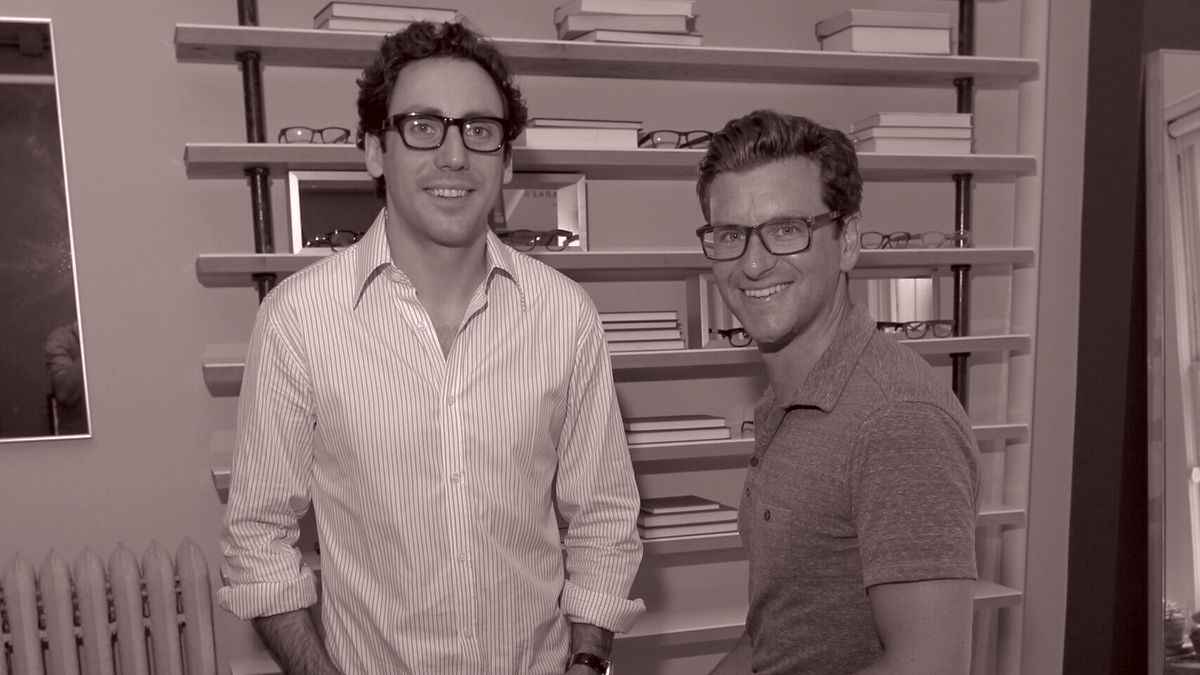
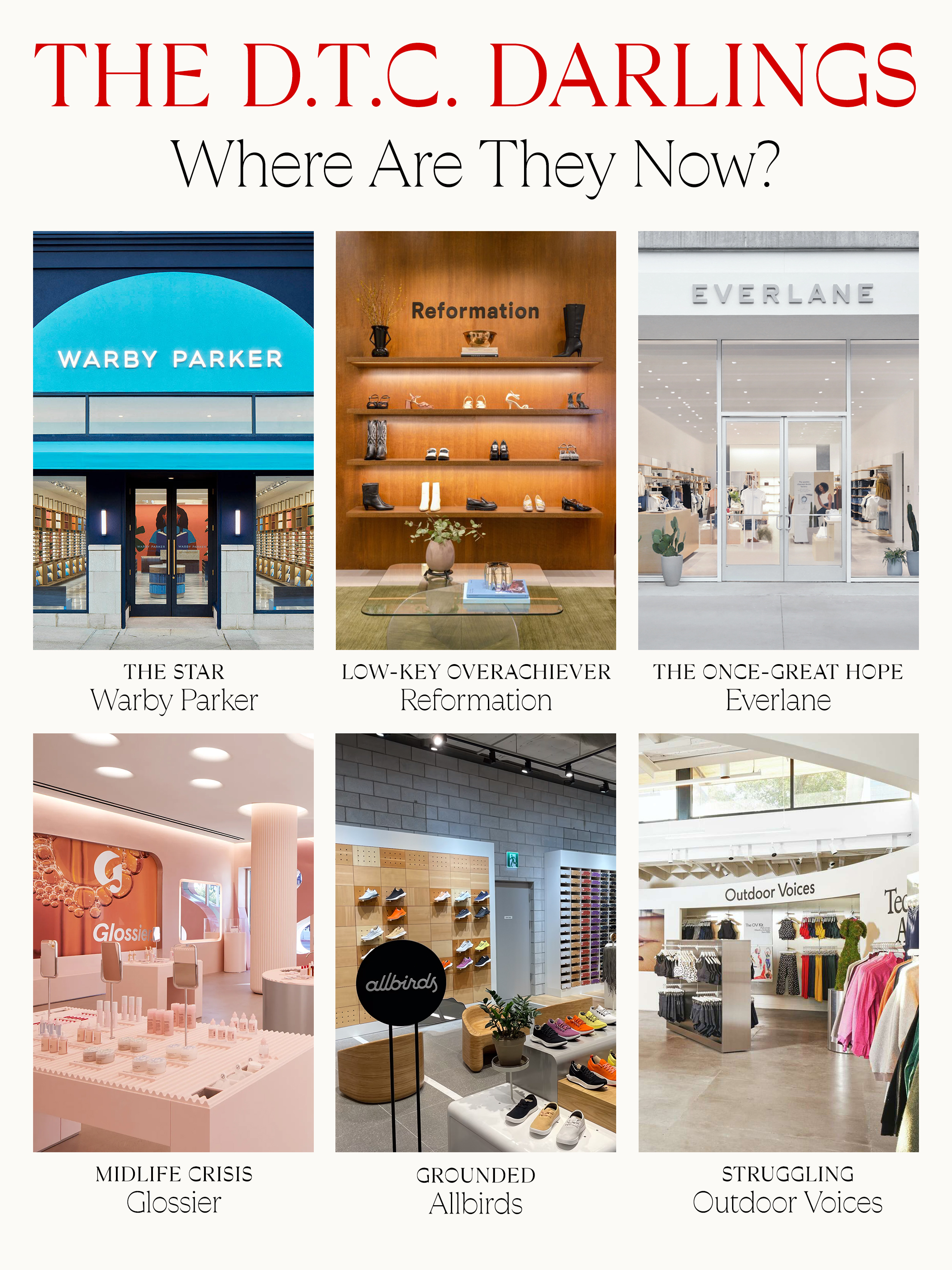
Anomalously, Warby co-founders and co-C.E.O.s Neil Blumenthal and Dave Gilboa are still leading the company they founded 15 years ago, and the new Google partnership shows they’re still interested in innovating beyond just selling frames. Their stock is down almost 60 percent from its 2021 peak, but it still feels like they’ll be an inevitable part of eyewear, whether it’s prescription glasses or Google’s A.R. glasses. They’ve grown to 276 stores, added Target partnerships, and launched an optometrist program to keep glasses literally in front of customers’ eyes, even if they’re no longer enjoying the disruptor halo and saving bespectacled consumers from EssilorLuxottica’s monopolistic pricing. Warby closed out 2024 with over $770 million in revenue, up 15 percent year-over-year.
|
The Overachiever: Reformation
|
After 16 years in business and just $37 million in capital raised to date, the brand has stayed relevant through smart marketing and styling that adapted to changing trends. (They also set some trends of their own.) The company also weathered hot-and-cold consumer interest over the years. In 2018, Reformation launched in 20 Nordstrom stores—the same store count that both Rothy’s and Dôen recently launched with. The brand, which was doing more than $350 million in 2023, has said it’s profitable and currently on track to exceed $500 million in annual sales.
|
The Once-Great Hope: Everlane
|
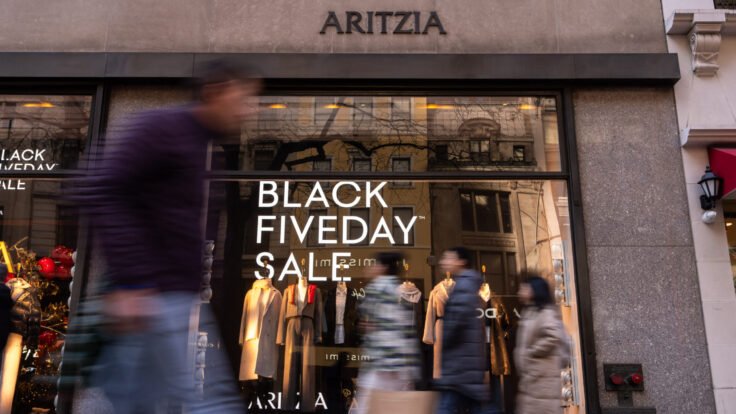
The brand that was once seen as the next Gap and planned to scale to $1 billion in revenue is way off that trajectory. Plagued by C.E.O. and designer turnover, and working to settle into their latest messaging pivot to clean luxury, Everlane is currently bringing in much closer to $200 million–$225 million. The brand, which has great basics (but so does everyone), seems to be moving toward Aritzia-inspired looks (similar to this tank) as it puts an investment from L Catterton to work.
|
The Cautionary Tales: Glossier, Outdoor Voices & Allbirds
|
Glossier, the quintessential Millennial beauty brand, raised more than $260 million with no potential suitors and a murky path to an I.P.O. And, as my Puck partner Rachel Strugatz reported last week, Rhode’s recent acquisition makes Glossier’s future even fuzzier. I was surprised recently to see that the top Glossier searches, according to Google Trends, are actually for merch and P.R. kits—not the actual products they need to sell. “Glossier cherry lock” from their Cherry Balm Dotcom launch, and “glossier laptop mirror”—both giveaways you can find on the resale market—are leading searches for the brand. Never a good sign…
|
|
|
Of course, Glossier looks like a veritable unicorn next to some of its generational peers. Outdoor Voices, which was once the most exciting new player in the nascent athleisure space, was quickly overtaken by Alo, Set Active, and Beyond Yoga as O.V. descended into leadership turmoil—and eventually ousted its founder. The top search regarding Outdoor Voices has been, “Where to buy Outdoor Voices in person.”
And then there’s Allbirds, the online shoe company for I.T. guys and people without taste that managed to go public in 2021—mainly because investors wanted their money out—and then immediately stumbled. Allbirds, which briefly touched a $4 billion valuation on the day of its I.P.O., now has a market cap of around $60 million, a 99 percent decline. As I noted in my recent piece about Rothy’s, Allbirds took too long to innovate beyond their single knit style.
|
|
It’s worth noting that all of these brands, even the ones that didn’t make it, probably could have thrived as lifestyle businesses with smaller funding rounds and sustainable growth. Venture capital changed their DNA, and so did inexperienced and often avaricious management teams who deluded themselves into believing they were running tech companies just because they sold goods over the web. And yet, the brands that we talk about today—Staud, Dôen, Toteme—all benefited from their mistakes. In many cases, they learned to prioritize direct sales with multiple stores, something unthinkable without these original pioneers. The winning formula du jour is a mix of wholesale and direct. But that’ll probably change soon, too.
|
What We’re Reading… and Listening to…
|
Nike and Levi’s are collaborating. (Details, thus far, are scarce.) Nike has announced multiple times that they need to focus on their core competency—sports. Whatever this is, it’s not that. [ Instagram]
In the grand tradition of its Nipple Push-Up Bra, Skims is launching the Ultimate Hips, a pair of bike shorts that offer extra padding on the sides of the body to help create an hourglass figure. Who needs plastic surgery? [ Skims]
This is a very fun breakdown of the state of celebrity styling from two ex-Fashionista editors and red carpet enthusiasts, Alyssa Vingan and Eliza Brooke. [ The New Garde]
Teen whisperer Casey Lewis shared this article about the foldover bike shorts trend. When I posted about Aerie’s foldover leggings recently, there was a lot of reminiscing in the D.M.s about So Low and Hard Tail—the O.G.s. [ Who What Wear]
This year’s CFDA/Vogue Fashion Fund finalists includes some familiar, relatively established names, most notably Ashlynn Park, Bach Mai, and Peter Do. [ Vogue]
|
|
Until tomorrow,
Lauren
P.S.: We are using affiliate links because we are a business. We may make a couple bucks off them.
|
|
|
|
Puck fashion correspondent Lauren Sherman and a rotating cast of industry insiders take you deep behind the scenes of this multitrillion-dollar biz, from creative director switcheroos to M&A drama, D.T.C. downfalls, and magazine mishaps. Fashion People is an extension of Line Sheet, Lauren’s private email for Puck, where she tracks what’s happening beyond the press releases in fashion, beauty, and media. New episodes publish every Tuesday and Friday.
|
|
|
|
Puck’s daily art market email, anchored by industry expert Marion Maneker, offers unparalleled access to the mega-auctions and galleries, elite buyers and sellers, and the power players who run this opaque world. Wall Power also features Julie Brener Davich, a veteran of Christie’s and Sotheby’s, who provides unique insights into how the business really works.
|
|
|
Need help? Review our FAQ page or contact us for assistance. For brand partnerships, email ads@puck.news.
You received this email because you signed up to receive emails from Puck, or as part of your Puck account associated with . To stop receiving this newsletter and/or manage all your email preferences, click here.
|
|
Puck is published by Heat Media LLC. 107 Greenwich St, New York, NY 10006
|
|
|
|