{{ 'now' | timezone: 'America/New_York' | date: '%b %d, %Y' }} |
|
|
|
Hi, and welcome back to Line Sheet. I’m taking some time off this week, but I’ll be back tomorrow
for a very special Thursday issue, available to Inner Circle members only. (Click here if you want in on the fun.)
Today, the singular Rachel “Rachel@puck.news” Strugatz returns with a performance update on Blake Lively’s Blake Brown haircare line. Now that
the Baldoni mess is (sort of) behind her, can Lively get her biz on track? Up top, Rachel also shares a timely update on Estée Lauder Co. Meanwhile, Malique explains what’s happening with Everlane’s San Francisco office eviction and has the scoop on some major, pretty wacky Pink collabs, which Victoria’s Secret C.E.O. Hillary Super hopes will lead to a Barbie-like boost for VS’s kid-sister brand, once the growth engine of the
whole operation.
By the way, Malique’s chat with Swap marketing chief Juan Pellerano-Rendón and Bandit Running C.E.O. Nick West at the Air Mail newsstand last night was a smashing success. They discussed, among other things, how brands can prepare for the A.I. e-commerce disruption. Thanks to everyone who came out, and to Malique for making it worth your while. We’ll share more from their talk next week.
Also mentioned in this issue:
Vince Adams, Reese Witherspoon, Ryan Reynolds, Crème de la Mer, Kacey Musgraves, Jim Bankoff, Matt Maddox, Isabel Clancy, Legally Blonde, Giambattista Valli, James Murdoch, Cardi B, Cheetos, Anna Wintour, Jamie Salter, and more. |
Three Things You Should
Know…
|
|
|
|

| Rachel Strugatz
|
|
- Estée’s markups: The
Ordinary—Estée Lauder’s mass-priced skincare line, and one of its successful recentish acquisitions—may be getting its parent company in trouble by doubling down on its “accessible-for-all ethos.” Shortly after Business of Fashion reported that the brand will be focusing even more on its low-cost, transparent pricing, the
industry watchdog Instagram account Estée Laundry stirred things up by posting an anonymous D.M. from a former Lauder employee: “Makes me laugh that they do these markup campaigns for The Ordinary but they own La Mer and their 60 ml. CDLM [Crème de la Mer] costs £4.50 to make.” Take that exact figure with a grain of salt, but a 2-ounce jar of Crème de la Mer retails for $390.
Sure, insane beauty markups are a well-known and common practice within the industry. But regular consumers still don’t understand exactly how much (or how little) it actually costs to make some of the products they’re buying—and with this campaign, Lauder is veering into tricky territory. It’s throwing significant marketing dollars behind its value-driven messaging for The Ordinary while continuing to charge close to $400 for a sister product that costs a
fraction of that amount to produce. Of course, Lauder might be banking on the hope that La Mer’s customers don’t know The Ordinary exists or that the two share a parent company. But everything comes out in the wash.
|
|
|
|
A MESSAGE FROM OUR SPONSOR |
Agentic commerce isn’t a future concept. It’s already reshaping how people shop. Static storefronts are giving way to
guided, conversational experiences that don’t just surface products. They drive decisions and conversion in real time. Swap’s Agentic Commerce 101 breaks down what’s real and what it means for brands right now. Inside: |
• What agentic commerce is and why most AI tools don’t qualify • Why AI discovery platforms aren’t built to convert for your brand • Why owning your AI experience and your data is becoming non-negotiable |
|
|
|

| Malique Morris
|
|
- Everlane-Shein
aftershocks: Everlane’s shocking sale to Shein, which Lauren broke over the weekend, still left plenty of unresolved questions for everyone’s favorite 2010s basics brand. One loose end is the nearly $200,000 in unpaid rent for Everlane’s San Francisco headquarters, which occupied two buildings, with two separate landlords—both of whom sued the company
in April. At the time, Everlane said it was relocating offices to Los Angeles and negotiations with its S.F. building owners were underway.
I’m told that last Friday, Everlane’s finance chief, Vince Adams, notified one of the landlords that the company had vacated the property—the brand has apparently moved into one of its new L.A. spaces—and that payments would follow in the coming weeks. Days earlier, Adams had asked the landlord for an extension, but
Everlane’s lawyer never followed up to finalize anything, according to a person with direct knowledge of the situation. (Everlane declined to comment.)
The sale’s aftermath was always going to be messy. Everlane had at least $90 million in loans and revolving credit, and I’m told that company leadership has not formally notified the landlords of the sale to Shein. “They’ve completely blown up their brand by who they sold it to. It shows that they’re in deep, deep trouble,” the person
said. “They got out of it… but they still have to pay their bills.” - VS Pink collabs: As I noted yesterday, one of Victoria’s Secret C.E.O. Hillary Super’s greatest successes has been repitching Pink, the company’s youth-focused line, to social media–obsessed teens. Naturally, TikTok is central to the
strategy. Last March, the brand partnered with Isabel Clancy, who creates Y2K skits for her 4 million TikTok followers, to promote a collection of its classic high-waisted flared pants after she went viral talking about the style, according to a person with direct knowledge of the deal. In the final quarter of 2025, the sub-brand’s sales grew at the highest rate in a decade.
Now Super is doubling down on the nostalgia factor with some of Pink’s newest collaborations. I’m
told the brand is partnering with Reese Witherspoon’s Hello Sunshine on a collection for Elle, the upcoming Legally Blonde prequel series that follows Elle Woods in high school. The linkup underscores Super’s talent for trendspotting—recent collaborations with the ultra-girly LoveShackFancy and Frankies Bikinis have also been hits.
But Super is taking an even bigger swing with a forthcoming swim collection with… Cheetos. I’m told the rationale was that
“it would be fun because it’s so surprising.” It’s a head-scratcher, but great collaborations balance the duh with the W.T.F., so we’ll reserve judgment. (“While we cannot speculate on any future plans, we’re excited for what’s ahead,” a Victoria’s Secret spokesperson said.) Perhaps the strategy will help Super avoid the stagnancy that contributed to Victoria’s Secret’s previous downturn (minus all the sexual harassment allegations, of course).
|
|
|
|
After the Baldonigate fallout, Blake Lively’s briefly hot Target haircare line, Blake Brown,
is circling the drain—and its Italian partners want out. Finding a new operator may not be easy. |
|
|
|
Earlier this month, just hours after reaching a settlement with Justin
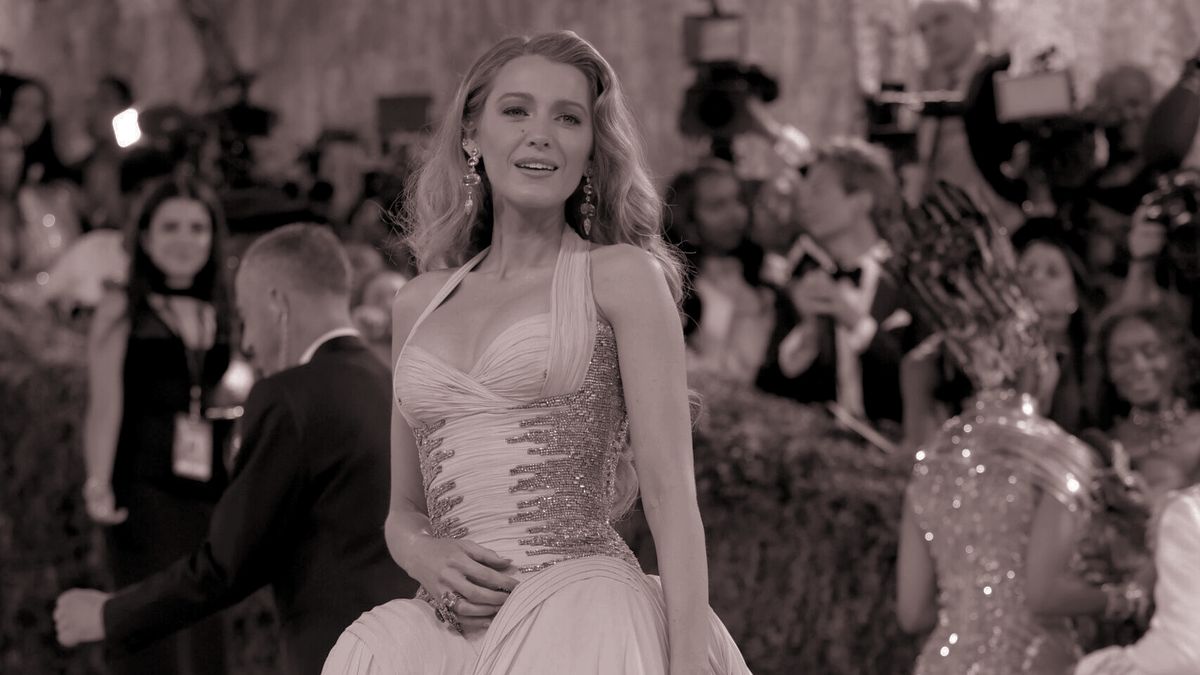
Baldoni, Blake Lively arrived at the Met Gala in perhaps the most dramatic look of the evening. Alas, the red carpet failed to deliver a much-needed personal rebrand: Observers trashed her Versace outfit, and a nasty rumor began swirling on the internet that she had even paid for her own ticket. (Quelle horreur!) Eventually, it was confirmed that Lively was an official guest of Anna Wintour, and that Versace
had made the pastel cupcake dress specifically for the actress. But the damage was done. Perhaps more importantly, the Met Gala misadventure apparently did nothing to help Blake Brown, Lively’s ill-fated beauty brand, which I’m told has hit an all-time low. |
|
|
|
A MESSAGE FROM OUR SPONSOR |
Agentic commerce isn’t a future concept. It’s already reshaping how people shop. Static storefronts are giving way to
guided, conversational experiences that don’t just surface products. They drive decisions and conversion in real time. Swap’s Agentic Commerce 101 breaks down what’s real and what it means for brands right now. Inside: |
• What agentic commerce is and why most AI tools don’t qualify • Why AI discovery platforms aren’t built to convert for your brand • Why owning your AI experience and your data is becoming non-negotiable |
|
|
|
Indeed, the brand has cratered in a spectacular way. Just two years ago, Blake Brown was the biggest haircare
launch in Target’s history, with close to $20 million in sales in its first three months. At the time, the retailer projected it would become a $100 million or so business in its first year. But I’m hearing the brand will be lucky if sales reach mid-single-digit millions in 2026—and even that might be optimistic. A person familiar with the company’s financials told me that Blake Brown is currently doing about $90,000 per week at Target, a figure that has steadily declined. “This puts it
toward the bottom of the list [of Target’s haircare brands],” this person said, adding, “I can’t imagine Blake Brown will last long, and I don’t think anyone else will take them.”
Blake Brown’s collapse was both mundane and predictable. The company, like so many other failed or failing beauty brands, was partly a victim of poor timing: The debut at Target coincided with the start of the It Ends With Us media tour—and Lively’s feud with Baldoni, which snowballed into 18 months of
lawsuits and countersuits and grueling he-said, she-said mudslinging, which only (tentatively) resolved last month after a judge dismissed almost all of Lively’s claims and the parties reached a settlement. But also, from the outset, Lively never really seemed (or was able to) fully buy in. Instead of endlessly promoting her new products—a prerequisite for any celebrity brand with aspirations to even modest success—Lively went dark on social media just as the brand went on
sale.
So, yes, the Target honeymoon was short-lived. While most brands plan for a 20 to 30 percent dip within six or so weeks post-launch, sales of Blake Brown were down by close to 90 percent. According to data I reviewed, sales were hovering around $200,000 per week by early 2025—which was before I reported, last May, about a “massive slowdown” around the time Lively released her first new product since the line’s debut. Earlier this month, I noticed, but was unable to verify, reports online about people finding Blake Brown at TJ Maxx. |
Now I’m hearing that Give Back Beauty, the Milan-based beauty manufacturer and incubator behind Blake Brown,
wants out of the brand. According to a source with firsthand knowledge of the situation, Give Back Beauty has been “trying to get out of the deal” since late last year. Doing so may be tricky: The company works with brands in various ways—owning some outright, distributing others, and even operating as a licensee in the case of Millie Bobby Brown’s Florence by Mills—but it’s involved with Blake Brown via a joint venture. To exit the brand, Give Back Beauty would have to sell its
stake to an operator who could continue to run the business. (Reps for Give Back Beauty and Blake Brown didn’t respond to requests for comment.)
Easier said than done. Lively could always buy out Give Back Beauty—but then the hard task of finding a new partner would fall to her. “It’s only a Target brand, and that type of retail concentration is highly risky when it’s a declining asset,” the person with knowledge of the situation said. Moreover, if the brand continues on its current
trajectory, and Target winds up dropping Lively’s line, it would have to rely on a tiny direct-to-consumer business, which would further complicate the challenge of finding a buyer. |
|
|
|
So where does all of this leave Lively, an actress whose most reliable asset in recent years was her marriage
to likeable actor-husband Ryan Reynolds? (Yes, Reynolds’s reputation has also suffered as Baldonigate has played out, but at least his Aviation Gin had a $610 million exit, and he’s still a co-owner of Wales-based Wrexham Association Football Club.) For now, her acting career seems to be shaky (recall that Sony executive’s candid assessment) and her future as a celebrity entrepreneur seems to be heading in the same direction: Her nonalcoholic beverage brand, Betty Buzz, quietly shuttered last year, and according to court documents, her ready-to-drink cocktail line, Betty Booze, tanked in the second half of 2024 when it “generated only one-third of the revenue it earned in the preceding four months.” Recent reports suggest that Lively and Reynolds were
considering moving to the U.K. to start over. Who’s going to tell them that Europe still has access to the internet? |
As expected, a tranche of works from late Condé Nast owner Si Newhouse’s massive art
collection, including a $181 million Pollock, contributed to a $1.1 billion night at Christie’s during the spring sales this week. The auction house even canceled its traditional post-sale press conference, walk-off home run style, as our partner Marion Maneker reports in Wall Power. [Puck]
Giambattista
Valli is his own white knight. The dressmaker bought his namesake label back from the Pinault family office Artémis following its near bankruptcy. [Instagram]
James Murdoch is
officially buying New York from Vox Media, along with the flagship Vox site and podcast network. Vox co-founder and chief executive Jim Bankoff is staying on. Terms weren’t disclosed, but Dylan Byers estimated the deal’s value at north of $300 million. More on this soon. [Inbox]
Anne-Marie Guarnieri of
Trucco Journal hilariously points out that the Sephora and Marc Jacobs teams are not on the same page about the beauty brand’s “relaunch.” [Instagram]
Cardi B is the face of handbag reseller Fashionphile’s latest brand campaign. Just last month,
Depop put Kacey Musgraves in an ad. Prepare to see more celebrity marketing stunts as competition in the U.S. resale market intensifies. [Fashionphile]
Around 100 of
Net-a-Porter’s U.K. warehouse workers are making good on their promise to strike after failed negotiations for living wages. The company says the warehouse will remain open and functional. It certainly won’t help the e-tailer claw back its power in online luxury under new owner LuxExperience.
[GMB]
ABG’s Jamie Salter is replacing himself as C.E.O. with Matt Maddox, the company’s president. Salter will transition to executive chairman. More on this soon!
[Authentic Brands Group] |
Until tomorrow,
Lauren
P.S.: We use affiliate links because we are a business. We may make
a couple bucks off them. |
|
|
|
Puck fashion correspondent Lauren Sherman and a rotating cast of industry insiders take you deep behind the scenes of this
multitrillion-dollar biz, from creative director switcheroos to M&A drama, D.T.C. downfalls, and magazine mishaps. Fashion People is an extension of Line Sheet, Lauren’s private email for Puck, where she tracks what’s happening beyond the press releases in fashion, beauty, and media. New episodes publish every Tuesday and Friday. |
|
|
|
An essential, insider-friendly Hollywood tip sheet from Matthew Belloni, who spent 14 years in the trenches at The
Hollywood Reporter and five before that practicing entertainment law. What I’m Hearing also features veteran Hollywood journalist Kim Masters, as well as a special companion email from Eriq Gardner, focused on entertainment law, and weekly box office analysis from Scott Mendelson. |
|
|
|
Need help? Review our
FAQ page or contact us for assistance. For brand partnerships, email ads@puck.news.
You received this email because you signed up to receive emails from Puck, or as part of your Puck account associated with {{customer.email}}. To stop receiving this newsletter and/or manage all your email preferences, click here. |
Puck is published by Heat Media LLC. 107 Greenwich St., New York, NY 10006 |
|
|
|
|