 |
|
Happy New Year, and welcome to this special Tuesday edition of Line Sheet. I’m keeping it relatively short (and just sweet enough) to ease you back into the real world.
As a perpetually embarrassed person, I try not to dwell on the past. When it comes to reporting, though, looking back is essential. So today, I’m sharing some of what I’ve learned in the past year or so that will inform my coverage in 2024. What are you thinking about? Just hit reply, or send me a voice memo at +1 646-241-3902.
Mentioned in this issue: Pinault, CAA, Carol Meyrowitz, Ozempic, Sally Singer, Jane Lauder, the Bouroullec brothers, Fabrizio Freda, Leon Rose, Victoria and David Beckham, mascara, Françoise Bettencourt Meyers, and many more…
|
|
|
- On the business of being Beckham: It was a banner year for the Beckham family brand with that society-uniting documentary (I finally know what a red card means) and the subsequent obsession with their lifestyle: What closet-organizing system does David use? Who makes Victoria’s gray sweatshirt?
It’ll be another year before we know whether that attention converted to sales of the many products that the couple shill, but according to financial documents recently filed in the U.K., the fiscal year 2022 was pretty good for the family business. The Victoria Beckham brand narrowed operating losses to about $1 million, with annual sales of nearly $75 million. (That’s in U.S. dollars; who wants to read about stuff in GBP?) Victoria Beckham still required an upfront investment of $9 million from current shareholders. (The VB label is backed by the Beckhams, Simon Fuller, and the U.K.-based private equity firm NEO Investment Partners, which is also behind Ami Paris, Valextra, and most importantly, the bougie French grocery store chain Maison Plisson.)
The David Beckham side of the operation is profitable, not only because it’s more diversified, but also because much of his reliance on no-debt, all-upside licensing deals. Does it matter that, after 15 years in business, Victoria Beckham is not profitable? Who really cares? If you think of the Beckham business as a holding company, the more profitable parts of the group will make up for the lagging parts that, in turn, use their losses to offset taxes. Also, who cares!?!?: If Victoria Beckham enjoys being a fashion designer and it’s not digging into their life savings, why not keep going?
Notably, Victoria Beckham Beauty, which she launched independently in 2019 after a flirtation with Estée Lauder Companies, is performing—and likely contributed to the narrowing of operating losses in 2022, not to mention the 40 percent increase in year-over-year revenue. I just bought this mascara, one of the bestsellers on Violet Grey this year. It is the best mascara I have ever owned. Anyway, let’s see how things netted out for Victoria in 2023, which was a tough year for most high-end fashion brands.
|
|
|
| For fashion, I suspect 2024 will be a year of striving for normalcy. The pandemic roller coaster is behind us (we think), and consumers are still spending (for now). But the fun thing about this industry is that normal can play out in pretty nutty, or at least captivating, ways. As we head into the new year, here’s what I’m thinking about, from fashion’s dirty little discounting secret to whether or not we’ll finally get a succession plot worthy of a television show. |
| 1. Off-Price Will Be Bigger Than Brands Are Letting On |
|
| A few months ago, I had coffee with an exec from a well-known, sub-billion-dollar brand. This person expressed concern that his brand was losing sales not only because of the post-Covid dip that everyone was experiencing, but also because competitors with more robust off-price channels—those that operate their own outlet stores, or sell to off-price department stores like Saks Off Fifth or T.J.Maxx—were dumping more products there than ever. “How can I compete when they’re selling leather handbags for under $200?” he asked me.
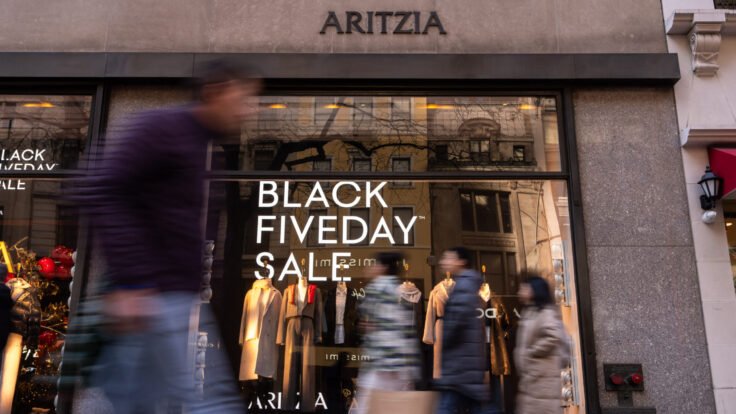
Luxury (and aspirational luxury) brands don’t like to admit how much they’re relying on off-price to boost the top line. After all, overt discounting can hypothetically erode brand value. At the same time, off-price stores are an important acquisition channel for the sort of customers who have never heard of Loewe or Bottega Veneta or Celine before visiting premium outlets like Desert Hills in Cabazon, California, or Woodbury Commons in Central Valley, New York, or Bicester Village in… Bicester (also a town in England).
Expect more of this in 2024. TJX, the group that owns T.J.Maxx and Marshalls, among others, generated $50 billion last year. Retail heads often call Carol Meyrowitz, the former C.E.O. and current executive chairman of the group, the low-key smartest executive working in the industry today. Of course, in fashion, the lower the price tag, the narrower the profit margins, and overreliance on off-price not only looks bad, but it can create some pretty deep holes that are hard to crawl out of. Watch out for this when Tapestry and Capri merge, if that deal does indeed go through. (I’m sure it will. Pretty sure.) |
| 2. Weight-Loss Drugs May Change the Business… Forever |
|
| I tease about the rampant Ozempic use in fashion—I’m truly not judging, just observing!—but the effect this class of weight-loss drugs could have on our industry is no joke. Right now, almost all brands (except, in my own experience, Nili Lotan, ha) employ some degree of vanity sizing—meaning they cut clothes more generously so that people who used to be a size 4, but are now a size 8, won’t feel bad about their expanding girth. This has been going on for decades and is especially prevalent in the U.S., where people are on average shorter and heavier than in many parts of Europe.
As these drugs become cheaper and more readily available, and their long-term side effects are better understood, the higher-spending population may shrink en masse, forcing brands to overhaul their sizing chart, the types of styles they offer, etcetera. A few executives expressed to me that the industry could even see a boost from Ozempic users acquiring entirely new wardrobes. But the truth is that people buy stuff constantly no matter what, because we’re vain and bad with money and that’s what society has trained us to do.
On that note: Longer-term, if I were a fashion executive, I’d be worrying about how these drugs often kill desire overall. Not only the desire to eat, but to shop, drink, have sex—anything fun. But I love to worry. |
| 3. Succession Questions Will Be Answered |
|
| There are folks at the Estée Lauder Companies that would push back on this, but I don’t think we exit 2024 without a new C.E.O. at the American beauty conglomerate. Fabrizio Freda had a great run, but it hasn’t gone well for a couple of years, and there are enough shareholders, including family members, who are ready to make the rigmarole of a C.E.O. search worthwhile. (Will it be Jane Lauder? Watch this space.)
As for the Arnaults, don’t hold your breath… although we’re still waiting to hear what’s in the cards for Antoine post-Berluti. Will Donatella Versace make a change? Maybe. Ralph? Armani? Guys, those aren’t happening until they happen. But don’t worry, I’ll keep asking. |
| 4. For LVMH, 2024 Is All About Future-Proofing |
|
| Last year was tough for a lot of LVMH brands, but the company dominated the industry conversation thanks to attention-grabbing marketing moves like hiring Pharrell at Louis Vuitton, outlandishly renovating the Tiffany flagship, and sponsoring this summer’s Paris Olympics. It also benefited from the rising profile of chairman and C.E.O. Bernard Arnault, now the second-richest man in the world, and, in particular, his ambitious, competitive children.
This year, however, is going to be trickier. Not only does the group need to get the U.S. business back on track, but there are executive shuffles in the works, the whole Olympics thing to pull off, and creative director roles to be filled. I assume a Givenchy appointment(s) will be announced imminently. I don’t expect any major acquisitions unless a very, very good deal comes along: There is too much work to be done on Tiffany for that to make common sense. More than anything, though, what happens this year will set LVMH up for the next decade. Arnault understands that LVMH needs to be a maker of culture, not just products. But he’ll only succeed if he’s able to anticipate what people want to buy next, and plan accordingly. In fashion, companies start to fail when they stop interrogating their own way of doing things. |
| 5. For Kering, It’s Crunch Time |
|
| The Gucci turnaround has got to work. Saint Laurent must maintain after 2023’s expected, but still system-shocking, post-Covid normalization. Can Bottega Veneta translate Matthieu Blazy’s runway genius into runaway commercial success? Will Alexander McQueen finally begin to realize its consumer potential? Is the Great Demna Experiment just getting started, or nearing its end? There isn’t one brand in the business that isn’t in transition right now, and shareholders are watching closely.
Most industry observers don’t expect a landmark deal in fashion M&A this year. (The activity is likely going to be among the bottom feeders, with mergers and take-privates among the luxury e-commerce sites, resellers, and the like.) But if there were going to be one, I’m still dreaming of a Kering-Richemont megamerger. |
| 6. Pinault Fuels the Agency-ification of Fashion |
|
| As I’ve said before, I don’t think Kering C.E.O. François-Henri Pinault’s controlling position in CAA is going to immediately affect the way that talent agency does business with other luxury brands. (Agents operate on commission, of course, and Pinault wants his agency to succeed, not simply feed his fashion empire.)
What’s more likely is that CAA will have to overcompensate with the LVMHs and Chanels and Brunello Cucinellis of the world to assure them that Pinault and his portfolio aren’t getting special treatment. But it will have an effect, and I think we’ll see that first in Hollywood talent investing further into fashion, whether that’s by launching brands, or by acquiring smaller agencies that deal more directly in image-making. The Condé Nasty takeover of WME Fashion, including former Voguette Sally Singer inexplicably running Art + Commerce, is just the beginning. |
|
|
| Here’s what else I’m tracking in 2024: The winners and losers of the luxury e-commerce crash… the Dov-Ye-Gosha triumvirate… Tom Ford at Zegna and Estée… the world’s reaction to the forthcoming John Galliano doc… the Italian brand comeback… Richard Dickson falling into The Gap… the temperature at J.Crew and Madewell… why Hermès never fails… the rise of Alaïa… fashion on TV, including but not limited to Emily in Paris… who is styling Jeff Bezos?… how Prada and Miu Miu manage indie success… what’s left of the D.T.C. crash (and not just Outdoor Voices and Naadam)… the next phase of Phoebe… Condé and Hearst, of course… and Richemont, always.
Here’s to new beginnings. |
|
|
| My friend Ali launched a style newsletter, and yes, you absolutely need to subscribe to this one, too. (Like all the best newsletters, she is different from everyone else.) [Uniform]
L’Oreal heir Françoise Bettencourt Meyers, who controls one-third of the French beauty conglomerate, was the first woman to cross the $100 billion fortune mark last week. (It’s since dipped slightly below.) [Marketwatch]
The Bouroullec brothers, makers of your neighbor’s Hay outdoor furniture set, bought during the Design Within Reach 15-percent-off sale, are no longer working together. A riveting family drama that begs the question: What happens to a creative person when there’s no one left willing to tell you no? [New York Times]
Not sure how I stumbled upon this, but there’s a long-held conspiracy-style theory about CAA’s grip on the New York Knicks, who are run by Leon Rose, a former mega-agent. When people worry about the Pinault-CAA tie-up, they’re worried about this sort of thing happening. [The Finder]
Mounjaro works better and faster than Ozempic and Wegovy, according to a recent study. [Reuters]
What Gen Z got for Christmas in 2023. [After School]
I tend to stay away from any form of entertainment that could be construed as stress-inducing or depressive. That said, this film wrecked me in the best way possible. And while you can’t compare the costumes to something like Poor Things—despite using a different designer every time, Yorgos Lanthimos’s films have the best costumes, hands down—the clothes in All of Us Strangers contribute a lot to the storytelling. [I Hope You Live Somewhere With an Indie Movie Theater]
And finally… After making gentle fun of Luna Luna, I took my kid there over the weekend and, well, it’s worth a trip if you’re in L.A. this week. Call it living history. |
|
|
Until Thursday,
Lauren |
|
|
|
| FOUR STORIES WE’RE TALKING ABOUT |
 |
| Box Office Omens |
| On the foreboding signs for the ’24 box office. |
| SCOTT MENDELSON |
|
 |
|
 |
|
 |
|
|
|
|
|
 |
|
|
|
Need help? Review our FAQs
page or contact
us for assistance. For brand partnerships, email ads@puck.news.
|
|
You received this email because you signed up to receive emails from Puck, or as part of your Puck account associated with . To stop receiving this newsletter and/or manage all your email preferences, click here.
|
|
Puck is published by Heat Media LLC. 227 W 17th St New York, NY 10011.
|
|
|
|