{{ 'now' | timezone: 'America/New_York' | date: '%b %d, %Y' }} |
|
|
Hello, and welcome back to Line Sheet. Happy holidays from
Luca de Meo and me.
I’ll be back on Monday with Fashion’s Villain of the Year (it’s not too late to change my mind—send nominees). I’ll also be tying up a bunch of loose-and-fraying ends. The latest on Saks Global, of course, but also: Why is Kristine Westerby leaving Louis Vuitton? How was that Oscar de la Renta show in the Dominican Republic? Did you
get your Max Mara Parmesan cheese yet? (Also, not to make you do more work, but a gentle reminder to send me questions for next week’s mailbag issue.)
Today, Sarah “SShapiro@puck.news” Shapiro is here with the bestselling beauty products of the year: No surprise, a lot of them are gadgets. She also has updates on Nike (post-earnings), a casualty in the affiliate wars
(it’s brutal out there), and a look at Emily in Paris’s collab strategy as the final season drops on Netflix.
Mentioned in this issue: Sephora, Molly Sims, YSE Beauty, InnBeauty Project, Alisa Metzger, Sarah Creal, Bethenny Frankel, Rare Beauty, Summer Fridays, Nike, Elliott Hill, Fendi, Darren Star, Lily Collins, and many, many more… |
|
|
A MESSAGE FROM OUR SPONSOR |
The refined BMW 7 Series is all luxury. With the ability to define your design, the ultimate glamour is yet to be.
Learn more at BMWUSA.com. |
|
|

| Sarah Shapiro
|
|
Three Things You Should Know…
|
- The affiliate wars lose a
contender: Collective Voice, the affiliate platform formerly known as ShopStyle (shout-out to Brian Sugar) and owned by Rakuten since 2017, will be shutting down in 2026. Once seen as a high-end option for influencers using the Rakuten platform, Collective Voice didn’t provide brand recognition equal to LTK or ShopMy. They’re giving creators plenty of notice: Links will remain active through March, and creators will be paid through mid-July. (Collective Voice did not
comment.)
- Nike nudges upward: During Nike’s Q2 earnings call on Thursday, C.E.O. Elliott Hill, in the midst of his grinding turnaround of the $100 billion company, said they are in the “middle innings of our comeback.” The numbers largely bear that out: Revenue growth in North America ticked up for a second consecutive
quarter, and wholesale revenues were up 8 percent—that sound you hear is pallets being unloaded from ships—while Nike’s direct-to-consumer business was down 8 percent. Gross margins were better than expected, but still down 3 percentage points, to 40.6 percent, amid high production costs and the ongoing impact of Trump’s tariffs.
When Robert Drbul, managing director at BTIG, asked about the company’s strategy to slow and reverse its declining sales in China, Hill said
Nike had become “a lifestyle brand competing on price,” and that the focus would now pivot to getting “back to the basics of retail, consumer-right assortments, better storytelling, and elevated visual presentation.” Nike’s need to innovate is no secret; Hill pointed to the new inflatable Air Milano jacket, which U.S. athletes will debut at the Olympics in Milan in February, as evidence they’re on the case. Nike’s stock plunged more than 10 percent after the call. - Fendi x Emily in Rome: When Darren Star airlifted Emily in Paris to Rome for Season 5, the Netflix show’s heavy rotation of paid product relocated, too. To coincide with the geographical change, Fendi has launched a piccola capsule collection of bags—two Baguettes and a Peekaboo—in what they’re calling a “tapestry-effect fabric.” The polka dots, “FF” logos, and quirky color combos are meant to evoke Lily Collins’s kooky character.
Each bag gets a limited-edition tag and will be sold in Fendi boutiques in New York, Miami, Beverly Hills, Costa Mesa, Dallas, and Las Vegas.
You’ve got to hand it to the Emily in Paris creative team here. Since the show arrived in 2020, it has often been lightly derided as the unintentionally perfect expression of a certain kind of American girl’s broadest fantasy of Paris/European luxury/adulthood—a post-Sex and the City Darren Star project that was
enjoyable enough, but never great. Now it’s got a collab with the LVMH-owned purveyors of Carrie Bradshaw’s most memorable bag. Nice reward for surviving five seasons in the streaming wars.
|
|
|
Now, on to the main event… |
|
|
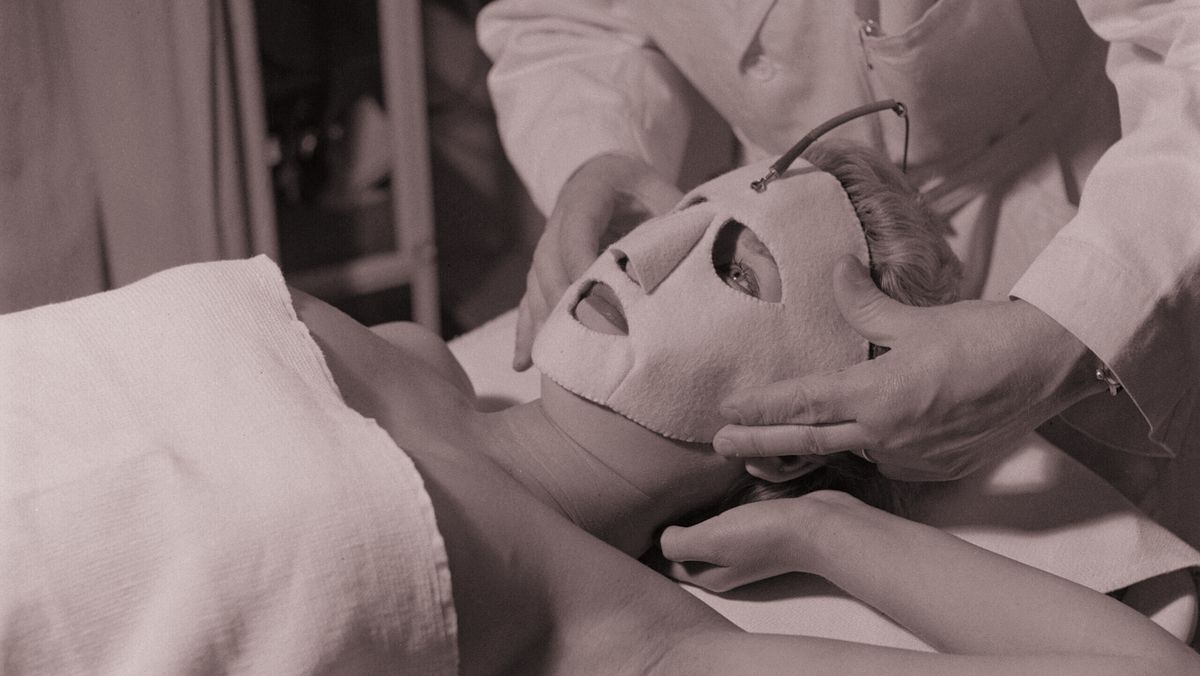
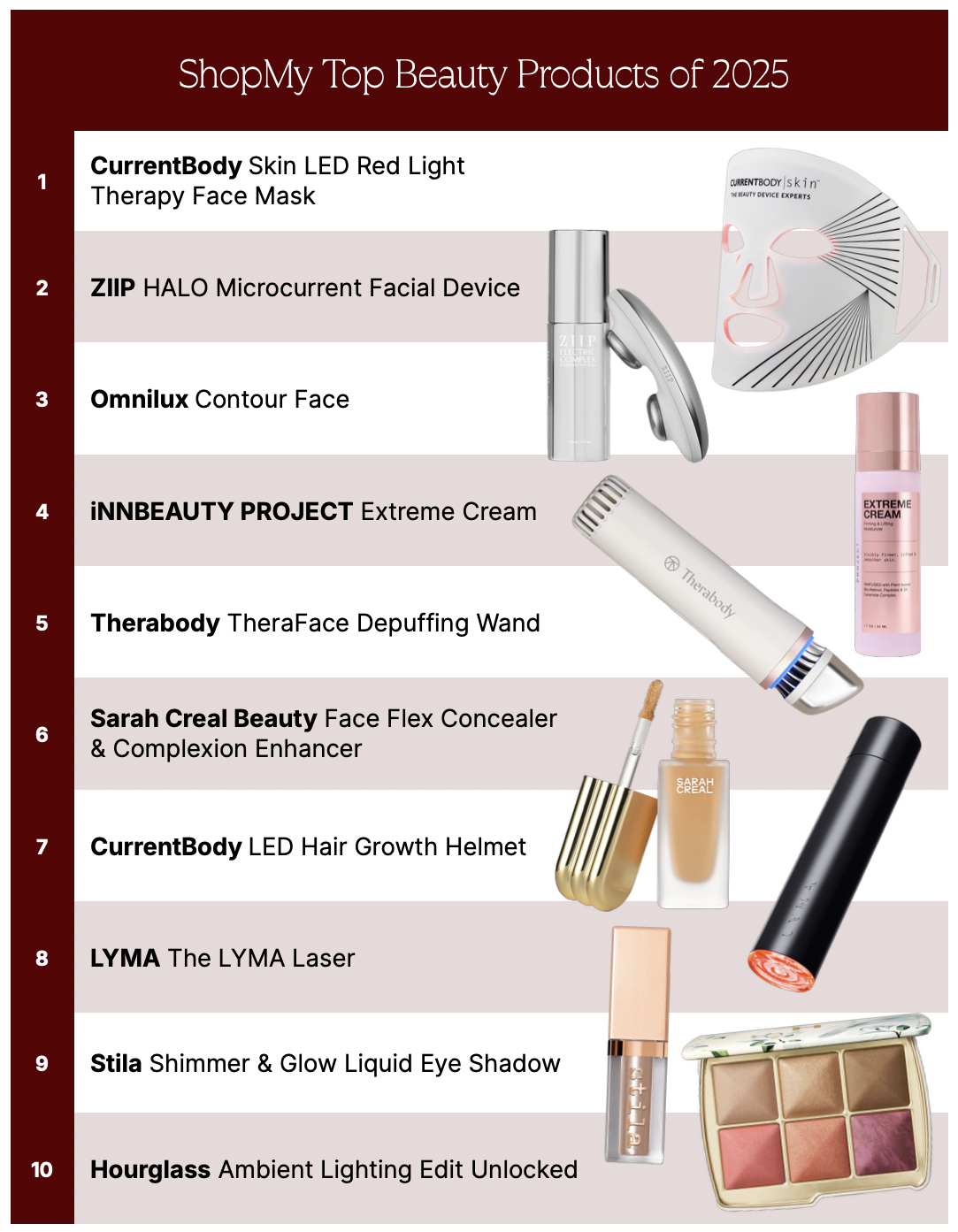
Beauty might be “recession-proof,” but influencers are monetizing anxiety with LED masks,
not lipsticks. Herewith, our exclusive presentation of ShopMy’s top 10 list for 2025. |
|
|
Beauty historians will one day parse ShopMy’s list of top-performing beauty products to understand how
influencers managed to reshape retail—and the culture—in their own image. Indeed, the top 10 affiliate beauty links on the platform for 2025, which we present here exclusively for Line Sheet readers, offers a unique reflection of our age, for better or worse: In short, those red light masks aren’t going anywhere. |
|
|
A MESSAGE FROM OUR SPONSOR |
The refined BMW 7 Series is all luxury. With the ability to define your design, the ultimate glamour is yet to be.
Learn more at BMWUSA.com. |
|
|
More than half the list is made up of LED and microcurrent devices—some priced north of $2,000, confirming
what affiliate data has been quietly signaling all year: Skincare, not makeup, is where the money is, and creators are now selling more expensive, medical-adjacent hardware, not just lipstick and foundation. Many consumers are reallocating discretionary spending away from $40 dopamine hits toward devices that cost three, 10, or even 60 times more and promise clinic-grade results at home. The highest-ranked skincare product without a plug or battery was InnBeauty Project’s
Extreme Cream, at No. 4. (Alisa Metzger, the company’s co-founder, told me that the company had partnerships with roughly 4,000 creators.) Notably, 65 percent of affiliate purchases of Extreme Cream were refills—a reminder that affiliate marketing, when done well, doubles as a retention strategy.
The list also confirms that ShopMy continues to skew toward more affluent
creators and an audience willing to spend—provided the pitch feels researched, credible, and not ripped from a brand brief. Six of the top 10 products were devices from CurrentBody, Ziip, Omnilux,
Therabody, and LYMA, with prices ranging from $170 to $2,695—an obvious advantage in a list ranked by revenue conversion. One CurrentBody hair-regrowth device was linked by more than 600 creators. (According to the
affiliate platform LTK, 87 percent of consumers are more likely to try a product after seeing it recommended by a creator.) |
Makeup doesn’t show up until No. 6, where Sarah Creal’s
Face Flex Concealer & Complexion Enhancer landed. The former co-founder and C.E.O. of Victoria Beckham Beauty, Creal launched the line at Sephora in fall 2024, and the product has now been shared by more than 500 creators. Stila’s Shimmer & Glow Liquid Eye Shadow also made the list, buoyed by TikTok chatter
positioning it as a dupe for pricier alternatives, as well as support from 180 influencers, including Hannah Chody, a Goldman Sachs–trained nepo baby from Chicago’s Garrett Popcorn family, former Real Housewife Bethenny Frankel, and YSE Beauty founder and podcaster Molly Sims. The Hourglass Ambient Palette
closed out the top 10 after being shared by nearly 900 creators. According to a ShopMy source, InnBeauty Project, Sarah Creal Beauty, and Hourglass all worked directly with the platform on gifting and influencer partnerships—no coincidence there. |
|
|
The absences matter, too. Lower-priced hits continue to dominate by category, even if falling
short in revenue rankings. Summer Fridays’ Lip Butter Balm led lip balms; Rare Beauty’s Soft Pinch Liquid Blush topped blush. Both are major Sephora sellers, and most influencers link to Sephora through LTK, where brand campaigns typically run for 60 days to track and pay commissions. According to a source at LTK, roughly 64,000 creators actively publish Sephora content on its platform, while more than 52,000 do the same for Ulta—proof that even the Substack-era influencer isn’t
platform-monogamous.
That calculus may soon change. This year, Sephora quietly launched its own affiliate program, My Sephora Storefront, enrolling about 1,900 creators so far, with a broader rollout planned next year. The move threatens LTK’s position as Sephora’s default affiliate pipe, even as brands continue to rely on third-party platforms to manage direct-to-consumer links.
For now, the lines are clear. Going by our ShopMy accounting, beauty’s influencer economy is currently
dominated by high-ticket skincare devices, while accessible color cosmetics drive volume elsewhere. Indie brands are using affiliates not just to acquire customers, but to keep them. Legacy brands are getting second acts via TikTok. And the platforms—ShopMy, LTK, and now Sephora—are battling over who gets paid when beauty sells itself. |
Have a great weekend,
Lauren
P.S.: We use affiliate links because we are a business. We
may make a couple bucks off them. |
|
|
Puck fashion correspondent Lauren Sherman and a rotating cast of industry insiders take you deep behind the scenes of this
multitrillion-dollar biz, from creative director switcheroos to M&A drama, D.T.C. downfalls, and magazine mishaps. Fashion People is an extension of Line Sheet, Lauren’s private email for Puck, where she tracks what’s happening beyond the press releases in fashion, beauty, and media. New episodes publish every Tuesday and Friday. |
|
|
Puck’s daily art market email, anchored by industry expert Marion Maneker, offers unparalleled access to the mega-auctions and
galleries, elite buyers and sellers, and the power players who run this opaque world. |
|
|
Need help? Review our
FAQ page or contact us for assistance. For brand partnerships, email ads@puck.news.
You received this email because you signed up to receive emails from Puck, or as part of your Puck account associated with {{customer.email}}. To stop receiving this newsletter and/or manage all your email preferences, click here. |
Puck is published by Heat Media LLC. 107 Greenwich St., New York, NY 10006 |
|
|
|