Welcome back to Wall Power. I’m Marion Maneker.
It’s always a
bit weird going to the Hamptons in the offseason—the traffic’s not nearly as bad, but then what is there to do? Tonight, I’ve got the answer, and I’ll take you with me on an unexpected trip to the Parrish Art Museum. There, I saw collector Glenn Fuhrman’s conversation with Jack Shear, widower of artist Ellsworth Kelly, to mark the opening of the show Ellsworth Kelly: Eight Decades. Before
that, I’ve got a report from Coco’s, the power restaurant and private club where entrepreneur Magnus Resch interviewed Christie’s C.E.O. Bonnie Brennan last night. Plus, I have some sales news from TEFAF in Maastricht.
Also mentioned in this issue: Matthew Marks, Michael Dell, John Phelan, Carol Bove,
Simone Leigh, Jeff Koons, Peter Doig, Faith Ringgold, Mónica Ramírez-Montagut, Corinne Erni, Jonathan Rider, Isa Genzken, Joseph Hirshhorn, and more… |
|
|
|
A MESSAGE FROM OUR SPONSOR |
|
|
|
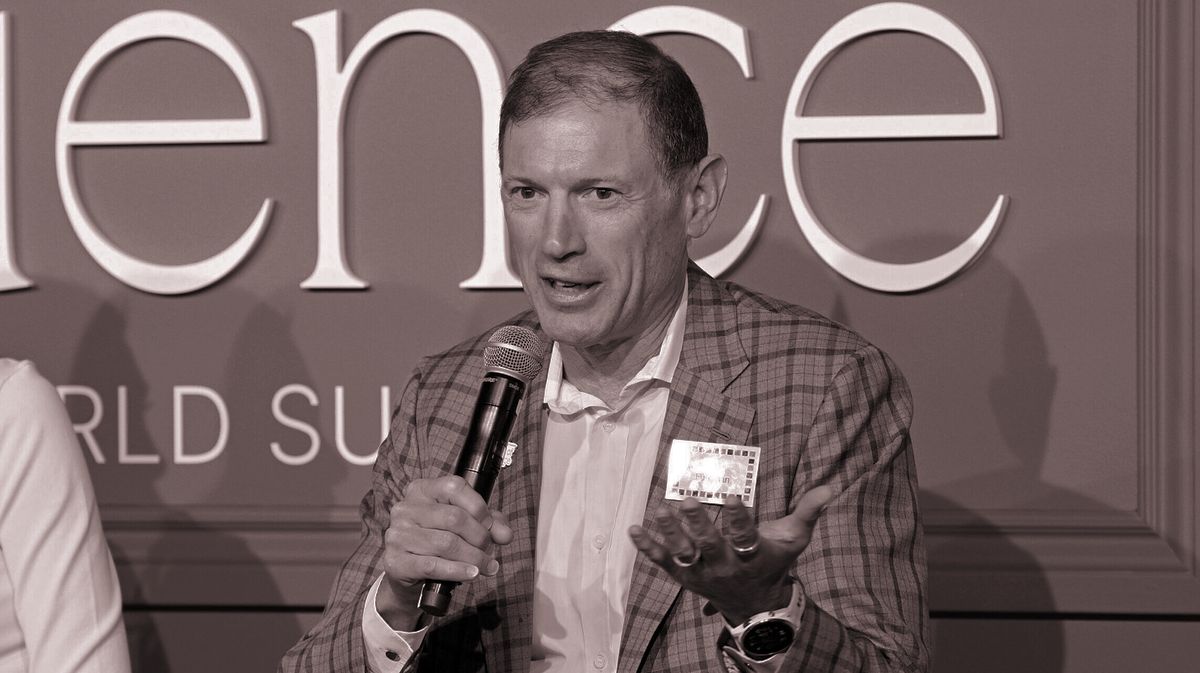
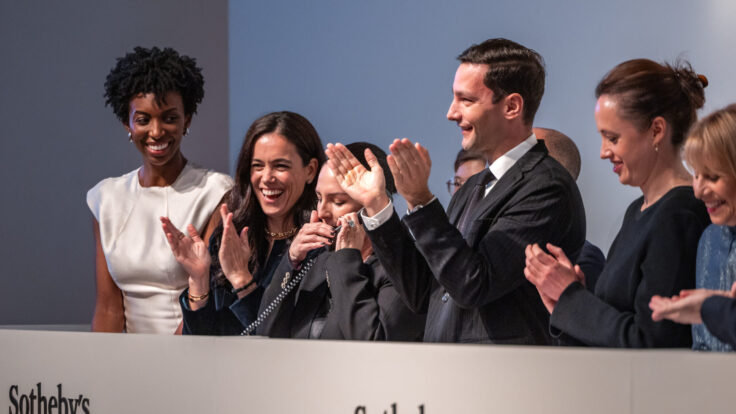
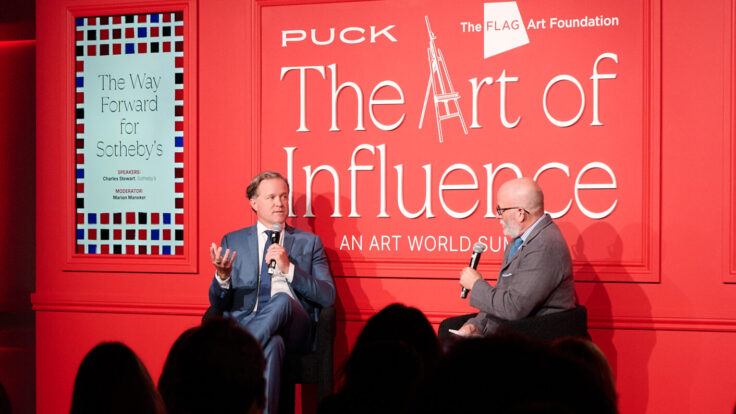
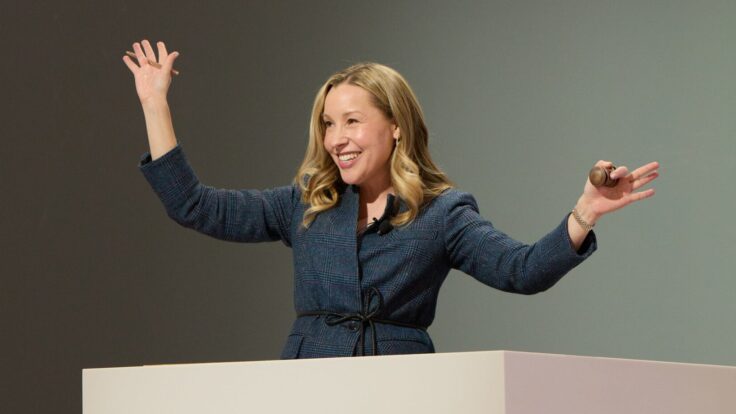
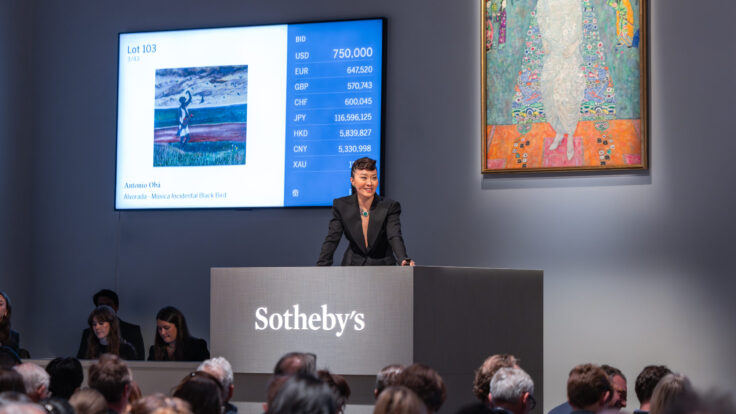
- Bonnie Brennan’s listening tour: I’m not a member of Coco’s, the private club on the 37th floor of what we used to call the GM Building, but it sometimes feels like everyone else in the art world is. Last night, Christie’s C.E.O. Bonnie Brennan was there on her brief visit to town between her many stops around the world, and I swung by to see her interviewed by Yale School of Management professor and entrepreneur Magnus Resch. The room was filled with
collectors and art professionals, and Resch opened with one of the perennial questions about the art market: With so much wealth in the world, why is the market seemingly stagnant? Brennan’s response was surprisingly open-minded and lacking in defensiveness. Although she pointed to the fact that secondary sales in the luxury market had proved a valuable source of new clients, especially young buyers, she was quick to agree that Christie’s struggles to make itself less foreboding and more
inviting to potential buyers. “We have to be better listeners,” she said more than once.
- A Maastricht sales report: TEFAF, which opened over the weekend, is already reporting a 5 percent increase in visitors over the first two days compared to last year. (The fair is only five days this year, compared to two weeks in previous years, and its last day is March 19.) TEFAF also claims that institutional visitors—a category that includes museum directors,
curators, and patron groups, and is a particular selling point to exhibitors—are up 10 percent, to 450.
And that crew did some buying. Gallery 19C sold a painting by Virginie Demont-Breton to the Van Gogh Museum for a price above €500,000. Agnews reported selling a Willem Drost painting from 1654 to Thomas Kaplan’s Leiden Collection. Elsewhere, Stuart Lochhead Sculpture sold a first-century vessel once owned by Nero for
€1.8 million. Dr. Jörn Günther Rare Books sold a manuscript, the Liechtenstein Tacuinum Sanitatis, for CHF5 million. And Colnaghi reported selling four major works. Among modern galleries, Ludorff in Germany sold a work by Max Pechstein with an asking price of €690,000. D Lan Galleries from Australia sold six Aboriginal works. Even the design galleries and those specializing in works on paper are reporting good sales.
|
Now, we’re going to take a trip to the East End… |
|
|
|
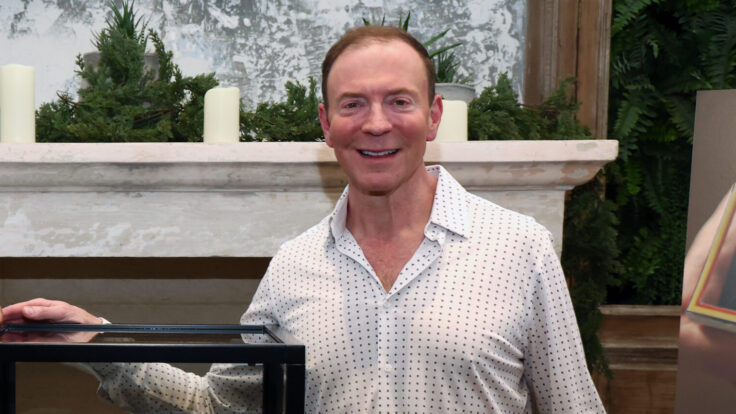
Glenn Fuhrman, the Wall Street banker turned art macher, hosted a late-winter
opening of the Ellsworth Kelly show at the Parrish Art Museum in the Hamptons—along with a pregame lunch at his art-filled Sagaponack home, which could double as a museum itself. |
|
|
|
I doubt you’ll have much sympathy for me, but I was not looking forward to my day trip to
Sagaponack last Saturday. Mid-March is the shoulder season’s shoulder season, and though the region’s cozy blanket of snow had finally melted, and Long Island had become sunny and warm for a day or two, the weekend seemed to offer neither a quiet winter idyll nor hope for spring. I had set out to attend the opening of Ellsworth Kelly: Eight Decades, the first show in a
partnership between Glenn Fuhrman’s FLAG Art Foundation and the Parrish Art Museum, a pillar of the Hamptons art scene. But a museum opening in the Hamptons in March gets no one’s heart racing.
How wrong I turned out to be. When we finally arrived at the Parrish around 2 p.m. on Saturday, the parking lot was full, and the museum was teeming with visitors. Fuhrman and Jack Shear, a noted collector of drawings and Ellsworth Kelly’s widower,
were slated to have a conversation in the large auditorium, which was filled to capacity, with many attendees lining the back of the hall. As Fuhrman remarked in his introduction, he didn’t think he had ever had to park so far from the Parrish’s entrance, even at the height of the summer season.
The crowds, of course, had not come for the weather or the weekend pleasures of easily traversing Route 27 without endless delays. And though Kelly is a giant in postwar art—when he returned from
Paris in the mid-1950s, he was part of the Coenties Slip crowd of Jasper Johns, Robert Rauschenberg, Agnes Martin, and others—his work seems to be engaging with a new group of collectors. Notably, his dealer, Matthew Marks, just opened a show of his work in Los Angeles for Frieze. Still, Kelly is not the sort of artist you normally associate with crowds. |
|
|
|
A MESSAGE FROM OUR SPONSOR |
|
|
|
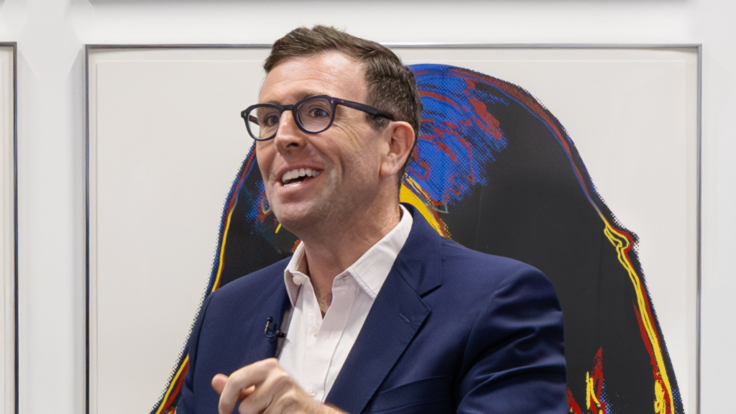
As those who attended our Art of Influence summit last September know, Fuhrman is a very good interviewer, and Shear, who described himself in their conversation as “an artist’s wife,” is a naturally entertaining and engaging raconteur. The allotted hour passed quickly as Shear and Fuhrman traded stories about Kelly, his art, his ability to control the narrative of his legacy, and their own roles in it. The result was as enjoyable a Saturday as I’ve had in a long time. |
In person, Glenn Fuhrman doesn’t come across as the titan of finance that he is. As an
undergraduate, he had gone to Wharton to study finance, but stumbled into an art history class early on. In the end, he was able to graduate while taking only a handful of finance classes but completing close to a dozen undergrad art history courses. Not that Fuhrman’s dalliance with art history changed his mind about working on Wall Street—he got his M.B.A. at Wharton before joining Goldman Sachs, where he worked for a decade.
That’s where he encountered Michael Dell,
who invested in some of Fuhrman’s deals. In 1998, Dell created MSD Capital to manage the fountain of money spurting out of Dell Computer. He introduced Fuhrman to a hedge fund executive named John Phelan. Dell figured that the two of them could work together to make him a lot of money, and he was right: They generated $17 billion in profits over a 22-year period. That’s not bad for a firm that bootstrapped itself with a mere $400 million. (Phelan, who is now secretary of the
Navy, also began collecting art while the two worked together at MSD.)
Seemingly diffident but hardly lacking in confidence, Fuhrman spends as much time talking about his relationship with artists as about the art itself. And, indeed, through his FLAG Art Foundation and his own collecting, the majority of the art he owns is primary work acquired from dealers and artists he has anecdotes about.
His house in Sagaponack, too, was designed to showcase his relationship with artists and
their art, especially large outdoor sculptures. When we arrived for lunch ahead of the Parrish event, we had to drive over one of the Andy Goldsworthy works that emerges from the grounds and snakes across the driveway so it’s impossible to avoid. That entrance seemed fitting, as if it said: This is a house where you will pay attention to the art. On our left was Roy Lichtenstein’s House 1, from 1996-98, and as we drove up to the
front of the house we passed a Carol Bove glyph coated in white powder. Across from the tree-lined entryway sits a large Richard Long sculpture, a circle made of shard-like red stones, and off in the distance, amid an orchard, stands a large Simone Leigh bronze. (The Fuhrmans donated another version of the same work to UPenn.)
As in many
houses built around significant art collections—and for owners who want to actually live with their art—the front entryway (it seems insufficient to call it a vestibule or foyer) is filled with some of the collector’s most important pieces. A massive, 10-foot-tall Jeff Koons from his coveted Celebration series, Cat on a Clothesline, from 1994-2001, confronts you as you arrive. To your left is an equally large Peter Doig
painting of a lion, among other works. |
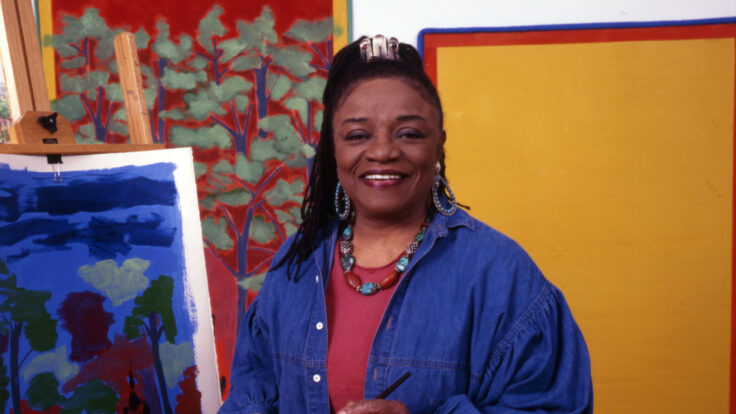
We arrived just in time for lunch. At the table, seated under a Faith Ringgold
work that has pride of place in the dining room, Fuhrman and an ebullient Shear previewed the stories he would tell at the Parrish. Also present were the museum’s director, Mónica Ramírez-Montagut; its chief curator, Corinne Erni; FLAG’s director, Jonathan Rider; and its deputy director, Caroline Cassidy. Fuhrman explained that while he is a trustee of the Museum of Modern Art and sits on the American board of the Tate
in London, his relationship with the Parrish sprang less out of interest in supporting another institution than out of the pesky height limits imposed by the Southampton zoning board.
Fuhrman, it turns out, had not realized there was a 20-foot cap on outdoor sculptures. His house was conceived and designed by Howard Backen as a lattice of interlocking wings, with a courtyard-like space to house a large Ugo Rondinone sculpture as well as vistas out onto
the grounds. And while the local height limit might not seem an insurmountable limitation to most of us, most of us don’t own Isa Genzken’s Two Orchids, from 2017, which stands 34 feet tall, or Lichtenstein’s Tokyo Brushstroke I & II, from 1994, one of which stands 33 feet tall. The easiest solution was for Fuhrman to loan the works to the Parrish, which is 10 minutes down Route 27. Genzken’s sculpture was on view there for a few years until recently, replaced
by Lichtenstein’s restored brushstrokes. |
|
|
|
Those loans evolved in 2024 into a series of exhibitions sponsored by Fuhrman titled Fresh
Paint, each of which featured a single artwork made within six months of the exhibition. That success, in turn, led to a new partnership between the FLAG Foundation and the Parrish that will involve three exhibitions a year over the next five years, through 2030. For Fuhrman, who is also funding a curator’s position at the Parrish to support these shows, it’s an opportunity to be more involved in the art side of a museum than a trustee normally might be.
It helps to have good
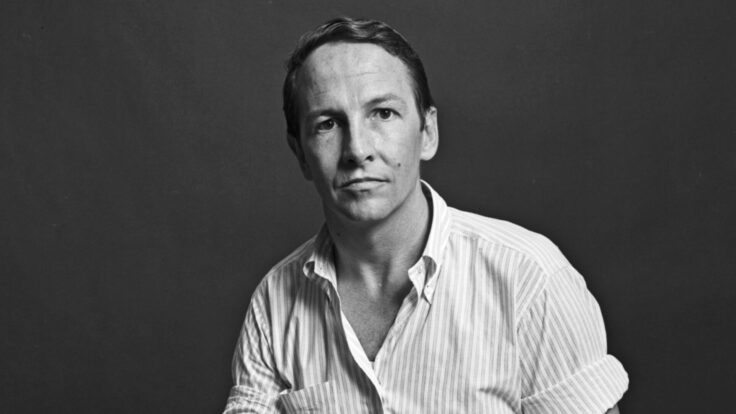
relationships with artists, and their estates. Fuhrman proposed the current Ellsworth Kelly exhibition to Shear and got him on board with a single phone call. The result is a very restrained retrospective of 20 works that chart the artist’s long career and leave very little wanting. Beginning with a remarkable figurative work, Self-Portrait with Bugle, from 1947, it progresses through a number of different abstractions, as well as the remarkable barn photographs that reveal Kelly’s
ability to find abstract forms in nature.
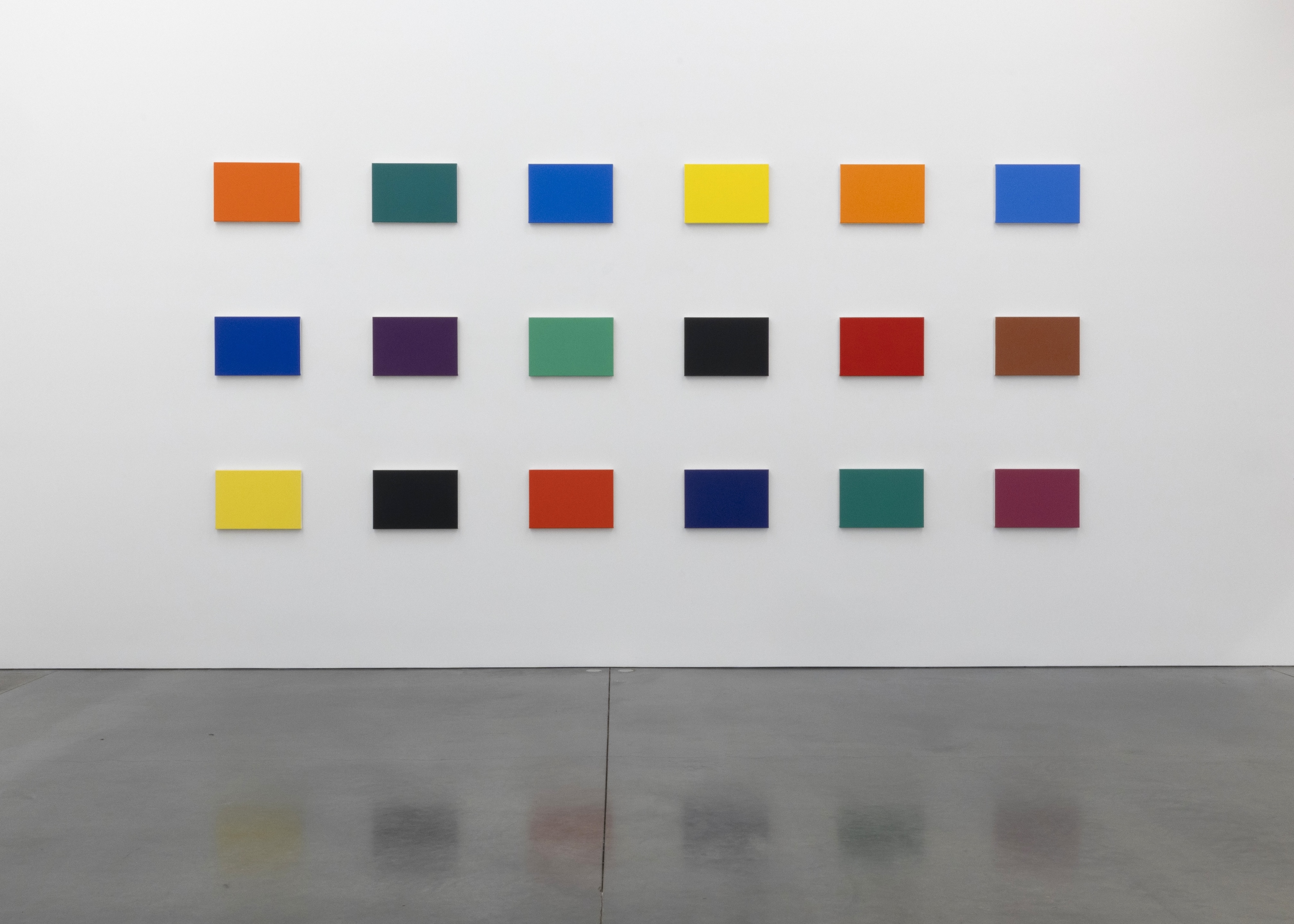
Over lunch, Shear explained the importance of the 18-panel work that forms the centerpiece of the show. It is a study for a work that Kelly was commissioned to make in 1978 for the Central Trust Company of Cincinnati—a modern building in grey tones that would feature Kelly’s colorful panels, in two rows of nine pairings, behind each of the bank’s nine teller stations. In 1992, after the company was merged into a larger bank, Shear and Kelly
suggested that the bank donate the work to a local museum. Kelly followed up by swapping the large installation for two smaller works that the museum could actually display. Eventually, Kelly reconfigured the panels into three rows of six and placed it with the National Gallery’s East Building, where it now fills a large wall across from the museum’s massive
Calder. |
Ellsworth Kelly: Eight Decades, Parrish Art Museum, New York. Photo:
Jenny Gorman/Courtesy of the Parrish Art Museum and The FLAG Art Foundation |
It wasn’t the first time Kelly had taken his legacy into his own hands. Fuhrman shared a
story about Joseph Hirshhorn, the collector who was well known for making bulk deals with artists, buying whatever they happened to have in their studio when he came to visit. When Hirshhorn’s holdings became the basis of the Smithsonian’s modern art museum in Washington, D.C., Kelly took it upon himself to trade out works from his own holdings so that the Hirshhorn would have what the artist felt was a fitting representation of his career. |
After lunch, and before we headed to the Parrish, Fuhrman gave the gathered group a tour of the
house, the grounds, and his art collection. In the hallway leading to Fuhrman’s study is a large Lawrence Weiner piece. After the artist died in 2021, Fuhrman collaborated with Weiner’s close friend Ragna Róbertsdóttir to add volcanic stone to the wall, creating a tribute to him. In the study, Fuhrman has a number of works, including maquettes for Lichtenstein’s outdoor sculptures that he bought from Dorothy Lichtenstein. Facing the doorway is a
large Anna Weyant painting that depicts a three-quarter-length young woman who appears fashionably dressed until you notice a small strip at the bottom of the painting, which reveals that she is nude below the waist.
In the living room, a large Jenny Saville painting faces a work by Derek Fordjour. Behind that is a room containing works by Amoako Boafo and Aliza Nisenbaum. In the basement, Fuhrman has
created a skylight gallery linked with Sam Gilliam works on paper. And around the house are other works by a wide range of artists, including Reggie Burrows Hodges, Sara Flores, Mark Grotjahn, Graham Little, and many others. In May, Fuhrman is publishing a
book of his
collection, Collecting Contemporaries, where you can see many more of these works.
Taking us back outside to see the sculptures, Fuhrman told a story about Ellsworth Kelly. When the artist came to visit the property before installing the large totem work directly behind the house, he asked whether Richard Serra had been there yet. (There is a large Serra Cor-Ten steel work sited not far from the house, with a Roxy Paine chrome tree in between.)
When Fuhrman assured Kelly that Serra hadn’t, the artist seemed relieved. Kelly lamented, “Richard gets all of the best spots.” |
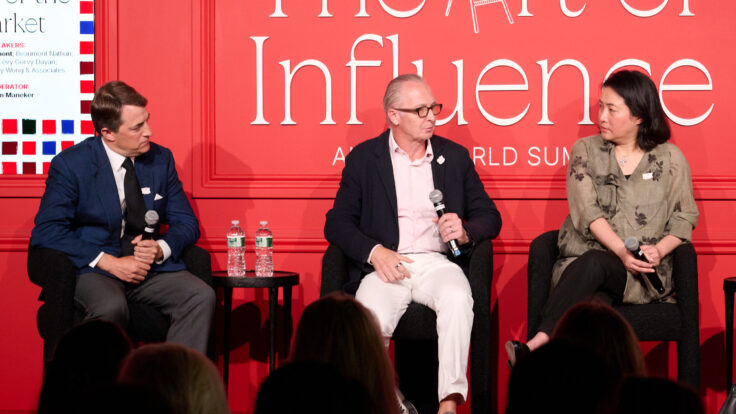
Some of you will no doubt remember that Puck hosted the Art of Influence summit last
September in partnership with the FLAG Art Foundation. During that event, Glenn Fuhrman interviewed artist Nicolas Party and appeared on a panel with collectors Michael Ovitz, J. Tomilson Hill, and Dasha Zhukova. Before anyone asks, I thought I would let you all know that we are planning another event this September. I hope we’ll have more to tell you this summer.
One note from Sunday—we told you
Rio Kobayashi is 27 years old. That was an error on our part. He’s 36.
And, with that, I’ll look forward to seeing you tomorrow in the Inner Circle. Sign up here, if you have not already.
Yours,
M |
|
|
|
Puck founding partner Matt Belloni takes you inside the business of Hollywood, using exclusive reporting and insight
to explain the backstories on everything from Marvel movies to the streaming wars. |
|
|
|
Ace media reporter Dylan Byers brings readers into the C-suite as he chronicles the biggest stories in the industry:
the future of cable news in the streaming era, the transformation of legacy publishers, the tech giants remaking the market, and all the egos involved. |
|
|
|
Need help? Review our FAQ page or contact us for assistance. For brand partnerships, email ads@puck.news. You received this email because you
signed up to receive emails from Puck, or as part of your Puck account associated with {{customer.email}}. To stop receiving this newsletter and/or manage all your email preferences, click here. |
Puck is published by Heat Media LLC. 107 Greenwich St., New York, NY 10006 |
|
|
|
|