Hi, and welcome back to Line Sheet. I’m trying to distract myself from what’s happening just a few miles from my home by following the increasingly public battle between advertising conglomerates WPP and Publicis. It started with WPP having an issue with Publicis over “ ad quality” (whatever that means), but it really seems to be about the fact that Publicis just filched the $1.7 billion Mars account. Meanwhile, WPP’s C.E.O. is leaving. The drama.
Yes, yes, I know there’s plenty of drama in fashion and beauty, too. Today, Rachel takes a closer look at Shiseido’s stewardship of Drunk Elephant, the skincare phenomenon it acquired in 2019 for $845 million. Let’s just say it hasn’t been the easiest integration. I, for one, am fascinated by the youth obsession with a brand that touts extremely grown-up ingredients like retinol and exfoliating acids. I recently hung out with a 12-year-old who informed me that Drunk Elephant is no longer cool with her beauty fridge–owning crew. “It’s for babies,” she said. “Kindergartners.” Okay!
Up top, I’ve got a list of the fashion-adjacent invitees to this year’s Allen & Co. conference in Sun Valley, and notes on a special Luca Solca report analyzing the current situations at Kering, LVMH, and Hermès. Finally, Sarah Shapiro explains why everything in every store is made of crinkle fabric now.
Mentioned in this issue: Shiseido, Ron Gee, Kentaro Fujiwara, Drunk Elephant, Sephora, Tiffany Masterson, Alix Earle, Nars, Lucia Perdomo-Ruehlemann, LVMH, Hermès, Kering, François-Henri Pinault, Alexandre Arnault, John Donahoe, the Bezos wedding, and many more…
|
|
|
|
A MESSAGE FROM OUR SPONSOR
|
|
For your consideration: Sponsors include Max, presenting The Righteous Gemstones. In the fourth and final season, the family's codependence is tested as they attempt to move forward without letting go of their storied past. Don't miss the series Slate is calling “The best comedy on TV”. Emmy-eligible for Outstanding Comedy Series and all other categories. Now streaming on Max.
|
|
|
Three Things You Should Know…
|
- The most wonderful time of the year: I have to say, there are few things I love more than tracking attendees of the annual Allen & Co. conference in Sun Valley, Idaho. Of course, I love the morning promenade down the path to the lodge, which doubles as a fashion show fit for an episode of Succession (R.I.P.), but also the promise of dealmaking. Remember when François-Henri Pinault showed up a few weeks after Matt broke the news that he was looking to buy CAA? That deal got sewn up at Sun Valley.To be honest, the invite list this year is kinda boring, at least on paper. The good news is that we have Alexandre Arnault representing LVMH, and his friend Josh Kushner there on behalf of Thrive Capital (here’s hoping wife and i-D magazine owner Karlie Kloss tags along). Slack co-founder Stewart Butterfield is listed, which means wife (and former Away C.E.O.) Jen Rubio should be around. Diane von Furstenberg is slated to attend, and of course, Alice + Olivia designer Stacey Bendet Eisner, a crowd favorite on the looks front, is a near-shoo-in. (Her husband, Eric Eisner, son of Michael, is on the list.) Then there’s Ynon Kreiz from Mattel and Sara Blakely, who is inexplicably still listed as the C.E.O. of Spanx, even though we all know she has moved on to Sneex.
You’ll find plenty of developer/investor types of interest: Rob Speyer of Tishman Speyer fame; Danny Rimer from Index Ventures (Etsy, Glossier, Farfetch, Business of Fashion); John Donahoe, the former C.E.O. of Nike. The On Running guys are missing this year, as is Pinault. We’ll make it fun no matter what. Plus, it’s happening just days after the Bezos wedding in Venice, so there will likely be some crossover content.
- Kering M&A wagers: Luca Solca over at Bernstein just published a fascinating report looking at the structure of the three most important French-headquartered companies in luxury, all of which are family-run. (Remember, Chanel is run out of London, Richemont is in Bellevue.)The family behind Hermès, for instance, set up a holding company in 2010 (after LVMH tried a creeping takeover) that “effectively eliminates the possibility of further hostile takeover attempts,” despite the weird situation with the heir who left—or tried to leave?—his shares to his gardener. At LVMH, the Arnault family controls 65 percent of the voting rights through a fairly complicated structure that Sidney Toledano tried to explain to me once but is still kind of confusing. The Arnault family office, Financière Agache, owns 97 percent of Christian Dior SE, which in turn holds 57 percent of LVMH voting rights, and then Financière Agache directly holds another ~8 percent of the voting rights.
Anyway, according to Luca, the one to watch here is Kering, thanks to all the debt I mentioned earlier in the week, some of it connected to real estate purchases, but also connected to Groupe Artémis, the Pinault family office, and its purchase of C.A.A. at a $7 billion valuation in 2023. “Gucci failing to revive could open new scenarios when it comes to how Kering works/is controlled,” Luca wrote. Don’t rule out the “possible involvement of creditors like Mayhoola in the Kering capital, further divestitures beyond real estate deals in progress in New York (for example, the Fifth Avenue building which was acquired 18 months ago), and Milan.” However, Luca also believes “transformative M&A”—meaning a merger with another big luxury player, like Richemont—“seems off the menu, at least for the moment.”
|
|
|
 |
Sarah Shapiro |
|
- Here’s the wrinkle: I’ve noticed an abundance of crinkle fabrics lately—practically every retailer is selling at least one set, including Eileen Fisher, Gap, and Zara. What’s happening?First, the fabric is an easy alternative to linen, which can be a pain to manage. Crinkle fabric, unlike finicky linen, is made to be scrunched, making it ideal for travel. It’s also an evolution of the Issey Miyake Pleats Please revival of the last decade. Once relegated to artsy Nancy Silverton types who have been wearing the Japanese since the 1980s, Pleats Please became the fashion set’s favorite thing to thrift. Alongside Pleats Please, Mara Hoffman’s riff—form-fitting, Tencel popcorn material—also became a staple at upstate weddings.
At this point, does every brand need crinkle in their assortment? Of course not, but it’s no wonder that the material fits into the merchandise mix for so many this year. For one, it can be a margin builder. The fabric is pretty easy to play with—the wrinkles are super forgiving and there are no temperamental stripes to line up. Also, brands are buying the fabric in bulk for the tops and the bottoms (Gap uses it for kids, too), which brings down the material costs even more.
But is there too much of it out there already? Probably. In order to move product, brands will need to market their fabric’s attributes and distinguish their styling and merchandizing from everyone else’s. Is it worth holding some fabric for next year, when tariff issues could finally hurt inventory levels and retailers are going to be desperate for newness? Depends on whether you deem the crinkle a true classic, or just this summer’s version of the embroidered camp shirt.
|
|
|
|
And now, on to the main event…
|
|
|
|
How a viral-hit bronzer, post-exit blues, and Shiseido’s bungling of the clean beauty pioneer sobered up Drunk Elephant.
|
|
|
|
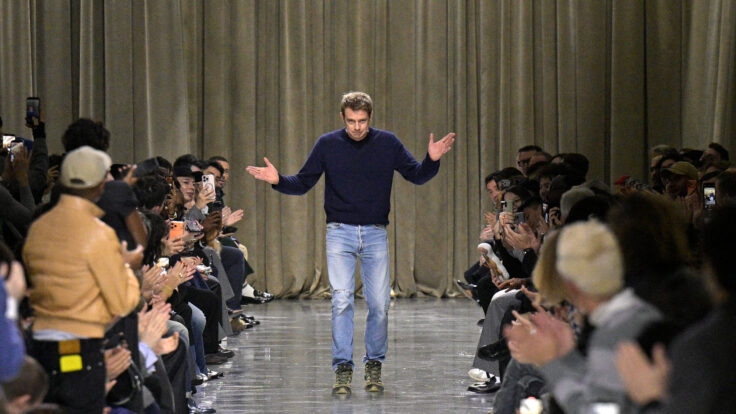
It’s been a rough couple of years at Shiseido, the Japanese cosmetics giant whose stock has cratered some 80 percent since peaking in 2018. Ron Gee, the former C.E.O. of the Americas division and Shiseido’s global M&A lead, abruptly left the company in April without a successor in place. Indeed, an executive at the company told me they had spoken with Gee just days before his departure, and there was no indication of a forthcoming change. Employees found out via a Microsoft Teams meeting hosted by Shiseido C.E.O. Kentaro Fujiwara, and that was that.
Alas, Shiseido is badly in need of change. The company’s operating profit has been declining for years, culminating in a 73 percent drop in 2024. Its acquisitions haven’t fared too well, either. Dr. Dennis Gross Skincare, which the company absorbed in 2023 in a $450 million deal, probably won’t earn out, according to a person familiar with the terms. A deal to acquire the skincare line Osea last summer, which was “basically fully done,” according to this person, fell apart. And then there’s Drunk Elephant.
|
|
|
|
A MESSAGE FROM OUR SPONSOR
|
|
For your consideration: Sponsors include Max, presenting The Righteous Gemstones. In the fourth and final season, the family's codependence is tested as they attempt to move forward without letting go of their storied past. Don't miss the series Slate is calling “The best comedy on TV”. Emmy-eligible for Outstanding Comedy Series and all other categories. Now streaming on Max.
|
|
|
|
When Shiseido acquired the “clean beauty” pioneer for nearly $850 million in 2019, Drunk Elephant was the top-selling skincare line at Sephora—a fun-but-serious brand that appealed to tweens and grownups, alike. According to documents I viewed, Drunk Elephant is now only the eighth-best-selling brand at Sephora North America, and sales for eight of its top 10 products are down anywhere from 25 percent to 56 percent at the retailer. Shiseido’s own financial reports show overall sales of Drunk Elephant tumbled 25 percent in 2024. In the first quarter of 2025, sales plunged by a staggering 65 percent year over year.
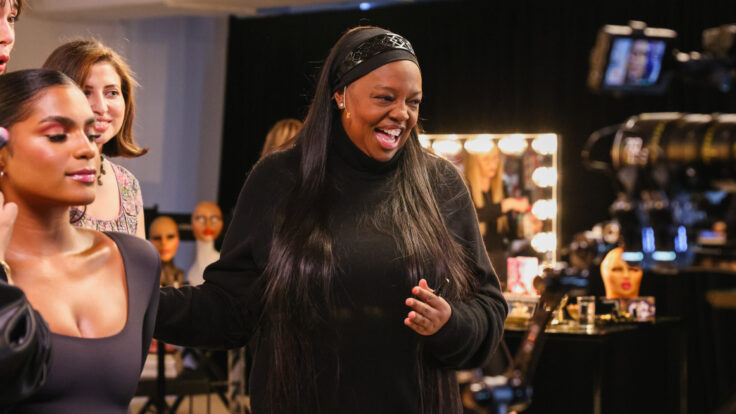
As I previously reported, and a spokesperson for Drunk Elephant just confirmed, founder Tiffany Masterson has decided to “step back from her role as chief creative officer,” a title she’s held since launching the brand in 2013. The spokesperson said that while she will “no longer be involved in the day-to-day operations, Tiffany will continue to support the brand she built, participating in special moments and events.” A person with knowledge of her departure said, “Tiffany doesn’t see eye to eye with the changes that were made and the results that new leadership has gotten.”
|
The Post-Acquisition Blues
|
|
It’s not unusual for founders to step aside after an acquisition, of course—they’ve become generationally wealthy, don’t need to work, and often have other aspirations. Many beat it as soon as their contract allows. But Masterson, who had overseen everything at Drunk Elephant, from creative to product development, apparently wanted to remain involved. It was only after the situation became untenable, according to multiple sources, that she decided to move on. “It became very clear that leadership wouldn’t allow her to make decisions––even the ones she was contractually supposed to,” one of these people said. (Masterson didn’t respond to a request for comment.)
Yes, much of the industry is grappling with the same macro issues (overreliance on China, softening in the skincare sector, the uncertain tariff situation, etcetera), but many of Drunk Elephant’s challenges are sui generis. The brand was once among the most anticipated M&A targets, pre-Covid, thanks to its very adult anti-aging ingredients (retinol, AHA, ferulic acid, sodium ascorbyl phosphate…) and colorful, kid-friendly packaging. Drunk Elephant continued to see growth through 2023, the same year an organic Alix Earle endorsement prompted preteens to become obsessed with the brand’s D-Bronzi drops.
Unfortunately, the company couldn’t keep the product in stock—part of larger stock issues, I’m told. A person close to Shiseido’s business estimated that the brand failed to capture about $40 million in potential Sephora sales last year due to an inability to keep up with demand. This aligns with data I’ve seen that shows the brand’s sales at retailers are down by 39 percent this year.
Some have pointed to the slew of executive departures. Others have blamed Gee, a serial C.F.O. in his first C.E.O. gig, for the shortcomings. “They put the wrong guy in a position where it’s all about the ideation, the energy, and the ability to capitalize on trends,” said one high-level industry leader. (Gee, who is bound by an NDA, disputed that characterization but otherwise declined to comment. “Mr. Gee did his job at Shiseido in good faith, and he would simply like to move on and continue his stellar career,” his attorney said. “Perhaps he will, at some point, be able to speak about the events surrounding his departure from Shiseido.”)
|
|
|
|
Others point to broader strategic misfires. According to a former Shiseido executive, the real trouble was that Drunk Elephant more or less inherited the P.R. and marketing teams from Nars, which Shiseido acquired in 2000, and may have adhered too closely to the same template. “Nars was the chosen brand, and if it worked at Nars, then it had to work at every other brand. It was, ‘How did Nars do it? That’s how you have to do it,’” the former executive said. “The department is still run by Nars veterans who doggedly refuse to acknowledge it’s not working.”
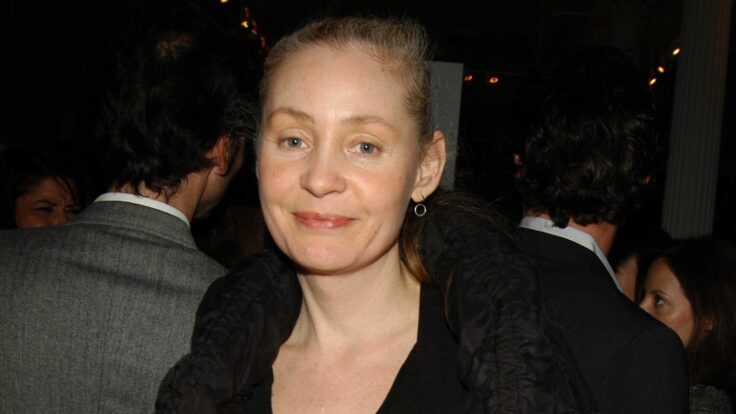
In any event, the transfer of the Nars playbook to Drunk Elephant is clearly one reason its marketing campaigns began to feature much younger models and more stylized aesthetics—more like a Gen-Z makeup brand than a Millennial skincare line. “Marketing dramatically shifted to the industry standard––which is that anyone over 28 doesn’t exist,” a person with knowledge of the situation said. These frustrations drove Lucia Perdomo-Ruehlemann, Drunk Elephant’s talented former chief marketing officer, to resign in 2022, according to three sources. (Perdomo-Ruehlemann is now the president of Saie.)
Unfortunately, acquisitions almost never pan out the way the buyer and seller hope. Usually, it goes something like this: A global beauty conglomerate acquires a brand for a large sum, said brand loses its way and its core message as the parentco scales, and founders become less involved, sometimes by choice and other times not. Conglomerates are almost never able to retain a brand’s magic post-sale—save for a select few, like Le Labo and The Ordinary (both owned, for what it’s worth, by The Estée Lauder Companies). It’s inevitable, no matter how sexy the brand or its products, that marketing and product development get diluted as the new owners try to globalize their new property.
Pretty early on, post-acquisition, there were rumblings about Drunk Elephant’s loss of momentum and lack of resonance in certain global markets. Perhaps a lot of that was due less to its new corporate parent, and more to the downside of being first to market––an affliction that even the most disruptive and industry-changing brands, like Glossier, aren’t immune to. “Drunk Elephant paved the way for a lot of the skincare movement and the surge in ‘clean,’” said a person close to Sephora. “And then it felt less special.”
|
What We’re Reading… and Listening to…
|
Congrats to friend-of-Line Sheet Lizzie Paton, who is leaving the Styles desk at The New York Times to be the fashion editor of the Financial Times, a gig she was born to do. Her predecessor, Lauren Indvik, has become inordinately obsessed with interior design and antiquing, and thus is moving to the FT’s House & Home section, where she’ll be deputy editor. [ BoF]
Can someone be beautiful or sexy if they are also totally artificial? We love Rhonda Garelick for asking. [ New York Times]
Matt Belloni chats with the new C.E.O. of UTA about everything that’s happening in Hollywood right now. [ The Town]
|
|
Until tomorrow,
Lauren
P.S.: We are using affiliate links because we are a business. We may make a couple bucks off them.
|
|
|
Need help? Review our FAQ page or contact us for assistance. For brand partnerships, email ads@puck.news.
You received this email because you signed up to receive emails from Puck, or as part of your Puck account associated with . To stop receiving this newsletter and/or manage all your email preferences, click here.
|
|
Puck is published by Heat Media LLC. 107 Greenwich St, New York, NY 10006
|
|
|
|