 |
 |
|
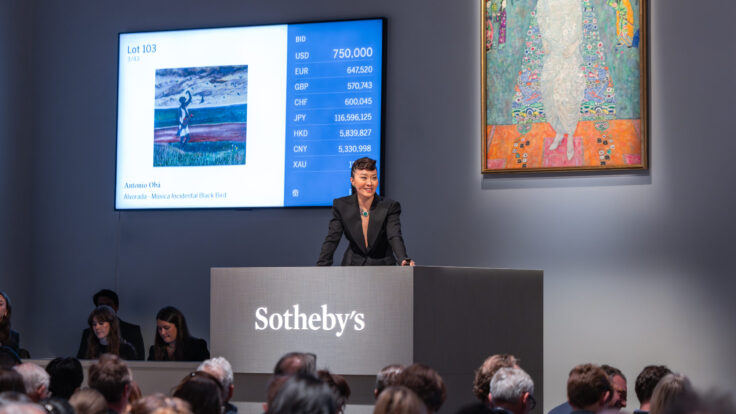
Welcome back to Wall Power. I was surprised—and also not at all surprised—on Friday morning by the news that Sotheby’s would be receiving “approximately $1 billion” in cash from A.D.Q., the Abu Dhabi sovereign wealth fund with very deep pockets, and additional capital from Patrick Drahi, that would allow Drahi to retain a majority ownership position. For now, that’s all we know about the deal.
Tonight, I’m going to try to divine what I think is happening, and provide you with the context surrounding it. The CliffsNotes version is that Drahi has been pining for this investment for most of the year, and perhaps longer. The money buys the auction house the time it needs to pay its bills and bondholders as it takes the keys to its new headquarters on Madison Avenue in the Breuer building, originally designed for the Whitney Museum, and opens new spaces in Paris and Hong Kong.
What the investment means for the future of the company, and Drahi’s ownership… Well, that is going to require a little more space. Welcome back to Wall Power. I was surprised—and also not at all surprised—on Friday morning by the news that Sotheby’s would be receiving “approximately $1 billion” in cash from A.D.Q., the Abu Dhabi sovereign wealth fund with very deep pockets, and additional capital from Patrick Drahi, that would allow Drahi to retain a majority ownership position. For now, that’s all we know about the deal.
|
|
A MESSAGE FROM OUR SPONSOR
|
 |
Polestar 3. Design that turns heads, without compromising performance.
Experience responsibly-sourced materials like Nappa leather and animal welfare certified wool, a minimalist Scandinavian interior. Designed to create a uniquely uncluttered experience that appeals to the senses without overwhelming them. Be among the first to experience Polestar 3.
Schedule your test drive today |
|
|
But first…
- Is this really how art dealers think about their clients?: An anonymous art dealer of 15 years’ experience (or so we’re told) took to Artnet last week to publish a screed against art collectors. The section headings capture the hectoring tone: “Be Humble!” “Build Relationships!” “Don’t Waste Our Time!” “Be Sane About Prices!” “Pay On Time!”
Reading the “mass email,” it’s hard to tell if the post is a satire or sincere. Either way, it does underscore some of the simmering resentments and tensions within the primary market. From the buyer’s point of view, it is simply too hard to buy art. Few galleries behave like a retail operation where you get to buy what you like. Instead, they pick and choose to whom they will sell based on criteria that can be opaque. All of this is expressed in the dealer’s letter, which basically tells collectors to do what they’re told or they won’t get any of the “good” art.
Of course, this is one of the central points of art advisor Jacob King’s recent analysis: Primary dealers dictate to collectors who gets what work (and which other works the collector must buy to “build relationships”) while claiming the value of the art will continue to rise. You’ll have to read the “letter” to get the full force of the dealer’s contempt for clients. It should surprise no one, including the dealers, that clients bridle and rebel against these high-handed and condescending tactics.
- Rosencrantz and Guildenstern Are Dealing Art: Earlier this year, when I wrote about the return of Inigo Philbrick, I read a galley of Orlando Whitfield’s new memoir about his art school buddy-turned employer-turned fugitive fraudster, titled All That Glitters. The title is meant to capture Whitfield’s own disenchantment with the art world as well as flick back at Philbrick’s golden boy flame-out story arc. At the time, the book had been published in the U.K. but not in the U.S. Now that it’s out here, I think it’s worthwhile to briefly return to the subject.
Unfortunately, if you’re fixated on Philbrick, the book is a bit of a disappointment. Yes, we get details on Philbrick’s personality, and even some of the timeline behind his $86 million scam. If you’re fascinated by confidence men, there’s plenty here for you. But Philbrick spends a great deal of the book offstage. Like Tom Stoppard’s famous play about two minor characters in Hamlet, the book seems to be miles from the real action. Mostly, we watch as Whitfield wanders aimlessly through self-doubt until the death of his father allows him to find himself as the apprentice to a master art conservator. The big surprise of the book is that Whitfield is a talented writer and his own coming-of-age story turns out to be more satisfying than Philbrick’s rise and fall. The book’s greatest value is not any inside look at the art world but rather as a touching, if naive, bildungsroman.
|
| Now let’s look at what’s going on at Sotheby’s… |
 |
| Drahi’s Billion-Dollar Question |
| Caught between a slowing art market and $1.88 billion in debt, Sotheby’s owner finally landed the investment he needed to see his art world adventure through. What will he do with the money? |
|
|
|
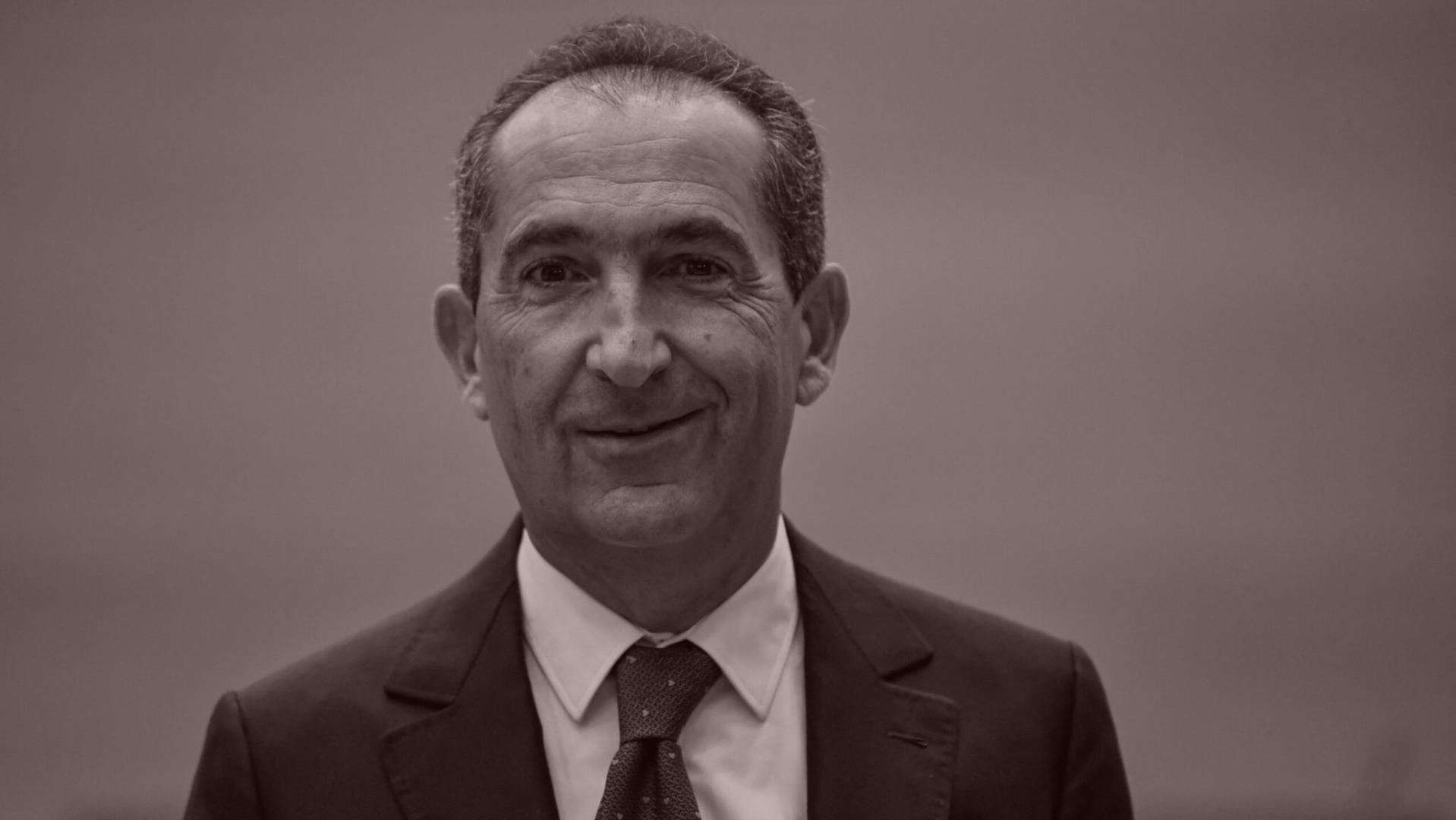
| Patrick Drahi, the founder of the Altice telecom empire, is a wily and unsentimental investor—a master at using debt to finance his aspirations. In 2019, he surprised the world by acquiring Sotheby’s for $3.7 billion and taking it private, financing a large portion of the acquisition with $1.88 billion in bonds. But as Altice struggles against its debt load, and upon the revelation that one of his closest partners had been bilking him via a procurement scam, Drahi has needed to shore up his hold on the auction house, which will need to refinance some of its debt in the coming years. Of course, the art market contraction and subsequent hit to Sotheby’s revenue have only made matters more pressing.
On Friday, Sotheby’s announced that Drahi would invest “approximately $1 billion” in additional capital into the auction house alongside A.D.Q., the Abu Dhabi sovereign wealth fund. Most of that approximately $1 billion will come from the Emiratis, but some of it will come from Drahi, so that he can maintain his position as majority shareholder. Over the weekend, it was reported that Drahi sold £1 billion worth of his shares in BT, the British telecom, most likely to cover margin calls. (Altice owns about 25 percent of BT.)
As you might expect, Abu Dhabi has non-financial motives for gaining a stake in Sotheby’s. Abu Dhabi is the site of the U.A.E.’s museum complex on Saadiyat Island, including an outpost of the Louvre and other storehouses of cultural treasures, many of them—like Stan, the $32 million T. Rex—bought at Sotheby’s. Although Dubai has been the site of auctions and previews, most buyers from the region would happily transact in London, Paris, New York, or Hong Kong. There’s simply no great reason for the auction houses to expand more than they have in the Gulf.
The big question, of course, is what kind of deal A.D.Q. got—and where this positions Sotheby’s over the next few years. The auction house has had a difficult 2024, with significant staff reductions in London and Hong Kong, and there’s been talk that the new investors feel Sotheby’s can be shrunk even further. So that $1 billion is likely to shore up Sotheby’s credit rating—credit experts told me that the 2027 bonds jumped 10-12 points on Friday after the investment was announced—or to buy Sotheby’s management more time to repair the damage to its margins from the brutal competition in the auction business. In any case, most everyone watching this deal from the sidelines is trying to figure out the valuation that the Emiratis put on their new investment. |
|
A MESSAGE FROM OUR SPONSOR
|
|
Polestar 3. Design that turns heads, without compromising performance.
Experience responsibly-sourced materials like Nappa leather and animal welfare certified wool, a minimalist Scandinavian interior. Designed to create a uniquely uncluttered experience that appeals to the senses without overwhelming them. Be among the first to experience Polestar 3.
Schedule your test drive today |
|
|
|
|
| A.D.Q. isn’t the first Gulf State entity to want to invest in an auction house. In 2010, the Qatari royal family, whose avid and catholic appetite for acquiring different forms of cultural property is well-documented, made the unusual step of telling the FT they were interested in buying Christie’s. “We are building a museum, and it has links with the stuff we are collecting for our museum,” the Emir said, perhaps too bluntly. The only problem was that Christie’s then-and-current owner, François Pinault, was also building a museum, and liked having “links with the stuff” that he was, and is, collecting for his museums.
But unlike Pinault or even Alfred Taubman, who bought Sotheby’s in the 1990s as a white knight before taking the company public, Drahi doesn’t seem to have ulterior motives for owning the auction house. There’s no social wattage he gains in Switzerland from owning it, nor does he seem to have a grander collecting agenda. (Though that never stops the art world gossip mill from assuming he’s the guarantor of last resort whenever there’s a big lot at Sotheby’s…)
In short, Drahi is taking this investment because the auction house needs the money. And it isn’t the first time Drahi has resorted to taking outside money to get Sotheby’s through a rough patch. During the initial shock of the pandemic, when the auction business all but halted for six months, Sotheby’s took an investment from Alexander Klabin, a former hedge fund manager who had mounted a competing offer for the auction house in 2019. Klabin wanted access to Sotheby’s Financial Services, the lending arm of the auction house, which provides loans against art as collateral and helps finance transactions. Klabin missed out on owning the whole company, but succeeded in getting control over S.F.S. by bailing Drahi out of the pandemic cash flow pinch. How much it cost him is anyone’s guess, but it was probably a significant nine figures.
S.F.S. made headlines earlier this year when it syndicated $700 million in art loans and bridge loans to consignors, but that money doesn’t go against Sotheby’s $1.88 billion in debt. Part of what Klabin could offer S.F.S., through his extensive Wall Street contacts, was access to cheap capital to fund the loans. The $700 million in notes that S.F.S. sold simply replaced that cheap capital with slightly cheaper capital. (And that’s how you make money these days, by shaving bips on large numbers.) Anyway, don’t be confused by the $700 million when you’re trying to figure out the math on Sotheby’s liabilities: Loans from S.F.S. are not financed through Sotheby’s balance sheet, according to the company.
Here’s my back-of-the-envelope calculation. Drahi bought Sotheby’s for $3.7 billion. He has $1.88 billion in outstanding debt. That leaves about $1.82 billion of nominal equity in Drahi’s hands, minus whatever he sold to Klabin. That makes the $1 billion investment look pretty close to the original deal. I’m told that would be 15-16 times current cash flow—or a very pricey deal given the current state of the business.
If this is even close to the real terms, Drahi’s team has pulled off a big coup. Remember, he’s been pulling dividends from Sotheby’s for five years. I doubt those dividends add up to anywhere near $900 million, but this deal would get Drahi close to half of the original money he put into Sotheby’s back while still holding a 50+ percent stake and whatever dividends he took out over the last five years (minus the money he’s putting back in, of course.)
Given the tough position Sotheby’s finds itself in, during this fine art and luxury sales recession, it would be a triumph to have gotten a deal at the 2019 valuation. You can imagine what kind of terms a Warren Buffett or Carlos Slim would have extracted—ratchets, liquidity preferences, etcetera. But the Emiratis may care less about price than positioning. If the art market rebounds, they’ll make decent money. If it doesn’t, they’ve got the inside position to take control at a better price later on, presuming that their goal is owning a prestigious international luxury brand that might enhance the prestige of Abu Dhabi as a business center. |
|
|
| De-Risking the Maturities |
|
| Meanwhile, Sotheby’s joint release statement with A.D.Q. perhaps raised more questions than it answered. “This marquee investment will support Sotheby’s in delivering its ambitious growth agenda,” it claimed. But how much of this new money will actually go into the company and where? What constitutes growth in a business that has been range-bound, despite its success over the past decade-plus?
Some of the finance people I spoke with see the deal as the best-case solution. Sotheby’s management has been able to “de-risk the maturities,” which is finance talk for The bond holders are now far less worried about getting paid back, and Abu Dhabi has a solid position in a prestige asset. Indeed, A.D.Q.’s famously deep pockets should have an added calming effect for the financial community. For Drahi, with his opaque finances and reputation as a swashbuckler, offering a guarantee against Sotheby’s bonds is one thing; A.D.Q.’s presence is an entirely different matter.
That said, the approximately $1 billion may not go very far. In addition to backstopping all of that debt, Sotheby’s just opened its new “maison” in Hong Kong, has a new headquarters in Paris, and will close on the Breuer building in September. That same month, Sotheby’s will relaunch its magazine as the centerpiece of a luxury and lifestyle media business. The goal is to add a revenue stream while enhancing the brand, and continuing to make it more celebrity adjacent. From the media kit I’ve seen, there’s nothing wrong with this pitch—except that its ambition will be expensive to execute. The ramp-up to revenue will eat up money, especially without a high-profile publisher in place.
Sotheby’s has also embarked upon a risky new fee structure that reduces the buyer’s premium, its main source of revenue, in favor of ending customer givebacks for all but the biggest consignments. We won’t know how things are going with the new fee structure until the fall, after we see what kinds of property Sotheby’s is able to land with its no enhanced hammer, no exceptions rule, and whether bidders will respond to the lower buyer’s premium in a novel manner. Despite the evidence of behavioral economics and common sense, Sotheby’s insists bidders will spend more knowing they are paying less in buyer’s premium.
But perhaps that’s all moot now, and the pitch has already served its purpose. With new financial projections based upon a new fee structure, Sotheby’s was able to land the investment they needed. Delivering on the promise will take a back seat now that the money is in the door.
There is one other issue that A.D.Q.’s investment ought to address. When Drahi bought Sotheby’s, he decided the staff was overpaid. They instituted pay cuts across the board and substituted a performance incentive program that was meant to more than compensate for the cuts. Auction house staff have few alternative employment opportunities; it’s a very specialized field. As cash grew scarce, Sotheby’s also found they could delay paying the incentives without much consequence. Nor have they created a new incentive plan despite the first one timing out. Will Drahi use some of the A.D.Q. money to pay his long-suffering staff? It surely won’t break the bank. But, like I said, he’s a wily and unsentimental investor. |
|
|
| That’s all for now. I’m sure there will be plenty of opportunities in the future to update the Sotheby’s story. Until then, a final note on Orlando Whitfield. His book was optioned by the production company behind Industry, the series about fragile and phenomenal young people in finance. The third season debuts tonight on HBO. Watching just a bit of it, you can see why this team wants a shot at the art world next.
On Tuesday, I’m going to revisit the numbers we got from ARTDAI earlier in the summer and discuss what’s happening at different levels in the art market. They include some indications that Sotheby’s might have timed this well.
Talk to you then,
Marion |
|
|
|
| FOUR STORIES WE’RE TALKING ABOUT |
 |
|
 |
|
 |
|
 |
| NBA on NBC |
| Foreshadowing Brian Roberts’ next moves. |
| JOHN OURAND |
|
|
|
|
|
 |
|
|
|
Need help? Review our FAQs
page or contact
us for assistance. For brand partnerships, email ads@puck.news.
|
|
You received this email because you signed up to receive emails from Puck, or as part of your Puck account associated with . To stop receiving this newsletter and/or manage all your email preferences, click here.
|
|
Puck is published by Heat Media LLC. 227 W 17th St New York, NY 10011.
|
|
|
|