{{ 'now' | timezone: 'America/New_York' | date: '%b %d, %Y' }} |
|
|
Hi, and welcome back to Line Sheet. Thanks to everyone who came out to WSA last night to hear us
gab about the resale market. (The audience was stacked. Even Chris Black showed up!) And a special thanks to Marisa Meltzer, Erika Veurink, Sarah Shapiro, and The RealReal’s Kristen Naiman for contributing so much to the conversation. (And a special, special thanks to Puck’s Eric Van Gelder and Alex Bigler for making it happen.) We’ll post the conversation in the
Fashion People feed ASAP.
Today, things really started moving. I finally saw some clothes: specifically, Rachel Scott’s first collection for Proenza Schouler (more on that below). This afternoon, I also stopped by the Germania Bank Building on the Bowery, where J.Crew is set up this week, to interview group C.E.O. Libby Wadle for Friday’s episode of Fashion People.
Today’s issue, though, is focused on the topic everyone
is talking about around town, when they’re not discussing GLP-1s and longevity doctors: facelifts, of course. There have been a million articles about the half facelift, the deep plane facelift, the undetectable facelift. As usual, Rachel Strugatz has the story behind the story, and that’s Dr. Steven Levine, M.D., the most in-demand plastic surgeon in New York. (We would never name names, but I have it on good authority that he
has worked on multiple Line Sheet stars… and readers.) Rachel explains how Levine became the guy.
In other news, I’ve got a quick-and-easy analysis of the Valentino-Kering-Mayhoola news. Also, we have a special guest: My husband, The New Consumer’s Dan Frommer, explains why Lululemon shares are down 57 percent this year. (At my New York Pilates class yesterday morning, the two
fittest women were in Lulu. So all hope is not lost.)
Mentioned in this issue: Steve Levine, Kris Jenner, Daniel Baker, Lindsay Lohan, Anne Hathaway, Kering, Luca de Meo, Gucci, Valentino, Riccardo Bellini, Lululemon, Calvin McDonald, Proenza Schouler, Rachel Scott, Jack McCollough, Lazaro
Hernandez, LVMH, Shira Suveyke Snyder, and many, many more… |
|
|
A MESSAGE FROM OUR SPONSOR |
The end of De Minimis has already redefined global commerce - and most businesses aren’t navigating it alone. A recent Swap study found
88% of companies are already seeking partners to adapt cross-border strategy, mitigate tariff exposure, and protect profitability.
Swap’s latest tariff turmoil report gives leaders the playbook to stay compliant, defend margins, and unlock global growth in the new trade era.
👉
Download the full report |
|
|
Three Things You Should Know…
|
- Proenza
after Proenza: This morning, Rachel Scott presented her first collection as the creative director of Proenza Schouler. She was smart to stage a moving presentation rather than a proper runway show: She hasn’t been with the company for very long (this collection was touted as a “collaboration” with the studio); she succeeded two still very in-the-mix creative directors, Jack McCollough and Lazaro Hernandez; and she already had a runway show
planned for her own label, Diotima.
|
- Scott’s
early-inning proposal for Proenza Schouler, whose co-founders decamped for LVMH-owned Loewe earlier this year, is exactly what I expected. McCollough and Hernandez’s greatest talent is crafting a silhouette, and she was faithful to their ideas. Backstage, Scott noted that she incorporated more texture, her own signature, and messed with the color palette a bit. (Less primaries, more softness.) Next season, Scott will be expected by the peanut gallery to push things a little further into new
territory. For a first collection, though, one that C.E.O. Shira Suveyke Snyder needs to sell to retailers, it was the right start.
|
- That
was fast: At yesterday’s annual shareholders meeting, incoming Kering C.E.O. Luca de Meo made it clear that he would start making moves by the end of this year—even if his comprehensive strategic plan will not be presented until early 2026. To wit: de Meo doesn’t even start until Monday, and the company has already announced changes to its agreement to buy the rest of Valentino from Mayhoola.
In a statement released today, Kering announced that it would extend the
option to purchase Valentino, in full, to the end of 2029. (Originally, the option ran until the end of 2027.) So, essentially, Kering is intimating that it doesn’t want to buy Valentino in its current state, and wants to see what new C.E.O. Riccardo Bellini does to turn things around before it commits to the second step of the transaction.
There are other factors at play, of course. Kering has its own Gucci turnaround to manage, and a significant amount of debt. And then
there are the macroeconomic issues affecting them all. However, this indicates to me that Mayhoola is still serious about offloading Valentino, and that Kering is still hopeful about buying it. - Dan Frommer on Lululemon’s existential dilemma: People want new stuff
constantly, and it’s a problem for a lot of businesses, including apparel retailers. On Lululemon’s earnings call last week, C.E.O. Calvin
McDonald said that the company’s “lounge and social product offerings have become stale and have not been resonating with guests.” He also delivered the news that sales at stores that had been open for at least one year in the Americas were down 4 percent in Q2. “My view now,” he said, “is that we have relied on the same product playbook across certain categories for too long.”
The need for newness in a fashion or clothing business is not a surprise; the question is how much of
the assortment needs to be truly new, versus “carryover” or classic styles. For more technical gear, styles and fabrics should be able to last a relatively long time, especially if colors are updated seasonally. (For Lululemon, part of the problem is that some of their specific color choices have underwhelmed. This happens; tough timing.) But for more lifestyle- and fashion-oriented clothing, new products should represent a larger portion of the lineup. This has become a particular
problem for Lululemon’s higher-value customers, who overindex on original styles and haven’t been getting enough newness in the more fashion-focused categories of lounge and “social,” McDonald said.
Anyway, the company plans to increase its mix of new styles to 35 percent of its overall assortment next spring, up from 23 percent. We’ll have to wait at least a year to see how much that helps.
As McDonald noted on the call, there are two familiar bigger-picture problems.
First, there’s the changes in the overall market, where consumers are “being more selective in their purchases, seeking out truly new styles.” Second, the competitive landscape has become oversaturated. For a long time, Lululemon was pretty unique at the high end of athleisure and stretchy, work-from-wherever wear. But now, there are plenty of good competitors—Set Active, Alo Yoga, Vuori, etcetera—merging performance and fashion. According to
Consumer Edge transaction data, Lululemon customers spent 72 percent of their activewear budget on the brand two years ago; now it’s 65 percent. These days, those people are spending 24 percent of their budget between Alo and Vuori, up from 13 percent two years ago. (Specifically, this represents a cohort of Lululemon customers
going back to 2018, the beginning of this data set.)
In short, companies like Lululemon need to move faster, offering customers more new stuff on a frequent basis. As choices increase and trends travel more quickly, brands face an evolving risk: if their customers can’t find new things they like from them, they’ll find them elsewhere. —Dan Frommer (Ed. note: Subscribe to
The New Consumer today or sign up for Dan’s advisory service so I can renovate my kitchen.)
|
Now on to the main event… |
|
|
The rise of Dr. Steve Levine, the Park Avenue architect of the $300,000 face lift, and the
dawn of “the undetectable era.” |
|
|
Dr. Steve Levine has been the baby-faced facelift king to the rich and famous for
years. The sheer volume of industry types, celebrities, celebrity-adjacents, and well-connected New Yorkers rumored to be his patients is overwhelming, if not also somewhat alarming. If you haven’t already received one of his signature Submuscular Aponeurotic System procedures, you’ve probably unknowingly mingled with some of his faces recently; and if you haven’t, you’re sure to see at least one of his lifts at any of the hundred events happening tonight in New York or L.A. “If you’re
talking about plastic surgery among a group of wealthy people with access, his is the name that comes up,” one person with intimate knowledge of this world told me. “I remember being at a dinner and talking about who did [famous fashion person’s] work, and this rich woman was like, ‘Levine! Levine!’” |
|
|
A MESSAGE FROM OUR SPONSOR |
The end of De Minimis has reset the rules of global trade. Every U.S.-bound shipment now faces tariffs, higher costs, and compliance
pressure—making margin protection more critical than ever.
Swap’s latest tariff turmoil report gives businesses the blueprint to adapt quickly, reduce risk, and turn disruption into growth.
Inside, you’ll learn:
🌍 Impact of the De Minimis suspension on global commerce
💸 How businesses and customers are adapting to rising costs
⚠️ Risks of inaction for margins and loyalty
🚀 Five strategies to protect profits and fuel growth
👉
Download the full report |
|
|
Levine, who is only in his mid-40s but looks much younger (in a natural way), achieved the apex of fame in
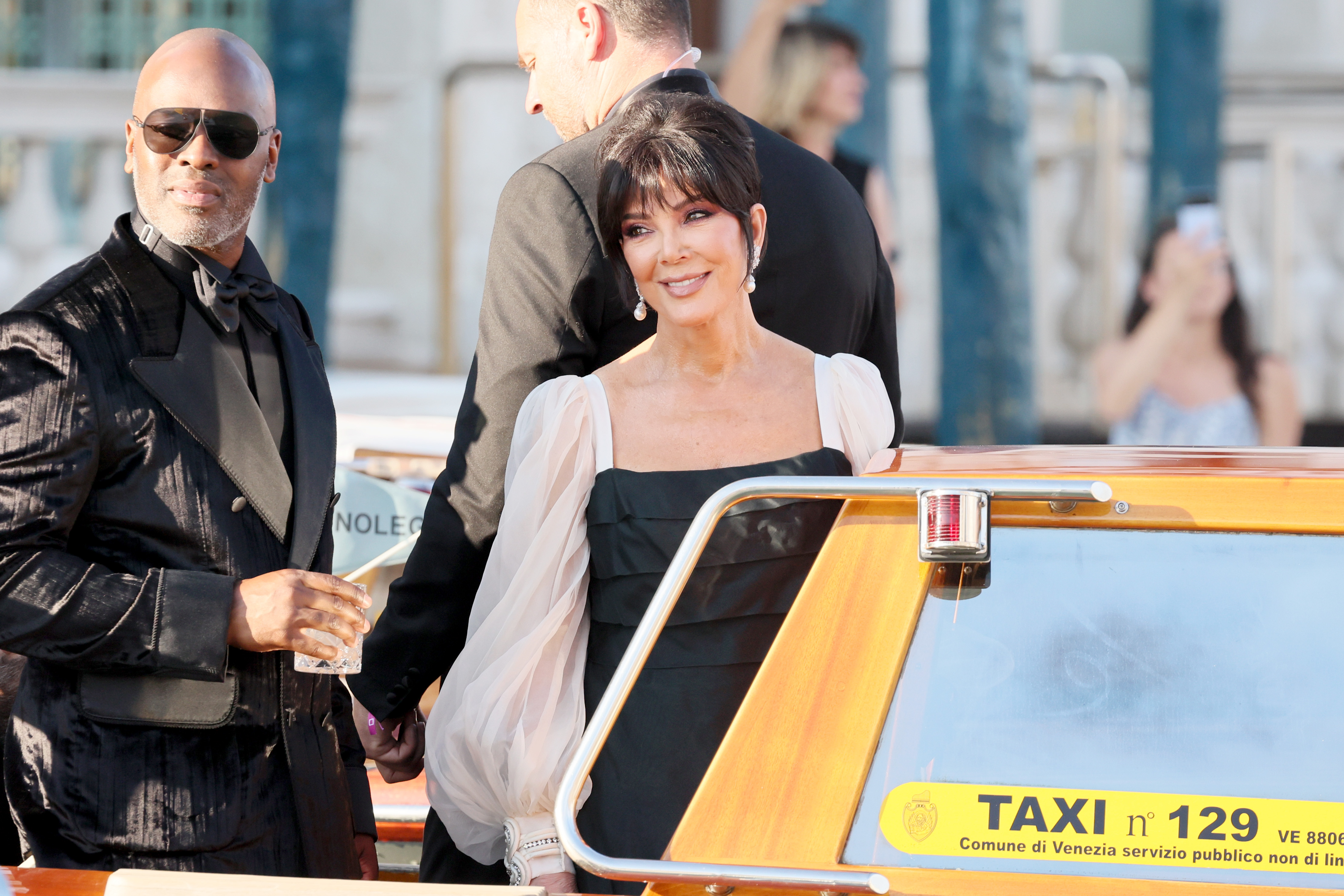
this literally cutthroat world earlier this year after Page Six confirmed that he was the architect of Kris Jenner’s second facelift. After Jenner’s surgical reveal, I was astounded by the amplification of the Levine discourse—past clients wanted to brag about their association, and prospective patients wanted an in. At a dinner recently, I sat next to someone who told me that two of their relatives had gotten facelifts from Levine, and earlier this week I talked to a
handful of people who’ve either already gotten a facelift, know people who have, or have scheduled consultations with Levine—a coveted ticket that itself costs about $1,000. |
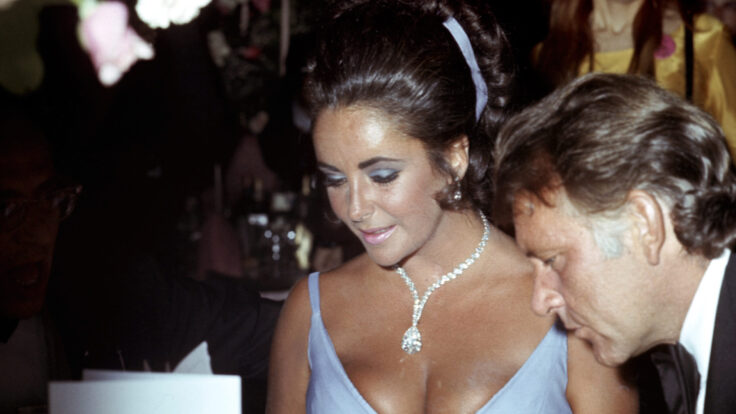
Photo: Ernesto Ruscio/GC Images |
Unsurprisingly, the price of his already six-figure facelifts has supposedly tripled since last year, at
least according to the $300,000 figure quoted in The Cut’s “The Forever 35 Face” story last week. I heard that Levine’s been so inundated that some prospective patients can’t get a callback from his office, even if they know someone. Shortly after the Jenner news, I was deluged by texts and D.M.s from people
asking if I personally knew Levine. Some were simply curious. Others, I presumed, wanted an introduction.
I was originally introduced to Levine seven or eight years ago, when he was primarily known for the mini boob job—a subtle enhancement procedure he popularized early in his career as the protégé of legendary plastic surgeon Dr. Daniel Baker, whom Levine worked alongside until opening a Park Avenue practice of his own in 2019. Levine was always
friendly and approachable, unusual traits for a plastic surgeon. In my experience—and I’ve interviewed many of the top surgeons over the years—they’re often arrogant, and possess questionable, if any, bedside manner. If you dare mention a peer, they’ll almost always tell you how they’re always “correcting” his work.
Levine’s signature SMAS procedure promises a fresh, youthful look without the tautness and expression of permanent surprise we associate with bad plastic surgery—but every
face is different, and even Levine’s celebrated procedure isn’t right for everyone. And yet, setting aside some general critiques of the SMAS, Levine is one of very few plastic surgeons I’ve heard only good things about. At the same time, he’s kept a surprisingly low profile. While most surgeons post dramatic before and after photos, the famously private Levine hasn’t posted on Instagram since 2022.
Of course, Levine still has over 220,000 Instagram followers. But someone once told me
that Levine saw no point in growing his footprint with followers who will never be able to pay for his services. Also, discretion matters in this business. “His patients choose him because he’s not on social media,” an insider said. “He doesn’t need hundreds of thousands of followers.” I’ve talked to many people about Levine, including his patients, and this was a key factor in their decision to trust him with the knife. |
Few ever thought Jenner would go public about her facelift—or who performed it. But once other surgeons more
or less started to take credit for her new new face (the first new face was arranged 15 years earlier, courtesy of Dr. Garth Fisher), Jenner decided to come forward and name Levine. A person close to the situation confirmed as much. |
|
|
The endorsement from Jenner, who turns 70 in November but looks 20 years younger, was especially powerful.
The lore that now surrounds Levine and his Upper East Side practice gets more ridiculous by the day. Someone I know paid about $100,000 for one of his facelifts about a year ago. (They’re thrilled with the result, by the way.) Another person told me that after they booked a consultation with Levine, in April, they subsequently received an email notifying them that $150,000 was the starting price for face and neck work. I hear others are now being quoted around $300,000, the figure reported in
The Cut.
One person told me you needed a “secret code” to get an appointment; others said “direct referrals” were the only way to even get his office to call you back. Currently, his office plays a recorded message that he’s only accepting new patients with “direct referrals.” (Levine didn’t respond to requests for comment.)
Our collective obsession with facelifts, coupled with the mainstreaming of a procedure once reserved for the last third of one’s life, has been slowly
percolating for a few years. People used to get the procedure in their 50s and 60s. Now they’re booking them in their 30s and early 40s: rumors about Lindsay Lohan and Anne Hathaway are rife in the “undetectable era.” The standard is now more expensive and exacting than ever—in addition to looking thin and ageless, it also has to appear like you didn’t get any work done. I guess I’ll have to start saving up. |
This report says that Bernard Arnault, who has been building up his media
portfolio in recent years, is considering selling the French daily Le Parisien to controversial right-wing French billionaire Vincent Bolloré. Employees would rather have B.A. as a boss than this guy. [La Lettre]
Olivier
Theyskens, one of the best designers to ever live, is launching a new, Antwerp-based brand called Boloria. It’s backed by the Belgian group We Are One World, which is mostly known for the electronic music festival Tomorrowland. Willy Vanderperre shot the first campaign. [Inbox/Instagram]
The Balenciaga fragrance launch and Bottega Veneta’s
fragrance expansion both show how important it is that a brand’s beauty strategy not be too closely connected to a particular creative director’s vision. It’s a tricky balance. [Vogue Business and
WWD]
The CFDA Awards are going to be fun this year. Ralph Rucci is getting the Geoffrey Beene Lifetime Achievement Award. Sara Moonves is getting the media award; Alaïa’s Pieter Mulier is getting the international award. So many faves. Also, I have a feeling this is the
year Tory Burch is finally going to win for womenswear designer of the year, even though she should have won two years ago.
|
Until tomorrow,
Lauren
P.S.: We use affiliate links because we are a business. We may make
a couple bucks off them. |
|
|
Puck fashion correspondent Lauren Sherman and a rotating cast of industry insiders take you deep behind the scenes of this
multitrillion-dollar biz, from creative director switcheroos to M&A drama, D.T.C. downfalls, and magazine mishaps. Fashion People is an extension of Line Sheet, Lauren’s private email for Puck, where she tracks what’s happening beyond the press releases in fashion, beauty, and media. New episodes publish every Tuesday and Friday. |
|
|
Puck’s daily art market email, anchored by industry expert Marion Maneker, offers unparalleled access to the mega-auctions and
galleries, elite buyers and sellers, and the power players who run this opaque world. Wall Power also features Julie Brener Davich, a veteran of Christie’s and Sotheby’s, who provides unique insights into how the business really works. |
|
|
Need help? Review our FAQ page or contact us for assistance. For brand partnerships, email ads@puck.news. You received this email because you signed up to receive emails from Puck, or as part of your Puck account associated with {{customer.email}}. To stop receiving this newsletter and/or manage all your email preferences, click here. |
Puck is published by Heat Media LLC. 107 Greenwich St, New York, NY 10006 |
|
|
|