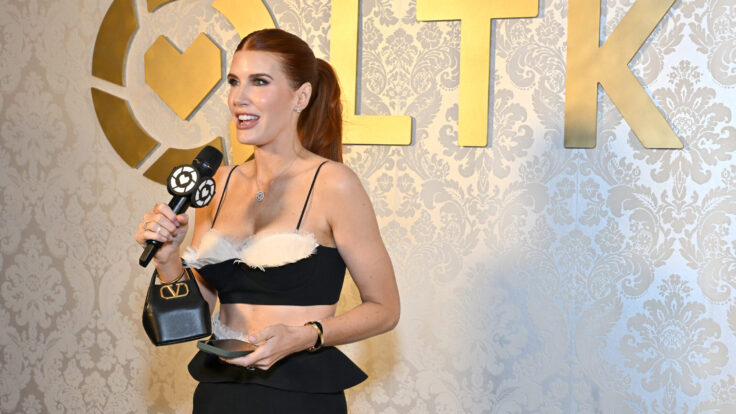
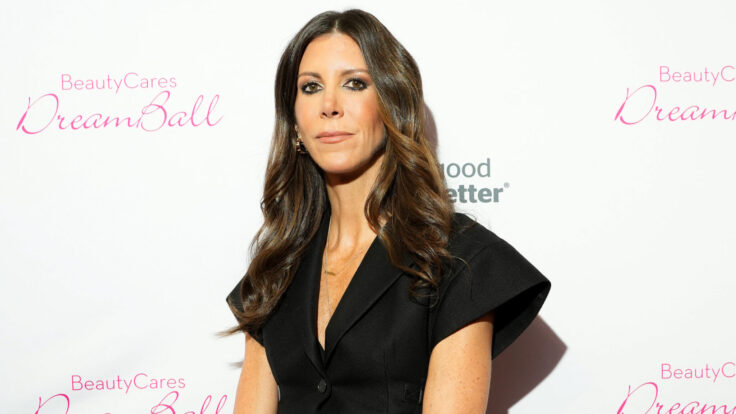
Hi, and welcome back to Line Sheet. There are few people who could get me to leave Eagle Rock on a Monday, but Tory Burch is one of them. Pretty much anyone in Los Angeles who is connected to fashion in any way came out last night to celebrate the opening of Tory’s new, multilevel Rodeo Drive flagship. These are people who would never go to a store opening in New York, and yet I witnessed Ciara singing along to “1, 2 Step” while Anderson .Paak DJed. After the party, everyone walked over to dinner at Mr. Chow, where there was more music, more spontaneous dancing, and more platters full of martinis (this time of the lychee variety). Congrats to the Tory team for pulling it all off. As you know, I’m a fan.
Congrats, also, to everyone feeling a little bit of a reprieve after yesterday’s announcement that the U.S. and China struck a temporary deal, bringing the tariffs on goods shipped to the U.S. down to 30 percent from 145 percent, at least until August. I can’t say I’m surprised. The real tragedy in this tariff fiasco is the amount of time and money spent worrying about it.
If you’re also worried about Saks Global’s debt situation, Puck’s Bill Cohan will be back tomorrow to break it down for you in Dry Powder, his Wall Street newsletter. Yesterday, the company announced it has contracted a group of advisors—PJT Partners, Kirkland & Ellis, and Bank of America—to raise money to help pay for the $120 million interest payment in June and “shore up liquidity,” as WWD put it. Of course, these advisors all work on debt restructurings—meaning Chapter 11 filings—too.
Meanwhile, there was news from Balenciaga today. I have some intel on deputy C.E.O. Nathalie Raynaud, and what her promotion means for the future of the business. (Also, some thoughts on the Balenciaga new-designer announcement that’s expected in the coming weeks.) From there, Sarah Shapiro takes the lead, with a scoop about the hottest name in affiliate marketing, ShopMy, plus some fresh reporting on the layoffs at Adidas. For the main event, Sarah is digging deep on Donni, the scarf charm turned pull-on pants line worn by seven out of 10 women dropping their kids off at school in a Volvo XC90.
Mentioned in this issue: Donni, Alyssa Wasko, J.Crew, Becky Malinsky, Chanel, Anthropologie, Balenciaga, Nathalie Raynaud, Kering, Pieter Mulier, Pierpaolo Piccioli, Thingtesting, Jenny Gyllander, Adidas, Puma, and many more…
|
|
|
|
A MESSAGE FROM OUR SPONSOR
|
The refined BMW 7 Series is all luxury. With the ability to define your design, the ultimate glamour is yet to be. Learn more at
BMWUSA.com.
|
|
|
Three Things You Should Know…
|
- Balenciaga’s designer pump fake: The interwebs were ablaze on Tuesday morning with news that Balenciaga was about to announce its new designer. Turns out, the planned announcement was of a different variety. Nathalie Raynaud, the chief product officer for the Kering-owned house, has been promoted to deputy C.E.O., a fashionable title among the European groups to indicate a C.E.O. in training. (In the U.S., they might give someone the title of president instead.)
Semantics aside, Raynaud’s ascendance is a good look for Kering. Since she joined Balenciaga in 2021, post-crisis, she’s become something of a secret weapon, managing to resuscitate the handbag business by introducing new, well-received styles, but also refreshing the classic Le City motorcycle bag, just as the silhouette—first introduced in the early aughts—was becoming a thing on the secondhand circuit. I hear she also plays nice with marketing, which is not always easy for a merchant.Raynaud’s title bump is an indication that Kering is committed to promoting from within, and promoting women. As we all know, there is a dearth of talent on the executive side of luxury, mostly because the business is far different than it was even 10 years ago, and a smaller and smaller pool of people have proven they are capable of navigating this unchartered territory.
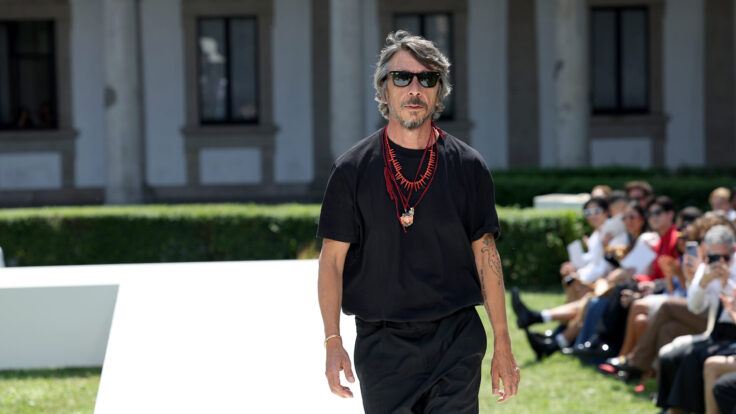
As for the designer question, I’m still not sure who is taking the job, but I suspect we’ll know soon enough. It needs to be someone who can manage womenswear, menswear, and couture, and who has at least some sense of marketing and merchandising, as the Demna-driven concepts will need to evolve significantly. The industry collectively wants Pieter Mulier to stay at Alaïa, although I will not rule him out until I’m told to do so. The other name that has popped up time and time again is Pierpaolo Piccioli, the longtime Valentino designer. Piccioli is a couture master, but “couture is not a business tool, it’s a communication tool,” as an industry friend said this morning. We will see.
|
|
|
 |
Sarah Shapiro |
|
- ShopMy’s new market advantage: ShopMy has acquired a platform to sort through reviews and aid in the discovery of new brands. It’s called Thingtesting, which Jenny Gyllander first launched in 2018 as an Instagram account and later transformed into a newsletter-slash-platform to highlight new consumer brands and products. It emerged at a time when C.P.G. and direct-to-consumer launches were really gathering steam, and eventually took on $2.3 million in funding from investors like Forerunner, Amino Ventures, and Detroit Venture Partners, as well as D.T.C.-minded individual investors.While details about the acquisition remain scarce, this is a happy outcome for Thingtesting—which had faded in relevance—and a useful acquisition for ShopMy, especially in the context of its battle with commerce rival LTK. ShopMy users will now be able to leverage Thingtesting’s searchable database to find, say, the highest-rated, female-founded, vegan product B corps. Thingtesting also has a cashback rewards program for users who write product reviews and engage with brands—yet another carrot for shoppers. I’ll be watching to see whether Gyllander lands full-time at ShopMy as part of the acquisition.
- The clumsy Adidas layoffs: While the news that the German sportswear giant is cutting 500 jobs isn’t particularly surprising or noteworthy, the chaotic, frankly un-German way they went about the reduction certainly has been. The company initially sought volunteers through an application process, according to an insider from Adidas HQ, but employees soon figured out the company would accept applications only from those whose jobs were going to be eliminated anyway. Then, when not enough employees stepped forward, the company was forced to move to involuntary terminations. (Adidas did not respond to a request for comment.)
Meanwhile, a few kilometers away in the same city of Herzogenaurach, Puma is conducting their own reduction of 10 percent of the company. But they are simultaneously hiring for other roles, and some Adidas employees have found refuge at their cross-town rival.
|
|
|
|
And now for the main event…
|
|
|
|
In an industry that values speed and scale, Donni, the trendy, L.A.-based stretchy mom-pants brand, is taking it slow. Is founder Alyssa Wasko naive about what it takes to compete, or forging a new model for subscale, independent brands?
|
|
|
While other brands chase venture capital and fetishize hypergrowth, Alyssa Wasko’s upscale momswear brand, Donni—a staple at pricey preschool drop-offs in West Hollywood and Park Slope—is taking the slow and steady approach. Wasko’s L.A.-based team is tiny, with less than 15 employees, even though demand for their relaxed silhouettes has skyrocketed. According to Lyst tracking data, the brand saw 470 percent year-over-year growth, with a 79 percent jump in the past three months alone. Meanwhile, YipitData puts their revenue between $10 million to $20 million, without a single outside investor on the cap table and none on the immediate horizon. (Donni didn’t comment on these figures.)
Whether Wasko is brave, naive, or simply chasing a different definition of success, there’s no doubt that her approach is unique among her peers—even if the clothes themselves are essentially high-quality replicas of more expensive brands. Indeed, in a market flooded with lookalikes, Donni’s clothes feel special but not precious, and perfectly on top of the trend cycle. The price also remains fairly accessible for well-made basics (the popular rib-knit kick-flare pant is $184, a diffusion of High Sport’s high-end style) and the weighty cotton and cashmere blend knitwear (reminiscent of Babaa, The Row, High Sport, and conjuring J.Crew and the Gap from the ’90s) runs from $340 to $520. Donni’s taffeta pieces have been worn by Substack stylists Becky Malinsky and Leandra Medine Cohen, as well as influencer Arielle Charnas, who wore a “corn” yellow taffeta pair that sold out in 12 hours. Wasko told me that Donni will often reach out and gift items after seeing influencers engage with the brand on their own.
|
|
|
|
A MESSAGE FROM OUR SPONSOR
|
The refined BMW 7 Series is all luxury. With the ability to define your design, the ultimate glamour is yet to be. Learn more at
BMWUSA.com.
|
|
|
Alas, without outside investment, Donni’s order sizes are limited to what the company can cover in cash or revolving credit, which means predicting each item’s popularity. Such was the case with their recently-sold-out pistachio green linen stripe pants. After aligning with her C.F.O., Wasko ordered upwards of 1,000 pairs from her manufacturer—a lot of product for a tiny company—and they quickly sold out. Of course, because they keep selling out, it’s hard to determine just how many units to order. And by the time another production run comes in, the customer might have already moved on.
Given all this, is Donni somehow missing its moment? Wasko, who launched her first brand, Donni Charm, 16 years ago, doesn’t think so. “I don’t want to be a mass-market brand,” she insisted when we recently spoke. “We’re doing a lot of volume even when we’re selling out of things.”
|
Wasko’s career began at Chanel, where she worked for six years, beginning as an intern and later as a consultant in the visual merchandising department. It was during this time that she started selling her Donni Charm scarves, which were named for her father, Donald, who died in 2008. The scarves were thick and blanket-like, adorned with charms and chains, and ultimately found their way into boutiques… and the Barneys New York accessories floor.
As she evolved from her twenties into motherhood, Wasko’s brand evolved with her. But comfort and versatility remain central to Donni’s appeal. (The Cut recently described the brand’s “elevated comfy” pants as the new mom uniform.) The brand’s $184 rib kick flare style, for example, is not simply a cheaper version of High Sport’s $860 original: While High Sport’s pants are dense and controlled, Donni’s are more relaxed, thinner, and machine-washable. Nevertheless, the similarities have created a high-low opportunity for influencers, who might share a link to the High Sport pants and earn approximately $129 in affiliate revenue for each pair sold, while also hawking the Donni version for a $27 commission.
Over time, the businesses evolved beyond direct-to-consumer. Revolve, Shopbop, and Anthropologie— big retailers—now all carry the line. Unlike founders who fixate on retail metrics, like how many physical stores carry the brand, Wasko says she’s focused on product development and building one-to-one relationships with customers through private events. She also operates outside the typical social circle of founders who cross-promote and appear in one another’s Instagram posts. She rarely shows her face on the platform, though she regularly answers styling and material questions before new releases.
|
|
|
|
The brand has its acolytes as well as skeptics. Fans appreciate the well-made clothing, which isn’t too trendy but also feels right on target for the home and school pickup line. Doubters point to the higher price point compared to brands like Madewell, Alex Mill, and J.Crew. Others are less than complimentary about the relaxed style, which one commenter on The Cut referred to as “house clothes.”
In late 2023, Donni began testing paid advertising, but hasn’t increased spending, unlike many D.T.C. brands whose customer acquisition costs equal or exceed first-purchase sales at this stage in the business. They’ve turned down opportunities to private-label for other brands, despite the potential revenue boost, preferring to focus on their own steady growth. “Is it possible to raise [capital]? 100 percent, and I’m not saying absolutely not, but we can reach our goals without doing that,” Wasko told me. “We have what we need to continue growing year over year. We’re tapering our growth right now.”
In the fast-growth startup fashion world, Donni’s measured approach feels almost radical. (Everyone takes money when they can, right?) Wasko claims she is happy to be the slightly under-the-radar brand that mom-friends whisper about on the playground, and that’s often spotted with an IYKYK wink. The question, of course, is whether Donni can afford to keep disappointing buyers with sold-out alerts. You’re only as good as your last hit style.
|
What We’re Reading… and Listening to…
|
The big winner in the tariff wars is obviously secondhand retail. [ Wall Street Journal]
While I am curious about a few locations and the zoning, overall I’m very into the think small opportunity with boutiques and personalized shopping that these single-location stores offer. [ The Washington Post]
New rules for the Cannes red carpet: no nudity or voluminous dresses. Do we think anyone will break the dress code? [ WWD]
For those of us who miss instructive magazine editorials, J.Crew did an excellent job breaking down how to wear colors. I might not be wearing much color (it’s a personal choice) but I do love this content showcasing the collection and how to wear it. [ Instagram]
|
|
Until tomorrow,
Lauren
P.S.: We are using affiliate links because we are a business. We may make a couple bucks off them.
|
|
|
|
Puck fashion correspondent Lauren Sherman and a rotating cast of industry insiders take you deep behind the scenes of this multitrillion-dollar biz, from creative director switcheroos to M&A drama, D.T.C. downfalls, and magazine mishaps. Fashion People is an extension of Line Sheet, Lauren’s private email for Puck, where she tracks what’s happening beyond the press releases in fashion, beauty, and media. New episodes publish every Tuesday and Friday.
|
|
|
|
Puck’s daily art market email, anchored by industry expert Marion Maneker, offers unparalleled access to the mega-auctions and galleries, elite buyers and sellers, and the power players who run this opaque world. Wall Power also features Julie Brener Davich, a veteran of Christie’s and Sotheby’s, who provides unique insights into how the business really works.
|
|
|
Need help? Review our FAQ page or contact us for assistance. For brand partnerships, email ads@puck.news.
You received this email because you signed up to receive emails from Puck, or as part of your Puck account associated with . To stop receiving this newsletter and/or manage all your email preferences, click here.
|
|
Puck is published by Heat Media LLC. 107 Greenwich St, New York, NY 10006
|
|
|
|