Hi, and welcome back to Line Sheet. I hope you had a nice holiday weekend.
Up top, a couple
quickie notes on Condé Nast’s theater of war and creative directors in the age of artificial intelligence. For the main event, a look at Stefano Cantino’s big opportunity at Dolce & Gabbana—which, like many independent Italian brands, has both benefited and suffered from a family ownership structure.
Tomorrow on Fashion People, my guest is Steff Yotka, global editorial director at i-D magazine. We discuss last week’s Margiela show in
Shanghai, Celine Dion’s 10-concert run in Paris this September and October (you could not drag me, sorry), the best fashion advertising campaigns of the season, who should go to Alaïa, Dario Vitale’s free agency,
the Coachella opportunity (really!), and more. Listen here and here.
Also mentioned in this issue: Stefano Gabbana, Domenico Dolce, Linda Dresner, Sequoia Capital China, Bernard
Arnault, Pieter Mulier, Jeffrey Epstein, Adriano Goldschmied, Lauren Weisberger, Amanda Dobbins, Recho Omondi, Anna Wintour, Alfonso Dolce, Derelicte, and more… |
Three Things You Should Know…
|
-
Keep calm and get back to your workstation!: Perhaps the New York–based Condé Nast employees who complained about having to be in the office four days a week will chill out after hearing that colleagues in Dubai were told by human resources chief Stan Duncan that they must return to work despite… the war that is currently destabilizing the region. At least some of the employees were freaked out by this request. I asked a rep for Condé Nast why this
happened. They did not respond.
|
|
|
|
A MESSAGE FROM OUR SPONSOR |
|
|
|
-
The Devil is coming for us all: The Devil Wears Prada 2 premieres in the U.S. on May 1, three days before the Met Gala. The media blitz is going to be crazy. Every brand involved will post about it incessantly; the major fashion journalists featured will undoubtedly write essays about appearing in the movie. Vogue has already assigned the original roman à clef—which, as my friend and Devil Wears Prada scholar Amanda
Dobbins recently noted, is merely okay—for its book club. And there’s obviously going to be excessive crossover between the promotion of the film and the Met Gala.
Anna Wintour understands the power of superficial marketing—she actually wore Prada to the premiere of the 2006 film—and this
is a big opportunity for Vogue. The first film, as you recall, debuted when Wintour and the magazine were at the peak of their influence—and it wasn’t entirely clear at first whether the movie was going to benefit Vogue or diminish its reputation. Most people around Vogue’s inner circle at the time viewed Lauren Weisberger’s memoir as an act of high treason. During the pre-publicity, however, Wintour and her team recalculated and recognized
that they had been bequeathed a true, once-in-a-lifetime, legend-burnishing gift.
This time around, of course, Vogue is far less haughty and Wintour will have her team milk the opportunity. I’ll share my thoughts and any updates as the promotion rolls out. My big question right now is: Who authored the fink Runway magazine that is being passed out to influencers and journalists like The Cutting Room Floor’s Recho Omondi? - The A.I.–creative director convergence is coming: Over a recent lunch, an expert on the fashion-adjacent talent agency business made a great point—one that mirrored the growing scholarship on how A.I. will stampede through creative industries. This person said that these agencies should deploy all their efforts into signing creative directors. Once A.I. takes over image-making in fashion, there will need to be creative directors to direct the A.I.
Maybe it
will be a while before that comes to pass, but it feels inevitable. The stretchy definition of creative director will also likely expand further than it already has. In many ways, the rise of elite YouTube creators is articulating the path, even if no one wants to believe it. The next generation of this industry, or at least the one beyond that, will be led by creative people who know how to manage their digital agents—and the wealth in the business will disproportionately move in their favor.
It sounds insane, but it’s gonna happen and you heard it here first.
|
|
|
|
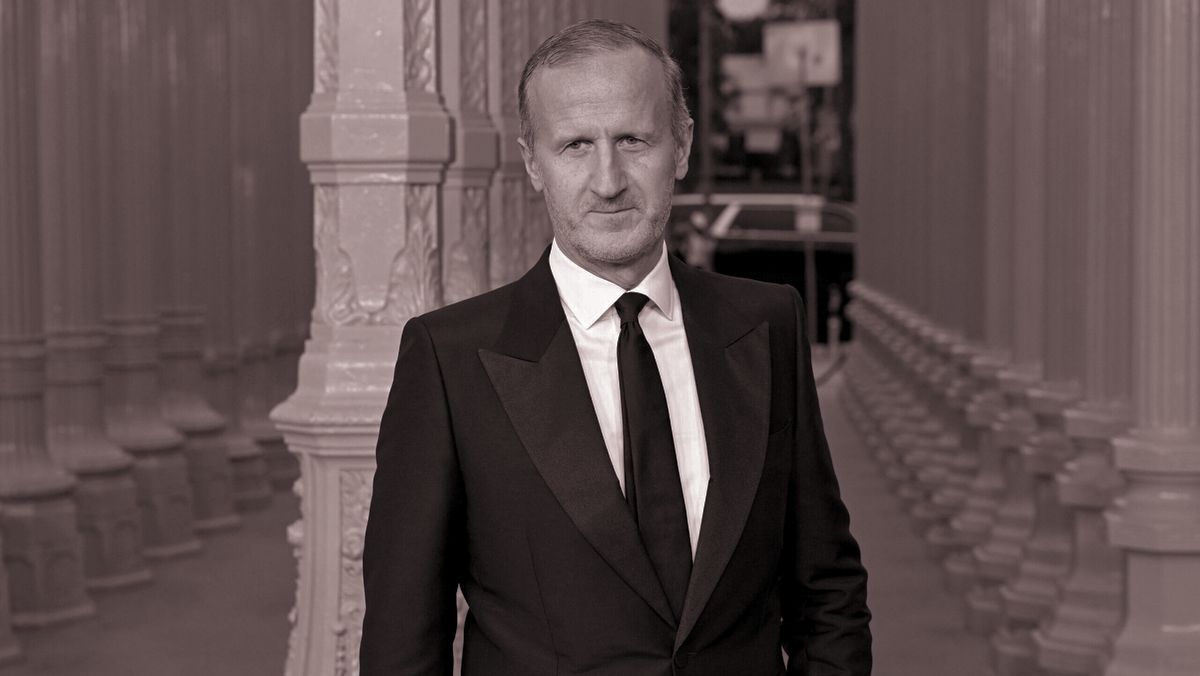
After an ill-fated run at Gucci, Stefano Cantino’s new gig at Dolce & Gabbana offers an
ideal opportunity for an executive who still needs to prove himself as a C.E.O. The challenges, however, aren’t insignificant. |
|
|
|
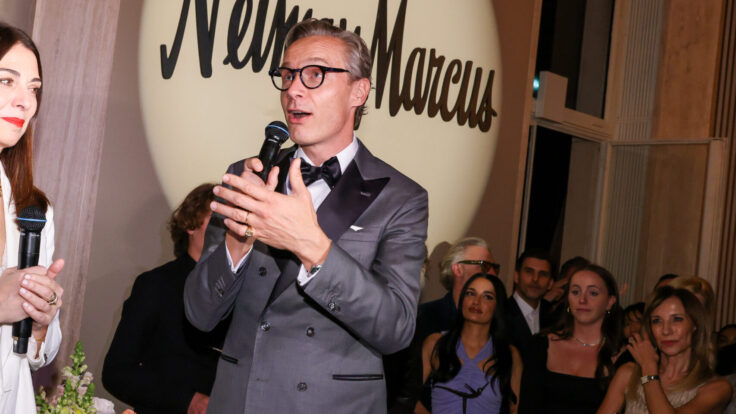
Last week, word began to circulate that short-lived Gucci C.E.O. Stefano Cantino would
emerge from his noncompete with a top job at Dolce & Gabbana. As I first reported, Cantino will help oversee a family-run business where the founders remain very involved, for better or worse. Not a bad consolation prize for a guy who lasted only nine months in his last role. |
|
|
|
A MESSAGE FROM OUR SPONSOR |
|
|
|
Cantino’s unsuccessful run at Gucci wasn’t really his fault, of course: He simply wasn’t prepared—or given
the tools—to turn around Italy’s largest luxury brand. But it also wasn’t a great look. Now, after all the speculation that he might land at Versace, Tod’s, Salvatore Ferragamo, or Armani, Cantino will get his best chance yet to prove himself as an executive. (The company did not respond to requests for comment.)
At Dolce & Gabbana, the opportunity will be commensurate with the challenge. As with many fashion businesses, it’s been mismanaged over the years and currently owes creditors a
lot of money. This spring, D&G reportedly hired Rothschild to advise the company on managing its €450 million in debt. According to reports filed with the Italian business registrar, the company generated more than €974 million in 2025, which was down from €1.1 billion a year earlier, and lost more than €200 million. D&G’s beauty business, which it has owned since 2022, is a bright spot: The unit generated €530 million in 2025, up significantly from €386 million in 2024. If managed correctly,
perhaps beauty could hit €1 billion by 2027, as C.E.O. Alfonso Dolce claimed last year. (Maybe those advertisements on the Ringer podcast network really are working!)
Cantino will arrive at a pivotal moment. Several years ago, there was some speculation that founders Stefano Gabbana and Domenico Dolce had hired Rothschild to sell a stake in the business—even though they’ve long maintained
that they prefer to remain independent. In 2024, in fact, I heard from multiple sources that the brand had approached various investors, including HongShan, the venture capital firm formerly known as Sequoia Capital China. In the years since, the realities of the modern fashion business have probably set in. Dolce is 67. Gabbana is 63 and, I’m told, whiles away much of his time in Dubai. Plus, anyone who has been to a Dolce & Gabbana show in recent years knows that the brand feels old.
Maybe everyone is getting the itch to move on, not just the audience.
So, yes, hiring an outside executive like Cantino is probably the best way to counteract the malaise. And if Cantino can handle the undoubtedly complicated interpersonal dynamics within the company, there is a real opportunity for him to transform the business—and even sell it to a strategic group down the line. |
Unlike Missoni, Moschino, Etro, or any of the other European heritage brands that have lost their way, Dolce
& Gabbana clothes are exceptionally well made and continue to sell—particularly their ready-to-wear. (The Alta Moda collections, their version of couture, are coveted by many buyers.) And while the majority of the business is in Europe, a sizable portion is in the U.S. The brand does even better in Asia, despite the fact that the company suffered from severe consumer backlash after running extremely culturally insensitive ads in the late 2010s. |
|
|
|
Amid this highly capricious fashion environment, the challenge for Cantino will be locating the ideal
consumer and understanding where the brand fits into the current fashion landscape. Like Versace, Dolce & Gabbana is a globally recognized name with broad appeal. Also like Versace, almost every corner of the business needs a refresh, from marketing to distribution to design. Sure, the commercial products are tried and true, and certain dress silhouettes sell season after season simply by being offered in new materials. But the shows themselves are relics of another era. A brand-name designer
might be able to infuse some much-needed energy, but the likelihood of someone coming in soon after Cantino is slim to none. (Although, come to think of it, Dario Vitale would be great.)
If the ultimate
goal is to appeal to one of the few remaining strategic buyers, Cantino will need to position Dolce & Gabbana as an Italian jewel worthy of further investment. Sure, it’s not a high-margin handbag business. But when managed well, there is incredible value in being able to sell both perfume and dresses. |
What I’m Reading… and
Watching…
|
R.I.P. Linda Dresner, a retail legend.
[Detroit Free Press]
Derelicte! [Carine Roitfeld]
Saks Global filed its restructuring plan this morning. There are no intentions to sell off any major assets. I’m not sure if this is a right or wrong
decision, but it means that Bernard Arnault still doesn’t own Bergdorf Goodman. LVMH-owned Le Bon Marché is the best department store in the world. [Yahoo Finance]
It’s totally worth listening to this relatively revealing interview with Pieter Mulier. He talks about Milan, the
relationship between Italian and Belgian culture, whether he reads criticism, the good and bad of Dior, getting fired at Calvin Klein (“To this day, I still think it’s not okay that we were fired”), and plenty more. Like, “Fashion is not comfort.” [YouTube]
On Jeffrey
Epstein’s last days of freedom in Paris. [N.Y. Times]
Adriano Goldschmied, the “godfather of denim” who co-founded Diesel, has died of cancer. R.I.P.! [WWD] |
Until tomorrow,
Lauren
P.S.: We use affiliate links because we are a business. We may make
a couple bucks off them. |
|
|
|
Puck founding partner Matt Belloni takes you inside the business of Hollywood, using exclusive reporting and insight to explain
the backstories on everything from Marvel movies to the streaming wars. |
|
|
|
The industry’s go-to source for unflinching reporting on the trillion-dollar business of artificial intelligence - perhaps the
single most important technology of our time. Ian Krietzberg, the powerhouse journalist behind The Deep View, delivers twice-weekly insights into the latest dealmaking and breakthroughs in A.I., and how the intersecting worlds of finance, entertainment, media, and politics are being transformed in its wake. |
|
|
|
Need help? Review our
FAQ page or contact us for assistance. For brand partnerships, email ads@puck.news.
You received this email because you signed up to receive emails from Puck, or as part of your Puck account associated with {{customer.email}}. To stop receiving this newsletter and/or manage all your email preferences, click here. |
Puck is published by Heat Media LLC. 107 Greenwich St., New York, NY 10006 |
|
|
|
|