Welcome back to Wall Power. I’m Marion Maneker.
We’re back in
the swing of things this week in New York, as the Armory Show and Independent 20th Century kick off a new season for the art market. Tonight I’m going to take you on a brief tour of both art fairs, as well as a few of the gallery openings held to coincide with the crowds of collectors arriving in town. In addition, we’ve got sales reported by the Armory Show; news of Basic.Space’s acquisition of Platform; results from the sale of works that Leo DiCaprio and others had been
gifted by Jho Low and later surrendered to the Feds; and Julie has the lowdown on a Sotheby’s auction of artist-designed jewelry, plus a personnel update at the Clark Art Institute.
Let’s get started…
|
|
|
 |
Julie Brener Davich |
|
- An $8 million
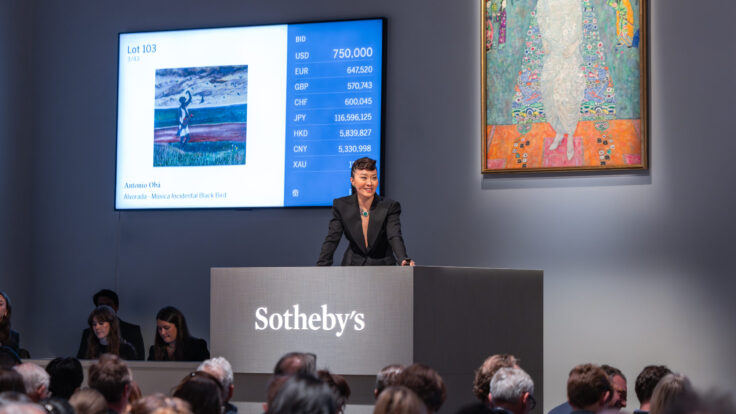
jewelry collection at Sotheby’s: This December, Sotheby’s will hold a dedicated evening sale of an $8 million, 63-piece collection of artist-designed jewelry, focused on Suzanne Belperron, whose work comprises about one-third of the collection, and Joel Arthur Rosenthal, a.k.a. JAR. Belperron, who died in the 1980s, is known for her bold combinations of stones and shades, such as the pink topaz, aquamarine, morganite, and diamond necklace that Sotheby’s has
estimated at $250,000. JAR picked up where Belperron left off in the 1980s; his 10 pieces in the collection represent a unique market opportunity since he makes only about 100 pieces per year for select clients. A trio of his Wild Rose Brooches, crafted from colored stones with pearl centers, is estimated at $850,000.The collection also includes jewels from the Parisian houses Boucheron, Cartier, and Boivin. The top lot is a Boucheron ruby and diamond laurel leaf necklace, estimated at
$1 million, which once belonged to Marie Louise Hungerford Mackay and the Countess Mona Bismarck, and has approximately 40 carats of rubies and 65 carats of diamonds. Today’s collectors are seeking “pieces that are aesthetically distinct, but emblematic of certain jewelers,” said Sotheby’s Quig Bruning. “That small subset is the most desirable on the market, and that’s what this collection consists of.”
- The return of a prodigal fundraiser: The director of the Clark Art Institute, Olivier Meslay, is stepping down next July after a decade-long run at the Williamstown institution. During his tenure, Meslay shepherded the donation of 331 paintings and $45 million to the Clark from the late collector and philanthropist Aso O. Tavitian, who had a country home nearby and sat on the board for several years. He will leave the Clark a year or two before
the new Annabelle Selldorf–designed Tavitian Wing is slated to be completed (although I hear some of the paintings will be on view next summer).Meslay, who specializes in European art, will be returning to his native France, where he previously held various roles at the Louvre. As it happens, that museum is suffering from
disrepair and could really benefit from the skills of an American-trained fundraiser right now—perhaps even someone like Meslay.
|
|
|
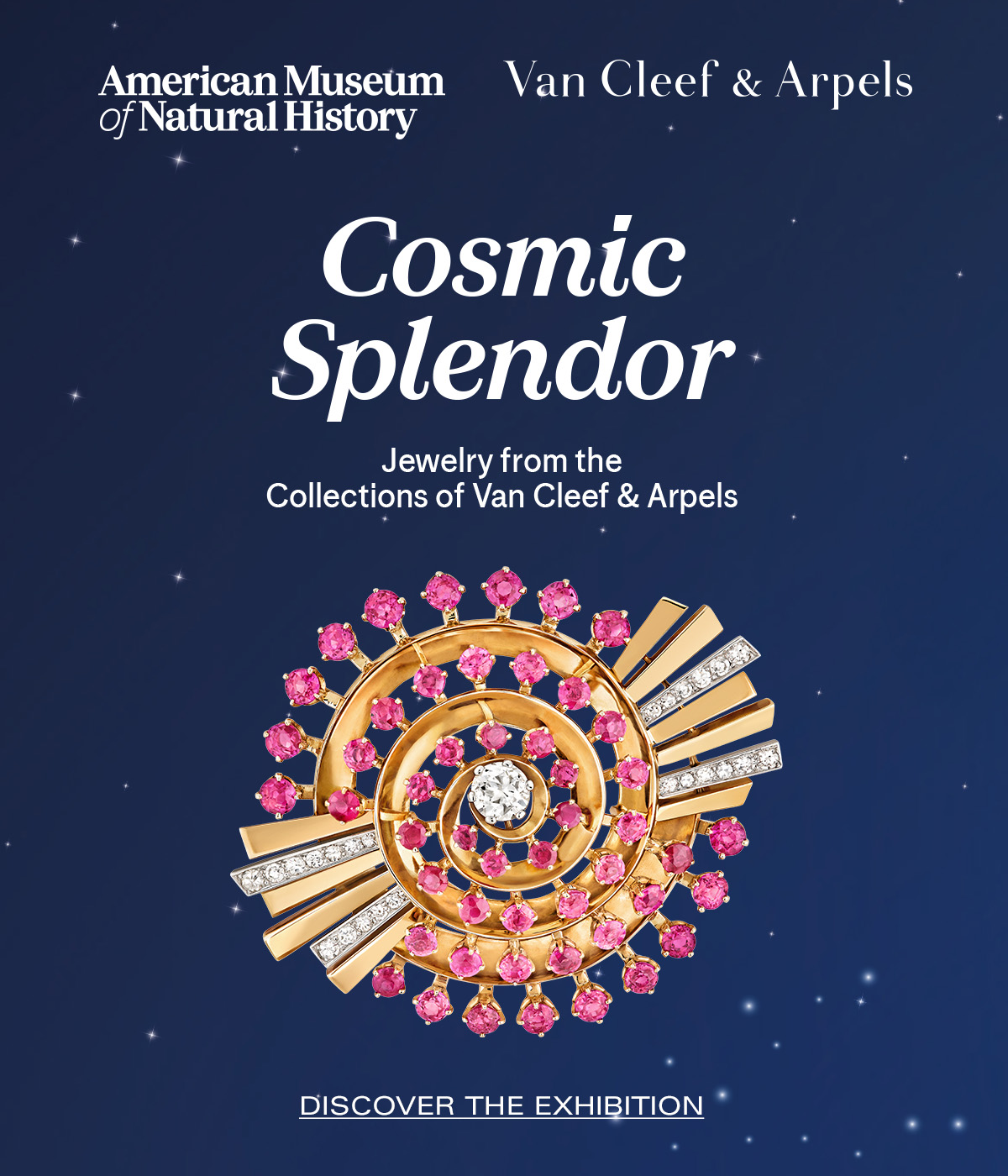
Van Cleef & Arpels invites you to open the doors of wonder with the "Cosmic Splendor: Jewelry from
the Collections of Van Cleef & Arpels" exhibition at the American Museum of Natural History in New York City. Until January 4, 2026, discover the Maison's precious creations, paying tribute to the marvels of the cosmos.
|
|
|
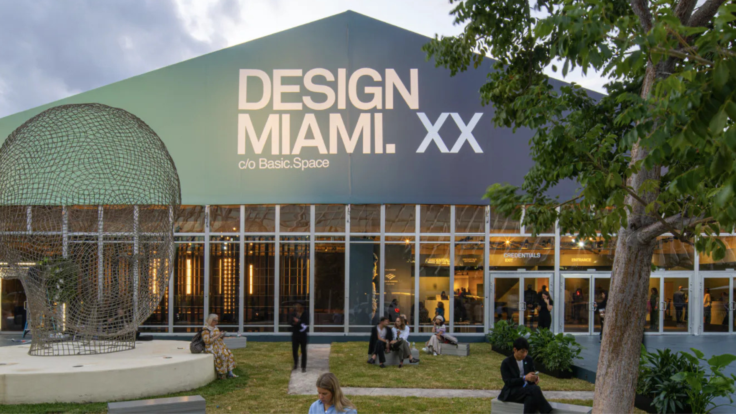
- Basic.Space takes over Platform: Basic.Space, the design retailing site that owns Design Miami, just made another acquisition. Platform is an art merch business founded in 2021 by gallerist David Zwirner’s children Lucas and Marlene Zwirner, along with Bettina Huang, as a
response to the Covid shutdowns of galleries. What began as talks to collaborate, after Basic.Space C.E.O. Jesse Lee and the Platform group were introduced by gallerist Alex Adler, turned into an acquisition. The deal gives Basic.Space access to Platform’s relationships and the Zwirner family cred, while further expanding into more art-centered online sales. Huang and the Zwirners will continue to run Platform as part of Basic.Space, but it will remain a
separate business.
- Jho Low’s art returns: Fugitive sovereign wealth fund scammer Jho Low’s whereabouts are still unknown—he is believed to be somewhere in China—but we do have a handle on the location of some of his art. The U.S. Marshals Service just sold four works that Low previously owned—two by Jean-Michel Basquiat and one each by Diane Arbus and Pablo
Picasso—for nearly $36 million; Low had given them as gifts to Leonardo DiCaprio and Wolf of Wall Street producer Joey McFarland.The sale, conducted without the usual buyer’s premium by Texas auction house Gaston and Sheehan, was held yesterday after a number of potential buyers viewed the works in a New York storage facility. The Arbus sold for $500,000, or about two-thirds of what Low paid for the photograph a dozen years ago.
The Picasso, which was bought for $3.28 million in 2014, sold for $5 million. But the serious players in the art world were all focused on the Basquiats. And, of course, everyone was trying to predict the final price.
I ran into a West Coast art advisor last night who said she had consulted with the “Basquiat Mafia” on the quality of the works before predicting a price above $8 million. Turns out she was right. The drawing that Low had given to McFarland, probably the best piece among the
works, sold for $8.3 million. That puts it among the top 10 highest prices paid for a Basquiat work on paper—edged out slightly by the Untitled (Indian Head) sold at Sotheby’s in June for nearly $9 million—but nowhere near the almost $23 million paid last November for a much larger drawing. The second Basquiat piece, Red Man One, from 1982, was a 6-foot-tall work featuring a large figure and an angled stretcher bar—attributes that Basquiat collectors cherish. It sold for $22
million.
That’s a solid price and a wee bit more than what most of the market pros I spoke to wanted to fork over. The auction had one other catch: The buyer has to pay in less than a week. Coming up with $22 million in cash is not a small thing for anyone, no matter how rich. So that, too, limited the field, making the final prices achieved here all the more reassuring to market participants.
|
|
|
Van Cleef & Arpels invites you to open the doors of wonder with the "Cosmic Splendor: Jewelry from
the Collections of Van Cleef & Arpels" exhibition at the American Museum of Natural History in New York City. Until January 4, 2026, discover the Maison's precious creations, paying tribute to the marvels of the cosmos.
|
|
|
The Armory Show opened yesterday and reported sales, including these selected
higher-value deals:
|
-
Sean Kelly sold a Kehinde Wiley for $265,000, a sculpture by Jose Dávila for $90,000, and several works by Hugo McCloud for $35,000 each.
- James Cohan Gallery sold a Kennedy Yanko sculpture for $150,000, two Tuan Andrew Nguyen sculptures for $95,000 each, one Trenton Doyle Hancock mounted canvas work for $85,000, and another for $40,000, among other works.
- White Cube sold several paintings from the artist duo Tarwuk, ranging from $65,000 to $100,000, a Tunji Adeniyi-Jones painting for $85,000, a mixed-media work by Emmi Whitehorse for $150,000, and a Tracey Emin bronze for $81,000, among others.
- Berry Campbell sold a 1952 Perle Fine painting for $125,000.
- Mariane
Ibrahim sold an Eva Jospin embroidery work for $110,000.
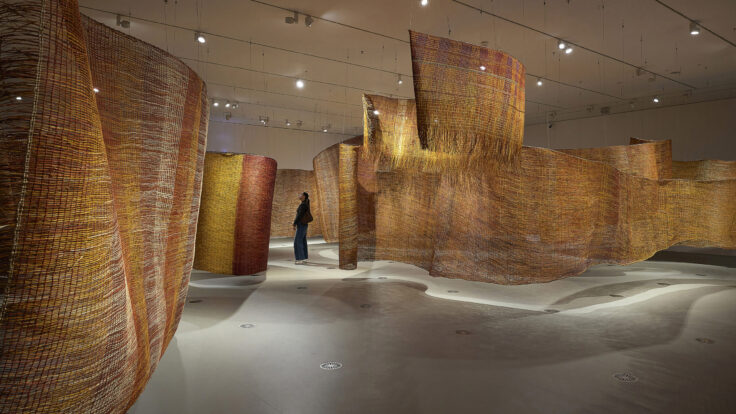
- Nara Roesler sold a fabric work by Sheila Hicks for $87,000, as well as other works.
- Library Street Collective sold two Gary Lang paintings, one for $110,000 and the other for $60,000, as well as works by other artists.
|
|
|
Art fairs are all about discovery—of artists old and new—and priming
the pump for the coming season of openings. This year, they are also about affordability, and both the Armory and Independent 20th Century fairs showed galleries looking to find the sweet spot of accessibility in the sub-six-figure market.
|
|
|
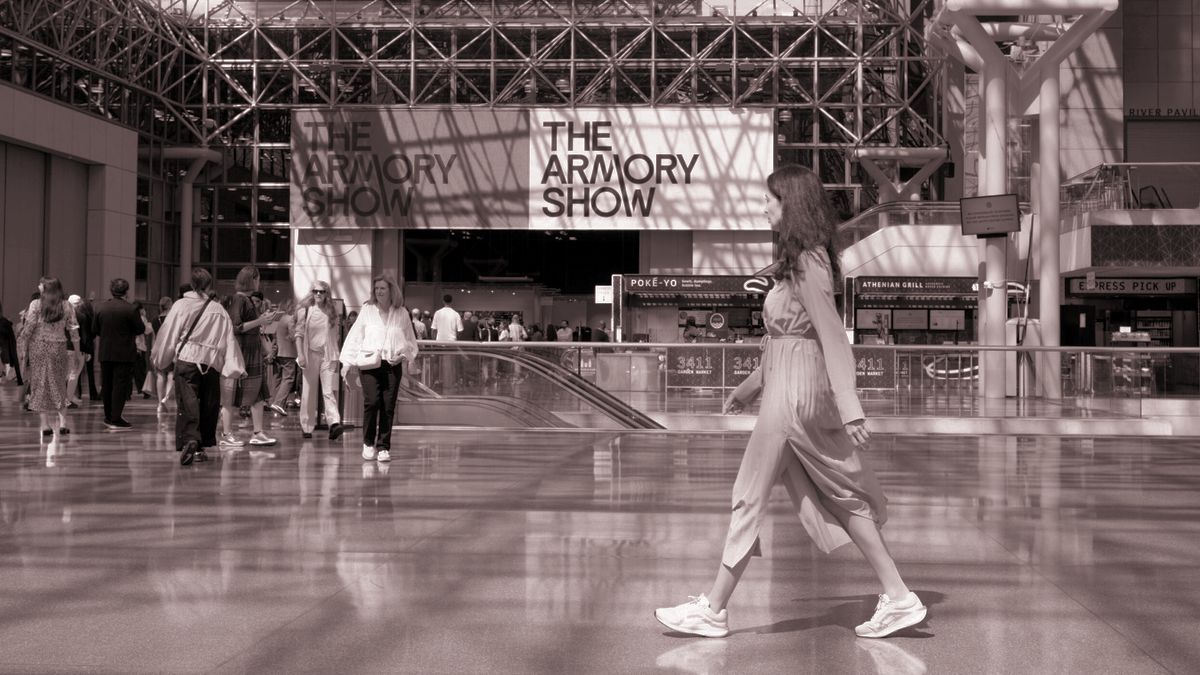
The standard joke at the Armory Show, held in New York’s Jacob Javits Convention
Center, is that the event takes place too early, when everyone is still trying to eke out a few more days of summer vacation, or preoccupied with getting kids back into school. Oddly, this year, there was less of that why do we have to do this grousing. Throughout the fair’s two days and the run of Thursday night openings, I ran into art advisors, dealers, and collectors who were upbeat but realistic. Half a dozen different art advisors told me they had been busy placing work
for clients surprisingly late into the summer, or that they had been involved in significant transactions in May and June. The fall was kicking off with a sense of momentum, and the effect on the mood was noticeable after the doldrums of the past year.
The fair, itself, seemed oriented toward today’s more value-conscious art fair buyers. Most of the booths presented selections from their gallery’s program as previews of coming attractions or enticements to new collectors. The Ben Brown
Fine Arts booth just inside the entrance, for instance, featured a large Rebecca Ness painting of the artist stepping off a curb under a pedestrian walk sign—meant to start a conversation about Ness, whom the gallery calls a “painter of everyday life,” which they hope to continue through to her upcoming show in London in late September.
Galleries like Eric Firestone,
which focuses on the kinds of sub-$100,000 paintings that buyers seem to be most engaged with these days, were offering the last available large flower paintings from their spring show of the Vietnamese-American painter Huê Thi Hoffmaster, alongside a booth of rediscovered artists and artist estates the gallery specializes in. A number of galleries—Skarstedt, Germany’s Ludorff, and the U.K.’s Archeus Post-Modern—had booths devoted to secondary market works.
|
|
|
Meanwhile, White Cube cleverly navigated the newish market constraint by bringing a
booth of work by the Croatian artist duo Tarwuk, which they’ve been able to sell into that market sweet spot. I had first seen an abstract Tarwuk work at the Dallas home and art space of Marguerite Hoffman, but the duo has moved on slightly from that style into more figurative paintings, adding more color and vibrancy to a palette still grounded in earth tones. That’s a good shift, because the new work no longer has echoes of the hard-to-get artist
Justin Caguiat, which many have remarked upon.
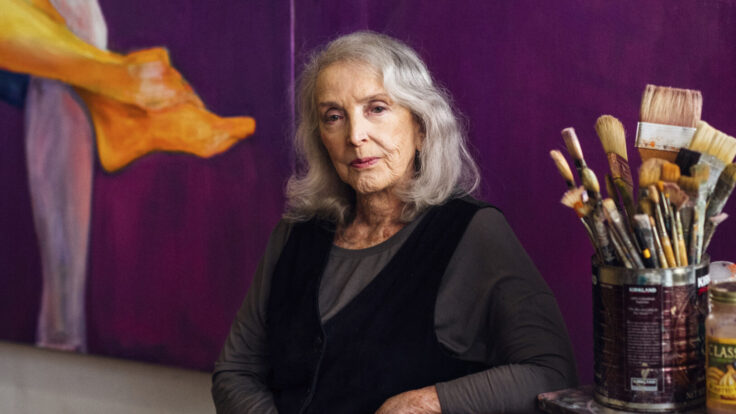
The Armory Show also continues to excel at that defining feature of art fairs: discovery. One art advisor marched over to the booth of Garth Greenan, the dealer for Rosalyn Drexler, upon first learning about the artist in her obituary this week. Drexler, who died
on Wednesday at the age of 98, was a pioneering pop artist in the 1960s, as well as a playwright, novelist, and television writer—and the art advisor had been struck by Nora Ephron’s quote in the Times writeup that Drexler’s friends thought she might be “carrying this Renaissance Woman bit a little too far.” The advisor told me this with no shortage of satisfaction after viewing a small Drexler triptych.
|
Independent 20th Century
Immersion
|
Down at Casa Cipriani by the Staten Island Ferry Terminal, you’ll find a very different
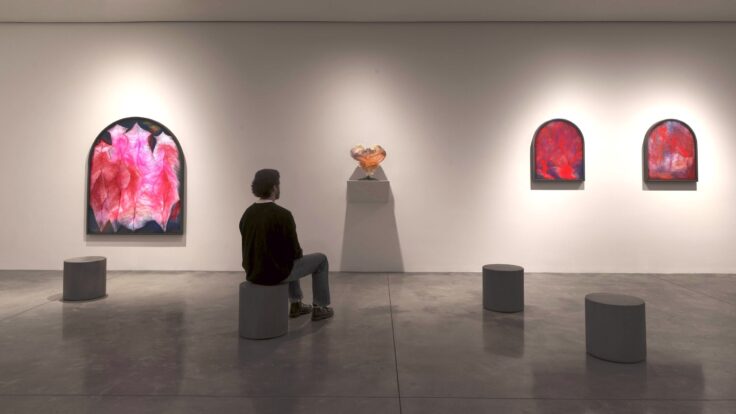
sort of fair, less than a seventh the size of the Armory Show. Most of the 30-odd booths at the Independent 20th Century fair are devoted to the work of a single artist each, which allows for real immersion. The show also strives to let its galleries educate fairgoers. The Skarstedt & Nahmad Contemporary booth, for instance, was making a big push with the work of Georges Rouault, who died in 1958, and whose work has fallen out of favor since being a staple of the modernist sales
of the later 20th century.
Skarstedt and the Nahmads gathered nearly 20 fairgoers to show Rouault’s works and talk up the artist’s hip factor and many admirers—including Chuck Close, Dan Flavin, Roy Lichtenstein, and Samuel Beckett—and to note his presence in the collections of Hollywood legends like Greta Garbo, Edward G. Robinson, and Alfred
Hitchcock. Bob Dylan even compared his own painting to Rouault’s work. I didn’t get a chance to ask how the paintings were priced, but a quick look at the auction data showed that average prices at auction have declined steadily since 2009.
You could have similarly immersive experiences at the other booths. Gabriel Kilongo’s Jupiter Gallery was featuring paintings by the now almost-forgotten Joe Zucker, and seemed
to be getting attention from museums and market makers. Ales Ortuzar had a wall of striking Ernie Barnes paintings and a number of supporting works on paper. Forum Gallery had a show of selected works from four decades of painter Gregory Gillespie’s career. Rosenberg & Co. focused on the work of Gertrude Greene. Sea View Gallery had works by California artist Bruce Richards, who had once been an
assistant to Vija Celmins. London’s Jeremy Scholar showed selected works from the group of two dozen or so artists who were known as The Highwaymen, because they sold their landscape paintings out of the trunks of their cars along the Florida highways in the 1950s. Choosing some of the most evocative works for contemporary eyes, visitors to the booth made easy connections between these African American painters and the tradition of American landscape painting.
|
Having somewhat overstayed my welcome at the fair, I took the train to Chelsea to stop
in at a few of the evening’s gallery openings. Michael Rosenfeld unveiled Surreal America with a wide range of artists, including Jackson Pollock, Mark Rothko, Adolph Gottlieb, Willem de Kooning, Lee Bontecou, John Graham, and many others. I also stopped in at the packed Shara Hughes opening at David Kordansky Gallery. (Demand for Hughes’s work seems to have only
diminished, from a downright feverish peak in recent years to merely urgent today.)
Hauser & Wirth had packed three new shows into its 22nd Street building. Starting from the top, María Berrío debuted more of her multilayered, multicolored collage works; in the middle was the debut of Sonia Boyce, working with the gallery with her silent disco film and photographs; and the ground floor featured a show of 14 paintings by Susan
Rothenberg, whose estate recently joined the gallery.
I ended my evening at Skarstedt’s Chelsea gallery for the opening of Yuan Fang’s new show of abstract paintings. That was the third exhibition of the day that Skarstedt was involved in—a marathon performance for the gallery and for the many who made the Manhattan circuit yesterday.
|
All of these fairs and galleries are open this weekend if you want to retrace some of my
steps—about 20,000 of them. If not, or even if so, we will be back in your inbox on Sunday.
M
|
|
|
The ultimate fashion industry bible, offering incisive reportage on all aspects of the business and its biggest
players. Anchored by preeminent fashion journalist Lauren Sherman, Line Sheet also features veteran reporter Rachel Strugatz, who delivers unparalleled intel on what’s happening in the beauty industry, and Sarah Shapiro, a longtime retail strategist who writes about e-commerce, brick-and-mortar, D.T.C., and more.
|
|
|
Finally, a media podcast about what’s actually happening in the media—not the oversanitized,
legal-and-standards-approved version you read online. Join Dylan Byers, Puck’s veteran media reporter, as he sits down with TV personalities, moguls, pundits, and industry executives for raw, honest, sometimes salacious conversations about the business of media and its biggest egos. New episodes publish every Tuesday and Friday.
|
|
|
Need help? Review our FAQ page or contact us for assistance. For brand partnerships, email ads@puck.news.
You received this email because you signed up to receive emails from Puck, or as part of your Puck account associated with {{customer.email}}. To stop receiving this newsletter and/or manage all your email preferences, click here.
|
Puck is published by Heat Media LLC. 107 Greenwich St, New York, NY 10006
|
|
|
|