{{ 'now' | timezone: 'America/New_York' | date: '%b %d, %Y' }} |
|
|
|
Hello, and welcome to Line Sheet. There are so many great fashion exhibitions on right now: Helmut
Lang at MAK in Vienna; Azzedine Alaïa and Christian Dior: Two Masters of Haute Couture at the Alaïa Foundation in Paris. This past weekend, the first-ever major retrospective on the Antwerp Six opened at MoMu. Soon, the Fondazione Dries Van Noten opens in Venice.
This issue is also an embarrassment of riches: I’ve got intel on the search for the next T magazine editor-in-chief, news of
the next Courrèges designer, and a ranking of the 10 best fashion advertising campaigns of the season. Plus, a postmortem on the promise that was Tomorrow, the showroom turned fashion “accelerator” that ended unsurprisingly badly. And yet, the specifics of the situation say a lot about how and where the industry is moving.
Tomorrow on Fashion People, my guest is Marisa Meltzer, author of It Girl and writer at Vanity Fair. We’re talking
Courrèges, Charvet, the latest in French pharmacy product innovations, the return (or not) of smoking, and how every man can be reduced to a combination of a superhero and a sport. Listen here and
here.
Mentioned in this issue: Phoebe Philo, Hanya Yanagihara, Stefano Martinetto, Samuel Ross, Dean Baquet, Steven Meisel, Joshua Schulman, A Little Life, Isabel Wilkinson Schor, Nick
Haramis, Rana Toofanian, Rachel Scott, Dario Vitale, Samira Nasr, Kate Lanphear, Kurt Soller, Jared Hohlt, Pieter Mulier, Jill Abramson’s memoir, Alice Newell-Hanson, Senta Simond, Benjamin Bruno, David Sims, Elisa Lipsky-Karasz, Daniel
Lee, Thessaly La Force, Stellene Volandes, Talia Chetrit, Sam Rock, Duran Lantink, Inez and Vinoodh, Erik Maza, and more… |
Three Things You
Should Know…
|
- And
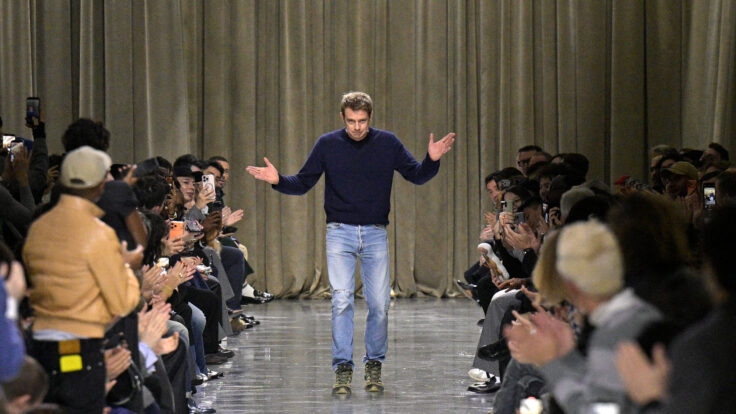
the new designer of Courrèges is: …another Phoebe Philo acolyte. Artémis-owned Courrèges has tapped Drew Henry, who worked under Philo at Céline and then her namesake brand. (He worked at J.W. Anderson in between.) Most recently, he was the runway design director at Burberry. The company planned to announce the news Tuesday morning but moved it up to Monday night after I let them know I was planning to run an item. Sorry!
Henry is just the latest
Philo underling to claim a leading role, following Peter Do (once the creative director of Helmut Lang) and Michael Rider (Celine). Henry, who was instrumental in the early days of Philo’s namesake brand, has been integral to the stabilization of Burberry’s runway shows since the arrival of C.E.O. Joshua Schulman. (Under chief creative officer Daniel Lee, another Philo descendant, of course.) We’ll see soon
whether he can cut it as a lead. - More ‘T’ intel: So the main impetus for current editor-in-chief Hanya Yanagihara’s exit was extracurricular activities. She wrote a play based on her hit novel, A Little Life, that launches at London’s Savoy Theatre on July 4 and starts rehearsals in May. Then, she’s producing a play in New York that will require fundraising, which would clash with the Times’s ethics policies. I’m told
that Yanagihara personally nominated four of her deputies—Kurt Soller, Nick Haramis, Alice Newell-Hanson, and Kate Lanphear—and has suggested some outside candidates, too. Apparently her editorial director, longtime Adam Moss deputy Jared Hohlt, isn’t interested in the job.
This likely all comes down to whether the Times wants a words person or a fashion person.
This being the Times, however, leadership will almost certainly value management experience above all—operating heir Sam Dolnick and executive editor Joe Kahn will prize a creative-inflected person who knows how to tell stylists that they can’t fly business class and when to invoke the internal editorial-standards secret police. Interestingly, I’m told that Dean Baquet, the executive editor before Kahn, is handling the external
search. Baquet was always personally interested in style coverage and originally hired Yanagihara. Dolnick and Baquet will present their shortlist to Kahn. (A rep for the Times confirmed this.)
The choice will also depend on how much the Times wants to continue not to care about the actual content of T—which, as former divisive top editor Jill Abramson noted in her little-read memoir, was essentially founded as a money job to pay for the Baghdad
bureau. But that was a lifetime ago in Timesworld, before C.E.O. Meredith Kopit Levien pivoted the company toward the lifestyle arts—Cooking, Wordle, The Athletic, Wirecutter—in support of the hardcore journalism. (And, yes, to reinvigorate the stock.) As one ex-T person said to me recently, “As long as you made money, they never cared who was doing it and what was going on. Pure negligence. And that was freedom, but also unnerving.”
Above all, though,
they need someone who gets the luxury market. T has become a cornerstone of Salone del Mobile, the big design fair turned business development blitz that happens in Milan every April. (Its party at Villa Necchi Campiglio has become increasingly exclusive and is definitely the most coveted invite of the week… especially for the fashion executives who have now flooded the event.) It’s no surprise that close to 17 percent of T’s advertising revenue comes from home
furnishing and design. (The other goods—fashion, jewelry, watches, and beauty—make up about 65 percent.)
Should the Times decide to pick from outside its ranks, as the Sunday Magazine did more than a decade ago, there are the usual suspects: Harper’s Bazaar’s Samira Nasr and Elle Decor’s Elisa Lipsky-Karasz may be compelled to apply. Town & Country’s Stellene Volandes is less likely to leave
because she seems to enjoy being the best-positioned editor at Hearst. No doubt New York editor Erik Maza, former WSJ. fashion director Rory Satran, and ex-T staffer Thessaly La Force have at least considered engaging. I would encourage another former T person, stylist Malina Joseph Gilchrist, to go for it, too. (Dark horse nominee Isabel Wilkinson Schor’s fashion brand,
Attersee, is faring too well for her to give it up, which she would have to for this.) Anyway, whoever gets it is still pretty lucky. As long as you keep the money coming in, you can have a good time. Just remember: No more free stuff!
|
|
|
|
A MESSAGE FROM OUR SPONSOR |
Introducing the first agentic storefront
Swap built the first agentic Storefront that replaces
your traditional static website with an immersive agent-led commerce experience, guiding shoppers through product discovery, to virtual-try on, to checkout in a single experience.
Learn More |
|
|
|
- Were
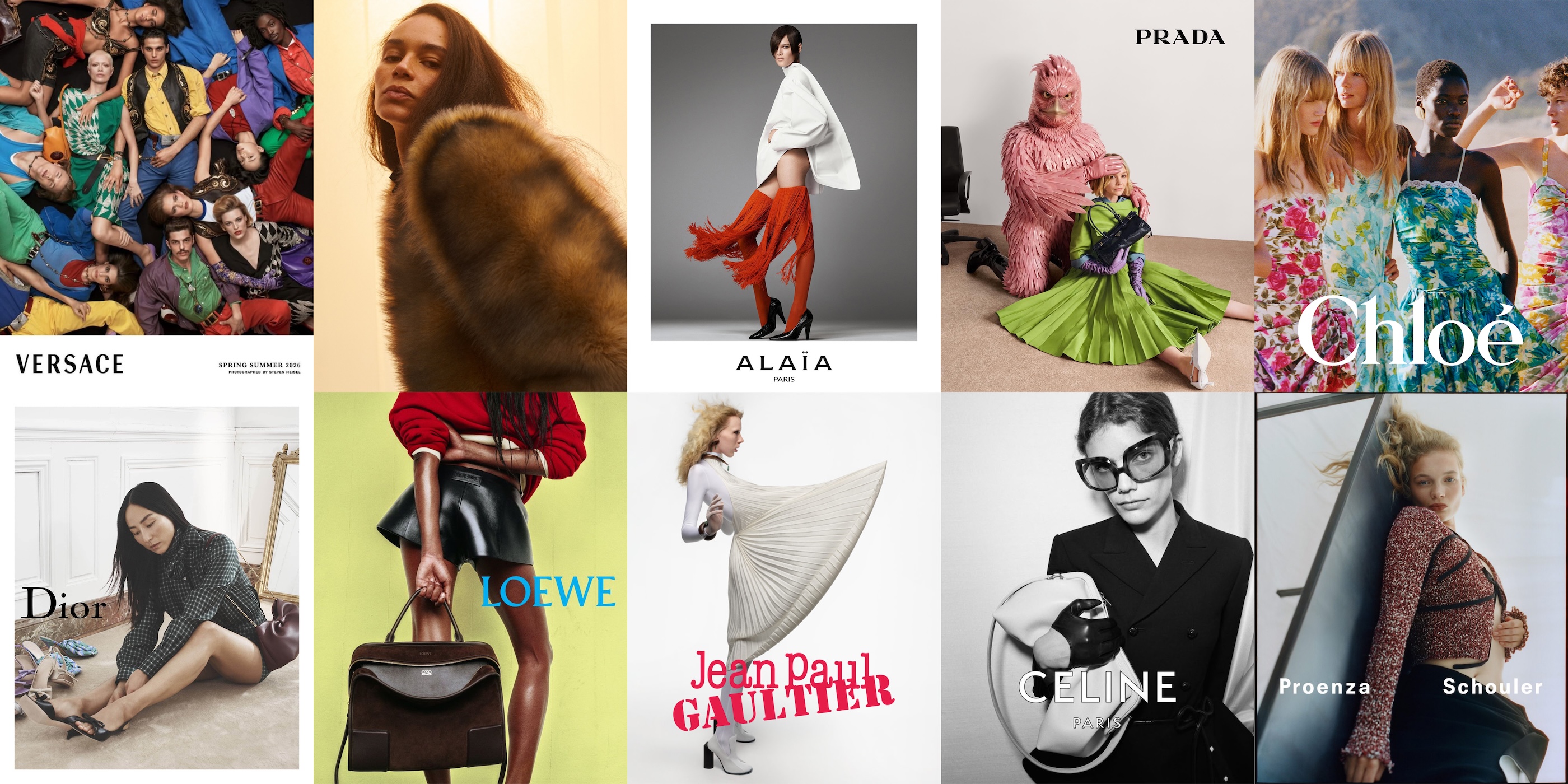
there even any good campaigns this season?: I keep meaning to rank the campaigns like the ready-to-wear shows, but there weren’t enough good ones this season. The crisis in image-making seems to relate to the inability of most people to process the flood of images they see every day, resulting in lackluster photos. However, after some reflection, I was
able to identify and rank 10 good-to-great campaigns:
|
- 10.
Proenza Schouler—I’m still not convinced by new designer Rachel Scott’s overall vision for the brand, but I liked this campaign. It was shot by Senta Simond, art directed by Rana Toofanian, and styled by Marika-Ella Ames. Caitlin Soetendal looked sexy and modern here, which is actually how the Proenza Schouler client wants to look.
- 9. Celine—I liked the focus on black (which is
the only color anyone wears anymore, really) in Michael Rider’s first campaigns for the house, shot by Zoë Ghertner.
- 8. Jean Paul Gaultier—Shot by Inez and Vinoodh, Duran Lantink’s first collection campaign, styled by collaborator Jodie Barnes, is so clear and easy to love. Like many of the best campaigns of this season, it references the past without sinking into it.
- 7. Loewe—Jack McCollough and Lazaro Hernandez’s color sense is one of their greatest assets, and I just love the way this campaign looks. Barnes gets yet another credit here. I love the energy between him and the designers, plus art directors Carina Frey and Stefanie Barth and photographer Talia Chetrit. It all works.
- 6. Dior—There is
so much imagery coming out of Dior, but it’s probably my favorite thing about Jonathan Anderson’s brand architecture thus far. (There’s a banality to it that intelligently reflects the state of image-making right now.) I suggest reading the conversation between Anderson, photographer David Sims, and stylist Benjamin Bruno in the new issue of System.
- 5. Chloé—My favorite part of the Sam
Rock–shot campaign was the florals, designer Chemena Kamali’s throwback (intentional or not) to Nicolas Ghesquière–era Balenciaga.
- 4. Prada—I refuse to engage in the “Is A.I. okay?” discourse when it comes to this freaky-deaky campaign, produced by the artist Jordan Wolfson. It has humor, shows off the clothes, and uses celebrities in an effortless way.
- 3.
Alaïa—Pieter Mulier ended his reign at the house with a stunning, sexy, Steven Meisel–shot, Fabien Baron–art directed campaign. The thing I like most is how it showcases the clothes and accessories. It gets right down to business.
- 2. Phoebe Philo—So many of the campaigns on this list were inspired, either directly or indirectly, by the drip feed of imagery Philo is releasing every season.
- 1. Versace—Dario Vitale’s first and last campaign for the brand, shot by Meisel as a throwback to an early 1980s Richard Avedon campaign for the house, has it all. It’ll be as memorable as the collection itself.
|
Now on to the main event… |
|
|
|
After the recent fire sale of London-based fashion accelerator Tomorrow Ltd., many of its
once-promising brands alleged mismanagement. But the incubator model, flawed even in the best of circumstances, may be completely doomed as fashion’s middle class goes extinct. |
|
|
|
In some ways, it’s a story as old as time: Tomorrow Ltd., the private equity–backed brand accelerator that
sprang out of the London wholesale showroom of the same name, was sold earlier this month to an e-commerce holding company called Progetto 11. And as is often the case with deals, there were going to be some redundancies: Progetto owns The Level Group, a Milan-based “end-to-end solutions” platform that essentially offers the same biz-ops services as Tomorrow—i.e., helping small fashion companies manage all kinds of logistical and operational capabilities, from manufacturing to
distribution. The Level Group will now handle Tomorrow’s portfolio, which includes A Cold Wall, Coperni, and Martine Rose. |
|
|
|
A MESSAGE FROM OUR SPONSOR |
Introducing the first agentic storefront
Swap built the first agentic Storefront that replaces
your traditional static website with an immersive agent-led commerce experience, guiding shoppers through product discovery, to virtual-try on, to checkout in a single experience.
Learn More |
|
|
|
But by the time the brands are integrated into their new parentco, I’m not sure there will be much left to
manage. At this point, after all, many of Tomorrow’s brands are nearly bankrupt. Tomorrow’s defenders blame its denouement on the one-two punch of Brexit and the pandemic. However, some of its brands claim that the umbrella company, which processes all payments and then disperses the proceeds (minus expenses for shared services like H.R.), never paid them their full share—and that Tomorrow owes them millions of dollars in back payments. (Representatives for Three Hills, the private equity firm
backing Tomorrow, denied this claim. Group executives with whom I spoke note that millions have been poured into these upstarts.)
Either way, many people involved on the brand side have insisted that this narrative elides mismanagement. Perhaps, they say, the group should have moved most of the shared operations from the U.K. to Italy. Critics have also argued that Three Hills allowed co-founder and C.E.O. Stefano Martinetto to take too much
money off the table after Tomorrow received a $20 million investment at the end of 2019—thereby making him less hungry. Also, these people say, Martinetto’s reliance on the wholesale model meant that the designers did not benefit from the online pandemic boom that boosted other labels.
A source close to management said that the company conducted its diligence to ensure it was making the right decision by keeping much of the business in the U.K. According to a source close to Martinetto,
he and his partners were able to sell a small amount of secondary shares back to Three Hills, and they reinvested much of that back into the business, even forgoing a salary for a year when things got rough. Regarding the wholesale gripe, executives argue they did what they could to set the brands up for direct-to-consumer success.
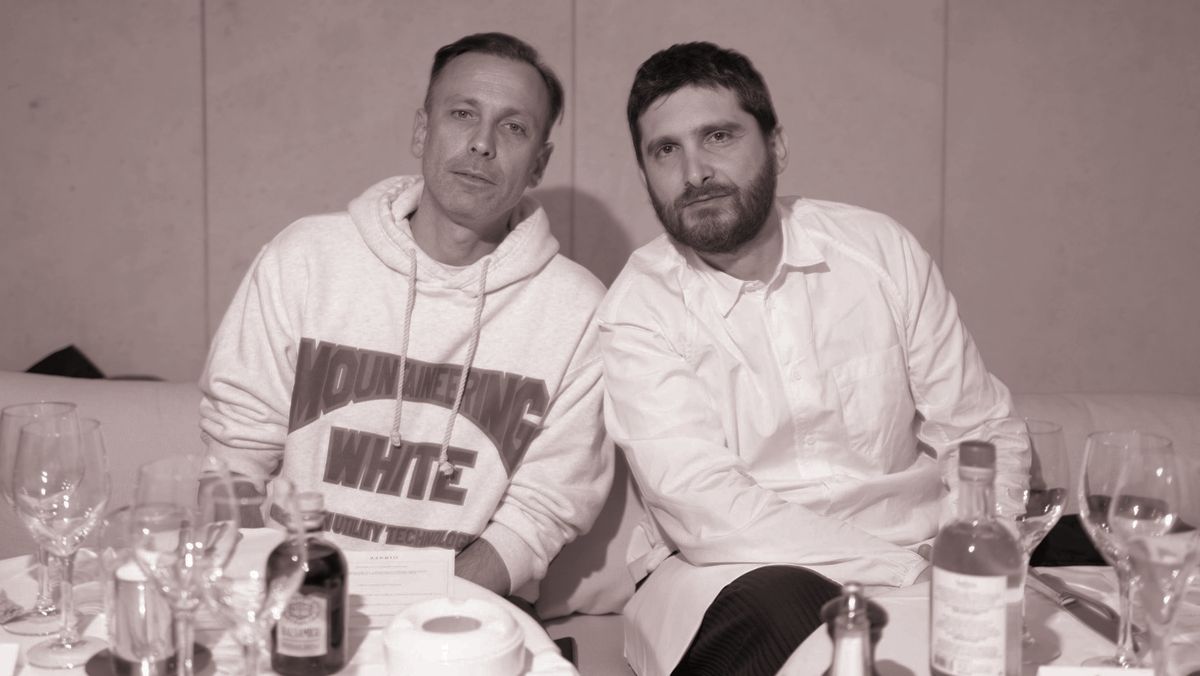
Obviously, much of the animosity among Tomorrow brand employees has been focused on Martinetto because he was the accelerator’s chief proselytizer: a
fifth-generation Italian fashion executive who promised he saw the future. And yet, he was described to me as “short-term-focused” at best—a poster boy for how the fashion industry is broken. Meanwhile, Three Hills was also looking for an expeditious exit. Nearly 10 years after first investing in Tomorrow, the firm took over governance of the business in 2024, and began exploring a sale with its bankers at Lazard. But that process failed. In the end, the deal with Progetto was a classic fire
sale. (A rep for Three Hills said the company doesn’t comment on the performance of individual investments.) |
Even if Three Hills and Martinetto had done everything right, it’s hard to imagine this would have ended
well. When I first interviewed Martinetto about Tomorrow in 2022, he was gearing up to sell another stake in the company. At the time, Martinetto intimated that the plan was to sell one brand at a time, rather than the group in its entirety. But A Cold Wall, which once reached $10 million a year in sales, never accelerated, and even deteriorated after the exit of founder Samuel Ross. This underscores one of the hard realities of the incubator model: The
brands that work best likely would have performed on their own. |
|
|
|
Progetto is claiming that Tomorrow’s brands will keep operating, but the founders are, collectively, wary of
the new organization. As much as I sympathize, Tomorrow’s inability to successfully scale brands may have been less about mismanagement and more about where we are in the fashion cycle. Entrepreneurship goes in and out of favor; it’s popular when cash is available and interest rates are low. But the attrition rate is always overwhelming. Over the past two decades, tech startup culture created a false narrative that it was broadly possible once again, and that seeped into fashion with the rise of
a generation of new names, from Christopher Kane and Alexander Wang to Proenza Schouler and, more recently, Khaite. Some were more successful than others. Most were not.
For as long as I have covered fashion, most design students’ deepest dream has been to own their own brand. Now, few designers aspire to become the next Christian Dior, but rather to work at Christian Dior. While fashion schools have never been good about forcing students to recognize
that this is a business, they are at least teaching their disciples to be more cautious about dumping the little money they do have into a brand that will be near-impossible to keep afloat. There are fewer stores to sell through, fewer media outlets for promotion, and fewer people who can afford to buy the clothes. Instead, the universities are now feeders into the big groups, where designers can be paid well and not worry about making payroll themselves. |
Nordic Knots, the bougie Swedish rug brand that unites the rich and super-rich, just raised $100 million in a
round led by Imaginary Ventures (after bootstrapping it for a decade). I am very into this investment, even if this isn’t investment advice. [WWD]
Is smoking back in the U.S. or… not? This piece (written by my husband) throws some cold water on all the fun trend stories without totally ruining it for us.
[The New Consumer]
Sunflower, a cute Danish brand that a lot of guys like, is staging a runway show at the next Pitti Uomo in June. [Inbox]
Many people asked if Taylor Swift is trolling me with her latest outfit, a Wiederhoeft set. I actually didn’t mind it? [Taylor Swift Style]
The Face announced it was shuttering on Friday. (I reported this on Tuesday.) [Instagram]
Loved Vanessa Friedman’s riff on the news of the new Antwerp Six
exhibition, which shows how many creative directors working today came up through the Belgian system. [N.Y. Times] |
Until tomorrow,
Lauren
P.S.: We use affiliate links because we are a business. We may make
a couple bucks off them. |
|
|
|
Puck founding partner Matt Belloni takes you inside the business of Hollywood, using exclusive reporting and insight to explain
the backstories on everything from Marvel movies to the streaming wars. |
|
|
|
The industry’s go-to source for unflinching reporting on the trillion-dollar business of artificial intelligence - perhaps the
single most important technology of our time. Ian Krietzberg, the powerhouse journalist behind The Deep View, delivers twice-weekly insights into the latest dealmaking and breakthroughs in A.I., and how the intersecting worlds of finance, entertainment, media, and politics are being transformed in its wake. |
|
|
|
Need help? Review our
FAQ page or contact us for assistance. For brand partnerships, email ads@puck.news.
You received this email because you signed up to receive emails from Puck, or as part of your Puck account associated with {{customer.email}}. To stop receiving this newsletter and/or manage all your email preferences, click here. |
Puck is published by Heat Media LLC. 107 Greenwich St., New York, NY 10006 |
|
|
|
|



_01KMR6FGPE9SGV090DJE88XJH7.png "Swap Commerce")
_01KMR6FH5863WFKFZHF2Z0B8FT.png "Swap Commerce")