Welcome back to Wall Power, sports fans. I’m Marion
Maneker.
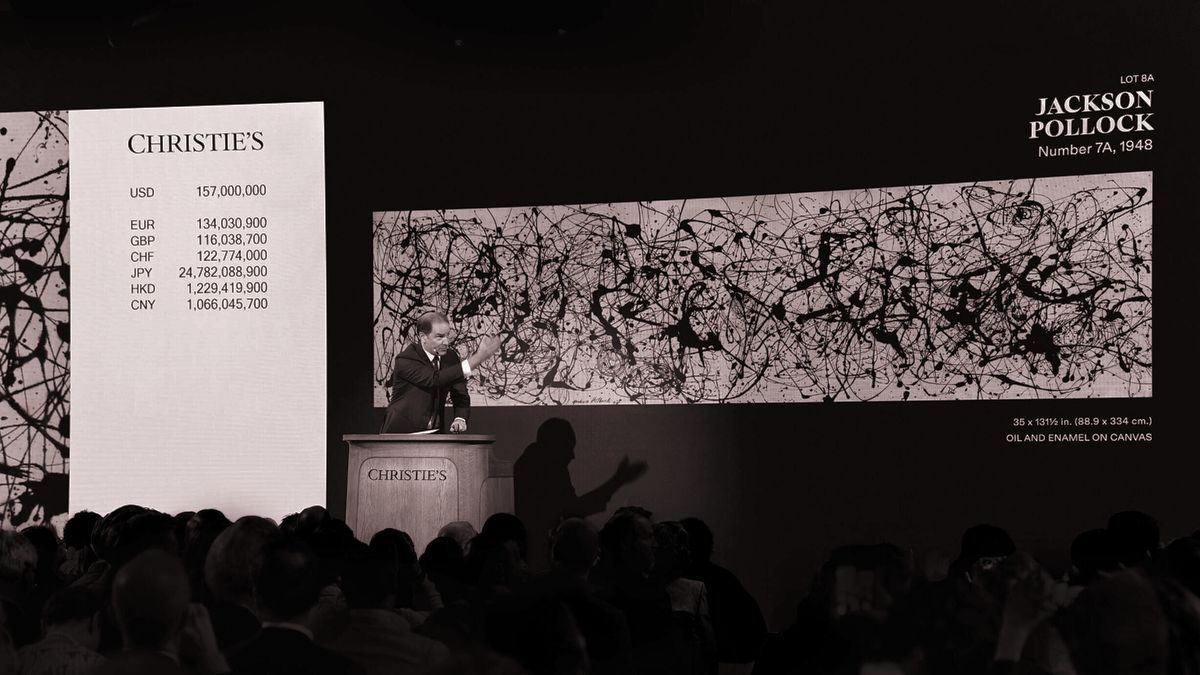
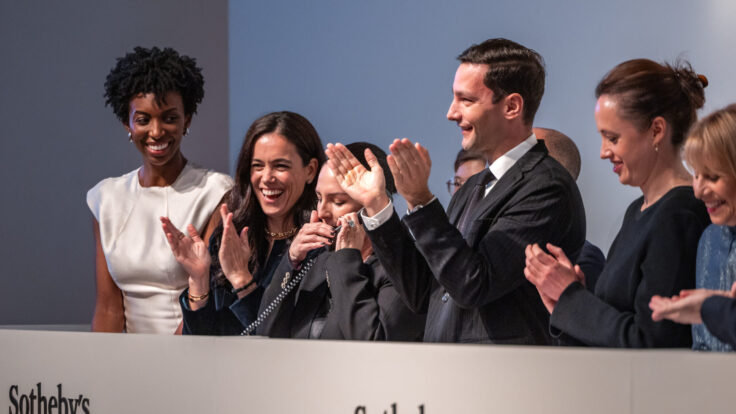
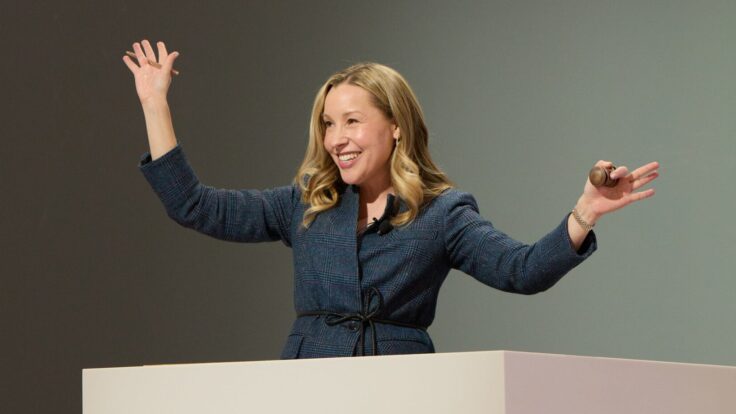
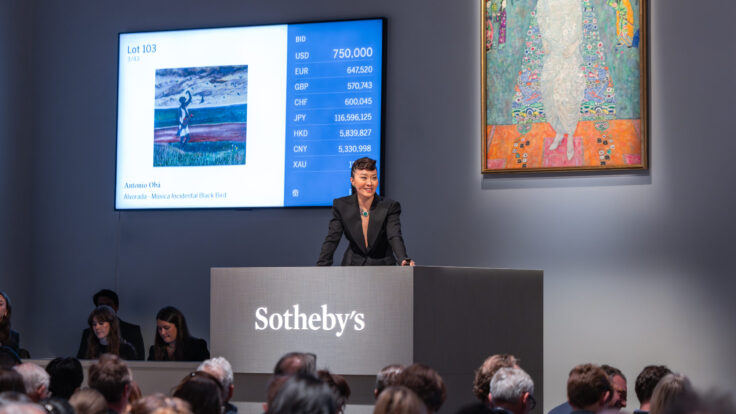
Last night at Christie’s, as 57 bids volleyed across the room in $1 million increments while auctioneer Adrien Meyer swiveled his head back and forth like a tennis umpire, I was reminded of why auctions can be so engrossing. At their best, they’re like great sporting matches: filled with moments of tension you can hardly believe you’re witnessing. The excitement builds as you try to imagine how it will all be resolved. Tonight, I’ll have my report from
Christie’s salesroom, where there were several of those moments.
Up top, we have an update on the de Kooning auction at Lévy Gorvy Dayan. Plus, Robert Wilson’s Watermill Center announces its lineup for this year’s festival—the first since the legendary avant-garde director died.
Also mentioned in this newsletter: Laurie Anderson, Isabelle Huppert, Lucinda Childs, Pina
Bausch, Madeline Hollander, Paul Allen, Si Newhouse, Alfred Taubman, Linda Macklowe, Alex Rotter, Ana Maria Celis, Nicole Kidman, François de Menil, Mattia De Luca, Jeffrey Deitch, Agnes Gund, Joan Payson, the Nahmads, Gabriel
Catone, Ralph DeLuca, Steven Platzman, David Henry, Joanna Carson, and more… |
-
An LGD update: Shortly after I sent Sunday’s newsletter, in which I wondered what had happened in the auction of Lévy Gorvy Dayan’s Willem de Kooning Milkmaid (Untitled X), I got an email from Amalia Dayan, one of the gallery’s partners. She explained that the sale was always meant to be structured as a private auction, the results of which would not be published. Nevertheless, Dayan told me the 1984 painting was sold within the $10
million estimate and that the gallery is happy with the result. It should not be surprising that LGD’s first attempt at running an auction involved some confusion about what’s public and what’s private. That said, the sale is probably more interesting in terms of what’s happening in the market for de Kooning’s works. But that’s a subject for a later post.
- Wilson at the Beach: Robert Wilson, one of the last avant-garde theater
directors, died last summer at the age of 83. Midsummer is also when Wilson’s Watermill Center, an interdisciplinary laboratory for the arts and humanities, holds its annual festival. This year, the event is back without Wilson for the first time. Titled Limitless Time, it will take place on July 24 and 25 and feature performances by Laurie Anderson and Isabelle Huppert, as well as works by Lucinda
Childs and Pina Bausch. Madeline Hollander will stage a 50th anniversary reimagining of Wilson’s most famous work, Einstein on the Beach.
|
Now, about that $1.1 billion sale last night… |
|
|
|
The May auctions continued in thrilling fashion at Christie’s last night, as
feverish bidding pushed new records for the mainstays of modernism—Pollock, Brancusi, Miró, Rothko—and the art-hoovering skylords of finance dropped the G.D.P. of a small country on the Si Newhouse collection. So can we call that an art market triumph? Not so fast… |
|
|
|
It would be very tempting, after seeing the $1.12 billion achieved last night at Christie’s, to
declare that the art market is back. This was, after all, the second-largest auction total notched in a single evening, behind the $1.5 billion Paul Allen sale of November 2022. And I would certainly not take anything away from the team at Christie’s, who clearly worked very hard to make the night a robust success—not only by selling the top lots well, but also by lining up strong bidding on many of the smaller lots in both the Si Newhouse and various-owners
sales. In fact, at the very end of an obviously successful evening, Christie’s team canceled its usual press conference, as if to walk off the field and celebrate in private, satisfied but also maybe exhausted. The art market isn’t for sissies.
Going into these sales, there was a hopeful feeling around town that this season might represent some kind of breakout moment similar to those of 2006 or 2013, in which art suddenly became something buyers needed at any price. Since the last market
peaks in 2015 and 2022, art prices have moved sideways or down, and although they’re long overdue for a repricing moment, I don’t think this was it. The effort Christie’s put into last night’s sales also indicates that, as much as everyone would like to see it, we’re not yet at escape velocity—even with the four new records for modernist mainstays Joan Miró, Constantin Brancusi, Mark Rothko, and Jackson Pollock.
A quick
glance at the headlines suggests this isn’t a time for economic or cultural euphoria. The financial markets remain mysteriously buoyant, but interest rates have not fallen, and there isn’t the kind of sloshing liquidity that usually surrounds art market upswings. Inflation, on the other hand, is beginning to change how we think about prices. So the best way to view last night is as another step toward rebuilding confidence in buying art. Buyers might view great works as a hedge against
inflation, though that strategy is not without its own risks. But these sales are more about demonstrating demand for the kind of high-value art that’s been absent from the market for too many seasons. With luck, they will inspire more long-standing art holders to think about bringing their works to market.
Meanwhile, no matter how rich a buyer is, they don’t want to part with a dollar more than they have to in order to get the works they want. We saw that last night, especially for the
most-expensive lots, where the bidding often indicated that presale estimates were as full as possible. There was also a pricing floor for the lots in the Newhouse sale; as far as I can tell, a single third party backed all of them, though Christie’s will not comment. Many of the various-owners lots were covered by a backer, too. |
The one undeniable moment of auction excitement was the $181 million sale of Pollock’s Number
7A, 1948, a painting that Newhouse bought from Alfred Taubman in 2000, but only after seeing it multiple times when others had owned it. Christie’s has been touting the work as the largest drip painting in private hands—and the first of Pollock’s large-scale drip paintings to come to auction since 1961. But the work is also related to Pollock’s black-and-white paintings, another example of which held the previous auction record for Pollock at $61 million.
Of course, Newhouse had also owned that other painting before selling it to Linda Macklowe, presumably after he upgraded.
Ever since the Newhouse collection exhibition opened, the question hasn’t been whether the Pollock would sell, but for how much above the somewhat artificial estimate of $100 million. Few Pollock drip
paintings change hands, but those that do often sell privately at prices above that—which means that while $181 million is impressive, it isn’t far from where Pollocks have traded privately for 20 years.
You could see that in the bidding, which started at $90 million and then climbed to $100 million, at which point Alex Rotter’s telephone bidder started raising in $1 million increments, setting the pace all the way to the end. Dealer Iwan Wirth batted the
auctioneer back and forth between himself and Rotter for a total of 53 bids, until Christie’s Ana Maria Celis, elegantly accessorized in feathers, broke in for two bids up to $156 million. In the end, Rotter’s bidder, likely an art-hoovering skylord of finance, topped out at a $157 million hammer, which translates to more than $181 million with fees.
The Brancusi bust, now inextricably linked to Nicole Kidman after her appearance in a video for the work,
was the next-most-valuable lot in the sale. But it appeared to have only one bidder pursuing it up to a $93 million hammer, which translated to almost $108 million with fees. If indeed the whole Newhouse sale had a single backer, that was a smart bet—everything sold, and the $631 million total far exceeds the $450 million to $500 million that Christie’s would have paid
to win the collection. In the case of the Brancusi, the bidder was competing with a reserve set by the backer, or Christie’s, or both. This dynamic also appeared to play out for Pablo Picasso’s Homme à la guitare, once owned by MoMA, which similarly seemed to have only one bidder and hammered for the $35 million estimate, or nearly $41 million
with fees.
The sale was cleverly packaged to combine market-friendly works with those that might need a little support. Robert Rauschenberg’s Levee, once owned by François de Menil, had two bidders, including advisor Mattia De Luca, but the work sold below the $7 million estimate at a $5.8 million hammer.
Jasper Johns’ Figure 2 made a $7.2 million hammer, or nearly $8.9 million with fees, even though the estimate was $10 million. And another Johns, the sublime Alley Oop, reached only a $4.7 million hammer ($5.8 million with fees) despite a $6 million
estimate.
I mention these results simply to illustrate that the market remains price-sensitive and focused on value. Even with multiple bidders, some other works hammered at estimates that already reflected full value. Picasso’s Tête de femme (Fernande) made a $41.5 million hammer against a $40 million
estimate, with three bidders driving the final price paid to more than $48 million. Piet Mondrian’s Composition with Large Red Plane, Blue, Gray, Black and Yellow hammered at $34 million against a $35 million estimate,
which worked out to just under $40 million for the buyer. Henri Matisse’s Robe noire et robe violette had four bidders, who drove the price just shy of the $30 million estimate; the work sold to Rebecca Yang’s telephone bidder for a $29.5 million hammer, or nearly $35 million all in. Another China-based Christie’s
representative also bid on the lot. The large Andy Warhol Do It Yourself (Violin) sold for a hammer price of $22 million, or just above the $20 million estimate, with the buyer paying just under $26 million all told.
Competition did push some works into very positive territory. The Nahmad family opened
the sale by helping to drive Picasso’s Tête de femme study for Les Demoiselles to a price twice the $6 million estimate; the invoice will read $14.5 million. Jeffrey Deitch helped set a new record
price for Joan Miró, with Portrait of Madame K. selling for just about $54 million with fees. Deitch also bid aggressively on Francis Bacon’s Study for Portrait I, which sold for $5.9 million. And five bidders helped Jasper Johns’ Gray Target make a hammer price nearly 20 percent above the
estimate, to sell for almost $29 million. |
In the various-owners portion of the evening, which totaled $490 million, the top lot was
Agnes Gund’s sublime Mark Rothko painting, No. 15 (Two Greens and Red Stripe), which had been estimated at $80 million and was backed by a third party. In the end, it sold for $98 million with fees—a new record for the artist. That’s impressive, but so is the painting. And considering the artist’s previous record price was set 14 years
ago, and that this new one represents only a 14 percent increase in value, it would be hard to say that the Rothko market has significantly repriced itself. Gund’s very valuable provenance, along with the enduring appeal of the artist, can easily account for the increase.
Gund’s Cy Twombly painting sold for $45.5 million, or a hammer price of $39 million—just under the estimate—probably to the guarantor. The popular favorite, Roy Lichtenstein’s Anxious Girl, seemed to have two bidders. It appeared that the guarantor was about to win the work when another telephone bidder came over the top to add $500,000 to the hammer price. The estimate was $40 million, which became $46 million
with fees. The so-called Whitney Renoir, which was being sold by the heirs of Joan Whitney Payson, also went to a guarantor for $28 million. Again, I’m not being churlish, but just pointing out that collectors are fairly stubborn in the way they’ve anchored prices. The auction houses, for their part, are doing a lot of
work before the sales to get guarantees at good prices.
That isn’t to say there weren’t solid successes. Picasso’s 1955 work L’Atelier attracted bids from the Nahmads, Gabriel Catone, and Ralph DeLuca, but sold to a phone bidder for nearly twice the $3 million estimate. Gund’s Joseph
Cornell box also nearly doubled its $3 million estimate. A Claude Monet painting of an apple orchard, estimated at $6 million, was bid to nearly three times that price, selling for almost $20 million with fees.
Georgia O’Keeffe’s double-sided From the Old Garden No. 1 was estimated at $7 million and had a late third-party backer—but bidding drove it up to $13 million with fees. A Matisse work on paper, estimated at $1.2 million, sold for more than three times its estimate, as did Remedios Varo’s Energia cósmica
(Inspiración), which sold for a premium price of $4.5 million. Aleksandr Rodchenko’s Maquette for “War of the Future” followed almost the same trajectory.
Late in the sale, Alice Neel’s
Mother and Child (Nancy and Olivia) had at least five bidders—including San Francisco advisor Steven Platzman—who pushed it to $5.7 million, almost four times the estimate and a new auction record for the artist. Childe Hassam’s Across the Avenue in Sunlight, June 1918 was
guaranteed by advisor David Henry, but he still had to fight to win the work at $10 million, a price above the high estimate. Frank Stella’s Hiraqla III sold for $2.6 million with fees to a British
dealer, or more than twice the estimate. And Lichtenstein’s Double Glass attracted a remarkable bidding war that included two big jumped bids by the winner, who ended up paying $1.9 million—almost twice the estimate.
Finally, the last lot of the sale provided a fittingly upbeat end. Henry Moore’s Double Standing Figure, which
was being sold by Joanna Carson’s estate, was bid to more than three times the estimate, selling for $7.8 million. As these aggressive bidding wars at lower price points suggest, there’s plenty of activity in the art market. There’s even a good case to be made for the positive effect of intensifying buying pressure and renewed engagement on consignors
of high-value works. It’s just not going to happen all at once. |
That’s it for tonight. This will reach you after Phillips’s evening sale, and around the time of
Sotheby’s modern evening sale. As always, if you see me, please say hello. More tomorrow in the Inner Circle.
M |
|
|
|
Puck founding partner Matt Belloni takes you inside the business of Hollywood, using exclusive reporting and insight
to explain the backstories on everything from Marvel movies to the streaming wars. |
|
|
|
Unique and privileged insight into the private conversations taking place inside boardrooms and corner offices up and
down Wall Street, relayed by best-selling author, journalist, and former M&A senior banker William D. Cohan. |
|
|
|
Need help? Review our FAQ page or contact us for assistance. For brand partnerships, email ads@puck.news. You received this email because you
signed up to receive emails from Puck, or as part of your Puck account associated with {{customer.email}}. To stop receiving this newsletter and/or manage all your email preferences, click here. |
Puck is published by Heat Media LLC. 107 Greenwich St., New York, NY 10006 |
|
|
|
|