Hi, and welcome back to Line Sheet. I’m writing from the stone-cold classic La Petite Chaise, where we’re wrapping up our super-dinner with ShopMy. More tomorrow on that. (And more tomorrow from Rachel Strugatz on the exit of Glossier C.E.O. Kyle Leahy. Rachel is the top chronicler of the Glossier saga, so you won’t want to miss it.)
In today’s issue, Sarah “ SShapiro@puck.news” Shapiro offers a look at what the sourcers of the world—the Gab Waller and Kelly Levian types, who track down hard-to-get fashion pieces for clients—are sourcing this season for their customers. The proof is already on the street. Yesterday, I relayed to Sarah that, according to my man on the ground, everyone in London is carrying the Chanel 25. Of course, Sarah was already on top of it: Chanel’s sac du jour, featured in that fabulous Dua Lipa commercial, came up in several of her conversations with these super-shoppers.
In other news, I address the mounting Willy Chavarria–Fendi speculation. Plus, Sarah tracks the return of the house dress, and explains why every other retailer has Aritzia envy right now.
Mentioned in this issue: Gab Waller, Kelly Levian, Chanel, Ann Wehren, In-Seam, The Row, Pucci, Alaïa, Willy Chavarria, Francesco Risso, Fendi, Silvia Venturini Fendi, Maria Grazia Chiuri, LVMH, Claire McCardell, Aritzia, Maeve Reilly, Vuori, and many more…
|
|
|
|
A MESSAGE FROM OUR SPONSOR
|
Now Viewing: FRAME Sotheby’s. A limited-edition collection from the California fashion house and the world’s leading name in art and design. Explore now at FRAME.
|
|
|
Three Things You Should Know…
|
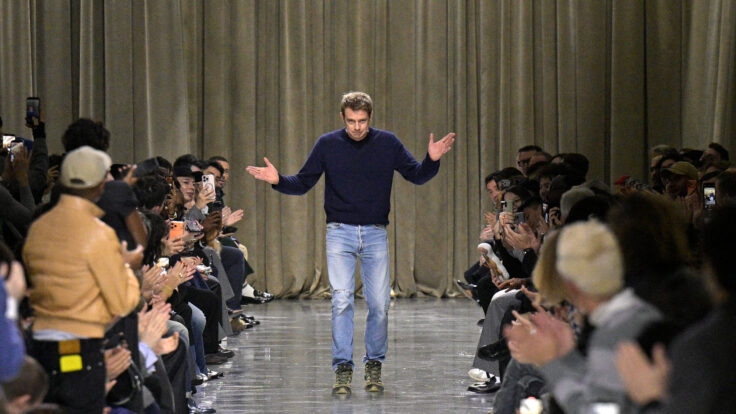
- How real are the talks between Willy Chavarria and Fendi?: Yesterday, WWD ran an intriguing report that the American designer has been speaking with Fendi about a potential gig. The reporters noted that the talks were “preliminary,” and that there were plenty of other candidate names swirling, including ex-Marni designer Francesco Risso.Upon further investigation, I was able to confirm that some conversations had indeed occurred. A friend and I subsequently debated why this information had leaked: Was LVMH trying to test the market response to the potential appointment? Was it some sort of insidious gesture to cajole another candidate into making a decision? Or were people on either side just chatting too much?
Regardless, will it actually manifest? Fendi, now a century old, is a very large brand—far exceeding a billion dollars in annual sales. With the right design team in place, the brand has the potential to do around $5 billion a year in sales in a decade—precisely the sort of business profile that LVMH is looking to cultivate within its portfolio. Right now, Silvia Venturini Fendi is still the menswear lead, and she’s doing a fine job managing womenswear while the company sorts out the next phase. Meanwhile, I’ve always assumed that she will retire at the end of this year, making room for a new person to oversee men’s and women’s and do a complete overhaul. (At least that’s what should happen.)
The two people who seem most suited for that gig are Maria Grazia Chiuri, who just returned to Rome after a stint at Dior, and Risso. Both are Italian and would bring their own flavor of strangeness to the delightfully strange brand. (I still think Alessandro Michele would have been the best choice… but alas.) Of course, non-Italians have designed Fendi, and Chavarria may reflect part of LVMH’s recent American kick. But the difference is that Jack McCollough and Lazaro Hernandez had been in conversations with LVMH for literally decades before landing at Loewe, and Michael Rider had worked at LVMH for years, and been considered as a replacement for Phoebe Philo at Celine before they did the deal with Hedi Slimane, before eventually getting the Celine gig in the fall.
Anyway, there’s no doubt that LVMH needs to replenish its stream of emerging design talent (where is the Jonathan Anderson of this next generation?). But I’m not sure that Bernard Arnault’s still-new right-hand, Stéphane Bianchi, a longtime Arthur Andersen consultant tasked with calibrating the group’s strategy, would advise on giving Chavarria the keys to the Fendi kingdom.
|
|
|
 |
Sarah Shapiro |
|
- About those 1950s house dresses…: A reader asked me why every retailer is carrying the same shirt dress right now: the 1950s house dress with milkmaid seaming that you may have seen at Anthropologie, Banana Republic, and Veronica Beard, among others. The silhouette originated with Claire McCardell, the 1940s designer who invented many American sportswear styles. (If you’ve ever said, “It has pockets!” when someone compliments your dress, you have McCardell to thank.) In short, her dresses have staying power because they fit many body types, and the proportions work well together. Tory Burch revived a McCardell nipped-in in 2022, and you can find her designs here, here and here. I found original McCardell designs on 1stDibs, Etsy, and The RealReal.
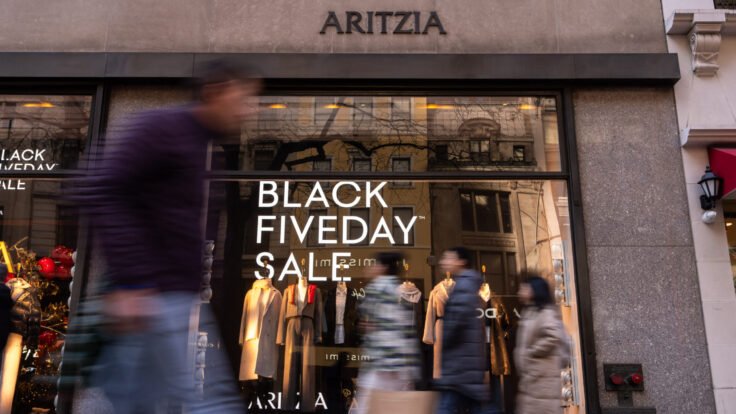
- Everyone’s knocking off Aritzia: Can any of the brands copying Aritzia match its success? The Canadian retailer is hitting the sweet spot between accessible and aspirational, backing up its corporate-core aesthetic—the proportions, the smocking, the cropped cardigans—with adroit merchandising mix and pricing. As of the latest earnings, shared last month, net revenue increased more than 30 percent, to almost $900 million, with comp store growth of 26 percent. Aritzia has been everywhere since Maeve Reilly, Hailey Bieber’s former stylist, started name-checking the brand. You can see the Aritzia renaissance in Everlane’s recent marketing pivot, and in Vuori’s tack away from performance-heavy styling into more transitional items meant to be worn outside the gym, as well as loungewear that feels distinctly… familiar.
|
|
|
|
And now for the main event…
|
|
|
|
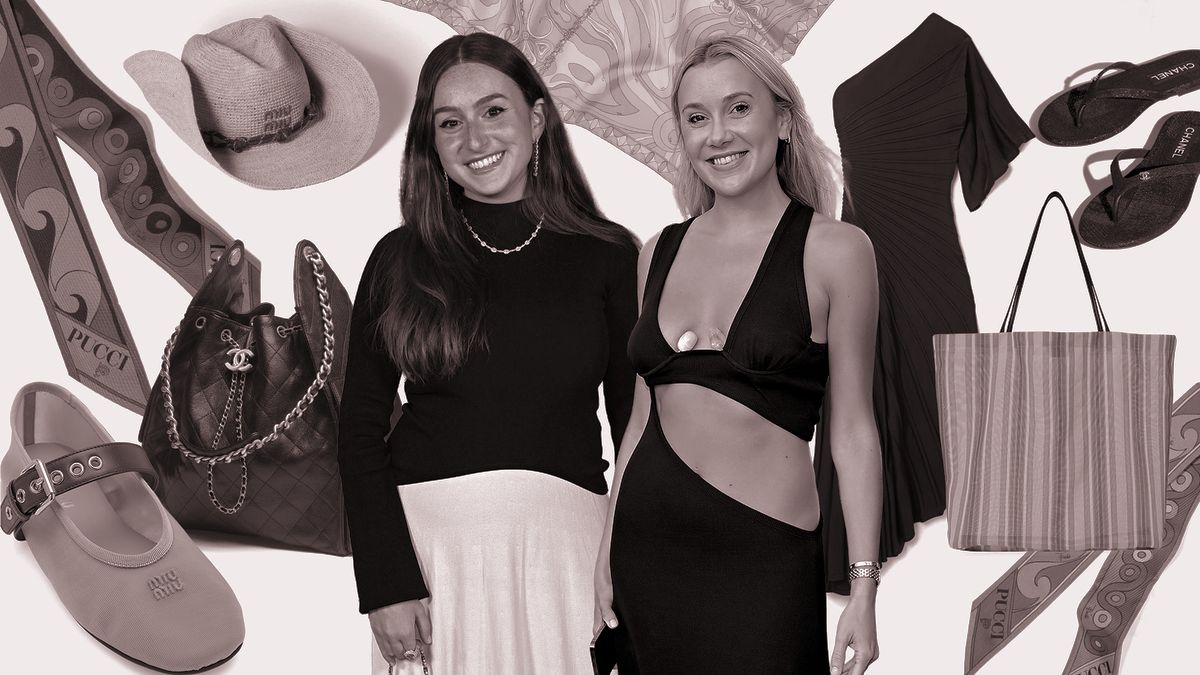
The summer fashion feeding frenzy is on, forcing hardcore customers to cut deals with a shadow network of sourcers who hunt down the season’s “sold-out-but-not-really” must-haves from Miu Miu, Chanel, The Row, Pucci, Alaïa, and more.
|
|
|
|
It wasn’t so long ago that personal shoppers were the preserve of the very rich, or the very famous, or some combination of the two. Later, department stores offered personal shoppers as a loyalty play: a way to keep their high rollers in the store and spending, lubricated with second-rate champagne and coos of approval. But then social media, pandemic lockdowns, and the expansion of direct-to-consumer businesses upended those models, and forced shoppers to go rogue.
Now, the kinds of aspirational customers who mostly shop Reformation, Cos, or Mytheresa online, but desperately want that one designer item, are reaching out directly to sourcers for coveted pieces that never appear on the shelves. The most recent example I heard from a sourcer was a Miu Miu raffia cowboy hat.
|
|
|
|
A MESSAGE FROM OUR SPONSOR
|
Now Viewing: FRAME Sotheby’s. A limited-edition collection from the California fashion house and the world’s leading name in art and design. Explore now at FRAME.
|
|
|
|
Well-known sourcers include Gab Waller, who told me she and her team are working on 30,000 unfulfilled requests, and The Coveted’s Kelly Levian, who says she gets between 150 and 200 DMs a day from people frantically searching for sold-out designer pieces. (Most sourcers charge a one-time fee of around $200, or 10 percent of the cost of the item.) There’s an informal symbiosis between sourcers and luxury brands. Scarcity, real or perceived, creates desperation. Chanel doesn’t sell handbags, ready-to-wear, shoes, or most of their merchandise (outside of beauty) online. Also, different countries receive slightly different products—heel heights, bag colors, and skirt lengths might vary.
Many popular items never make it to the selling floor, or into online inventory. But the heart wants what it wants. Ann Wehren, the founder and C.E.O. of In-Seam, a marketplace that supports stylists, personal shoppers, and sourcers, told me that many “Very Important Customers” (yes, they’re called V.I.C.s) never shop in person or online. The sourcers I talked to work globally, building relationships with brands to snag coveted pieces quickly, hunting down an item in Paris, Dubai, Sydney, Hong Kong, or Beverly Hills.
Waller explained to me that she had the epiphany for her business when she set out “to essentially bring all the pieces that are available all over the world, wherever it may be, to the Australian market”—thereby filling a legit hole in the market for engaged, high-intent shoppers who were happy to pay an upcharge that was less than a plane ticket and hotel room. It was a far larger market than she’d ever expected.
|
Not surprisingly, sourcers chase many of the same items, creating a kind of hall of mirrors by posting on social media how many requests they’re getting for a particular piece. When I canvassed Waller, Levian, and Jennifer Nisan from Front Row Live, I heard all about the Miu Miu mesh mary jane. Lyst reported that demand for the product increased by 170 percent in recent months, making it a top index contender for their upcoming rankings.
|
|
|
This summer, according to Waller, the V.I.C.s are demanding brands like Chanel, The Row, Pucci, and Alaïa. She told me she has more than 100 requests, including from overseas, for the Chanel 25 hobo. The Row barn tote, too, is racking up requests, and seems to be the Idaho tote of the season. Also in high demand is Pucci, perhaps due to aspirational nostalgia, the boom boom aesthetic, and the ability to buy it both resale/vintage and new. (Lyst data shows Pucci is up 78 percent year-over-year.) Alaïa ready-to-wear sells out quickly, despite the higher price point. Even specific colors of Alo leggings have received sourcing requests.
For retail, this represents a shift. Sourcers are creating a shadow distribution network, operating in the outskirts of the luxury brands and designers, driving volume, and making a dent in inventory allocation challenges. “The typical client could go into a boutique and ask about a shoe, and if it’s not in stock, they’ll be told the answer is a flat ‘no,’” Waller told me. “Whereas sourcers have access to local and global stock and inventory.” That difference, she explained, is what makes the service so unique, and so valuable. With sourcers, she concluded, “there’s no ‘no.’”
|
What We’re Reading… and Looking At…
|
An accurate depiction of sending a Gen Alpha daughter to camp right now. [ Instagram]
Somehow we missed this sweet (and well-deserved) profile on David Siwicki, one of the hardest working (and uniquely positioned) P.R.s in Paris, written by Friend-of-Line-Sheet Sarah Cristobal. [ 10 Magazine]
Chanel is launching Arts & Culture Magazine, and it will be edited by Yana Peel. [ WWD]
The first truly compelling, state-of-Gap piece published since the 1990s. [ Businessweek]
Sander Lak’s debut Sanderlak collection, which he’ll show to press and buyers later this week in Paris, is dedicated to California. No one does color—and prints—better than Sander. [ Vogue]
The Roberto Cavalli x Skims collab launched with the Cavalli tiger prints on Skims swimwear for summer. [Inbox]
Former Madewell creative director Joyce Lee’s round-up of shoes for walking 10,000 city steps a day is worth a gander, from Marcella’s take on the toe-ring sandal (demand for toe-ring styles is up 149 percent year-over-year, according to Trendalytics) to the Khaite Boden, which is in the running for sandal of the summer. Sarah swears by Margaux sandals for long treks on the pavement—what a comfortable footbed! [ Time Less]
Skincare brand Bubble made their faulty packaging into engaging content. [ Instagram]
|
|
Until tomorrow,
Lauren
P.S.: We are using affiliate links because we are a business. We may make a couple bucks off them.
|
|
|
|
Puck fashion correspondent Lauren Sherman and a rotating cast of industry insiders take you deep behind the scenes of this multitrillion-dollar biz, from creative director switcheroos to M&A drama, D.T.C. downfalls, and magazine mishaps. Fashion People is an extension of Line Sheet, Lauren’s private email for Puck, where she tracks what’s happening beyond the press releases in fashion, beauty, and media. New episodes publish every Tuesday and Friday.
|
|
|
|
Puck’s daily art market email, anchored by industry expert Marion Maneker, offers unparalleled access to the mega-auctions and galleries, elite buyers and sellers, and the power players who run this opaque world. Wall Power also features Julie Brener Davich, a veteran of Christie’s and Sotheby’s, who provides unique insights into how the business really works.
|
|
|
Need help? Review our FAQ page or contact us for assistance. For brand partnerships, email ads@puck.news.
You received this email because you signed up to receive emails from Puck, or as part of your Puck account associated with . To stop receiving this newsletter and/or manage all your email preferences, click here.
|
|
Puck is published by Heat Media LLC. 107 Greenwich St, New York, NY 10006
|
|
|
|