 |
|
Happy Thursday and welcome back to Line Sheet, now coming to you twice a week. Today, I’ve got news out of Paris, London, New York and Los Angeles—and remember, I’m always taking requests. (Send me the Milan goss.)
Mentioned in this issue: Jen Brill, Matthieu Blazy, Bottega Veneta, Tremaine Emory and Supreme, Matt Puckett, Jill Jordan, more Horses drama, Law Roach, Jennifer Lawrence, Dolce & Gabbana, Dior, Michael Miller, Clare Waight Keller, Sarah Edmiston, The Wall Group, and many more.
But first…
|
| We Need to Talk About Those Alaïa Mary Janes… |
|
| Having a hit item certainly doesn’t guarantee the success of a fashion business, but it does indicate something, and it’s time to take a moment to recognize what Pieter Mulier is accomplishing at Alaïa, the Richemont-owned Parisian fashion house whose beloved namesake died in 2017. Azzedine Alaïa was famously above trends, managing to work off the traditional fashion calendar, sans the support of Anna Wintour and Vogue, to develop a following of diehards who built massive collections of his engineered knits and punch-hole accessories. How do you follow that?
Mulier worked with Raf Simons for more than 20 years (most notably at Dior and Calvin Klein) and has received favorable feedback on his runway collections—have you seen those peacoats?—but I’m most interested in how resonant his Mary Jane flats have been with fashion editors. “The shoe we all worship and adore,” said Jen Brill, who works on the magazine-slash-fashion brand HommeGirls with Thakoon Panichgul, on Instagram the other day.
So many people I know have bought a version of them: fishnetted, crystal-studded, what have you. (A quiet rebellion against q**et l*x**y.) According to Lyst, a shopping app, the fishnet mary janes were the most-searched-for Alaïa product this month, superseding the heart-shaped Le Coeur bag, with a 60 percent uptick in searches for Alaïa flats in general over the past three months. (Mesh flats are trending overall, up 177 percent over the last month.)
Also, it’s a good time to mention just how well the whole Raf Simons triumvirate—Simons co-designing at Prada, Mulier at Alaïa, Matthieu Blazy at Bottega Veneta—is doing right now, not only in terms of making zeitgeisty things that people want to wear and talk about, but also in terms of revenue. Lyst is just one gauge, but searches on the platform are up 31 percent over the last three months for Alaïa, up 13 percent for Bottega, and up 35 percent for Prada. What a crew. And if you haven’t read Osman Ahmed’s February 2023 interview with the trio in i-D magazine, please do so now! It’s so great. |
| What’s Going on at Supreme? |
|
| Can we talk about what’s going on with Tremaine Emory? The design consultant, who was named creative director of Supreme in February 2022, suffered a lower aorta aneurysm last October—a very scary, life-threatening condition—and is still in recovery mode. Emory has been open about what he’s been through on at least one podcast, and yet the situation has been all but ignored in the traditional press, despite the fact that he’s leading the creative for what is arguably the most important American fashion brand to emerge over the past 30 years.
Supreme, which was acquired by sportswear conglomerate VF Corp in 2020 at a $2.1 billion valuation, isn’t that big of a company (it generated about $500 million in sales in 2021), but its influence is gargantuan. After all, Supreme essentially created the modern playbook for how people buy fashion today—with sales driven by limited-edition releases, collaborations, and a queue out the door as a main form of marketing. Hiring Emory, one of only a few Black designers to lead a major American brand, was a big deal, not only because of his status as a fashion insider but also because it indicated that the notoriously press-shy founder James Jebbia might be taking a step back.
Anyway, Emory is still firmly installed at Supreme, from what I know, although his illness meant that he wasn’t around much over the winter. But that’s only one part of what’s happening over there. The Wall Street Journal recently analyzed why Supreme gear is suddenly more available than it used to be—as in, not everything is always sold out anymore, and the resale market has cooled. In short: Supreme is part of a big, public company now, and needs to increase sales, which means it needs to make certain items available more consistently to drive up volume. It may not be as cool as it once was, especially to the 40- and 50-year-old guys who once obsessed over it as teenagers and 20-somethings—and that’s fine, as long as actual teenagers and 20-somethings are still buying it.
However, on its earnings call this week, VF reported that it had to take a $313 million write-down in the fourth quarter related to Supreme, and that’s in addition to another $422 million impairment in the second quarter. “The business performance was clearly uneven in fiscal 2023,” said C.F.O. Matt Puckett, adding that the company would start ramping up “geographic expansion” and “further penetration in current markets,” with a bit of growth expected in 2024, followed by a projected explosion in sales in 2025.
We’ll see. The brand has undergone so much change in the past three years: it was bought by a huge conglomerate, then it hired a famous, influential creative director—a friend of Virgil Abloh’s and, at one time, Kanye West—only for that collaboration to be disrupted by a terrible health scare. That’s a lot. I’m not sure what the future of Supreme looks like, but it’s worth paying attention to the current situation.
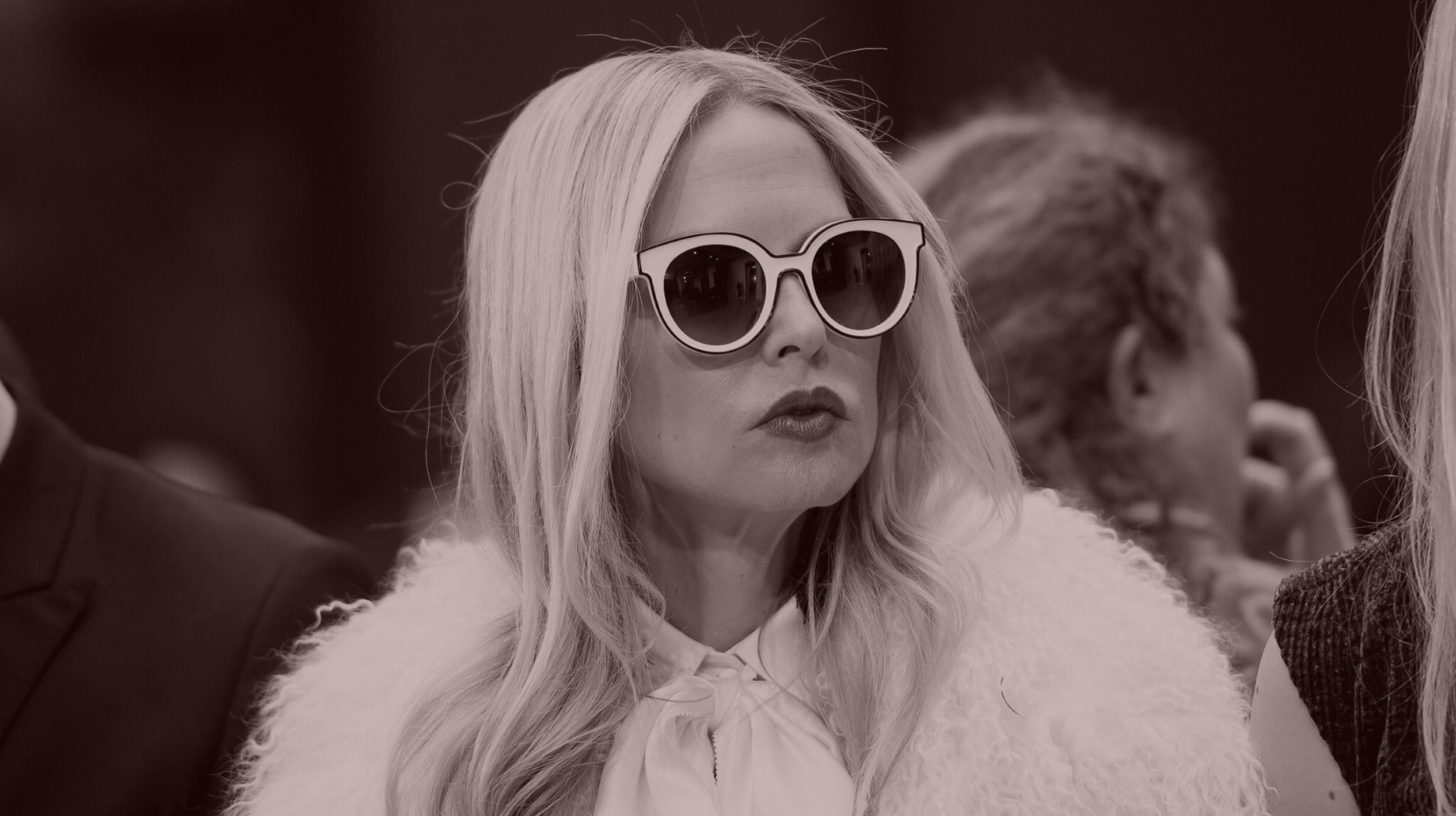
And now for the main event, a look at an unexpected consequence of the writers strike: discontent within the celebrity styling world. |
 |
| The Celebrity Styling Caste System |
| Yes, yes, styling can be a highly lucrative business, with a handful of top players on retainer for $200,000 per brand, and generating $5 million to $10 million annually. The reality for most stylists, though, is far less glamorous. Is now the time to mobilize? |
|
|
|
| As I’ve written before, the business of celebrity styling is entirely unregulated, proliferating a culture of favor-trading that results in some fairly shady business dealings. Stylists primarily get paid three ways: by the talent, by the studio, or by the brand. The problem right now is that no one really wants to pay them—at least not enough to cover the high-margin and low-justifiability expenses associated with putting together just one look.
It’s a strange time for the styling industry. The competition between streamers like Netflix and traditional studios such as Paramount have created more jobs than ever for stylists through the sheer volume of shows being released (pre-writers’ strike, anyway). There’s also been an exponential increase in requests for “glam”—hair, makeup and styling—from both on-screen talent and behind-the-scenes executives looking for an assist with public appearances. These days, everyone is their own personal brand. But as demand has gone up, so has supply. Fifteen years after Rachel Zoe made the career viable to millions of starstruck teenagers in the aughts, there are enough people calling themselves “celebrity stylists” to fill multiple representation agencies.
Yes, yes, styling can be a highly lucrative business, with a handful of top players on retainer for $200,000 per brand, and generating $5 million to $10 million annually. The reality for most stylists, though, is far less glamorous: studios are offering $500 a look, and sometimes even less, according to a person I talked to who runs a talent agency. Often, the entire budget presented for “glam” might be $1,000 per event, meaning that hair, makeup and styling have to split that three ways: $333 a piece. And that’s not including a manicure… or the costs associated with putting together a look. And according to one agent, it’s hard to convince these studios that a stylist needs more budget than a hair or makeup artist, even though the work requires extra hands (tailors, assistants) and includes logistics costs (Uber, Fedex, etcetera).
Jill Lincoln, one half of the Zoe-disciple styling duo Jill and Jordan, worked for years with big names like Jennifer Lawrence and Kiernan Shipka. Then, last year, she quit after 20 years in the biz, partially because of the “current state of 8 million celebrities, clamoring for the same dresses,” partially because “with the rise of the streamers, our rates were decimated.”
Indeed, the cost of goods sold (COGS in P&L parlance) make profitability profoundly difficult in the modern market. First off, there’s the tailoring—the fitting fee is $200, then alterations would likely cost at least $150. Then you’re likely spending about $500 FedExing looks either from New York or Europe, plus around $300 for couriers once the items land. Some big brands with budgets, like Dolce & Gabbana or Dior, will help cover some of these costs, but not always—and if you’re working with a young designer in order to show that your client supports the art of fashion, the onus is on the stylist to figure it out.
Lincoln was also paying her assistants a day rate of $250, plus $50 for gas and $20 a day for food. And then there’s the agency fee stack—typically 15 percent for the stylist’s agent—although some agencies lower their commission based on the rate, and will take their 15 percent out after deducting expenses. In order for Lincoln to profit from a job, she told me, the rate needs to be $1,250 per look, which means that, in some cases, the COGS associated could be more than $900. So that’s $350 before taxes, agency fees, etcetera. Alas, Zoe built her business by maintaining the glossy part on the outside and the gritty part on the inside. |
|
|
| This may help to explain why so many stylists, even the ones at the top, resort to sketchy behavior, like hiding endorsement deals from their clients or selling designer samples on The RealReal. (I brought this up a few weeks back when chronicling le scandale of Law Roach, who recently “retired” from the business.)
The problem, as I see it, is that nobody really wants to pay stylists anymore: not the studios, not the talent, not the brands. Not that it was ever a real meritocracy, but it’s harder than ever to go into this business without someone else paying for your life. Talent agents at The Wall Group, which is owned by Endeavor, will often float less-experienced clients one-off, $1,000-a-day personal shopping gigs to help supplement their income, but real styling jobs often take precedence, even if you have to essentially work for free, or rack up credit card debt.
I’m not really sure what the solution is, other than, some say, to unionize. There are a few big stylists here in L.A. who say they are pro union, but this is quite the precarious job and there’s little upside, if any, for the handful of people at the top. However, in the U.K., where the number of people in trade unions continues to rise—unlike the U.S., where the number continues to shrink—there’s movement. On Wednesday night, the stylists Michael Miller (who works with a gaggle of young actors including Callum Scott Howells and Parker Sawyers) and Sarah Edmiston (whose clients include Ariana DeBose and Hong Chau) organized a meeting for what they are calling the Celebrity Stylists Union, supported by Bectu, a trade union that represents more than 40,000 works in media and entertainment in the U.K.
“All we’re asking for is to be treated fairly,” Miller said, recalling one stylist who reported having over £50,000 in credit card debt. “Styling is a real skill, fucking hard work. You can’t just pull a gown out of your ass in 30 seconds, this takes days and days of work in multiple time zones, often dealing with multiple jobs at the same time… It’s becoming unbearable.”
For stylists, a strike could force studios to increase their base rate, a far less complicated ask than what’s going on with the writers, and potentially the actors and directors, too. But it’s also certainly not a priority for Big Hollywood right now. (If actors aren’t promoting their shows, then there’s no one but David Zaslav and his buddies to gussy up.) And remember, the real money for stylists is coming from brands, which are more comfortable paying talent than the hardworking teams behind them. And brands, unlike the studios, don’t negotiate as part of any trade group, or make deals as a bloc. |
|
|
| Herewith, The Horses Article. My main takeaway, other than “wow, this is sad and distressing,” is that Liz Johnson and Will Aghajanian are still very young—just 32 and 31, respectively. Sheesh. [NY Mag]
Hermès, Selfridges, and other companies have quietly left the “Fashion Pact,” a climate commitment first introduced to the G7 in 2019 at the request of Emmanuel Macron. [BoF]
Who’s allowed to wear Sambas? Not me! [GQ]
I loved Scarjo in Prada at Cannes, but Lily-Rose Depp (in Chanel!) obviously won the week. [Twitter]
Clare Waight Keller is forever rumored to be getting one job or another, but I assume this Uniqlo collab intel is legit. [WWD]
Luxury stocks are slumping amid worries of a U.S. economic slowdown. Eek! [Bloomberg]
Another example of fashion moving further upstream: Brunello Cucinelli and Chanel go in on a yarn manufacturer. [Vogue Business]
“My mom doesn’t have a retirement fund anymore, and that’s an awareness I have to confront and suppress every time somebody doesn’t want to come to the show because ‘It’s too late at night,’ or ‘It’s in Brooklyn.’” –Milwaukee-bred designer Elena Velez on the realities of trying to “make it” as a fashion designer in New York. [NY Times]
A deep-end dive on why it’s Hermès or bust when it comes to handbags. [BoF] |
|
|
| On the Nicolas Ghesquière-to-Chanel rumor: “NEVER GONNA HAPPEN. VV [Virginie Viard] needs to go away quietly and let the house run itself. Not that anyone asked me.” –An ex-Chanel exec
“I’m rooting for Elisa [Lipsky-Karasz, WSJ. deputy editor and potential candidate for E.I.C.]” –A strategic advisor
“If I had to write in an outside candidate [for the WSJ. job]—this is really more my wishful thinking than anything—I would nominate Adam Rathe from Town & Country. He’s multi-faceted, has a grasp on all the subjects covered in WSJ. mag; he has the experience and background, and does more at the magazine than his job title indicates. He’s well-liked, witty, handsome (and we both know that doesn’t hurt).” –A journalist (who is not Adam Rathe) |
|
|
Until Monday,
Lauren |
|
|
|
| FOUR STORIES WE’RE TALKING ABOUT |
 |
| Bezos at Sea |
| A conversation encircling the latest mediaworld plotlines. |
| DYLAN BYERS |
|
 |
| Gorman’s Goodbye |
| Handicapping the Morgan Stanley C.E.O. succession odds. |
| WILLIAM D. COHAN |
|
 |
| DeSantis-Sacks ’24 |
| Charting the PayPal Mafia scion’s ascendency through the G.O.P. |
| TEDDY SCHLEIFER |
|
 |
| Netflixonomics |
| A close look at the putative success of the streamer’s ad tier. |
| JULIA ALEXANDER |
|
|
|
|
|
 |
|
|
|
Need help? Review our FAQs
page or contact
us for assistance. For brand partnerships, email ads@puck.news.
|
|
|
|
Puck is published by Heat Media LLC. 227 W 17th St New York, NY 10011.
|
|
|
|