Welcome back to Wall Power. I’m Marion Maneker.
There’s a lot
of art being donated to museums these days. Tonight we look at the Met’s preview of its new show of Man Ray’s photograms, which came yesterday with the announcement that John Pritzker was making a major donation of dadaist and surrealist works to the museum’s 20th century collections. Like the Lauder gift of cubist works more than a decade ago, the Pritzker donation continues the museum’s march into modern art. Meanwhile, in Arkansas, Crystal Bridges
announced the opening dates for its expansion and the news of more than 200 works of art being donated to the museum. Julie Davich also gives us a look at Bunny Mellon’s blue diamond, which is coming to auction again after a dramatic rise in prices for colored stones.
Let’s get started… |
-
Independent x Sotheby’s: Early Monday morning, the Independent 20th Century art fair announced that it would hold next year’s event at a new location uptown: the Breuer Building on Madison, which is now owned by Sotheby’s. Consequently, the fair will move to a slightly later date, September 24 to 27, and expand from approximately 30 to 50 galleries.
- Crystal Bridges’ expansion: Crystal Bridges held a press conference in New York yesterday
to announce two donations and the opening of its expanded campus on June 6, 2026. The museum’s new wing will increase the size of the facility by 50 percent. Candace and Michael Humphreys announced that they’ve given the museum 200 artworks, along with funds for future acquisitions, to help fill the space. The gift includes works by Mary Cassatt, Barkley Hendricks, Alex Katz, Robert
Bechtle, Edward Ruscha, Kiki Smith, Jaune Quick-to-See Smith, Nicholas Galanin, and Do Ho Suh.
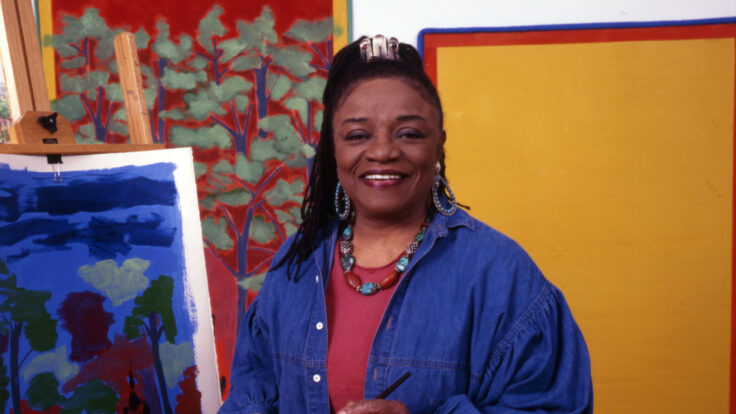
Olivia and Tom Walton have also donated 18 major works of art, all by women. The gift includes works by Yayoi Kusama, Njideka Akunyili Crosby, Loie Hollowell, María Berrío, and
Betye Saar.
|
|
|
A MESSAGE FROM OUR SPONSOR |
Greatness isn't achieved in an instant. It's tested until there is no question — only performance.
|
|
|
- Christie’s shutters
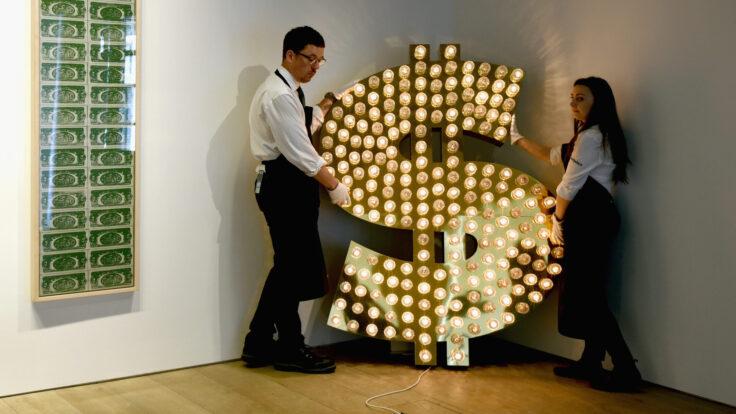
its digital art department: Yesterday, Now Media reported that Christie’s had decided to reformat its digital art sales. The house will sell works within the 20/21 art category, but no longer hold stand-alone digital art sales. This won’t come as a surprise to anyone closely observing this market, but two staffers have left the company as a result.
Even
before Christie’s sold Beeple’s NFT, Everydays: The First 5,000 Days, in early 2021 for nearly $70 million, the house had been holding sales of generative and A.I.-based artworks. The advent of NFTs accelerated interest in digital art, but the explosive rise of that market proved unsustainable.
|
|
|

| Julie Brener Davich
|
|
There are few objects so associated with their owner that they take that person’s name:
The Brody Picasso. The Pincus Rothko. The Newman Rolex. And the Mellon Blue, named for its first owner, Rachel Lambert “Bunny” Mellon, which is coming back up for sale at Christie’s Geneva in November at an estimate of $20 million. The 9.51-carat fancy vivid blue diamond first appeared at auction in 2014 at Sotheby’s, in the historic sale of Bunny’s estate. Back then, it sold to the current consignor, a private Hong Kong collector, for $32.6 million against an estimate of $10 million.
Known primarily as a horticulturalist, Mellon was the second wife of Paul Mellon, the son of Gilded Age financier and impeached
Treasury Secretary Andrew W. Mellon. She set the diamond as a pendant, but the subsequent owner reset it as a serpentine pavé diamond ring and inscribed the words “9.75ct Fancy Vivid Blue” inside—lest anyone forget. The stone was retouched slightly to bring the clarity back to flawless, which is why it’s now only 9.51 carats.
Blue diamonds are exceedingly rare, comprising less than 0.1 percent of all diamonds. And less than 1 percent of those can be
categorized as fancy vivid. In fact, in the Mellon sale, a complementary fancy blue 9.15-carat diamond (thought to have once been the other half of a pair of earrings) sold for just one-tenth the price.
At the time, the Mellon Blue was the auction record for a blue diamond and the highest price per carat for any diamond. Today that price wouldn’t even feature in the top 10—demonstrating the explosion in the market for colored stones over the past decade. Since that sale, four
pink diamonds have sold for between $45 million and $71.2 million (at Sotheby’s in 2017, setting the world auction record for any jewel), and five blue diamonds have sold for more than $40 million. The 14.6-carat Oppenheimer Blue, which sold at Christie’s Geneva in 2016 for $57.5 million, currently holds the record for a blue diamond. |
|
|
Now let’s get to the main event… |
|
|
The preview of the Met’s Man Ray show on Monday also marked a major
promised gift of dada and surrealist works to the museum. Like the Lauder gift of cubist art, this one from John Pritzker will give the museum a much-needed core collection. |
|
|
Like with most museum openings, the preview of Man Ray: When Objects Dream
at the Met on Monday was a subdued affair. But the Met had a lot to celebrate. The exhibition, which opens September 14, explores the crucial period of the artist’s development from 1915 to 1929 through his “invention” of the rayograph, a form of photogram. The preview also coincided with the Met’s announcement of a major promised gift of 188 dadaist and surrealist works from trustee John Pritzker—which includes works by Marcel Duchamp, Max
Ernst, Kurt Schwitters, and Jean Arp, in addition to Man Ray—and comes with additional money from the John Pritzker Family Fund to create a multidisciplinary research program focused on dadaist and surrealist art.
Just as Leonard Lauder did a dozen years ago with his gift of cubist art, which was valued at more than $1 billion, Pritzker is providing the museum with a much-needed core collection of
dada and surrealist art, capped with a significant auction purchase. That trove will become part of the foundational collection of the future Tang Wing, which will begin construction next year and is slated to be finished in 2030. Along with the Pritzker and Lauder gifts, the wing will also house Musa Mayer’s gift of her father Philip Guston’s art. |
|
|
A MESSAGE FROM OUR SPONSOR |
Greatness isn't achieved in an instant. It's tested until there is no question — only performance.
|
|
|
The Man Ray exhibition is just the start, and the curators—Stephanie
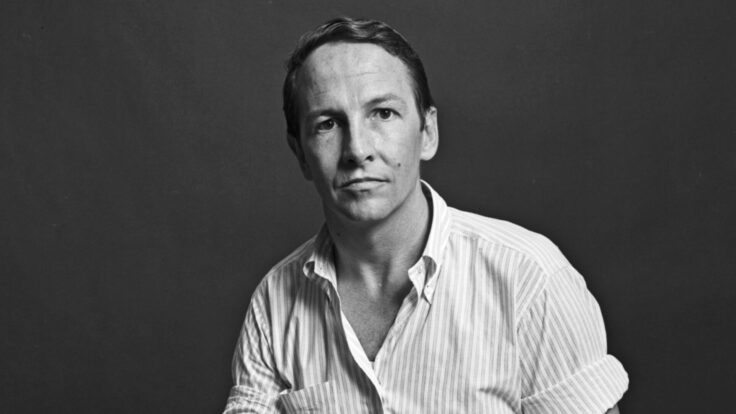
D’Alessandro, of the modern art department, and Stephen C. Pinson, from photography—present the rayographs as a distinctive body of work that unifies, illuminates, and defines the multidisciplinary career of a pivotal artist. Man Ray was a contemporary of dadaist and surrealist talents, though he was never one to join a movement. The American artist had tried to distinguish his namesake black-and-white photograms from their 19th century forebears, and the Met’s
exhibition space was designed in a striking manner to highlight them and provide a space for serendipitous exploration. It also offered hints of glamour at the preview: Gagosian’s Derek Blasberg swanned through the event, and David Breslin, the Met’s curator for modern and contemporary art, squired Emily Rales around the mostly black-and-white displays. |
In 1921, Man Ray moved to Paris to be an avant-garde painter. But his interest in other
avant-garde painters, and his facility with a camera, led to his evolution into a recognized portrait photographer for magazines like Vanity Fair, Vogue, and Harper’s Bazaar, for whom he created images of just about everyone considered cool in Paris in the 1920s—from Gertrude Stein, Pablo Picasso, and Jean Cocteau to Ernest Hemingway and Marcel Proust. The Virginia
Museum of Fine Art memorialized this aspect of Man Ray’s working life in their 2021 show, Man Ray: The Paris Years. Even though Man Ray himself didn’t consider photography to be a form of art, the ready market for his images back home in America, along with a strong exchange rate, gave him the time and means to keep experimenting with media.
The rayographs emerged at a
crucial, hazy moment in between dada and surrealism. They presented a keystone for Man Ray’s other work creating ready-made sculptures, dabbling in film, and on occasion returning to painting—the medium for which he most longed to be recognized, but which continued to frustrate him.
As the Met’s exhibition shows, the process that Man Ray stumbled upon while developing images for a fashion client turned out to be an inflection point in his career. Exposing photographic paper to light using
a variety of commonplace objects allowed him to bring together many of his artistic preoccupations. Man Ray had previously written about the “new art of two dimensions” and the “flat plane,” but the rayograph was photography without a camera or lens, and allowed the artist to, in his words, “work directly with light itself,” per the exhibition’s catalogue.
So while Man Ray may not have considered his portraits art, he did think that his rayographs were on par with the experiments in
painting he’d begun in 1915. The curators show us Man Ray wrestling with the flat plane of the picture in various ways: He made collages; he took photographs of household objects in mysterious shapes and assemblages; he turned hangers into mobiles; he used an airbrush to create new painterly effects and adapted a hybrid process of printmaking and photography called cliché-verre. The galleries presenting various works in these different media are some of the best in the show. |
|
|
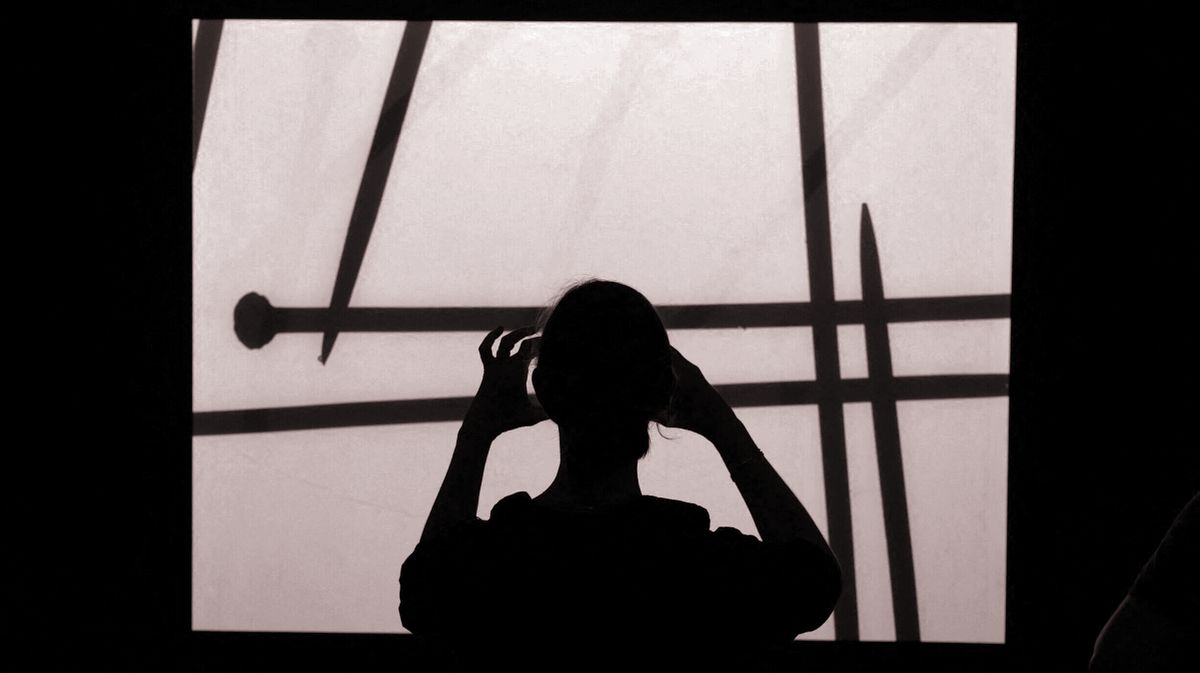
They lead directly to a dark display of the rayographs, which forms the center of the
exhibition, along with a long underlit vitrine that displays many of the household objects that Man Ray used to make his photograms. It’s easy to get lost in the gallery of rayographs. The works are both familiar—it’s been a century since the artist published his Champs Délicieux portfolio—and otherworldly. |
Pritzker Down the Rabbit
Hole
|
Like many museum shows organized to highlight gifts from benefactors, this one is
serving several masters. John Pritzker’s donations make up nearly a fifth of the show’s 100 works of art and 60 rayographs. The rest were borrowed from more than 50 lenders. During his remarks to the press, Met director Max Hollein praised Pritzker for “going down the rabbit hole” to find the best works. And he admitted that Man Ray had not made the task easy.
One of the draws of the show—the crowd-pleaser, if you will—was the gallery containing Man Ray’s most famous
images. Here you’ll find the image of Man Ray’s partner, Kiki de Montparnasse, her face in repose next to an African mask; the untitled close-up of a woman’s eyes festooned with glass tears; and, of course, Le Violon d’Ingres, from 1924, depicting de Montparnasse with a cello’s F-holes painted on her back. Like Lauder’s cubist donation, which was topped off with a $56 million Juan Gris painting bought at auction in 2014, Pritzker acquired Le
Violon at auction in 2022 for $12.4 million.
You cannot have a show arguing for Man Ray’s importance in the development of modernism without these works—but the curators are far more interested in the gallery of paintings from 1923 and 1926 that they’ve reunited here for the first time and shown alongside the rayographs. The curators are making the argument that rayographs, which can be read as revolutionary still lifes, also allowed Man Ray to return to his interest in creating a
flat plane of painting. The pairings of rayographs and painted works underline “the call and response between painting and photography” in Man Ray’s work, per the exhibition catalogue, as well as his ambition to achieve a breakthrough that would reverberate through the art world and establish his own reputation as an artist. |
That’s it for today. More in the Inner Circle tomorrow. Upgrade
here for access.
M |
|
|
The ultimate fashion industry bible, offering incisive reportage on all aspects of the business and its biggest
players. Anchored by preeminent fashion journalist Lauren Sherman, Line Sheet also features veteran reporter Rachel Strugatz, who delivers unparalleled intel on what’s happening in the beauty industry, and Sarah Shapiro, a longtime retail strategist who writes about e-commerce, brick-and-mortar, D.T.C., and more. |
|
|
Finally, a media podcast about what’s actually happening in the media—not the oversanitized,
legal-and-standards-approved version you read online. Join Dylan Byers, Puck’s veteran media reporter, as he sits down with TV personalities, moguls, pundits, and industry executives for raw, honest, sometimes salacious conversations about the business of media and its biggest egos. New episodes publish every Tuesday and Friday. |
|
|
Need help? Review our FAQ page or contact us for assistance. For brand partnerships, email ads@puck.news. You received this email because you signed up to receive emails from Puck, or as part of your Puck account associated with {{customer.email}}. To stop receiving this newsletter and/or manage all your email preferences, click here. |
Puck is published by Heat Media LLC. 107 Greenwich St, New York, NY 10006
|
|
|
|