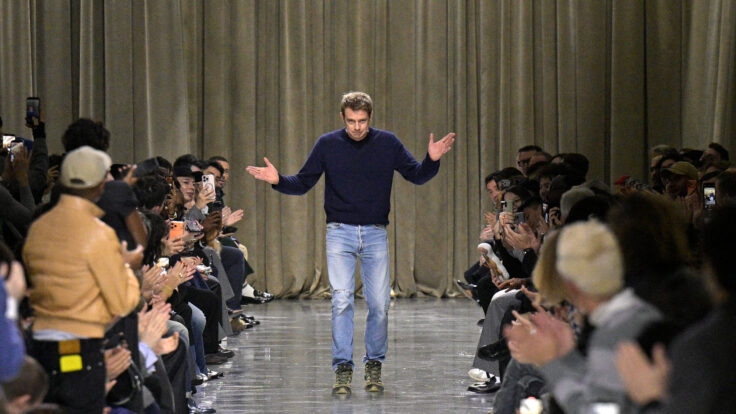
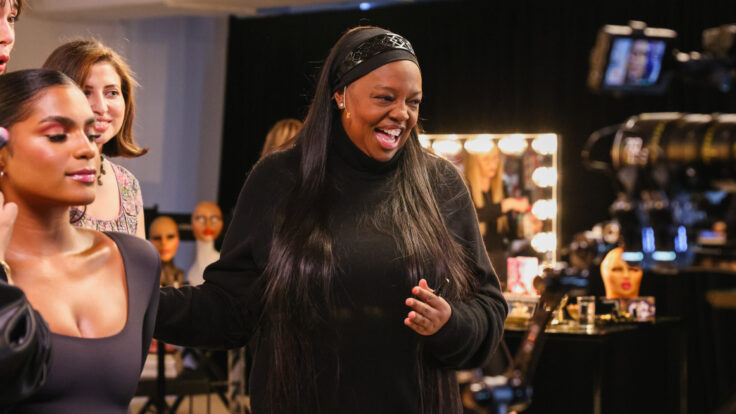
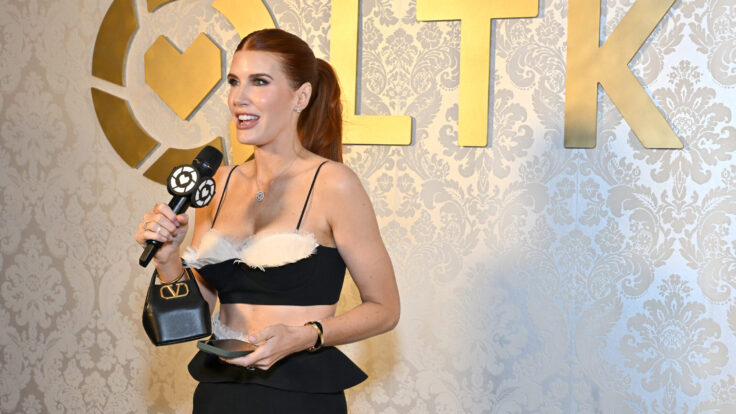
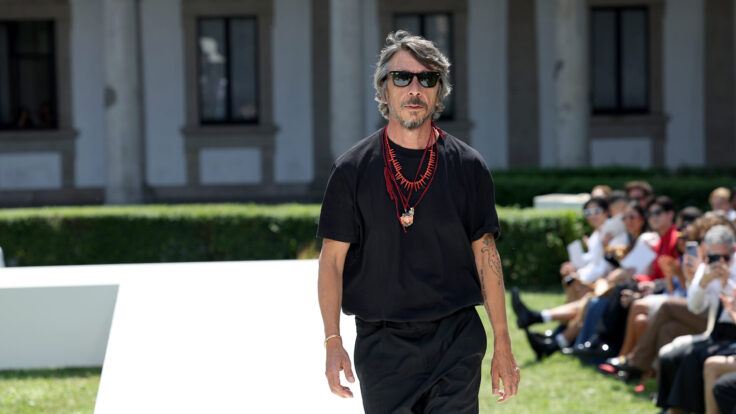
Hi, and welcome back to Line Sheet. What a week. Chloe. Armani.
And to top things off, NeueHouse—my work home away from home for the past two years, where my fantasy football pal Dylan Byers and I have been plotting our winning strategy—is filing for Chapter 7 bankruptcy. That means liquidation. This is the last day you can go. I’m sad. I really liked working at the Hollywood location, where I enjoyed catching up with Dylan; running into my friends Molly and Amy (and occasionally Collin);
avoiding certain publicists; and eavesdropping on other publicists. “I can get Jon Caramanica to go” was a favorite overheard comment.
I had a feeling something was up a few months back when they changed chefs and got rid of the Nicoise salad—the best in L.A. It was a clear sign that the management team was not making good business decisions. I hope everyone who works there gets a new job soon, and everyone who works from there finds a new place
that’s almost as lovely. (In retrospect, the furniture was probably too nice.)
In today’s issue, Sarah Shapiro looks at how the secondhand market is (actually) changing consumer behavior; she also has some thoughts on the exit of Madewell president Adrienne Lazarus and the big Bloomingdale’s opportunity. Plus, I’ve got intel on Buck Mason’s new womenswear strategy, which has been brewing behind the scenes
for a while but is launching in earnest next week.
Mentioned in this issue: The RealReal, Rati Sahi Levesque, Chanel, Hermès, Jonathan Anderson, Toteme, Pucci Girl Summer, Buck Mason, Sasha Koehn, Erik Allen Ford, Rachel Wilder, Erin Wasson, Madewell, Adrienne Lazarus, Bloomingdale’s, Macy’s, Tony Spring,
Olivier Bron, Taylor Swift, and many, many more… |
|
|
A MESSAGE FROM OUR SPONSOR |
The end of De Minimis has already redefined global commerce - and most businesses aren’t navigating it alone. A recent Swap study found
88% of companies are already seeking partners to adapt cross-border strategy, mitigate tariff exposure, and protect profitability.
Swap’s latest tariff turmoil report gives leaders the playbook to stay compliant, defend margins, and unlock global growth in the new trade era.
👉
Download the full report |
|
|
Three Things You Should Know…
|
- Buck
Mason for girls: You may not realize that the Los Angeles–based brand that sells your husband’s no-stretch chinos has been pretty quietly developing a women’s line over the past few years. (You might have noticed it tucked into one of their ever-proliferating stores.) About a year ago, co-founders Sasha Koehn and Erik Allen Ford hired designer Rachel Wilder (late of Frame, Joie, and Trish Wescoat Pound’s first brand, Haute
Hippie) to go all out. Now, they’ve contracted model, designer, and forever muse Erin Wasson to join the business as a “creative partner,” I’m told. They’re set to announce Wasson’s involvement—which yes, includes starring in campaigns—as early as next week, followed up with a party in New York on September 16.
I got a sneak peek of the Wasson images, and the clothes look great. (We are all looking for simple denim and t-shirts that feel like they are nice quality, don’t
look like something an old lady would wear, and are free of doohickeys. They’re harder to come by than you’d think.) Plus, this team is golden: Wilder is a star in Buck Mason’s part of the designer world, and Wasson certainly has bona fides beyond her work in front of the camera. (I’m not sure if you all remember her line for surf and skate brand RVCA—which, of course, is now owned by Authentic Brands Group—but I do, and all the young fashion girls loved it circa 2010.) Anyway, Sarah is going to
write more about this all and Buck Mason’s prospects next week. Women’s is just a way bigger market, and if you want to be a giant brand, you sort of have to get it right.
|
|
|

| Sarah Shapiro
|
|
- Who can make Madewell…
well?: Madewell president Adrienne Lazarus is leaving, two years after being brought in to revitalize the J.Crew Group’s struggling denim and basic-casual-wear mall brand. More than anything, her departure underscores the brand’s ongoing identity crisis: As I’ve written, Madewell is too dated for younger shoppers, its aging millennial customer base
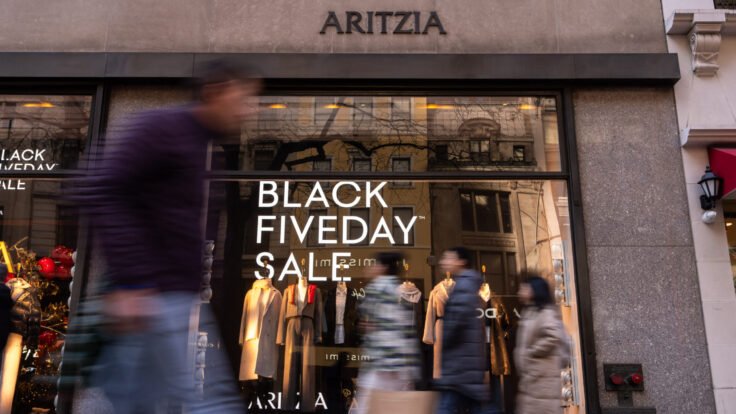
has many other options, and its pricing falls in the muddy middle, neither competitive nor luxury. Former execs have told me that an effort to go after the Aritzia customer backfired; Madewell’s customers were actually looking for novelty, and went to Sézane instead.
During her tenure, Lazarus overhauled the creative team and changed the company culture. I’ve heard it’s a very different organization than it used to be, and employees are concerned about what comes next.
Of course, that’s the case whenever there is executive turnover at a company, but a source told me that the leadership team will otherwise remain intact (for now). What the brand really needs, however, is someone who can figure out what Madewell actually stands for—and execute on that vision before it’s too late. - Can Bloomingdale’s save Macy’s Inc.?: Even though foot traffic has dropped at Macy’s, Bloomingdale’s, and Bluemercury stores, Macy’s
Inc. appears to be stabilizing, with net revenue holding steady at $4.8 billion in Q2. Among the department stores, Bloomingdale’s has been the difference maker—it just notched its fourth consecutive quarter of growth, and seems destined to grab even more market share.
The key has been brand curation: Macy’s Inc. C.E.O. Tony Spring and Bloomingdale’s C.E.O. Olivier Bron have started catering to consumers across the demographic spectrum. The brand Area,
for instance, offers rhinestone-crusted denim pieces that Taylor Swift turned into a WAG staple, while the new-to-Bloomingdale’s Toteme handbags are essentially updated, contemporary pieces for the former Theory shopper.
This positioning matters: Bloomingdale’s thrives when it captures each season’s trend across multiple price points, serving everyone from the cautious trend-seeker to the all-in fashion buyer. During the decade that I spent as a Bloomingdale’s buyer,
solving this puzzle was part of the fun. The trick always came down to maintaining the assortment edge, while staying differentiated from Nordstrom’s service-focused approach and Saks’s higher-price-point play.
Of course, the open question is whether Bloomingdale’s can build enough momentum to offset broader challenges at the parentco. It only has 32 full-line department stores, four small-format Bloomies, and 21 outlets. Meanwhile, Macy’s has 449 locations, but is on track to close 150
storefronts by 2026. The only way Macy’s Inc. can succeed is if its flagship department store finds its own, value-focused lane, with enough big brands and fashion-forward private labels to mean something—while avoiding getting hit too hard by tariffs in the meantime.
|
|
|
The secondhand category has been surging in recent years, driven by Gen Z bargain hunters
addicted to resale platforms. According to experts in the field, a few distinct buyer archetypes have emerged. |
|
|
Something has shifted in resale shopping, and one solitary statistic tells the story: Nearly half of American
shoppers, 47 percent, now consider the resale value of a clothing item before making a purchase, as The RealReal C.E.O. Rati Sahi Levesque was happy to point out on the company’s Q2 earnings call. It’s the latest signal that resale has officially moved from the margins into the mainstream—fueled in part by the addictive, online hunt for the one
item at that once-in-a-lifetime price, in an adrenaline-fueled gamification of shopping that traditional retail just can’t match. |
|
|
A MESSAGE FROM OUR SPONSOR |
The end of De Minimis has reset the rules of global trade. Every U.S.-bound shipment now faces tariffs, higher costs, and compliance
pressure—making margin protection more critical than ever.
Swap’s latest tariff turmoil report gives businesses the blueprint to adapt quickly, reduce risk, and turn disruption into growth.
Inside, you’ll learn:
🌍 Impact of the De Minimis suspension on global commerce
💸 How businesses and customers are adapting to rising costs
⚠️ Risks of inaction for margins and loyalty
🚀 Five strategies to protect profits and fuel growth
👉
Download the full report |
|
|
In some ways, this ecosystem has sidelined luxury brands—you can now purchase a Chanel tweed
jacket or Hermès Kelly without ever setting foot in a designer boutique. And your first luxury experience might happen on The RealReal, Fashionphile, or eBay rather than in a brand-controlled environment. Hence Levesque’s triumphalism that “today’s modern consumer” seeks out luxury resale as “an option of first resort, not
last.”
Of course, there are two sides to the coin. On the supply side, The RealReal reported seeing double-digit growth in new consignors in the second quarter, driven by so-called “flywheelers”—customers who both buy and sell frequently. A former company executive told me they’re especially focused on the shopping patterns of Gen Z, where they expect to reap the bulk of the secondhand growth in the next few years. “Gen Z isn’t wearing exactly what everyone else is wearing or what’s right
off the runway,” the executive explained. “They’re very into thrift culture and doing trends in their own way.” By contrast, this person added, Instagram-driven Millennials find it “such a faux pas to be wearing the same thing over and over.” |
Resale
Shopping Archetypes
|
According to ThredUp’s Resale Report, resale grew eight times faster than the apparel category overall in
2024, driven by several key buyer demographics. And after speaking to experts in the field, a few distinct archetypes have emerged. What I’ll call the collector hunts for specific vintage pieces—early Marc Jacobs, Phoebe Philo–era Céline, Giorgio Armani classics, etcetera. These shoppers have their finger on the pulse: When Jonathan Anderson’s Loewe departure was announced, searches for Loewe surged 488 percent on The RealReal. Yesterday, following the
news of the legendary designer Giorgio Armani’s death, The RealReal saw a 170 percent increase in searches for “Giorgio Armani,” and an over 200 percent increase for “Armani.” (Former Vogue writer Liana Satenstein chronicled the adventures of this archetype in her Neverworns Substack.)
Meanwhile, the
flywheeler treats resale like a revolving door, through which they constantly refresh their closet. Whether it’s because they enjoy mixing up styles or prefer to sell items when they’re still valuable to fund their next purchase, there are multiple factors that lead to this shopping behavior. The flywheeler is also a valuable shopper because she engages in both sides of the inventory ecosystem, creating supply and demand.
The entry-level designer seeker is fueling
momentum for brands like Rachel Comey and Polène—both of which entered The RealReal’s top 100 brands in 2025—as well as Toteme, one of the fastest-growing brands, with an 82 percent jump in RealReal searches during 2025. “They’re just looking for the best deal on sites they trust,” said a former TRR employee of this archetype. “There’s no brand loyalty—it’s purely about price.” |
|
|
Then there’s the trend hunter, who shops by cultural moment. When The White Lotus aired,
eBay saw searches spike for the Gucci Bamboo 1947 top handled bag, according to Alexis Hoopes, the company’s global head of fashion. The Pucci Girl Summer trend on TikTok pushed Pucci into The RealReal’s top 100 brands for the first time in 2025. Finally, while not a buyer archetype, there’s the
all-important consignor, who would never dream of buying secondhand themselves, but plays a crucial role in the resale ecosystem by getting rid of their stuff to the benefit of the various other kinds of shoppers. |
For their part, resale platforms are leaning into the psychology of the chase. As one former executive told
me, “It’s entertainment, not just utilitarian.” For example, The RealReal’s “Obsessions” feature tracks search terms and flags new listings, which heightens the pressure to act fast. This gamified hunt has sparked an entire content ecosystem, with TikToks and Substacks dedicated to strategies for scoring the best resale finds.
Of course, certain items are more prized than others. “Birkin” averages 4,000 daily searches on The RealReal, which sold one last year for $385,000 at its West
Hollywood store. Meanwhile, Bernstein Research reports that Birkins and Kellys now command resale premiums of 1.7 times their retail price—evidence that buyers will pay more for instant online access rather than endure Hermès’s opaque quota system. But demand extends beyond trophy items. Contemporary labels like Coach, Cult Gaia, and Ulla Johnson are seeing notable resale growth, demonstrating how the market elevates mid-tier brands alongside luxury.
Inevitably, macroeconomic factors play
a role in this ecosystem, too. As the price of gold has increased, and tariffs have reshaped resale economics, resale platforms have had to calculate how to respond to price changes from brands. Typically, they’ll follow suit: According to The RealReal’s resale report, yellow gold jewelry now sells at 47 percent of original retail value, an increase from 37 percent in 2019. Ebay reports that Van Cleef & Arpels’ resale value jumped 90 percent between January and May 2025.
Some
designers are getting ahead of the trend. Moschino, Erdem, and Altuzarra have all collaborated with eBay to feature pre-loved pieces on their runways. ThredUp now projects that the global secondhand apparel market will reach $367 billion by 2029, growing at a compound annual rate of 10 percent. Even so, most brands still seem content to remain on the sidelines—thereby cutting themselves out of a multibillion-dollar slice of the business. |
See you at Oasis on Saturday,
Lauren
P.S.: We use affiliate links because we are a
business. We may make a couple bucks off them. |
|
|
Puck fashion correspondent Lauren Sherman and a rotating cast of industry insiders take you deep behind the scenes of this
multitrillion-dollar biz, from creative director switcheroos to M&A drama, D.T.C. downfalls, and magazine mishaps. Fashion People is an extension of Line Sheet, Lauren’s private email for Puck, where she tracks what’s happening beyond the press releases in fashion, beauty, and media. New episodes publish every Tuesday and Friday. |
|
|
Puck’s daily art market email, anchored by industry expert Marion Maneker, offers unparalleled access to the mega-auctions and
galleries, elite buyers and sellers, and the power players who run this opaque world. Wall Power also features Julie Brener Davich, a veteran of Christie’s and Sotheby’s, who provides unique insights into how the business really works. |
|
|
Need help? Review our FAQ page or contact us for assistance. For brand partnerships, email ads@puck.news. You received this email because you signed up to receive emails from Puck, or as part of your Puck account associated with {{customer.email}}. To stop receiving this newsletter and/or manage all your email preferences, click here. |
Puck is published by Heat Media LLC. 107 Greenwich St, New York, NY 10006 |
|
|
|